Media
-
-
by admin
Daft: the solution to the housing crisis depends on facts-led public-policy but we need to be discriminating about the facts chosen and who chooses them, even when it’s Ronan Lyons. By J Vivian Cooke.
-
Posted in:
Byrne should burn
by admin
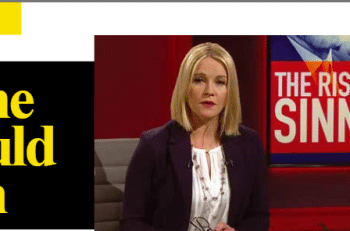
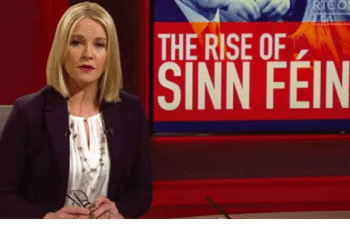
Biased. Michael Smith reviews Claire Byrne Live: The Rise of Sinn Féin (14 February, RTÉ 1)
-

Posted in:
Donkeys and Lions led by Lyons
by admin
56March/April 2022GRADUATE RESEARCH students are often told of a drunk who has lost his keys elsewhere but insists on searching for them under a street lamp “because that’s where the light is”. It is a warning of the danger of relying on data merely because they are available rather than because they address a research question. More formally termed “convenience sampling”, data gathered by this methodology, unlike random sampling, are treated with caution because of difculty in applying the results generally.For this reason, academic research papers publish a prominent statement of the limitations of the scope and application of their methodology. Acknowledge–ments of any such limitations are conspicuously lacking in the coverage of reports of Irish property markets published by the two leading property web–sites, Daft and MyHome. Nor, for that matter, do such considerations prevent politicians waving these reports at each other across the Dáil chamber as con–clusive proof of their arguments. Admittedly, it is difcult to explain nuance and com–plexity. But that is precisely the job of experts, and all the more so when they have chosen to put themselves forward as a public commentator. Too many of the con–tributions to our debate on housing are either blithely, or wilfully, ignorant of just exactly what is being meas–ured in the reports that are so readily quoted. In some instances, the reports themselves do little to correct these misconceptions. What qualifcations J Vivian CookeDaft:the solution to the housing crisis depends on facts-led public-policy but we need to be discriminating about the facts we choose and who chooses them, even when it’s Ronan Lyons Daft Reports whose “statistics are based on properties advertised on Daft.ie for a given period” all too readily confate the observations of its sample with the overall national situationand explanations are to be found skulk at the very back of the reports in the small print.Daft Reports whose “statistics are based on proper–ties advertised on Daft.ie for a given period” all too readily confate the observations of its sample with the overall national situation. And they do so with a shocking casualness that would not be accepted in peer-reviewed academic publications. Just one of the many examples of this tendency is the commentary in its Q4 2021 Rental Report, which refers to “712 ads for rental homes in Dublin”, but, in the report’s headline, this becomes “712: The number of available rental homes in Dublin”. And, in the Irish Times: “Daft.ie’s rental price report for the fnal quarter of 2021 shows there were just 712 properties available in Dublin, the lowest level since its records began in 2006”. This was inac–curate and the Irish Timeswas far from alone in misrepresenting it.What the Daft property fgures measure is not a crisis in supply available to rent, but – to be entirely accurate – a crisis in the number of adverts on its web–site. While Daft could be, indeed most likely is, experiencing a cashfow squeeze due to underlying market shortage in property supply, such a conclusion is suggested but not proven by their own data. Property website reports are unable to overcome problems generated because they do not capture transactions that are:• Not advertised on their website (!);• Actual prices paid as distinct from the initial prices advertised (also !);MEDIADonkeys and lions led by Lyons March/April 2022 57• The rents paid by people in existing tenancies;• Of-market transactions;• Self builds;• Institutional activity.This fawed methodology also explains the discrepancy between Daft’s fnding that “(T)he number of available rental homes in Ireland is 1,397” in Q3 of 2021 rental market, and record–ing by the Residential Tenancy Board of 15,711 new tenancies in the same period. While the data underlying both statistics are true, they present very diferent pictures from each other. Diferences in research design and methodol–ogy inevitable leads to diferences in fndings. The Department of Finance’s comparisons of property reports from diferent sources show sig–nifcant variations in their results. The magnitude of their diferences precludes the possibility that all of them are accurate. suggested technical refnements to the Council’s predictive model, PII were satisfed with a call for an “independent review of the HNDA and supply targets to ensure that Dublin can achieve its full potential”. Both submissions were true to their authors’ track records and concluded that DCC should remove existing restrictions on the con–struction of build-to-rent projects. Supply and Demand is an important analytical construct, but it has its limitations. Most notably, it only holds true when all other things are equal; yet all other things never remain constant. This is a point that Lyons made in these pages back in the November 2014 issue: “Everything else being equal. . . [U]nfortunately, everything is not equal”. The information generated from a simplifed model of supply and demand can inform a coun–terfactual situation: that is what prices would have been for a diferent quantum of supply. Which, although interesting of itself, only pro–vides a necessary but insufcient frst step to explain price movements. Accurate, real-world observations of the property market require more methodological sophistication that, among other things, account for intervening variables and con–trol for diferences within a sample population.For instance, in addition to other limitations, the author qualifes the Daft Report fndings by highlighting how market trends have changed due to the increase in the proportion of longer terms tenancies – ie 4-year tenancies. It is difcult to see how the Daft Rental Report controls for this factor as the flter on its website only provides for tenancy terms as far as 3 years. Even then, the 6 properties nationally returned by this flter as available for a minimum tenancy term of 3 years, put the minimum term as 1 year + in the text of their adverts. If the Daft Rent report only uses observations from its own listings, then it is fail–ing to account properly for what its author admits Supply and Demand is an important analytical construct, but it only holds true when all other things are equal; yet all other things
-
Posted in:
Byrne should burn
by admin
March/April 2022 55“Fact Check!”. He proceeded to rollick through two minutes of almost entirely accurate fact checks while pointing at an ill-at-ease but plushly-suited Michael O’Flynn and a very not-ill-at-ease Jennifer Carroll MacNeill. Claire Byrne let herself down at one stage by interrupting him to confrm that his name was Tony. She would not have asked that of Jennifer, even when no-one knew who Jennifer was.There was a bit of fak for Sinn Féin’s Matt Carthy, but none of it stuck as much as it could have it had been better-directed and a few punters who seemed open minded were allowed to ventilate without correction. But it was too late. Groves had won the evening; and RTÉ had lost the day.If RTÉ wants to treat Sinn Féin diferently from everyone else, it had better say why. The Broadcasting Act commits RTÉ to fairness and impartiality: Current affairs broadcasts, including matters of public controversy or debate, must be treated in a manner which is fair to all interests concerned.This show was not impartial, it was clumsily biased. Having embarrassed themselves with this exercise RTÉ needs to do the same for every other party, certainly every other big party. Let’s hear a folksy evocation of what Fine Gael, as neoliberals, does to people with two cows. To achieve that special RTÉ balance, RTÉ will need to fnd equivalents to Eddie Hobbs, Jennifer Carroll MacNeill and Michael O’ Flynn. Has anyone in there still got the numbers for Dessie O’Hare, Joan Burton and Tom McFeely?It was ludicrous, crude, nasty and inappropriate but most of all it was inefective. After that, you would almost vote for them. and 30 Things to do with your SSIA. Let me stop things there: before entering politics he ran a series of shows about how to make money and avoid rip-ofs. So it’s sub-optimal that before entering politics his main legacy was the auto-erotically-named Brendan Investments which pissed away €13m, 90%, of its investments, on the world’s worst properties, mostly the savings of little old ladies from Cork. That was before he entered politics. Politicswas Renua, the world’s least successful party – with no (0) elected representatives and a platform culled from the rural 1970s. And before he became an anti-vaxer.As an antidote, Jennifer Carroll McNeil came on with very unwild eyes and the world’s most expensive shoes to say that capitalism works for everybody, though nobody could stop thinking that it had worked so well for her that there probably wasn’t much left for everyone else. Moneybags ex-Nama and FF builder Michael O’Flynn’s eyes wandered when he was under pressure but like the other two there was never a ficker that his view could ever be changed. After consummate performances from this not terribly-likeable trio, it was time for someone called Tony Groves. Fans of left-wing twitter will know Groves as the man who says he is Ireland’s leading left-wing tweeter (he’s not) and takes his shirt of a lot. He also co-fronts the ‘Tortoise Shack’ podcasts, probably the most popular socialist programmes broadcast from Ireland. Groves has clearly never been invited anywhere outside his shack before so he’d prepared, with his shirt on and the killer opening line You know it was important television because the Irish Timesdidn’t review it and it wasn’t mentioned again on RTÉ after it had been narrowcast. It was of course Claire Byrne putting the boot into Sinn Féin.I’m all for the exercise, and think SF deserve a hard time because of all that killing they defended, a dubious commitment to democratic accountability and because they’re not actually going to deliver a radical left-wing agenda, and are anti-green.I wish they were radicals but we can tell from their performance in the North, from what they do at local government and from their policies and manifestos that they’re not really going to be the antidote to a hundred years of FF and FG. I’ve said before I’d like to see them commit to increasing equality by 1% annually, stringently measured by say the Gini Coefcient. And if they’re not achieving it they should leave whatever miserable coalition is in their way. They won’t though because they want, and have scented, power and because they will go into coalition with whoever will take them, including right-wing parties, if they feel they can pursue a mandate to push an unhurriable United Ireland.Having said that, they’re competent politicians, SF/IRA have ended a longstanding war, making them peace-makers, and they seem to ofer the best opportunity of some left-wing policies, if – which is unlikely – they can get a critical mass of (other) left-wing parties in with them in coalition. Whatever about that, RTÉ had lined up Eddie Hobbs (property man), Michael O’Flynn (property man) and Killiney-based Jennifer Carroll MacNeill (Fine Gael) as antagonists to Sinn Féin, on a programme that was mostly about property. It launched with a wild-eyed Eddie Hobbs’s anecdote of how socialism gives one of your two cows to losers. According to Wikipedia before entering politics Hobbs was known for presenting RTÉ shows such as Give or Take Club, Rip-Of Republic, Show Me the Money Byrne should burnBiased.Michael Smith reviews Claire Byrne Live: The Rise of Sinn Féin (14 February, RTÉ 1)MEDIA
-
Posted in:
2022 Media blues
by admin
54March/April 2022Such campaigns could end up being at least as signifcant as any aid made available as a result of the recommendations of the Commission on the Future of Media. The funding problems the Future of Media Commission must address are obvious. In addition to plummeting newspaper audiences, RTÉ has not had an increase in its licence fee since 2008, despite increased competition from satellite and streaming services. Realistically RTÉ needs a signifcant funding increase, and to break the link between television sets and the licence fee. This was attempted before, with a proposed move to a “screen tax”, but the idea was long-fngered and eventually dropped after water-tax protests made introducing another household tax unpalatable.The other issue for RTÉ is reliance on advertising revenue. A look across Europe shows many diferent variations in public service broadcasting, from the BBC’s licence only to a household and business fee in Germany, an electricity surcharge in Greece and Serbia, and grants paid directly from central government in other countries.One novel suggestion, put forward by solicitor and writer Simon McGarr, is to allocate a share of central funds to RTÉ. Not only that but the proportion would be fxed as a percentage of government revenues, and locked in for a signifcant term, say a decade.This would release RTÉ from dependence on commercial advertising (and so help commercial television, which could them attract more advertising revenue), while allowing RTÉ to plan over the medium- to long-term without having to worry about near-bankruptcy every year. In addition to securing its future as a news source, the station would also be able to invest in developing indigenous drama distinct from the latest American or other imported programming, some of which it might even sell on to streaming services and other broadcasters internationally. last autumn, and there it has sat ever since, gathering dust. News media in Ireland have been in crisis for over a decade, ever since the perfect storm of a property advertising prolapse at the same time that Apple launched the iPhone and Facebook/Google (Meta/Alphabet?) achieved critical mass, leading to the crumbling of both circulation and advertising revenues.The government seems much more excited about the similarly named but distinct Media Commission, which will replace the Broadcasting Authority of Ireland and regulate not only traditional broadcasting but streaming media, and potentially every internet company headquartered in Ireland. That is: the new Media Commission may also be a New Media Commission.Despite what some may fear, this is unlikely to lead to overreach by an Irish regulator possessed of powers to rival the Great Firewall of China. This government has no interest in upsetting the large tech companies whose accounting practices boost the Irish tax take. A government which went to European courts to prove it did not have to tax Apple is not going to interfere with their business models.However, both backbenchers and ministers will seize on the opportunity to make antagonistic noises about cyberbullying and online trolls, while doing little in practice beyond setting up a Commission with a commissioner whose major power will probably be the right to nag people to be civil online.The new Media Commission may end up doing old media a favour if that is the case. Given a likely mandate to promote civil behaviour online and discourage trolling, the media will need an advertising budget. Some of that will inevitably go on Facebook ads, and on glossy online videos and audio inserts to podcasts, but some of it will also go to much0needed newspaper, television and radio advertising.Looking to the year ahead, it is hard to feel optimistic about the multiple current reviews of the media landscape in Ireland though certain reports that the Minister for Justice is fnally to bring the 2022 review of defamation law to Cabinet and that she will recommend abolition of juries in High Court defamation actions and safeguards against SLAPP orders, though hardly radical, did warm the journalistic cockles a little in February. Freedom of information (FOI) law is being reviewed again, and the signals are not good. There is a tendency for new FOI laws to be less about opening up public information, and more about giving civil servants new excuses to refuse FOI requests. The last freedom of information review grudgingly rolled back the requirement that citizens should have to pay to obtain public information, but not without an intense and sustained campaign for a more open government. During the review, one government minister was prompted to complain about freedom of information being abused by “two guys with a website”. This was a reaction to a case which went to the Supreme Court after the Information Commissioner found that NAMA, the State’s ‘bad bank’, was indeed subject to access to environmental information regulations, an EU law similar to freedom of information legislation but covering environmental issues.On another front, the government continues to drag its heels in publishing the report of the Future of Media Commission. The report was delivered to the desk of minister Catherine Martin The Future of Media Commission report was delivered to the desk of minister Catherine Martin last autumn, and there it has sat ever since.2022 Media bluesPessimism prevails about Freedom of Information, Future of Media Commission and Media CommissionBy Gerard CunninghamMEDIA
-