Opinion

Random entry RSS

  • Posted in:

    EDITORIAL & OPINION

    IN the following pages Village publishes the Ansbacher dossier which ‘Authorised Officer’ Gerard Ryan has been attempting to submit to the Public Accounts Committee

    Loading

    Read more

  • Posted in:

    EU richer countries tend to be fairer than poorer ones.

    By Sinéad Pentony. The EU Social Justice Index developed by the Bertelsmann Stiftung Foundation does not make for smiley reading in Ireland. Ireland is ranked 18th out of 28 countries, well below the EU average. The top three countries for social justice are Sweden, Finland and Denmark. (Chart 2 shows the overall rankings). The Index draws a number of wide-ranging conclusions which include the following: •    Europe is making progress in terms of economic stabilisation, but the level of social justice has declined in recent years in most EU member states. •    The comparisons between the 28 member states clearly shows that the concept of social justice is realised to very different extents. •    EU member states vary considerably in their ability to create a truly inclusive society. •    Social injustice has increased in recent years most in crisis-hit countries including Greece, Spain, Ireland, Italy, Hungary and Portugal. The Index investigates six different dimensions of social justice: poverty, education, employment, health, social cohesion and non-discrimination and inter-generational justice, across the 28 EU member states. The strengths of the Index include its holistic approach to examining a broad range of indicators that are compared across member states and its evidence-based approach to assessing the levels of social justice across the EU. It is informed by a paradigm that requires a strong state to focus on improving social equity as a means of realising equal opportunities and life chances. This approach has limitations because it does not zero in sufficiently on the structures that give rise to and perpetuate inequality in society. Equal opportunities do not always lead to equal outcomes. However, notwithstanding these limitations, the Index provides an evidence-based approach to social-policy change in the EU and the poor performance on specific indicators should be used as a roadmap to guide the Irish Government on the specific areas of policy where improvements are necessary. For poverty prevention Ireland is ranked 21st out of 28 countries. The most striking feature of Ireland’s performance here is the fact we have a significantly higher proportion of the population living in workless households or households with low-work-intensity (e.g. part-time work) than all other 28 member states.   This has a knock-on effect on the level of household income and the standard of living that can be achieved. In general, poverty is a consequence of weak policymaking in areas such as education and the labour market. These areas are central to addressing Ireland’s low level of poverty prevention. For education, Ireland is ranked 22nd out of 28 countries. Ireland is above the EU average in preventing early school leaving. However, we spend less than any other EU country on pre-primary education. Budget 2015 failed to advance this issue in any way. The report notes that early and well-targeted investments in the youngest members of their societies are not only morally sound, but also economically productive. In the area of employment, a majority of EU countries have suffered a deterioration in labour-market access opportunities as a result of the crisis. Ireland ranks 15th out of 28 countries, which is slightly above the EU average. The EU-wide problems in the labour market are above all evident in the unequal distribution of access to decent jobs, with good pay and conditions, for various at-risk groups. Unemployment among young people and low-skilled workers is a particular problem across the EU.  This situation has resulted in extremely high rates of long-term unemployment, which greatly increase the risk of poverty and social exclusion. While we have seen much needed improvement in the labour market in Ireland, we still have almost 250,000 people unemployed and over half of these are long-term unemployed. Unemployment of young people remains high, at over 20%, and more than one in five young people is not in education, employment or training. Ireland compares better with other European countries for health where it is ranked 13th out of the 28 countries. However, the quality and inclusiveness of health services varies greatly in Ireland and in other countries that perform relatively well in health. The Irish health system is a complicated mix of public, private and voluntary care providers, with unfair, unclear and complex routes in and through the system for the users of health services. For social cohesion and non-discrimination Ireland performs above the EU average, and is ranked 11th out of 28 countries. The report emphasises the efficacy of strict anti-discrimination laws and the role of the Equality Authority in this regard. However, it remains to be seen if Ireland will maintain its strong performance in this area following the cutbacks to bodies charged with addressing discrimination, and the merger of the Irish Human Rights Commission and the Equality Authority. The final dimension of the Index is inter-generational justice. This includes a variety of indicators across a number of areas including family policy, pension policy, the environment, research and development spending, Government debt and old-age dependency. Ireland is ranked 19th out of the 28 countries. Our general level of gross debt is a significant factor, as the debt burden taken on during the financial crisis will pass to the next generation, at the expense of investment in areas such as infrastructure, education and health. The Social Justice Index considers how differences in social justice within Europe can be explained. It asks if some countries are more socially just simply because they are economically stronger overall? Countries with a higher economic performance  are, on average, also more socially just. However, there are differences. The Czech Republic, Slovenia and Estonia, in particular, show that a comparatively high degree of social justice is possible despite having an average economic performance. These countries appear more effective in translating economic strength into fairness within society. They illustrate the fact that social policy – besides economic productivity – plays a critical role in achieving social justice. (See Chart 1). In contrast to these countries, Ireland’s GDP per capita is similar to Germany or Sweden, the top performers in terms of social justice. However, Ireland

    Loading

    Read more

  • Posted in:

    All changed…

    By John Gormley. Was it a mere co-incidence that the election of Paul Murphy took place at the same time as the biggest ever anti-water charge demonstration; or was it just a case of Jungian synchronicity? Jung’s theory on the ‘collective unconscious’ can sometimes be a better guide to understanding history than a description of events. How does the historian analyse a mood at a particular time? It’s still difficult, for example, to understand what was happening in the German psyche in 1933/34 when democracy was abandoned. Now, I’m not for a moment comparing the anti-water charge protests with the end of the Weimar Republic and subsequent events. But on Saturday the 10th of October, something very significant happened, a mood change that is hard to define. It was as if the vacuum – the gap between the rhetoric of economic recovery and harsh reality of people’s lives – was filled by an air of outright defiance. And it was those most in touch with this feeling who triumphed in the by-elections. The more nuanced anti-water charge message of Sinn Féin was swept aside by the visceral soundbites of the Anti-Austerity Alliance/Socialist Party: ‘Axe the tax’ and ‘can’t pay, won’t pay.’ No complex neurotransmission required there, but that’s the essence of good communication, and the newly elected Paul Murphy is, if nothing else, an excellent communicator. As one of the most effective MEPs, Murphy was very unlucky to lose his seat in the European elections. The publicity he garnered on that campaign stood him in good stead for the by-election in Dublin South West. He now joins his comrades, Higgins and Coppinger to form a solid trio of political predators who will mercilessly hunt down any Labour Party stragglers. Just watch as the Labour Party herd is thrown into confusion. It’s unlikely that Joan Burton, who is now seen as the bête noire by protestors after her insulting gaffe about smartphones, can provide them with any extra protection. Those within Labour who believe that her personal popularity can help save seats are badly mistaken. It may not even be enough to save her own seat. Certainly, there was no sign of the ‘Burton bounce’ in Dublin South West with the party vote declining from 36 per cent to a mere 8 per cent. It does not augur well for the General Election in 12 months time (my prediction). Murphy will be re-elected and Labour lose both seats here. Again, the political cognoscenti will tell you that these by-election results are nothing but an aberration and that people, when push comes to shove, will revert to sensible voting patterns. But why would they do that? Right now with the mood veering from indifference and desperation to anger and defiance, the disenfranchised feel they have absolutely nothing left to lose. Being told to vote responsibly is likely to goad them into a further radical response. They have had their fill of being patronised. Socialist Party Party leader, Joe Higgins, knows better than anyone the galvanising effect of the water-charges issue. The water-charges campaign not only helped to get him elected in 1997, but also forced the Labour Party into a climbdown on the issue in 1996. The same pattern is about to re-emerge. The election of Murphy will force the Shinners into adopting a much more hard-line approach, if they are not to be outflanked on the left. This in turn will exert enormous pressure on Labour Party rank and file, who will let their individual TDs know that they can’t take any more. It would be interesting to know how many of those who marched on 10th October voted for Labour the last time. The rebate concessions on the water charges made in the budget are unlikely to satisfy people who now feel that they have the Government on the run. This demonstration was not a one-off. The next one in November could be bigger, increasing the pressure on beleaguered backbenchers. Those protestors who have talked to Joe Duffy on ‘Liveline’ have spoken about their sense of ‘empowerment’, ‘solidarity’ and even ‘elation’, feelings that they haven’t felt for quite some time, least of all in their contemplations on the Labour Party.  Now that they can sense victory, they won’t give up easily. They know that the water charge is not primarily about water conservation but about increasing the profits of Irish Water, a company that will be privatised in the future. If Labour really want to win back some credibility on this issue, they ought to give consideration to the proposal made by the Greens. Éamon Ryan has suggested inserting a clause in our Constitution to prevent our water resources falling into private hands. Joan Burton, if she has any survival instincts left, should ask Máire Whelan, the Attorney General to start drafting a suitable amendment immediately. The referendum could be held on the same day as the Marriage Equality vote. It could be a double victory for the Labour Party. Just a thought, spared for the Labour Party. • published in Village Magazine, Oct 2014

    Loading

    Read more

  • Posted in:

    Equality of outcome: an ethical imperative

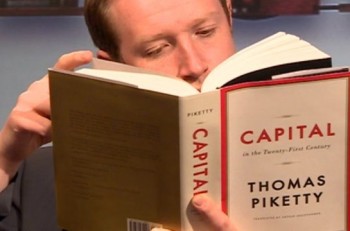
    Village has always tended to support a vision of equality of outcome in society. Unfortunately, the most widely supported form of equality is equality of opportunity. Since it has more of the qualities of “freedom” than of “equality” even Margaret Thatcher revered it, for example. Unfortunately, too many human rights these days are being pursued on the back of equality of opportunity rather than equality of outcome. One of the regrettable symptoms of this is that the victims of topical forms of discrimination seem to have little empathy for, or solidarity with, victims of other types of discrimination. It is good to see a refocus of the equality debate on issues where outcomes can easily be measured – on income, and wealth. Issues of equality of opportunity cannot so easily be measured since opportunity can be intangible. A lot of the re-orientation is down to Thomas Piketty and his recent book ‘Capital in the Twenty-First Century’ which draws on extraordinarily wide-ranging objective data and which is admirable too for drawing attention to the influence of policy on inequality as manifest in perverse income and wealth distribution. Almost everyone in economics and (therefore) mainstream politics had for years agreed that higher taxes on the rich and re-distribution to the poor have hurt economic growth. As Paul Krugman has noted “liberals had generally viewed this as a trade-off worth making, arguing that it’s worth accepting some price in the form of lower GDP to help fellow citizens in need. Conservatives, on the other hand, have advocated trickle-down economics, insisting that the best policy is to cut taxes on the rich, slash aid to the poor and count on a rising tide to raise all boats”. But, because of the Great Recession and Piketty, fashion has moved phenomenallyswiftly to a different view, that there isn’t actually any trade-off between equity and inefficiency, that inequality has become so extreme that it’s inflicting economic damage so that redistribution – taxing the rich and helping the poor – may well raise, not lower growth rates. The latest manifestation of this surprisingly comes from economists at Standard & Poor’s with their beguilingly titled ‘How Increasing Inequality is Dampening U.S. Economic Growth, and Possible Ways to Change the Tide’. The fact that a reviled Ratings Agency is addressing economic inequality suggests that a debate that has been largely confined to the academic world and left-of-centre political circles could become practical. Piketty analyses historical data to show that at the end of World War II the top 1% in Ireland, the UK and the US, for example, collected about 15% of all national income. The share collected by the wealthiest people dropped in the subsequent decades and then rebounded from the mid-1970s. At the start of the new millennium the concentration of income at the top was back at around pre-war levels, though it dipped in the Great Recession. In the US incomes of those in the top 1% have now recovered and surpassed pre-crisis levels, though in Ireland the Gini Coefficient seems to suggest that efforts over the last few years to redistribute wealth, through taxation and welfare, have been successful, though absolute levels of deprivation for the poorest are at crisis levels and shockingly, in Budget 2014 for example, the lowest income group lost proportionately more income than any other group. On the back of the data, in ways that are redolent of Karl Marx’ views on Capital, Piketty makes the case that it is inevitable that the returns to capital will be higher than those to labour, and that since the richest already have more capital, they will inevitably simply continue to get richer (at least unless a global tax on capital is imposed). Piketty, a mild man, considers this a problem for economics, but eschews the ethical issues it poses. He therefore posits a theory that is fragile: in the event equality were once again deemed bad for the economy, presumably it might be justifiable to jettison equality. As an economist, Professor Piketty’s focus is too narrow. Village believes equality of outcome is an ethical not an economic imperative. We are all equal from birth, and equal moral agents. If we designed a social contract with these essentials as the starting point, with a veil of ignorance as to our actual circumstances and prospects (or a radical open-mindedness as to how nourishing society could be), we would see that equality of outcome is the optimal politics. Society’s goal is to recognise that, distributing resources to reinforce that underlying equality – by promoting equal outcomes. Unfortunately the debate about equality – and its different forms – remains very crude, partly because those who benefit from inequality want to keep their privileges. We need to promote structures that address overall levels of inequality but which also focus on pre-existing difficulties for the very least well off. And we need to ground the structures in ethics, rather than economics. •

    Loading

    Read more

  • Posted in:

    Charities Regulator: make role broad.

    By Niall Crowley Regulator should ensure charities are rights-focused, independent and frugal; promote equality and social justice and are accountable to users. It is not clear how much longer the Central Remedial Clinic can command our headlines. They are doing their best. We cannot be sure who will follow them into the hot seat. Rehab has put itself out there with some jaw-dropping prominence. Before that we had Holles St Hospital, St Vincent’s Hospital Trust, the religious and industrial schools, the Red Cross and other Development Charity scandals. There is something rotten within parts of our so-called “charity” sector. Minister Alan Shatter has promised the long-awaited Charities Regulator as the resolution to loss of trust in the sector. Instigating the Charities Regulator is necessary but not sufficient. The legislation, for example, does not appear to allow it any role in eliminating greed and excessive remuneration. It will usefully require a transparency from organisations in the sector. They will have to provide basic information about their operations to get on the Charities Register. They will be required to submit annual accounts and an annual report of activities to the Regulator. All of this information will be made public. This transparency is important. But annual accounts or annual reports of an organisation never tell much about greed and excessive remuneration. Transparency alone will not resolve these issues. Further, transparency alone cannot address equally important issues of low standards in governance or in services provided. The current debate is premised on the supposed fact that so-called ‘charities’ are doing good work and the obvious danger this work could be undermined by some rogue executives. While many such organisations are doing good work, we have little evidence to support such a premise for the whole sector. A culture of greed and executive entitlement is never aligned with a culture of care and rights. The Charities Regulator is to be “interim”. A CEO will be appointed through “internal” competition. There are not many, if any, civil servants in the Department of Justice and Equality with the necessary knowledge and understanding of the ‘charity’ sector for an internal appointment to work. This approach also undermines the necessary independence of a Charities Regulator. An ‘interim’ Charities Regulator will inevitably have minimal resources, insufficient to stimulate and secure the changes in culture and practice needed in parts of the ‘charity’ sector. State institutions tend to remain at or around their start-up budget long into their life span. The key budgetary battle is always the first one and this already seems lost in the notion of “interim”. Is this why everyone seems so happy with the promise? It looks good and resolves the collapse of trust issue but changes little. We need to be concerned about what sort of Charities Regulator we will get. Remember we have some experience of poor Regulators. There is the “cosy” regulator. This is the regulator that is tightly-knit into the sector it is regulating. There is an assumption that everyone is operating to the same set of values and good relationships will enable good practices. This is the model that gave us the financial crisis. There is the “lofty” regulator. This is the expert and professional adjudicator. Things go wrong and the appropriate punishment is meted out to the individual transgressor. Serious illegality will be curbed, but the status quo is maintained. The status quo is not good enough for many who are dependent on the ‘charity’ sector. There is the “busybody” regulator. This is the interfering regulator that serves as a catalyst for change in the sector. As more and more key social services are publicly funded through the ‘charity’ sector, this is the type of regulator that is required. The ‘busybody’ regulator could inculcate a necessary rights-based culture in provision of these services. The Charities Regulator will have powers to investigate; and to publish codes of conduct, guidelines and model constitutions. It could use these powers to set and demand standards for a management culture that reflects a social-justice ethos rather than a business ethos, for an accountability directed to the communities and groups served by the organisation rather than just to funders, for services that create greater equality in society rather than maintaining certain groups on the margins, and for a public funding regime that enables service users to be rights holders rather than grateful recipients. Will Charities welcome intrusive regulation and what exactly is being promised?

    Loading

    Read more