Posted in:
Did Phil Hogan save your life?
Why the environment should be protected in the Constitution
Posted in:
by admin
Why the environment should be protected in the Constitution
Posted in:
by admin
GNP (and GDP) growth figures need to be reduced to allow for vulture property funds and contract pricing; and to reflect the weird lack of growth on the streets
Posted in:
by admin
How Greece and its unrecognised reforms have been paralysed by the Troika and debt
Posted in:
by admin
By Niall Crowley. If Alex Fogarty was told one more time how mature he was he could really have claimed the right to violence. Alex, 15 years old we were told repeatedly, from the National Youth Council of Ireland was on the ‘Prime Time Debate’ on votes for 16-year-olds. He was up against Noel Howard of the Irish Association of Social Care Workers. We never got to hear Noel’s age. However, it was clear that his Association is no country for young people. In May we will vote on reducing the age a person can stand for the Presidency from 35 to 21 years – on the same day as the referendum on same sex marriage. The Government has said it cannot have too many referenda on the one day and its commitment to hold a referendum on reducing the voting age to 16 has therefore bitten the dust, been “abandoned”. Leaving aside misplaced concerns from the likes of Diarmaid Ferriter as to whether 21-year-olds exercise what they see as the requisite “wise discretion”, how could it possibly be more important to reduce the age at which one can stand for President than to reduce the age at which one can vote? A central political issue has been subordinated to a more obscure one. Noel Howard was full of concern. We don’t want to ‘adultify’ young people. This seemed like a stretchify of the English language. He was worried about the erosion of childhood. They will have plenty of time for voting when they are older he suggested. Politicians will exploit the idealism of young people with promises he argued. This ignores that promises are clearly the engine of our politics for all age groups. He expatiated reams on ‘children on the margins’ whom he felt don’t have the maturity, despite admitting that most of them had no childhood. Alex Fogarty, ever mature, pointed out that 16-year-olds can go out to work and are liable for taxes and wondered why they can’t vote. He suggested that allowing these children on the margins a vote is hardly negative and merely gives them the voice that they need. He said that giving a vote to 16-year-olds would ensure that politicians have to engage with young people. The Government has said this decision is not about electoral strategy. The case for change is so clear, the evasion of a referendum that they had already committed to so brazen, that it is hard to believe otherwise. They are afraid of what young people will vote for. If young people were predicted to vote Fine Gael and Labour the referendum would have been deemed a top priority. If young people were predicted to vote Fianna Fáil we would have had this referendum during the last Government. The National Youth Council of Ireland ‘Vote@16’ campaign makes a compelling case that giving the vote to 16-year olds would generate greater interest in politics among young people. It would promote their participation in politics and put the issues of young people, as defined by young people, onto the political agenda. Research in Austria suggests that 16- and 17-year-olds are every bit as politically sophisticated and indeed turn out in greater numbers than 18 to 21-year-olds.Ireland ratified the UN Convention on the Rights of the Child as far back as 1992. This committed us to ensuring the right of children to “express (their) views freely in all matters affecting the child, the views of the child being given due weight in accordance with the age and maturity of the child”. If we were in any way serious about this part of the Convention we would be giving the views of 16 year olds “due weight” by allowing them to vote. We prize youth. They are our greatest resource, we say. But we fear young people. We stereotype them as irresponsible, given to excess, and even violent, a worldwide survey last year in the Economist was headed: “Today’s young people are held to be alienated, unhappy, violent failures. They are proving anything but”. The media predominantly portray young people as a problem or as having problems. In fact it is not young people but youths that get coverage.The Economist survey notes subversively that “The media are struggling to cope with the rising temperance of youth”. If the coverage is not about crime or violent behaviour or binge drinking or teenage sex, it is about vulnerability due to lack of care or supports or being victims of physical or sexual abuse. This distorted generates and reinforces our stereotypes and reflects what we really think behind our patronising wonder at the potential of young people. This debate is about power and empowering young people. A vote is only a small step in this regard. It is shameful that we fail to take it. •
Posted in:
by admin
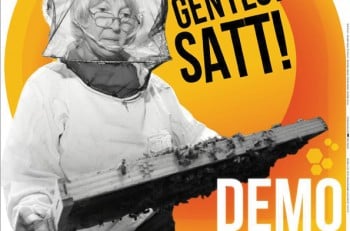
By Oliver Moore. Berlin in January is a very cold time to have a demo. Yet 50,000 people – about the same number as attended Dublin’s biggest water protest, the zenith of Ireland’s opposition to long and oppressive austerity – marched the frosty streets that month not for a high profile march against cuts or Islam, but rather to march against food. The Wir Haben Es Satt, or “We are Fed Up” protest attracted 80 tractors and 120 organisations to demonstrate against the globalised, industrialised extremes of the food system. Germany is not known for its protests, and 50,000 is 20,000 more than the previous year’s event. This was one of the biggest protests in Germany in decades. The 80-tractor bit is interesting too, especially for an Irish person: these events are often, especially when held in very urban countries like Germany, seen as for naïve city types who don’t know farming. There may of course be an element of truth in this. However, as one of the organisers, organic farmer Jochen Fritz pointed out, when 75% of the pig farmers who were in business in 2000 are now gone, something has to give. Farmers for business as usual is a bit like turkeys voting for Christmas: even the organic ones get slaughtered in the end. A recent high-profile publication in one of the world’s leading journals Science gives us some background. Rockstrom conceived idea of planetary boundaries. That’s the safe operating space for humanity, or the earth’s natural carrying capacity for certain practices. In these areas – climate change, biochemical cycles (nitrogen and phosphorus) biosphere integrity (biodiversity loss and species extinction) and finally land-use change – we are exceeding our carrying capacity. Climate change and biodiversity loss were considered by the team to be core boundaries defining the future. EU agri-food will reduce its climate change impact by 1% by 2020, yet we need global decarbonisation of 80% by 2050 to prevent runaway climate change. An area in the Baltic Sea sometimes rivalling the size of Germany is stubbornly covered in a polluting algal bloom thanks in large part to the excessive nitrogen and phosphorus levels industrial pig farming off-loads there. Agri-food with its land-use, processes and pesticides, undermines biodiversity. Species are disappearing at between 100 and 1000 times the natural extinction rate. The Food and Agriculture Organisation of the UN classifies 80% of fish stocks as “fully or excessively depleted”. Scientists asked for a 20% reduction in the EU fishing quotas. What happened? A 5% increase was granted in January. There are socio-economic measures of agri-food’s poor performance but exceeding planetary boundaries is a solid indicator. TTIP – the Transatlantic Trade and Investment Partnership – was credited by organisers as bringing the extra thousands out onto the streets this year. Ostensibly about trade, many civil society organisations fear TTIP is more about a race to the bottom for food standards, where the lowest standard becomes the norm. This suits corporations but not threatens citizens’ hard fought labour, health and environmental standards. TTIP is inimical to national standards. To take a relevant example, the EU’s precautionary principle is seen as a barrier to equivalence, or harmonisation, of pesticide rules between the EU and US. Europe adopts a precautionary approach to pesticides, while in the US proof has to be provided that damage is being done. While currently pesticides like paraquat, and many class 1 organophosphates are not allowed in Europe, a recent report highlighted 82 potential new and very strong pesticides that would come on the market in the EU, were the US standards to be applied. There is evidence that a regulatory chill on, for example, endocrine disrupting pesticides is already happening in the EU, simply because legislators anticipate TTIP coming into effect. It is interesting to see how these issues morph into each other. Walter Haefeker, President of the European Professional Beekeepers’ Association, spoke from the stage about TTIP because he feared the EU’s partial ban on bee-killing pesticides (neonicotonoids) is under threat: already “the manufacturers in question do not accept even the current temporary partial ban and have initiated legal action against the EU Commission at the European Court of Justice”, he said. One of the main provisions in TTIP is to make it easier for companies to sue governments or the EU potentially in Investor State Dispute Settlements (ISDSs). Indeed this partial neonicotonoid ban has been specifically cited by US negotiators as problematic for regulatory harmonisation. It is worth remembering that, while 97% of replies to a recent EU consultation were against either TTIP or ISDSs most lobbying on TTIP is by the corporate sector, the biggest component of which is agribusiness and food. It’s definitely a cause to march for. What happened to the environmental movement, and its marches, in Ireland? • Dr Oliver Moore works for UCC’s Food Business and Development Department
Posted in:
by admin
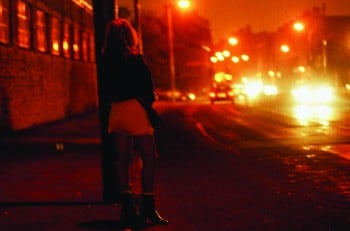
By Rachel Moran With the relentless practicalities of running a country it is perhaps unsurprising that our politicians don’t often propose legislation which has, at its heart, the goal of human harmony. November 27th of this year was a welcome exception. With Minister Frances Fitzgerald’s proposal of ‘The Sexual Offences Bill 2014’ we have it within our grasp to prohibit, for the first time in Ireland’s history, by law, the purchase of sexual access to another person. I speak about human harmony here because it is an absolute impossibility in the absence of equality, and equality itself is impossible where one group has not been liberated from the dominance of another. As an abolitionist campaigner, I am often reminded that there are men and trans-persons bought in the sex-trade. My answer is always the same: look who’s buying them. This proposed legislation would make those who buy sexual access to people legally accountable for their actions, irrespective of biological sex. Nobody, however, is ever going to be able to tell me that almost all those abused in the sex-trade are not women and children. They are. After seven years in prostitution I know they are, and it is that simple. The announcement of these proposed laws has been a major milestone in the Turn Off the Red Light campaign. It has been almost four years since I first spoke at the launch of a campaign that turned out to be a long, drawn-out and arduous fight for social justice. Fifteen months of relentless media debates and over 800 written submissions were involved. There were private hearings and public hearings in which the Garda Síochána made it perfectly clear in their evidence to Government that Irish prostitution is directed and controlled by organised crime. Irish politicians visited Sweden to investigate how the Sex Purchase Law was operating there. This lengthy and thorough debate was eventually concluded on June 27th as the Joint Oireachtas Committee on Justice, Defence and Equality unanimously agreed that the Nordic Model should be imported into Irish law. Now, thankfully, Minister Fitzgerald has backed the main points of the campaign. While we of course look forward to examining the Bill in detail, we are overwhelmingly well-disposed to the headings of its contents so far, and glad to see also that a whole new raft of measures to protect children from sexual exploitation is contained in the bill. There are few enough days in all our lives when we can truly say we are proud of our country, or that we are living through a historically significant time. When these things come together, as they do for me at this time, I find myself looking both forward and back. I find myself imagining myself living into my seventies and eighties and looking back on this as a truly significant turning point for my country. And I find myself looking back to my teens and connecting with the absolute sense of injustice I was so immersed in and infused with then. I was not so inured to injustice, though, that I was unaware of it. I always knew the purchase of sexual access to women and girls was a human rights abuse. I knew it because I lived it every day. It is easy for me to imagine my older self looking back on the historical relevance of the enactment of this legislation, but it is harder, much harder, to imagine my teenage self looking forward to it. Justice did not exist in the brothels and the red-light zones and it would have been so very difficult for my fifteen-year-old self to imagine it there. If I could go back and tell myself one thing, it would be this: “On November 27th 2014 a law will be proposed that will bring justice to this red-light street, and all the other streets in the zone, and every brothel in Ireland.” • Rachel Moran is the author of ‘Paid For – My Journey Through Prostitution’ @RachelRMoran