We are disciplined and motivated, with a new ambition to become a mainstream political choice for people right across this island, and deliver a just transition, protecting our natural world and bringing a fairer economic model.
Posted in:
Around one hundred submissions were received by Galway’s City Council on its Draft Development Plan 2017-23 by the deadline of 5 October. Meanwhile, a number of well-known community and environmental activists in Galway City have come together to form a new alliance to promote a ‘Future Cities’ concept based on “regenerative urban development, ‘green’ living, smart technologies and a sustainable transport. They have a lot on their plate. It’s a planning and transportation mess with no visionary Messiah. In many small cities comparable in size to Galway, people are regenerating and humanising their urban environments by introducing woodlands, gardens, recreational parks and city-wide 24/7 cycling, walking and public bus or train systems. Yet here in Galway City we are now proposing to build the N6 ringroad that will cut through homes, villages, neighbourhoods, farmland, key wildlife habitats, a university campus and sports elds, and lead to further mindless urban sprawl of this, in so many ways, creative city. Then, having spent €700m on a new road, there will be no incentive or money left to introduce the Public Transport improvements being promised “after the road is built”. If Galway City is to have a sustainable future, the authorities should immediately bin a policy based on a discredited ‘predict and provide’ private car-based transportation model and instead should use the available €500-750m to construct a hierarchical transport model based on a ‘new mobility’ prioritising pedestrians, cyclists and users of public transport”. When the IDA first developed its business parks at Parkmore in the early 1970s there were very few businesses initially established out that far. So having only one main entrance avenue wasn’t a problem. In the intervening years the estate has exploded so it now accommodates many of the world’s leading medical device and IT manufacturers. With very little available public transport passing, let alone actually entering the estate: the sheer number of private cars coming in has now reached crisis point. Yet Galway Co Council actually gave permission for a new sub-standard entrance/exit point and junction giving the planning board no choice but to refuse permission. In September An Bord Pleanála duly reversed the permission because “its construction would endanger public safety by reason of traffic hazard”. This decision could, should, force debate about the much larger can of worms around Ireland’s lack of a ‘sustainable’ National Spatial Strategy’. The daily traffic chaos in Parkmore is a symptom of the much wider problem we have in historic spatial planning in Galway, with rapidly increasing numbers of people having to commute from their new homes in County Galway to their workplace in the city, by car. This phenomenon has become overwhelming over the past 40 years. Workers living in the city but working in Parkmore/Ballybrit have been failed by the lack of civic imagination that might have provided an adequate public transport system in the city. For a youthful and fashionable city, capital of ‘craic’, dubbed as progressive, and once crowned ‘the fastest growing city in Europe’ this is anachronistic. In its May 2014 Newsletter, the Western Development Commission – using an IDA case-study, stated that “of the 16,701 rural dwellers commuting to work within the gateway of Galway city, one quarter (25.6% or 4,285) commute to work in the IDA estates”. The first figure refers not just to people heading in to Ballybrit, Parkmore and Galway Technology Parks, but others who commute further still into the heart of Galway city, for work at GMIT, NUIG and UCHG, our largest city-centre employment nodes. As James Wickham said in his book ‘Gridlock’: “Car dependency is an issue for social policy. Car dependency exacerbates social exclusion, for those who do not have a car run the risk of being excluded from normal life. Their access to jobs is restricted, they find it difficult to move around the city, they are not full citizens”. There is a belief that transportation problems result from the antedeluvian planning policies of the 1980s and 1990s, both at local and national level. These intensi ed in Galway from the time Colin Buchanan and Partners published its ‘Galway Transportation and Planning Study’ in September 1999. This report together with its subsequent 2002 ‘Integration Study’ commissioned jointly by Galway City and County Councils, led to a situation in Galway, not dissimilar to that of Dublin, where availability of sufficient reasonably priced housing units in the city failed to keep up with growing public demand. This, combined during the madness of the Celtic Tiger years, with pressure being applied by county councillors and developers turned Galway’s surrounding towns, villages and particularly countryside into worker dormitories: for families that had been priced out of continuing to live in Galway city. The Galway County Development Plan of 2002, which integrated the recommendations from the Buchanan Report, facilitated development in places ringed around the city: Bearna, Moycullen, Claregalway, Tuam, Oran- more and Athenry. And everything in between. Responding to Galway County Council’s then- Draft Development Plan in July 2002, then City Manager John Tierney wrote to Donal O’Donoghue, then County Manager, expressing some concern over proposed policies which would continue to promote a wider spread of settlement, and not the concentration into the 38 towns, villages and proposed development at Ardaun that had been planned. He stated: “The cumulative effect of these policies/objectives all greatly undermines the ‘Galway Transport and Planning Study’ GTPS, any sustainable approach to a settlement structure and consequently any ability to promote a sustainable public transport system. It would exacerbate the current dependence on private vehicular transport and the consequent negative effects of this”. Tierney’s pleas went ignored, and widespread ‘one off’ housing development in County Galway continued unabated, with septic tanks mushrooming leading to water pollution, cryptosporidium, and a culture of lengthy commutes into once homely Galway City. So a long-term strategic policy for planning where people might be sustainably housed was scupperedd, due to the regime, the report and thousands of concomitant individual acts of planning anarchy, cumulatively undermining any regional strategy. The problem is now self-pepetuating and solution-less.
If you’re looking for a chirpy, upbeat assessment of how humanity will, in the nick of time, get its clappy act together to tackle dangerous climate change, then Kevin Anderson is probably not the person you need to talk to. Professor of Energy and Climate Change at the University of Manchester and deputy Director of the Tyndall Centre for Climate Change Research, Anderson is one of the world’s best known and most in uential – and outspoken – climate specialists. On a recent working visit to Ireland, he ripped into any complacent notion that the Paris Agreement signed up to by almost 200 nations, including Ireland, last December meant that we could all relax a little in the knowledge that our politicians, guided by the best scientific advice, are nally getting on top of this crisis. Some of his most devastating critique is reserved for the IPCC itself or, more specifically, the wishful thinking that underpins many of its model projections. He fleshed this out late last year in a commentary piece published in Nature Geoscience, where he took apart some egregiously fanciful assumptions. “The complete set of 400 IPCC scenarios for a 50% or better chance of 2°C assume either an ability to travel back in time or the successful and large-scale uptake of speculative negative emission technologies. A significant proportion of the scenarios are dependent on both time travel and geo-engineering”, wrote Anderson. He repeated this point forcefully during his presentation at the Royal Irish Academy in Dublin, to the obvious discomfort of the representative of Ireland’s Environment Protection Agency, who found himself trying to explain how completely untested technologies could, somehow, be massively deployed to remove upwards of ten billiontonnes of carbon dioxide (CO2) from the air every year, liquefy it and pipe it into vast underground storage where it would have to remain securely for at least the next 1,000 years. Village sat down with Professor Anderson for an in-depth interview in Dublin. First question: what about our recent steps, such as the new Climate Act – does Anderson think Ireland is grasping the nettle of climate change? “I think certainly not; what Ireland has signed up to in the recent Paris Agreement, and particularly when you think that Ireland is one of the wealthier countries in the world, isn’t anywhere near what is necessary to meet its (Paris) commitments”. While the same can be said for the UK and much of Europe, Anderson stresses that “Ireland is a particularly wealthy nation, and it has wonderful renewable (energy) potential; it also has a very educated workforce. It has all that is necessary to make the rapid transition to a low-carbon energy system and indeed a much-lower-carbon agriculture system – at the moment, it is choosing to do very little in that direction”. So what about the view propounded by Irish politicians from Enda Kenny to Simon Coveney, that climate action is something we can kick down the road for another five or ten years, while concentrating on economic development instead? “That view completely, and I would say, deliberately misunderstands the science”, he retorts. “It’s the emissions that we put into the atmosphere now that really matters…these build up every single day in the atmosphere”. As for the oft-quoted argument that Ireland’s emissions are a small fraction of the global total, Anderson replies that every sector, from aviation and shipping to countries large and small, makes the argument that it only contributes a small share of the global total, but every percent is equally important. He is scathing of Ireland’s major expansion of its ruminant-based agriculture sector, believing the argument that if we don’t produce vast amount of beef and dairy products here, someone elsewhere will do it less efficiently, is bogus. “The climate does not care about (emissions) efficiency, it only cares about absolute levels of emissions, so if you are going to look at Ireland you have to look at these absolute levels”. Measuring ‘efficiency’ of CO2 per kilo of beef or ton of dairy produce is not, he argues, the right way to think about it. “If you are really concerned about feeding the world, then you measure it in terms of the CO2 per useful calorie you produce – that will almost certainly mean you will have to move away from the types of agriculture that have innately very high green-house-gas emissions”. Anderson describes the types of measurements being deployed to promote the ‘Origin Green’ image of Irish agriculture as “inappropriate and misleading”. A staunch public defender of agricultural emissions is retired UCD meteorologist, Professor Ray Bates, who has repeatedly argued against an ‘over-alarmist’ response to climate change that might, in some way, curtail our beef and diary sectors. Bates’ principal argument is that ‘climate sensitivity’ to CO2 may be on the lower end of the scale. Anderson is unimpressed. “I think it would be a foolish mistake to go down the ‘let’s keep our ngers crossed that climate sensitivity is on the low end’ dead-end, despite the fact that by far and away the majority of scientists think it’s likely to be on the middle to the upper end of the (sensitivity) spectrum”. What’s at stake, after all, is the habitability of the entire planet, and who would want to leave that to the toss of a coin?”. Anderson knows only too well the appetite among politicians, policy-makers and parts of the media for people who are prepared to down-play the risks and urgency, but believes that only by acting now in line with the scientific advice can potentially disastrous and irreversible damages be avoided. Quite how close we already are to the point of no return, no one can say for certain, but there is growing consensus that +1.5C, rather than +2C, should be the upper limit before really dire consequences become locked in. The findings emerging from climate science pose “fundamental questions about how we have framed modern society, the whole concept of economic growth, of progress – all of the things that have served us very
Posted in:
To say that environmental issues didn’t have much of an impact on Election 2016 would be a bit like observing that feminism hasn’t exactly been the defining feature of Donald Trump’s exciting US presidential run. The topic was completely ignored in the botched opening Leaders’ Debate on TV3, and again, on RTÉ’s seven-way debate the following week. The Green Party had fallen foul of an internal RTÉ decision to exclude it from a slot among the extended parties. This telling ruling was upheld in the High Court, and sure enough, RTÉ’s Claire Byrne steered the seven leaders through two long hours of questions and answers without a mention of anything remotely environmental. Ironically, the same journalist had dramatically dashed in an Air Corps helicopter only a few weeks earlier to interview some of the latest victims of this winter’s extreme flooding event. This dramatic fare, with long shots of ruined farms and submerged houses, interspersed with heart-rending stories of loss and struggle, is understandably grist for RTÉ’s current affairs mill. It is standard training in journalism to ask the five Ws – who, what, where, when – and why. We are getting lots of who, what, where and when from our media on flooding disasters and other climate- fuelled events, but precious little time is being devoted to that all important final W: why. And the ‘why’ is of course climate change. This vast topic made it into the last few min-includes lots of easy utes of the nal leaders’ debate, where just the savings, by 2020 four main parties were involved. Presenter Miriam O’Callaghan admitted in her introduction to it that it hadn’t featured at all in the campaign up to that point – the media weren’t asking and the politicians sure as hell weren’t going to bring it up spontaneously. O’Callaghan lobbed the climate grenade into the reluctant lap of outgoing Taoiseach, Enda Kenny, who – shocked that there might be an Idea in play – took fright and ubbed his lines. First off, he announced that the EU’s 2020 targets (20% emissions reduction versus 2005) “are targets we cannot reach”. Fair enough. And why, prime minister, would that be? “We have a chance with the abolition of milk quotas to expand greatly the capacity of our national herd…to increase our dairy herd by 50%”. Having fessed up to the fact that Ireland has chosen not to meet its 2020 targets, Kenny then went on to make the following quite extraordinary statement: “The targets that are set for 2030 are dif cult targets, but we will meet them”. The targets he is referring to are for a massive 40% cut in emissions. Given our inability to hit 20%, which includes lots of easy savings, the idea that we can escalate to an infinitely tougher 40% target in just one more decade suggests, to the cynical, that Kenny knows for certain that he will be long gone before the fantasy 40% emissions cuts by 2030 are exposed as a sham. So, the world’s greatest existential threat, according to Mr Kenny, is a distant second to pushing the agri- industrial expansionist agenda on behalf of the IFA and the food PLCs it so often appears to speak on behalf of. These same transnational organisations offshore their tax affairs to ensure the Irish Exchequer gets as little as possible. Glanbia, for example, routed its €40 million profits in 2014 via brass-plate companies with no employees in Luxembourg in order to cut its Irish tax bill to a paltry €200,000, or an effective tax rate of 0.5%. These patriotic enterprises represent, in the view of our Taoiseach, so vital a national interest as to set aside all other considerations to ensure their burger and baby milk powder export operations are in no way impacted by binding international emissions targets. To be fair to Mr Kenny, when asked to choose between agricultural expansion and climate chaos, the three other major party leaders also waffled and equivocated in equal measure, all fearful of riling up the assorted special interest groups that maintain such an effective lock on Irish environmental policy. Both Micheál Martin and Joan Burton did try to point out that the transport sector is on an equally ruinous trajectory, but the clear instruction that O’Callaghan pursued single-mindedly was to pitch climate policy in Ireland as either pro- or anti-farmer. This obsessive focus on agriculture seems to be a rut that RTÉ’s PrimeTime has dug for itself, as reflected in its paltry two efforts at covering climate change since 2009, which have lurched from cack-handed to catastrophic. Having attracted a slew of written complaints, the BAI will rule in the coming weeks on whether PrimeTime’s most recent ‘climate debate’, in early December, was in breach of broadcasting regulations. While climate and environmental issues were squeezed to the periphery of both the media and political framing of Election 2016, there was sufficient to be gleaned from the assorted party manifestos to suggest that whatever coalition is eventually assembled to lead the 32nd Dáil might represent a step forward on the hugely underachieving FG/Labour coalition, and the woeful Alan Kelly in particular. While Labour’s stewardship of the Environment ministry was a huge failure, the loss of outgoing Energy Minister, Alex White is a genuine setback, as he is regarded as one of the few politicians with the brains to truly understand climate change, and the guts to speak publicly on it. Not that it in any way helped his own political cause. The obliteration of Renua signals that the Irish public is in no mood to return to the simple-minded moral certainties of the 1980s. For the Green Party, turning a 2.8% national share of vote into two seats was an impressive achievement; whether such slender representation can really add a green hue to the new Dáil remains to be seen. While both Labour and the Green Party have plenty of useful things to say about addressing climate change and moving Ireland towards decarbonisation, given that the two
Posted in:
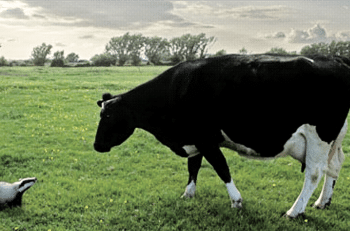
Sometimes farmers find difficulty sleeping at nights. Random, gnawing thoughts drift into our heads as we doze off. Are badgers prowling around the farmyard? Are they sniffing the cattle? Is TB being transmitted? New research will allow us to sleep more easily. A project led by district conservation of cer Enda Mullen, with Trinity College Dublin (TCD) and the Department of Agriculture, spent three years tracking badgers in the Wicklow countryside. 40 badgers from twelve social groups had radio collars fixed around their necks. Then enthuastiac National Parks and Wildlife Service (NPWS) staff and volunteers from TCD plotted the 12,500 movements of the badgers as they made their ways through the countryside. We usually find TB in cattle in the lungs.The conventional wisdom states that badgers transmit TB to cattle via aerosol – direct breathing close to a cow. A badger may be lured into a farmyard by the presence of spilled grain, and come in contact with livestock housed in sheds. But this study proved otherwise. Badgers tended to avoid farmyards – and particularly farmyards with cattle. If they visited farmyards at all, they tended to frequent equestrian, and disused, farmyards. But most badgers kept away even from these. A single individual badger (which the researchers christened Violet) seemed to like a trip to the horses, but most other badgers kept well away from all livestock, and even were shy of visiting disused farmyards. A second study undertaken by Declan O Mahony in Northern Ireland confirmed that badgers avoid cattle. Declan works with the Agri-Food and Biosciences Institute in Belfast, and his approach was slightly different. He affixed proximity collars on 58 cattle and 11 badgers in a TB hotspot in Northern Ireland. If the badgers and cattle came within 2 metres of each other (enough distance to share a breath), the collars would emit a pulse. This would be plotted via GPS. In addition, motion sensor cameras were positioned all over the farmyards to video anything which moved. The results were amazing. There were over 350,000 interactions between cattle and cattle. There were 11,774 interactions between badger and badger. Clearly, you hang out with your own species. And there were no interactions between cattle and badgers. Zero. So is TB being transmitted by badgers? And if so, how? The researchers looked at water troughs. But badgers and cattle did not use water troughs concurrently. In fact, badgers rarely used water troughs at all. So the researchers turned their attention to the farmyards. They recorded 500,000 hours of video at farmyards in a mammoth undertaking, and analysed the results. The visiting animals recorded mostly were feral cats, some of which were in poor health. Farm cats play an important role in rodent control, but can also be carriers of TB, and any animal in poor condition is more susceptible to disease. Mice and rats were also seen on camera, and very rarely an individual badger (perhaps a cousin of Violets) turned up at a meal shed for a few min-utes. Most other badgers kept away – and all badgers avoided the cattle sheds. Cattle are large, sometimes dangerous, and often scarily frisky. It seems that the badgers have known this all along, and are keeping well away from them. Instead of scapegoating the badger,we need to increase bio security measures on our feed sheds. And thanks to this hard work and wonderful research, we can settle down to sweet dreams and sleep without worries. Now – did I feed the farm cats? Donna Mullen
Posted in:
‘Twas the night before Christmas, and the Minister for Arts, Heritage and the Gaeltacht was beavering away looking for ways to ensure that no creature was stirring. Especially not a mouse. On 23rd December last year, in the political dead of night, the Minister charged with protecting natural heritage announced a plan to make destroying it even easier for farmers. Heather Humphreys – who lives on a farm, is married to a farmer, and whose brother is the Ulster/North Leinster Regional Chairman of the Irish Farmers Association – took the regressive decision to weaken Section 40 of the Wildlife Act, which deals with the cutting of hedgerows and burning of uplands, on the basis that doing so “will help to address some of the challenges faced by those living in rural areas”. She didn’t address rural people whose challenges are that they actually like hedges and uplands. An already flimsy piece of environmental legislation and notoriously difficult to enforce, Section 40 of the Wildlife Act, 1976 and the subsequent Wildlife (Amendment) Act, 2000 ban cutting and burning between March 1st and August 31st on the well-evidenced grounds that this is the time of year when the birds – including endangered species such as curlew, yellowhammer, linnet and greenfinch – have their birdy babies. The legislation does make provisions to accommodate summer cutting for health and safety reasons (ie on dangerous stretches of road) and in “the ordinary course” of agriculture or forestry. Humphreys, however, contends that this is not, farmers are finding, enough. “I want to strike a balance here”, she said, in a press release that neglected to mention the enormous imbalance that already exists in favour of agriculture over nature. “While hedge-rows and upland areas are very important in terms of wildlife habitat, they also need to be managed in the interests of both farming and biodiversity”. That biodiversity is a prerequisite for farming seems to elude the Minister. Nevertheless, for what it’s worth, last month, for example, an international team of researchers (including Trinity College Dublin’s Yvonne Buckley) proved for the first time that biodiversity “strongly and consistently” enhances productivity. In addition, hedgerows and uplands are known to improve rainwater attenuation and filtration, mitigate flooding, harbour the species that control pests and provide important foraging for crop pollinators such as bees (a third of which are threatened in Ireland). They sequester carbon, support soil fertility, provide resilience to soil erosion and assimilate the nutrients in agricultural run-off. All that tedious old natural- balance stuff. The benefits are provided by the natural world to farmers for free, despite the fact that the environmental cost of farming remains unpaid (according to a 2015 FAO report, the unassailable Irish beef industry alone has racked up debts of at least $15bn in environmental destruction). What might not be lost on her, however, are the 15,000 citizen signatures which oppose the measures. A petition launched by Birdwatch Ireland, An Taisce, the Irish Wildlife Trust and the Hedgelaying Association of Ireland has shown that healthy uplands and hedgerows and the biodiversity they support are beloved by more people than might have been expected, and that a freshly-slaughtered one at the height of summer is something a lot of people, though perhaps no-one the Minister ever meets, don’t want to see. Nonetheless, the proposed changes will be included in the Heritage Bill 2015 on a “pilot” basis, for two years. According to the DAHG website: “Managed hedge cutting will be allowed, under strict criteria, during August to help ensure issues such as overgrown hedges affecting roads can be tackled. Power will also be given to the Minister to allow for controlled burning in certain areas around the country, to be specified by the Minister, during March, should it be necessary, for example, due to adverse weather conditions”. No detail has yet been provided on the “strict criteria” and no provisions for the effective monitoring or enforcement of these measures have been mentioned. To Humphreys and her ag-mates, hedgerows are the annoying prickly bits of brown and green between the luscious elds of monoculture through which Oscar nominees frolic in hazy late-summer sun. Like the overgrown fringes of small children, these superfluous strips of deficit require meticulous and regular trimming in order to avoid negative comment on their unkemptness. The atavistic and visceral commitment to ‘tidiness’ and post-Victorian standards of natural beauty is the exact opposite of what is needed for an environment that is robust enough to support an ever-intensifying agricultural system and resilient enough to absorb the environmental impact it produces. The ‘dog- whistle’ call from IFA Environment Chairman, Harold Kingston, for “a workable outcome” has as so often been met with a grovelling response that works for farmers only, in the short-term, if at all. Michael Smith
In 2011 we wrote in this space, “You would think from our recent history of some of the most notoriously bad governance on the planet, that we would have learnt that our political classes need to be replaced. In fact, this election time we see no new ideas”. Sadly democracy in Ireland needs an overhaul every bit as much now as it did in 2011. Village is disappointed at the quality of politics, across the range. It’s easily diagnosed: Fine Gael is open to regressive policies and cronyism. However, at least on its own terms it deserves credit because it has consistently stuck to its agenda of (unimaginative) economic orthodoxy and because Enda Kenny has proved relatively competent, in the face of scepticism, including from this magazine. In 2011, we stated, “ Perhaps it is a unique merit of Fine Gael that if it is elected with a mandate, this time it may actually govern as it has campaigned. The electorate will be able to assess whether what it voted for was what it wanted”. This edition of Village explores at length the extent to which the coalition government delivered on its Programme for Government. It’s a fair test and it shows that, beyond promoting economic stability, the Government has been a disappointment. Labour certainly does not have the Fine Gael appeal of consistency. It never does what its manifestos promise. Worse, a number of its senior TDs have allowed themselves to appear smug and ideologically jaded or even, in Alan Kelly’s case, dangerous. Because of the elasticity of its conscience Labour has long attracted the wrong type of representatives. Fianna Fáil is tainted by its reckless past and the incoherence of its platform. It believes serving the people, parish and business in equal measure is viable. It has learnt little beyond the need to regulate the banks. Sinn Féin’s commitment to a Left agenda is unclear bearing in mind its defining preference for irredentist nationalism over ideology, its centrist pragmatism in the North and its willingness to coalesce with Fianna Fáil. Its performance at local-authority level is not impressive or particularly leftist. It is cultist, and ambivalent about democracy and transparency, and its leaders lie casually about its, and particularly its leader Gerry Adams’, past. Renua seems like a somehow unendearing chip off Fine Gael’s Christian Democratic block, with a penchant for propriety. The Independent Alliance (dubbed Shane Féin) is utterly incoherent of policy and membership. If ex-stockbroker Mr Ross and turfcutter Michael Fitzmaurice ever breathed an atom of the same political air, Village cannot imagine where it was. Village has a weakness for the Social Democrats, whose mild platform is essentially the same as Labour’s, though strangely more pro-business, but whose small membership is more prepossessing. Its antipathy to water taxes is expedient but regrettable. The radical Left offers the huge appeal of integrity and seriousness but its opposition to property taxes is inexcusable, and its focus on opposition to the loathed water taxes rather than a broader anti-inequality platform, including opposition to the iniquities of Nama, corruption and the resurrection of the developer classes has diverted its revolutionary ideology. The Green Party’s policies are often radical, and its agenda mature, but it is not hard-minded and it achieved so little in the last government that it is difficult to be enthusiastic. To the extent that we have not afforded space in this edition of Village to the policies and protagonists of most of these parties, it is because they simply don’t offer enough to justify it. Village believes equality of outcome, sustainability and accountability are the most important policies; and it is difficult to be optimistic about their immediate Irish prospects. Laboured machinations over the fiscal space are ephemeral, though most of the other media address little else. Reflecting the need for a vision of society as well as economy this edition focuses on the coalition’s delivery across a number of departments that promote equality, sustainability and accountability, though we do have articles by Constantin Gurdgiev, Michelle Murphy and Sinead Pentony on the iniquitous handling of the fragile economy. We consider Education, Health, Social Welfare, Environment including climate change, Small Firms policy, and Accountability. These departments make life worth living. We systematically assess whether they achieved the goals set by the Government for each of them when it took office. In the end the conclusion is that they have underperformed. And so therefore has the unimaginative, regressive and stolid Government behind them. Against this backdrop, we would again not presume to advise readers where to direct their votes. However, we can say the non-ideological, non-visionary parties of the pragmatic centre hold little appeal, even when mitigated by somewhat more thoughtful ones. A coalition of the parties of the Left, radical Left and the Greens would, as always, best promote Village’s agenda, if no doubt imperfectly.
Posted in:
At the end of last September, under the shadow of the glimmering New York skyline overhead, the world celebrated the dawn of a new era. The UN Summit on the Sustainable Development Goals (SDGs) concluded with a massive party in Central Park, graced by the presence of superstars such as Ed Sheerin and Beyonce. The party was sponsored by Gucci, Citi, Unilever, Google and others. Many of their super-rich executives could well have been watching the party from their high-rise apartments in that most elegant part of the planet. Some people had paid upwards of $10,000 for VIP passes to the party. All proceeds went to charity, of course. There was no whiff of a world on the brink of collapse, threatened environmental destruction and violent extremism, the one that had been so eloquently articulated by Pope Francis in his landmark address to the UN General Assembly the previous day. The gap between the optimistic, almost euphoric atmosphere in some UN quarters and the pessimistic, almost despairing perspectives of others, including Pope Francis, was palpable at the Summit. On the one hand, famous business moguls, UN officials and many states, including Ireland, lined up to hail the goals as a new beginning. On the other hand, many wondered whether yet more goals would make any difference at all or even whether they would take us in the wrong direction altogether. Whatever your perspective, the SDGs are now a universally agreed UN document. For the most part, they set out important objectives for the world, 17 in all. They point to all the critical areas of human development that must be addressed if we are to tackle inequality, poverty and environmental destruction. They set 167 indicators of progress which are to be monitored and followed up annually. Importantly, for the first time ever, they promise to “leave no-one behind” and put a deadline of 2030 on achieving that goal. While as individual objectives the SDGs are desirable, as a global policy framework they are deeply flawed in at least four ways. Firstly, the sheer number of goals agreed and the lack of real interconnection between them has turned them into a shopping list. Everything becomes equally important. Yet the truth is that global imperatives exist. There are critical enablers which everyone needs to address alongside second-level priorities, which can be reached only on condition the first are being achieved. So the SDGs create a kind of policy fog in which it is hard to see the wood from the trees. Secondly, despite years of debate, the goals fail to resolve the decades old conundrum of sustainable development. This is the fact that ‘economic’, ‘social’ and ‘environmental’ dimensions do not really sit side by side or form interlocking circles. The ‘economic’ and the ‘social’, in reality, are dependent on the ‘environmental’. We need to move away from the inadequate cliche of interlocking circles to a ‘doughnut’ model as put forward by Oxfam. There is no overarching agreement in the SDGs that we need to move towards a world which lives within planetary boundaries. This is a real opportunity lost. Thirdly, however worthy the SDGs are, they are weak voluntary initiatives rather than an international treaty. Of course, voluntary initiatives have an important role in setting norms, but they only thrive when the environment is conducive to their realisation and are matched by strong implementation measures. The goals are debilitated by dysfunctional power structures, which render them a side-show, if not quite irrelevant to the main drivers of power. Unfortunately, important policies are being actively promoted by the same states that signed up to the SDGs and whose actions elsewhere directly contradict many of the goals. One alarming example is the emerging rules on global trade and investment, epitomised by the Transatlantic Trade and Investment Partnership (TTIP), which is being negotiated between the EU and USA. Controversial proposals within TTIP include Investor State Dispute Settlement mechanisms. These will effectively facilitate MultiNational Corporations to circumvent domestic court systems and sue sovereign states through a confidential arbitration mechanism in challenging governments for introducing regulations that in multinational businesses’ view harms their interests or profit margins. This raises concerns about the state’s right to regulate on a wide range of public policies, including extreme poverty and environmental standards. SDGs do not even enter into these negotiations. Another example is continued state subsidies and investments in fossil fuels. If remaining below the agreed 2°C-increase target for global temperatures is to be possible, a basic pre-requisite for the SDGs, 80% of known remaining fossil fuels need to remain under ground. Yet in 2014 the global economy missed the decarbonisation target needed to limit global warming to 2°C for the sixth year running. Fourthly, the respective roles of the state and the private sector in SDG development and implementation is deeply concerning. The visibility of the private sector and the pledges made in New York reflect the way that major corporations have managed to skew the agenda. One official pledge made by MasterCard at the SDG Private Sector Forum to bring 500 million people in the developing world into the credit market, thus enabling them to achieve Goal 8, is indicative of this. A pick-and-mix approach to the SDGs is already evident, facilitating corporations to use them to their marketing advantage while not addressing basic human rights and issues such as lack of accountability. The UN appears to have already relinquished control of its own message about the SDGs to the corporate sector through its ‘Global Goals’ campaign. This was launched during the Summit. In signing a licensing agreement for the Goals with key sponsors such as Gucci, Citi and others, it effectively delivered the SDGs, a key global public good, into private ownership. A clause in the campaign agreement means that those who use the goals’ branding must do so in ways which do not damage the partner brands. Technically speaking, therefore, if an NGO such as Trócaire or Christian Aid, draws attention to the systemic problems of corporate power whilst using the goals’ branding, they are in breach of the licence. Though it