Environment

Random entry RSS

  • Posted in:

    Island of Tyreland

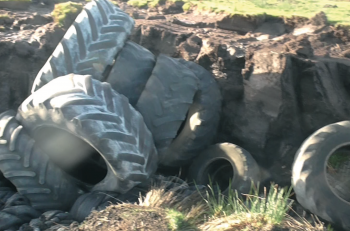
    Carndonagh is an area of outstanding natural beauty that nestles in the shadow of the Grinlieve Mountain, only eight kilometres from the designated Natura 2000 sites, Trawbreaga Bay Spa and the North Innishowen Coast. Safeguarded by the 1992 Habitats Directive both these ecological wonders are home to protected animal species and diverse wetlands. Outwardly this area seems idyllic and well-protected; however, on 4 December 2011 Sunday Life newspaper exposed Meenyollan, Carndonagh, as the location of a vast illegal tyre dump fed by KF Tyres, Corody Road, Derry (top right). The landowner, Michael McLaughlin, was also claimed to be complicit in the dumping. Nearly ten million tyres had been buried, unregulated, in the period 2008-2011 alone. At least one for everyone in the audience. It has made Carndonagh Europe’s largest illegal tyre dump. Following the Sunday Life exposé in 2011, Donegal County Council promised robust enforcement including an extensive cleanup operation. KF Tyres should have been made responsible in whole or in part for the cleanup operation Donegal County Council promised. However, seven years on, there is still clear evidence of tyres being illegally buried at this location and there is little evidence of a cleanup. The pristine fields, underpinned by tyres which leach into the meandering water table, contrast starkly with the surrounding boglands and call to mind previous violations and unseen toxicity (bottom right). Although it is difficult to find out the exact composition of a tyre, and there are lots of different types most of them include synthetic carcinogens, solvents and heavy metals, for example. KF Tyres and Michael McLaughlin escaped prosecution and in fact subsequently applied for and were granted a range of permits and planning permissions by both Donegal County Council and the Northern Ireland Environment Agency (NIEA) allowing them to legally operate at the same site. These incongruous decisions, some of which were granted in breach of the legally-man-dated sequence, reduced the promised enforcement to no more than knuckle raps. After an abortive attempt by planning consultant Jim Harley to get McLaughlin’s development deemed “exempt” from planning permission, an unlikely new wheeze was to tout it as land reclamation with secondary drainage benefit. Yet still the terms of the new permits permissions have been flouted. Photographic evidence clearly shows that illegal dumping is still going on at the site. In 2018 KF Tyres and Michael McLaughlin are still controversially involved on this site, while Donegal County Council behaves as if it is unaware of this. In 2015, Planning Permission was obtained for the use of 8448 tyres in 105 bales (80 tyres per bale) over a five- year period, suggesting even what Donegal County Council considers reasonable has been overwhelmed by illegal dumping on a much greater – indeed unconscionable – scale.   The photographic evidence (left) shows that neither McLaughlin nor KF Tyres appear to be compliant with the terms of the planning permission, which demands that the tyres that are used be baled, not loose (left, bottom right); nor do they seem to care. Moreover, Donegal County Council evidently does not appear to know what is going on. For example, after the Sunday Life article in 2011, Donegal County Council promised an investigation and robust enforcement. However, in January 2012, mere weeks after the article, Donegal County Council granted McLaughlin a five-year Waste Management Facility permit (WMP) (top right). Why? No planning permission had been granted though one is mandatory before a WMP can be issued. Without the requisite planning permission all tyres taken to Cardonagh around that time continued to be transported and dumped illegally. Jim Harley, formerly of Harley Planning Consultants, has figured in strong criticisms levelled against the Donegal County Council planning department when he worked there a decade ago. These are currently being reviewed by a senior counsel on behalf of the Department of Housing, Planning and Local Government. Harley acted as a planning consultant for McLaughlin when he was granted planning permission in November 2015. There was one condition: that he apply for a WMP. But there was an existing WMP that had been issued illegally. It was illegal precisely because it should not have been issued before planning permission was granted. The Sunday Life article stated in 2011 that KF Tyres had a WCP (waste carriers permit) with Donegal County Council to collect “end of life tyres” but it had no permission to bury tyres at Carndonagh. It is yet another anomaly that KF Tyres obtained a valid Waste Carriers Licence for the South in 2011 but no planning permission or commensurate licence for the site it operated from in Derry. It is strange that Donegal County Council neglected to contact the NIEA about KF Tyres in 2011. The NIEA went on to grant Ken Ferguson a WMP (bottom right) allegedly oblivious to the illegal dumping. This information would have been immeasurably beneficial in averting the current situation. Donegal County Council should have been monitoring the site, verifying the number of tyres being buried both by KF Tyres and McLaughlin. No assessment appears to have been made, north or south of the border, of how many Trans Frontier shipments (TFS) and what tonnage of tyres, KF Tyres declared to the NIEA it had transported between 2012 and 2015.   It is not clear how many physical border and site inspections were made by Donegal County Council and the NIEA during this period. As stated both the WMPs (previous page) were granted under Appendix II of the EU Waste Frame Directive 2008/98EC: recovery operations. R10-Land Treatment resulting in benefit to agriculture or ecological improvement; R13 – storage of waste pending (right). Amazingly there is no reference to waste tyres or indeed anything like rubber within this directive, nor to the burial of solid waste in any form. Land reclamation using tyres is deemed dangerous and illegal in Northern Ireland , but not in the Republic – yet both countries are bound by the same European Directives. Given the toxicity of tyres and the stringent legislation on their

    Loading

    Read more

  • Posted in:

    Ourland

    The return of the Irish economy is not an accident. The fact there were no riots when in collapsed in 2008 in a sea of imploded vested interests was no happenstance. The fact this country has divided power since its instigation between Fianna Fáil and Fine Gael wasn’t just luck. The repetition of the failures of the national spatial strategy in the National Planning Framework was predestined. The failure of any party to take on the rights of property and make them subject to the common good isn’t a random thing, it’s determined. This country isn’t Germany which went through industrialisation, Nazification and deNazification, and learnt that politics and the common good is a serious business. Nor are we like the US which takes itself so seriously that it can elect a politician on an America First platform, elect someone who’s utterly wrong about everything. Or the UK which tossed a reputation forged over a millennium for empirical pragmatism into the fires of Brexit because it had a serious gripe with Institutional Europe (and Johnny foreigner). Ireland lost half of its people in the famine five generations ago. There is a strong folk memory of apocalypse which imbues a national fear that workaday issues aren’t important, that politics doesn’t really matter, that anything good is transient, that there’s no point planting a tree, a flower. We also suffer from the residual malaise of the colonised. For 700 years decisions were taken not in the common good but in the interest of an alien political entity. Service for the government and its establishment was not service for the common good. This country is sceptical about the motivations of its politicians, and its politicians do not see their roles as ethical or principled. This can generate corruption. We also suffer from the overhang of over a millennium of pious religious adherence though arguably we are overcoming that fast, almost – though not quite – too fast. Ireland is not a serious country like Germany. Yes we’re big on the GDP that every country wants. Certainly, we can do capitalism if you ask us too, but it’s only because that’s a doctrine that depends on an independent competitive detachment. You don’t have to buy in to anything particular to practise capitalism. We’re good at giving international commerce and its IT companies and vulture funds what they want: from planning permissions to an utterly unethical system of corporate taxation. You never hear anyone in public life talk of morality or ethics, you rarely hear mention of the public interest or the common good. Or philosophy: we’re sort of middlebrow. It is taken for granted that the combined private interests of all somehow amounts to the public interest. It is assumed the needs of the present outweigh concerns for the future. We don’t have a language for ugliness even though we forge it everywhere. We don’t care about planning, we couldn’t give a fiddlers for the environment. We’re the worst climate-change offenders in Europe, one of the few EU countries to miss its 2020 emission reduction targets under the EU effort-sharing decision, the worst per person in Europe. We love to litter. We’ve filled the countryside with unsustainable houses, allowed Dublin to leapfrog into much of Leinster. We’re going continue doing it. It would be draconian to tell anyone they can’t actually build somewhere. Climate, the environment and planning are at the sharp edge of our psychological weaknesses. We understand when someone fleeces the public purse – sure we’d do it ourselves. Even the parties of the left can’t bring themselves to support a property tax. For that would impinge on “the family home”. Does Richard Boyd Barrett not realise that that phrase betrays a millennium of weakness? Strangely we never hear that other assets shouldn’t be taxed – that stocks and shares shouldn’t be taxed because they’re “the family portfolio” but mention the family home in Ireland and a ‘Land League’ and a host of people who don’t realise they’re not leftists will come running to your aid, in your home or in the courts, even if you’re looking to remain in a gilded mansion, even if you have three homes. Charlie Haughey, Bertie Ahern, Enda Kenny, have been replaced with shiny new faces – Leo, the Simons, Eoghan. These tyros may have had radical, progressive or interesting ideas before they got into politics but it’s not an accident that they get beaten out of them by the time they stand for election, for the party. They’ll toe the party line, not the thinktank line on everything from housing to the drugs crisis to healthcare. They bought into Fine Gael (it might as well have been Fianna Fáil) atavistically. Sit on a bus in England or the US and the quality of the conversation overheard (‘innit?’, ‘So I’m Like’) shocks and bores. Not here. You’ll never meet a complete moron in Ireland. The left may not yield a property-tax agenda but then again the right hasn’t managed to muster much of an anti-immigration or even privatisation agenda. Most Irish people have lots of common sense, a fairly global outlook, a sense of humour and a cultural hinterland of some sort. Ireland isn’t serious enough to keep its quality of life as high as that in countries where the common good is the transcendent driver. But then again it’s not serious enough to say no to gay marriage – sure everyone likes someone who’s gay. Or serious enough to elect a Fascist or a tub-thumper. Ireland is a peculiar place. It’s not the worst place. But its history holds it back, and will for generations to come.

    Loading

    Read more

  • Posted in:

    NIexit will reduce protections

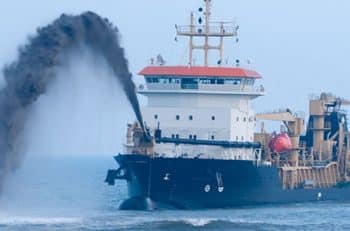
    Brexit brings a threat of the North accelerating in a race to the bottom in terms of the environment and employment, cutting costs in order to get economic advantage. In the face of this, much depends on when or if Devolution is reinstated. There is a particular concern on environmental matters because the EU has had a determining impact on the North’s environmental legislation. Even with EU membership, there is concern at a systemic failure to enforce environmental legislation. Sand has been dredged from Lough Neagh for years, without any planning process being applied. Currently about 1.5m tonnes per year is extracted. The Lough is the largest fresh-water lake in Ireland or Britain. It is a Special Protection Area. It is a Ramsar site, that is recognised as a wetland of international importance. Around 100,000 wild birds winter on and near it. It is one of only five lakes in the world where pollan are found. In June last year the North’s Court of Appeal allowed an appeal from Friends of the Earth against former Environment Minister Mark H Durkan’s decision not to order an immediate halt to the dredging. However, the Department of Infrastructure has said it is “not expedient” to stop dredging, which continues. In another regulatory failure, approximately one million tonnes of assorted waste was illegally dumped on a site at Mobuoy Road, Derry. Remediation will cost at least £20m (€22.4m), but may cost 12 times as much. The dump is beside the River Faughan, which provides drinking water for Derry City. Friends of the Earth has lodged a complaint with the European Commission against the North for systemic failure to enforce planning and environmental laws. The complaint is slowly making its way through the process. The North, like the rest of the UK, has no third-party right of appeal against planning decisions: developers have a right of appeal. That is contributing to pressures to restrict the right of appeal in the South. With this being the current situation, the North’s environmentalists are worried about developments after Brexit. They are particularly worried about the loss of the Habitats Directive. This has been key to their successes: in particular, their two biggest. These were the A5, the North’s biggest-ever road project, which was halted after a court challenge: and the court action on the Lough Neagh dredging. The Habitats Directive is particularly important because it contains the precautionary principle. Politically, there is no great will to protect the environment. The two dominant parties, the DUP and Sinn Féin, have shown little commitment. Famously the first measure the Paisley/McGuinness devolved administration introduced was a relaxation on the former Northern Ireland Minister’s restrictions on one-off housing. In 2008 Arlene Foster as Environment Minister rejected a report ‘Review of Environmental Governance. One of the recommendations was for an independent environmental protection agency, and a limited third party right of appeal. Former DUP Environment Minister Sammy Wilson has said people would “look back at this whole climate change debate and ask ourselves how on Earth were we ever conned into spending the billions of pounds” on policy changes. Sinn Féin has not denied climate change, but has been the main party pushing the A5 project. The party’s attitude to the environment is typically ad hoc. This is more worrying because the North’s environmentalists are not a major lobby group. The Assembly elected last year contains only two Greens, from 90 members. Only a handful of others have any significant interest in environmental matters. The effects on workers’ rights will partly depend on when or if devolution is restored. Certainly, trade unionists are seen as a better – organised lobby than environmentalists. They have had certain limited successes. The Executive parties rejected introducing proposed legislation further restricting the right to strike being introduced by the UK government. It did not follow the British parliament in extending the time limit for the right to claim unfair dismissal. On the other side, Northern wages are lower. The median weekly wage is £501 (€562.50), in contrast to €734.60 in South. The minimum wage, which is UK-wide, is £7.83 (€8.79) and only comes into operation at 25. In the South it is €9.55. It seems Northern Ireland is facing into a future without the threshold protections of for example the EU Working Time Directive 2003 which requires a minimum of four weeks paid holidays annually and a maximum 48-hour working week unless a worker individually consents; of the The Parental Leave Directive 2010 which prescribes four months of unpaid leave for parents to care for children before they turn eight years old, and of the Pregnant Workers Directive 1992 which creates a right for mothers to a minimum of 14 weeks paid leave to care for children. There will be continued pressure to reduce wages and protections. That will be strengthened by the tendency not to let a good crisis go by without seizing the chance to cut pay and conditions. Anton McCabe

    Loading

    Read more

  • Posted in:

    Oxymoron

    By 2040 we expect that an additional one million people will live in Ireland, an additional two-thirds of a million people will work here. An ageing population and smaller family size mean that we will need an additional half a million homes to accommodate this growth. Project Ireland 2040 purports to address this. It consists of the National Planning Framework which sets out a spatial strategy for Ireland, to accommodate in a “sustainable and balanced” fashion these significant demographic changes. It is the overall Plan from which other, more detailed plans including city and county development plans and regional strategies will take their lead. Learning from past experience, the NPF is backed up by an infrastructure investment programme, the National Development Plan. This National Development Plan sets out the significant level of investment, almost €116 billion, which will underpin the NPF and drive its implementation over the next ten years. €91 billion in Exchequer funding for public capital investment has been allocated and will be supplemented with substantial investment by commercial State Owned Enterprises. This increased level of resources is expected to move Ireland close to the top of the international league table for public investment, from a low post-crash base. In short, the State’s infrastructure investment – the money – should be guided by and follow the Plan. That is what makes Project Ireland 2040 different and a significant innovation in Irish public policy. What is not different is that it does not have teeth, particularly to stop market-driven development that is incompatible with the vision. Project Ireland 2040 is about enabling all parts of Ireland to achieve their full potential. It seeks to move away from the current, developer-led, business as usual pattern of development, to one informed by the needs and requirements of society. This means seeking to disrupt trends that have been apparent over the last fifty years and have accelerated over the past twenty. It purports to aim to ensure that rather than have excessive population growth focused on Dublin – as is the current trend – that 75% of all population growth occurs in the rest of the country.The immediate priority is to increase overall housing supply to a baseline level of 25,000 homes a year by 2020, and then a likely level of 30-35,000 annually up to 2027. 112,000 households are expected to obtain social housing over the decade. A new €2 billion Urban Regeneration and Development Fund will aim to achieve sustainable growth in Ireland’s five cities – Dublin, Cork, Limerick, Waterford and Galway – and other large urban centres, incentivising collaborative approaches to development by public and private sectors. It aims to secure at least 40% of future housing needs by building and renewing within our existing built-up areas, whether they be in the many villages and towns in need of regeneration or in our cities and larger towns where there are also huge opportunities for city and town centre regeneration. Of course the corollary of this is that an unsustainable 60% of future housing need will be met on green-field sites. It targets a level of growth in the Northern and Western, and Southern, Regions combined to at least match that projected for the East and Midland Region. It will support the future growth of Dublin as Ireland’s leading global city of scale, by better managing Ireland’s growth to ensure that more of it can be accommodated within and close to the city. It supports ambitious growth targets to enable the four cities of Cork, Limerick, Galway and Waterford to each grow by at least 50% to 2040 and to enhance their significant potential to become cities of scale. It recognises the extent to which Sligo in the North West and Athlone in the Midlands fulfil the role of regional centres. It recognises Letterkenny in the context of the North-West Gateway Initiative and Drogheda- Dundalk in the context of the Dublin- Belfast economic corridor. It seeks to strengthen our rural fabric, by reversing town/village and rural population decline, by encouraging new roles and functions for buildings, streets and sites, and supporting the sustainable growth of rural communities, to include development in rural areas. That’s one- off housing. Anyone who follows this will see that there’s not much sense of anything being ruled out, and indeed almost everything seems to be ruled in. That suggests it won’t all happen. And the determinant of what happens and what doesn’t will, as usual, be the market – which will skew to Dublin and its hinterland, and of course one-off housing whose site costs are negligible (for those lucky enough to own rural land) but which pose difficulties for sustainability: economic, social and environmental. It costs more to service far-flung housing with broadband, and everything else. One might quibble with elements of the plan. Dr Edgar Morgenroth – Professor of Economics at DCU and a primary author of the document – said that plans for the €850m motorway between Cork and Limerick would undermine the proper growth of “second tier” cities in Ireland. He rejected claims by An Taoiseach Leo Varadkar that the motorway would encourage the cities to grow faster saying it would instead lead to sprawl. He told ‘Morning Ireland’ it was important “to put the infrastructure into the cities, not between them”. “Once you put the motorway between two cities what you’re doing is getting more sprawl. So you’re undermining your own strategy”, he said. Morgenroth also said that building a new motorway undermined a commitment by government to reduce carbon emissions. The NPF will also have “statutory backing” overseen, quasi-independently, by the new Office of the Planning Regulator (OPR) – a key recommendation of the Mahon Tribunal.   Unfortunately this particulator Regulator will not regulate but rather advise others whose motivation may be political and short-termist. A regulator who does not regulate. There has been much light-free heat, led by Sinn Féin which even claimed to be seeking a legal opinion, about the failure of the government to put the NPF to a parliamentary vote but instead to include

    Loading

    Read more

  • Posted in:

    Punker

    “Things can only get better”, went the lyrics to the hit by D:Ream which became the anthem of the incoming New Labour government in 1997, fronted by the relentlessly upbeat Tony Blair. Six years later, Blair joined the US in its illegal invasion of Iraq, a move that plunged the entire Middle East into a new era of violent instability and a refugee crisis that today, some 15 years later, shows little signs of abating. Things, it turns out, can also get worse. Statistics can, however, be schooled into presenting a beguilingly different picture of the true state of the world, and the darling of global optimism, psychologist and author Steven Pinker is a skilful inquisitor of data. His scholarship seems to have caught the zeitgeist of the latest wave of techno-optimism, and his data-fuelled Panglossian creed is being enthusiastically embraced by global influencers like billionaire Bill Gates. So excited were the editors of Time magazine that in January, for the first time in its more than 90-year history, it invited Gates to be guest editor of an edition, titled ‘The Optimists’. His editorial was essentially a re-heat of Pinker’s tome, ‘Enlightenment Now’, which, Gates gushed, was his “new favorite book of all time” and “the most inspiring book I’ve ever read”. High praise indeed. Gates’ benediction no doubt helped Pinker’s tome to become a runaway bestseller. What got the Microsoft über-nerd so excited is that: “this is not some naively optimistic view; it’s backed by data”. And Pinker cites data by the chartload, much of it undoubtedly painting an accurate picture of one species doing remarkably well. Life expectancy is a case in point. In just the last 28 years, the number of children dying before their fifth birthday has halved. Women’s and LGBT rights have made remarkable, if uneven, advances in recent decades. Fewer people are living in absolute poverty. Child labour, slavery and sexual abuse have not been eradicated globally but all indicators point towards major progress for millions of people. Catastrophic famines are rarer now; more people now live in democracies (Trump’s populism notwithstanding) than in all of human history and, while there are hundreds of deadly local and regional conflicts around the world, there are, mercifully, no full-scale wars between countries. Were an 18th or 19th century European to survey the region today, they would be astonished to find that the perpetually warring great powers – France, Italy, Spain, Germany, the Netherlands and Britain – have enjoyed more than 75 years of peace, co-operation and prosperity, with just occasional insults now being hurled at one another, where until quite recently, disputes were routinely settled with bloodbaths and pogroms. So, all’s well with the world, it seems. Another contributor to the Time special edition was the estimable investor and billionaire Warren Buffett. He waxed about the astonishing economic progress that swept across the US in the 20th century. No argument there. “The game of economic miracles is in its early innings. Americans will benefit from far more and better ‘stuff’ in the future”, he opined. At this point, it’s time to take a deep breath and a sharp step backwards. How can such heavy-hitters as Pinker, Gates and Buffett have possibly discounted or ignored the ecological train-wreck hurtling ever closer towards humanity? Pinker’s book does indeed grapple – after a fashion – with environmental limits, but it’s hardly encouraging that someone who prides himself on offering numeracy as the cure for biases then launches – unprovoked – into a biased jeremiad against the “quasi-religious ideology” that is what he disparagingly terms “greenism”. For someone regarded as among the world’s great thinkers, this is dull fare indeed. Undeterred, Pinker lashes out at this “apocalyptic creed” which he finds to be “laced with misanthropy”. Quite why it was necessary for Pinker to denigrate environmentalism becomes clear as the narrative unfolds. The vehemence of his anti-environmental rhetoric is in inverse ratio to his ability to address the profound critiques of his beloved ‘progress’ posed by the findings of climate and environmental sciences. He points out – correctly – that as countries get richer, they usually clean up their own rivers and ease local pollution. The fact that rich countries simply outsource much of their dirty heavy industries and ship their wastes to the ‘developing’ world is glossed over. Climate change of course does not respect national borders; faced with the quite over-whelming evidence from the physical sciences (and he frequently claims to be an advocate for science), Pinker baulks at what he dismissively calls the “tragic” view that humanity may well destroy both industrial civilisation and itself in the process. Pinker concedes: “humanity has never faced a problem” like climate change. Rather than ponder this existential threat, he instead brandishes the magic wand of eco-modernism and waves away the gloomy ‘eco- pessimism’ he and his billionaire fan club find so objectionable. He points out that global carbon intensity has been static or declining slightly in recent years. The atmosphere is, however, indifferent to such subtle points. All that matters are the gross numbers, and these continue to climb inexorably. Science tells us we have a finite and rapidly reducing global ‘carbon budget’. The only way of avoiding irreversibly smashing through this budget in the next 10-20 years is drastic, compulsory, permanent and deeply unpleasant cuts in carbon, starting yesterday. Per capita, the greatest carbon polluters on the planet are the global elite, billionaires like Gates and fellow Microsoft founder, Paul Allen. The latter maintains three very large ocean-going yachts at all times, so that one is always fully staffed and equipped close to wherever in the world he might happen to jet. That’s an awful lot of carbon to have to forego. The eight richest billionaires control as much wealth as the world’s poorest 3.7 billion people. Imagine then how pleased Gates will have been to read Pinker’s pronouncement that staggering and increasing wealth inequality is really not that big a deal. In common with Trump, Pinker also tries to blame the media for stoking “irrational pessimism” about the state of the world. I have long argued the opposite:

    Loading

    Read more

  • Posted in:

    Wicklow Manager bouncing Bray demolition

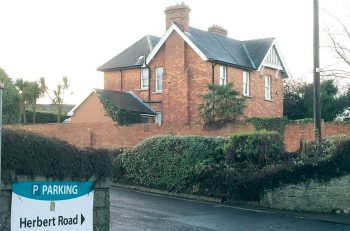
    Village last month reported that Wicklow County Council has agreed to sell a prime town-centre site in Bray to developer Paddy McKillen’s Navybrook Ltd for just €2.6m. The deal is contingent on Navybrook delivering a commercial development by the end of 2019. It is also a controversial sale that has raised questions about value for money. Most Councillors and most residents of Bray want the site developed. Known as the ‘Florentine’, it has been vacant for 20 years, but has also served meanwhile as a convenient car park with 225 spaces. A Council official in January told Wicklow County Council that the site is actually worth more as a paying car park than as a development site. “There’s not huge value in this for developers”, he claimed. But a related effect of the sale of that site to Navybrook is now proving controversial too. For it transpires that Council officials set aside a sum almost equivalent to the Florentine’s sale price to buy and demolish two large inhabited houses at Herbert Road nearby in order to extend another surface car park by up to 100 spaces. The proposed new spaces are seen by some residents as an incentive or subsidy to the purchaser of the Florentine site. The original Council budget for the extra spaces appears to have been only about 10% less than what that Navybrook has agreed to pay for the Florentine. Wicklow County Council might have insisted on any purchaser of the Florentine erecting a multi-storey with 356 car spaces, instead of the 256 now planned there. Had Wicklow County Council insisted on 100 more car spaces at the Florentine, it would still have been fewer than had been required as a condition, when planning permission was granted for the Florentine site to an earlier owner. One previous planning permission for an earlier proposed development on the Florentine site, one that included apartments, had required 417 parking spaces. Wicklow County Council acquired the site at a bargain-basement price during the recent crash. It believes that the Florentine will yield it commercial rates of up to half a million euros annually when completed. The County Council itself sought planning permission for the Florentine before selling the site to Navybrook. The inspector for An Bord Pleanála pointed out that objectors had stated that the Council was not making sufficient allowance for car parking, with provision being promised for just 256 spaces. The inspector’s report included a statement that applying car-parking standards in the, then-current, Wicklow county development plan 2010-2016 would have meant that “504 spaces would be required”. But Wicklow County Council insisted that 256 spaces were enough, and An Bord Pleanála accepted the Council’s assurances. Permission was granted last year. Just one month later the Council was engaged nearby in private negotiations to buy St Paul’s Lodge and another big house, both adjacent to the existing surface car park on Herbert Road which is an area zoned for mixed use. Local residents were not informed, but the prospective purchasers were told that Wicklow County Council wanted to buy their houses, and that the purpose for which the Council wanted them was additional parking. The owners first sought €1.5m each (as opposed to the€765,000 valuation that the Council’s own surveyor put on one of the houses last year). In the end, only the sale of St Paul’s Lodge went ahead, for €913,000 including the vendor’s legal and other costs (such as furniture removal to Spain). The Council thus acquired an Edwardian home and large garden that officials hope to clear for up to 47 hard-surface car spaces.   Bray residents (including myself ) oppose the Council’s proposal to destroy St Paul’s Lodge, on architectural and social grounds among others, pointing out that it was reportedly designed by the architect of Farmleigh House, and that destroying family homes during a housing shortage pushes up the cost of new homes for everyone. Hearing rumours of the Council’s wish to destroy part of their neighbourhood, residents tried between June and October last year to elicit information from Wicklow County Council. We were told by the Council simply that, “We are examining all aspects of parking in the town at this time”. In fact Council officials were then intent on closing the purchase of St Paul’s Lodge as quickly as possible. Council officials concluded the purchase of St Paul’s Lodge unconditionally, despite the fact that it was bought solely “in order to raze it to the ground and build a car park on the site”, as the vendor’s solicitor put it last July. It is an extraordinary fact of current law that Council officials have great freedom to spend public money on acquisitions without the approval of elected representatives. However, approval is required to demolish or dispose of a building, and the process of securing approval in such a case requires public consultation under a provision known as ‘Part 8’. But what kind of consultation? In this case Wicklow County Council ignored expressions of concern by local residents and inserted no provision in the contract of sale contingent on Council approval. The Council closed the sale without first completing the consultation concerning possible demolition. This has put Councillors under pressure to approve demolition. The house could be put back on the market. There is a strong demand for such houses in the immediate vicinity, and at least one older and bigger house nearby (in bad shape) was recently bought and substantially renovated. But the fact that officials paid above what their surveyor considered to be the house’s normal market value could leave the Council out of pocket from any resale. Residents had their request for a meeting ignored by Council management, and have been forced to take an appeal to the Office of the Information Commissioner to get some documents eventually released that reveal details. The first site notices of planned demolition were not clearly visible from the road and none at all was put on the property of St Paul’s itself. A new notice was published when

    Loading

    Read more

  • Posted in:

    Dumb greens and unions

    One of the things historians may dwell on is how the key December 2017 and February 2018 eu drafts of the Brexit agreement came to take the forms they did. It is all the more important since the inept UK Government of Theresa May failed to produce its own draft, though it might have been expected to do just that. Of course that suggests a lack of seriousness on the UK’s part about the agreement and perhaps that the EU Drafts may not go as far as we, and the EU, think, but that is a separate matter. In particular it is interesting that the drafts – the first a draft political agreement, the second a draft legal agreement with the same substance enshrine the EU’s rules for the customs union and single market but not its rules for multifarious other spheres of eu activity that bind the UK while it remains a member of the EU: most notably on the environment, labour and consumer affairs. The body politic and commentators have missed the following: the UK could become the trading neighbour from hell by ignoring EU environmental, health, labour etc standards – exploiting the competitive advantage over the eu you’d expect from a country saving money by keeping these standards low. It is interesting is that so many dogs have failed to bark. One might have expected the British trade unions to be shocked at the potential dangers to workers’ rights if EU standards are abolished and they become subject to the whims of a hawkish Tory party. But they didn’t because, like the British Labour party of course, they can only think of the superior standards Jeremy Corbyn will bring to the sphere. This is self- absorbedly naïve. Corbyn will not be in power for ever and the Tories won’t be going anywhere. When they return they will not have to observe the comfort blanket that EU standards provide. We know well the frustrations of the Tory party over the years with what used to be known as the EU’s ‘Social Chapter’. Nothing is as certain as that they will not observe its prescripts on issues like maternity and overtime if they return to power in some post-Brexit outturn. There are occasional insights into this thinking but mostly the protagonists remain mute. Surprising too that the Irish unions have made so little noise about it but then the Irish Congress of Trades Unions and SIPTU are both challenged by having members and remits both North and South of the border. You’d think they’d be on the warpath. Environmentalists and Green parties have said little perhaps because typically they languish far from the vehicles of power and tend not to be as forensic or aggressive as the circumstances here demand. Village tried to provoke the establishment media, most of RTÉ’s and the Irish Times’ Europe, Northern Ireland and Environment correspondents etc (by twitter) into recognising their failure to cover this issue but – to a man – they’re too complacent, and probably too immersed in politics and economics, to think about social and environmental rights and rules. The issue is clouded as terms like “a common regulatory area on the island of Ireland” and “a single regulatory space on the island of Ireland…” in themselves don’t do justice to the fact that there are important areas that will no longer be regulated by the EU. It’s also a bit difficult for many people to get their heads around as “regulatory alignment” of Northern Ireland with the EU is only envisaged as a ‘backstop’ if the UK can’t strike a more wide- ranging deal with Ireland and if a technological border solution proves impossible. Of course with only a year left to Brexit it’s looking increasingly like neither of the two contingencies will come to pass. The easiest way to avoid the backstop is for the UK as a whole to remain in the customs union and the single market. But the UK government insists this will not happen. Because the contingencies are uncertain they were left out of the draft Withdrawal Agreement which is a strictly legalistic document, thought they had appeared in the December political draft – and they remain politically possible. It’s complicating too that the Tories and Brexiteers so vociferously think the common regulatory area described in the EU draft goes too far rather than not far enough – though of course they are referring essentially to economic matters, not to environmental and social matters about which they may care little. It is clouded because it may well be that no deal is possible. It is important to note that, despite occasional diplomatic pleasantries, there has been little progress on the central conundrum of the negotiations: if the UK leaves the EU trading bloc, then a customs border is needed either on the island of Ireland or in the Irish Sea. One is ruled out by the EU drafts, the other by the UK. Theresa May asked Brussels if Britain could stay in the bits of the single market that she likes and exit the bits that she does not. The EU doesn’t have to, and won’t, run with that – no matter how self-righteous Brexiteers fume. On this basis it is very possible the EU’s draft terms form no element of the (WTO) arrangement that the UK falls back on. And it is clouded because confusingly the Draft Withdrawal Agreement refers, in its Article 12, to the Environment. Most people (not you dear reader) glaze over a little when contemplating the diktats of a customs union and single market. The customs union is an agreement among members to charge the same import duties as each other and usually to allow free trade between themselves. The single market guarantees the free movement of goods, capital, services, and labour – the “four freedoms” – within the European Union. You couldn’t for example have goods which comprise some material, imported into Britain on the basis of a tariff-free agreement between Britain

    Loading

    Read more

  • Posted in:

    Eschatological ruminations

    Eschatology, or the study of the end of times, is at least as old as the written word. The concept spans many of the world’s major religions, usually referring to some future day of judgement or reckoning. Beyond the realms of theology, eschatology as a concept is currently undergoing something of a renaissance, especially after the tempestuous and chaotic first twelve months of the Trump regime. In this time, almost everything we once took for granted about inherent stability, even inevitability, of western democracies and the robustness of our institutions has been shaken profoundly. As if to add to the sense of impending calamity, the Bulletin of the Atomic Scientists moved their famous Doomsday Clock for 2018 forward in late January– to two minutes to midnight. This is the closest it has ever been to the witching hour. The authors of the Bulletin excoriated the US government’s reckless nuclear brinksmanship, but poured special scorn on its efforts to derail international climate diplomacy. “Avowed climate denialists have been installed in top positions at the EPA and other agencies, and the administration has announced its plan to withdraw from the Paris Agreement. In its rush to dismantle rational climate and energy policy, it has ignored scientific fact and well-founded economic analyses”. The Bulletin was particularly scathing of the role played by climate deniers in stymieing action. “Despite the sophisticated disinformation campaign run by climate denialists, the unfolding consequences of an altered climate are a harrowing testament to an undeniable reality: The science linking climate change to human activity is sound. The world continues to warm as costly impacts mount, and there is evidence that overall rates of sea level-rise are accelerating – regardless of protestations to the contrary”. The toxic wave of US science denialism has swept right across the Atlantic. As previously reported in Village, last May saw the first meeting in Dublin of the self-styled Irish Climate Science Forum (ICSF) a denialist group with opaque membership and funding sources. February sees it host its fifth meeting in just 10 months, featuring a fringe Italian academic with strong ties to US neoliberal think tanks, the latest in a procession of climate contrarians to present new (thoroughly debunked) ‘findings’ to an eager audience mostly of Irish contrarians and deniers. Their agenda appears to be to hobble effective Irish government response to the existential threats posed by climate change. Their standard operating method is to cherry-pick data, float red herrings and exaggerate uncertainties in the scientific consensus often as political cover on behalf of special-interest groups, for continued inaction. Above all, groups like the ICSF are engaging in ‘post-truth’ assaults on reason itself. A recent edition of New Scientist magazine stated baldly: “There are disturbing hints that western civilization is starting to crumble”. The article quotes intriguing research from Yale university, which examined the two broad modes of human thought: 1) fast, automatic and inflexible, and 2) slower, more analytical and flexible thinking. As flexible thinkers within society solve our various problems, from transport to energy, with complex technologies, this relieves the great bulk of the population from even being aware of these problems, and so inflexible, automatic thinking ensues as the population, in a sense, dumbs down, since technologies can create the beguiling illusion that life is magically simple. One of the psychologists who developed this theory, Jonathan Cohen, suggests this may help solve one of the great puzzles regarding societies heading for catastrophe: why do they persist with their self-destructive behaviour, in the face of overwhelming evidence of future harms? “The train had left the station”, according to Cohen, and the forward-thinking, analytical types were no longer at the controls. Separately, computer modelling carried out at the University of Maryland in 2014 examining the mechanisms that can lead to local or even global system collapse, identified two key elements. The first, unsurprisingly, is ecological strain. The panoply of chronic environmental stressors, including resource depletion, widespread pollution, ocean acidification and sea-level rise are generally well understood, at least in expert circles. What was less widely known was the systemic risk posed by economic stratification or, in plain language, the rich getting richer at everyone else’s expense. In the scenario modelled, “elites push society toward instability and eventual collapse by hoarding huge quantities of wealth and resources, and leaving little or none for commoners who vastly outnumber them yet support them with labour”, according to author Rachel Nuwer. Eventually, she argues, “the working population crashes because the portion of wealth allocated to them is not enough, followed by collapse of the elites due to the absence of labour. The inequalities we see today both within and between countries already point to such disparities”. She notes that the top 10% of global income earners are responsible for almost as much total greenhouse gas emissions as the bottom 90% combined. Here, extreme inequality and ecological stresses converge to form a toxic cocktail capable of crashing our civilisation into the dust. US academic Thomas Homer-Dixon published the influential book: ‘The Upside of Down’ in 2005. It presciently anticipated the global economic crash that occurred some three years later. The financial crisis was, he wrote, one of “five tectonic stresses which are accumulating deep beneath the surfaces of our societies”. Others include population, energy, pollution and resource exhaustion; and climate system stress. The 2008 economic crisis, along with more recent shocks, such as Brexit and the Trump election in 2016 can, according to Homer-Dixon, be seen as a series of non-linearities, or sudden and unexpected jolts to the assumed world order. These may be viewed as a random pattern of tremors presaging a truly global catastrophe, a word that derives from the Greek, meaning ‘to overturn’. To view catastrophe as imminent rather than already occurring requires a deeply anthropocentric perspective. The sequestration, plunder and simplification of the entire biosphere by a single species is without parallel in a billion years of Earth, let alone human, history. Irrespective of our own narrow fate, the human stain will be etched

    Loading

    Read more