Posted in:
Taking Liberties
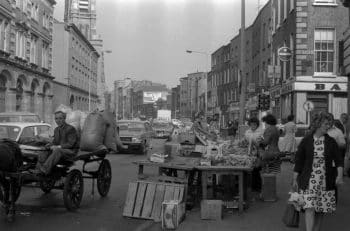
An Bord Pleanála is anachronistically heedless to the heritage of Dublin’s most famous and vibrant working-class suburb by Kevin Duff THE LIBERTIES area is a special part of Dublin with a rich social and architectural history. Dating to the twelfth century, the area preserved its own jurisdiction although it was otherwise part of the city. Considered to maintain an authentic sense of historic and working-class Dublin to a greater extent than other parts of the city, the feeling is that great care needs to be taken in its development so as not to erase or further diminish these particular qualities. Following years of underinvestment, the area has seen an explosion of recent construction activity. While on the one hand repair of the area’s fabric is welcome, there is significant disquiet over the avalanche of new hotels, aparthotels and – in particular – student accommodation constructed in the past five years, and the parallel absence of construction and delivery of much-needed affordable housing in the area for locals or for those who wish to live in the area. As has happened in other parts of the city, the smaller artisan houses and terraces of the area have been attractive to young professionals for the past couple of decades, pushing prices up and contributing to housing shortage and unaffordability. Successful new additions to the area include the Hyatt Centric hotel on the Coombe, and the Maldron hotel, Upper Kevin Street, both of which are well-mannered and reinstate historic streetscapes in the vicinity of Saint Patrick’s Cathedral. The redevelopment currently underway of the Tivoli Theatre and adjoining carpark, on Francis Street, will provide a mixed-use scheme to include a cultural and performance space. There are plans to regenerate a 12-acre site at the Guinness Brewery as a new mixed, commercial and residential district. At Newmarket, where the market was closed and the Teeling Distillery opened, the restoration of the early-eighteenth-century house at No. 10 Mill Street as part of an adjacent new development provided a public gain in the rehabilitation of an historic building that had fallen into dereliction over two decades in Eircom’s ownership, and redevelopment of the square itself at Newmarket has commenced. Successful new additions to the area include the Hyatt Centric hotel on the Coombe, and the Maldron hotel, Upper Kevin Street, both of which are well-mannered and reinstate historic streetscapes in the vicinity of Saint Patrick’s Cathedral. The main streets of the Liberties are medieval in origin and the area is richly endowed with architecturally outstanding buildings, including Saint Catherine’s church, the former Fire Station on Thomas Street (now part of NCAD), John’s Lane church, and the Iveagh Market, Francis Street. Built in a neo-Palladian style in 1907, the regeneration of the latter is long-awaited and much concern has been expressed over the unnecessary deterioration of its fabric through a gross lack of maintenance. Owned by Dublin City Council and leased to Temple Bar publican Martin Keane, a sensitive redevelopment proposal for the complex was expected to include retention and rehabilitation of the adjacent nineteenth-century brick buildings of the former Mother Redcap’s pub and Winstanley factory on Back Lane, close to An Taisce’s headquarters where the tailors had their hall. Unfortunately a recent application provided for an eight-storey lump with facade retention only. Apart from its well known historic architectural landmarks, the Liberties, as a former industrial quarter, has an abundance of smaller-scaled buildings of interest – mills, pubs, malthouses and stores. However, poor planning decisions are routinely being made by the State appeals board, An Bord Pleanála, resulting in the needless destruction of this vital and understated component of the area’s built heritage. A recent case concerned an unlisted stone industrial building on Warrenmount Lane, off Mill Street, formerly part of a malthouse complex adjacent to the River Poddle. The building had sat for some years within a development site known as ‘the Tenters Site’ and had been identified by the conservation architects Shaffrey Associates as being of value and interest and worthy of repair and retention within the new development. An example of ‘urban vernacular’ architecture, it was envisaged that the building would form a marker or ‘gatepost’ at the western entrance to the new development. The building (or a previous building on the same footprint) is seen on the 1756 John Rocque map of Dublin forming part of a stepped street-line leading towards the early-eighteenth-century mansion Warrenmount House, a protected structure, which was later converted to a convent. The Tenters Site had been the subject of numerous planning applications for development stretching back to 2005, all of them providing for retention and integration of the stone industrial building within the new scheme. Building work finally got underway in 2016 and was largely complete when, out of the blue in March 2017, an application was made by the developer, BAM Property Ltd (of Children’s Hospital fame), to demolish the historic stone building. Demolition would extend to part of the adjacent, roofless, cement-rendered building, also visible on the Rocque map and forming part of the boundary wall with Warrenmount House. Objections were lodged by An Taisce and a local resident, citing the heritage value of the existing building and the planning precedents for its retention, but permission was nevertheless given by Dublin City Council. As a vital ‘safety valve’ within the system, An Bord Pleanála could generally be relied upon in cases like this where vulnerable built heritage was endangered, and so an appeal against the City Council’s decision was lodged by An Taisce with the aim of saving the building. The appeal arguments were straightforward: The building was characteristic of the Liberties and an example of historic stone construction and craftsmanship It provided a valuable link to and reminder of the area’s rich industrial past, and its retention would add value to the new development Its footprint was evident on maps going back to the mid-18th century It formed part of the historic laneway approach to and setting of the early-Georgian mansion, Warrenmount House, and