Archives
OK
![]()
-
-
Posted in:
Evidence and Vision, then Policy
by admin
Simon Coveney’s avoidance of the facts on housing completions is a metaphor for our governance

-
by Mel Reynolds
In an article on 27 March in the Irish Examiner ‘Simon Coveney Looking at All Means of Getting more Houses’, the Minister for Housing made serious and precise statements about the housing market. Mel Reynolds checked them. CLAIM: “Many years of pro-cyclical policies contributed to the crash that caused a decade of inactivity, and it will take a number of years of the correct ones to put things right”. Concededly tax incentives and grants contributed to the boom and crash. But is the government now working against the economic cycle? The Help-to-Buy scheme was widely criticised on its introduction in 2016 as being pro-cyclical and inflationary. To date there have been 3,750 successful applicants for the scheme at an average cost of €15,000. Just 3,606 new homes in housing estates were sold last year and recent figures suggest that house prices have increased by €15,000 in three months. Current price inflation may get into double digits and will significantly erode affordability for those attempting to get on the property ladder. By June we may see two Help-to-Buy applicants for each new home coming to the market. VILLAGE VERDICT: True, but with a misleading implication about current policies. CLAIM: “The most recent monthly activity report indicates 15,256 homes were provided last year and commencement notices in the year up to the end of January 2017 show an increase of 44% year on year”. The Department of Housing figures use connections of dwellings to the electricity supply as a proxy for completions, and dwellings vacant for two years or more are double-counted as new-build completions when connected even if they have registered in figures before. Given the large volumes of vacant NAMA and ghost-estate units, this methodology gives inflated new-build levels and creates a false perception of dynamism in the market. In 2016 there were just 3,606 estate homes developed and sold, and a similar number of one-off homes commenced along with 75 local authority houses – less than 8,000 new homes in total. Not 15,256. This has been highlighted in this magazine and elsewhere. Yet the Minister ignores the reality. Officials have never explained how they get to double these figures, 15,256, for new-build units completed. It is reasonable to infer they cannot. VILLAGE VERDICT: Deliberate untrue misstatement on a central plank of government performance, an issue the Minister accepted in May 2016 is “a national emergency”. CLAIM: “One of the central elements of ‘Rebuilding Ireland’ involves an unprecedented commitment of €5.35bn for social housing. We are determined to help individuals and families that are homeless and those on social housing waiting lists”. Housing 2020 was launched in 2014 and proposed a budget of €3.8bn and 35,000 social homes in five years. Between 2014 and 2015 there were less than 1,000 local authority and voluntary and co-operative social homes built. Homelessness has increased by 190% since 2014. Child homelessness has increased by a shocking 250% in the same period. Official figures show that 4,875 adults and 2,546 children are sleeping in hotels, B&Bs and hostels. As part of the plan to tackle homelessness, the Government promised 200 rapid-build homes by the end of 2016, a further 800 this year, and a further 1,500 next year. Just 22 have been built so far. Department Housing Plans consistently missed targets by some distance. VILLAGE VERDICT: True but optimistic. CLAIM: “Last year 18,300 social housing solutions were put in place and this year that figure will be over 21,000 and we will spend €1.3bn making it so”. ‘Solutions’ is the Department’s term and includes rent supplements, assistance, emergency hotel accommodation and private and public social housing – all forms of social housing assistance. Many would not know that rent supplements was a ‘social housing solution’. To illustrate the low level of state construction, in 9 months of 2016 just 161 Local Authority homes were built. This is actually double the rate of the preceding year. The private sector is similar – the number of Part V social homes delivered by the private sector was 37 in 2016, it was 64 in 2015 and 67 in 2014. Government relies heavily on the ‘hands-off’ involvement of charities and approved housing bodies for social housing, and of course on private sector rentals with no security of tenure. VILLAGE VERDICT: True but misleading. CLAIM: “In terms of social housing construction, 650 homes were built last year, 1,800 are under construction on sites around the country and 8,430 are at various stages in the pipeline of delivery”. Construction activity has started on 1,829 units and 3,262 housing units are at some stage of pre-development. However, one third of the total mentioned, 2,687, are ‘under consideration’- these schemes may or may not proceed and may well be cancelled. Minister Coveney includes these as “in the pipeline of delivery”. For most people anything that is metaphorically in a pipeline cannot be stopped. So this is misleading, not really true. Furthermore, Housing Department equation of completions with ESB connections means that existing local authority voids refurbished will be double-counted as new build completions, inflating figures again. VILLAGE VERDICT: Misleading and untrue. CLAIM: “That’s why we brought in a €200m housing infrastructure fund to unlock these sites. I will be shortly announcing funding for roads, bridges and amenity infrastructure that will facilitate the delivery of tens of thousands of new homes across the country”. The €200m infrastructure fund – over fully five years – for housing infrastructure is a pro-cyclical developer incentive. Designed to ‘unlock’ 23,000 ‘affordable’ units, details have now been provided of various impressive bridges, link roads, and Dart stations to be funded 75:25% between the Exchequer and local authorities. Nevertheless it is unclear whether details of the 23,000 affordable units have been agreed between landowners and local authorities, and the Department. It would appear to make little sense if what are effectively incentives to developers are being paid in advance of agreements on unit size, location specification, delivery date, and most obviously affordability including price of the suggested units, There is no guarantee that the developers will pass on the benefits of their incentives end-purchasers and tenants. The Department claims that it “is determined that the fund

-
Posted in:
Our exquisite recent Architecture
Kathleen James-Chakraborty reviews ‘One Hundred & One Hosannas for Architecture’ by Shane O’Toole, Gandon Edition. Designed much like a guidebook, to fit into the pocket of a good tweed jacket, and with not one but three ribbons to hold one’s place, ‘One Hundred & One Hosannas for Architecture’ is in fact a collection of essays by Shane O’Toole, Ireland’s most celebrated critic of the island’s contemporary architecture. The book makes a good travelling companion. The brief pieces hold your attention well, but do not individually demand it for very long. Unusually for a book about architecture, it is not illustrated. Perhaps the author and his designers simply assumed that we all carry smart phones, on which we can call up the colour photographs that are too expensive to print. It is also possible that they simply did not want even the buildings that are his subject to distract from O’Toole’s eloquent prose. The volume’s design is handsome without being distracting, although I dread the many late night e-mails from my students on how to cite a book that lacks page numbers. The journey here proves temporal rather than geographic. Almost all the essays have Irish architecture or the celebration of it at their core. Most were written for publication in The Sunday Times. These are particularly effective at communicating to readers with little background; those published in Architecture Ireland, especially the accounts of prize ceremonies in Barcelona, where the focus shifts from buildings to name-dropping, are less successful. At O’Toole’s best, – and he is almost always at his best – he reminds us how the Irish architects who are now among the most renowned in Europe achieved their current position and what other younger Irish architects are following in their wake. The earliest essays date to 1999; only in the middle of the following year did O’Toole begin to address contemporary Irish architecture. The boom and bust associated with the Celtic Tiger does not figure prominently here. Instead one subject traced is the steady rise in first local and then international significance of the architects with whom O’Toole collaborated as Group 91 on the revitalisation of Temple Bar. Since then, while O’Toole has mostly focused on criticism, his former collaborators: Grafton, O’Donnell & Tuomey and McCullough Mulvin in particular, along with the slightly younger partnership heneghan peng, have achieved a degree of international renown that has little Irish precedent. The story of their rise unfolds in O’Toole’s pithy pieces as it happened and with little mention of such accompanying frustrations as the relatively small slice of the pie they were accorded at home, when much new construction before the crash was decidedly subpar and very little was built for many years afterwards. There is no mention of ghost estates or Priory Hall here! O’Toole instead focuses on success. At the same time, his take on what will endure is particularly convincing because it is so firmly rooted in an understanding of both the recent and the not so recent past. His appreciations of the pioneering Irish modernism of Michael Scott and of his subsequent partners Ronnie Tallon and Robin Walker, as well as of the much more controversial Sam Stephenson, are some of the finest pieces of recent writing on Irish architecture. He is also excellent on de Blacam and Meagher, who probably did even more to prepare the way for the current Irish stars. These often affectionate accounts will entice even those Irish readers not already committed to the cause of outstanding architecture. At the same time they are sure to engage those from abroad drawn to the subject by the high calibre of our very best new buildings. O’Toole has a good story to tell, but a larger issue for the concerned local public is how the success he chronicles can be embedded in Irish society as a whole. There is very little in these pages about housing or for that matter about office blocks, two of the building types that do the most to shape the daily experience of Irish cities and even towns, but whose quality is more often than not far less distinguished than it would be if developers were as willing as local authorities were during the opening years of the new century to work with the most talented firms. Hobnobbing with Pritzker Prize winners in Barcelona is no substitute for more affordable apartments of the calibre of the Timberyard. Kathleen James-Chakraborty is professor of art history at University College Dublin.

-
Posted in:
Housing and Coveney
The figures given for housing completions 2015-2017 are simply and definitively untruthful and misleading. It is extraordinary that the political Department of Housing and the normally scrupulous Central Statistics Office continue to tout them though the deficiencies have been highlighted by Mel Reynolds in Village and elsewhere.

-
Posted in:
Wicklower still
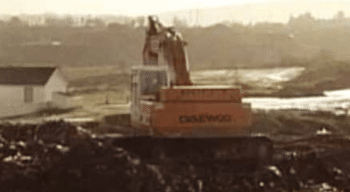
The former Minister for the Environment, Phil Hogan, made a promise he did not and could not deliver to spend €50m of public money on the remediation of an illegal waste dump. This was in order to avoid the emergence of damaging evidence in the High Court about the role of Wicklow County Council (WCC) in the management of the site. In recent weeks, the High Court has heard that the former Wicklow County Manager, Eddie Sheehy, was aware of plans by an authorised officer of the Council to set up a private company in order to make up to €30m in profits from the remediation of the huge waste site at Whitestown in West Wicklow. In the case, brought by Brownfield Restoration Ltd against WCC before Justice Richard Humphreys, former authorised officer, Donal O’Laoire, has claimed that he was involved in a corrupt attempt to make huge profits by setting up a private company to clean up the site and that he was operating under the direction and with the full knowledge of senior officials, including Sheehy. O’ Laoire has admitted to the court that his actions were corrupt and that Mr Sheehy “was up to his neck in it” when he put forward a proposal to set up a company, Environmental Remediation Ltd, and sought to purchase the dump from landowner, John O’Reilly, in 2002. O’Laoire said he had discussed the plan with Sheehy and then WCC Director of Services, Michael Nicholson, after he had been employed by the Council to identify the nature, source and amount of polluted material on the site in 2001. O’Laoire admitted that he was the person authorised by the Council to inspect the site and identify the polluters, including the role of O’Reilly, in allowing the waste dumping on his land for payment, over many years. O’Laoire then sought to lease the land with a view to setting up a commercial entity to remediate the site and turn it into a depository for the treatment of waste dumped illegally at various sites in Wicklow. Read the Village article from August 2014 outlining the history of the Whitestown illegal dumping saga Instead O’Reilly sold the Whitestown lands – which the company wanted to turn into a licensed waste facility after removing toxic and other dangerous, commercial and domestic from the site – to Brownfield in 2002 for €2m. It received a licence to do this from the Environmental Protection Agency but sued Wicklow County Council for failing to remove material including inert waste from road clearing work and dangerously toxic tarmac it had dumped. O’Laoire and Sheehy have been giving evidence in a case for damages brought by Brownfield over the failure by the Council to remediate the site after the dramatic intervention by Phil Hogan during an earlier court hearing in 2011. Just weeks before a full hearing of the matter was due before the High Court in January 2012, representatives of the Council told a hearing before Mr Justice O’Keeffe that the department had confirmed that it intended to provide €50m to cover the costs of remediation. As a result, the judge agreed to an indefinite adjournment of the case until the promised remediation had been carried out. In evidence over the past two weeks, Sheehy has branded O’Laoire “a liar and a perjurer” and denied he had colluded with the authorised officer in plans to set up a private company to clean up the site he had been paid to inspect. O’Laoire had been the principal witness used by the Council to prosecute private waste firms that had illegally dumped vast quantities of commercial, domestic and medial, including hazardous waste on the site through the 1990s. He had failed to inform the authorities that Wicklow County Council had also dumped tens of thousands of tonnes of waste at Whitestown and had wrongly discussed issues with other witnesses, including Sheehy, during an earlier trial despite being forbidden by the presiding judge to do so. The adjournment of the case in November 2011, following the promise by Hogan to provide the Council with €50m, came before Sheehy and other officials were called to give evidence about the private company set up by O’Laoire. It also meant they did not have to deal with the role of the Council itself in illegal dumping or the involvement of the EPA and Department of the Environment officials in the handling of the illegal dumping controversy. It has now emerged that Hogan did not have €50m to provide to the Council. RTÉ News carried the story of the planned intervention by the Department and the minister following a briefing the night before the court case in November 2011 in the Custom House provided by Hogan and senior department officials. Sheehy has insisted in his recent evidence that he had known that O’Laoire had been engaged in corrupt activities since 2002 and that he had asked him to desist. However, counsel for Brownfield, Peter Bland SC, has challenged this and has claimed that Sheehy knew for many years about O’Laoire’s role and had failed to disclose it to the department or in previous court evidence. In evidence on, 31 March, Bland showed Sheehy an email sent by the Department to him about an article published in Village magazine, and about questions posed by this writer following the adjourned court case in November 2011. Questioning Mr Sheehy, Bland asked: “….we have a journalist, Frank Connolly… writing to the department, saying that the lead lawyer for Wicklow County Council attended the High Court on the 24th November, 2011, and told the Court that the Department agreed with the Council to underwrite the cost of the remediation of Whitestown illegal dump up to a cost of €50 million”. Quoting the Village email query to the department, Bland continued: “Two officials of the Department were present (at the court case). Can you confirm whether or not the Department subsequently paid towards remediation and to what amount?”. In response, the press

-
by Village
Simon Coveney’s avoidance of the facts on housing completions is a metaphor for our governance

-
by Mark Kernan
Communication techniques in politics (marketing and advertising) are becoming increasingly targeted. Online political marketing is now increasingly tailored for individual voters based on their political preferences, ideals, and values, fears even. So far, so relatively mundane. That is until, inevitably, someone comes along and finds out a way to manipulate all the mass data available online so they malignly influence prospective voters’ opinions on a grand scale. A kind of mass, digital Orwellianism, to use a well worn cliché. For some years now masses of consumer and behavioural data, from open sources such as social media sites, have been collected and collated by large communication companies to develop psychographic profiles. Polish psychologist Michal Kosinski has pioneered a psychological technique based on people’s Facebook activity, what they like and so on. Kosinski has devised a personality test along the lines of what has become known in psychometrics as the Big Five test or OCEAN: Openness to new experiences and readiness to non-conventional ideas; Conscientiousness, organisational attentiveness and attention to detail; Extraversion, how socially assertive you are; Agreeableness, relating to characteristics such as kindness, compassion and willingness to co-operate; and Neuroticism, dealing with stress and anxiety. Typical questions are answered by ticking three choices: accurate, inaccurate and neutral, Options you can identify with include: I have frequent mood swings, I respect others, I enjoy hearing new ideas, and I believe in the importance of art, and so on. Although the answers are of course subjective it is claimed that from this information a reasonably accurate picture can be built that tells us about individuals’ personality traits – whether they are driven predominantly by fear or curiosity for instance. Such tests are obviously open to our own cloudy, subjective and distorting biases – both positive and negative. Nevertheless it is claimed that when the data are cleaned up an accurate and potentially predictive picture emerges of a person’s political leanings. After this a type of sentiment analysis (the identification and extraction of subjective information from text, also known as opinion mining) is used to compile a database profile of millions of voters’ preferences. Three technologies are used: behavioural science (behavioural communications), data analytics and addressable ad technology. Deployed together they microtarget both consumers and citizens voting in elections. The potential abuse of such technology is evidently disquieting. For a democracy to function properly citizens need access to as much information as possible, so they can make informed decisions. They can’t make informed decisions if the information that they are fed is micro-tailored to their ill-informed predispositions. Worse, it is unlikely that expressed preferences will be subtle enough to register that voters’ actually care about others’ preferences too. That votes can and should be cast for a vision of society not just for the voter’s material furtherance. In particular that that vision should embrace the rights of others, of minorities, of the vulnerable, even of the despised. Of course conclusions drawn from big data may not be as precise as many companies would like us to believe. Statistical analysis is based on probabilities and doesn’t always accurately predict voting preferences. Moreover future actions do not always follow from past behaviours and present attitudes. And the methodology behind the science isn’t completely clear. Yet in a sense this isn’t the point. Paralleling the history of democracy, there have been concerted and often successful attempts to influence and control public opinion to suit the ends of elite political and economic groups. Edward Bernays, the father of the modern public relations industry and a nephew of Sigmund Freud, clearly understood this as long ago as the early 20th century. In ‘Propaganda’ (1928), Bernays argued that: “The conscious and intelligent manipulation of the organized habits and opinions of the masses is an important element in democratic society. Those who manipulate this unseen mechanism of society constitute an invisible government which is the true ruling power of our country. …We are governed, our minds are molded, our tastes formed, our ideas suggested, largely by men we have never heard of. This is a logical result of the way in which our democratic society is organized”. The point is that microtargeting people based on their psychological profile only has to work on the margins for it to be effective – a targeted group in a tight constituency say: low-hanging fruit. The medium is not the message here: messages driven by microtargetting will tend to particular content. Microtargeting is well adapted, indeed conducive, to the technocratic ethos of neoliberalism: identify, measure, control. In this brave new world the only standard of value becomes market utility. In the US millions of people have been fed on a diet of targeted propaganda and blatant misinformation by Fox News for years; many of those same people came out to vote in their droves for Trump. The agenda is Rupert Murdoch’s. In our economically stagnating world, we are seeing populations lurch toward radical far-right ideologies and autocratic leaders. So what happens if an unscrupulous demagogue decides to weaponise this type of technology in the future? The misuse and abuse of the social sciences, in particular psychology, for propagandistic ends has happened before, notably with Nazism and Goebbels. We must only read Hannah Arendt and Primo Levi to know where it ends. Arendt warned us in the wake of WWII, after the persecution and industrial destruction of both European Jewry and the Roma and Sinti, of what happens to seemingly ordinary people when we are exposed to mass political manipulation for extreme causes and ideologies, and the very real and inevitable violence that follows. ‘We’ or ‘they’, depending on how you see it, become as Arendt put it as a result of this exposure quite literally ‘thoughtless’ in the face of injustice and oppression. That is we become incapable or unwilling to think for ourselves, and to understand the world from the point of view of the other-particularly if we have been primed to see the ‘other’ as either socially, racially, culturally or economically less