Archives

OK

Random entry RSS

Loading

  • Posted in:

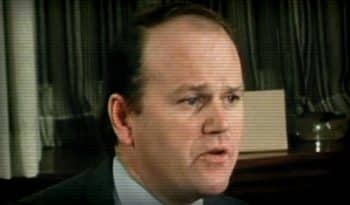
    The Village Interview: Pankaj Mishra

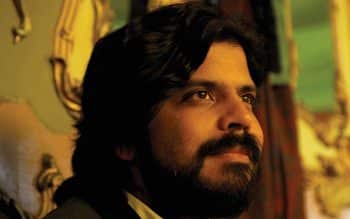
    Pankaj Mishra inhabits a perplexing position in Indian and international letters. One of India’s most exhilaratingly provocative voices, his blistering op-eds and essays in Asian journals and such “intellectual outposts of Anglo-America” as the New York Times, Time, the Guardian, Bloomberg, the Financial Times, the Wall Street Journal and the New York Review of Books (NYRoB), frequently involve lacerating moral critiques of both Indian and triumphalist Western ideologies. He has drawn an impressive array of naysayers down the years: from neo-con military historians such as Max Boot, to “neoliberal” bigwig, Jagdish Bhagwati, a WTO colleague of Peter Sutherland’s who, in a 2010 speech to the Indian Parliament, denounced Mishra’s criticisms of India’s economic liberalisation as “fiction masquerading as nonfiction”. Meanwhile, life rarely delivers such pleasure as Mishra’s demolition, over a long and remorseless 2011 essay in the London Review of Books (LRoB), of the preposterously right-wing Scottish TV historian and Harvard professor Niall Ferguson, whose enthusiastic apologia for Western imperialism, for Mishra, amounts to “moral and intellectual onanism”. Gentle in person, Mishra is a compact, boyish-looking man with a piercing gaze: his faultless courtesy framing a voice of quiet gravitas from which undulate impeccably elocuted, oft-ornate and resonant sentences. Much of this flows from the exactitude and force of his writing; his vivid, pyrotechnical style embroidering telling quotations from world writers and philosophers into propulsive passages which often ignite in the mind. Mishra diagnoses our era of resurgent bellicose nationalism as a recurrent symptom of capitalism’s dysfunction: as opportunist demagogues deflect mass disaffection onto minorities (or “Islam”); and make grand promises of “development” whilst facilitating crony capitalism. They typically present themselves as social revolutionaries promising to uproot entrenched “cosmopolitan elites” and political “insiders” who are seen, correctly, as callously unresponsive to the sufferings of their peoples. Mishra’s latest book, ‘Age of Anger’ interrogates the contradictions inherent within western liberal democracy: forged in the eighteenth-century Enlightenment as a secular, materialist, universalist civilisation based on rational self-interest, equality, ‘liberty’, and laissez-faire free market capitalism. “Even equality is a deeply problematic concept. It has its origins in Christianity, where it is conceived as equality before God. When you transfer that into a competitive commercial society, it becomes elusive, even deceptive. Really, the drama of the modern world is the collision between the promise of equality and the fact of structural inequality. This is where neoliberalism’s promise of meritocracy is an illusion. It has created a subjectivity where equality is seen as achievable, not through state intervention or socialism, but through the pursuit of prosperity. Except that prosperity creates and requires new hierarchies… “So it becomes a completely futile pursuit, accumulating all kinds of political pathologies in its wake. This is not the left view: I think the left is committed to the idea of equality through redistribution. But here we reckon without specialisation, industrialisation, all these complex processes of gradation and heirarchy which make the project of equality all the more difficult. Even in socialist states, you had massive inequality; say in Yugoslavia, what was called the ‘New Class’ ….” Meanwhile, fuelling the engines of history, Mishra identifies Nietzschean ressentiment: a corrosive, rancorous mix of powerlessness, subjugation, humiliation and hatred which can boil over into revolution or terrorism; and from Hannah Arendt’s ‘The Origins of Totalitarianism’ (which sold out on Amazon after Trump’s election), a “new terrifying negative solidarity”- a “structureless mass of furious individuals” and superfluous people, united only in loathing of the status quo. Arendt was writing about post-WWI Europe, where class collapse and economic calamity created an atomised people without social identity or emotional moorings. Now, declares Mishra, it is happening again, not just at the global margins, but “in the heartland of modernity. So you get this political insurgency, a nihilistic impulse to punish the elites, to blow up the system; and retreat into fantasies of authenticity, some imagined national community”. For Mishra, “the history of modernisation is largely one of carnage and bedlam”; of uprootedness, dislocation and alienation, as economically backward countries often take cruelly coerced shortcuts to aggressive urbanisation. “Socialist states in general have been everywhere committed to this particular vision of modernisation – whether in Eastern Europe, the Soviet Union or in Asia or in Africa – which more and more complicates the project of equality”. He reminds Westerners of our own often wartorn historical transition to modernity; mirroring the turmoil and extremism often witnessed in the developing world, especially after 1945, when emergent nations shook off colonial shackles across Asia and Africa. Thus huge recent advances in India and China are the most radical since Bismarck’s Germany: shoring up catastrophic environmental and social disruption, where just as in nineteenth and twentieth century Europe and the US, many millions are being left behind. Across Asia, he says, this threatens to create reservoirs of nihilistic rage among hundreds of millions of have-nots. Born in 1969 in Uttar Pradesh, Mishra grew up near the north-central Indian city of Jhansi, the son of a railway worker whose high-caste Brahmin family had been impoverished by post-independence land reform. With parents “decisively shaped” by “a pre-modern world of myth, religion and custom”, he can attest to “the ruptures in lived experience and historical continuity, the emotional and psychological disorientations… that have made the passage to modernity so arduous for most people”. Although born a Hindu, “Hindusim is not really a religion, it’s a way of life: there was no obligation to go to temple or engage in rituals, it was very agnostic, very relaxed”. They lived “a semi-rural life on the margins of small towns, amidst a mixed local population. I grew up assuming human diversity to be the norm. That’s why I find any suggestion that we should have a homogenous society deeply repulsive. For me, humanity is diverse”. “I grew up in an India where the collective project was important, where the phrase ‘the common good’ still had some meaning. We didn’t think of ourselves as individuals competing with each other in the marketplace. There was a particular

    Loading

    Read more

  • Posted in:

    No on and on for Noonan

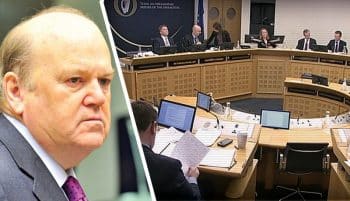
    When Enda Kenny steps down from his position as Taoiseach in the coming weeks, it comes as little surprise that finance minister, Michael Noonan, another great survivor of Irish politics, will depart with him, or not long after. The Public Accounts Committee (PAC) is believed to be critical of a decision Noonan made not to intervene in the sale of Project Eagle, in April 2014, even though he had been made aware of a £15m fixer fee arrangement connected to the sale of NAMA’s Northern Ireland property portfolio. This has done a lot of damage to his reputation. That he met with the winning bidder, Cerberus, along with department officials, on the day before the tender was awarded to the US fund, is expected to raise further questions that can only be properly dealt with by a Commission of Investigation. It is understood that Noonan has objected to what he believes is an adverse finding against him in the PAC report, but the majority of committee members are of the view that it merely states the obvious which is that the perception of a meeting between the finance minister responsible for overseeing NAMA and the executives of the company on the day before it won the lucrative tender raises uncomfortable questions. The PAC is also expected to support the thrust of the report by the Comptroller and Auditor General who concluded that the amount paid by Cerberus was over €220m less than could have been obtained, and that NAMA failed to deal with apparent conflicts of interest involving Frank Cushnahan, a member of its Northern Ireland Advisory Committee (NIAC), when they first emerged in 2012. In March 2014, the favoured bidder, PIMCO, informed NAMA executives about fee arrangements involving payments to solicitors Brown Rudnick, Belfast solicitors Tughans and Cushnahan, and its decision to withdraw its tender on the advice of its legal advisors. Noonan then had a chance to call a halt to the sale. He failed to do so. Indeed he met with executives from Cerberus, on the day before it secured the portfolio of properties across the North and in the UK for £1.24bn, far less than its original value of in excess of £4.6bn. Noonan can be expected to defend his approach, on the grounds that he did not discuss any commercially sensitive issues with the Cerberus team, and while there are no publicly available minutes of the meeting it beggars belief that the biggest single sale of Irish public assets did not come up during the conversation. Noonan has weathered many political storms before, and only last year managed to escape any serious fallout when he was caught out by Sinn Féin finance spokesman, Pearse Doherty, during the general election campaign, massaging the budget figures. He has also managed to give the impression of gravitas and, as a master of the jaundiced soundbite, displays an apparent sagacity and knowledge of economic and financial affairs while rarely saying anything of consequence. It was his mantra about keeping the recovery going, adopted by Fine Gael disastrously as its main election slogan which contributed to its loss of a bucket full of seats in the February 2016 election and which has left his party at the mercy of Fianna Fáil in the current shambolic ‘confidence and supply’ arrangement. He spends much of his time rubbing shoulders with the architects of an EU austerity programme which threatens to bring down the Euro and the entire post war European project as millions of working people flock to the embrace of right wing xenophobic nationalist movements across the continent. In 2012 he was accused of ignorance when he commented that: “Apart from holidaying on its islands, I think most Irish people don’t have a lot of connections with Greece. If you go into the shops here, apart from feta cheese, how many Greek items do you put in your basket?”. This may have gone down well with Wolfgang Schauble and his mates in Berlin, Brussels and Frankfurt but it did little to show any empathy with an entire people being subjected to a viciously enforced austerity programme. His recent speech to the Irish Taxation Institute confirms his position as an old-style financial conservative pursuing a tax-cutting agenda while public services in health, education, transport and housing are in dire need of investment and state support. Approaching 74, and a TD since he entered the Dáil for Limerick East in 1981, after a BA in Economics and English in UCD and a few years teaching English, Economics, and Geography in the Crescent Secondary School in Limerick (where his son John now works). Noonan is a political survivor who has tasted victory and defeat in their many guises over the past 35 years in politics. Following a general election in 1982, after which Garret FitzGerald was forced out of office, Noonan found himself on the Fine Gael front bench as a spokesperson for education, presumably due to his teaching experience. After the second general election in 1982, and just eighteen months as a TD, the Limerick man was appointed to a senior cabinet position as Minister for Justice at a time of intense political turmoil and upheaval and just a year after the republican hunger strikes which had undermined the preceding Haughey administration. He was only a few weeks in office when he disclosed the sensational details of how the previous FF government had tapped the telephones of journalists including Bruce Arnold, Geraldine Kennedy and, later it transpired, Vincent Browne. He was the minister who introduced the wording for the 1983 referendum on abortion which ever since has forced tens of thousands of women to leave the country to secure a termination of their pregnancy. In 1986, he was made Minister for Industry and Commerce and the following year Minster for Energy after the Labour Party left the then coalition government and before an election that saw Charles Haughey return as Taoiseach. Around this time he came to national attention on ‘Scrap Saturday’

    Loading

    Read more

  • Posted in:

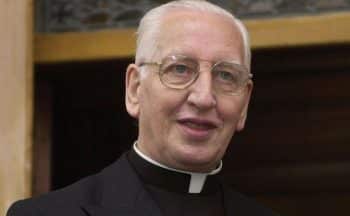
    Obituary: Cardinal Desmond Connell, 1927 – 2017

    Cardinal Desmond Connell has died aged 90, generating – since he was the best known avatar of the conservative Catholic Church – predictably ambivalent obituaries. Born in Dublin’s Phibsborough he attended Belvedere College, Clonliffe diocesan seminary, and UCD where he picked up a brilliant MA. After St Patrick’s College, Maynooth where he was a bachelor of, among other things, divinity, he was ordained in 1951 and got a doctorate at the Pontifical University of Leuven, where his subject was the 17th-century French philosopher, Nicolas Malebranche – whose trick was to synthesise the thinking of St Augustine with that of Descartes – and about whom he later wrote a book which addressed many of the most complex issues relating to angels. He was appointed professor of metaphysics in UCD in 1972 and became dean of the faculty of philosophy and sociology in 1983 from where he held doctrinaire sway for a generation. In 1988, the future St John Paul II named him Archbishop of Dublin which he remained for sixteen long and purgatorial years. In 2001 he became the first Archbishop of Dublin to have been made a cardinal in almost 120 years. He led the archdiocese at a difficult time as faith broke down due to the ‘Late Late Show’, the invention of the contraceptive pill and an outbreak of education, and lovechild scandals such as those of Bishop Eamon Casey and Fr Michael Cleary enveloped an increasingly unsheepish flock. Despite his seraphim-on-a-pin unworldliness, he managed to pull the diocese out of crippling debt. He also championed the underdog at every opportunity: Travellers, refugees, the unemployed. A close colleague said, “he loved music, history, gardening, dogs. He loved his pipe”. He liked Bruckner, Elgar and Mahler and, according to obituary writers, was greatly loved by his priests and by many of his former university students. It was not enough. The first draft of history has already been written and it damns him, in temporal terms, for how he handled child abuse in his diocese. The 2009 report of the independent Commission of Investigation, headed by Judge Yvonne Murphy, looked specifically at the handling of some 325 abuse claims in the Archdiocese of Dublin, 1975-2004 incorporating much of Connell’s time: “The Dublin Archdiocese’s preoccupations in dealing with cases of child sexual abuse, at least until the mid-1990s, were the maintenance of secrecy, the avoidance of scandal, the protection of the reputation of the church and the preservation of its assets”, concluded the report. “All other considerations, including the welfare of children and justice for victims, were subordinated to these priorities”. Although he had had the nous to set up the Child Protection Office in 2003, the report said then-Archbishop Connell was “slow to recognise the seriousness of the situation when he took over in 1988. He was over-reliant on advice from other people, including his auxiliary bishops and legal and medical experts”. There is substantial evidence that while personally appalled at the horror of a little child being abused by a person who had promised to give his life to God, he was not good at conveying this horror to victims. It is fatuous, as many have unsympathetically claimed, to make out that Connell did not himself realise this. In 2009 Connell issued a full apology in the Pro Cathedral. At a mass to commemorate the 24th anniversary of Pope John Paul II’s papacy, he said, “I did not effectively deal with it. I failed”. He also has said “I ask pardon of all whom I have offended, especially of those who suffered unspeakable abuse by priests of the diocese and experienced a lack of the care that ought to have been provided”. This is, perhaps appropriately in view of the special social privilege afforded the clergy in its ascendancy, a much more abject apology than would be normal from, for example, a politician, or a banker. According to Breda O’Brien, the Irish Times’ apologist for Catholicism: “The general consensus is now that he was a good man trying his best in a role for which he was radically unsuited, but he was more complex and faced a more complex time than that simple summation suggests”. She refers then to his concept of mental reservation – that is, the idea that while one could not tell a direct lie, one was not obliged to tell the full truth – we were profoundly shocked”. Certainly it is determining that the Archbishop didn’t make the Truth his central concern. But why would he? She goes on to defend his secrecy: “His age and generational values meant that he opposed the opening of diocesan files, not in a desire to hide damaging secrets but because he was horrified at the idea that people who had told their stories in confidence would be betrayed”. Again that was to be expected. As Murphy so clearly inferred, Connell’s central concern was the faith and the institutional Catholic Church and its traditions teachings, transcendent as they are. If his concern had been the Truth he would have better been a scientist or cosmologist. He was driven by Catholic dogma defined as “a truth revealed by God, which the magisterium of the Church declared as binding” but also, according for example to the Second Vatican Council’s document on divine revelation, Dei Verbum (‘The Word of God’), both sacred Tradition and sacred Scripture are to be accepted and venerated with the same devotion and reverence”. Abuse survivor Marie Collins, who met Connell often during the period covered by the Murphy report said, before expressing the wish that he rest in peace : “He was a man of his time”. Again this entirely misses the point. He thought of himself as a man for all time, an agent for the eternal Church. Otherwise why be a priest rather than a social worker? If he failed to follow the vogue for happy-clappy openness, for the fallible watering down of God-given theology by liberalism, that was not because he was a man of his time

    Loading

    Read more

  • Posted in:

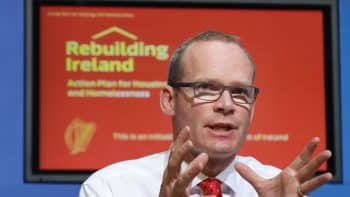
    Government Policy the main barrier to housing supply

    Mandatory standards, regulations and policy introduced since 2014 have negatively affected the feasibility of many residential projects, increased costs and contributed to the skills shortage in the construction sector. This has led to continued sluggish residential output and increasing rents. Despite Ireland’s vacancy rate of twice the ‘normal’ – with 200,000 vacant homes, Government policies have focused on new-build homes. Residential land values have increased dramatically as a result of policy interventions. There are three main areas of concern: (1) Building Control, (2) Planning Regulations and (3) Housing Policy. 1: Building Control Following introduction by the Department of Housing of S.I.9 of the Building Control (Amendment) Regulations (BCAR), in 2014, a 60% fall-off in one-off housing commencements was observed in the first year of operation. No estimated Impact Assessment of the Regulations (Regulatory Impact Assessment) was undertaken in advance of their implementation. BCAR direct and indirect costs of up to €50,000 per house for self-builders and up to €25,000 per apartment were confirmed by industry commentators Karl Deeter and Dr Ronan Lyons (Trinity College, Dublin). A Ministerial review (April-September 2015) resulted in an ‘opt-out”, SI.369, which permitted one-off houses and extensions to be exempted from BCAR. ‘One-off’ house commencements have recovered as a result. However, no Government review of BCAR is planned for the multi-unit residential sector. As an example from my own practice, a modest change-of-use project in suburban Dublin with a construction budget of €25,000 required three separate statutory appointments which cost over €10,000, and permissions which took six months to obtain. Of this, Building Control procedures cost €7,600 and took one hundred days to complete. In contrast, in the UK similar Building Control permits cost £695 and take ten days. Planning is not the problem. Reliance by Government on privatised Building Control ‘self-certification’ compliance procedures rather than simplified inspections is placing unnecessary cost burdens on the sector, and increasing skills shortages – with little improvement in either consumer protection or quality. 2: Planning Standards The Department’s proposed ‘fast-track’ Bord Pleanála process for schemes of one hundred dwellings or more will not address timescales; rather it allows developers to bypass development plan ‘inconsistencies’ e.g. the requirement for passive house standards in Dun Laoghaire Rathdown, or ‘leave the door open’ for suburban housing applications in ‘green belts’, e.g. around Cork City. The Department’s Minimum Apartment Standards were issued in December 2015. The stated intention was that reduced space standards would yield considerable cost savings, and improve feasibility and supply. The purported savings are not seen in the weak accompanying Department research which underpins it and which suggested a profit margin of just 0.7% would result from application of the standards in its own worked example. No Regulatory Impact Assessment was undertaken in advance. The assumed saving from lower standards is not borne out by detailed analysis, and mandatory standards have little effect on feasibility. Three out of five Local Authorities have seen costs increase as a result. The current availability for sale of affordable Passive Standard homes contradicts the Department’s assumption that increased performance comes at a premium. In 2006 the Society of Chartered Surveyors estimated that a typical County Dublin house cost €330,000. When a Local Authority assumes the developer’s role, significant savings can be passed on to end-users. Last November, Minister Coveney confirmed on the Dáil record that Local Authority housing costs ranging from €141,445 (two-bed outside Dublin) to €205,250 (three-bed in Dublin) including vat. 3: Housing Policy The Government’s recent ‘Rebuilding Ireland’ plan relies heavily on the private sector for the provision of ‘affordable rentals’ and for social housing. The majority of the plan’s 47,000 new social homes are rented or leased units. The balance of 15,000 units will be a mixture of Public Private Partnerships, ‘Rapid’ builds, Approved Housing Body projects and Local Authority housing. The Department of Housing uses new ESB connections as a proxy for new-build ‘completions’. This flawed methodology effectively means that the plan’s actual new-build five-year social-housing target is just over 8,000. Recent analysis by Dr Rory Hearne (Maynooth University) concludes that at current rates it will take at least thirty years to house those on current housing waiting lists. To put ‘Rebuilding Ireland’ in context, there were 8,794 Local Authority homes completed in 1975. Dr Declan Redmond (UCD) has confirmed out of 567,585 new dwellings completed in a ten-year period, the equivalent of 19,539 Part V homes (2.6%) were delivered. Part V (under which local authorities can now obtain up to 10% of land zoned for housing development at “existing use value” rather than “development value” for the delivery of social and affordable housing) was revised down last year to less than half the previous requirement and units can be leased instead of purchased. Over a thirty-year period a typical rental house costs €270,000 more than a Local Authority-built passive house (PH) standard home. A simple cost-benefit analysis suggests the ‘Rebuilding Ireland’ private rental model will cost €291m more per annum than state-built PH homes – that is €8.74bn more expensive over thirty years. Conclusion There is little evidence to support the Government’s reliance on the private sector for delivery of social and affordable housing, or affordable rentals. Ambitious five-year plans have come and gone – Housing 2020 was launched in May 2014 with a budget of €3.8bn and promised 25,000 new social homes in five years. However in fact, in 2015 and 2016 less than 300 local authority homes were built. Building Control Procedures introduced in 2014 continue to negatively affect the residential sector. Reform of our ‘reinforced self-certification’ system along the lines of Northern Ireland’s self-funded version could reduce costs, improve standards and safety, increase consumer protection, ease the industry skills shortage and significantly improve supply. Local Authority directly-procured housing can deliver affordable rentals and social and affordable housing at significant discounts. The private sector will wait for asset prices to rise to a level where a reasonable profit margin can be achieved, and it is naive to expect new homes to be provided at or below

    Loading

    Read more

  • Posted in:

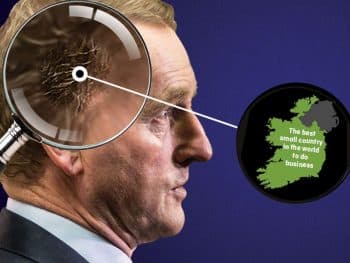
    Editorial: Enda the puns

    Enda Kenny has been Taoiseach since 2011 and leader of Fine Gael since 2002, a political aeon ago, and was first elected to the Dáil in 1975, before the flood. When he retires as he will next month he will be the longest serving Fine Gael Taoiseach, overtaking John A Costello. He has been consistently under-rated primarily because he is not an intellectual and Fine Gael is a conservative, and often self-righteous, party that dices with dourness, so it amuses some to ridicule its leaders. He has done some foolish things, like summoning in aid ‘Paddy’ a notional Irishman who likes to know the truth, and imagining a meeting with the minister for children, which has precipitated his demise. But in 2011 Village predicted that he would be error-prone and let down the office. This he has notably not done.  He has fulfilled his duties with dignity and gained international respect. It is easy to complain about Ireland but our politicians have conducted themselves in ways that have allowed an increase in tolerance and avoided the rise of the dangerous hard right that threatens in a great number of other liberal democracies. Kenny was decent to his colleagues, including his coalition partners, and when his imagination was let loose, allowed himself to be socially progressive on issues like gay marriage, abortion, the Magdalen laundries and Traveller’s rights. He leaves a legacy of social change that could not have been expected of his younger self, or his conservative instincts. Most of all, however, he will be remembered for his role in what is touted as the turnaround of the economy which was bankrupt and under IMF management when he became premier. For example our public-debt-to-GDP ratio has reduced from 120.1% to 77%, and the unemployment rate from 14.8% to 6.6%. Nevertheless he leaves a country where iniquity and poverty, including homelessness, are endemic, and where, because of an absence of political vision, the quality of life is gratuitously subdued. In particular Kenny has little interest in the environment or equality, especially equality of outcome. On numerous occasions Kenny has offered his own limited vision: “that the country will become the best little country in the world in which to do business” (by 2016).  However, the genesis of the quote was in 2011 where during the election campaign he expressed a vision that went beyond that, and indeed he has often repeated the extended vision. For example, before Budget 2012, Kenny spoke in a television broadcast of the “challenges we face as a community, an economy and as a country”. He explained: “I want to be a Taoiseach who retrieves Ireland’s economic sovereignty. I want to make this the best small country in the world in which to do business, in which to raise a family, and in which to grow old with a sense of dignity and respect”. The vision is fuller than the impoverished business-centred mantra but business remains central and it is remarkable how unideological, how workaday, the folksy formula that seems to represent his broadest ‘vision’ is. Kenny promised a new regime of transparency but had to be dragged into it – through measures like whistleblowers legislation and the regulation of lobbyists.  A plethora of tribunals has been his response to a wave of scandals, centring on Garda whistleblowers. It is also a pity that the current partnership government which should represent a democratic turn towards accountability, in fact is fractious, inert and time-serving. He promised a new politics but instead we have carping and chaos. However long Kenny’s service, it is a pity that new-found vanity has propelled him on a lap of honour that may fuel instability in the so-called partnership government. It is said that leaders should be assessed for their temperament and their intellect. Kenny has a first-class temperament and remains untainted by allegations of personal venality.  It is a pity that he did not ally his political talents to a vision, better still a progressive vision.

    Loading

    Read more

  • Posted in:

    PAC has vindicated C&AG

    The Public Accounts Committee (PAC) has criticised finance minister, Michael Noonan, over his dealings with Cerberus, the US fund which controversially purchased the property assets held by NAMA in Northern Ireland in April 2014. Following public hearings late last year into the detailed analysis report of the Comptroller and Auditor General (C&AG) on the sale of Project Eagle for £1.24bn to Cerberus, the PAC has signed off on its report which is said to be critical of Noonan and a number of senior officials in the Department of Finance. Village has learned that the final PAC report will defend the C&AG investigation as thorough and robust and support its finding that the portfolio of assets mainly in Northern Ireland, but also in the UK, was sold too cheaply by NAMA leaving the public purse short by over €220m. Although restricted by its terms of reference to investigating the C&AG’s ‘value for money’ report it is understood that the PAC has also raised questions over various conflicts of interest that arose in the sale of Project Eagle, and in particular those involving Frank Cushnahan, a former member of the Northern Ireland Advisory Committee of NAMA. When the C&AG, Séamus McCarthy, launched his report into Project Eagle last Autumn, it was heavily criticised by NAMA executives who suggested that the C&AG was not equipped to assess the sale of such a massive property portfolio and disagreed with his conclusions on a number of issues, including the discount rate applied to the transaction. The PAC has concluded that because there were no up to date property valuations at the time of the sale it was impossible to calculate the exact value of the portfolio. There was no mention in the board minutes of NAMA detailing the 10% discount rate to be applied in the sale leading to the probable loss, according to the PAC report. However, McCarthy and his team have now been vindicated by the PAC and the spotlight has turned on the failure of NAMA properly to supervise the sale of its single largest asset portfolio which had an estimated value of £4.6bn when the loans associated with over 800 properties across the North and in the UK were transferred to the agency. The PAC has identified a series of meetings where Cushnahan was involved with global investment funds, Northern Ireland politicians and other businessmen with an interest in the property portfolio which took place as far back as 2012 without the knowledge of senior NAMA executives, chief executive officer, Brendan McDonagh and chairman, Frank Daly. Serious conflicts of interest were disclosed by Cushnahan to the NAMA executives when he informed the agency that he represented a number of business people and property developers whose loans, representing almost 50% of the entire Project Eagle portfolio, were under the control of the agency. Meetings took place in 2013 between Cushnahan, Ian Coulter – a senior partner with Tughans Solicitors in Belfast, former finance minister, Sammy Wilson and first minister, Peter Robinson, at which the sale was discussed. From the outset, a representative from Brown Rudnick, an international law firm with offices in New York, London and Dublin, was closely involved in the discussions surrounding the sale and that represenative first invited the giant US investment fund, Pimco, to make an offer. In mid-2013 Pimco suggested that it would make a bid for the portfolio if it was granted an exclusive right to tender and its interest was relayed by Wilson to his counterpart in Dublin, Michael Noonan. Noonan referred the letter of interest to NAMA who engaged with Pimco in relation to the sale but NAMA’s board resisted the idea of an exclusive-bid or single-tender arrangement. However, it did provide Pimco with access to the virtual data room which set out in detail the content of the portfolio, the level of indebtedness of each distressed borrower and the likely current market value of the properties involved. Pimco remained as the favoured bidder almost to the end of the process when it disclosed that it had agreed to pay a “finder’s fee” of £15m to be divided between Brown Rudnick, Tughans and Cushnahan if it was successful in acquiring the portfolio. On the advice of its legal compliance team in New York, who argued that the fee arrangements could be in breach of US law, Pimco withdrew from the bidding process in March 2014. Noonan was informed by the NAMA executives of this startling development in relation to the purchase of Project Eagle but accepted assurances that the process remained competitive as other tenders were on the table from Cerberus and another US fund, Fortress. The PAC, however, questions why Noonan and some department officials agreed to meet with executives of Cerberus just the day before the fund won the sensitive tender given the perception that it might be interpreted as an expression of support for Cerberus or of providing inappropriate access to the minister while the tender process was still underway. According to committee sources, Noonan has objected to the suggestion that he may have acted inappropriately or that he in anyway interfered with the bidding process and has written to the PAC to complain that he is the victim of an adverse finding against him. However, the Committee has rejected this complaint and has insisted that it has merely reported the facts as presented to it from the various parties that appeared during it public hearings last year or in written correspondence. The PAC has also questioned how Cerberus, which entered the bidding race in early 2014 ended up with the same solicitors, Brown Rudnick and Tughans, who had helped prepare the Pimco bid and who also promised a £15m finder’s fee to the solicitors and to Cushnahan. It has also concluded that the criticisms of the C&AG in relation to the price paid by Cerberus are justified and has raised concerns, not least in respect of the conflicts of interest involving Cushnahan and others. The PAC has found the

    Loading

    Read more