Archives

OK

Random entry RSS

Loading

  • Posted in:

    EU of Nations must stick together

    The beginning of 2017 doesn’t look good for the European Union. But things are at least becoming clearer. In light of attacks from both the US and the UK, the choice between unity and disintegration is registering for Europeans. This is a good thing. Disintegration would result in accelerated poverty and maybe even war, so unity seems like the easy choice. However, tougher decisions lie ahead as unity will be difficult to protect since the EU is facing its own contradictions. In the last few weeks the EU has had to face two unprecedented attacks. The first is the iconoclastic declaration by an American President that he is expecting more European countries to leave the EU and that it will be a good thing, notwithstanding the risks to worldwide peace. This came along with a direct attack on the role of Germany in Europe. This announcement was preceded by the news that Trump would fast track an exhaustive free-trade agreement with the UK. The second attack came from Theresa May. On 17 January, she announced that the UK will go the route of ‘hard Brexit’. She confirms that UK will carry out fiscal dumping by cutting corporate taxes if it doesn’t get access to the single European market. During the Christmas holidays, news surfaced in the UK media that its Queen favoured Brexit, presumably because it would allow the UK to refocus on the Commonwealth. This illustrates to what extent, even at the highest levels, the English never really wanted the EU… and have kept their colonial mindset. Seccessiontist moves from the UK vindicate Charles de Gaulle who always opposed UK membership on the grounds that the UK would never be enthusiastic members. But it is a shame that after 43 years, the EU had not been better at winning over English and Welsh hearts and minds. Threat to post-war order Donald Trump’s declaration is a direct affront to the very post-war order that the US helped to foster. Despite all her words of friendship with the EU, let’s be clear: Theresa May’s declaration was a message of economic war to her neighbours. On 18 January, the cover of The Times couldn’t have been more explicit: “May to EU: Give Us Fair Deal or You’ll Be Crushed”. The implied threat is that the UK could turn into a tax haven by lowering corporate tax and regulation to lure as many multinationals as possible away from the EU. This threat is credible: London already has many tools to attract high-powered business away from the continent. All of this points to a new direction in the current world disorder: a stronger Anglo-Saxon axis. Of course this axis has always existed: it is the ‘special relationship’. For years new Foreign Secretaries in Britain visited the US before any European countries. But recent developments have only strengthened this relationship. The directions the UK and the US have taken make things much clearer for Europeans in 2017. With an assertive Russia in the East, the risks of an isolationist and erratic America in the West, an ascendant China and the protectionism that would follow the implosion of the EU, disintegration would almost certainly lead to poverty and even war. So naturally, Europeans should choose to stick together. Regarding negotiations with the UK, the choices are easy too, at least on paper. With the EU, the English at least want to have their cake and eat it too. Theresa May’s premise is that the EU is desperate for access to the UK market because the UK is the fifth economic power in the world. But this is partly because France and Italy are so weak. While Sweden, Denmark, the Netherlands and Germany have done so well in international markets, it is baffling to hear that the UK thinks EU membership has held it back. May plainly puts the blame for UK failures on the backs of others. The UK has a number of its own problems holding it back, including the fact that it has no industrial policy. In addition, UK internet, telecom, road and train infrastructure is sub-standard; healthcare is on the point of collapsing; the regions are emptying out to London; many economic sectors are uncompetitive and the ones that are competitive overlap with those in America. The irony is that in the end, the UK’s weaknesses and new direction may well backfire on Brexit voters or at least on the least advantaged – and angriest – in the UK. It is clear that the slightest concession in the name of economic interests would create a precedent that would lead more members to leave the EU. The UK tax-haven threat is only credible if UK-based firms get free access to the single market. If they did not, none would choose to invest in the UK to trade with the EU. And EU companies and countries can work even harder to become innovation hubs that would mitigate any advantage of being based in the UK. It is slightly reassuring that the President of the German Industrial Association recently declared that German industrialists will not lobby their government to make concessions to protect their access to the UK market. But in practice, since European politicians have always bowed to Britain, I am not sure we can count on firmness. Are the populists on to something? But it would be foolish automatically to dismiss the new positions in London and Washington, even if they are both arrogant. They highlight an uncomfortable truth for the European political establishment, and the tough choices that lie ahead for the EU if it wants to survive. The difficult choices are about how we will stick together. What the UK have been saying for a while, without being listened to, is that continuing on the same federalist track will drive the EU into a wall. The EU has been much too casual and naïve in the way its institutions are disconnected from citizens. It suffers from a lack of inspirational leadership.

    Loading

    Read more

  • Posted in:

    How Ireland goes neoliberal, by stealth

    Inadequacy is set to remain one of the most significant features of the welfare state in Ireland. Fiscal conservatism, lack of capacity to get traction from ‘taxability’, and failure to generate adequate revenue suggest Ireland’s welfare state will remain not up to its task. This is the somewhat gloomy conclusion to the recently published book, ‘The Irish Welfare State in the Twenty-First Century: challenges and change’, edited by us. This book focuses on four dimensions of post-crisis structural change in the welfare state. It explores what welfare is for, who delivers it, who pays for it and who benefits from it. It addresses these questions for social protection, education, health, housing, pensions, the labour market, water, financial services, early childhood education and care, and corporate welfare. While new social risks and demographic trends drive welfare change, so too does globalisation, Europeanisation and financialisation. Processes of marketisation, privatisation and fiscalisation also drive welfare change in uneven and sometimes unexpected ways. The discourse of welfare is often ambivalent and contradictory. This is most evident in exploring the question of what welfare is for. Discourse on water has shifted from of its conception as a social good to as an economic good. Corporate welfare has shifted from a developmental welfare agenda to a more explicit competitiveness and growth agenda. Social protection and activation have moved from addressing poverty and social inclusion, to addressing active inclusion through employment and a more overt work-first discourse. Third-level and further education and training has shifted from a focus on the person to a product with a focus on meeting the needs of employers and the economy. We see more ambivalent discursive shifts in early childhood education and care that struggle to decide whether they should aim to meet the needs of the labour market or those of children. In debt and financial services a conflict exists between whether the aim is a conservative moral imperative or a social-liberal model offering the prospect of a fresh start. In social housing, we see discursive repetition of the mantras of security, quality and choice but little policy to realise such goals. Finally, in health and pensions we hear a discourse about universalisation but see a dualist public/private system. Ireland has long had a mixed economy for welfare. When it comes to the question of who delivers welfare, rather than any outright transfer of responsibility between state, market and civil society in provision, funding and regulation, we see a blurring of boundaries. The crisis broke some path-dependent policy, providing opportunities for organisational reconfiguration to rationalise and downsize the public sector and introduce other providers. Some of the largest and most disproportionate budget cuts were in community initiatives and development services delivered via the now vulnerable social and community sector. Credit and debt services have been changed by the instigation of a range of new institutions delivering new services with a strong market logic that filters through to civil society organisations like credit unions. Overall, who delivers welfare seems less important than how delivery is controlled. With the concerted roll-out of neoliberal agencies and mechanisms, the market logic has pervasively infused the mixed economy of welfare. Meanwhile there has been more overt marketisation and privatisation in some sectors. As to the ‘activation’ of employment for those without jobs, we have seen the introduction of JobPath, a private-sector-delivered service, but little significant change in the state’s role in delivering income support. As to pensions, we see a return to pre-crisis-style reinforcement of private-market funding and financing accompanied by residualisation of the public system. Housing policy is similar, with reliance on private providers for the delivery of social housing. As to water, we see the failed creation of a quasi-market institution and the fall back to a ‘state’ owned company. In health see significant re-organisation of existing state, voluntary and private systems, albeit with more privatisation, but no real reform, and abandonment of the proposed market-led universal health insurance. Education now offers private sector delivery in third level and further education and training, alongside greater managerialism where the state remains involved. In early childhood education and care there is an ongoing creeping privatisation. Corporate welfare ie support for business is experiencing significant infrastructural and institutional change and a scaling down of state agencies. The question of who pays is interlinked with changes in how welfare is funded. Social protection shifts from social insurance to tax-funded social assistance, while employers still pay the lowest PRSI in Europe. The next generation of workers will pay even more for the present generation’s pensions, while the state subsidises the richest 20% to invest in their own private pensions. Debt and credit markets are complex. Mortgage arrears have hit a middle-class, home-owning population, while the poor ultimately pay through over-priced credit. The attempt to shift to user water charges appears stymied and the taxpayer continues to pay for water provision. There is no roll-back of health-service user charges. People and families increasingly pay for care, or ration services. Increased user charges for those in social housing in the form of a reduction of rent assistance payments ultimately manifests as deprivation and homelessness. In education, students have experienced increased fees and higher self-contributions. Families continue to pay the highest childcare costs in the OECD. In tandem with discursive shifts, citizens are construed as customers, further undermining the welfare state’s role in generating solidarity. It is not always clear who benefits from state welfare functions. There are well known instances of regressive redistribution and hidden beneficiaries, but often the beneficiaries are impossible to discern, with serious data deficits and a culture of not evaluating outcomes. The social protection system benefited Irish citizens during the height of the crisis through its effectiveness in mitigating poverty. However, child poverty doubled during the crisis, deprivation rates soared and the younger generation bore the brunt of social protection cuts. Activation policy means employers benefit from the subsidisation of low pay. In healthcare, we see unequal access and unequal geographical delivery and ultimately unequal health

    Loading

    Read more

  • Posted in:

    Apollo House: channel for change

    Josephine Campbell (not her real name) volunteered for the media team in Apollo House during the 28 day occupation, which saw a vacant NAMA building transformed into a shelter for people sleeping rough. In total, 205 people stayed as residents in Apollo House. “I’m currently without a home or a tenancy since May 2015. Before this I was 15 years living in the same area. We had to move out due to a rent increase of €400 a month. Myself and my son, who is in sixth class were forced to stay with my elderly parents on the other side of town, after months of looking for a place to live and staying between friends’ houses, usually on couches. Now we are in overcrowded conditions, sleeping in the same room with no space for our belongings. We travel across town every morning to get to school. When we moved, everything we owned had to either be destroyed or stored in friends’ houses. We are still living out of bags, seventeen months after. I’m eleven years on the Dublin City Council waiting list. I was never involved in any housing campaign before Apollo House. I only knew I wanted to help so I signed up a few days after the occupation. The day before I signed up I had passed a man outside Stephen’s Green shopping centre. It was freezing out. I gave him some food and asked had he a place to stay that night. He said he hadn’t. I wrote him out the details of Apollo House and said he should to go there, that he’d be safe. I don’t know if he went in the end, but It was the first time I’d felt I could actually do something, just giving him the details was enough to feel like I was helping in some way. Everyone who entered Apollo House had no idea what they would be faced with when they went in. I don’t think anyone was aware really what a success it would become.  Everyone thought, “I’ll do a few hours then I’ll head off”. From day one I stayed 12 to 14 hours without noticing the time go by. There was an all-consuming energy the minute you walked in the door. That energy was care, love and determination, alongside all the issues we were faced with every day stretching from the residents needs to the media backlash. The day-after-day change in the residents was astounding, from coming in tired, weary, pale, and very unhealthy, to getting three meals a day, the colour back in their face, feeling empowered and feeling their voice was heard. I really think it brought out the very best in everyone. There is something quite magical in that. It is why it worked so well, only good can come from good. The Apollo Alchemy is a huge catalyst for change. After Apollo, I feel more than ever that people like me, who are living this crisis every day, have a voice. We are all affected. Once you start to see just how horrific the situation really is, it is very hard just to ignore it. Apollo House brought this to the fore, the isolation and loneliness you feel when you’re affected by homelessness and how to beat it. It highlighted the standard of care people should be receiving, from 24-hour beds to the supports they need to become part of society again. This is breaking the cycle of poverty. You can’t put a person in substandard care and throw them out again. All people need proper support, love and care. What would success be? Success would be to increase the standard of care for those currently living on the streets and to give vulnerable people support. Success would be more public housing. I feel the funding given towards the private rental market (HAP & RAS) was counterproductive. There is still no security of tenure or available property for rental, particularly in Dublin. There is also the need to prevent homelessness, not just deal with it after the fact. The homeless crisis is so bad that it is starting to normalise horrendous conditions. People think because I have somewhere to stay that it’s ok. But it’s not, and neither is living in tents, cars or parents’ houses, or paying your entire earnings just to put a roof over your head. All volunteers have a story.  Each story becomes a channel for change. I know what it is like to lose everything. I lost my home, my neighbours, my community. My son lost everything. If my experience helps anyone else feel less isolated or alone then I will continue to fight for housing rights. Rosi Leonard is involved in The Irish Housing Network and in Home Sweet Home.

    Loading

    Read more

  • Posted in:

    Parliament President is Berlusconite

    On 17 January, the European Parliament elected a new President, the Italian MEP Antonio Tajani. The election of Tajani may have gone unnoticed by most citizens in Ireland, however the implications of it could have far reaching consequences for their everyday lives. Tajani, is a member of the European People’s Party (EPP), a group he shares with the four Fine Gael MEPs. This group refers to itself as the centre right. However, in its quest for power it has accepted political parties with extreme right-wing views, including parties like Fidesz from Hungary, the party of Viktor Orban. The new president of the European Parliament, Tajani, is not as extreme as his Fidesz colleagues, but he does hold some conservative views. A founding member of Silvio Berlusconi’s Forza Party, Tajani was once spokesperson for the controversy-ridden Prime Minister. He has been a vocal opponent of reproductive and LGBTI rights. In 1996 he wrote that “the child of a same sex couple is certain to have serious psychological problems and experience major difficulties in being accepted as part of society”. More recently he signed up to the Novae Terrae Pledge. This takes a hard line on abortion and on LGBTI people. On the issues of abortion and euthanasia, it asserts the right to life from conception to natural death. On same-sex marriage, it asserts that “families consist of the union of a man and woman”. It refers to same-sex relationships “as homosexual private affectivity” and claims any comparison between this and families is “insane”. The choice of such a socially conservative man by the EPP for the role of President of the Parliament is deeply concerning. It marks a further shift to the right for this, the largest group in the Parliament. The election of Tajani also saw the end of the grand coalition between the ‘Socialist and Democrats’ group, the second largest in the Parliament, and the EPP. A dispute on who would take over the role of President of the Parliament led to this split. To secure his election, Tajani and his political group struck a deal with Guy Verhofstadt the leader of the ‘Alliance of Liberals and Democrats for Europe’, the fourth largest group in the Parliament. This hitching of the liberals to such a conservative candidate raised many an eyebrow on the corridors of power in Brussels. The deal is being sold as a pro-European coalition to combat the rise in far-right populism. Ironically this so-called pro-European coalition may very well further undermine citizens’ confidence in the European institutions. Tajani is another insider, another establishment man who is very much part of the golden circle of European bureaucrats. His election, like those before him, was secured in a secret backroom deal. This is the type of deal that gives the EU its bad reputation. The contents of the deal will also do little to comfort citizens. This so called ‘pro-European’ deal is about federalism, it is about creating the basis for a united states of Europe. It wants to see more economic governance at EU level, a move that only one in five citizens actually supports. The deal envisions a European defence union incorporating an EU coastguard and an EU army. Both these political groups are supportive of the call for Member States to increase defence spending to 2% of GDP, a large proportion of which would have to be spent on the arms industry. Ireland currently spends less than 0.6% and an increase of such magnitude would have to come from cuts to spending on other public services such as health and education. EU Barometer polls show that citizens see social inequality and unemployment as the priority for the EU. Despite this, the pro-European deal calls for more international trade deals. These trade deals have been shown to diminish workers’ pay and conditions and to undermine employment. If there is anything positive to be taken from the election of Tajani it is that it may finally bring about a left/right realignment in the Parliament. It is rumoured that many of the more progressive members of the Socialists and Democrats group are secretly relieved at the break-up of the grand coalition. Across Europe they have been leaking votes and many have put this down to their failure to act asa voice of real opposition to the EU’s policies of austerity. These people have already made contact with my political group, the ‘European United Left – Nordic Green Left (GUE/NGL)’, and with the ‘Greens – European Free Alliance group’ to see if we can forge a progressive left-wing voting bloc. It is only through such a bloc that a coherent approach can be taken to tackling the right-wing economic and social policies of the new President, and to stem the rise of fascism. By Lynn Boylan

    Loading

    Read more

  • Posted in:

    ParentAlienation

    During 2015 in Ireland there were 49,689 applications to the family law courts in the context of relationship breakdowns. This indicates a high level of contentious separations and divorces exposing children to ongoing conflict between their parents. Definition One emerging phenomenon currently facing social, legal and mental health practitioners is that of a child or children strongly aligning themselves with one parent while rejecting the relationship with the other despite having had a previous loving relationship with that parent, either mother or father. The primary behavioural symptom is the child’s refusal to have contact with the alienated parent. The behaviour of the child includes a persistent campaign of denigration against the alienated parent and weak, frivolous and absurd rationalisations for the child’s criticism of the alienated parent. This phenomenon is referred to as parental alienation. Is it recognised? A frequent critique put forward is that the dynamics of parental alienation are not recognised. But it is important to note that in fact these dynamics have been independently noted and documented in the empirical psychiatric and psychological literature since the early 1950s. More recently, the current edition of the Diagnostic Statistical Manual 5 (DSM) has included a number of terms that contain the spirit of parental alienation such as “child affected by parental relationship distress”, “parent-child relational problem”, and “disruption of family by separation or divorce”. Rates of Alienation Studies have concluded that there were elements of false or negative ideas about the other parent in eighty percent of the 700 divorces studied5. Further studies have demonstrated that the vast majority of parents were considered at a minimum, to be naive alienators while at the other end of the spectrum there were obsessed and active alienating behaviours in an effort to damage and terminate the child’s relationship with the targeted parent. Key Features of Parental Alienation Practitioners are increasingly being faced with angry and distressed children who strongly insist that they do not want any contact with a previously loved parent in the context of a high conflict separation or divorce. The child may react aggressively toward the targeted parent by kicking, punching or spitting at him or her. The names of Mum or Dad are replaced with him, her or it. They may destroy property belonging to the targeted parent. They may suddenly and completely shun the targeted parent and his or her extended family including grandparents, uncles and aunts in public. The child may offer scripted responses using adult language to justify their rejection of the targeted parent and make allegations of neglect and abuse. They deny previous positive experiences with the targeted parent, say that they do not remember them or that they were just pretending to be happy at those times. Some examples of the reasons for parental alienation offered by children include “she treats me like a slave” (10-year-old female) when explored further, she went on to say, “She makes me empty the dishwasher” and “she makes me tidy my room and put my clothes into the wash basket”. It is striking that these seemingly ordinary reasons are used to warrant such an extreme response from the child, however, in high-conflict divorces events can take on alarming new meanings. In another case a 9-year-old boy presented with fourteen written pages of reasons as to why he hated his father and did not want to see him again, while another 11-year-old female stated: “Under Article 12 of the United Nations Convention on the rights of the child I do not have to see my mother if I do not want to”. Some children present with more serious concerns about themselves and their safety such as “I am in fear of my life”, “I fear for my safety”. Thus, the clinician may find themselves obliged to report and/or investigate such allegations. It is important to acknowledge that some children do indeed reject a parent for what can be considered normative reasons such as abusive or neglectful parenting. This is considered realistic estrangement and is not to be considered alienation whereas, an alienated child is described as expressing freely and persistently unreasonable negative beliefs that are disproportionate to the child’s actual experience with that parent. It is crucial to be able to differentiate true estrangement from parental alienation. Therefore, unless there is compelling evidence to investigate or there has been proven sexual, physical or emotional abuse children should be strongly encouraged to have contact with the other parent in order to preserve the relationship into the future when the child may be feeling less angry and upset. When it comes to decisions regarding custody and access it is important to recognise that joint custody is usually in the child’s best interest when both parents are fit to parent. Therefore, it is crucial to look behind the statements of a child who seeks no contact with a previously loved parent rather than simply accept a child’s strident rejection at face value as somehow being a negative reflection on a parent’s parenting capacity or competency. A close evaluation of the parent/child relationship before the relationship breakdown is important; otherwise practitioners may assume that the current parent/child relationship is a reflection of the true parent/child relationship resulting in professionals recommending reduced contact time between the targeted parent and child. This may lead to perpetuating the alienation process by practitioners, albeit unwittingly. The aligned or alienating parent may present as disempowered regarding contact with the non-resident parent stating, “what can I do if my child does not want to see him/her”? Paradoxically, this same parent will present as very much empowered in all other aspects of the child’s life. False allegations of abuse and neglect in contact disputes The contemporary literature provides us with numerous examples regarding the prevalence of false allegations of abuse and neglect in this context. These studies demonstrate 70 per cent of cases where false allegations of neglect and abuse have been identified. Other researchers found that both mothers and fathers are equally likely to make unfounded allegations.

    Loading

    Read more

  • Posted in:

    Fury and Avoidance

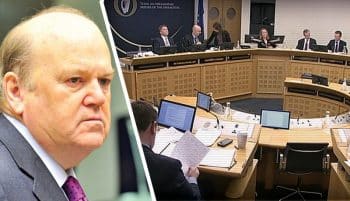
    The prospect of a Commission of Investigation into the sale by NAMA of its Northern Ireland property portfolio to US vulture fund, Cereberus, in April 2014, looks to be receding by the day. Judging by the demeanour and language of finance minister, Michael Noonan, during a special debate on the issue on 1 February the Government has no intention of exploring the serious allegations of corruption and fixer fees that surrounded the Project Eagle deal, despite an all-party agreement to set up a commission. Given that Fianna Fáil leader, Micheál Martin had pressed the Taoiseach to agree to a Commission last year, it seemed until then that Enda Kenny and Noonan would have no choice but to accede to the calls across the opposition benches for an inquiry into the astounding claims about the sale which have been aired north and south of the border over the past eighteen months. Indeed on 1 February, Fianna Fáil finance spokesman, Micheál McGrath, accused Noonan of resiling from the Taoiseach’s promise of an inquiry just a few months ago, and said he detected what he described as a “muddying of the waters” in relation to the Government’s commitment. “There is a shift here in the Government’s position”, he told Noonan in response to the claim by the finance minister that any “Commission of Inquiry cannot circumvent the Garda or other law enforcement agencies” such as the National Crime Agency (NCA) in the UK and the Security and Exchange Commission and the FBI in the US, which are investigating the Project Eagle deal. “What should be most obvious is that a Commission of Investigation cannot deal with a range of non-specific claims”, Noonan replied before raising concern over the possibility of “unfocused and ill-defined” inquiries which could distract NAMA from completing its vital task of winding down its distressed loan book. He said that the findings of the Public Accounts Committee (PAC) investigation due for publication within weeks should be assessed in any case before any decision on a Commission is made by the Oireachtas. With that, the chairman of the PAC and Fianna Fáil deputy, Sean Fleming, got to his feet alongside McGrath to trot out all the reasons why a Commission may not be the best way forward given that his committee had already covered a lot of ground during its public hearings last year. A FF double act was revealed when Fleming expressed his concern that “NAMA will fold up its tent” long before any commission makes its findings. It would have problems with compelling witnesses from outside the jurisdiction, Fleming said, and that it would be preferable and less costly for the Oireachtas to do the job of investigating such matters, rather than an inquiry led by an independent judicial figure. Careful not to contradict his party colleague, it was evident to those listening from the other opposition benches that Fianna Fáil was engaged in a public u-turn. Pearse Doherty of Sinn Féin immediately noted the display of political gamesmanship between the two largest parties. He rounded on Noonan for failing to use his powers to stop the sale of Project Eagle in April 2014 when he was informed of the £15 million fixer-fee arrangements promised to a former member of NAMA’s Northern Ireland Advisory Committee (NIAC), Frank Cushnahan, Tughans Solicitors and solicitors Brown Rudnick – by US fund Pimco. Doherty reminded Noonan that he had instructed NAMA in relation to other matters and the minister’s argument that he was not legally empowered to intervene with the Project Eagle sale was untrue and unsustainable. In other words, Noonan has a political interest in preventing any independent public inquiry into the sale and purchase, despite the strong whiff of corruption involved in it. Further, Doherty asked about the developers whose loans were taken into NAMA who have repaid substantially less than the money they owed despite the expressed intentions by the agency’s architects that it would pursue “developers to the end of the earth” for every cent they owed. His colleague, David Cullinane, a member of the PAC, reminded Noonan of the sequence of events which led to Pimco withdrawing from the sale process in March 2014 when it was advised by its own compliance department that the fee payments were in breach of US law. He described how Cushnahan and Ian Coulter of Tughans had been working with solicitors Brown Rudnick as far back as 2012 in relation to the NI Portfolio and on the basis of a potential £15 million fee to be shared between them if successful in offloading the portfolio through a single sale. They met Pimco in April 2013 and then a month later brought the US investors to meet NI first minister Peter Robinson and finance minister Sammy Wilson, to discuss the “conceptual transaction” they envisaged. In other words, a member of the NIAC, apparently without the knowledge of the NAMA board, chairman or chief executive, was exploring a possible fire-sale of its NI loans to interested buyers. NAMA already knew that Cushnahan had associations with six NAMA debtors, which raised potential conflicts of interest that were subsequently explored in last year’s critical report by the Comptroller and Auditor General (CAG) on the sale. But the CAG was only dealing with the value-for-money aspects of the sale, not the entire “corrupted process” that appears now to have underpinned it, Cullinane said. If this assessment and further contributions by PBP/AAA TD’s Richard Boyd Barrett and Ruth Coppinger were not enough to scare the government troops from going anywhere near a Commission of Inquiry, an impassioned speech by Independents for Change TD, Mick Wallace, must certainly have done the trick. Wallace outlined a series of sensitive matters which such an inquiry must investigate including the unauthorised leaking of documents from NAMA, the allegation of cash payments made to agency officials by clients seeking to get from out of its clutches, and the more recent claim by businessman Barry Lloyd that he was approached as far back

    Loading

    Read more