Environment
-
-
by admin
By Tony Lowes. Ireland has joined 9 other member states in torpedoing proposed transparency in pesticides-use Regulations which would require farmers to use micro-data transmission to report annual farm-level data on pesticide use. There are currently no precise data showing which pesticides are used for food production in the Member States and where, when and in what quantities they are used. This is in spite of the fact that farmers are obliged to, and have been, collecting this data in their farm records for many years; and Eurostat has provided statistics on crops and animals for many decades. A 2020 report from the EU Court of Auditors said that “progress in measuring and reducing the risks of pesticide use in the EU has been limited” and biodiversity loss on agricultural land “has not been halted”. The European Commission is unable to precisely monitor the effects or risks resulting from pesticide use because there are currently no precise data to enable the implementation of the European Green Deal aim of 50% pesticide reduction by 2030. Samo Jereb, the Member of the European Court of Auditors responsible for the report, says: “An opportunity to properly address this issue was offered by a new Common Agricultural Policy coming into force in 2021, but was unfortunately missed”. While statistics are not a tool to control the compliance of individual farmers with the rules on pesticides, they are a tool to control whether the regulations in place are achieving their targets. According to the Commission, which – along with the Parliament – supports the Regulation, data collections are not harmonised and coherent to a satisfactory degree because new data needs are emerging, legislation has been developed separately over many years, and there are sometimes different definitions and concepts in different agricultural areas. The Regulations would make the parts fit together and makes the output more significant than their sum. The Regulations also adopt international recommendations such as the guidelines for reporting greenhouse gas emissions of the Intergovernmental Panel on Climate Change. The Regulations must be approved by the Council which of course comprises members’ Ministers, where Ireland and nine other member states are opposing their adoption, in forthcoming ‘trilogues’. The member states argue that “It is not the purpose of European statistics to control the behaviour of farmers, but such an image would be created if this proposal would be realised”. Under the current system, while every farm is required to create and keep pesticides records, only a selection of farms answering voluntary surveys are reported every five years. Sales-data, the current benchmark, is not use-data. The failure to adopt the Regulation will also undermine the Aarhus guarantee of the existing right of citizens to know what is emitted in their environment. Tony Lowes Tony Lowes is one of the Directors of Friends of the Irish Environment.
-
-
by admin
Councillors and the CEO are in a standoff as to whether the legal advice needs to be fully independent or if it can be delivered via the Law Agent who normally reports to the CEO. As with O’Devaney Gardens, in Oscar Traynor Road Councillors appear to have allowed leeway the CEO to rewrite the Councillors’ agreement with the developer .
-
-
by admin
By Caroline Hurley. This Sunday 21 November, the Irish Farmers Association (IFA) is spearheading another grinding Dublin city rally with tractors and machinery, one of a series to spotlight inadequate funding, and lack of government engagement with farmers’ leaders about changes in the Common Agricultural Policy. Farmers are a diverse bunch though, not uniformly represented by one voice, with a growing number welcoming measures they feel should have pertained all along. CAP Reform ‘Around ten million farms employing about twenty-two million workers make the EU one of the world’s leading agri-food producers and net exporters’ The EU’s Common Agricultural Policy (CAP) is undergoing another round of reforms. The EU budget agreement has provided for a total CAP funding for Ireland of €7.4 billion over the 5-year period from 2023 to 2027. The funding is split between Pillar 1 (direct payments and sectoral interventions including 25% for eco-schemes – €5.9 billion) and Pillar II (Rural Development including LEADER programmes – €1.56 billion). The Department of Agriculture (DAFM) has been translating the latest EU schemes into Ireland’s own CAP Strategic Plan 2023-2027 (CSP) for Irish farmers, still in its stranglehold despite environmental and climate measures gaining more purchase, especially with the passing of the Climate Action and Low Carbon Development Bill 2021 and Plan. Climate budgets for the period up to 2030 have just been allocated by the Climate Change Advisory Council (CCAC), seeking a paltry 21% to 30% reduction in emissions for the agriculture sector. ‘Professor John Sweeney of Maynooth University warns that expecting other sectors of society to make up for agriculture’s future deficit in curbing carbon could become an unbearable burden especially given the key impact of lifestock-created methane’ Professor John Sweeney of Maynooth University warns that expecting other sectors of society to make up for agriculture’s future deficit in curbing carbon could become an unbearable burden especially given the key impact of lifestock-created methane. Ireland’s alleged superior efficiency in dairy and beef production and agriculture’s unique economic place, are among counter-arguments cited. CCAC recommended cuts of between 11% to 19% cannot happen without mass mobilisation and conscious behaviour changes. Meanwhile at COP26 have just pledged to cut emissions 30% by 2030. On 20 October, after negotiations, analyses and public consultations, Minister for Agriculture Charlie McConalogue T.D. announced almost 30% increases in overall CSP funding, to rise to €9.8 billion in the 2023-2027 period, along with indicative allocations that would increase funding for Pillar II issues to €3.86 billion with €2.3 billion extra national funding provided. €723m of carbon tax funding has been earmarked for sustainable farming practices through a flagship agri-environment climate measure. 202407_c38f85e8-bd00-4c75-af3b-00ede0271c11 Donning the CAP The CAP evolved from the European Recovery Plan (ERP), lasting from 1948-1952 in Ireland and bankrolled through the American Marshall Plan during the precarious post-World War Two era. Eamon de Valera’s economic policy had stressed self-sufficiency using indigenous resources, in opposition to the globalising vision of larger world powers. During the precarious post-World War Two era. Eamon de Valera’s economic policy had stressed self-sufficiency using indigenous resources, in opposition to the globalised vision of larger world powers. Discouraging insularity, the Keynesian Marshall Plan Plan unevenly funded sixteen European countries with the proviso they would take the technical and economic advice given. According to Professor Bernadette Whelan “the Marshall Plan’s focus on public-private partnership, trade liberalisation, freeing up intra-European payments and trade, market organisation and financial stability were its most enduring legacy reinforcing to-day’s dominant neo-liberal economic ideology”. A seminal essay by Professor JL Sadie, ‘The Social Anthropology of Economic Development’ published in the 1960 Economic Journal, noted: “Economic development of an undeveloped people by themselves is not compatible with the maintenance of their traditional customs and mores. A break with the latter is prerequisite to economic progress…What is, therefore, required amounts to social disorganisation. Unhappiness and discontentment in the sense of wanting more than is obtainable at any moment is to be generated. The suffering and dislocation that may be caused in the process may be objectionable, but it appears to be the price that has to be paid for economic development: the condition of economic progress”. ‘When high wages and time-shortages prevail, the economic advantages of engaging in sustainable local practices are reduced’ When energy is scarce but time and labour abundant, people readily employ Schumacherian ‘small is beautiful’ methods, cultivating organically for local markets, building with earth and natural materials, and rejecting industrial campaigns. When high wages and time-shortages prevail, the economic advantages of engaging in sustainable local practices are reduced. The communal, physical work involved in land-care is usually inaccurately disparaged as unskilled labour but can be highly dignified and creative. Despite the health, social and self-actualisation gains associated with rural occupations, the proportion of a population engaged in agriculture has come to be taken as a measure of how underdeveloped a country is. The CAP has played a big part in fostering this perspective. CAP’s Warp and Woof After the Treaty of Rome established the EEC in 1957, the CAP was launched in 1962 to ensure food continuity under uncertainty and to address rural poverty. Managed by the European Commission’s Department for Agriculture and Rural Development, it became the EU’s biggest and most costly programme. Intended for farmers in all EU countries, the CAP cost €58 billion in 2019. The CAP’s two budget funds are the European agricultural guarantee fund (EAGF) for direct and market payments, and the European agricultural fund for rural development (EAFRD). ‘The CAP cost €58 billion in 2019. The CAP’s two budget funds are the European agricultural guarantee fund (EAGF) for direct and market payments, and the European agricultural fund for rural development (EAFRD)’ The CAP allocates direct income support for wage regulation, intervenes in markets to address situations such as price drops due to temporary oversupply, and funds rural development. Payments are managed at national level. Around ten million farms employing about twenty-two million workers make the EU one of the world’s leading agri-food producers and net exporters. The
-
by admin
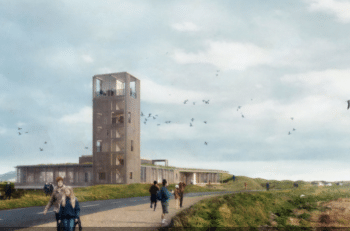
By Sean Byrne. Until the beginning of the nineteenth century ships entering and leaving Dublin port frequently stuck on sand banks at the entrance to the port and had to wait until a high tide floated them in or out. To solve this problem, the Great South Wall and the North Bull Wall were built to narrow the entrance to the port and thereby increase the speed of the ebbing tide which would scour the sand banks. The sand which was washed out built up behind the North Bull Wall, which was completed in 1825, and over the succeeding fifty years what is now the Bull Island was formed. The Island became a habitat for many plants, animals and birds and from the early twentieth century its importance as a nature reserve was recognised. In 1931 Dublin City Council designated the island as Ireland’s first bird sanctuary. Today, Bull Island is the most designated site in Ireland. It is a UNESCO biosphere (the only such biosphere within a capital city boundary). The Island is also a National Nature Reserve, a Special Protection Area under the EU Birds Directive and a Special Area of Conservation under the EU Habitats Directive. Since 1995 Bull Island has been a Special Amenity Area, one of only three in the Republic of Ireland, a designation based on the Island’s outstanding beauty and nature conservation values. Dublin City Council (DCC) which has responsibility for Bull Island has completely failed to maintain the Island in a way that meets the requirements of these designations. Ironically, the map of Bull Island produced by DCC shows the hare, now long gone, the cuckoo which has not been heard for many years, a ringed plover nesting at the Sutton end, now gone because of disruption of its nesting sites, the short-eared owl now very uncommon, and a bar-tailed godwit now under pressure because of poor management of the nature reserve. The main reason for the reduction in Bull Island’s biodiversity is uncontrolled access to the island by dog walkers, many of whom let their dogs off leads. This has led to the disappearance of hares and a huge reduction in the number of little terns, skylark, linnet, reed bunting and red poll. Until the 1990s, an area at the northern tip of the island was fenced off to facilitate ground-nesting birds but when the fence was broken down it was not replaced. Another threat to the Island’s biodiversity is the extraction of water and installation of wastewater treatment plants by the two golf clubs, Royal Dublin and St Anne’s on the Island. DCC, insofar as it has managed the Island at all, has managed it as a park and leisure space rather than a significant and fragile nature reserve. That DCC regards Bull Island merely as a park, is clear from its ‘North Bull Island Nature Reserve Action Plan 2020-2025 for the Implementation of Management Objectives (May 2020)’. This Plan states that ‘the Nature Reserve will undoubtedly have a greater footfall as the urbanisation of Dublin continues’ and argues, without any evidence, that the Nature Reserve has a ‘capacity to carry additional footfall’. It then says that the damage which this additional footfall will cause to the Nature Reserve can ‘ultimately if necessary … be controlled using techniques which have proven successful in other nature reserves” without stating what these techniques are or where they have been successfully implemented. The only measure in the Plan to deal with the uncontrolled dog walking, which is the greatest threat to the Bull Island biosphere, is a proposal that people, with or without dogs, will be “requested” not to access the northern end of the Island and along the saltmarshes and that dog walkers will be “required” to keep dogs on lead within the sand dunes. The southern end of the beach will be an ‘off-leash’ area outside the bathing season. These pitifully weak measures are to be “supported by signage, communication and awareness raising.” The effectiveness of “awareness raising” can be judged from the fact that when there was a warden on the Bull Island, he was abused and threatened when he asked dog walkers to keep their dogs on leads. No warden has been employed for the past three years. The sign at the entrance to the beach from the causeway road saying that dogs should be kept on leads disappeared several years ago. An Interpretive Centre on Bull Island which, during the period it operated, did not open on Sundays and Bank Holidays was closed without explanation three years ago. Not content with neglecting the conservation of Bull Island, which has led to a severe loss of biodiversity, DCC with the support of Fáilte Ireland now plans to build an intrusive ‘Discovery Centre’ at the entrance to the beach on Bull Island at a cost of €10 million. This Centre aims to attract 55,000-60,000 visitors who will have to pay an entrance fee. To be viable the Centre will need a spending footfall more suitable to a high-street shop than a critically important and fragile Nature Reserve. If the Discovery Centre is built, it will hasten the decline of the nature reserve and will display pictures of birds and mammals which will have disappeared by the time the Centre opens. Green Party leader Eamonn Ryan launched his party’s policy for biodiversity on Bull Island in January 2020 and Malcolm Noonan, Minister of State for Heritage was pictured on Bull Island in March 2021 launching a scheme of grants for biodiversity projects. People concerned about the future of the nature reserve have asked both Ryan and Noonan and former Green Lord Mayor Hazel Chu to oppose the building of the Discovery Centre and to ensure that DCC implement conservation measures but have had no response, or in the case of Noonan, a dismissive response to their representations. The Green Party councillors on Dublin City Council have not opposed the building of the Discovery Centre or sought measures to conserve the