Environment

Random entry RSS

  • Posted in:

    Food talk: it’s more than new potatoes

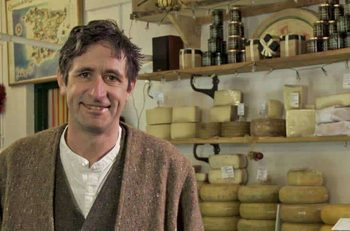
    Talking food, culture and politics with Seamus Sheridan by Ronan Lynch   Seamus Sheridan doesn’t want to talk about cheese. “I love what I do and I know the jobs it supports but this isn’t really about me or Sheridan’s Cheesemongers”, he says. As an advocate for Irish food producers and the slow food movement, Sheridan could talk for Ireland on the subject of food but today he is wearing his political hat as the Green party spokesperson on Agriculture, Food and the Marine. This year he will run for election to Galway city council and he believes that Ireland is facing in to a struggle over food and agriculture that will have broad long-term consequences for the country.   Starting from a market stall selling cheese in 1995 Sheridan’s Cheesemongers has evolved into a well-regarded business with shops in Galway, Dublin, Waterford, and a shop and distribution centre in Meath. In recent years they’ve added a new business making brown bread crackers in Cork and they now employ a total of 45 people. These days, ‘Sheridans’ and Irish farmhouse cheese are virtually synonymous, but he says it’s a workaday struggle for small food producers.   ‘Agri-food’ and fisheries is Ireland’s biggest indigenous industry and under the Food Harvest 2020 initiative, the Department of Agriculture, Food and Fisheries aims for a 33% increase in the primary output in agriculture, fisheries and forestry, and a 40% increase in value added. Sheridan believes that this massive expansion of food production can only come about by ceding control of our food to a handful of multinationals. “What worries me is that we – and particularly this government – seem to have developed very close links with large multinational food producers. Fine Gael is supporting and promoting the agri-food business to the exclusion of artisan and craft food producers and small and medium farmers”. He believes that the government is taking the hard-won reputation of Ireland’s traditional food producers and handing it over to food corporates chiefly interested in producing processed food.   Last year, Sheridan challenged Minister Simon Coveney’s characterisation of the opening of the Kerry Foods’ research facility outside Naas as “probably the most significant announcement ever” in Irish agriculture. “I welcomed that investment and the jobs it created, but the most significant announcement ever?” says Sheridan. “Make no mistake, a lot of food science – even though people start in it with good intentions – is used not to feed the world but to generate maximum profits at a maximum price targeting the less-well-off in our society who can least afford it. Look how many ingredients are synthetically developed to mimic flavours – that seems to be the holy grail of Irish food development. But let’s look at what end products they develop. Is it real or synthetic ham?”.   Sheridan marvels at the facility with which the corporate food sector has borrowed the language of artisan food production and green policies. “I’m now watching the entire Irish agricultural sector which looks like an ad for the Green Party”, he says. “You’ll see this language: Origin Green, sustainable Ireland, ‘Farm to Fork’. But our green image is not just a marketing tool. It has to be based on an ethos. We’ve seen disgraceful examples in the horsemeat scandal. Some of the protagonists’ websites were claiming to be fully-traceable from farm to fork”.   Sheridan contrasts government support for multinationals and food corporates with support for small food businesses. “When you take away raw agricultural produce and the multinationals, we have the smallest amount of indigenously owned exporters in Europe. It’s very difficult for small businesses to survive unless you export so we have to be an export-led economy if we are to generate sustainable jobs particularly in relation to food and crafts. As a business person, let me say that we need far more support for small businesses”.   Sheridan wants to see more people from business and other areas of the social economy getting involved in politics. “It is possible to be involved in business and be on the left, and we need to strengthen the left wing, in a modern sense. Labour are doing admirable work in social reform but they are letting Fine Gael and multinational corporations run rings around them”. Sheridan’s involvement with party politics began in the late the 1990s when he got involved in a court case to defend the rights of Irish cheesemakers to produce cheese from raw milk. “That case was really my first political involvement with the corporatisation of food”, he says. “Fighting the raw cheese case also gave me a real appreciation for the importance of science in politics and it gave me great faith in the judicial system. Protest all you want, but if you believe your case is valid, go to the district court. In a way that’s what brought me into contact with the Green party, because the only TDs willing to help me at that time were Trevor Sargeant and John Gormley”.   “Food” says Sheridan, “is wrongly portrayed in Ireland and the UK as an issue for the middle classes, or even as an elitist issue. Food and the quality of food is a left-wing issue all across Europe. The Slow Food movement [which emphasises the connections between food, community and environment] had its origins in the Italian communist party. Carlo Petrini, who founded the Slow Food movement, asked ‘why shouldn’t we eat good food, and support our local farmers?’ There is a misinformed idea that Greens are anti-farming. When you go to the South of France, you’ll find that José Bové, who is one of the most outspoken Green party members and MEPs, has built his entire base among small farmers”.   “So, if I was from the left in Spain or Italy or France, the issue of access to butchers and markets and good food is part of political conversation”, he says. “The only food that we debate about in Ireland is new

    Loading

    Read more

  • Posted in:

    Feminism and farming

    Going back to the land promotes sustainability and is living feminism Article by Ailbhe Gerrard What do you think of when you consider farmers? Is it a macho guy smelling of pig shit and covered in engine oil? Our in-built expectations about gender keep women relatively under-paid and disempowered in Ireland. If you Google “woman farmer in Ireland” you may come across this gem on Boards.ie: “Not trying to sound bad but I’ve never heard of a woman farmer in Ireland. I know of plenty that help… but full-on farmers themselves would quite shock me”. Environmental justice is an oft-neglected gloss on equality. Poor and disempowered people frequently have little say over access to and disposal of environmental goods such as clean water, fertile land, timber and other fuel for warmth and cooking; and often have disproportionate exposure to environmental bads such as poor air, unhealthy food-sources and urban blight. Meanwhile a powerful few have access to real decision-making about who controls natural assets such as minerals, land, beauty spots and water. Ivana Bacik’s article in last month’s Village was a mainstream if perhaps unradical feminist history of the women’s movement in the Irish state from 1922 to present. It is important to remember and acknowledge the power of the female collective voice. However, living feminism means addressing the implicit ceilings, taboos and shibboleths of what women can or should do and can or should not do. The expectations about women and men’s roles are a constant source of frustration in this gendered and conservative society. Irish feminism has a long way to go. In the same edition Shirley Clerkin’s ironical article ‘Stuck in the Sticks’ is about living in a rural area and is a crie de coeur for men with trailers to stack logs by her back door. Clerkin makes us realise that cheap timber, like cheap food, does not price for environmental bads. She concludes: ‘We the independent women need to be more demanding’. Indeed. ‘We the independent women’ need to be more demanding of ourselves and recognise that we can be our own primary providers of fuel and food. Following a period working in construction – another traditionally male industry – three years ago I realised that primary production of food and timber is vital. Without food production by skilled and motivated farmers, finance, war, mining, forestry, advertising, even magazine production are impossible. The key to an efficient workforce is specialised food production and, in climates like Ireland’s, adequate, locally-produced heat. It is not often recognised that women have a huge input into food production and farming worldwide – 43 percent of the world’s farmers are women and they produce most of the food consumed locally according to the FAO.  This is despite owning only between 10 and 20 percent of farms. Women farmers are also ignored by government assistance: female farmers receive only five percent of all agricultural extension (training and advice) services worldwide. So we have a situation where women farmers produce most of the real food eaten in the world, but men farmers tend to be more involved in food commodities, for instance the world grain market, where the money is. Conscious of this, in 2010 I bought a 65-acre tillage farm with 15 acres of deciduous tree plantation. Recently I saved the second year’s grain harvest, and am selling the first timber harvest. The farm’s oak, ash, beech, sycamore and larch plantation is managed with two principles in mind: long term timber quality through sustainable timber production and forest biodiversity. I am immersed in the ritual of the farm’s seasonal turns – forestry and fencing in the winter, food and forage production in the summer. There is no way to persuade a recession-stricken rural population to pay the full price it costs for the farm’s ecologically-sensitive firewood carefully hand-cut and horse-extracted. The going market-rate for firewood timber in rural areas, to urban dwellers would seem a pitifully small amount per ton of timber. This is the dilemma of primary producers (foresters or farmers) and the local market. However, rural people are starting to seek out sustainable and artisan forestry products – for firewood, fencing, charcoal and many other uses. Not only the quality of the timber is recognised, but also the knock-on benefits to the local community: employment of skilled foresters, chainsaw operatives, wood-workers and horse-loggers; and environmental benefits. I believe that tough-minded nurturing can ground a modern feminism as an antidote to the slash-and-burn machismo of many Irish industries and professions. Sustainable farming benefits  consumers and is an outlet for practical and feminist egalitarianism.   Ailbhe Gerrard has a tillage and forestry farm in Ireland and is studying for an MSc in organic farming  

    Loading

    Read more

  • Posted in:

    AARHUS BITES IRELAND (Tony Lowes’ blog)

    The recent ratification by Ireland of the UN’s Aarhus Convention still has a year’s probationary period before citizens can lodge complaints against our authorities. The NGO inspired Convention requires access to justice and information. Ireland has, however, already found itself at the receiving end of a preliminary ruling that threatens the country’s vast subsidies for wind turbines against other forms of renewable energy, as well as EU funding for the new interconnector to the UK. Circumventing the fact that at the time he lodged his complaint Ireland has not even signed the Convention, engineer Pat Swords focused his complaint on the EU itself’s failure to ensure that the member states followed the Convention. The EU had ratified the convention in 2006. Swords’ complaint was deemed acceptable in 2010 and a preliminary ruling this year upheld his central tenet: that the ‘public authorities in Ireland and the Party concerned [the EU] failed to disseminate information concerning the Renewable Energy Feed In Tariff I programme (REFIT I) in Ireland – a programme supported by the Party concerned both by means of direct funding and by approving state aid – in a timely, accurate and sufficient manner.’ The ‘information’ includes the fact that no Strategic Environmental Assessment was done of the wind energy programme – a call that is being echoed by almost every community in Ireland adversely affected by wind developments. The National Renewable Energy Action Plan (NREAP) was not ‘subject to the necessary consultation and assessment’. One recent submission to An Bord Planala opposing the Clare grant of permission for a further 48 turbine windfarm north of Doonbeg makes the point succinctly: “All counties in Ireland have areas with sufficient wind speeds to make them economically viable – this is borne out by the presence of wind farms in these areas.  It is evident that any national policy for Ireland which seeks to capture the country’s maximum capacity for wind energy can be achieved without impacting on areas with sensitive landscapes, ecology and hydrology.” The lack of a national Strategic Environmental Assessment has led to a wild west mentality with developer’s land grabs for mountains in remote areas where opposition will be scattered. Generous 20 year contracts offered by the companies to hard pressed landowners are subsidised by the taxpayer. Meanwhile, the aerobiotic digester programme remains underfunded. These digesters would take up the slurry now contaminating beaches and drinking water supplies and use them to produce fuel. An EU funded LIFE project at Silver Hill Foods in County Monaghan now takes the slurry of 3,000,000 ducks – 70,000 tons – and converts it to dry pellet fertiliser, capturing the methane to run the unit. Sword’s, whose lengthy internet publications indicate that his opposition to wind farms is just the tip of his conviction that mitigation against climate change is not economically viable, has now met unlikely allies in Geneva. The Scotish Avich & Kilchrenan Community Council has recently has its complaint accepted by the Compliance Committee. This too strikes at what it calls ‘the flawed consultation process at the heart of the Government’s renewables programme’ They allege, as did Swords, that they have been denied ‘the opportunity to participate in decision-making when all options are open and effective public participation can take place, rather than after programmes and targets are presented in a final form to the public.’ Under the Convention, Governments must make available the scientific justifications for programmes which are said to affect the environment in which we all live. Not only did the UK and Scottish Governments not do so, the community Council alleges that ‘the justification for the programme, namely the emissions savings attributed to wind energy, are false in that both the EU and the UK have systematically made claims which are neither transparent nor valid. The consequence has been that planning approvals and consents under the Electricity Act have been fatally undermined, since they have proceeded on an entirely false prospectus supporting wind farm development across the UK and the European Union.’ Continuing, they allege that ‘now that developers have exclusive investigative rights of search for the entire FCS [Forestry Commission of Scotland] estates, it has exposed the actual level of developer and FCS intentions under their new policy for hosting renewable energy projects.’ ‘We have a public authority’, they conclude, ‘with vast tracts of land held in National trust, engaged in multiple developments of a commercial nature in the field of energy, all of which as individual projects fall under Annex II of the Environmental Impact Assessment Directive, for which this same public authority is the competent authority for purpose of development consent.’ Sound familiar?  

    Loading

    Read more