
Environment

Random entry RSS

  • Posted in:

    $5,431,810,000,000 in the bank and still miserable – 11 Oct

    Why do billionaires tend to be visionless climate-denying misanthropists? Village Oct/Nov 2013 – 11 Oct   As evil plutocrat villains go, Australia’s Gina Reinhart is straight from central casting, writes John Gibbons. The daughter of a mining tycoon, she is now regarded as the world’s wealthiest woman, with an estimated worth of around $20 billion. Her fantastic wealth is all inherited; her parents’ vast fortune was made by exploiting Australia’s mineral wealth. Reinhart is also quite outspoken. Last year she bemoaned the fact that Australians were not prepared to work for less than two dollars an hour, unlike African workers. This fact made the multi-squillionaire “worry for this country’s future”.   Reinhart, whose wealth is entirely serendipitous, is not shy of advice for other people who would like to get ahead. They should, she says, “stop whingeing” and “Do something to make more money – spend less time drinking or smoking and socialising, and more time working”. Mind you, at the two dollars an hour wage she prefers, the average Australian would have to work for approximately five million years to match the pile Ms Reinhart got handed by daddy and mummy.   “humungous wealth is of little value when the electrical grid is permanently down, the global economy is dead and food production has been destroyed by chaotic weather.  Odds-on” Reinhart is also, shock, horror, a climate-change-denier. In the last three years, tired of all the left-wing whining in the media, she has taken the step that more and more billionaires, both home and abroad, have discovered is foolproof in dramatically improving your media profile –that is, to start hoovering up newspapers and broadcasters. She is now the largest shareholder in Fairfax media whose journalists were reportedly openly fearful that Reinhart would turn them into a “mouthpiece for the mining industry”.   Her best buddy is Rupert Murdoch (net value: $13.4 billion), the tycoon who uses his web of media interests to grossly interfere in politics and undermine democratic oversight and accountability around the world. The influence of Murdoch’s odious Fox network in polarising and debasing US politics and demonising science, specifically climate science, is now well understood.   According to Forbes magazine, there are 1,426 billionaires in the world. Collectively, their combined wealth is around $5.4 trillion – $5,431,810,000,000 in longhand.   The net worth of energy-industry mega-tycoons the Koch brothers is around $68 billion – around the same as the entire GPD of Cuba, a country with a population of over 11 million. The Koch brothers invest some of their vast wealth in funding anti-climate change disinformation and astroturfing groups. They are also now dabbling in buying up media companies.   Here’s a simple thought experiment: imagine our 1,400-odd billionaires were planning to head off, in a fleet of luxury aircraft, on a flight path that would take them thousands of miles from land and crossing through some hazardous airspace along the way. First off, you can be certain they would insist the aircraft had been thoroughly checked prior to departure. This work would have been entrusted to the best engineers. Similarly, plotting their course, getting detailed weather forecasts and ensuring their planes’ fuel supplies were adequate, all this work would be placed in the hands of the leading experts in their field.   And, if they decided to bring along an in-flight medical team, these would be hand-picked based on experience, expertise and their status among their peers. You get the picture. The world’s billionaires generally know how expensive it can be to take the counsel of numbskulls.   And yet. When it comes to the Big One, whether or not industrial civilisation can survive the next couple of decades, and whether humanity itself can escape the jaws of an encircling trap comprising resource exhaustion, biodiversity collapse, ecosystem failure and climate catastrophe, the world’s richest people can hardly be accused of doing nothing.   Quite the opposite: their funding, media access and moral support is enabling an international cabal of climate deniers, liars and assorted charlatans to befuddle and bamboozle with impunity. What these patrician geniuses appear to have entirely misunderstood is that we (and yes, that includes the super-rich) really are all in this leaky tub known as the biosphere together.   Wealth, even humungous wealth, is of little value when international trade has collapsed, the electrical grid is permanently down, the global economy is dead and food production has been destroyed by chaotic weather. All of these vistas are odds-on in a world in which average surface temperatures will have shot up by over 4°C this century.   The controversy-averse IPCC routinely low-balls risks by excluding real but difficult-to-measure threats such as permafrost methane releases, yet it still says we have no better than a 50/50 shot at avoiding a 4°C global warming calamity. And that slim shot assumes we all act now to slash emissions.   You and I can fret, we can lobby, we can make our plans, but in reality, as individuals, we remain almost powerless. Our billionaire betters, on the other hand, have power and influence almost beyond measure. Yet, rather than acting to save even their own necks, many of them work diligently and spend freely to actually hasten our collective appointment with mass extinction. Let’s conclude with a – perhaps wishful – update to that ancient Greek quotation: ‘those whom the gods would destroy, they first make filthy rich’. John Gibbons is a specialist environment writer and tweets @think_or_swim    

    Loading

    Read more

  • Posted in:

    Flown forever: Birds under threat

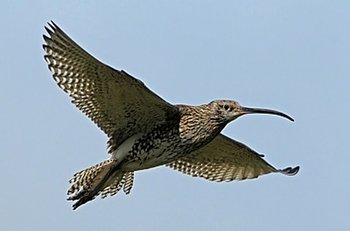
    Flown forever Shirley Clerkin Long-distance bird migration  is down by nearly a quarter over the last 30 years ‘curlews are the Irish giant panda.  Their population has collapsed by 86% over the last thirty years, with 200 or fewer breeding pairs remainin’ The day is full of birds. Stitched –  moving – into the air, into hedges and woven into the weft of wetlands.   Hanging on to houses, grasping gutters and aerials, balancing on the wire.  Singing. Tweeting. Cooing. Whistling. Swooping. Diving. Gliding.  Ascending. Descending. Disappearing. The State of the World’s Birds, by the BirdLife International Partnership published in July is shocking reading.  Silent Scenery will be our certain future. The soundscape we have on loan from future generations rubbed out.  Birds are an integral part of our biodiversity, their fate heralds our fate.  The report compiled by 121 organisations finds that the status of the world’s birds is deteriorating, with species slipping ever faster towards extinction. One in eight of all bird species is considered threatened with global extinction. They are in effect dead birds flying.   A woman I know instructed her husband to hose a family of long distance migrant swallows, away from their house at every opportunity to stop them nesting.  They were dirtying her car. Such an ignorance of actions is, I suspect, more commonplace than some of the common birds. A poverty of thinking; knowing the price of everything and the value of nothing.     Swallows are without doubt one of my favourite birds. I monitor their return every year, worrying when it gets past their due date that they may not come at all.  When they swoop past my kitchen window on the April morning of their arrival, I feel swept up too. They are back. The swallows are back, I tell everyone.   Prelude, ninety seconds of perfect sound by still-effervescent Kate Bush, from her album Aerial, features wood pigeons cooing and a child in wonder pronouncing: The day is full of birds Sounds like they’re saying words By unravelling birdsong into lower, slower registers we can stroll through their songs, to hear notes so swiftly sung that their complicated compositions only become audible when played at a snail’s pace.  They have no words that we can understand and we, of course, are only half-thinking. But the numbers speak for themselves and are a preface to what is to come. There are 300 million fewer farmland birds in Europe now than in 1980.   57, out of 148, species of birds have declined across 25 European countries.   Long-distance migrants in Europe declined by 23% on average during these 30 years alone.     BirdWatch Ireland, Ireland’s largest conservation charity, recently drew an analogy. Globally threatened, curlews are the Irish giant panda. Confusingly, their numbers are artificially raised in the winter by migrants from other countries, but when these fly away, only a fragmented and threatened Irish population subsists.  This population has collapsed – by 86% over the last thirty years, with 200 or fewer breeding pairs remaining. Curlews have a melancholic and evocative voice at the best of times, crying across the reeds, wetlands and coasts.   Robbie Burns wrote that he had “never heard the loud solitary whistle of a curlew on a summer noon … without feeling an elevation of soul”.  However, these are now the worst of times.  WB Yeats begging “O Curlew, cry no more in the air” is an unintended prophecy. BirdWatch Irelandis calling on the government to take a range of actions for the conservation of curlews nesting in Ireland,  They include developing agri-environment measures and removing the species from the hunting list. Curlew: the word itself hugs your tongue when you say it, has a beak like a cobbler’s needle or crewel which can deeply probe the mud for small invertebrates.  While in Murphy Sheehy fabric shop in Dublin a few weeks ago, I came upon bird material that I just had to buy for my new frock.  The Ornithology Liberty Print was designed from sketches by Edwyn Collins, who is best known for fronting Scottish rock revivalists ‘Orange Juice’ and for his solo hit,  A Girl Like You. In 2005, Collins suffered a severe cerebral haemorrhage.  As part of his rehabilitation he drew a bird a day, each of which has been used in the printed fabric. Every drawn bird represents a daily recovery. I am stitching dunnocks, black-tailed godwits, barn-owls, teals, swallows and lots of other birds into my bird dress. There are no curlews drawn or printed. Maybe Collins experienced a sort of anticipatory illumination like Yeats suggested: “the arts lie dreaming of what is to come”.  If ecosystem potholes are not filled in and conservation measures don’t succeed, curlews will continue their dive to the realm of art and the dead zoo, echoes only, like other ghosts of gone birds. The days were full of birds.  

    Loading

    Read more

  • Posted in:

    PAC ignores Docklands conflicts of interests

    PAC doing a Mahon/Dunlop – in Docklands The Public Accounts Committee ignores dozens of other schemes and the position of Treasury Holding, in its focus on the Glass Bottle debacle By Michael Smith     As the Public Accounts Committee allegedly gets stuck in to Docklands, I am struck how – in the same way as the Mahon Tribunal was too lazily dependent on evidence from Frank Dunlop, the PAC, like the Comptroller and Auditor General whose report it is considering,  is unduly focused on the Glass Bottle Site where it seems the conflicts of interest were much better handled than elsewhere…though the commercial decisions were not.  But there was far more afoot in Docklands.   In April 2007 I submitted a  complaint  to the Standards in Public Office Commission (SIPO) based largely on information secured through a Freedom of Information Request from the Dublin Docklands Development Authority [“DDDA”] by the defunct Centre for Public Inquiry and from newspaper articles.  The complaint primarily  concerned conflicts of interests of then Members of the Board (Directors) of the DDDA. These Directors were Lar Bradshaw, Chairman of the DDDA and Sean FitzPatrick.   Bradshaw had been chairman of the DDDA since 1997 and was re-appointed in 2002. FitzPatrick had served as a Director since 1999 and had been Senior Independent Director, with a role in helping with ethical issues, since 2001.  FitzPatrick didn’t like it.  In June 2007 he made a speech to a business lunch hosted by a research company called Experian.  He told his compliant audience: “among the most insidious aspects of our current regulatory environment is the apparent presumption of guilt on the part of entrepreneurs and business people generally.  The whole structure seems to be geared towards something akin to an annual proof of innocence statement.  This is corporate McCarthyism and we shouldn’t tolerate it… We should ask ourselves if it is fair or equitable to allow almost any allegations, however wild and unsubstantiated, against any other citizen with seeming impunity”.  So Matt Cooper invited FitzPatrick on his radio show to find out what on earth he could have been on about.  In Who Really Runs Ireland Cooper writes “He  wouldn’t  give examples despite my repeated requests.  He wouldn’t name any victims of this ‘corporate McCarthyism’… Having raised the hare he wouldn’t chase it, as angry text messages from listeners stressed”.  Cooper continues: “At the time I didn’t realise what had upset FitzPatrick so much… I learned subsequently that only a month before his speech and interview he had been the  subject of a complaint to SIPO.  Legitimate questions had been raised by a member of the public about conflicts of interest.  He had to explain himself to SIPO or, as he would have put it, to prove to them that he was innocent”.   FitzPatrick and Bradshaw served on the DDDA at a time when a great number of schemes in Docklands was being financed by their bank.  But they also both took part in discussions on numerous occasions on planning schemes and their certification  under section 25 of the Docklands  Act 1997, for schemes which the  bank of which they were both major shareholders and Directors (Mr FitzPatrick being chairman), was financing.  That bank was Anglo-Irish Bank. The future of Docklands seemed to be largely in the hands of under fifteen development companies.  It was clear that Anglo-Irish Bank was lending money to a considerable number, perhaps a majority, of them. In itself that was extraordinary and a cause of concern. Mr FitzPatrick and Mr Bradshaw seemed to engender an atmosphere that was conducive to facilitating the interests of the development sector, including those of some clients of theirs.  They clearly had conflicts of interest which hung like clouds over the whole operation of the DDDA Board. That much was clear well before Anglo became a coda for dishonesty, incompetence and intrigue. The question was if these conflicts of interest were illegal or are otherwise actionable.  I asked the Commission to consider the, necessarily incomplete, evidence presented and to investigate.   Another DDDA board member, Donall Curtin, is married to Ms Anne O’Donoghue who was  Associate Director, Anglo Irish Bank Private Banking. Planning Schemes The Grand Canal Dock Planning Scheme 2000, and the North Lotts Planning Scheme 2002 gave the DDDA its statutory planning powers and were similar to an outline planning permission for extensive areas on the north and south side respectively. Any development proposal submitted under Section 25 of the DDDA Act which complied with the Planning Scheme was exempted development for the purposes of the Principal Planning Act.  I requested that the Commission investigate any decisions to amend or review the planning schemes and the reasons for these amendments or reviews particularly regarding the North Lotts Planning Scheme.  I requested the Standards Commission to investigate whether the appropriate declarations had been made and whether Mr Bradshaw and Mr FitzPatrick absented themselves from meetings where required. Review of the planning schemes could obviously significantly benefit Anglo Irish Bank and the developers of schemes it is funding. Scheme DD167 Minutes concerning one of the most controversial schemes in this category, DD167 (967 apartments, office, retail), were eventually put on its file.  They show prolonged and intense debate about social housing and height.  While one Director (Donal Curtin) declared an interest, Mr FitzPatrick does not appear to have, though there were four fraught meetings in 2002-3 of which he attended two. In particular at meetings of 13 Nov and 5 Dec 2002 Mr FitzPatrick was present  for discussions on these matters which did not lead to a conclusion but which pushed in the socially-segregative direction that Treasury Holdings through its Director, Mr Richard Barrett, were suggesting.  Mr FitzPatrick did not absent himself. It is possible that he made declarations in some other manner but this is not clear from the minutes. At a meeting on 9 Jan 2003  (from which Mr FitzPatrick was absent) the developers appeared to get their way: a paper to the board from Peter

    Loading

    Read more

  • Posted in:

    ‘Ming, lies and our obliterated raised bogs’

    Mechanised despoliation may cease, though pervasive exceptions  proposed and EU Commission sceptical. By Tony Lowes (2011) Devastating the Bogs In the end for a while even Ming the Merciless, TD, zipped his mouth, allowing the under-informed media to report a ‘cessation’ of immemorial turf-cutting in designated conservation areas – affecting “6,500” turf-cutters and an estimated “17,000” turf-users. The turf-cutters, the IFA and conservationists on the recently-formed and government-appointed Peatlands Council (PC) all ostensibly went along  with an open-ended fudge. This evolved  under pressure from Minister for the Environment Phil Hogan and his man on earth, academic Conor Skehan, who chairs the PC, which was set up to resolve this intractable issue. Illegal turf-cutting of ‘raised bogs’ in EU-designated Special Areas of Conservation (SACs) will cease (except in exceptional cases where the EU will be asked to allow a little bit of ‘small-scale, domestic’ illegal cutting) but past illegal turf-cutting will be ignored and those who have cut illegally can take home their drying turf. Alternatives for bog-cutters will be agreed, including relocation  and compensation. The agreement will close 31 of these raised bogs around the country immediately and 24 at the end of 2011. The government is being asked to prioritise reviewing the domestically-designated Natural Heritage Area (NHA) raised bogs (a portion of the total), though it is not clear if it can review the overlapping, but less-easily reviewed, EU ‘SAC’ designation which applies to all of the bogs covered by the agreement. Elsewhere, the PC press release recites as fact the turf cutters’ view that designation and management of SACs  should take account of the “economic, social and cultural requirements of local communities”, under the science-driven Habitats Directive even though the Habitats Directive (according to EU Case C-371/98) does not elevate such human ‘requirements’ over the protection imperative. But within a few days Ming was describing the agreement as “purely academic”, buying “breathing space”; and the European Commission was reported to be “wary and cautious”.  In short it is clear that the turf cutters are merely regrouping, reserving their position until the bog-cutting season starts again, traditonally on Patrick’s Day. The agreement came after the EU lost the European equivalent of a temper after years of prevarication by Irish ministers and publication of a graphic and damning report by Friends of the Irish Environment exposing continuing despoliation. The Turf Cutter and Contractors Association (TCCA) and their spokesman, Ming Flanagan, had been painting to the public a picture of families returning on fine spring days to their bogs to cut nuggets of turf for the winter. Presented as ‘domestic’, countless TV shots featured old grannies in rocking chairs by flickering peat fires under threat from gnomes in Brussels and spoilt environmentalists. In fact, a 2005 report to the government’s National Parks and Wildlife Service (NPWS) notes that the “mechanisation of the cutting and the use of contractors to carry out this work make it difficult in many cases to distinguish between domestic and semi-commercial cutting”. Ming is a demagogue – his rhetoric normally embraces a vision of shivering God-fearers and before the election he told a cheering crowd of 700 at a meeting of the TCCA, “we must succeed because if not it will be more than turf at stake when they next come calling for your land”. From 12 – 21 May this year, a small band of environmentalists fanned out from a rented holiday home on the Shannon’s Lough Ree and visited 33 of Ireland’s 55 most protected raised bogs to try to inform the fractious and anecdotal debate that had been raging in the media. Irish raised bogs are one of Europe’s most treasured eco-systems, attracting the highest level of  protection under EU law. Raised bogs were formed by decaying vegetation on shallow glacial lakes. They build up over ground level. Blanket bogs on the other hand cover undulating ground. While – mainly through turf-cutting – 45% of Irish blanket bogs have been lost, 99% of more-easily-cut raised bogs have been destroyed. Aside from the damage to the protected habitat, the loss of carbon sequestered in these bogs is extraordinary. Peat bogs account for approximately one-quarter of the carbon stored in land plants and soils worldwide. When destroyed, the rotting or burnt vegetation is a source of CO2 and methane comparable in magnitude to the amount of carbon released by a fossil-fuel powered plant of equivalent power. Drainage of peat soils also releases silt that smothers the river and lake-bed vegetation on which fish and birds rely. It releases organic carbons and suspended solids – the peaty colour in water – which when treated with chlorine creates trihalomethanes – cancer-causing agents. What the environmentalists found and photographed was utter devastation. That last remaining 1% of raised bogs was being savagely destroyed by mechanical turf-harvesting for short-term gain, with no effective action whatsoever being taken by the Government to enforce restrictions. Until the FIE report was published Phil Hogan, the Minister for the Environment, continued the pretence of assiduous legal compliance to the European Commission. Cutting on the closed bogs was not an issue. On the 22nd of March 2011 he told Maureen O’Sullivan, TD, in a written parliamentary reply that: “My department continued to monitor bogs in designated areas following the Government decision ending the derogation. In a number of cases contractors coming onto bogs to begin turf cutting discontinued their activities on having the situation explained to them”. The site visits recorded that even where cutting had apparently been discontinued, bogs were still being burnt. Burning was considered the main reason for the decline in Active Raised Bog habitat at five raised bogs in the 2006 NPWS reports. In all 33 random site visits to SAC-designated raised bogs, not a single instance of hand-cutting was observed. The final report  contains more than 700 damning photographs. Cutting, burning, draining, and adjacent extraction were photographed on 22 of the 33 bogs visited. The reaction was immediate.  Minister Jimmy Deenihan issued a press release within days warning those

    Loading

    Read more