General

Random entry RSS

  • Posted in:

    Reckless disregard for our security. By Gerard Humphreys, former army officer.

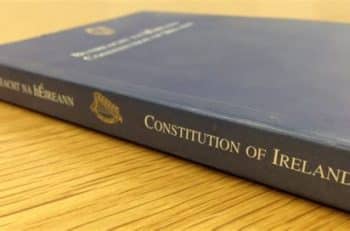
    The Constitution of Ireland declares Ireland to be a sovereign independent democratic state. This declaration of sovereignty means that the State is not subject to any power or government. But sovereignty to be recognised in International Law brings with it rights and duties. International law is based upon the concept of the state and the exercise by that state of effective control over it’s own territory. Territorial sovereignty is the key concept in International Law in particular in regard to territorial defence. Ireland is not fulfilling its key obligations in International law. The Russians have already hacked our health system, and acted in a hostile manner in positioning warships over our crucial underseas cables (our south-western approaches) yet because of our reckless disregard for our own security we had insufficient number of naval personnel to deploy our ships or put an adequate number of aircraft in the sky. Yet the government are engaged in a massive PR exercise on celebrating a centenary of independence. Rules of international law come from two main sources, treaties and customary international law, both of which are created by States. States are bound by the rules to which they have chosen to bind themselves. Every State has jurisdiction over its territory. That is obvious given the concept of Statehood with which international law operates. Article 5 of the Constitution Proclaims: “Ireland is a sovereign, independent democratic state.” The territory of the State is the whole of the area within its borders and also the adjacent territorial seas up to 12 miles from the coast. It includes the airspace above and the subsoil below. The 1982 UN Convention on the Law of the Sea provides a comprehensive legal framework for the use of the seas along coastal States to exercise jurisdiction over the living, fish, whales etc. and non-living resources, oil, gas etc. of the sea and seabed and over certain other matters including pollution, scientific research and other installations such as oilrigs in a 200-mile exclusive economic zone adjacent to its coast. What does this mean? Therefore, it is not open to Ireland to abandon its responsibilities for its territory, airspace and exclusive economic zone. It is the sovereign duty of the State to deploy its ships into our exclusive economic zones off our coasts. It is our sovereign duty to police our airspace. It is questionable whether it is a permissible delegation in international law to have another sovereign State police our airspace to interrogate aircraft. It would appear that the Government have authorised British military aircraft to interrogate unidentified civil aircraft that fails to identify itself by radio or radar as it approaches Ireland from the Atlantic. It begs the question after interrogation if it is unsatisfactory and the aircraft is perceived as being hostile either by being hijacked or otherwise is there a power of interdiction also delegated? It would appear that the Government have authorised British military aircraft to interrogate unidentified civil aircraft that fails to identify itself by radio or radar as it approaches Ireland from the Atlantic. It begs the question after interrogation if it is unsatisfactory and the aircraft is perceived as being hostile either by being hijacked or otherwise is there a power of interdiction also delegated? It would appear that the British Prime Minister can authorise the interdiction of a civilian aircraft that is being weaponised. We do have a National Security Committee and the risk of an aircraft being weaponised is real but there is no effective democratic oversight of national security in Ireland. The Oireachtas and members of the Dáil and Seanad do not have access to classified information at any level. Ireland is one of the most secretive democracies when it comes to democratic oversight of national security issues. The Oireachtas and members of the Dáil and Seanad do not have access to classified information at any level. Ireland is one of the most secretive democracies when it comes to democratic oversight of national security issues. But this is a questionable delegation or power; it has all the hallmarks of an abdication of responsibility by our Government. Our duty of impartiality in International Law may not be viewed as neutral delegating to a NATO Country a power of interruption and possible interdiction. Of course we can request assistance, but the duty falls primarily on us under the self help principle. These are the real questions that our democratic representatives should be raising in the Dail and Seanad. The right to raise and maintain armed forces is vested in the Oireachtas. Why is our navy not capable of deploying naval vessels in our seas and exclusive economic zone? Why has our air corps not capable of policing our airspace a task that could be executed by the Air Corps in the 1960’s with Vampire jets then replaced by Fouga magisters but not now equipped with aircraft fit for purpose and the discharge of their primary task. Are we to spend the next 50 years pointing an accusing finger at the British for the destruction of an aircraft interdicted by them in our airspace when we have already spent 50 years pointing an accusatory finger at Britain in the media for the possibility that the Aer Lingus Viscount St. Phelim was accidentally shot down by a British missile off the coast of Wales? On that occasion the recovery of the Aer Lingus wreckage was carried out by the Royal Navy. The failure of a State to carry out its assigned duties as a State undermines the very existence of that State. It was the sovereign duty of the State to deploy its Navy off the south-west coast when there was suspicious activity being carried out by Russian vessels. That is the task of our naval vessels. ..we have already spent 50 years pointing an accusatory finger at Britain in the media for the possibility that the Aer Lingus Viscount St. Phelim was accidentally shot down by a British missile off the coast of Wales? On

    Loading

    Read more

  • Posted in:

    Parallels in ‘Perversion’: RUC and MI5 informers and the Arlene Arkinson and Richard Kerr cases. By Donal Lavery.

    While they would seem worlds apart, their fates were all the more alike. This refers of course to the tragedies which befell young Arlene Arkinson and Richard Kerr starting when both of them were youths and culminating in two destroyed lives. Arlene was a pleasant teenage girl who seemed well-liked by her family and friends in Castlederg, County Tyrone. Richard was a young boy who was trying to make the best of a life separated from his family whilst in the care of the state under the auspices of social services in Belfast. They did not have all that much in common by way of their generalities in life, what they do share in common is their grotesquely unlawful treatment at the hands of the state authorities.Richard Kerr was a resident of the notorious Kincora Boy’s Home and Williamson House in 1970’s Belfast. In these facilities he was the victim of known sexual predators and perverts who were informants and agents of the security services, some of whom even had criminal convictions for child abuse (such as Richard’s Doctor, Morris Fraser, who made him strip to photograph his naked body). These people acted with legal immunity and impunity towards the vulnerable. Arlene was a teenage schoolgirl who was never seen alive again in 1994 after leaving home apparently to attend a disco with a person she believed to be her ‘friend’ and Robert Howard. The latter was the then partner of Arlene’s ‘friend’s’ mother and was a brutal child rapist with a known history to the authorities of sexual misconduct. Arlene was a teenage schoolgirl who was never seen alive again in 1994 after leaving home apparently to attend a disco with a person she believed to be her ‘friend’ and Robert Howard. The latter was the then partner of Arlene’s ‘friend’s’ mother and was a brutal child rapist with a known history to the authorities of sexual misconduct. When the Kincora scandal broke in 1980-81, the three staff there were eventually placed on trial for child sexual abuse. All were to plead guilty to avoid lengthy cross-examination and discovery or disclosure of illicit activities, including their relationship with the Police Special Branch and Intelligence Services. The Court was never told, in so far as we can know, about the three abusers having been ‘agents’ and or ‘informants’. The subsequent government inquiries set up to review the rape and torture of children (including Richard) in their care all neglected to disclose this vital information, including as recent as 2017 at the Historical Institutional Abuse Inquiry. This perverted the course of justice in denying Richard and other victims the transparency as well as accountability they suffered so long for. The subsequent government inquiries set up to review the rape and torture of children (including Richard) in their care all neglected to disclose this vital information, including as recent as 2017 at the Historical Institutional Abuse Inquiry. Similarly, when Robert Howard eventually was charged and put on trial for the murder of Arlene Arkinson in 2005, the Crown Court was not told either that Howard was an ‘informant’ for the RUC or that he was serving a sentence for the 2001 murder of a young girl in England, Hannah Williams. On this basis, that is the concealment of a murder conviction, the jury in Belfast’s Crown Court could not reach a ‘guilty’ verdict beyond a ‘reasonable doubt’ as the threshold due to a then lack of evidence. However, the Arkinson family courageously and resiliently fought the actions and inactions by elements of the state. Just like with the Kincora probe, the Police in the Republic of Ireland (who had a very “close” relationship with their RUC counter-parts) neglected to provide relevant information for the investigation and Inquest into Arlene’s murder. When the Coroner was able to conduct an Inquest, a Northern Ireland Office Minister, Ben Wallace, mysteriously applied for a national security “Public Interest Immunity” Certificate in 2016 – the legal instrument which prevents media reporting and disclosure of certain evidence. At the very least, the purpose of this was to disguise the fact that Howard (who died in jail for the Williams murder before the Arkinson Inquest) was a paid ‘informant’ of the Police in Northern Ireland. The argument usually is that in disclosing such information it would denigrate confidence in the administration of justice. Equally, the same argument could be said for the Police and Minister even applying for such a “certificate” – would anyone feel more reassured by this? After all, what does a brutal child murderer really have to do with “national security” anyway? Or is “national security” perhaps just a by-word in ‘polite circles’ for “crimes of state”? The real reason for “Public Interest Immunity” applications in the case of Kincora and also of Arlene Arkinson, is the total collapse in confidence the truth would bring about for some mechanisms of policing and justice. That is, those tasked with enforcing the rule of law recruited and paid people who were involved in heinous crimes against young people, while the Police turned a blind eye in exchange for murky information on paramilitaries. The PSNI are on record as refusing freedom of information requests to university academics on convicted abusers like Doctor Morris Fraser – literally for reasons of “national security”. It will be interesting to observe the High Court civil action which Richard Kerr is taking against various government agencies, including the Police and Ministry of Defence. Let us see if the same entities also plead “national security” to conceal was is really their indictable act of ‘misfeasance in a public office’. OTHER STORIES BY DONAL LAVERY:-     “Trust me, I’m a Doctor” The Richard Kerr-Kincora case has become a transatlantic campaign for justice. Sir Jeffrey Donaldson’s dubious former associates.  

    Loading

    Read more

  • Posted in:

    An Elegant cacophony: Fontaines DC at the Iveagh Gardens.

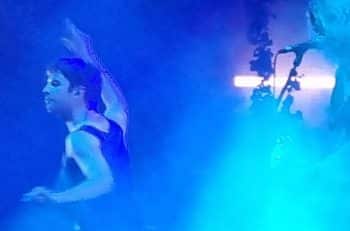
    Fontaines DC have become part of rock’s rich tapestry,  living proof that rock’s canvass is far from complete. Countless band set out to bring something new to the party. Most fail. Fontaines deliver in spades. Better again, they do so with an intelligence that permeates the lyrics and music. The group kicked up a sonic storm at the first of their two gigs at Dublin’s Iveagh Gardens on Saturday night. The hurricane was sustained by waves of intricate cross patterns delivered by the band’s guitar players, Conor Curley and Carlos O’Connell. The sensation was intensified by a series of teasing, delicate otherworldly sounds that made fleeting appearances. Grian Chatten’s mesmerising mantras  locked to the propulsive explosion of Tom Coll’s drumming; and Conor Deegan’s hypnotic bass completed a wall of sound that dominated the venue. A lot of bands labour to achieve a sonic atmosphere such as this live;   Fontaines DC do it at the flick of a switch. The future of rock ‘n’ roll is in safe hands and they are Irish, poetic, elegant and loud.

    Loading

    Read more

  • Posted in:

    If you ever thought the Irish Times wasn’t political in deciding what books to review, read this exchange.  Kevin Higgins is a poet; Martin Doyle is the Books Editor of the Irish Times; Polina Cosgrave wrote a review of Higgins’ poetry which Higgins asked the Irish Times to publish.

      From: kevin higgins <kphiggins@hotmail.com> Sent: Wednesday, June 8, 2022 7:56:21 AM To: Martin Doyle <martindoyle@irishtimes.com> Subject: For Martin   Hi Martin, hope all is well and good your side. As you may know, I have a new poetry collection – my sixth – out next week. Polina Cosgrave is launching the book in Galway. Would you be at all interested in the possibility of publishing her launch speech on you online pages? Warmest, and thanks, Kevin   From: Martin Doyle <Martin.Doyle@irishtimes.com> Sent: Wednesday 8 June 2022 09:21 To: kevin higgins <kphiggins@hotmail.com> Subject: Re: For Martin   Hi Kevin I’d be happy to consider that. But it would have to be rewritten as an article for print, be a substantial piece ie 1,000 words or so and be better than other stuff I’m being pitched. I have a backlog of three weeks’ articles so I have to be selective. An alternative is that you write a piece yourself about your work Best of luck with the collection Martin   From: kevin higgins <kphiggins@hotmail.com> Sent: Wednesday, June 15, 2022 12:39:45 AM To: Martin Doyle <martindoyle@irishtimes.com> Subject: For Martin Doyle re Polina Cosgrave article about my poetry collection   Hi Martin, just to let know, we will have Polina’s article about my new poetry collection ‘Ecstatic’ to you in the next couple of days. She says it’ll like run to just under 1,000 words. Very best, Kevin   From: Martin Doyle <Martin.Doyle@irishtimes.com> Sent: Wednesday 15 June 2022 05:40 To: kevin higgins <kphiggins@hotmail.com> Subject: Re: For Martin Doyle re Polina Cosgrave article about my poetry collection   Thanks Kevin but there is no need now. I read your piece in Broadsheet about my colleague Naomi O’Reilly and the paper she and I both work for and I really don’t see why you would want anything to do with us. https://www.broadsheet.ie/2022/05/03/kevin-higgins-this-means-war/ Martin   And here’s the launch review/launch speech:   … ‘Ecstasy’, by Kevin Higgins, reviewed by Polina Cosgrave     Kevin Higgins’ sixth poetry collection under the sardonic title “Ecstatic” starts with a dedication to the recently married Julian and Stella Assange, and this initial gesture is a perfect set-up for the poetic world we are about to enter. Prepare to be disillusioned, experience embarrassment for your government, mourn the death of journalism (and common sense at large), only to get to the core of the human condition and be inspired to choose love over gold, fear and power. “Ecstatic” is your reality check and a test to face the truth, however ugly, without a flinch. Just like a wedding ceremony in a London high-security prison, in Higgins’ poems our life becomes a celebration of humor, devotion and the beautiful mundane in confinement of global politics and oppressive social circumstances. The collection opens with the figurative lines: “The dread of being together / forcing us back to sleep”. And from there we are continuously forced to wake up and examine the world, look attentively at things that disconnect us, even if it is painful. This book is asking the reader to question not just their biased views, but the nature of thinking itself. Kevin Higgins is the Daniel Kahneman of poetry, human behavior and judgement are scrutinized through the lens of his uncompromising language. Sharp as a razorblade, not a line missing, his poems are full of what could be idiomatic phrases but are actually invented by the author: “no one hates Holocaust denial more / than the old woman who runs a bed and breakfast / five miles from Auschwitz.” These harsh truths could be overheard in an honest conversation between two old friends in a local pub, but instead they are now made available to a large audience of readers. We are dealing with the author brave and authentic enough to balance on the edge and take the risks to preserve the integrity of true art, so rare in our conformist times. Occasionally, it leaves you wondering if the expressions so easily coined all throughout the collection have always been part of colloquial speech, which might be the highest achievement for a poet. Being so close to the vernacular, that at times their voice is hardly distinguishable from that of the people. That being said, while perfectly attuned to the national discourse, Kevin’s poetry remains culturally multilayered and intellectually challenging, often metaphysical. With the focus on Higgins’ signature ruthless satire, this collection will make you laugh, bitterly and loudly, and you will hate yourself for it. Immune to inertia, his wit will keep you on your toes. From absurdist poems verging on the surrealist aesthetic (“Not time yet / to commit suicide again…”) to the beautifully shameless and staggeringly funny erotica (“Her spine is a repossessed grand piano / you still play to yourself in your sleep”), this eclectic collection covers a surprisingly broad range of subjects. Its structure develops from the specific to the general, as an extensive metaphor for inductive reasoning. We are allowed to take a peek at images of personal history, masterfully conveyed childhood memories in Coventry, 1973, share private yet universal grief for lost friendships, embrace the inevitable aging and sickness, and tenderly reflect on how our lovemaking changes as we grow older. Via the domesticity made precious and exhilarating, this collection teaches us to be vulnerable and aware how fragile we are and how little time we have left. What gives it a special depth are incredibly lyrical poems with the mental imagery of lungs and breath, trees and leaves. Together they create an almost therapeutic effect, like a blues song that helps relieve emotional tension. This sublime landscape of a rich individual inner experience comes in stark contrast to the social and environmental issues explored further on, and the entire poetic impulse of the book erupts into an anti-war, anti-capitalist and anti-colonial sequence concluding with a merciless poem called “Past” that can be read to relate to both a particular life and the chronicle of humanity. As a poet, on a personal and societal level Higgins is fighting the battle that can’t be won, and he knows it. Nonetheless,

    Loading

    Read more

  • Posted in:

    Stádas bunreachtúil na Gaeilge in Éirinn aontaithe. Le Dáithí Mac Cárthaigh.

    Tá borradh tagtha agus ag teacht faoi stádas agus úsáid na Gaeilge sa saol oifigiúil. Is teanga oifigiúil oibre den Aontas Eorpach í gan mhaolú, cíos, cás ná cathú ón 1ú Eanáir 2022. Feasta achtófar agus clófar gach rialachán, treoir agus cinneadh den Aontas as Gaeilge ag an am céanna agus ar aon dul leis na leaganacha sna 23 teanga oifigiúil eile idir mhórtheangacha domhanda cosúil le Béarla, Fraincis agus Gearmáinis agus teangacha na náisiún beag cosúil le Máltais, Eastóinis nó Laitvis. Tá Acht na dTeangacha Oifigiúla leasaithe agus an tAcht leasaithe sínithe ag Uachtarán na hÉireann. I measc na leasuithe is suntasaí anseo féachfar go mbeidh 20% ar a laghad den fhoireann a earcófar chuig comhlachtaí poiblí inniúil sa Ghaeilge faoin 31 Nollaig 2030 agus cuirfear seirbhísí poiblí ar fáil as Gaeilge sa Ghaeltacht. Beidh 20% d’fhógraíocht chomhlachtaí poiblí as Gaeilge agus caithfear 5% dá mbuiséid fógraíochta ar na meáin Ghaeilge. Éascófar úsáid síntí fada, cinnteofar lógónna dátheangacha, foirmeacha dátheangacha agus ábhar margaíochta dátheangach do chomhlachtaí poiblí. Leagfar síos prótacail nó caighdeáin chinnte maidir le seirbhísí as Gaeilge ó chomhlachtaí poiblí agus cuimseoidh na dualgais seo seirbhísí a chuireann comhlachtaí príobháideacha ar fáil thar ceann comhlachtaí poiblí. Tá reachtaíocht teanga á achtú do na Sé Chontae, reachtaíocht lena mbunófar caighdeáin teanga faoina soláthrófar seirbhísí poiblí as Gaeilge agus Coimisinéir Gaeilge a fheidhmeoidh mar ombudsman teanga. Sa chomhthéacs fáis seo, ní foláir a chinntiú go slánófar stádas na Gaeilge mar theanga oifigiúil faoi aon socrú bunreachtúil nua. Is slán don stádas láidir oifigiúil ag leibhéal an Aontais Eorpaigh agus is gá a chomhaith a chur i bhfeidhm ag baile. I gcomhthéacs Éireann Aontaithe, beidh cosaint cearta mionlach go mór i gceist, lucht labhartha na Gaeilge ina measc. Ó thaobh cosaint mionlaigh teanga de, tá múnla eiseamláireach le fáil i ndlí bunreachtúil Cheanada sa Chairt Cheanadach um Chearta agus Saoirsí a leagtar amach agus a phléitear thíos. An Ghaeilge mar phríomhtheanga oifigiúil Ó bhunú an Stáit, tá an Ghaeilge neadaithe mar theanga náisiúnta na tíre agus ó 1937 le h-achtú an bhunreachta reatha is í an príomhtheanga oifigiúil í toisc gurb í an teanga náisiúnta í. Is cuma nach ndéantar beart de réir briathair ina thaobh seo i gcónaí. Is beag dlí a chomhlíontar a chuid riachtanas an t-am ar fad ach ní chealaíonn sé sin an t-ordaitheach bunreachtúil a eascraíonn ón seasamh bunreachtúil seo. Cuimhnítear gur ráthaíodh comhionannas idir shaoránaigh ó 1937 i leith ach gurbh éigean do mhná éirí as poist stáit nuair a phósaidís anuas go dtí 1973 agus nár cuireadh deireadh leis an gcleachtas leatromach seo ach faoi anáil dlí an Aontais Eorpaigh. Mar an gcéanna, is de bharr seasamh bunreachtúil seo na Gaeilge agus an t-ordaitheach a leanann é a baineadh amach aon bhua don Ghaeilge sna cúirteanna. An té a mholann an stádas sin a mhaolú, ní ar mhaithe leis an nGaeilge atá sé, é sin nó ní thuigeann sé an Bunreacht.   Bunreacht Saorstát Éireann 1922 D’fhoráiltí le hAirteagal 4 Bhunreacht 1922 mar seo a leanas: Sí an Ghaedhilg teanga Náisiúnta Shaorstáit Éireann, ach có-aithneofar an Béarla mar theanga oifigiúil. Ní choiscfidh éinní san Airtiogal so ar an Oireachtas forálacha speisialta do dhéanamh do cheanntair nó do líomatáistí ná fuil ach teanga amháin i ngnáth-úsáid ionta. Cheadaítí maolú ar an dátheangachas oifigiúil ag deireadh an Airteagail ‘to provide for the contingency of the entry of Northern Ireland into the Free State’ dar le Kohn The Constitution of the Irish Free State (Londain 1932), lch 124. Thráchtaí ar chúrsaí teanga chomh maith in Airteagal 42: Chó luath agus féadfar tar éis d’aon dlí aontú an Rí d’fháil, cuirfidh an cléireach no pé oifigeach eile a cheapfaidh Dáil Éireann chuige sin dhá chóip chearta den dlí sin á dhéanamh, ceann aca i nGaedhilg agus an ceann eile i mBéarla (agus sighneoidh Ionadaí na Coróinneach ceann de sna cóipeanna san chun é do chur ar rolla cuimhnte in oifig an oifigigh sin den Chúirt Uachtarach ar a gcinnfidh Dáil Éireann), agus beidh na cóipeanna san mar fhínéacht chríochnuithe ar fhorálacha gach dlí dá sórt, agus i gcás coinbhlíocht idir an dá chóip a cuirfear i dtaisce mar sin, sé an ceann a bheidh sighnithe ag Ionadaí na Coróinneach a bhuaidhfidh. Tá cúpla léamh ar an bhforáil seo. Dar leis an gcéad Phríomh-Bhreitheamh, Aodh Ó Cinneide, sa chás Ó Foghludha v. McClean [1934] I.R. 469 gur thug an tAirteagal achtú dátheangach le fios seachas achtú as Béarla amháin agus tiontú Gaeilge a chur amach ar ball agus luaigh sé an nós billí/achtanna a rith go dátheangach i dtíortha eile den dlí coiteann a raibh dhá theanga oifigiúla acu .i. Ceanada (Béarla agus Fraincis) agus an Afraic Theas (Béarla agus Ísiltíris).   Bunreacht na hÉireann 1937 Foráiltear le hAirteagal 8 den Bhunreacht reatha mar seo a leanas: Ós í an Ghaeilge an teanga náisiúnta is í an phríomhtheanga oifigiúil í. Glactar leis an Sacs-Bhéarla mar theanga oifigiúil eile. Ach féadfar socrú a dhéanamh le dlí d’fhonn ceachtar den dá teanga sin a bheith ina haonteanga le haghaidh aon ghnó nó gnóthaí oifigiúla ar fud an Stáit ar fad nó in aon chuid de. Is ionann stádas príomhúil na Gaeilge in Airteagal 8.1 agus ordaitheach bunreachtúil ar ar bunaíodh na cearta a baineadh amach sna cúirteanna, an ceart chun éisteachta a fháil os comhair breitheamh a thuigeann do chuid Gaeilge, m.sh. (Ó Cadhla v. An tAire Dlí agus Cirt [2019] IEHC 503). Tugtar faoi deara gur mó an poll sa taoschnó áfach in Airteagal 8.3 más ea, in ainneoin nár achtaíodh riamh dlí den chineál a dtráchtar air ann. Tráchtar ar chúrsaí reachtaíochta agus ar chúrsaí teanga in Airteagal 25. Foráiltear le hAirteagal 25.4.4° agus 6° mar seo a leanas: 4° i gcás an tUachtarán do chur a láimhe le téacs Bille i dteanga de na teangacha oifigiúla agus sa teanga sin amháin, ní foláir tiontú oifigiúil a chur amach sa teanga oifigiúil eile. 6° i gcás téacs Gaeilge agus téacs Sacs-Bhéarla de dhlí a chur isteach ina n-iris

    Loading

    Read more

  • Posted in:

     Vatican/Vested interests 10: Women of Ireland 0. The people and process failures that created the St Vincent's NMH débacle. By Peter Boylan.

    The ownership and governance arrangements for the new National Maternity Hospital (NMH) are fraught with risk for future generations of women in Ireland. The board structure of the new hospital makes it liable to capture and control by the 3/3/3 membership structure.   The NMH will have minority representation of only three out of nine on its own board, and one of its directors is limited to chairing its own board for a maximum three out of nine years.   The three St Vincent’s Hospital Group (SVHG) directors are committed to the “continuance of the fulfilment” of the  evidently Catholic mission of the Venerable Mary Aikenhead, the founder of the Religious Sisters of Charity who is well advanced in the process of becoming a saint in the Catholic Church. One of these directors too will chair the NMH board for three out of every nine years.   Minister Donnelly claims he can guarantee that his successors over the next 299 years will not appoint three anti-choice members who could combine with the three SVHG members to form a 6:3 anti-choice majority. There is no need to speculate that such a situation might arise in fifty or a hundred years.   Memories are clear of the infamous picture of the majority of the Fianna Fáil parliamentary party just four years ago — women to the forefront — holding up “Love Both” posters; while men in the background all affirm their anti-choice position.   In a final blow for NMH board independence, one of the ministerial nominees will chair the board for three out of every nine years.   The global pushback on women’s reproductive rights is constant.   Majorities on controlling boards matter.   Just look at how a majority anti-choice Supreme Court in the USA is poised to overturn Roe v Wade.   Problems with the NMH relocation plan began can be traced back to a letter written by then Master, Dr Rhona Mahony, and Deputy Chair Mr Nicholas Kearns to Kieran Mulvey in September 2016.   Problems with the NMH relocation plan began can be traced back to a letter written by then Master, Dr Rhona Mahony, and Deputy Chair Mr Nicholas Kearns to Kieran Mulvey in September 2016.   “We agree that the ownership of what is now the NMH will transfer to the ownership of SVHG, a private company owned by the Sisters of Charity”.   Simon Harris, then Minister for Health, enthusiastically embraced this plan in the Mulvey report   Simon Harris, then Minister for Health, enthusiastically embraced this plan in the Mulvey report, apparently untroubled by the history of the Magdalene laundries in Ireland and seeing no possible risk in a Catholic religious order owning the State’s flagship maternity hospital.   When the predictable public uproar ensued, five years of complicated and secretive legal manoeuvres commenced.   The Sisters announced they were departing healthcare. Not true, they were gifting their land to their successor private company, St Vincent’s Holdings.   The Sisters announced they were departing healthcare – a plan in the works for several years before May 2017 – and were “gifting lands worth €200 million to the People of Ireland”.   Not true, they were gifting their land to their successor private company, St Vincent’s Holdings.   They then tried to claim that they did not need Vatican permission for the shareholding transfer. Not true either.   They then tried to claim that uniquely among Catholic religious orders they did not need Vatican permission for their shareholding transfer.   Not true either.   Two more years passed while the machinery in Rome considered the Sisters’ petition. In Ireland, a dizzying number of legal documents whizzed between top law firms as the State’s attempt to dig itself out the hole it had created for itself became increasingly labyrinthine and Byzantine.   Following correspondence between the Sisters, the Irish Catholic hierarchy, the Papal Nuncio, and the Vatican, conditional permission was granted in 2020 for the creation of St Vincent’s Holdings. Two further years passed while the civil law process got underway.   In a spectacular failure of due diligence, that correspondence has never been seen by the Government who have now committed to spending a billion euros   In a spectacular failure of due diligence, that correspondence has never been seen by the Government who have now committed to spending a billion euros, and probably more, on a new hospital whose operating company NMH DAC will be owned by St Vincent’s Holdings – the Sisters’ Vatican-approved successor.   Only sustained opposition and public pressure forced the release of some of the tangled web of legal documentation following failure to approve Minister Donnelly’s Memo to Cabinet two weeks ago.   Contradictory “definitions” were put forward about the term “clinically appropriate” including one risible proposition that it was to ensure NMH clinicians didn’t indulge in a spot of brain surgery when they were supposed to be doing a caesarian section.   In a new twist, fresh consternation arose about the term “clinically appropriate” in the documents. Taken by surprise, different and contradictory “definitions” were put forward, including one risible proposition that it was to ensure NMH clinicians didn’t indulge in a spot of brain surgery when they were supposed to be doing a caesarian section.   Doctors such as Professor Louise Kenny and myself were clear that these words make the provision of legally permissible services dependent on the clinical decision of a doctor rather than the request of woman on a case-by-case basis. They remove patient autonomy.   Nothing has changed since the Chairman of SVHG, Mr James Menton made clear in May 2017 that the project “will only proceed on the basis of existing agreements that give ownership and control of the new hospital to St Vincent’s Healthcare Group” Irish Times May 30 2017 .   His objective has been wholly achieved.   Vatican/Vested interests 10: Women of Ireland 0.   And the Government, as we now know, has never been on the pitch.   Dr

    Loading

    Read more