General

Random entry RSS

  • Posted in:

    ‘A Date for Mad Mary’, into the difficulties of a troubled woman

    ‘A Date for Mad Mary’ is one of the most heartfelt and immediately loveable films of the year. Based on Yasmine Akram’s play, ’10 dates for Mad Mary’, and directed by first time director Darren Thornton, the film is a compassionate tale of friendship, love and adversity. The film stars relative unknown Seána Kerslake, as the titular character “Mad” Mary McArdle. The plot involves Mary’s recent release from Mountjoy prison, after an apparent assault charge, as well as her subsequent attempt at reintegration into her old way of life, in Drogheda. But, as she soon comes to realise, the life she left, for better or for worse, is not the same as the one awaiting her upon her return. Her best, and only, friend Charlene (Charleigh Bailey) is about to get married. Charlene denies Mary a “plus one” invite to the event, assuming that she would be unable to find a date in time, leading Mary to become determined in disproving her. Struggling to find her place in a world she is completely ostracised from. This relatively unassuming plot summary does nothing to speak of the true richness of this film, which lies in its characters and the quality of its script. Through our protagonist of Mary, we are granted insight into the very down-to-earth life of a young woman who finds herself at constant odds with the world around her, while desperately clinging to a life she once knew, but which has left her behind. Alienated by her friends and family she attempts to both mature as a person, while staying true to herself. Mary is an incredibly well-written and captivating character. Seána Kerslake gives an incredible, nuanced performance of her character’s subtle complexities, especially for such a new face in film. From her gruff, abrasive exterior to her more sensitive and lonely side. Eloquently expressing emotion with little more than a twitch of the lip or a seemingly vacant gaze, achieving a calibre of performance, which even the recent breakout success ‘Sing Street’ could not. Thornton masterfully directs scenes from beginning to end, with a particular highlight being the scene in which Mary comes face to face with the victim of her assault. This wordless encounter manages to say more than any dialogue could about the ways in which Mary’s past haunts her, like an inescapable, ghostly presence, looming over her at all times. His incredible sound work with this scene is enthralling. On one level, ‘A Date for Mad Mary’ is a wonderful, true to life look into the difficulties of a troubled woman transitioning into maturity. But, on another level it is also a sign of the times for Irish cinema, which has seen a recent renaissance of sorts, with modern Irish films such as ‘Calvary’, ‘Frank’, ‘Brooklyn’, ‘Room’ and the previously mentioned ‘Sing Street’ all receiving international, critical acclaim. With two of the aforementioned films receiving nominations for best picture. As well as the country itself being used by larger productions as a frequent filming location, such as ‘Game of Thrones and Star Wars: The Force Awakens. One contributors to the current success in Irish cinema was made possible by the re-establishment of the Irish Film Board in 1993. The Irish Film Board attempts to bring Irish films to international audiences, through their assistance and funding. The fruits of their labour, however, have begun to truly ripen in the past half decade or so, with an increase in recognition for their achievements. The film industry has taken years to get to this point, with over twenty years already spent in the funding of Irish projects. It was a long process for the board to acquire the necessary skills to both identify viable projects and to advise film makers on the production of those projects. Unfortunately the Irish Film Board’s funding is down 40 per cent to €11.2 million from its 2008 peak of €20 million. The challenge now for the Irish film board and the industry is to make a persuasive  case for a re-establishment of funding levels seen prior to 2008. To do this they will need to both persuade the government and the wider film going audience of its merits. Brian Lenihan

    Loading

    Read more

  • Posted in:

    When shall we three meet again?

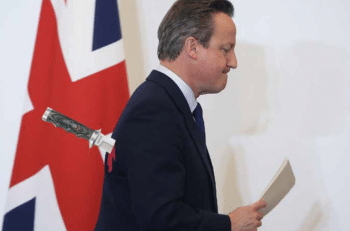
    This is a saga of sadness, a tragic tale of three ‘whiches’, a fairy ‘which’, a whichsoever ‘which’ and a wicked ‘which’. In initiating each of three referendums, David Cameron said, “You have a choice, ‘this’ or ‘that’, which do you want?”. So all three ballots were binary, and while the first two delivered what he wanted, the last one was, in effect, political suicide. All three outcomes were inaccurate reflections of ‘the will of the people’. Let’s have a look, and then let’s consider a better methodology. 2011 Referendum on the Electoral System After the 2010 general election, the UK had a coalition government: Cameron’s Conservative Party (Tories) and the Liberal-Democrats. And he probably thought to himself, “How can I rid myself of the Lib-Dems’ persistent pursuit of proportional representation, PR?” Hence the first ‘which’, so to silence any further debate on electoral reform. Some people liked single-seat constituencies, either the UK’s first-past-the-post, FPTP, a plurality vote; or France’s two-round system, trs, a plurality vote followed by a majority vote; both are single preference systems; or again, there is the Australian alternative vote, av, a preference vote which is like a knock-out competition – in a series of plurality votes, the least popular is eliminated after each round and his/her votes are transferred to the voters’ second or subsequent preference… until a candidate gets 50%. Meanwhile, many wanted PR in multi-member constituencies. There is the German half FPTP and half PR-list system called multi-member proportional, mmp. There is PR-list – in Israel, you vote for a party; in the Netherlands, for a candidate of one party; in Belgium, for one or more candidates of one party; and in Switzerland, for those of more than one party. Or there’s the Irish PR-single transferable vote, PR-STV, where voters can vote cross-party in order of preference; STV is like AV except that success depends on (not a majority but) just a quota of votes. Overall, then, the choice was huge. But Cameron’s 1st preference was FPTP and his 2nd av. So that was the 2011 referendum, the first ‘which’: “FPTP or AV, which do you want?” For countless (and uncounted) supporters of pr, this was like asking vegetarians, ‘Beef or lamb?’. Now maybe FPTP was the most popular but, based on data from just a two-option poll, impossible to say. For Cameron, however, it was a dream: he chose the question, and the question determined the answer, just as any fairy godmother would have wished: a massive 67.9 to 32.1%. Magic. Furthermore, the Electoral Commission said the question was fair. Amazing. The Ombudsman agreed. Incredible. And many thought this was all democratic. So that was the end of that argument. So why not a second fantasia, another referendum? Scotland 2014 “Double, double, toil and trouble”, said the witches in Macbeth. The Scottish Nationalist Party, (SNP), always on about independence. How can I rid myself of these skittish Scots? This was Cameron’s second problem, and so, as if on a broomstick from the darkest recesses of Westminster, the second ‘which’ enters the political stage. There were three options: (a) the status quo, (b) maximum devolution or ‘devo-max’ as it was called, and (c) independence. Thinking that (a) would easily beat (c) in a two-option contest, just as FPTP had wiped out av, Cameron waved his wizard’s wand and demanded a binary ballot. So the second ‘which’ was again dichotomous: “(a) or (c), which do you want?” In the campaign itself, however, the gremlins were grumbling, option (c) was gaining ground. Cameron twitched; no – panicked: and so, as if at the witches’ coven, a vow was made – zap! – and option (a) morphed into option (b). On the ballot paper, however, there was no switch, the ‘which’ was still “(a) or (c)?” So the result was a stich-up: 55.3% and 44.7% respectively were highly in ated levels of support for (a) and/or (c). Furthermore, the winner was (b)… but no-one had voted for it! For Cameron, though the potion was fading, the plebiscite was still successful, and that was the (very temporary) end of that argument too. We return to the diviners’ den. The EU Referendum Believing as it does in majority voting, the Tory Party (and many another) is a beast of two wings and no body. Little wonder that this weird creature is often in a ap, especially over Europe. “Those cursed Europhobes”, he might have muttered. And then, stage extreme right, another scary monster, the UK Independence Party, Ukip. “Oh how can I rid myself of these damned devils?” Ah-ha, the third… but this was the wicked ‘which’. The wrong side won. The Electoral Commission’s semantic change from ‘yes-or-no?’ or ‘in-or-out?’ to ‘remain-or-leave?’ did not change the poisonous potent of the poll, its binary bind, its divisive ‘positive-or-negative’ nature. The question – “Which do you want?” – was again adversarial. The campaign was horrible. And the result? 48.1% chose ‘remain’ to 51.9% ‘leave’. But nobody knows what the latter actually want! To suggest, then, that this outcome is ‘the will of the people’ is, again, bunkum. Meanwhile, politically, Cameron is dead, impaled on his own petard; in a word, ‘bewhiched’. Democratic Theory and Practice So what should have happened? Well, consider first a hypothetical example. The average age of the electorate cannot be identified by a majority vote. If such a piece of research were to be attempted, the question would probably be, “Are you young or old?” In which case, no matter what the answer and by what percentage, it would be wrong! If, however, the question were multi-optional, ‘Are you in your twenties, thirties, forties, etc.?’ the answer could be pretty accurate. With average age or collective opinion, as in a German constructive vote of con dence, voters should be positive. No-one should vote ‘no’ or ‘out’ or ‘leave’; instead, everyone should be in favour of something: for the UK to be in the EU, or like Norway in the EEA, or like Switzerland in a looser

    Loading

    Read more

  • Posted in:

    Irexit

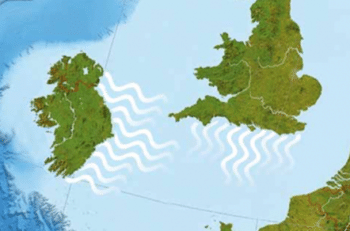
    Since the Brexit referendum in June I have been rapporteur of a Private Study Group of Irish economists and constitutional lawyers who have been examining what we should do when and if the UK leaves the EU. In August their report was sent to the Taoiseach, his Ministers and the Secretary-Generals of all Government Departments. It has been sent also to the EU embassies in Dublin, to UK Prime Minister Theresa May, her key Ministers and senior civil servants concerned with Brexit, and to a wide range of British Brexiteers whom my colleagues and I have got to know over the years. The report’s basic conclusion is that it is in the interest of the Irish people that Brexit should be accompanied by “Irexit” – Ireland exit. We applied to join the then EEC in 1961 because Britain and Northern Ireland did so. We joined simultaneously with the UK and Denmark in January 1973. Now that Britain and the North are leaving, we should do the same, for three principal reasons. The first is that Ireland is nowadays a loser, not a gainer, from EU membership. In 2014 we became a net contributor to the EU Budget for the first time, paying in €1.69bn and receiving €1.52bn. This means that in future any EU moneys that come to the Republic under the CAP, EU cohesion funds, research grants, support for community groups and the like, will be Irish taxpayers’ money coming back, employing some Brussels bureaucrats on the way. Henceforth the EU will no longer be the ‘cash cow’ most Irish people have regarded it as for decades, and which is the basis of much of our official and unofficial europhilia. A bonus would be that outside the EU Ireland can take back control of its sea-fishing waters. Eurostat’s estimates of the value of fish catches by non-Irish boats in Irish waters since 1973 are a many-times multiple of the EU cash we got over that time. The second reason why Irexit should go along with Brexit is that that is the only way of preventing the North-South border within Ireland becoming an EU external frontier, with new dimensions added to Partition, affecting trade, travel and different EU laws and legal standards as between Dublin and Belfast. For example without the UK as an EU Member alongside it, the Republic would be in a much weaker position to withstand pressure to adopt continental norms in EU crime and justice policy, which differ signi cantly from Anglo-Saxon ones in such areas as trial by jury, the presumption of innocence and habeas corpus. Such divergence would adversely affect good relations within Ireland as a whole and while it would not undermine the Peace Process, it would not help it either. If we stay in the EU while the UK leaves it would mean that for Irish reunification to come about at some future date the people of the North would have to rejoin an EU that Britain had long left, adopt the euro-currency, take on board a share of the €64bn of private bank debt which the ECB insisted that Irish taxpayers nance during the 2008-2010 currency crisis, and implement the further integration measures that are likely to be needed over the coming years if the Eurozone is to be held together. It would give 26 EU Governments in addition to the UK and the Republic a veto on eventual Irish reunification. Such a development should be unacceptable to all Irish nationalists. Another consideration is that if the South remains in the EU while the North leaves along with Britain, future Irish reunification would make the whole of Ireland part of an EU military bloc that is likely to come under greater Franco- German hegemony following Brexit. That potentially could be a security threat to Britain. This will surely change significantly the calculus of British State interest and give Britain a strategic reason for keeping the North inside the UK, an interest it has not got today. The third reason why most Irish people should now reassess their attitude to the EU is that the business case for Ireland remaining an EU member diminishes significantly if the UK leaves. Most foreign investment that comes here is geared to exporting to English-speaking markets, primarily the UK and USA, rather than to continental EU ones. Once the UK leaves the EU two-thirds of Irish exports will be going to countries that are outside it, as they are going today to countries outside the Eurozone, and three-quarters of our imports will be coming from outside. Outside also, Ireland’s 12.5% corporation tax rate would no longer be under EU threat. Of course our relations with the UK and the EU in the Brexit context are complicated by our membership of the Eurozone. Irish policy-makers abolished the national currency and joined the Eurozone in 1999 on the assumption that the UK would do so also and that by going first they would show how communautaire they were. It was an utterly irresponsible action in view of the fact that the Republic does most of its trade with countries that do not use the euro. With the pound sterling falling against the euro as the UK disengages from the EU, Ireland desperately needs an Irish pound that can fall with it, so maintaining its competitiveness in its principal export markets – the UK and America. That is why the Irish State urgently needs to get its own currency back. Economist Chris Johns noted in the Irish Times on 20 August that if the Irish pound existed today it would be worth some 10 percent more than the pound sterling. This was the level it reached in January 1994, when Irish industry was in crisis because of its overvalued exchange rate – explicitly then, implicitly today. That in turn precipitated the major devaluation which inaugurated our ‘Celtic Tiger’ years. Ireland needs to regain the freedom of being able to determine its own exchange rate. There is no legal way to

    Loading

    Read more

  • Posted in:

    Oxford, Britain

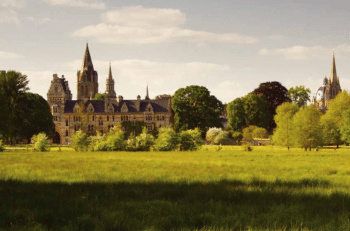
    North Oxford is a heartland of academia where leafy halls of residence mingle with stately homes and rarefied hostelries. Situated in almost the very centre of Britain a windless calm favours scholarly reflection removed from modernity’s fugue. Even the traffic is orderly with bicycles sensibly preferred. It is one of the most attractive places in the world. Spend an afternoon on the lawns at Christchurch if you doubt it. Oxford is world-class in so many ways: the city and the university. PWC and Demos rated it the best place to live in Britain, in 2012, across a wide range of criteria. Shanghai ratings names Oxford University the seventh best in the world. South Oxfordshire was recently named Britain’s best rural place to live. It is transcendent England. What has this to say about Brexit, the political issue of this generation? The City of Oxford is located on the confluence of the Isis (the idiosyncratic name for the Thames here) and Cherwell rivers. Broadly, it may be divided into three zones with a clear north-south divide: that affluent and mature north Oxford of Jericho and Wolvercote; predominantly twentieth-century suburbs including Cowley to the south; and the historical and commercial centre linked to Botley and Osney Island, built around an Anglo-Saxon settlement of which little remains. This contains renowned colleges such as Christchurch, Balliol and Magdalen. The first sign of incongruity is how close it nestles to the ‘any-town-UK’ commercial centre and its array of gaudy chains. Moving south, there is yet another Oxford as housing gets cheaper and industry is evident. The first industrial revolution passed Oxford by as colleges objected to the contagion of commerce. Only after World War II did significant manufacturing arrive as the city attracted a car industry. By the early 1970s, 20,000 people were employed in the sector and the original Mini Minor was developed here in 1959. Unfortunately, as in much of the country, a significant proportion of heavy industrial jobs have departed. The working class areas now face social problems familiar in many English cities. Living as a jobbing tutor and supply teacher in Oxford for two years I encountered classroom behaviour that made experiences in schools in socially-deprived areas of Dublin seem almost meditative. Oxford is a place of profound educational inequality. Oxford accomodates a great literary tradition: JRR Tolkien, CS Lewis, Lewis Carroll, Kenneth Graham and Irish Murdoch wrote from Oxford. The number of Prime Ministers that have passed through Oxford University is startling. 28 overall. Only Jim Callaghan and John Major, who revelled in his immersion in the university of life, among English Prime Ministers since Winston Churchill (who finally left office in 1955) did not pass along its quads. Alumna Theresa May (St Hugh’s, 1974) joins a list that includes Labour Prime Ministers Tony Blair (St John’s, 1974), Harold Wilson (Jesus College, 1937) and Clement Atlee (University College, 1904) as well as Tories Anthony Eden (Christchurch College, 1922), Harold MacMillan (Balliol College, 1914) Edward Heath (Balliol College, 1939), Margaret Thatcher (Somerville College, 1947), and David Cameron (Brasenose College, 1988). Oxford indubitably has seeded the post-War UK political establishment. Moreover, numerous Tory politicians maintain an association with the wider shire. Churchill himself was born in the nearby ancestral estate of Blenheim Palace (though he passed some of his early childhood in Dublin’s Phoenix Park). David Cameron, MP for Witney, Oxfordshire, lives in Chipping Norton close to Rebekah Brooks, Jeremy Clarkson and the rest of the well-placed Chippy set. Michael Heseltine (Pembroke College, 1954) dwells in style nearby though one imagines he looks slightly askance at the gobby neighbours. Theresa May grew up in the village of Wheatley a few miles east of Oxford where her father served as vicar. Further east towards London, Boris Johnson (Balliol College, 1987), the new foreign secretary, lives in Henley-on-Thames. Jeremy Paxman, Richard Branson, Kate Moss, Kate Winslet, Rowan Atkinson, Jeremy Irons and Ben Kingsley: celebrities, high-and-low-brow, live in Oxfordshire. Perhaps the county has a quality – an England of the imagination – that grandees of all sorts gravitate towards. It could be the low rural population density, a legacy of the Enclosure Acts (1760-1830) that placed formerly common land in the hands of expanding gentlemen farmers. Today, though located only an hour from some of the most in ated land prices in the world in London, it is possible to drive for long stretches without seeing a single dwelling. The hoi polloi were kept at bay, in Oxford and swathes of its hinterland. As an Irish person living in the city of Oxford I never had a sense that I was unwelcome, or at least any alienation was no different to that felt by the bulk of the population before a converging aristocratic and mercantile elite: unlike the ancient regime in France since the Tudor era, nobility has been open to the highest bidder and an Oxford education provides the polish. One must however acclimatise to the southern English reserve and a sardonic sense of humour. The historian Tony Judt (St Anne’s College 1980- 87), who concededly knew little of Ireland, wrote that the English are perhaps “the only people who can experience schadenfreude at their own misfortunes”. Succumbing to generalisation I regard English friendships as firmer than Irish for all the latter’s sociability. But these societies of companions generate mosaic communities often hostile to one another. Better the devil you know and bugger the rest. In the era of the Internet there is a growing suspicion of the ruling class of politicians. Many do feel “shat on by Tories, shovelled up by Labour” in the words of Uncle Monty in ‘Withnail and I’. They are often seen as a separate cast reflecting the cultural dominance of Oxford and Cambridge Universities (‘Oxbridge’) which extends to the media and business. This trend perhaps explains why maverick and grumpy (though otherwise profoundly different) outsiders such as Jeremy Corbyn, Nigel Farage (and Boris Johnson who went rogue over Brexit) are appealing to a jaded electorate; a state of

    Loading

    Read more

  • Posted in:

    Galway Sprawlway

    Around one hundred submissions were received by Galway’s City Council on its Draft Development Plan 2017-23 by the deadline of 5 October. Meanwhile, a number of well-known community and environmental activists in Galway City have come together to form a new alliance to promote a ‘Future Cities’ concept based on “regenerative urban development, ‘green’ living, smart technologies and a sustainable transport. They have a lot on their plate. It’s a planning and transportation mess with no visionary Messiah. In many small cities comparable in size to Galway, people are regenerating and humanising their urban environments by introducing woodlands, gardens, recreational parks and city-wide 24/7 cycling, walking and public bus or train systems. Yet here in Galway City we are now proposing to build the N6 ringroad that will cut through homes, villages, neighbourhoods, farmland, key wildlife habitats, a university campus and sports elds, and lead to further mindless urban sprawl of this, in so many ways, creative city. Then, having spent €700m on a new road, there will be no incentive or money left to introduce the Public Transport improvements being promised “after the road is built”. If Galway City is to have a sustainable future, the authorities should immediately bin a policy based on a discredited ‘predict and provide’ private car-based transportation model and instead should use the available €500-750m to construct a hierarchical transport model based on a ‘new mobility’ prioritising pedestrians, cyclists and users of public transport”. When the IDA first developed its business parks at Parkmore in the early 1970s there were very few businesses initially established out that far. So having only one main entrance avenue wasn’t a problem. In the intervening years the estate has exploded so it now accommodates many of the world’s leading medical device and IT manufacturers. With very little available public transport passing, let alone actually entering the estate: the sheer number of private cars coming in has now reached crisis point. Yet Galway Co Council actually gave permission for a new sub-standard entrance/exit point and junction giving the planning board no choice but to refuse permission. In September An Bord Pleanála duly reversed the permission because “its construction would endanger public safety by reason of traffic hazard”. This decision could, should, force debate about the much larger can of worms around Ireland’s lack of a ‘sustainable’ National Spatial Strategy’. The daily traffic chaos in Parkmore is a symptom of the much wider problem we have in historic spatial planning in Galway, with rapidly increasing numbers of people having to commute from their new homes in County Galway to their workplace in the city, by car. This phenomenon has become overwhelming over the past 40 years. Workers living in the city but working in Parkmore/Ballybrit have been failed by the lack of civic imagination that might have provided an adequate public transport system in the city. For a youthful and fashionable city, capital of ‘craic’, dubbed as progressive, and once crowned ‘the fastest growing city in Europe’ this is anachronistic. In its May 2014 Newsletter, the Western Development Commission – using an IDA case-study, stated that “of the 16,701 rural dwellers commuting to work within the gateway of Galway city, one quarter (25.6% or 4,285) commute to work in the IDA estates”. The first figure refers not just to people heading in to Ballybrit, Parkmore and Galway Technology Parks, but others who commute further still into the heart of Galway city, for work at GMIT, NUIG and UCHG, our largest city-centre employment nodes. As James Wickham said in his book ‘Gridlock’: “Car dependency is an issue for social policy. Car dependency exacerbates social exclusion, for those who do not have a car run the risk of being excluded from normal life. Their access to jobs is restricted, they find it difficult to move around the city, they are not full citizens”. There is a belief that transportation problems result from the antedeluvian planning policies of the 1980s and 1990s, both at local and national level. These intensi ed in Galway from the time Colin Buchanan and Partners published its ‘Galway Transportation and Planning Study’ in September 1999. This report together with its subsequent 2002 ‘Integration Study’ commissioned jointly by Galway City and County Councils, led to a situation in Galway, not dissimilar to that of Dublin, where availability of sufficient reasonably priced housing units in the city failed to keep up with growing public demand. This, combined during the madness of the Celtic Tiger years, with pressure being applied by county councillors and developers turned Galway’s surrounding towns, villages and particularly countryside into worker dormitories: for families that had been priced out of continuing to live in Galway city. The Galway County Development Plan of 2002, which integrated the recommendations from the Buchanan Report, facilitated development in places ringed around the city: Bearna, Moycullen, Claregalway, Tuam, Oran- more and Athenry. And everything in between. Responding to Galway County Council’s then- Draft Development Plan in July 2002, then City Manager John Tierney wrote to Donal O’Donoghue, then County Manager, expressing some concern over proposed policies which would continue to promote a wider spread of settlement, and not the concentration into the 38 towns, villages and proposed development at Ardaun that had been planned. He stated: “The cumulative effect of these policies/objectives all greatly undermines the ‘Galway Transport and Planning Study’ GTPS, any sustainable approach to a settlement structure and consequently any ability to promote a sustainable public transport system. It would exacerbate the current dependence on private vehicular transport and the consequent negative effects of this”. Tierney’s pleas went ignored, and widespread ‘one off’ housing development in County Galway continued unabated, with septic tanks mushrooming leading to water pollution, cryptosporidium, and a culture of lengthy commutes into once homely Galway City. So a long-term strategic policy for planning where people might be sustainably housed was scupperedd, due to the regime, the report and thousands of concomitant individual acts of planning anarchy, cumulatively undermining any regional strategy. The problem is now self-pepetuating and solution-less.

    Loading

    Read more

  • Posted in:

    Seeya print

    The recent Audit Bureau of Circulation (ABC) figures for newspaper sales for January-June 2016 show an alarming decrease for nearly all Irish newspaper titles, with the demise of the industry itself now, for many, inevitable. Of the national newspapers, The Irish Times dropped 5.5 percent compared to the first half of last year, The Irish Independent is down 6.4 percent, The Irish Examiner 6.7 percent and The Evening Herald 8.4 percent in the same period. Most daily tabloids are down, apart from the Irish Sun, which saw a rise of 4.6 percent year on year. The Sunday Independent dropped 6.7 percent year, The Sunday Business Post 3.5 percent, The Sunday Times 6.4 percent and The Sunday World 8.9 percent. The Irish Mail on Sunday fell by 7.2 percent while the Irish Sun on Sunday recorded the only rise in circulation at +9 percent. Overall, the circulation of daily print titles was 5.7 percent lower and of the Sundays 6.3 percent lower. Globally, the threat to newspapers is epidemic. In May 2016, the 121-year-old Tampa Bay Tribune, Florida, ceased publication; in March, the London Independent and Independent on Sunday ceased their print publications and November 2015 saw Russia’s only independent English-speaking title The Moscow Times end its daily edition in favour of a weekly format. In 2013, The Washington Post was sold to Amazon.com founder and chief executive Jeffrey P Bezos for $250m. In September 2010, the Chairman and Publisher of The New York Times announced to an International Newsroom Summit that: “We will stop printing the New York Times sometime in the future, date TBD”. The Guardian, whose web edition is the world’s second most popular English-language newspaper website – after the Daily Mail online, has shed 200 jobs and clocked up losses of £69m for the last financial year with falls in both print and digital revenue leading to an £8m fall in total turnover to £209.5m. Digital revenues were £81.9m, down almost £2m from the preceding year as Facebook and Google ate up the bulk of the money it had made from mobile advertising. Based on current trends, commentators have predicted that only the Sunday and weekend newspapers will survive in a culture immersed in Facebook, Twitter, Snapchat and Youtube and with the proliferation of citizen journalism offering free ‘news’ content. What New Media offer is ‘free’ news as it happens from an infinite number of sources around the globe; in the age of New Media, traditional values of accuracy, accountability and professionalism are at risk from unverifiable facts, unconfirmed sources and the constant need for instant news; and gossip. With daily newspapers, today’s news is essentially yesterday’s, or this morning’s at best. Newspapers have made a concerted effort to shift content towards analysis and commentary, but this hasn’t been enough. What the recent ABC gures don’t reveal is where these disenfranchised readers are migrating. The loss of newspaper revenue may be partly attributable to growing internet usage and online culture, but this does not necessarily mean those same readers are now reading news online. A decline of 10,000 readers for a national newspaper does not equate to an additional 10,000 people reading or accessing news online. Youtube, Facebook, Twitter and other social media account for most internet usage, so perhaps not all migrated readers/users will be regular perusers of the Guardian online edition. A ‘cornerstone of democracy’ for over 400 years is now in danger of imploding. Attempts by newspapers to embrace New Media by offering pay walls for access to online content have so far been largely unsuccessful (though the Guardiannow boasts 50,000 ‘subscribers’); cynics point to the obvious – there is simply too much ‘free’ news to be harnessed online. Print Media’s only hope is to reinvent their current business model and somehow embrace their biggest rivals. What that does for journalism is another story. Ken Phelan

    Loading

    Read more