General

Random entry RSS

  • Posted in:

    Treatment of trans in transition

    Transgender issues are becoming more visible. Last year’s Gender Recognition Legislation was mostly progressive and things are improving. However, it’s not all plain sailing for this community and their families. Families of transgender people face many challenges as their loved one undergoes a gender transition, and often have to shelve their own emotional needs as they battle recalcitrant public services. Despite legislation that is seen as among the best in the world, there are still gaps. The problem is the lack of legislation for children under 16 years. This creates challenges in the school system with knock-on effects. Ironically before the recent legislation everybody was in the same situation, and every situation was technically up for negotiation. Now, trans people under 16 don’t exist. The Passport Office had discretion to change the gender marker on a passport for young people. That is no longer the case: you can only have the gender marker changed on your passport if you have a gender-recognition cert or your birth certificate has been amended. Changes can be made to your PPS number to reflect the gender identity of a young person who is undergoing, and has proof of, a medical transition. That omits younger children who are socially transitioning. They feel let down and isolated. Parents are left trying to navigate a system that doesn’t recognise their children. TransParenCI is a peer-support organisation for family members of transgender people, which is open to all family members over 18, not just parents. The group has grown from 14 people back in November 2011 to a massive 150 families. TransParenCI supports these families with the assistance of TENI. There are now four groups – one in Limerick, Dublin and Carlow, and the Transformers group for young people. Families experience challenges when trans family members express themselves to be trans. Needs can be wide-ranging. In some cases, families experience a relational rupture as they struggle to understand what is happening with their loved one. It can cause conflict within the family and with external family, which in turn de-stabilises the family unit. TransParenCI’s monthly meetings and annual residential sessionn endeavour to address these issues by facilitating the needs of the family and allowing them to take a journey. However, the parents often realise that their own emotional needs in many situations have to be set aside, as they engage with systems that are ill equipped to meet their child’s needs. Healthcare and official treatment are a major obstacle that parents and families have to navigate. They can initially experience a foreboding about medical interventions. However, on further investigation and after speaking to other families, they realise that such options have been found to be safe and that an International protocol has been developed. The treatment received is currently influenced by what area of the country the family resides in and the experience of health professionals in that area. Consultations are underway with the HSE about an official treatment pathway for trans young people and adults. Health professionals throughout the country have been offered training through a partnership between the HSE and TENI. In 2015, 69 training events were delivered to over 2,000 staff. This partnership is having a positive impact on service delivery and patient safety. Feedback suggests high levels of client satisfaction. This approach is addressing some of the gaps. However, they need to be narrowed further and an official treatment pathway will help. TENI, in partnership with parents, is calling for further changes in legislation. It is organising workshops with the Department of Children and Youth Affairs in July. The hope is that, over the coming months, the issues of legislation, education and healthcare are clarified, and resolved. In turn, families can then begin the journey of understanding their unique situation, and TransParenCI can continue facilitating the needs of all family members. TransParenCI can be contacted through: office@teni. ie, Catherine@teni.ie or 01-8733575 (TENI) and 0870637933 (Catherine). Vanessa Lacey is Health and Education Manager, Transgender Equality Network Ireland (TENI).  By Vanessa Lacey

    Loading

    Read more

  • Posted in:

    US Zeitgeist shifts to isolationism

    “My foreign policy is ‘Don’t do stupid shit’”, Barack Obama said to the White House press corps on board Air Force One in 2014. So the New York Times’ Mark Landler, who was there, tells us in a recent illuminating book on the contrasting foreign policy approaches of Obama and Hillary Clinton as the US adjusts to a world in which it is no longer the hegemon it was for the quarter century since the collapse of the USSR in 1991.* Having been Obama’s rival for the 2008 Democratic presidential nomination, Hillary Clinton was in charge of his foreign policy as Secretary of State during Obama’s first term, and she now looks like succeeding him as President unless the Republican Donald Trump can stop her. We are all likely to be affected over the next four years by whichever of this duo eventually reaches the White House. The “stupid shit” Obama was referring to in 2014 was the pressure he was then under to get rid of the Assad regime in Syria, to escalate tension with Russia over Ukraine and to placate the Zionist Israeli lobby by abandoning his efforts to get a nuclear deal with Iran. Hillary Clinton was on the opposite side on each of these, and various other, foreign policy issues. Back in 2002 Obama, then a littleknown Illinois state senator, told a rally against George W Bush’s impending Iraq war, “I am not opposed to all wars. I am opposed to dumb wars”. By contrast, a week later Hillary Clinton, then also a senator, said she voted “with conviction” in favour of Bush’s invasion of Iraq. When Secretary of State in 2011, Hillary Clinton was the principal supporter in Obama’s Cabinet of Britain’s David Cameron and France’s Nicolas Sarkozy as they pushed for a total assault on Colonel Gadaffi’s regime in Libya. Obama then watched in consternation as post- Gadaffi Libya descended into a failed state. Regret at having given in to the hawkish Hillary on Libya undoubtedly influenced Obama in resisting pressure to follow a similar course in Syria. To quote Landler’s book: “Obama stands for those in America’s ruling circles who believe the US resorts too readily to military force to defend its interests, that American intevention in other countries usually ends in misery, and that the US would be well-served by defining its interests more narrowly than it has for most of the post-World War 2 era. Counterposed to that view are those, like Hillary Clinton, who believe that the calculated use of military power is vital to defending national interests, that American intervention does more good than harm and that America’s writ rightfully reaches, as George W Bush once declared, into ‘any dark corner of the world’”. Clinton and Obama embody competing visions of America’s role in the world. His vision is restrained, inward looking, radical in its acknowledgement of limits. Hers is hard-edged, hawkish and unabashedly old-fashioned. Hillary Clinton gets on well with America’s generals. They in turn are in and out of the military- industrial complex, which can never get enough orders for military hardware, whose share prices rocket when international tension increases, and about whose malign influence on US foreign policy former General Dwight D Eisenhower – who coined the term “militaryindustrial complex” – warned in his farewell address as Republican President in 1961. Of course Obama and Hillary Clinton are agreed on certain things. One is the European Union. When Obama came to London recently to tell the British public that they should vote against ‘Brexit’ and stay in the EU, he was voicing long-standing Democratic Party policy subscribed to wholeheartedly by Clinton: support of globalism in economic policy and support of the EU as America’s collective junior partner in foreign policy – with the British Government as America’s reliable voice in the EU. Many people do not know that the EU was largely an American creation, a spin-off of the Cold War, and that supranational integration was pushed by the US and its allies in the 1950s and later to provide an economic underpinning for NATO in Europe. In 1947 the two Houses of the US Congress resolved that “Congress favours the creation of a United States of Europe”. That same year, American-Marshall- Plan economic aid to post-War Western Europe to head off the threat of communism, was premised on the recipients supporting economic and political integration. In 1948 the American Committee on a United Europe was established. For years this body channelled CIA money to the European Movement, which was then and later the principal lobby group for supranational EU integration. In 1949 the USA wanted a rearmed Germany inside NATO when that military alliance was founded. This greatly alarmed France, which had been occupied by Germany just a few years before. The Frenchman Jean Monnet’s solution was the European Coal and Steel Community, which placed those key industries under a supranational authority as ”the first step in the federation of Europe”, to quote the accompanying Schuman Declaration. Monnet was America’s man in all this. In 1961 America’s President Kennedy succeeded in pressing British Prime Minister Harold Macmillan to apply to join the then EEC, offering Britain guided missiles in return so that she could continue as the world’s third thermonuclear power. Although Britain had already developed the H-bomb, it had no independent means of delivering it to possible targets. In 1965 a US State Department memo advised the Brussels Commission Vice-President at that time, Robert Marjolin, to pursue a common European currency by stealth. It recommended suppressing debate until the point at which “adoption of such proposals would become virtually inescapable”. Mainstream US Government policy as mediated through the State Department has for years backed the euro-currency for political reasons.  Successive British Governments have acted in effect as America’s voice inside the EU. This theme is central to the Anglo-American “special relationship”. A lot is therefore riding for official America on Britain remaining a member of the EU. Obama and Hillary Clinton are at

    Loading

    Read more

  • Posted in:

    Councillors sue former Wicklow Manager for defamation

    A defamation case currently under way in the High Court has exposed some of the tensions that have been apparent for many years between members of Wicklow County Council and its former county manager, Eddie Sheehy. Sheehy, who retired last year, spent several days in the witness box defending himself from a claim that he defamed Councillor Tommy Cullen and former councillor, Barry Nevin, in a press release issued by Wicklow County Council in April 2013. The council is also a defendant in the action. The action arose from a claim in the press release that, in 2011, the councillors had made “unfounded and misconceived” allegations in relation to the compulsory purchase (CPO) of lands close to the Three Trouts stream, at Charlesland in Greystones. These allegations were contained in a letter from the councillors and councillor Jimmy O’Shaughnessy, to then environment minister, Phil Hogan, who authorised an ‘Independent Review of the Compulsory Acquisition of land at Charlesland, county Wicklow’ by Seamus Woulfe SC. As a result of the review the department delayed the sanctioning of a €3m loan to the council to allow it to purchase the land under CPO. The press release was issued by the council under the headline: ‘WOULFE REPORT REJECTS COUNCILLORS’ ALLEGATIONS REGARDING THREE TROUTS CPO’ It went on to quote from the report it received on that day, Tuesday 23 April 2013, and stated that “Woulfe rejects the very serious allegations which were made by Councillors Cullen, Nevin and O’Shaughnessy”. The press release said that Woulfe concluded that “almost all of the concerns” raised by the three councillors “are not well founded or are misconceived”. It said that Woulfe had concluded that “there was no deviation by the council from the relevant legal requirements and administrative requirements or practices”. The press release then went on to state that “the delay in sanctioning the loan to purchase this site (caused by the need to carry out this Independent Review of the unfounded and misconceived allegations of Councillors Cullen, Nevin and O’Shaughnessy) has resulted in a loss to the Council of circa €200,000 in respect of interest foregone and administrative costs. This is in addition to the costs of the Independent Review commissioned by the Minister”. Although the defamation claim was first rejected in the Circuit Court two years ago the decision has been appealed by the two councillors and hearings opened in the High Court before Judge Marie Baker in mid-April. Although the action revolves around the claim by the councillors that they were defamed in the press release, the context of the case brings in the wider issue, as reported in Village over recent years, of the zoning and development of lands at Charlesland by well-known developers, Sean Mulryan and Sean Dunne through their company Zapi Ltd, from the early 2000s. As Judge Baker said during the early hearings last month Zapi is “in the ether” of the case. Under cross-examination, Sheehy claimed that the lands at Three Trouts were earmarked and purchased for social housing from a landowner at Charlesland. Barrister for the councillors, Mark Harty, submitted that the lands were known and acknowledged as a flood plain and were unsuitable for housing. He also asked whether Woulfe had been made aware of this fact when he carried out his independent review. Sheehy claimed that Woulfe was given all relevant information while Harty indicated that the reference to its being a flood plain was never mentioned in his investigation report. Harty also asked why the council needed the land at Three Trouts for social housing when it already had sufficient zoned land for this purpose. Sheehy confirmed that the council already possessed 32 acres of land intended for social housing in the Greystones area, including 22 acres close to Charlesland, but said these were ear-marked as collateral for the harbour development in the town. Councillor Cullen has told the court that several councillors had raised questions about the CPO and the land valuation during meetings in 2011 and that the issue was widely covered in the media; and his lawyers have submitted that it was “incorrect to place or attribute responsibility for the Woulfe investigation” on the three councillors. Cullen has defended correspondence he exchanged during October 2011 with senior executives of the council and his decision in early November 2011 to raise issues with the department and the minister, in relation to the land purchase. His barrister claimed that the correspondence opened in court contradicted evidence by Sheehy that there had been no such contact between the elected member and council executives on the issue during October 2011. Former Secretary General of the Department of the Environment, Geraldine Tallon, was also called as a witness, along with Des O’Brien, director of services at Wicklow County Council and senior executive, Lorraine Gallagher. Former Labour Party TD and councillor Anne Ferris also appeared in court and confirmed that she, along with Fine Gael TD, Simon Harrishad raised the issue of the purchase of lands at Three Trouts at the Public Accounts Committee, in 2011. The Department first approved a loan of €5m to Wicklow County Council in July 2009, for the purpose of land acquisition at Three Trouts. It did not draw down the money, as the CPO negotiations with the landowner were not completed until March 2011. The land remains idle and no social housing has been built in Greystones on it or on any other lands for many years. The Three Trouts site is adjacent to a landlocked part of the larger Charlesland scheme developed by Zapi and containing 1400 homes. The plans to extend the development collapsed with the financial crash in 2009. Landowner, the late John Nolan, from whom the lands were compulsorily acquired, objected to the CPO and controversially claimed at a hearing of An Bord Pleanála that its real purpose was to facilitate the developers of the Charlesland site. Among those attending the High Court hearings, which have moved between three different rooms in the Four Courts

    Loading

    Read more

  • Posted in:

    THIS IS NOW A COPY AND IS TO BE DELETED IN DUE COURSE: THE BATTLE FOR ST MATTHEW’S, JUNE 1970: THE UNPUBLISHED PAMPHLET. The British Army created a vacuum, someone had to step in.

    Introduction by Kieran Glennon In the immediate aftermath of the violence that erupted in Belfast in August 1969, Citizens’ Defence Committees (CDCs) were formed in many nationalist areas; barricades were hastily erected and patrols of vigilantes armed with clubs were organised to ensure that loyalist mobs, the B Specials and the RUC were all kept at bay. Within days, a co-ordinating group was established to link the individual CDCs, the Central Citizens’ Defence Committee (CCDC); its first chairman was Jim Sullivan, who was also Adjutant of the IRA’s Belfast Brigade. Jim Sullivan, Adjutant of Belfast IRA and first chairman of Central Citizens’ Defence Committee (CCDC) By early 1970, Sullivan had been deposed and replaced as chairman by Tom Conaty, a fruit and vegetable merchant from west Belfast. Conaty’s closest ally on the CCDC was Canon Pádraig Murphy, the administrator of St Peter’s Cathedral in the Lower Falls. Paddy Devlin MP had remained the CCDC’s secretary since its inception. Fifty years ago this month, at the end of June 1970, the Provisional IRA made their first armed appearance on the streets of Belfast, in conjunction with armed members of the local CDC, in what came to be known as the Battle of St Matthew’s. In Ballymacarrett in the east of the city, more commonly known today as the Short Strand, three people were killed in the worst night of violence since August 1969. At that time, Tom Henry – a nom de plume – was self-employed as a researcher and was commissioned by Conaty and Murphy to write a history of St Matthew’s church for the diocese of Down and Connor. Also at that time, Conaty and Murphy were welcome at Army HQ, Lisburn as representing the Bishop of Down and Connor, Doctor William Philbin. Canon Padraig Murphy and Major General Tony Dyball Henry was given access to parish records at St Matthew’s as well as written statements from witnesses who were present there during that night. However, despite their central involvement in the battle, Henry did not knowingly interview any members of the IRA or their local auxiliaries. Fearful of the police scrutiny that would inevitably follow the pamphlet’s publication, he took the view that what he didn’t know couldn’t be got out of him, even under torture. So, while there is one reference in his text to “armed defenders”, the initials “IRA” are not mentioned. Henry completed his pamphlet in April 1971 and concluded that on the night, the British Army had failed to honour written agreements given to the Ballymacarrett CDC for the defence of the area if attacked. In view of this conclusion, he believed the pamphlet would not be well received. This conclusion did not suit Conaty and Murphy. At the time, they were trying to position the CCDC as the spokesmen for moderate nationalists; their efforts to develop a close relationship with Army HQ in Lisburn would receive a frosty response if they were to publish an account of the debacle that was critical of the Army. Tom Conaty, Chairman of the CCDC: commissioned the pamphlet but its conclusions would have threatened his relationship with British Army HQ, Lisburn. I have known Tom Henry for many years and know him to be a man of impeccable integrity: he was not about to change his conclusion to suit the positions of Conaty and Murphy. A copy of the manuscript was shown to Henry Kelly, then northern correspondent of the Irish Times whose opinion, as he informed Henry, was that the pamphlet would never see the light of day. That remark turned out to be prophetic. It is notable that while the confrontation became known as the Battle of St Matthew’s, Henry entitled his pamphlet the “Battle for St Matthew’s”; the distinction is subtle, but probably reflects more closely what happened on the night. Historian Andrew Boyd had a copy of the manuscript and donated it to the Linen Hall Library in Belfast, considering it to be an important historical document. Although it was referenced in the book Belfast and Derry in Revolt, by Simon Prince and Geoffrey Warner, the full text has never before been published. Included as a prologue, as they form an essential foundation for Henry’s conclusion, are the verbatim texts of the documents supplied by the Army to the Ballymacarrett CDC in September 1969; also included are excerpts from written responses to the Army and RUC by the CDC and their legal advisor. Taken together, these constitute the “Joint Military and Police Security Plan for Ballymacarrett.” Like the pamphlet itself, they have never previously been published. The early chapters of the pamphlet provide context for the events of June 1970. Chapter 3 outlines previous attacks made on St Matthew’s in the course of the pogrom of 1920-22. Chapter 4 recounts the opposition to the planned building of a Catholic church elsewhere in east Belfast in the 1930s, illustrating that sectarian hatred was directed, not just at St Matthew’s in particular, but at Catholic churches in general. Chapter 5 details correspondence between the Bishop of Down and Connor, William Philbin, and the chairman of the Sirocco Works at Bridge End, near St Matthew’s, concerning the extent of religious discrimination in employment at the firm – overturning such discrimination was one of the key objectives of the Civil Rights movement, to which unionism took such violent exception. What happened during the Battle for St Matthew’s undoubtedly flowed from what had happened before – but what ultimately transpired was not inevitable. Kieran Glennon is the author of ‘From Pogrom to Civil War, Tom Glennon and the Belfast IRA’. Although he is not from the area, two of his great grandparents were married in St Matthews. In 1920, his grandfather, as a member of the IRA, did picket duty at the church to protect it from sectarian attack. Prologue: September 1969 On 12th September 1969, the Ballymacarrett Citizens’ Defence Committee (CDC) met with the British Army and RUC to discuss security in the area; the next

    Loading

    Read more

  • Posted in:

    Councillors show up management

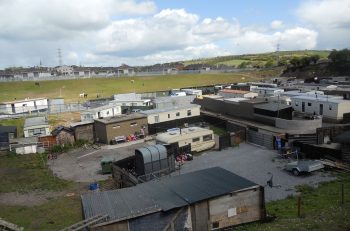
    Things took a dramatic turn for the Travellers down on Spring Lane in Cork last week. Cork City Council’s Director of Housing presented a report for debate by City Councillors. It proposed a swift reduction in the number of Travellers resident on the Spring Lane site. This was to be achieved by making offers of standard housing to the Travellers and, if and when these offers were not accepted, taking legal action to evict the families. The report did not refer to two earlier needsassessments done for residents on the site. These both clearly stated that the majority of families on site needed Traveller-specific accommodation. Worse, it completely failed to mention the 1998 Traveller Accommodation Act which obliges local authorities to provide culturally appropriate accommodation to Travellers where required. It ignored all the partnership processes put in place to involve Travellers in decision-making, such as the Local Traveller Accommodation Consultative Committee and the Traveller Interagency Group. The situation became dramatic when the report was debated by the City Councillors. They rejected the recommendations. Instead, they agreed a new proposal to invite residents and Traveller organisations to meet City Councillors to discuss solutions to the overcrowding on the site. They firmly set out the way forward in terms of engagement, partnership and consultation. The majority of the City Councillors took a very different perspective to that of the Director of Housing’s report. They spoke about their understanding of the need to create safe, sustainable accommodation for the Traveller families on site. The debate and the resulting vote is to their credit. They have set a new standard. This turn of events is evidence of the strength of the campaign that Travellers and Traveller organisations have worked on to build awareness of the situation on the Spring Lane site and to get support across all sectors to address what are, but are not treated as, serious human rights issues. Cork City Councillors have stimulated real hope that this next phase of engagement will lead to real change and long-term, goodquality, culturally-appropriate accommodation for the 150 people who call the Spring Lane site home. The Spring Lane halting site was built in the late 1980s by Cork City Council with very basic facilities for 10 families. Today it is home to more than 34 families with over 150 people, all of whom are long-term residents. Two thirds of these residents are children. For 30 years, the families who live on the site have been exposed to serious, ongoing health and safety hazards. Official HSE and architect reports have highlighted these hazards. They include severe overcrowding, very poor sanitary facilities, exposure to raw sewage, rodent infestation, and dangerous and overloaded electricity supply. The drains on the site are malfunctioning and there is recurrent flooding. There are no amenities on the site and no safe play space for the 92 children living there. For the past three years residents on the site, supported by the local Traveller organisations, have been campaigning for better accommodation. Central to this campaign has been residents telling their stories and showing their homes to people over and over again. Media headlines captured the impact of this: “A hidden world where our children can’t have their friends over”; “The closest thing we have in Ireland to a shanty town”; “Deeply ashamed of Cork’s Travellers’ living conditions”; “Sewage on site a serious risk to children”; and “This is hell. We are human beings, not dogs”. Residents made a documentary “Spring Lane site: 26 Years of Hardship”, which has been screened twice, including in the Triskel Arts Centre. Emergency work to address the urgent safety issues was the first demand of the campaign. Over the last year, there has been some success. The Council undertook considerable work to upgrade and make safe the dangerous electricity supply. It upgraded the broken and pock-marked internal road and the street lighting. It replaced many of the worst-quality mobile-homes and provided emergency portable toilets. A long-term solution to the accommodation crisis, however, is the goal. The residents have developed a Community Manifesto which sets out proposed solutions, including the provision of standard accommodation for one group of residents and the development of new, Traveller- specific (group housing or halting site) schemes for the other residents. Meanwhile, many families remain without water or toilets, some continue to live in old damp mobile-homes, all families live with daily overcrowding, and the children continue to have no safe place to play. People’s health, mental health and life expectancy suffer. The impressive new resolution among Cork City Councillors must now advance these solutions and end this inhumane situation.

    Loading

    Read more

  • Posted in:

    The whip subverts the Constitution

    “The people have spoken, but what have they said?”, the head-scratching commentariat has endlessly mused since the March election, as it reluctantly negotiates a changed universe where politics once existed in a binary-star system with just one waxing or waning moon and the occasional incoming independent or ideological comet to exert some short-term gravitational influence upon the status quo. But with the earth having turned since that conundrum was posed and with the arrival of the cuckoo, the citizenry can, for now, sleep soundly in the knowledge that – following the longest bout of post-electoral plutonic dance – the 32nd Dáil looks set to perform the second and third of its constitutionally mandated duties. It will elect Enda Kenny as Taoiseach and approve the motley cabinet crew- cuckoos included – that he looks likely to nominate. The incoming meteorite that was the people’s conundrum for the establishment has resulted in history of sorts being made. The civil-war hatchet has been, if not buried, hidden in the thatch and the Soldiers of Destiny will abstain in Kenny’s re-election vote: That is, provided Kenny can muster a scourge – the collective media noun for those dreaded pot-hole focussed independents – to support him. And the old enemies have even entered a “Confidence and Supply” arrangement whereby FF will assist – if not support – Kenny’s government from the curiously comfortable confines of the opposition benches. Of course the electorate has only itself to blame for ignoring the Newtonian script and creating the gravitational dynamic that has Fianna Fáil – the party of power – being attracted away from the nest by the pull of Sinn Féin nibbling at its bum and a large cohort of uncontrollable and unpredictable independents and smaller parties exerting unexpectedly strong pull on the solar system. But even now, knowing the new physics, the media pack continues to scratch its collective head. Is this a crisis or a correction? How can a country be run without a single party government or ’proper’ coalition rooted in an overall Dáil majority? And how will the influence of those looney but gravitationally significant independents – both inside and outside government – affect the celestial dynamic? But all this musing ignores something screamingly obvious. For instance, few would blame the Lowry-Rae phenomena for the mess the two-and-a-half party system has created – much of it caused by the needs of the political parties themselves: From pick-me-ups to ministerial constituency strokes; from gaping party coffers to unhealthy political/corporate relationships; from re-zoning powers to ‘leave the cheque blank’, and ‘would ye like a pint or a transfer’, the negative influence of parties has permeated society since the State’s inception and has stimulated the forces that have led to the new physics. Moreover, most would agree that a huge part of the problem is that the government controls, as opposed to being controlled by (answerable to), the Dáil through the most corrosive, and possibly unconstitutional, contribution the parties bring to the Dáil chamber – the whip system. But it is usual to ignore this most obvious dysfunctionality whilst branding the vagaries of our system of Proportional Representation, the culprit. The framers of our constitution designed an elegantly beautiful system of power-exercise and transfer which has the people’s sovereign authority at its centre. That power is exercised through the ballot box then down through a structured system whereby TDs pick a Taoiseach, then approve a government and then discuss and approve legislation mostly, but not exclusively, presented by that government. There are no political parties and no opposition in this elegant scenario. TDs represent constituents and the government represents those TDs. And yes, it is necessary to convince 79 TDs to support individual measures to get them passed – but it doesn’t have to be the same 79 each time. And the gravitational force that keeps the planetoids in orbit and avoids heavenly collisions should be the desire never to face the electorate unless absolutely necessary. Here’s how we should use that Constitutionally- mandated construct to revive our politics. Article 16.2. 1° of the constitution suggests that all TDs should be independent, as it states that “Dáil Éireann shall be composed of members who represent constituencies determined by law”. The practice whereby Dáil candidates fetter their hoped-for discretion by signing party pledges to abide by whips must surely offend TDs’ Article 16 obligations. What the new dispensation has licensed may prove difficult in the short term but will only represent a transitory phase in the loosening of the grip of party politics on our democracy. Political power should be exercised by our elected representatives for their constituents’ benefit and not the parties they have manufactured around themselves. The people have, indeed, spoken, but is anybody listening?

    Loading

    Read more

  • Posted in:

    (Water)rors

    For years vital Irish public services were consistently starved of funding at a time when taxes were being cut for electoral reasons. This is unfortunate but it has consequences which cannot be denied, whatever the ideology of the (non-)payer. Keeping water prices at an artificially low level leads to a vicious cycle of underfunded service-providers, insufficient investment, collapsing infrastructure and deteriorating services, according to the European Environment Agency. If this sounds bleak, that’s because it is – cheap or free water has been tried before. It doesn’t work. Irish Water’s five-year business plan proposes to spend €5.5 billion by 2021 on national priority schemes, on fixing leaks, on improving drinking water quality and on reducing pollution through sewage outfalls. Indeed it says that €13bn needs to be invested over the next 10-15 years. A flickering insight into what this means is that despite dominating the political discourse and its angst for several years, only €110m has been collected over the last two years. Diligent payers are in the lurch. Social Democrat TD, Stephen Donnelly, was on the mark when he suggested recently that: “Anyone who’s paying out €160 is essentially being asked to go out into their front garden and set fire to the money”. One of the problems is that Irish Water was so badly thought through. Phil Hogan, the minister, rammed the Bill for it through in three hours, after the opposition walked out. Of course consultancy and PR charges were scandalously inflated, metering seemed disproportionately expensive, the underlying principle of the polluter paying was undermined by the setting of standard charges and a misnamed conservation rebate was applied to the bemusement of all. The problem is homegrown. There is no infirmity in the EU regime which we purport to be implementing. Under the EU water framework directive the aim of water pricing is to “provide adequate incentives for users to use water resource efficiently”. “Social, environmental and economic effects” can shape these price levels; what is required from user groups is an “adequate contribution”. Of course one of the reasons for forming a commercial company was that it would be able to borrow without the loan registering in the now-EU-constrained national debt. This was a logistical imperative in itself and never implied that increasingly unfashionable privatisation was the covert agenda. In a country where referendums on for example property rights and protection of national resources are long overdue calls for a referendum enshrining Water alone as a resource which can never be privatised are little but cynical populism. The longer water charges are suspended, as a wily public reserves its rights during the party-political maneuverings, the greater the overall cost to households. This is because eroding the incentive to save water raises consumption and therefore demands more pre-treatment, pumping, post-treatment, elevating the cost which must be borne by someone. Charging works. In the Czech Republic, following charging reforms in 1990, household water consumption fell by 40%, from 171 litres per person per day to 103 litres a day, in the subsequent 12 years. Denmark, which extended volume-based charging in 1993, had much the same experience. In Ireland, losses to leakage are 49pc, almost double the 28pc in Northern Ireland where there are charges. Figures from Eurostat released in November 2015 suggest the average person in Ireland accounts for 400 litres of water use a day (146,000 litres a year), some five times higher than in Belgium. 1% of households use 22% of water, 7% of houses uses 6 times the national average of water and one house in Galway notoriously used the water allocation expected for 325 houses. Until 2013, water was the responsibility of 34 local authorities. The Republic has 856 water-treatment plants, Northern Ireland gets by with 24. 600 of our treatment plants are earmarked for closure, but the process is slow and expensive. Operating costs, expressed both in terms of population and kilometres of network, are almost double those at Northern Ireland Water. Meanwhile for example the Vartry tunnel (1860) in Wicklow, a 4km tunnel bringing drinking water to 335,135 people in County Wicklow and County Dublin needs to be replaced. A planning application has been submitted for a new tunnel. Meanwhile Dublin is vulnerable. Elsewhere, more than one-in-ten public supplies are inadequate, with, for example, thirty Kerry plants requiring attention. But there are problems with more than just supply and wastage. The pollution record caused primarily by insufficient funding is little short of calamitous. 30% of our 13,200km (8202 miles) of rivers and streams are polluted. In general, while Ireland treads water (charges), standards are getting increasingly stringent under the Water Framework Directive. Moreover as of 2012 less than 50% of lakes and transitional and coastal waters met EU standards for a ‘good’ or ‘high’ rating under the Bathing Water Directive. Furthermore the EPA’s Urban Waste Water Report 2014 found waste-water discharges contributed to (indictable) “poor water quality” at seven of Ireland’s bathing spots. Discharges from Youghal, Clifden and Galway city contributed to poor quality bathing waters at Youghal Front Strand, Clifden beach and Ballyloughane beach respectively. The same was true at South Beach, Rush, Co Dublin; Ardmore Beach, Co Waterford; Lough Ennel, Co Westmeath; and Duncannon Beach, Co Wexford. A recent Prime Time highlighted raw untreated sewage being pumped into the sea in the case of Rush, an expanding town of 9,000 people. Along much of our coast, semi-treated sewage is discharged through what appear to be streams. Children mistake these for attractive play areas. In Co Kerry alone, there are at least eight vulnerable beaches. E.coli risk will not materialise every year, and programmes to monitor and close beaches are in place. In fact, raw sewage is being discharged into 45 rivers, lakes and coastal areas around the State, the Environmental Protection Agency (EPA) has said. In 2013, there were 704 reported cases of verotoxigenic E.coli, a harmful bacterium. Some 5% to 8% of those affected suffered serious kidney complications. One in 20 of those died. Water-borne E.coli in Ireland

    Loading

    Read more