Politics

Random entry RSS

  • Posted in:

    The British ‘Traitor King’ who contemplated settling in Ireland.

      By David Burke. Andrew Lownie will be known to many Village readers for the depth of his research into the life of Lord Louis Mountbatten and his wife, especially the former’s abuse of boys in the Republic of Ireland. During his research into Mountbatten, Lownie tried, and failed, to gain access to Garda logs showing who had visited Mountbatten at Classiebawn Castle in Sligo.  Lownie had more success earlier this year when he forced the British government to disclose some of Mountbatten’s diaries. The documents had been purchased by the British government and given to Southampton University but at some stage Whitehall had intervened to keep them under wraps. NO TRIAL FOR TREACHERY. In his captivating new book, Traitor King: The Scandalous Exile of the Duke and Duchess of Windsor, Lownie shreds the reputation of the Duke of Windsor, the former Edward VIII, who abdicated in 1936 so he could marry Wallis Simpson. The author confirms and elaborates on long-held suspicions that the Duke played fast and loose with the Nazi regime both before and during the Second World War. Lownie’s book describes grounds upon which the Duke could have been put on trial for treachery, so much so that the Nazis had come to view him as a potential puppet monarch, a British version of France’s Marshal Pétain. Lownie highlights a telegram sent on 15 August 1940 from Portugal while the Duke was on his way to the Bahamas. In it the Duke asked his Portuguese host, a Nazi sympathiser, to send “a communication” as soon as his action was required. The conclusion Lownie draws is that he was complicit in a plot to instal him as a puppet ruler in Britain after a negotiated peace with Hitler. Yet, somehow, the Duke never had to face the music. Churchill was one of a number of influential figures who prevented the post-war publication of captured German documents which detailed the Duke’s Nazi intrigues. Others were not so lucky. William Joyce, better known as Lord Haw Haw, sided with the Nazis in a very public way during the Second World War by becoming the voice of Nazi propaganda radio broadcasts to England. Despite the fact Joyce hailed from Galway, he was hauled back to England and executed for treason. John Amery was also executed. His father Leo was a Tory MP and minister. His brother Julian would marry the daughter of Prime Minister Harold Macmillan and go on to hold a number of government ministerial positions. None of these connections were sufficient to save the life of John Amery. THE MI5 TRAITOR WITH LINKS TO IRELAND WHO KNEW ABOUT THE DUKE’S TREACHERY. The Duke’s treachery had ramifications for Ireland. After the war ended, an MI5 officer called Anthony Blunt was sent to Germany to retrieve some of the embarrassing correspondence that had passed between the Duke and the Nazis. Blunt remained in MI5 while also serving as the Keeper of the King’s Pictures at Buckingham Palace. When it belatedly emerged that he had been working for the Russians while in MI5, his knowledge about the Nazi correspondence played a part in saving him from prosecution. By then he was the Keeper of the Queen’s pictures, a job he was able to retain notwithstanding his treachery. As part of a secret immunity deal he struck in 1964 with the Government, Blunt was granted an amnesty for all the crimes he had committed. These included the abuse of children ensnared by the Anglo-Irish vice ring of which the Duke’s relative Mountbatten was a leading member. Had Blunt been prosecuted, it is conceivable that his role in the abuse of children in Ireland might have emerged much earlier and the activities of the vice ring shut down. Part of the passage in Lownie’s book relating to Blunt’s mission to Germany reads as follows: In 1979, Blunt was publicly revealed to have been a Russian spy since the 1930s, though he had privately confessed to the intelligence services in 1964. The MI5 officer Peter Wright, who interrogated him, was informed by the Queen’s private secretary, Sir Michael Adeane, that Blunt had undertaken an “assignment … on behalf of the Palace – a visit to Germany”. Wright was told not to “pursue the matter…Strictly speaking it is not relevant to considerations of national security”, It looks like the trip [by Blunt] to Kronberg [in Germany] was a cover for a fishing expedition, which suggests that there was something else the Royal Family was worried about. “George VI had every reason to believe that the Hesse archives might contain a “Windsor file”, because Prince Philip of Hesse had been an intermediary, via the Duke of Kent, between Hitler and the Duke of Windsor”, claimed Prince Wolfgang of Hesse to the Sunday Times. It was a belief supported by the wartime intelligence officer Hugh Trevor-Roper, later Regius Professor of Modern History at Oxford University. It is confirmed by Andrew Sinclair, who spent eighteen months researching a biography of Vicky, The Other Victoria, who wrote that Blunt had retrieved “the Duke of Windsor’s correspondence with his German princely cousins, some of whom held high office in the Nazi party”. John Loftus, a lawyer with the US Justice Department, interviewed two former US military intelligence officers .. attached to General Patton’s forces, who confirmed that they had seen references to communications between the Duke of Windsor and Hitler. The documents had been found in a “villa that was owned by a close relative of the Duke which was occupied as an American officer’s club.” There can be little doubt that Blunt provided a report about – if not copies of – the Royal correspondence to Moscow. Ironically, Vladimir Putin and his circle would have ready access to them whereas British politicians would be turned away from Buckingham Palace if they made inquiries about the fate of the originals. A HOME IN IRELAND. There is an intriguing Irish angle to the book. After the war the Duke and Duchess

    Loading

    Read more

  • Posted in:

    Licence to Lie. Freddie Scappaticci, a British agent inside the IRA, sought immunity from prosecution from British legal authorities so he could claim he was not Agent Stakeknife at a secret meeting with a tribunal in Dublin.

    By Deirdre Younge.   Introduction. Freddie Scappaticci became an agent for British Army intelligence in 1978. A member of the IRA in Belfast he worked his way up the IRA hierarchy,  eventually becoming  second in command of the ‘Internal Security Unit”,  known as the feared “nutting squad”. He joined the British Army’s newly-formed Force Research Unit in 1982.  Scappaticci has consistently claimed he is not an agent called ‘Stakeknife’ or ‘Steaknife’ including in his dealings with the Smithwick Tribunal in Dublin. The latter was established to investigate allegations of Garda collusion in the murders of Chief Superintendent Harry Breen and Superintendent Bob Buchanan in South Armagh, after they had left a meeting in Dundalk Garda Station in March 1989. Operation Kenova investigating the agent believed to be Scappaticci has  submitted files to the Public Prosecution Service in relation to perjury charges. Scappaticci had an extensive engagement with the Smithwick Tribunal set up in 2005 which reported in 2013. Though he did not give sworn evidence his legal team argued on his behalf that he was not an agent called ‘’Steaknife’ or ‘Stakeknife’. Through letters obtained through Freedom of information requests to the Lord Advocate of Scotland and the Attorney General of England and Wales it is clear that Scappaticci obtained protection from prosecution or immunity in relation to his interactions with Smithwick from the Lord Advocate of Scotland. He did not not receive a similar immunity or amnesty from the Attorney General of the UK despite Smithwick’s assertions that witnesses from the UK and Northern Ireland had received such protection.Documents obtained through Freedom of Information requests to the (Irish) Department of Justice show Scappaticci was paid his full legal costs of 382,270 euro in 2015. The bills were paid by the Department of Justice, signed off by the Department of Public Expenditure. The Letter from the British Attorney General.   The absence of such an amnesty has enormous implications in light of perjury allegations against Scappaticci in relation to his continual denials that he is an agent called ‘Steaknife’ or ‘Stakeknife’. It also calls into question the decision by the Smithwick Tribunal, set up in 2005 by Dail Eireann, not to reveal details of covert meetings with him and the decision by the Irish State to pay Scappaticci  nearly 400,000 in legal costs, primarily to claim he was not a British Military Intelligence and MI5  Agent called Steaknife or Stakeknife. Senior legal sources assert that Scappaticci spent three days in Dublin talking to the Tribunal. Documents released by the Department of Justice under FOI in relation to substantial legal costs paid to him in 2015, indicate extensive interactions between Scappaticci and the Tribunal. Smithwick on amnesty In the opening chapters of his 2013 report Judge Peter Smithwick has a chapter on amnesty for witnesses and the legal cover afforded by the Irish Tribunals of Evidence Act as follows: Any witness before the Tribunal would have protection in this jurisdiction from criminal prosecution on the basis of evidence given before it. The protection is enshrined in section 5 of the Tribunals of Inquiry (Evidence) Act 1979 which provides as follows: A statement or admission made by a person before a Tribunal or when being examined in pursuance of a commission or request issued under subsection (1) of section 1 of the Principal Act shall not be admissible as evidence against that person in any criminal proceedings (other than proceedings in relation to an offence under subsection (2) ( c ) (as inserted by this Act) of that section) – ( and that is a reference to the offence of providing false testimony to the Tribunal) and subsection (3) of that section shall be construed and have effect accordingly. The Judge went on to explain how witnesses from outside the jurisdiction could be provided with legal cover, particularly those from Northern Ireland and the UK – “However, given the cross-border aspects of the Inquiry, it was equally important to securing the attendance of witnesses that such protection be extended to the United Kingdom. The Tribunal therefore sought and received an undertaking from the then Attorney General of England and Wales, the Right Hon.,The Baroness Scotland Q.C., to similar effect. Subsequent to the devolution of policing and Justice powers to Northern Ireland on the 12th April 2010, Sir Alistair Frasier, the Director of Public Prosecutions for Northern Ireland confirmed that he would continue to honour Baroness Scotland’s undertaking. After the change of Government in the United Kingdom…the new Attorney General of England and Wales..Dominic Grieve Q.C M.P provided the Tribunal with confirmation that Baroness Scotland’s undertaking would continue to apply. The Tribunal subsequently, at the request of Freddie Scappaticci, sought and received a similar undertaking from the Lord Advocate, in relation to Scotland. This was given in terms specific to Mr Scappaticci..”(Page 9, the final Smithwick report, 2013). Judge Smithwick went on to to refer specifically to Scappaticci in the one and only reference to him in the Tribunal report, as follows : The Tribunal subsequently, at the request of Freddie Scappaticci, sought and received a similar undertaking in relation to Scotland. This was given in terms specific to Mr Scappaticci..   The Lord Advocate of Scotland in his role as Crown Prosecutor gave Freddie Scappaticci an amnesty to cover his interactions with the Smithwick Tribunal so that he could provide “a full account” to the Tribunal in 2012. The AG of England and Wales it is now apparent gave no such amnesty to Scappaticci. Other witnesses from the UK and Northern Ireland included Scappaticci’s former FRU, British Army Intelligence handler, retired Major David Moyles, other British army officers, as well as ex RUC and PSNI officers. Witnesses also included representatives of the IRA ASU who talked to the Tribunal from 2008 onwards. First representation Scappaticci’s solicitor first made an application for legal representation in 2006 but this was refused However his legal representative, Belfast solicitor Michael Flanagan submitted his first bill in relation to meetings in 2007. Like all Scappaticci’s covert

    Loading

    Read more

  • Posted in:

    When the Official IRA and the UDA became Partners in Crime and Murder…and nearly killed me.

    By Ed Moloney. The document reproduced above is the opening five-paragraph extract of a four-page, forty-paragraph Ulster Defence Association (UDA) intelligence report, or ‘memo’ as it is titled, describing the genesis of the corrupt relationship that developed in the late 1970s between the Official IRA and some leading members of the UDA. Since both groups dealt in death as well as thievery and racketeering, some people lost their lives as a result, others came uncomfortably close to that fate. I was one those who had a lucky escape. Targeted by the Official IRA for my journalism in The Irish Times, my name was put on a hit list by OIRA and the UDA was given a false story that I was an intelligence officer for the INLA, using my work as a cover. But for the fact that the UDA leaders knew me well enough to smell a rat, I almost certainly would have been killed and my name besmirched in death. On the day I got the phone call from Gawn Street, asking to see me, I assumed a routine encounter would follow. The UDA leaders enjoyed the company of journalists and sometimes what might follow would be a story worth the trip. There were three senior figures waiting to see me. Since two are now long dead – John McMichael and Davy Payne – no harm can be done by naming them. The third is still living so he will remain nameless. The trio told me that I had been named as an undercover INLA activist but they had investigated and found the charge to be baseless. I subsequently learned that a senior figure in the Official IRA called Harry McKeown, was the source of the accusation. But he was only the errand boy in this case. The deal began with a self-serving pact between the UDA and the Official IRA but it eventually emerged that the UDA leadership had sanctioned deals with all the republican paramilitary groups, including the Provisional IRA and the INLA – although not everyone in the UDA power structure was aware of the arrangements. The corrupt relationship between the UDA and OIRA centered on self-enriching rackets – involving the extortion of building sites and/or tax exemption frauds in the construction industry – but in the case of the Provisional IRA it revolved around a so-called ‘top man’s agreement’, in which the Provos and the UDA agreed that their respective leaders would not be targeted for assassination. Needless to say this arrangement was a tightly guarded secret in both organisations and was known about only at the highest echelons of both groups and even then known selectively. In practice ‘the top man’s’ deal was honoured as much in the breach. It broke down on both sides several times. On two occasions the UDA tried to kill Gerry Adams, while the IRA succeeded in assassinating the UDA’s military leader, John McMichael. This was almost certainly due to the fact that not all those in the UDA’s top tier knew about the deals with the OIRA and PIRA. The fact that McMichael was investigating Jim Craig’s role in the corruption when he met his death may be more than a coincidence, and suggestions persist to this day that Craig set up McMichael for IRA assassination. Another attempt on Adams’ life was sabotaged by the British Army with the aid of the UDA British Army spy, Brian Nelson. But when Adams was badly wounded in a March 1984 UDA ambush in Belfast city centre, an indignant Joe Haughey phoned the UDA HQ in Gawn Street in East Belfast on behalf of the Provos to complain about this breach of the ‘top man’s agreement’. Craig was eventually shot dead by his own side, mostly on the initiative of the late Tommy Lyttle who led a putsch which also saw UDA Supreme Commander Andy Tyrie ousted. On the weekend that Craig was gunned down, in an East Belfast bar, Lyttle took a trip to Scotland, giving himself the perfect alibi. All these convulsions can credibly be traced back to the corrupt deal cut between the Official IRA and the UDA. Much more successful and enduring was the racketeering deal between the Official IRA and the UDA, an arrangement that was sanctioned by at least some of the UDA’s Gawn Street leadership and which enriched both organisations and individuals in leadership positions. The rackets centred on the construction industry and took two forms. First was the straightforward extortion of building sites using threats of violence. But much more lucrative, albeit more complex and difficult to arrange, were tax exemption frauds. These swindles worked in various ways; the most popular was to deduct income tax from bricklayers, roofers, plumbers etc employed on a job but fail to send the money on to the inland revenue. When the time came to pay up, the tax man would discover the business had folded. In practice, of course, the UDA, the Official IRA and their respective leaders arranged the bankruptcy of their businesses and then pocketed the government’s share of tax owed., The key figure in the scam, someone who made all this corruption possible, was Harry McKeown, an Official IRA member and one-time construction company owner who knew the corrupt side of the business better than most involved in the building trade. Without his accumulated knowledge the scam would never have got off the ground. McKeown had been a member of the IRA before the 1970 split and then went with the Officials at the parting of the ways. He was arrested in the August 1971 internment swoop but released the following year. In April 1972 he gave this interview to the New York Times, in which he indignantly complained that internment had cost him a thriving construction business. Former Observer and Irish Times journalist, Kevin Myers knew Harry McKeown well, better than I who had met him during my brief sojourn with the Republican Clubs in 1972. He wrote this tribute to him, in the Irish Independent, after his

    Loading

    Read more

  • Posted in:

    The shooting of Marian Brown. A near 50-year cover-up is blown apart.

    By David Burke. Marian Brown, a 17-year old teenager, was shot dead in Belfast in June of 1972. For nearly half a century the British Government has denied that she was killed by British soldiers. Her family campaigned for the truth for five decades with the aid of researchers and lawyers. Armed with new information from the Historical Enquiries Team report into the case, Ó Muirigh Solicitors, who acted for the Brown family, petitioned the Attorney General for a new inquest in 2018. The petition was successful. After the inquest, Ó Muirigh Solicitors initiated civil proceedings against the British Ministry of Defence (MoD). Back in 2017, the Coroner’s Office had asked Ciaran MacAirt of Paper Trail to help target archival evidence. This he did and concluded that same year that Ms. Brown had been shot by British soldiers. Paper Trail did not publish its conclusions until this morning lest it interfere with the legal action against the MoD. The MoD has now settled the action with the victim’s family. The settlement vindicates the effort of all of those involved in this pursuit of justice. Significantly, the case highlights the injustice of Boris Johnson’s attempts to thwart similar cases through legislation. If Johnson succeeds, relatives of other victims will be denied justice and closure. MacAirt’s foray into Britain’s archives allowed him to conclude in 2017 “that British Army soldiers poured fire into the area” where Ms. Brown and three other teenagers had been shot. MacAirt’s also concluded that “either the British Army believed it was firing at gunmen … and the teenagers were in the line of fire; or the British Army patrols and sanger [fortification] were responding to each other’s firing and either shot the teenagers by mistake or targeted them deliberately”. Paper Trail also felt that the “British Army did not follow its own so-called Yellow Card Rules as the soldier(s) who fired the fatal shots had no clear target, no clear line of sight, and called no warnings”. A detailed article on the shooting can now be found on the Paper Trail website  at: https://www.papertrail.pro/the-killing-of-marian-brown/ The report brings to light one particularly distressing aspect of the tragedy: What makes the killing of Marian Brown more poignant is not only that the British armed forces covered up the circumstances of her death and that her family have fought for two generations for the truth, but also because Marian’s family did not know that she was pregnant at the time. Her family only discovered that she was carrying a baby when they were both killed when the Historical Enquiries Team (HET) reviewed her post-mortem files 40 years later. In a heart-breaking interview with Maurice Fitzmaurice in the Mirror, Marian’s brother, Richard, said: “It’s two people I lost that day… Our mother passed away and she never knew about the grandchild she never had.”  

    Loading

    Read more

  • Posted in:

    THE LEGACY OF THE CONFLICT: MR LEWIS’S MODEST PROPOSAL

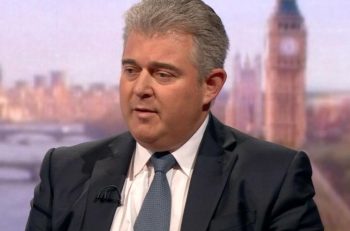
    Christopher Stanley, Litigation Consultant, KRW LAW LLP, Belfast[1] In 1729, Jonathan Swift published his Juvenalian satirical essay “A Modest Proposal For preventing the Children of Poor People From being a Burthen to Their Parents or Country, and for making them Beneficial to the Publick”. As readers of Village know Swift’s essay suggests that the impoverished Irish might ease their economic troubles by selling their children as food to rich gentlemen and ladies.  Swift’s essay created a backlash within the community after its publication. [i] On 14 July 2021 Her Majesty’s Secretary of State for Northern Ireland, the Right Honourable Brandon Lewis MP (a lawyer by trade), made a statement in the House of Commons and his office published a Modest Proposal: “Addressing the Legacy of Northern Ireland’s Past” (CP498). It  is fair to say that Mr Lewis’s Modest Proposal created a backlash within the community after its publication. [ii] This most recent British government proposal to address the out-workings of the Legacy of the Conflict in Northern Ireland (Dealing with the Past) adds only a little flesh to the bones of Mr Lewis’s plans published at the start of pandemic lockdown in 2020. This was by way of a Press Release “UK Government sets out way forward on the legacy of the past in Northern Ireland” (18 March 2020). That statement marked a dramatic change of tack from the “New Decade, New Approach” (January 2020) of the Right Honourable Julian Smith CBE MP, Secretary of State for Northern Ireland, and Simon Coveney TD, Tánaiste and Minister for Foreign Affairs and Trade, published to restore devolved government in Northern Ireland. The British government agreed that: “16. As part of the Government’s wider legislative agenda, the Government will, within 100 days, publish and introduce legislation in the UK Parliament to implement the Stormont House Agreement, to address Northern Ireland legacy issues. The Government will now start an intensive process with the Northern Ireland parties, and the Irish Government as appropriate, to maintain a broad-based consensus on these issues, recognising that any such UK Parliament legislation should have the consent of the NI Assembly” (page 49) The Irish government made the following commitment: “The Government affirms its commitment to working with the UK Government to support the establishment of the Stormont House Agreement legacy institutions as a matter of urgency, including by introducing necessary implementing legislation in the Oireachtas, to deal with the legacy of the Troubles and support reconciliation, meeting the legitimate needs and expectations of victims and survivors” In under one hundred days Mr Lewis, on behalf of his government, had torn up the “New Decade, New Approach” joint cross-border agreement and in the process abandoned the hard fought for Stormont House Agreement 2014. The Right Honourable Julian Smith CBE MP became, like Syme, in George Orwell’s 1984, an unperson. His fate to be shared, if the Modest Proposal comes to pass, by all relatives of victims and survivors of the Conflict in Northern Ireland [iii] The 18 March 2020 Press Release stated that the UK Government “will now begin an intensive period of engagement with the Northern Ireland political parties, and the Irish government, to discuss these proposals in detail.” It did not. What it did do were behind closed-door briefings, no public consultation, and controversial secret meetings at Lambeth Palace with a select few specially chosen to attend. There is no public record. The restrictions of the lockdown provided perfect cover to ferment policy in private within the deserted village of Whitehall and Westminster. The 18 March 2020  Press Release was both blunt and absent in detail and clearly had an audience in mind: the Tory backbench and those Shire and Red Wall Conservatives who would probably have agreed with Tom Denning’s own Modest proposal in his assessment of The Birmingham Six. “We shouldn’t have had all these campaigns to get them released if they’d been hanged. They’d have been forgotten and the whole community would have been satisfied.” Mr Lewis proposed: A new independent body focused on providing information to families and swift examinations of all unresolved deaths from the Troubles End to the cycle of reinvestigations that has failed victims and veterans for too long Ensuring that Northern Ireland veterans receive equal treatment to their counterparts who served overseas. The focus on veterans signalled a dismantling of the ‘no hierarchy of victims’ as both a political, moral and legal principle (as defined in statute by way of the Victims and Survivors (Northern Ireland) Order 2006 section 3). The focus on veterans  also  opened the way to the contentious issue of a statute of limitation and an amnesty. “We owe a huge debt of gratitude to our Armed Forces for their service in Northern Ireland. That’s why these proposals also put an end to repeated reinvestigations where there is no new compelling evidence and deliver on our promise to protect veterans from vexatious claims.” As was asked at the time of the Press Release: An amnesty for who? Soldiers and ‘Terrorists’ Who are the veterans? Soldiers and other members of the British security forces – spies, agents and informers (from all paramilitary groups). (What vexatious claims?) [iv] The publication of Modest Proposal adds, as I noted, only a little flesh to the bones of the press release but is in the spirit of Swift’s Juvenalian satire in its draconian intent to offer a complete, or final, solution, to the Legacy of the Conflict. “Addressing the Legacy of Northern Ireland’s Past” is an apparently impressive 32-page document. But there is a lot of white space (listen to the void of the white noise) and the type face is large. Of the 32-pages the modest proposal is modestly set out in 24 pages, which is one page longer that the 23 years since the Belfast-Good Friday Agreement 1998. On page two of his Foreword, Mr Lewis calms the Tory back bench and his Cabinet colleagues: “The current system for addressing the events of that dark and difficult period of our national

    Loading

    Read more

  • Posted in:

    Another bloody mess. Frank Kitson’s contribution to the wars in Afghanistan and Iraq. 300,000 have died in Afghanistan since 1979.

    By David Burke. 1. The counter-insurgency gurus. During the period 1970-72 Brigadier (later General Sir) Frank Kitson served as Brigadier of 39 Brigade in Belfast. It is arguable that he caused more damage to relations between the British government and the Nationalist community than any other individual in the British Army. There are many stories about Kitson on this website, and readers are invited to visit them. Despite the hornets’ nest he kicked over in Ireland, Kitson rose up the ranks of the British Army and was hailed as a counterinsurgency expert around the globe. He even served as Queen Elizabeth’s aide de camp. Unfortunately, Kitson did not learn much from his mistakes in Ireland. Nor did the American counterinsurgency specialist, General David Petraeus. The latter served as commander of the United States Central Command and Coalition Forces in Iraq and Afghanistan. Petraeus viewed Kitson as some sort of guru. In 2006 when Petraeus was planning the so-called military  ‘surge’ in Iraq, he visited Kitson for guidance and advice. Kitson was in retirement at the time but was happy to share his views with the American. The ‘surge’ involved an increase in the number of American troops to provide security to Baghdad and Al Anbar Governorate. It served as the template for the 2009 ‘surge’ of 30,000 troops in Afghanistan which was meant to stabilise the country and defeat the Taliban. 2. Petraeus supports Kitson in his defence of Mary Heenan’s action against him. On 27 April 2015, Kitson was cited as a co-defendant along with the British Ministry of Defence in an action taken by Mary Heenan. She is the widow of Eugene ‘Paddy’ Heenan. Her husband was murdered by Albert ‘Ginger’ Baker’s UDA gang. Baker was commanded by Tommy Herron, a senior UDA figure. Herron oversaw UDA assassination teams in the early 1970s. Herron and Baker were allies of British military intelligence. Herron entered into his alliance with British army counter-insurgents during Kitson’s tour of duty in Belfast. It is to be hoped that more details will emerge during the forthcoming trial. Baker did not join the UDA until sometime in the second half of 1972, by which time Kitson had left Northern Ireland. What is crucial, however, is that Baker was put in contact with British military intelligence by Herron. Baker is still alive. Although Baker has said little in recent decades, back in the 1980s he spoke at length about his connections to British military intelligence and explained how the UDA conducted operations with guns supplied by the RUC. Petraeus undoubtedly kept in contact with his hero during the rest of his military career. He was appointed as Director of the CIA by President Barack Obama and served in that role between 2011 and 2012. At the very least, Petraeus monitored how his British hero was faring. In November 2019, he came out in defence of Kitson by attacking the type of legal action Heenan had initiated. Petraeus did so in the forward to a paper he wrote, ‘Lawfare – the Judicialisation of War’. He argued that this development was “as much of a threat to Britain’s fighting capacity as would be a failure to meet NATO budgetary targets, and it risks putting the special relationship under increasing strain … The extent to which those who served decades ago in Northern Ireland, including the highly distinguished soldier-scholar General Sir Frank Kitson, remain exposed to legal risk is striking and appalling”. Mary Heenan’s action against Kitson and the Ministry of Defence has not yet received a trial date. No doubt every trick will be used to delay it as long as possible. Kitson is participating in the defence of the action. It is important to note that it is a civil action, not a state prosecution and Mary Heenan is in control of whether or not it will proceed. If it is not derailed by Northern Ireland Office and MoD dirty tricks, the Heenan prosecution could prove to be one of the most important legal actions to arise out of the Troubles. If it is not derailed by Northern Ireland Office and MoD dirty tricks, the Heenan prosecution could prove one of the most important legal actions to arise out of the Troubles. One person who will await the trial with concern for the ‘highly distinguished soldier-scholar’ Frank Kitson is his great admirer, David Petraeus. 3.The Man who boasted about starting the war against the Soviets in Afghanistan in July of 1978. 300,000 have died since then.   The tragedy in Afghanistan was started in July of 1978 by American intelligence dirty tricks. Zbigniew Brzezinski, the US National Security adviser to President Jimmy Carter, admitted during an interview that he instigated the turmoil. He confessed this to a French reporter – on the record. The Americans, he boasted, were plotting against Afghanistan even before the country was invaded by the Soviets. See Obit(ch)uary: Zbigniew Brzezinski It is inconceivable that Brzezinski and his subordinates did not consult the British about their intentions in 1978. The Americans held their British partners in very high esteem in those days. The role of MI6 (Britain’s overseas intelligence service) and the British Army’s special forces in the plotting against Afghanistan before the Soviet invasion in 1979, has yet to emerge. All told about 212,000 people died during the Afghanistan war waged by the US, UK and their allies. At least 70,000 died during the earlier conflict involving the Soviets. The real overall figure probably exceeds 300,000. Many more were maimed and injured.

    Loading

    Read more

  • Posted in:

    Kitson’s Private Army: the thugs, killers and racists who terrorised Belfast and Derry. Soldier F was one of their number.

    By David Burke. Brigadier Frank Kitson, who is still alive, ran 39 Airportable Brigade area, i.e. Belfast, as if he was a mob boss with the city his patch. He let the paratroopers under his command run riot in that domain. Some of the more decent and honourable British army officers were aghast at their excesses and asked HQNI to keep them away from their sectors. The shock troops of Support Company of 1 Para became known as ‘Kitson’s Private Army’. 1. State terrorist. There was method to Kitson’s madness, albeit of a grotesque variation: he wanted to make Belfast hell for any community he suspected was or was likely to become an IRA stronghold. Kitson also established the MRF death squads and began the process of collusion with the UDA, UVF and Red Hand Commando terror groups. His counterinsurgency tactics backfired with disastrous results. In effect, he became the greatest recruiting sergeant for which the IRA could have hoped. 2. The ‘Gunge’ Eaters Kitson’s paratroopers, a motley crew of thugs, racists and rapists, were permitted to assault and even kill those they believed had stepped out of line. Rifle butts were used to smash teeth, ribs and noses as a matter of routine while Catholic homes were often ransacked. Michael Asher, author of ‘Shoot To Kill’, described the violence he witnessed while serving as a paratrooper in Belfast in the early 1970s. There were a lot of fights in the barracks: They were what happens in most exclusively male societies: fights to determine the pecking order and who can boss who. But they weren’t the only exotic form of entertainment. One group of soldiers would hold so-called ‘gunge’ contests. They sat around in a circle and tried to outdo each other in acts of gross obscenity, like eating shit and drinking urine. [Asher, Michael, Shoot to Kill: Journey Through Violence (Cassell Military Paperbacks, London, 2003), p.119.] Asher has also described how the paratroopers came to despise the Nationalist community: During house searches they vented their anger on their victims, smashing down doors and breaking up furniture, kicking and rifle-butting anyone who resisted, making lewd suggestions to the women of the house and threatening the children. Some of them tormented the quiet Pakistani in the [regimental] shop until he threw a chip-pan of boiling fat at them. They battered to death a stray cat that wandered past the OP and held up its mangled corpse to the children who came looking for it. [Asher (2003), p.119–20.] Asher knew paratroopers who were truly scraped from the very bottom of the barrel: Several of them boasted of dragging a mentally deficient girl into the OP [observation post] and forcing her to perform oral sex. They said she enjoyed it. [Asher (2003), p.119–20.]   3. Some of the soldiers of Support Company who invaded the Bogside on Bloody Sunday. The sequence of photographs which follows contains pictures of some of the paratroopers who participated in the attack on the Bogside on Bloody Sunday.     4. Mass Murder. It was Kitson’s paratroopers who perpetrated the Ballymurphy massacre in August 1971. 1 Para went to Derry on Bloody Sunday on ‘loan’ from Kitson. It was they who perpetrated the massacre. They disobeyed the orders issued to them by the Brigadier of Derry, Pat MacLellan. Brigadier MacLellan had not wanted 1 Para to go near the Bogside on Bloody Sunday. Lord Widgery conducted a cover-up of what Kitson’s troops did in Derry on Bloody Sunday. Kitson’s name did not even appear once – anywhere – in Widgery’s Report. Lord Saville virtually ignored him in his 2010 report. David Burke is the author of ‘Kitson’s Irish War’. It can be purchased here:  https://www.mercierpress.ie/irish-books/kitson-s-irish-war/ OTHER STORIES ABOUT BLOODY SUNDAY, THE BALLYMURPHY MASSACRE, BRIGADIER FRANK KITSON AND COLONEL DEREK WILFORD ON THIS WEBSITE:   The covert plan to smash the IRA in Derry on Bloody Sunday by David Burke Soldier F’s Bloody Sunday secrets. David Cleary knows enough to blackmail the British government. Learning to kill Colin Wallace: Bloody Sunday, a very personal perspective Lying like a trooper. Internment, murder and vilification. Did Brigadier Kitson instigate the Ballymurphy massacre smear campaign? Where was Soldier F and his ‘gallant’ death squad during it? Another bloody mess. Frank Kitson’s contribution to the wars in Afghanistan and Iraq. 300,000 have died in Afghanistan since 1979. Lying like a trooper. Internment, murder and vilification. Did Brigadier Kitson instigate the Ballymurphy massacre smear campaign? Where was Soldier F and his ‘gallant’ death squad during it? A Foul Unfinished Business. The shortcomings of, and plots against, Saville’s Bloody Sunday Inquiry. Kitson’s Private Army: the thugs, killers and racists who terrorised Belfast and Derry. Soldier F was one of their number. Soldier F and Brigadier Kitson’s elite ‘EFGH’ death squad: a murderous dirty-tricks pattern is emerging which links Ballymurphy with Bloody Sunday. A second soldier involved in both events was ‘mentioned in despatches’ at the behest of Kitson for his alleged bravery in the face of the enemy. Mentioned in Despatches. Brigadier Kitson and Soldier F were honoured in the London Gazette for their gallantry in the face of the enemy during the internment swoops of August 1971. Soldier F, the heartless Bloody Sunday killer, is named. Mission accomplished. The unscrupulous judge who covered-up the Bloody Sunday murders. Soldier F and other paratroopers have been protected by the British State for five decades. None of them now face prosecution. This perversion of justice began with the connivance of the Lord Chief Justice of England and Wales, John Widgery, a former British Army brigadier, Freemason and oath-breaker. Counterinsurgency war criminals, liars and cowards: Kitson and Wilford, the brigadier and colonel who led the soldiers who perpetrated the Ballymurphy Massacre. Brigadier Kitson’s motive for murdering unarmed civilians in Ballymurphy. The McGurk’s Bar cover-up. Heath’s Faustian pact. How a British prime minister covered up a UVF massacre in the hope of acquiring Unionist votes to enable the UK join the European Economic Community, the forerunner of the

    Loading

    Read more