american

Random entry RSS

  • Posted in:

    The Right to have Rights

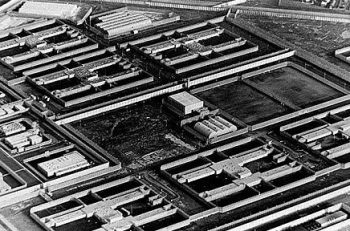
    Hannah Arendt’s famous phrase ‘the right to have rights’ was coined in her 1958 book ‘The Human Condition’. The condition of being stateless, of being a displaced person, which began its modern history in Europe with World War I, has been experienced since by untold millions who have had to listen to the claim that ‘human rights’ are universal and fundamental – but not for them. Once we had the glamorous figure of the cosmopolitan, the person who belonged to the world, the global community; that figure has been displaced by the refugee, who belongs nowhere, but is to be found everywhere in the paradigmatic settings of the modern and contemporary world – the prison camp, the internment zone, the refugee camp, the ghetto, the jail, the arena of suspension where people live in a place that is always outside the country that it is inside. Arendt pointed out that the creation of such places and conditions is a political decision, not just a terrible catastrophe. It is the prevailing form of the penal colony, the new home that we have built to house the theory of human rights. Since Arendt, and most especially in the indebted work of Giorgio Agamben, it has become clear that the concentration camp of the twentieth century was not some historical anomaly, but that it is actually one of the paradigm sites of Western modernity. The internment camp is a zone of suspension, of ‘rendition’, a place that is always outside the country it is inside – Guantanamo is the best-known example, although there many such places – our best- known example was The Maze in Northern Ireland. Those entrapped there expose the hollowness of any claim to universal human rights, to having rights just on the basis of being human. Arendt said it plainly: the refugee, the displaced person, has regularly been denied the right to have rights. The denial is a political decision. It takes its most popular form in the denial that there are any ‘political prisoners’ in the denying country, although enemy countries are full of them. Its political nature has been counterpointed more clearly since 1948, since the United Nations began its series of declarations of Human Rights, unabated since that date; rights of men, women, children, of minorities, of the disabled, of all indeed who can be characterised as having been ‘excluded’, which means that even the ‘poor’, a constituency which enlarges globally by the hour, faster than ever since the almost perpendicular rise of neo-liberalism in the decades before and after the financial crash. Reading these rights, as ‘declared’ (whatever that means), in that bland United Nations universalistic rhetoric, it is hard to know whether to laugh or cry. Such noble vacuities, such actual atrocities – produced by the same state systems that have prevailed since 1945. It was part of Arendt’s long argument, which began in 1943 with her essay “We Refugees” (about Jewish migrants who had become ‘stateless’, that condition in which they had no rights) that asked why European civilisation had so successfully produced the barbarism that made statelessness pandemic and human rights so unavailable to the millions of ‘displaced persons’ of World War II. Part of her answer was that this barbarism was so successful precisely because it was so concealed within or behind the declarations of universal rights and justice which the West, in the case of the American and the French Revolutions, had made central to the powerful ideology of what mutated into Western ‘freedom’. Arendt’s question then was: how could such an ideology be developed (as through the UN declarations) and simultaneously traduced (as in American foreign policy)? It is too feeble an explanation to put it down to hypocrisy. Hypocrisy on this scale occurs when the people who most sincerely believe in the peaceful principles are those who most regularly betray them in violent action. The British spent three centuries in perfecting their international reputation as hypocrites, a nation that believed itself to be peaceful even as it waged endless wars. Now that role has been assumed, largely, by the Americans. But, to achieve world domination is one thing; world hegemony is another. That’s what the World Wars were fought for. Arendt achieved notoriety with her reporting on the 1961 trial of the Nazi Adolf Eichmann, which was published in book form as ‘Eichmann in Jerusalem: A Report on the Banality of Evil’, where she developed the central figure of the ‘desk-murderer’, the bureaucrat who administered the death-camps. But her key point was that this was a show-trial, that pretended to be an example of universal justice triumphing over universal evil. Rather, it was in fact a national victory of the Israelis over their Nazi persecutors. In this exemplary instance, we are shown how the language of universalism can be used as a disguise for a state’s policies. The jurist who had the ambition to do that for a successful Nazi state, Carl Schmitt (1888-1985), described in his ‘Nomos of the Earth’ (1950), how the European system of international law had been replaced by an American one, with the UN as its legislature and the International Tribunal or Court as its executive. In effect, the language of universal rights was used to ratify the aims of American foreign policy; Nuremberg, Tokyo, Damascus, the Hague were, like the Moscow show trials of the 1930s, elaborate pretences that something objectively true was being defended from the current version of sectarian betrayal – war criminality, terrorism, the new terms of ‘war crime’ and its flourishing neighbourly companions, such as ‘ethnic cleansing’. Danilo Zolo has demonstrated in Victor’s Justice how the Kosovo war of 1999, that infamous intervention (to be followed by interventions in Iraq, Afghanistan , Libya and elsewhere, saving the ‘people’ of those countries for democracy, largely by killing and dispossessing them), with its International Court at the Hague, which could try anybody but Americans, is the most egregious example so far of how the language of universal rights has been perverted

    Loading

    Read more

  • Posted in:

    World War 1 and the Middle-East

    If Colonel Gadaffi were still running Libya there would not be mass migration across the Mediterranean, with thousands drowned because of unscrupulous traffickers. Gadaffi was guilty of the sin of all those secular dictators. He was too independent of ‘the West’. Britain and France, backed by America, bombed him out of existence. Their excuse was that he intended assaulting civilians in a provincial town. They got the cover of a UN Security Council resolution, which a weak Russia failed to veto. Now Libya is a failed state racked by civil war. Where do these Mediterranean migrants come from? Many are from Syria, another state afflicted by civil war encouraged by the West. Since 2011 the Syrian rebels against the Assad regime have been covertly financed and armed by Saudi Arabia, Qatar and Turkey, with the CIA and Israeli intelligence overseeing the details. Recall the House of Commons vote which denied Tory Premier David Cameron permission to bomb Syria by 285 votes to 272 in 2013. Encouraged by the US, Cameron and France’s Hollande wanted to repeat in Syria the regime- change they had brought about in Libya two years before. It was surely Ed Miliband’s finest moment as Labour leader that he refused to go along. 30 Tories and nine Lib Dems voted against Cameron too. This House of Commons No in turn gave the US Congress the impetus to stop Obama’s impending assault on Assad. In Syria the pretext was to be that Assad used chemical weapons against his foreign-financed rebels. If these rebels succeed in overthrowing the Assad regime, the country’s Christians, Alawites and many Shia Muslims are likely to have their throats cut. The paradox now is that support for the Assad regime in Syria and its Shia-backed counterpart in Iraq looks like being the best hope of holding back the ISIS monster which these ‘rebel’ groups with their dubious sources of arms and finance have spawned. America needs Iran and its clients as allies, not opponents, in the region. Najibiullah in Afghanistan, at the time of the Russian intervention there, was the first of the secular dictators America sought to overthrow by backing the mujahideen fundamentalists against him. Osama Bin Laden was on the US payroll then. Najibullah was executed by the Taliban in 1996. Saddam Hussein was the second, overthrown by Bush and Blair in their 2003 invasion of Iraq. When Saddam ruled Iraq, Sunni, Shia and Christians lived peaceably side by side. Now Iraq too is well on the way to being a failed state, racked by the Shia-Sunni conflict which America encouraged until the tormented politics of the region spawned ISIS. Najibullah, Saddam Hussein, Gadaffi and Assad were certainly dictators but the West did not realise that worse could follow. Since Bush invaded Iraq the USA has become self-sufficient in oil because of the fracking revolution. America no longer needs Saudi oil as it once did. This is the basis of Obama’s turn towards Iran, which in turn causes consternation among the Saudis and Israelis. The Saudi-Israeli response is to try to up Sunni-Shia antagonism further, building on what the Americans had started, seeking thereby to undermine Iran’s clients in the Iraqi and Syrian governments and in the Lebanese Hezbollah, in the hope of stymying a US-Iran deal. A seminal book on the historical background to the region’s current anguished politics, is James Barr’s ‘A Line in the Sand: Britain, France and the Struggle that shaped the Middle East’. The catastrophe in the Middle East is rooted in Western power-grabbing for the provinces of the Ottoman Empire a century ago in World War 1. Iraq, Syria, Lebanon, Palestine and Jordan were all Ottoman provinces then. The different religious communities had lived peaceably side by side in them for centuries. Getting hold of them was one of the war aims of imperial Britain and imperial France in 1914. It was why Britain and France pushed Turkey into an alliance with Germany in the first months of the Great War. What was presented to British and French public opinion as a war to defend the rights of small nations and to prevent ‘poor little Belgium’ from falling under German rule, was seen by these countries’ Governments as an opportunity to expand their empires in the Middle East at the expense of the Turks. Britain particularly wanted to gain control of Palestine and with it the eastern approaches to the Suez Canal, that vital route to Britain’s empire in India. The Bolsheviks published the secret treaties between the Entente Powers within a month of the 1917 Revolution, while simultaneously repudiating them and announcing Russia’s withdrawal from the War. The British were embarrassed, the Arabs dismayed and the Turks delighted. The most important secret treaty was the agreement in March 1915, just one month before the Gallipoli operation, promising Russia control of Constantinople and the Dardanelles after the war, in return for Russian agreement to support British interests in Persia, next to India. Britain had fought the Crimean War in 1854 to prevent Russia taking Constantinople and establishing itself on the Mediterranean. For the same reason Disraeli risked war with Russia in 1878 and sent the British Mediterranean fleet through the Dardanelles at the time. In the lead-up to World War 1, however, a century of British rivalry with Russia – the “Great Game” that was given literary form in Kipling’s novel ‘Kim’ – was abandoned in order to induce Russia to join France in encircling Germany. Russia and France together were the only European land powers that could crush Britain’s rising commercial rival, Germany. As a seapower Britain could help in that defeat, but only land power and large armies could ensure a decisive victory. In early 1915, with stalemate on the Western Front based on static trench warfare from the Channel to the Swiss border, the British and French Governments were worried that Russia might pull out of the war altogether in view of the pasting its armies were taking at the time from

    Loading

    Read more