british

Random entry RSS

  • Posted in:

    As sad as Assad

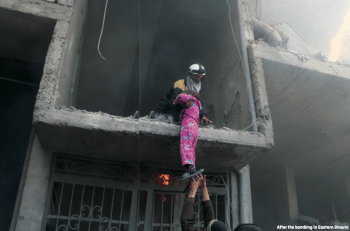
    Unthinkable suffering The Syrian army’s apparent chemical attack on Douma on April 7 was the worst atrocity of an infernal six-week military campaign in Eastern Ghouta. This in turn was the latest horrific chapter in a war lasting seven years which has brought unthinkable suffering to millions of innocent civilians. The relentless bombardment of Eastern Ghouta, backed by Russia and Iran, follows a cruel siege of the area lasting almost five years. These events reflect the most destructive and tragic elements of human nature: when ruthless powers encircle and terrorise the vulnerable, unchecked by any higher authority. The scenes being broadcast from the region are glimpses into an abyss of inhumanity – children being dragged from underneath rubble, parents convulsed with grief, neighbourhoods reduced to debris. The repeated bombing of hospitals and obstruction of aid convoys entering Ghouta are the most depraved aspects of the Syrian army campaign. They are examples of what Holocaust survivor Primo Levi called “useless violence” – suffering inflicted for its own sake and for no other purpose. Putin’s geo-political game Russian President Vladimir Putin has been providing military and diplomatic support to Bashar al-Assad since 2015 when he was losing the Syrian civil war – partly to secure Russian economic interests and partly to assert Russia’s dominance over the US in the region. The civilians of Eastern Ghouta are pawns in Putin’s geo-political game, and it appears he faces little consequence for directing this inferno of mayhem and bloodshed from Moscow. The wholesale destruction of Eastern Ghouta resembles the fate suffered by Aleppo and Homs earlier in the Syrian war and by Grozny, capital of Chechnya, during Putin’s first venture in politicised mass killing, a year into his reign. In each of these war zones the wretched plight of civilians incited him to an extreme of merciless aggression. Putin and al-Assad appear to share a psychopathic relish for attacking the weak. Aerial footage of Aleppo after the worst bombardments in 2016 showed apocalyptic scenes of ruination. The Russian and Syrian forces may as well have dropped a nuclear bomb on this once thriving, exotic city. Night after night on our television screens we are witnessing similar destruction and misery visited upon another mass of civilians, and hearing the same lies from Russian and Syrian officials who deny appalling events that are plain for all the world to see. Footage now emerging of Eastern Ghouta reveals almost a carbon copy of the haunted, hollowed-out cityscape that remains of Aleppo. Syria abandoned Article 1 of the Charter of the United Nations, set out at its inception in 1945, committed members to “tak[ing] effective collective measures for the prevention and removal of threats to the peace, and for the suppression of acts of aggression or other breaches of the peace”. Humanitarian protections for civilians in war zones were enshrined in the UN’s Fourth Geneva Convention of 1949. Grave breaches of these conventions include “wilful killing”, “wilfully causing great suffering or serious injury” and “making the civilian population or individual civilians the object of attack”, all of which have without question been perpetrated on Eastern Ghouta. The UN as it currently stands is nothing more than a politically redundant talking shop for Syria. Hand-wringing about the awfulness of the latest atrocity is invariably followed by diplomatic paralysis. Where power is concentrated most – among China, the US and the EU – moral courage appears absent. The US government, supported by the UK and France, mounted a sharp military response to the chemical assault on Douma, as it did last April when 80 civilians were killed by nerve agents dropped by Syrian army planes in Idlib province. We could ask why the relentless killing of civilians by every other weapon imaginable does not warrant intervention. As before, it is likely that such a measure will not be followed by substantive protections for Syrian civilians who will remain at the mercy of al-Assad and Putin. It primarily served as a show of US military might and of Trump’s willingness to impose a supposed tougher line than Obama on chemical weapons. It   also conveniently shifted public attention from the Mueller investigation into Trump’s alleged links with the Russian administration during his election campaign. An international peace-keeping force The Syrian conflict is a complex and deadly quagmire, involving armies and militias from several countries. Any attempt to resolve it is fraught with risk. And yet the choice to allow this slaughter of innocents to continue is a defilement of our collective humanity. If a large international peace-keeping ground force were based in Syria Putin would be far more cautious in the use of his military power there, and in his sanctioning of al-Assad’s violence. This would require courage from several of the world’s most powerful nations and would involve some risk to the domestic popularity of their leaders. It would be a show of collective strength to cold-blooded autocrats who answer to nothing else. A long-term political settlement is another challenge altogether, but in the interim this would give some protection to civilians caught up in the war. Putin and his allies have been emboldened for too long by having no limits placed on their behaviour and by the implied international attitude that the lives of Syrian civilians are not of much value to the rest of the world. Liam Quaide Liam Quaide is a clinical psychologist and the Green party election candidate for East Cork

    Loading

    Read more

  • Posted in:

    Some devils got him

    The Westminster terrorist attack on 22 March of last year, by lone attacker, Khalid Masood (52), who drove a car into pedestrians and fatally stabbed PC Keith Palmer, is not the first time that terrorists have selected the Palace of Westminster, and its surrounds, to perpetrate an act of violence. 39 years ago, on 30 March 1979, the Irish National Liberation Army (INLA) murdered Airey Neave, Conservative MP and Margaret Thatcher’s shadow secretary of state for Northern Ireland, in a devastating car bomb attack. Apart from reaffirming Thatcher’s determination to defeat Republican paramilitaries, Neave’s assassination robbed the Conservative Party of one of its most open-minded, albeit controversial, thinkers on Northern Ireland. By the standards of the day, Neave was a remarkable figure. On the one hand, he was a public figure: war-hero, writer, barrister and politician. He had escaped from Colditz, a Nazi prisoner of war camp during the Second World War; was the author of five semi-autobiographical books; established a practice at the bar; and was Conservative Party MP for Abington, 1953-1979. On the other hand, he was an elusive and secretive individual, retaining close links to the British Secret Intelligence Service throughout his adult life. During the Second World War he worked for MI9, a subsidiary of MI6, later holding the rank of commanding officer of the Intelligence School 9, Territorial Army (TA). Neave’s greatest contribution to political life came in the autumn of his career, following his promotion as shadow secretary of state for Northern Ireland in 1975. Neave’s appointment to Thatcher’s shadow cabinet, in the wake of her election as leader of the Conservative Party in February 1975, had important ramifications for the Conservative Party’s Northern Ireland policy. From the moment he took up his new shadow cabinet portfolio, until his murder by the INLA, Neave’s “first priority”, as he noted in April 1978, was to defeat Republican terrorism. Although often preoccupied by security-related issues, and despite misguided arguments to the contrary, Neave remained committed to finding a workable solution in the hope of ending direct rule in Northern Ireland. As a pragmatist, confronted by the political reality that the mainstream political parties in Northern Ireland could not agree on the terms of devolution, he instead championed reform of local government in Northern Ireland, as an interim measure. By initially supporting the establishment of his so-called ‘Council of State’, subsequently followed by a proposal to create one or more Regional Councils in Northern Ireland, Neave sought to end, as he phrased it in November 1977, `’civil servants’ paradise`’, which existed under direct rule. Unfortunately, Neave’s assassination by the INLA robbed him of the opportunity to implement his proposals to reform local government in Northern Ireland.   New archival material from Neave’s personal papers and the National Archives of the UK iliuminate the events of 30 March 1979. Neave commenced his working day, like any other. Following breakfast, he left his at at Westminster Gardens, got into his powder-blue Vauxhall Cavalier saloon, and made the short journey to the houses of Parliament, the Palace of Westminster. His morning was spent preparing for the forthcoming British general election (scheduled for 3 May) and dealing with day-to-day constituency matters. Following lunch, he decided to stop for the day and return home to spend time with his wife Diana. It was in the members’ lobby that Neave held his last conversations, chatting to colleagues before crossing to the members’ exit and taking the lift to the five- floor underground car-park to pick up his car. At 2.58p.m., an enormous explosion engulfed New Palace Yard. Soon after, as Neave’s sole biographer Paul Routledge wrote, smoke was seen billowing from the smouldering wreckage of a Vauxhall car on the ramp leading up from the MP’s underground car-park. It was a “haunting image”, with sheets of headed house of Commons writing paper “blowing gently in the breeze”, recalled Lord Lexden, Neave’s former political advisor on Northern Ireland. Police officers rushed to the scene and came upon an unidentifiable man, dressed in a black coat and striped trousers. Initially, the victim was believed to be Alan Lee Williams, a Labour MP. In fact, in the car lay sixty-three-year-old Neave. Surveying the burning wreckage, the mangled frame of the car and the glassless windows, it was apparent that some type of bomb had exploded. “He’s still alive! Clear the area!”, a policeman shouted. Within minutes, an ambulance crew arrived to find the still unidentified figure, who was breathing, slumped over the steering wheel, his face burned beyond recognition. A doctor, nurse and firefighters soon joined the entourage, before Neave, with his right leg blown off below the knee, was eventually freed after half an hour. He was quickly taken to Westminster Hospital where he underwent emergency surgery. It was too late. Neave died on the operating table. Thatcher received news of Neave’s murder while preparing for a party-political general-election broadcast at BBC headquarters. Her first thought was reportedly: “Please God, don’t let it be Airey”. When it was confirmed that Neave was indeed the victim Thatcher was described as “numb with shock”. Later that day she informed a BBC reporter that “… some devils got him and they must never, never, never be allowed to triumph, they must never prevail”. Following Neave’s murder, attention immediately turned to who had perpetrated this brutal crime. Initially, the Provisional Irish Republican Army (PIRA) claimed responsibility. In fact, the real perpetrators were the INLA. Formed in 1975, with a pledge to establish a “republican and socialist” state, the movement had previously been known as the People’s Liberation Army, having sprung up in late 1974, when the Official IRA attacked members of the newly formed Irish Republican Socialist Party (IRSP). At the time of Neave’s death, it was believed that the INLA had approximately 60 active members. The INLA basked in the publicity following Neave’s murder. A spokesperson for the terrorist organisation said that Neave’s assassination “had a tonic effect in Northern Ireland where there had been celebrations in Belfast,

    Loading

    Read more

  • Posted in:

    Oxford, Britain

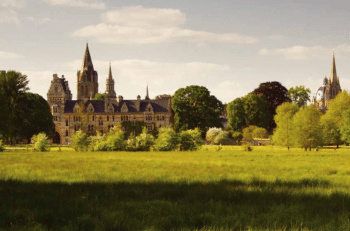
    North Oxford is a heartland of academia where leafy halls of residence mingle with stately homes and rarefied hostelries. Situated in almost the very centre of Britain a windless calm favours scholarly reflection removed from modernity’s fugue. Even the traffic is orderly with bicycles sensibly preferred. It is one of the most attractive places in the world. Spend an afternoon on the lawns at Christchurch if you doubt it. Oxford is world-class in so many ways: the city and the university. PWC and Demos rated it the best place to live in Britain, in 2012, across a wide range of criteria. Shanghai ratings names Oxford University the seventh best in the world. South Oxfordshire was recently named Britain’s best rural place to live. It is transcendent England. What has this to say about Brexit, the political issue of this generation? The City of Oxford is located on the confluence of the Isis (the idiosyncratic name for the Thames here) and Cherwell rivers. Broadly, it may be divided into three zones with a clear north-south divide: that affluent and mature north Oxford of Jericho and Wolvercote; predominantly twentieth-century suburbs including Cowley to the south; and the historical and commercial centre linked to Botley and Osney Island, built around an Anglo-Saxon settlement of which little remains. This contains renowned colleges such as Christchurch, Balliol and Magdalen. The first sign of incongruity is how close it nestles to the ‘any-town-UK’ commercial centre and its array of gaudy chains. Moving south, there is yet another Oxford as housing gets cheaper and industry is evident. The first industrial revolution passed Oxford by as colleges objected to the contagion of commerce. Only after World War II did significant manufacturing arrive as the city attracted a car industry. By the early 1970s, 20,000 people were employed in the sector and the original Mini Minor was developed here in 1959. Unfortunately, as in much of the country, a significant proportion of heavy industrial jobs have departed. The working class areas now face social problems familiar in many English cities. Living as a jobbing tutor and supply teacher in Oxford for two years I encountered classroom behaviour that made experiences in schools in socially-deprived areas of Dublin seem almost meditative. Oxford is a place of profound educational inequality. Oxford accomodates a great literary tradition: JRR Tolkien, CS Lewis, Lewis Carroll, Kenneth Graham and Irish Murdoch wrote from Oxford. The number of Prime Ministers that have passed through Oxford University is startling. 28 overall. Only Jim Callaghan and John Major, who revelled in his immersion in the university of life, among English Prime Ministers since Winston Churchill (who finally left office in 1955) did not pass along its quads. Alumna Theresa May (St Hugh’s, 1974) joins a list that includes Labour Prime Ministers Tony Blair (St John’s, 1974), Harold Wilson (Jesus College, 1937) and Clement Atlee (University College, 1904) as well as Tories Anthony Eden (Christchurch College, 1922), Harold MacMillan (Balliol College, 1914) Edward Heath (Balliol College, 1939), Margaret Thatcher (Somerville College, 1947), and David Cameron (Brasenose College, 1988). Oxford indubitably has seeded the post-War UK political establishment. Moreover, numerous Tory politicians maintain an association with the wider shire. Churchill himself was born in the nearby ancestral estate of Blenheim Palace (though he passed some of his early childhood in Dublin’s Phoenix Park). David Cameron, MP for Witney, Oxfordshire, lives in Chipping Norton close to Rebekah Brooks, Jeremy Clarkson and the rest of the well-placed Chippy set. Michael Heseltine (Pembroke College, 1954) dwells in style nearby though one imagines he looks slightly askance at the gobby neighbours. Theresa May grew up in the village of Wheatley a few miles east of Oxford where her father served as vicar. Further east towards London, Boris Johnson (Balliol College, 1987), the new foreign secretary, lives in Henley-on-Thames. Jeremy Paxman, Richard Branson, Kate Moss, Kate Winslet, Rowan Atkinson, Jeremy Irons and Ben Kingsley: celebrities, high-and-low-brow, live in Oxfordshire. Perhaps the county has a quality – an England of the imagination – that grandees of all sorts gravitate towards. It could be the low rural population density, a legacy of the Enclosure Acts (1760-1830) that placed formerly common land in the hands of expanding gentlemen farmers. Today, though located only an hour from some of the most in ated land prices in the world in London, it is possible to drive for long stretches without seeing a single dwelling. The hoi polloi were kept at bay, in Oxford and swathes of its hinterland. As an Irish person living in the city of Oxford I never had a sense that I was unwelcome, or at least any alienation was no different to that felt by the bulk of the population before a converging aristocratic and mercantile elite: unlike the ancient regime in France since the Tudor era, nobility has been open to the highest bidder and an Oxford education provides the polish. One must however acclimatise to the southern English reserve and a sardonic sense of humour. The historian Tony Judt (St Anne’s College 1980- 87), who concededly knew little of Ireland, wrote that the English are perhaps “the only people who can experience schadenfreude at their own misfortunes”. Succumbing to generalisation I regard English friendships as firmer than Irish for all the latter’s sociability. But these societies of companions generate mosaic communities often hostile to one another. Better the devil you know and bugger the rest. In the era of the Internet there is a growing suspicion of the ruling class of politicians. Many do feel “shat on by Tories, shovelled up by Labour” in the words of Uncle Monty in ‘Withnail and I’. They are often seen as a separate cast reflecting the cultural dominance of Oxford and Cambridge Universities (‘Oxbridge’) which extends to the media and business. This trend perhaps explains why maverick and grumpy (though otherwise profoundly different) outsiders such as Jeremy Corbyn, Nigel Farage (and Boris Johnson who went rogue over Brexit) are appealing to a jaded electorate; a state of

    Loading

    Read more

  • Posted in:

    Discovering Casement

    It is today widely believed that between Casement’s arrest and execution in 1916 the Black Diaries now held in the UK National Archives were clandestinely shown to in uential persons in order to disarm appeals for his reprieve. This belief was once again articulated by law professor Sean McConville on 2 June, 1916 at a Casement event in London when he stated to a TV audience of millions “…the diaries were circulated in London … Blackwell … was circulating these diaries at a time when Casement’s fate had not nally been decided …”. The original sources of this belief, however, are the books written by Rene MacColl BL, Reid, Roger Sawyer, Brian Inglis and Séamus Ó Síocháin. These volumes comprise more than 2,000 pages and at an average of two years of research for each study, we have around ten years research. Strangely, in these 2,000 pages there is not a single verifiable instance recorded of the diaries in the National Archives being shown to anyone in that period. How can this be? It is not credible that these authors of research overlooked this crucial aspect after ten years. If they found instances of the diaries being shown in that period, then it seems they withheld that vital information from their readers. Since this is not credible, we must assume that none of them found any instance of the diaries being shown in that period. It is well attested that typescript pages were circulated in that period and that a large quantity of these eventually found their way to Singleton-Gates who published them in Paris in 1959. But Casement did not type those pages. What would constitute a proof of authenticity of the diaries held in the National Archives? There are no witnesses to Casement’s authorship and there have been no rigorous and impartial scientific tests. The only evidence that has been adduced in favour of authenticity is a resemblance in handwriting. The attempts at corroboration in July 1916 are not evidence of authorship. But perhaps the question about authenticity is a false trail. In the period from 25 April to 3 August the British authorities claimed to be in possession of the five bound volumes now held in the UK National Archives. However, there is no verifiable record that these volumes were shown to anyone in that period. Rather than show the diaries, the Intelligence chiefs had decided to prepare typescript pages and to show these to influential persons, journalists, editors, politicians, churchmen and others. They told these persons that the typescript pages were authentic copies of original diaries written by Casement. They failed to provide any proof that the typescript pages were copies of anything written by anyone. The proof which they did not provide would have been exhibition of the bound volume diaries now in the UK National Archives. No explanation has ever been proposed for this failure. Today there are five bound volumes in the UK National Archives. Their existence today does not prove their existence in the period 25 April to 3 August 1916. That the bound volume diaries were not shown in that period means there was some impediment to showing them. The protagonists – Blackwell, Thomson, Hall, Smith and others – had the strongest of motives for showing the bound volume diaries which they said had been discovered but they did not do so. The impediment certainly existed and it was such that these powerful men neither jointly nor singly could overcome it. Therefore it was out-with their joint power to show the bound volume diaries in that period. This circumstance indicates that the impediment could not have been overcome by anyone in England at that time – not even by the monarch. In this regard these powerful men had touched the limit of theirhuman power. The question is therefore not about forgery or authenticity but about the material existence of the bound volume diaries at that time. The absence of verifiable evidence that the bound volume diaries existed before August 3, 1916 means that questions about authenticity are meaningless. What first requires to be proved is their existence in that period before August 3. Those who claim the typescripts were true copies have now had 100 years to produce evidence of the existence of the bound volumes in that period. That they have not produced the necessary evidence indicates that they too have been unable to overcome the impediment which defeated their powerful predecessors, Thomson, Smith, Hall etc. In these circumstances an impartial court of law would decide to act as if the bound volume diaries did not exist at that timeand would dismiss a case for their authenticity as being un-tryable. The case for the typescripts being copies at that time could not be tested or proved without verifiable independent evidence that the bound volumes existed before August 3. Thus the case in favour of the material existence of the bound volume diaries before August 3 rests entirely on the word of Thomson, Hall, Blackwell, Smith and others and these are the people who at that time were circulating typescripts which depicted Casement as “addicted to the grossest sodomitical practices”. These persons can only be considered as hostile witnesses by virtue of their uncontested behaviour. There are no neutral witnesses who testified to seeing at that time any of the bound-volume diaries now in the UK National Archives. Absence of proof of existence of the bound volumes at that time entails that no proof of their authenticity can be derived. That no proof of authenticity can be derived entails that – until such proof of existence is provided – the veracity or falsity of the typescripts cannot be considered. Ei incumbit probatio qui dicit, non qui negat; the onus of proof rests on the accuser, not on the defence. If questions about authenticity are meaningless due to lack of conclusive evidence after 100 years, claims favouring authenticity do not rest upon verifiable facts or upon independent testimony. Therefore such claims rest upon

    Loading

    Read more

  • Posted in:

    Braced for Brexit

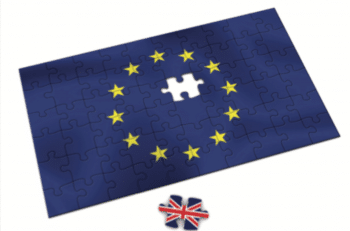
    Back in the 1960s I once stood on the plinth of Nelson’s column in Trafalgar Square, London, between Landseer’s lions, at a Connolly Association rally against anti-Catholic discrimination by the Northern Ireland Stormont regime. Lots of people were waving tricolours. Forty years later I spoke again in the same spot, at an anti-EU rally organised by the Democracy Movement, one of Britain’s EU-critical bodies, before a sea of little Union Jacks. I smiled to myself. Here were the English discovering the drawbacks of being ruled by foreigners, by people they did not elect, and how EU laws had come to have primacy over those of their own Parliament. They were reacting against losing their democracy and national independence. British Euroscepticism is largely English nationalism. The political psychology of the governing élites in England and Ireland is very different, not least in their attitudes to the EU. The lack of self-confidence of the Irish élite is shown by their continual anxiety to be seen as ‘good Europeans”’. Hence for example Enda Kenny’s boast that our recent modest economic improvement has “restored our reputation in Europe”. I was at the EU summit in Gothenburg, Sweden, a few days after Irish voters rejected the EU’s Treaty of Nice in 2001. The then Taoiseach, Bertie Ahern, was virtually beating his breast there as he explained apologetically to the international media how Irish voters were mistaken, but they would have a chance to change their minds in a second referendum – which of course duly happened. By contrast England’s governing élite has the psychology of a ruling power. For centuries they backed the second strongest powers of Europe against the strongest, thereby preventing any one power dominating the continent. When the EU came along after World War II they joined it in the hope of either prising France and Germany apart or else of being co-opted by the Franco-Germans as an equal partner to run ‘Europe’ as a triumvirate. Both hopes have proved illusory. Hence English disillusion with the EU. They never shared the Euro-federalist visions of the continentals – something that former Commission President Jacques Delors expressed when he said in 1993: “We’re not here to make a single market – that doesn’t interest me – but to make a political union”. Prime Minister Cameron wants to stick with the EU. But most of his party and large swathes of British public opinion see the EU as a low-growth economic area mired in recession, with a dysfunctional currency and high unemployment. They want to regain their freedom of action, especially over trade, by leaving. They want to develop trade and investment links with the five continents and the far-flung English-speaking world. The obvious power imbalance between the two sides would make it extraordinary if the “Leave” people were to prevail over the “Remain-Ins” in the Brexit referendum. On the one side are the British Government, the American Government, the German and 25 other EU Governments, Wall Street, the CBI, the TUC, the British Labour Party, the Brussels Commission, the European Movement, most EU-based High Finance and Transnational Corporations, plus in Ireland all the parties in the Oireachtas. On the other side is a diverse and sometimes quarrelsome range of groups and individuals on the Left, Right and Centre of British affairs, united only by their desire to get back their right to make their own laws, control their own borders and that their Government should decide independently its relations with other countries. It would be unrealistic though to think that a “Remain-in” vote in June will decisively settle the matter. It is likely merely to delay the inevitable divorce, for the interests of the continentals and the island Britons are just too fundamentally opposed. And what of the Celtic fringe? Contrary to the received wisdom there could well be a substantial “Leave” vote in those areas too. If the UK as a whole votes to leave, will Scotland want to break away from the rest of the UK in order to remain in the EU, abolish sterling and adopt the euro – that being a requirement for all newly acceding States to the EU? It is very doubtful. The Irish media have not yet picked up on one big downside for Irish people of the deal David Cameron concluded in Brussels before he launched his referendum. This is the implication of the EU agreement that if the UK votes to remain, new immigrants to the UK are liable to have lower social benefits for some years than those already there. It will be impossible under EU law to differentiate between Irish immigrants on the one hand and non-Irish ones on the other. This means that new Irish immigrants to Britain or the North must face cuts in social bene ts too if the “Remain” side wins. This proposal will not affect Irish people already settled in the UK, but solidarity with their fellow countrymen and women should still cause lots of them to vote Leave. If a booming British economy, freed of EU regulation, becomes the Singapore of Europe outside the EU, which is perfectly possible, it can only benefit Ireland economically. Lurid scenarios are being painted of the consequences of Britain leaving the EU while Ireland remains in it. If Brexit happens some uncertainty is inevitable for a year or two, but it will not be the end of the world. Free trade will continue between Ireland and the UK under all realistic “Leave” scenarios, so there will be no customs posts on the North-South border within Ireland, no passport controls or anything like that. Such claims are simply scaremongering, part of “Project Fear”. What of Northern Ireland in the event of Brexit? Over the past decade the UK has paid over £150 billion to the EU budget – far more than it has got back. It sends £350 million to Brussels every week. This is some ten times the Northern Ireland schools budget. EU subsidies to the North in the form of

    Loading

    Read more

  • Posted in:

    Yes to history, no to commemoration

    Commemorations for the centenary of the 1916 Rising are well underway. This anniversary is being marked in a much less sanitised way than previous significant Easter Week commemorations. This is very welcome. For far too long, ceremonies celebrating the 1916 Rising were based on a highly simplified, monochrome account of history: Rebels good, Brits bad, civilians ignored. We did not see pictures of dead bodies. Few official accounts mentioned the deaths of women and children caught in the crossfire. This time around, things are different. The vital research work of many historians and others has contributed greatly to the generation of this more complex understanding of the 1916 Rising. We now know that approximately 488 people were killed during Easter Week. Of these, 40 were children, and over 200 were civilians. There were about 120 British soldiers killed, and 60 rebels. These numbers are as significant as the numbers we have traditionally associated with commemorations marking Easter Week: the seven signatories of the Proclamation, and the 16 men executed. It is timely to reflect on four key themes which should shape, and to some extent are shaping, the centenary commemoration process: de-militarisation; contextualisation; inclusivity; and humanisation. Commemorations should not be over-militaristic, nor should any death or killing be ‘celebrated’. This is even more necessary in the wake of the recent Brussels atrocity which showed the immense human tragedy of mixing religion, politics and violence. The events organised throughout Dublin for Easter Monday under the ‘Reflecting the Rising’ banner were far more in keeping with an inclusive spirit of commemoration, than the military parade that took place on Easter Sunday. In a similar spirit, commemorations should reflect the context of the time. The rise of important social movements, in particular the trade union and suffragette movements, as well the Irish cultural revival, should be marked alongside the nationalist struggle. The commemorations must be inclusive. Where official ceremonies include religious services, these must be carried out with respect for humanists, atheists and people of minority religions. Similarly, commemorations must be inclusive of both women and men. We now know, from the great work of feminist historians, that 77 women involved in the 1916 Rising were arrested along with their male colleagues at the end of Easter Week. Inclusivity also means remembering the many thousands of Irishmen who fought and died in World War I, but whose lives and deaths were not officially commemorated for many decades after independence. Commemorations must become humanised. It is welcome to see this happening in this centenary year. Many official and unofficial events have incorporated the telling of individual eye-witness accounts: some noble, some tragic, some humorous, and some poignant. These include stories like that of Catherine Byrne, who jumped through a side window of the GPO to join the male Volunteers inside. They include that of two-year old Sean Foster, who was shot dead in crossfire while being wheeled in a pram by his mother Katie on Church Street, and whose father had died on the Western Front the year before. In bringing these stories to the fore, we come closer to realising the past and to remembering the dead in a respectful and inclusive way. It is very welcome to see these four themes informing the 2016 commemoration process. Yet it appears that they are not embraced universally. The Glasnevin Cemetery Trust has carried out hugely important work in compiling accurate data on all the 488 people killed during the 1916 Rising. It is constructing a Necrology wall to mark all of their deaths in a non-judgemental fashion. It is unfortunate that some of the 1916 Relatives Association do not support this approach to commemoration. And that there was some scuffling at the recent unveiling. It seems that, for them, even 100 years on, there is still a hierarchy of grief. Those who still seek to elevate some deaths over others are themselves harking back to the old monochrome view of Easter Week. Their view should not prevail. The reality is that the concept of ‘commemoration’ is always problematic. Ultimately, we should not seek to replace ‘history’ with ‘commemoration’. Commemoration is a largely artificial concept, itself tending towards sanitisation. History is messy, complex, ambiguous and contradictory. The history of the 1916 Rising should be marked and remembered in a way that is appropriate to that reality. Accurate historical research, inclusive contextualised events, and vivid eye-witness accounts should replace empty commemorative ceremonies. Our process of marking the 1916 Rising should be de-sanitised, to reflect the real complexity of the history of the struggle for Irish independence. Ivana Bacik

    Loading

    Read more

  • Posted in:

    Anti-bloodshed brothers

    Much is made of the choice made by James Connolly to join the Irish Citizen Army (ICA) with the Irish Volunteers led by Pádraig Pearse for the Easter Rising in 1916. Across the British and European Left, notably but not exclusively among those on the side of the allies in World War I, there was a mixture of horror and disdain at the Irish merger of socialism and nationalism into a revolutionary force. Within the ICA itself there was some opposition to any collusion by socialists with the nationalists with one of its founders, Sean O’Casey, to the fore in condemning Connolly whom he described, retrospectively, in 1919, as having “stepped from the narrow byway of Irish Socialism onto the broad and crowded highway of Irish nationalism”. For many years since, and particularly since the outbreak of conflict in the North in the late 1960s, Connolly’s decision to join the military council of the Irish Republican Brotherhood and to set a date for the Rising after a three-day secret meeting with Pearse, Sean MacDiarmada and Joseph Plunkett in January 1919 has been the subject of much criticism, including by many on the Left. However, in the light of so much recorded material including the invaluable statements of participants to the Bureau of Military History becoming available since then, the rationale behind Connolly’s decision, however reluctant, has become much clearer. Equally, the motivation and coherence of Pearse and his comrades in the Volunteers in striking a blow for freedom is also now more credible than many of their detractors would allow. In 1915 Connolly did use the words “blithering idiot” to describe anyone who would celebrate the “red wine of the battlefields” – comments widely believed to have been in response to Pearse’s exhortations. He said: “No, we do not think the old heart of the earth needs to be warmed with the red wine of millions of lives. We think anyone who does is a blithering idiot. We are sick of such teaching and the world is sick of such teaching”. He was referring to a Victorian tradition in literature and poetry which was widespread in Ireland and Britain as well as in mainstream, including socialist, European thinking which glorified blood sacrifice and martyrdom. What is more important though is the practical opposition of Pearse and Connolly to the actual blood sacrifice which saw hundreds of thousands of young men wasting their lives on the killing fields of Flanders and beyond in an imperialist war. For this was the central reason why both men found common cause in the Spring of 1916. As President Michael D Higgins said at a commemoration for the ICA in Áras an Uachtaráin at Easter: “The suggestion that, when WWI broke out, James Connolly scrapped his faith in socialism to embrace pure nationalism is contradicted by Connolly’s writing and journalism both before and after 1914. James Connolly was deeply concerned with the context of turmoil in Europe and the world, whose revolutionary potential was, in his view, being squandered in defence of imperialist adventurism. In Connolly’s estimation, a blow against Empire was a clearing of the ground for future socialist struggle. It is important, therefore, not to rush to judgement on what James Connolly’s motivations were for orchestrating a joint action with the Volunteers. One can understand how, in despair at the collapse of his and other socialists’ internationalist hopes after the outbreak of the War, appalled by the breakdown of the international proletariat into nationalities which were slaughtering each other on the Western Front and in the Middle East, James Connolly resolved to seize the opportunity of the war to strike a blow again the British Empire”. At the secret meeting in January 1916, Connolly accepted an invitation to join the IRB council and agree a date for the Easter Rising while conscious of the ideological differences that existed between the ICA and the nationalists of both the Irish Volunteers and the larger force of nationalists under John Redmond. Connolly had worked with the trade union movement against the capitalists in the US, and on return to Ireland led the Dublin workers against the brutal onslaught by employers, some of whom were prominent in the nationalist movement during the 1913 Lockout. That struggle led directly to the creation of the ICA the constitution of which influenced key sentiments of the 1916 Proclamation including its call for equality for women and children and “the right of the people of Ireland to the ownership of Ireland”. Further, Connolly was an internationalist who understood that the world war was essentially a contest between the great powers over global resources. Pearse clearly shared more in common with this perspective than many of his former nationalist allies as he agreed to include the progressive thinking of the ICA in the Proclamation he drafted and read at the GPO, a document that had of course been printed by union labour in Liberty Hall the night previously. Redmond on the other hand was prepared to encourage tens of thousands of young, mainly impoverished, Irishmen to their deaths in the imperialist war in order to gain advantage for his wealthy compatriots through the fading promise of limited home rule. As President Higgins remarked, “the ranks of mainstream nationalists, and particularly those of the Irish Parliamentary Party, comprised a significant number of industrialists and graziers who were happy to secure the advantages of a political independence within the Empire but who would resist economic, social, or as both O’Casey and Synge would learn, cultural, innovation”. Many of those who fought heroically with the Irish Volunteers during Easter Week went on to reveal just how divergent their view of the type of Ireland they were ghting for was from their comrades in the ICA, and indeed many in Cumann na mBan. Some of those drafting the 1922 Constitution of the Free State just six years later described how the proposed inclusion of Pearse’s words on equality was dismissed as “Bolshevist” by the British authorities

    Loading

    Read more

  • Posted in:

    World War 1 and the Middle-East

    If Colonel Gadaffi were still running Libya there would not be mass migration across the Mediterranean, with thousands drowned because of unscrupulous traffickers. Gadaffi was guilty of the sin of all those secular dictators. He was too independent of ‘the West’. Britain and France, backed by America, bombed him out of existence. Their excuse was that he intended assaulting civilians in a provincial town. They got the cover of a UN Security Council resolution, which a weak Russia failed to veto. Now Libya is a failed state racked by civil war. Where do these Mediterranean migrants come from? Many are from Syria, another state afflicted by civil war encouraged by the West. Since 2011 the Syrian rebels against the Assad regime have been covertly financed and armed by Saudi Arabia, Qatar and Turkey, with the CIA and Israeli intelligence overseeing the details. Recall the House of Commons vote which denied Tory Premier David Cameron permission to bomb Syria by 285 votes to 272 in 2013. Encouraged by the US, Cameron and France’s Hollande wanted to repeat in Syria the regime- change they had brought about in Libya two years before. It was surely Ed Miliband’s finest moment as Labour leader that he refused to go along. 30 Tories and nine Lib Dems voted against Cameron too. This House of Commons No in turn gave the US Congress the impetus to stop Obama’s impending assault on Assad. In Syria the pretext was to be that Assad used chemical weapons against his foreign-financed rebels. If these rebels succeed in overthrowing the Assad regime, the country’s Christians, Alawites and many Shia Muslims are likely to have their throats cut. The paradox now is that support for the Assad regime in Syria and its Shia-backed counterpart in Iraq looks like being the best hope of holding back the ISIS monster which these ‘rebel’ groups with their dubious sources of arms and finance have spawned. America needs Iran and its clients as allies, not opponents, in the region. Najibiullah in Afghanistan, at the time of the Russian intervention there, was the first of the secular dictators America sought to overthrow by backing the mujahideen fundamentalists against him. Osama Bin Laden was on the US payroll then. Najibullah was executed by the Taliban in 1996. Saddam Hussein was the second, overthrown by Bush and Blair in their 2003 invasion of Iraq. When Saddam ruled Iraq, Sunni, Shia and Christians lived peaceably side by side. Now Iraq too is well on the way to being a failed state, racked by the Shia-Sunni conflict which America encouraged until the tormented politics of the region spawned ISIS. Najibullah, Saddam Hussein, Gadaffi and Assad were certainly dictators but the West did not realise that worse could follow. Since Bush invaded Iraq the USA has become self-sufficient in oil because of the fracking revolution. America no longer needs Saudi oil as it once did. This is the basis of Obama’s turn towards Iran, which in turn causes consternation among the Saudis and Israelis. The Saudi-Israeli response is to try to up Sunni-Shia antagonism further, building on what the Americans had started, seeking thereby to undermine Iran’s clients in the Iraqi and Syrian governments and in the Lebanese Hezbollah, in the hope of stymying a US-Iran deal. A seminal book on the historical background to the region’s current anguished politics, is James Barr’s ‘A Line in the Sand: Britain, France and the Struggle that shaped the Middle East’. The catastrophe in the Middle East is rooted in Western power-grabbing for the provinces of the Ottoman Empire a century ago in World War 1. Iraq, Syria, Lebanon, Palestine and Jordan were all Ottoman provinces then. The different religious communities had lived peaceably side by side in them for centuries. Getting hold of them was one of the war aims of imperial Britain and imperial France in 1914. It was why Britain and France pushed Turkey into an alliance with Germany in the first months of the Great War. What was presented to British and French public opinion as a war to defend the rights of small nations and to prevent ‘poor little Belgium’ from falling under German rule, was seen by these countries’ Governments as an opportunity to expand their empires in the Middle East at the expense of the Turks. Britain particularly wanted to gain control of Palestine and with it the eastern approaches to the Suez Canal, that vital route to Britain’s empire in India. The Bolsheviks published the secret treaties between the Entente Powers within a month of the 1917 Revolution, while simultaneously repudiating them and announcing Russia’s withdrawal from the War. The British were embarrassed, the Arabs dismayed and the Turks delighted. The most important secret treaty was the agreement in March 1915, just one month before the Gallipoli operation, promising Russia control of Constantinople and the Dardanelles after the war, in return for Russian agreement to support British interests in Persia, next to India. Britain had fought the Crimean War in 1854 to prevent Russia taking Constantinople and establishing itself on the Mediterranean. For the same reason Disraeli risked war with Russia in 1878 and sent the British Mediterranean fleet through the Dardanelles at the time. In the lead-up to World War 1, however, a century of British rivalry with Russia – the “Great Game” that was given literary form in Kipling’s novel ‘Kim’ – was abandoned in order to induce Russia to join France in encircling Germany. Russia and France together were the only European land powers that could crush Britain’s rising commercial rival, Germany. As a seapower Britain could help in that defeat, but only land power and large armies could ensure a decisive victory. In early 1915, with stalemate on the Western Front based on static trench warfare from the Channel to the Swiss border, the British and French Governments were worried that Russia might pull out of the war altogether in view of the pasting its armies were taking at the time from

    Loading

    Read more