• Posted in:

    Israel Politik: Illegal settlement

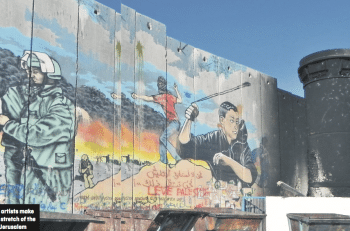
    After completing his Ph.D in the University of Pennsylvania, the former Palestinian foreign minister, Nabil Shaath, lectured in financial economics at the elite Ivy League Wharton School in the US. Among his students was a brash undergraduate named Donald Trump who did little study, flunked his exams and was expelled from the university. With the help of his very rich father, Trump was readmitted and, despite his poor academic credentials, went on to greater things. “He was not a good student. He dropped out and his academic standard did not come up to scratch. I was teaching advanced corporate finance and he flunked the courses. The idea of this man as President of the US to me shows the decline of American civilisation”. Some half a century later, Trump is leading the latest assault on the historic right of the Palestinian people to their own land, including international recognition of Jerusalem as the capital of their independent state. Last December, President Trump confirmed that he intended to move the US embassy in Israel from Tel Aviv to Jerusalem in a move that deeply angered the Arab world while elating many Israelis who have long had their sights on ultimate control of the holy city, which has been traditionally shared by Muslim, Christian and Jewish religions. The decision to move the embassy to Jerusalem was authorised by the US Congress some years ago but was put on hold by President Barack Obama, who believed the decision could only hamper efforts to find a lasting peace in the region and, in particular, the achievement of a two-state solution with east Jerusalem as capital of Palestine. For the Palestinian president, Mahmoud Abbas, and for Nabil Shaath who acts as foreign relations advisor to him, this divisive action by the Trump administration has confirmed a view they have long held privately: that the US cannot be considered as an honest broker in the search for a just solution to the Middle-East crisis, arguably one of the world’s most egregious human rights scandals. Over recent weeks, 35 Palestinian people have been killed and over 1500 injured by live rounds fired by Israeli army snipers from behind a fortified security fence erected in Gaza. Each Friday thousands of people from the besieged and almost destroyed Gaza Strip have protested for their “Right to Return” to the lands from which they and their families were expelled during the Nakba or catastrophe when the state of Israel was declared in 1948, and over the decades since. The policy of the government led by Benjamin Netanyahu and of the Israeli Defence Forces (IDF) is that the right-to-return protests must be resisted with maximum force, including by the killing of unarmed activists and the maiming of thousands. Already overstretched and under-resourced Gazan hospitals have been unable to cope with the recent slaughter, while their efforts to transfer shooting victims with serious injuries to hospitals in the West Bank have been obstructed by the IDF. Two young men who each had had a leg amputated after suffering severe bullet wounds lost their other leg after doctors were prevented by Israeli authorities from transferring them from Gaza to better-equipped hospitals for treatment. The reason they were refused access to urgent medical care in Ramallah was because their “medical condition is a function of their participation in the disturbances”, the Israeli authorities confirmed. One of the young men, Yousef Karnez, said that he was a trainee journalist and was holding a camera at the demonstration which he sought to document. “I got two bullets. One hit my left leg and crushed it and the other hit my right leg, where it gravely injured my shin. Doctors have already amputated my left leg and I am begging; I don’t want to lost my other leg,”, he pleaded in the days after he was shot in early April. A young journalist, Yaser Murtaja, who was wearing a white ‘Press’ sign on his chest during the same protest on 6t April, was shot dead by IDF snipers and wrongly accused by the Israeli defence minister, Avigdor Lieberman, of being a member of Hamas who had been operating a ‘spy drone’ before he was killed. His claims were denied by the International Federation of Journalists who said that Murtaja had worked for both national and international media over recent years including for the BBC and Al Jazeera, and that his company Ain Media had been funded by the US Agency for International Development. His production company had used drones for aerial filming and he was due to start a new job with the Norwegian Refugee Council two days after he was shot. Nabil Shaath, a Gazan, believes the people of the strip are desperate and the large ‘Right to Return’ protests are a reflection of their appalling living conditions. The electricity in Gaza, where some 2.5 million Palestinians live, is turned off for sixteen hours each day, there is no clean water, and there are severe shortages of food and medical supplies. Efforts to establish a unity government across the West Bank, east Jerusalem and Gaza which commenced last year have so far been unsuccessful due to the inability of the Palestinian Authority (PA) and Fatah (the political organisation led by President Mahmoud Abbas) and Hamas to reach agreement. At the core of their disagreement is the refusal of Hamas, which took political power in Gaza following elections in 2006, to cede control of security to a new government of Palestine. “We have a presidential system in Palestine and the President is in charge of security and foreign relations,” Shaath explains. “Hamas was elected in Gaza in 2006 by popular vote and we accepted that mandate. However, the PA remains responsible for ensuring that the people of Gaza have sufficient finance to cover the costs of education, health, water and electricity. We have now said to Hamas that we can only continue to pay the bills if they agree to complete discussions for a unity government that will include security”. This

    Loading

    Read more

  • Posted in:

    Responsive parties don’t want reform, responsibility or even power

    The election is over, but the prospect of forming a government is still somewhat distant. This probably shouldn’t surprise us. Apart from the outgoing Fine Gael-Labour government none of the other parties were really proposing to go into government. Their campaigns were based on a critique of the incumbent government. The Irish people roundly rejected the outgoing government. But it is not clear what positive choices the voters were making, if any. The result was remarkably similar to the result of the local elections in 2014. Local elections are regarded as second-order elections, in which voters aren’t making a decision on the choice on offer, rather making a judgement about the government of the day. These are protest elections. In 2016 each party came within 1.5 percentage points of their result in the local elections. This Dáil will have the appearance of a protest meeting. It’s not just the Trotskyite left, but also Sinn Féin and many independents. It is not that these don’t have any interest in policy – they do – but they have no interest in taking responsibility for policy delivery. At the moment Sinn Féin repeats relentlessly that it will not compromise its principles. We have rarely seen so many on the left anywhere greet the prospect of a right-wing government (of Fianna Fáil and Fine Gael) with such jubilation. But, problematically, they are in effect telling their voters – the ones living in hotels, or lying on hospital trolleys, or waiting for treatment – that they don’t matter. Those people will have to wait five years until the party is bigger, because their political movement’s long-term growth trumps effecting real change to people’s lives through compromise. These are ‘responsive’ politicians, responsive to every real or perceived grievance on the part of the citizens they represent. Populists on the left and right offered voters simple solutions to these grievances. All we needed to do was tax the rich, burn bond-holders, spend more money and everything would be solved. They appear to believe that we live in a world without external constraints. These parties and independents were not only responsive to voters’ concerns, they fed them. They sought to say to voters that any problems experienced by them or their own community were the direct responsibility of the state. Though many rise up as ‘community activists’, by being so demanding of the state they are actually disenfranchising their communities. The government parties’ politics were ‘responsible’. The Greens took responsibility. Labour took responsibility. Certainly they made mistakes; in pursuit of ‘responsibility’ they were often too anxious to please markets and Europe. They ignored, or weren’t responsive to, the often genuine concerns of voters. But surely the establishment parties’ unwillingness to promise the undeliverable wasn’t one of their mistakes? Between the harsh realism of ‘responsible’ politics and the utopianism of the ‘responsive’ politics, languish ordinary people who struggle with increasing insecurity. Issues such as rural services saw the rise of independents, issues such as the affordability of childcare, homes, and transport led to ‘responsible’ parties seeping votes to ‘responsive’ parties who have no real solutions. The ‘responsive’ don’t want reform, they want to protect failing systems. They offered few ideas beyond investing more money into services. That we already spend above OECD average proportions of GDP on health appears not to matter. They want to protect poorly designed redistributive payments that help create a small underclass so removed from society that many of us cannot actually understand them. Accepting that people’s diminished disposable income, which affects their ability to afford consumer goods – atter at-screen TVs – is a genuine problem that the state needs to care about, the ‘responsive’’s answers to issues such as the housing crisis are firmly rooted in the twentieth century – rent controls and rent allowance. They are more interested in protecting failing teachers than helping the children they damage. All their answers deal with the symptoms of inequality, accepting the disease of inequality of opportunity as if it is the natural order of things. If our politicians are going to be ‘responsive’, voters need to start to take responsibility. We should avail of the time over the next month or so when there is no ‘government’ to reflect on whether punishing parties who make compromises is going to deliver anything other than more fantastic promises by parties who eschew power and, especially, its responsibilities. Eoin O’Malley

    Loading

    Read more