France

Random entry RSS

  • Posted in:

    ISIS in Ireland and France

    Not a season has passed since 2015 without a terrorist attack from ISIS or Al-Qaeda in France. Interventions in the Middle East, perceived discrimination against Arabs including ghettoisation and stringent or doctrinaire secularisation are the primary reasons for the attacks, though many have also been random, typically ‘franchised’ retrospectively from ISIS. Ireland is no model of racial tolerance and has not been generous in accepting refugees from conflicts in the Middle-East, including Syria. 1400 members of the Irish Defence Forces operate in Syria, Lebanon and Morocco on Peace Support Operations with the UN. Although Ireland has not participated in the war against terrorism in the Middle East, it is not impossible that one day it would suffer an attack. It is believed there are around 150 radicalised Muslims living in Ireland and that there are terrorists supporting ISIS financially from Ireland. For example, an electrician in his twenties named Hassan Bal was arrested in Waterford after confessing he had financed ISIS. He gave 400 in October 2015 in a city in Bosnia-Herzegovina to Stevo Maksimovic who was apparently supporting the terrorist group. Bal was jailed for 20 years. Last year, two men from Morocco and Algeria were arrested in Dublin suspected of assisting the financing of ISIS but the Garda didn’t have enough evidence to jail them and they were later released. It is understood the Garda Special Detective Unit was conducting several surveillance operations on people suspected of supporting terrorism in Ireland. Also in 2017, Humza Ali – a bricklayer from Birmingham – tried to travel to Syria via a Dublin-Istanbul flight. Turkey refused him entry. He went back to England where he had been before he had travelled to Ireland by boat and ferry. The man and one of his accomplices, Ali Akbar Zeb, had been sharing photos and videos on WhatsApp to promote the terrorist group. It is believed they were training for an attack. Last year, an Irish woman named ‘Sister Aaliya’, from Limerick who had become radicalised to Islam, claimed she had heard ISIS terrorists talking about running a 2.8m fund from Dublin. The men linked to this financing were planning a terrorist attack in the capital. Assistant Garda Commissioner Michael O’Sullivan revealed last month that the Garda has been ordered to use barriers on busy streets like Grafton Street in Dublin. He claimed to be worried about people coming back to Ireland after having travelled to Syria or Iraq in support of ISIS. Security specialist Dr Tom Clonan thinks terrorist attacks are possible in Ireland. He told Village that, according to the International Centre for the Study of Radicalisation in London, there were “40 Irish passport-holders who have gone to engage in jihad in the Middle-East”. The reason why Islamists do not attack on the soil of Ireland, he says, is because Muslims are integrated in this society. The Defence Forces are ready to deploy 500 soldiers if terrorists attack. However, civilians inevitably get killed before any police intervention. Even though France has long been on high alert, there are continuing fatalities. The state of Emergency declared there following the November 2015 Paris attacks only expired, after five extensions, in November 2017. In Ireland the state of emergency only expired after peace in Northern Ireland in 1995, and the Emergency Powers Act still allows internment, the juryless Special Criminal Court and draconian provisions for detention. However these are measures frmo a different era and with a different focus. It is believed our information technology and architecture; and our security and intelligence systems are over 20 years out of date. Two years ago, the association of Garda Sergeants said the Garda was not equipped or trained to deal with the terror threat here. The best way to avoid terrorism, according to Tom Clonan, is to stop interfering and bombing the Middle-East. “Muslims have been treated so badly since the invasions of Afghanistan and Iraq and the war in Syria. It is a major cause of radicalisation because people are suffering.” ISIS attacks are sadly frequent in France, the European focus for ISIS. 11 terrorist attacks, starting with Charlie Hebdo, have been committed since 2015 alone – resulting in 245 dead. 17 attacks have failed and 50 were foiled. 9 cases out of 11 targeted French police. Certainly Ireland has not been affected by terrorist attacks. However, the truth is that nobody knows the percentage chance that situation might change. After the murder of an Irish tourist in Tunisia three years ago, Tom Clonan thinks Ireland should have raised its terror threat level from Moderate to Substantial, the level before Severe and Critical. The 2017 Stockholm attack shows neutrality and non-interventionism are not definitive shields against attack, even if Ireland were not facilitating US troop and ordnance movements through Shannon. Clonan changed his mind after Stockholm: “Now terrorist attacks in Ireland are a distinct possibility”. Marianne Lecach

    Loading

    Read more

  • Posted in:

    50 years since 1968

    Not a week has gone by in 2018 Ireland without several street demonstrations, especially about abortion and the housing crisis. In France, protesting is part of the vernacular. Riots are common: just look at 1789 and 1968. Ireland and France share a reputation for feistiness. A comparison between Irish and French demonstrations could be instructive. “What do we want? Public housing! When do we want it? Now!”. More than 10,000 people are currently home- less in Ireland. The demonstration I attended, organised by the National Homeless and Housing Coalition, on 7 April was good-natured: festive and serene. People played and sang music as they marched. The Garda seemed engaged and smiled while overseeing the demonstration: a safe protest. It appeared the crowd was representative of the general population, as perhaps you might want. It started at the Garden of Remembrance and ended in front of the Custom House in Dublin in light rain, as cheerful as the weather allowed. Its effectiveness was its mainstream attendance; there was no danger here. It would, I reflected, be different: more fractious, less representative, angrier – in France. Ireland fights for Human Rights At the moment Ireland is in arms over: abortion, education, sex education, health, animal welfare, drugs. But I have the sense that some of these campaigns are not mainstream, even as protests. Certainly the Water Protests were successful, albeit the underlying political message (no new taxes?) and symbolic value were not too clear. Abortion is a long-standing divisive issue in Ireland, symbolising the hegemony and, later, decline of the Catholic Church. Protests date back to 1983 when an unwise blanket prohibition was approved in a referendum. In May there will be a rerun. There are many events, debates and demonstrations on both sides, with pro-choice as fashionable politically as pro-life must have been a generation ago. The demonstration I attended in April was ‘pro-choice’- for ‘Equality, Freedom and Choice’, organised by Rosa. The rally was jubilant and confident, almost over-confident. The Daddy of all modern Irish marches is the PAYE protests from 1979-1980. Around 700,000 Dubliners marched against the stifling ‘Pay As You Earn’ tax. The BBC called it “the largest peaceful protest in post-war Europe”. But I sense things have changed since then. There is no longer an Ireland the sense that the regime is fundamentally at odds with its electorate. Perhaps it’s because the country now mostly complies with international norms or is fast moving in that direction; perhaps it’s because the country is simply much wealthier and has never been so confident. In 2003, Irish anti-war protesters organised a demonstration for peace in Iraq. The British and Americans had invaded Iraq. 100,000 walked on the streets of Dublin. It was a thoroughly internationalist protest. In 2006, a violent demonstration took place in Dublin’s O’Connell Street. For some reason Northern Unionists wanted to organise a ‘Love Ulster’ Parade to honour the victims of the IRA. A counter demonstration materialised and a riot started. Several Molotov cocktails were thrown and cars were burnt. A total amount of 14 persons were wounded and 41 arrested by Garda. Locals put the intense violence down to the alien influence of recalcitrant Northerners: it didn’t symptomise a new riot mentality. These kinds of demonstrations are pretty rare in Ireland compared to in France, where there are wide-ranging politically-driven strikes and demonstrations every year. Governments can fall as a result of demonstration culture in France. If France had had an international bailout that was forcibly inflicted on the population; if France had had the iniquities of Nama bailing out the richest failed developers there would have been strikes and riots. A country’s protest mentality varies from generation to generation. We’ll put down the Irish monster meetings and boycotts of the nineteenth century as the fruits of a different era. Where a country is colonised and not run for the benefit of the majority – or a significant minority – wideranging subversion is to be expected. In Ireland it culminated in the Easter Rising in 1916 and the War of Independence 1919-21. In the North of course discrimination against Catholics fuelled a later whirlwind. In the Bogside riots of 1969, eight people were killed, a majority Catholic, and over 150 homes destroyed; and the IRA campaign resulted in 1696 deaths. But, though important, this all speaks little to the modern-day Republic of Ireland.   France, protest pioneer French demonstrations have been well-known and lethal since at least the 18th century with a sustained and celebrated (though not of course by Edmund Burke) historic riot: the French Revolution, facilitating a declaration of the rights of man and changing forever the notion of the political establishment. In the twenty-first century, protests are still an important political phenomenon. France has been a global leader in dissent. The rockstar of street opposition was May 1968 when strikes and demonstrations led by students and workers and the occupation of universities and factories across France brought the entire economy of France to its knees and political leaders feared civil war or revolution. The moribund government itself ceased to function for a while after President Charles de Gaulle secretly fled France for a few hours in Germany. ‘68 changed France’s democracy: the super-annuated President De Gaulle resigned, the Assemblée Nationale was dissolved, and government committees were formed to restructure secondary schooling, universities, the film industry, the theatre and the news media. The Grenelle Accord gave better conditions for the unemployed, a 35% increase in the minimum wage and a fourth week of paid leave for those in employment. Mentalities started to change too with a sexual revolution from the young. Mixed schools became more common. 1968 sundered a post-War France of austerity, conservatism and asceticism. Nevertheless the movement succeeded “as a social revolution, not as a political one”. President of the Republic (2007-12) Nicolas Sarkozy famously denounced May 1968 as the source of contemporary France’s problems. The student revolts against bourgeois society introduced a “relativism”, he argued, that undermined national identity, the spirit of

    Loading

    Read more

  • Posted in:

    How maths will destroy capitalism

    The consumerism-generating-capitalism- it usefully loyal, generating-consumerism cycle that characterises the developed or ‘Northern’ world depends on inequality, even as it purveys certain equalities, and is the main obstacle to tackling climate change, the most serious long-term problem facing humanity. Capitalism is struggling to maintain itself. In one formal sense this is good for equality. A crucial weakness of capitalism (not sufficiently noted by the Left) is that by relentlessly pushing its ‘free’ market into every corner of life to seek profit, it puts a cash-price on everything,and it thereby becomes a great social leveller: status, is replaced by capital or money as the measure of societal eminence. As a result, other than the great inequalities of money, we now live in communities with a level of personal and legal equality that was totally unimaginable throughout human history or even 40 years ago – for gender, sexual orientation, race, ‘legitimacy’, nationality, and religion, for example. Capitalism eschews the personal inequalities which torpid caste-based civilisations emphasised. Only money matters now. But the crucial point is that the promotion of personal equality by capitalism also causes constantly growing agitation by workers for a just share of their social production as they now see themselves as equal to their bosses. In response to this growing agitation for equality, the capital-owning class must react, like any ruling-class or mafia, in two ways: one section of the exploited must violently be repressed, the other will be bribed to keep inside. England, as one of the biggest imperialist powers has done this regularly and systematically. It did it in the 1819 Peterloo massacre of demonstrating workers. It did it in the 1840s when famine starved a million people in ireland while massive amounts of food were being exported under British army guard to Liverpool. Towards 1850 when Chartist agitation for equality again became strong in england, instead of violence the Corn Laws were dropped to allow imports of cheap food as the ‘bribe’ to quieten agitation. Colonies were brutally plundered by England’s imperialism to deliver bribes to English workers. Friedrich Engels noted this in a letter from 1882 to Kautsky: “English workers gaily share the feast of England’s colonies”. Ireland at this time was used as one source of those bribes as part of the effort to maintain the English working-class comfortable enough to forgo dangerous agitation, even to join the imperial army. But the equality drive continued, Ireland demanded and won independence, and after two diverting world wars and the likes of the Jarrow march in the 1930s, in the 1970s and 1980s there again arose agitation among the English working-class against capitalism’s economic inequality – most noticeably the 1974 and 1985 miners’ strike and opposition to the poll tax from 1990, in spite of the material benefits to the working classes third world imports of cheap food and raw materials. There was also strong, often violent agitation by the colonies, following Ireland and Viet Nam‘s example, for national liberation, for the equality of races and nations. This new agitation was a dangerous crisis for capitalism, and as there were no further colonies to plunder, a new source of wealth, beyond cheap food and raw materials, had to be found. Thatcher’s capitalism achieved this: up to the 1970s colonies were generally not allowed to manufacture, this was reserved for the North so that for example India was forced to send its raw cotton to England and to buy back spun and woven goods. The new policy was that the ex-colonies and third world in general needed to get the national liberation they were increasingly demanding and could then develop manufacturing on their low wages to export the new agitation-quitening bribe of cheap manufactured goods back to England. Reagan and the North in general did the same. Ireland had become part of this group, exploiting not exploited. This new system worked well and subsists: a surfeit of cheap manufactures from the southern nations, often produced by children working in horrible conditions, as the North’s diminishing manufacturing drifts toward a financial economy where billionaires speculate to produce damaging bubbles and get bailed-out when a bubble bursts, as Thomas Piketty notes in ‘Capital in the 21st Century’. The class-struggle, previously within nations, has become global, between nations. The ‘bribes’ mentioned are not just cash incentives, there is an intrinsic turbocharge for the enthusiastic wealthy consumer. Consumerism thrives when a worker in the US or Ireland receives the equivalent of $15/hr while the worker in, for example, China producing equally-sophisticated manufactured goods is only paid $2/hour. Capitalists gloat at the classic opportunities to trade the spoils, the only issue is the ‘terms’ of trade. A worker in the US or Ireland can trade one hour’s labour, in a shopping mall, for several hours of equal-quality Chinese labour. This looks like a winning gambler cashing in the chips. The more you shop for consumer goods the more your profit grows as you indirectly exploit foreign workers. This is the economic basis of that particular ‘buzz’ element of our Consumerist consciousness. The incentive is inbuilt, the process stacked to the advantage of consumers in the North. It is the instinctive grasp of this situation by a worker who is comfortable with capitalism that matters. a worker might exchange 30 minutes labour at a routine retail job for the price of a pair of imported jeans. the cotton must be: planted-grown-harvested-spunwoven-dyed-cut-sewn,then zips-pockets-hems-buttons- belt-loops-rivets-labels applied, and the lot transported. The same is true, though it is less obvious, if both workers are on car-assembly lines in their own countries. The consumerist ‘buzz’ arises from an unequal worker-to-worker relationship, not worker-to-capitalist. In striking contrast shopping for manufactured goods before 1980 felt like the much cruder experience of being mugged by capitalists as the wages earned exchanged for a less than equal amount of labour because when a worker shopped, those workers who produced the manufactured goods were in the same economic area and so were paid the same wage rate (the missing labour-value of course expropriated as profit by capitalists). This is why shopping for the working

    Loading

    Read more

  • Posted in:

    Democracy and war

    DEMOCRACY AT HOME General Election 2016 has thrown up an utterly unpredictable result with Fianna Fáil in the ascendant. At the time of writing the consequences of the vote including who will survive as leaders, who will be in government and who will lead the government could not be less predictable and, without resorting to metaphysics, will reflect only opaquely the will of the people. Yet we carry on as if this did not reflect in any way on the integrity of our democracy. DEMOCRACY ABROAD The Brexit referendum should have been framed on whether the UK will be in the EU, in EFTA, or independent. But, as always in these islands, the third option, the middle one, has been omitted. The outcome, therefore, is bound to be inaccurate. And given the divisive nature of the in-or-out, stay-or-leave question, it is highly likely that the ‘leave’ option will win. In a three-option poll, the ‘leave’ option will probably lose. On 20th Dec last year, Spain went to the polls… and two months later, Spanish politicians are still arguing about who should be in government. But this is par for the course. As happens in so many democracies, open and transparent elections are followed by closed and opaque discussions, as various parties wheel and deal behind closed doors, trying to concoct a majority coalition. In 2013, Germany’s four parties took 67 days to sort something out. In 2010/11, Belgium’s dozen took 451 days! Will Ireland have the same sort of uncertainty? Democracy is for everybody, not just a majority. Conflict zones like Syria and Ukraine need inclusive governance, governments of national unity. Inter alia, this should mean that elections are preferential and proportional; that power is shared in both joint presidencies and all-party coalition cabinets; while the third ingredient is preferential voting and collective responsibility in parliament. Sadly, while we preach at least some of these ideals abroad, we practice the very opposite at home: majority rule in the Dáil and the Commons, and divisive majority voting both in parliaments and national referendums. Before the Scottish referendum of 2014, it was widely assumed that ‘devo-max’, the middle option for maximum devolution, would get about 60 per cent. The ballot, however, included only the two other options, status quo and independence. The result, therefore, was a highly inaccurate nonsense. There are times, as with the election victory of Aung San Suu Kyi in Myanmar, or our own recent referendum on same sex marriage, when democracy is wonderful. On other occasions, as in the Balkans, it was downright dangerous: the 1990 elections there were little more than sectarian headcounts and “all the wars in the former Yugoslavia started with a referendum”. (Oslo- bodjenje, Sarajevo’s main newspaper, 7.2.1999.) It must also be remembered that Napoleon became the Emperor by a popular vote, one in which he, literally, dictated the question. Hitler, too, came to power ‘democratically’. In the 1924 elections, the National Socialists won just 14 seats but, in the wake of the great depression, this rose to 107 (17.6%). The subsequent history consisted of weighted majority votes in parliament (like the Enabling Act of 1933), simple majority votes in referendums in which, again, the dictator di tated the question, and war. DEMOCRACY AND WAR The focus of this article is Westminster’s democracy and the decision to go to war in Syria. Would the outcome of the debate on bombing in Syria have been different if the chosen methodology of decision-making in parliament were not majority voting? In other words, would the House have made a different decision if the procedures had allowed for a more pluralist decision-making methodology? First of all, a little background. In 2002, in the UN Security Council debate on Iraq, Resolution 1441, both France and Germany objected to the phrase “serious consequences” in Clause 13. Yet both voted in favour of that resolution. The outcome, described as “unanimous”, was (not the but) a cause of war, of the invasion of Iraq on 20.3.2003, and of the sorry story since, not least in Syria. But that outcome – 15-nil – was not unanimous! France and Germany did indeed object to the above clause, and perhaps would have objected to other paragraphs if but the procedures had catered for such criticisms. Maybe other Council members, one or other of the ten temporary non-veto powers, which at the time included Ireland, might have had policy proposals worthy of consideration. Unfortunately, binary voting means questions are dichotomous. So countries vote in favour, perhaps because the resolution is better than nothing, perhaps because of the need for international solidarity, we don’t know. There is the main resolution; there may be amendments to this clause or that, or even perhaps a wrecking amendment; but everything is yes-or-no; it is this methodology which is at fault. Majority voting was, yes, a cause of war. A MORE INCLUSIVE PROCEDURE A more accurate methodology would allow the UK and USA to propose one draft Resolution 1441; option A. If France and Germany objected to Clause 13 or whatever, they could propose an alternative wording, even if only for this one clause, whence their preference would be a slightly revised but nevertheless complete package, option B. Syria, then a temporary member of Council, might have preferred another complete package, option C. Ireland could have preferred a more obviously neutral option D, and so on. Naturally enough, countries might seek to come together in groups to favour this or that option but the first principle would remain: everything should be on the table, (computer screen and dedicated web-page). The subsequent debate would allow for questions, clarifications, composites and even new proposals (although of course, at any one time, any one country could sponsor only one motion). At various stages, participating countries could express their preferences, so to indicate where the eventual consensus might lie. Then, at the end of the debate, all concerned would cast their preferences on a final (short) list of about five options. The winning outcome,

    Loading

    Read more

  • Posted in:

    Britain was responsible for The Rising and WWI

    As July 1, the centenary of the start of the Battle of the Somme – a asco in which one million soldiers were killed or wounded to make a six-mile advance for the Franco-British forces, comes nearer we will no doubt be asked to counterpose once again the heroism of the Easter Rising participants with the heroism of the combatants in the Great War. Heroism is surely an ambiguous category. Can heroism in a discreditable cause be admired? Is not indignation the most appropriate retrospective response to the politicians and generals who sent millions to their deaths in that mass slaughter? And compassion, rather than admiration, for those who followed their lead? The 1500 or so Irish volunteers of 1916 were taking on the British Empire at the height of its power. History has by now justified their cause by passing a negative judgement on that and other territorial imperialisms. The Easter Rising inaugurated the first successful war of independence of the 20th century, an example which many other colonial peoples have since followed. It set in train the events that led to the establishment of an Irish State. As the world moves from some 60 States in 1945 to 200 today and to a probable 300 States or more over the coming century, it is unlikely that either history or historians will look negatively on that Irish pioneering achievement. The 1914-18 war was by contrast a war between Empires which unleashed a catastrophe on mankind whose effects still haunt us. Quite apart from its 17 million deaths, 20 million wounded and economic devastation, its disastrous winding-up in the Treaty of Versailles gave us Hitler and World War II. The Great War was a conflict between empire-hungry politicians and powerful economic interests in the main belligerent countries. The recent academic consensus on how it started tends to spread responsibility between on the one hand the governments of the Entente Powers – France, Britain and Russia and on the other the Central Powers – Germany, Austria- Hungary and Turkey. The title of Cambridge historian Christopher Clarke’s best-selling book ‘Sleepwalkers’ implies that both sides drifted into a disaster none of them foresaw or intended. They were all equally foolish or criminal, and so equally responsible. Traditional left-wing characterisation of 1914- 18 as an “inter-imperialist war” implies a similar conclusion: that as all the imperialisms were bad, they were all equally guilty for the war. It is true there was a war party in each big power on either side. But neither logically nor historically does that mean that they all contributed equally to starting it Unsurprisingly, Christopher Clarke’s conclusion has gone down well in Germany. Germany was forced to accept sole responsibility for starting World War I in the ‘war guilt clause’ of the Treaty of Versailles. For decades English language historians echoed that verdict complacently until the Australian Clarke came along with his revisionism. Further revisionism may be called for. Some historians now contend that the prime responsibility for causing War War I rests with Britain. Their thesis seems convincing. Their argument goes like this: The economic and political rise of imperial Germany from the 1890s onwards threatened British global pre-dominance. German economic competition was making inroads into the British Empire. Britain was a naval power, with a small army. The only powers with land armies strong enough to crush Gemany were France and Russia. They could attack Germany from East and West while the British navy could blockade its ports. The central aim of British foreign policy in the decade before 1914 was to encourage a Franco-Russian alliance against Germany which Britain could join when a favourable moment came. For centuries Britain’s main continental enemy was France, with which it fought many wars. In 1904 Britain concluded the Entente Cordiale with France, ostensibly to sort out their colonial interests in Africa. This was not a formal military alliance, but secret joint military talks directed against Germany started at once and continued up to 1914. As for Russia, that was the land of serfdom, the knout and anti-Jewish pogroms in the eyes of British public opinion during the 19th century. Russia threatened Britain’s empire in India. It was the cause of “the great game” between their respective intelligence services, which Kipling fictionalised in his novel ‘Kim’. Britain and France fought Russia in the Crimean War of the 1850s to prevent it moving in on the weak Turkish Empire to take Constantinople and the Dardanelles, which was a longstanding Russian dream. In 1907 Britain upended this policy and came to an agreement with Russia on their respective spheres of in uence. From that date British policy-makers worked together with France and Russia towards bringing about a war with Germany in which Turkey would be pushed into joining Germany’s side. If victorious, France would get back Alsace-Lorraine, which it had lost to Germany in the Franco-Prussian War of 1870. Russia would get Constantinople and the Dardanelles. And Britain, France and Russia between them would divide up the rest of the Turkish Empire, including Syria, Lebanon, Palestine and Iraq. The war aims of the Entente Powers were set out in the secret treaties which the Bolsheviks released in 1917 following the Russian Revolution. These tell us what ‘the war for small nations’ was really about – that of cial propagandist phrase which many people in this country who do not know their history are still liable to trot out to explain Britain’s involvement in the Great War. Who were the British politicians who orchestrated this scheme to crush Germany for a decade prior to Sarajevo? They were the ‘Liberal Imperialists’ who were in office from 1906 – Asquith as Prime Minister, Grey as Foreign Secretary, Haldane as War Minister and Churchill as Naval Minister, interacting intimately with the Tories’ Arthur Balfour, Alfred Milner and Bonar Law, for the key people on both front benches were at one in their anti-Germanism. And what of poor little neutral Catholic Belgium – leaving aside its bloody

    Loading

    Read more

  • Posted in:

    Their daughters’ fathers

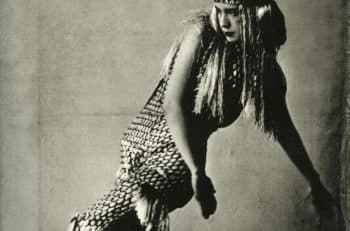
    Way back in 2004, I wrote an article for The Sunday Business Post, entitled ‘Play Boys, but few Play Women’ highlighting chronic gender imbalance in Irish Theatre, on the occasion of ‘Abbey One Hundred’, a virtually all-male programme celebrating the centenary the Abbey Theatre, (apart from one children’s play by Paula Meehan, and a shared run for Marina Carr’s ‘Portia Coughlan’ at the Peacock Theatre). That was before the dawn of social media, and my article, a lone voice in a sea of unquestioned misogyny, was received with resounding silence. Unfortunately, ‘his’ story has a habit of repeating itself, and more than a decade later, on October 28th, 2015 the Abbey Theatre proudly announced ‘Waking the Nation’, its – surprise, surprise – virtually all-male 1916 commemoration programme (apart from a lone monologue by Ali White entitled “Me, Mollser”, jutting out of the programme like Elizabeth O’Farrell’s incongruous little feet behind Patrick Pearse’s iconic 1916 surrender photograph). Nearly as bad was the playing of O’Farrell in both Jordan’s ‘Michael Collins’ and the recent ‘Rebellion’ series on RTE by men. This time, however, Twitter and Facebook ignited with rage at the outrageous gender imbalance, bringing an exciting counter-movement into being, with its own hashtag #WakingtheFeminists, abbreviated, wonderfully, to #WTF. Wasting no time on this occasion, Mná na hEireann, had a “storming of the Bastille” moment at the Abbey Theatre on November 12th, 2015, when over 30 female theatre professionals took to our national theatre’s stage, and the 450-seater auditorium over-owed with women demanding an end to this unacceptable gender imbalance, for ever. A contrite Fiach Mac Conaghail, director of the Abbey Theatre, sat in the auditorium and listened. After each of the 30+ women on stage had had their say, he stood up, looked up, and admitted: “I wasn’t thinking about gender balance. I did not look up. I failed to check my privilege. And I regret that”. If theatre holds up a mirror to society, this recurring gender imbalance at the Abbey Theatre is indeed a perfect reflection of Irish society, and the nature of Irish cultural ‘His’story – so far. We need look no further than to the iconic 1916 surrender photograph of Patrick Pearse for confirmation of this, with its dodgy silhouette of self-effacing inner city nurse Elizabeth O’Farrell who braved snipers to deliver the surrender order throughout Dublin’s rebel garrisons, only to be airbrushed out of the official surrender picture as published by The Daily Sketch. I was delighted to hear artist Jaki Irvine speak of Elizabeth O’Farrell and her 2013 book about the fearless nurse, ‘Days of Surrender’ (as yet unreviewed in Ireland), from the Abbey stage in its Theatre of Change symposium in January. Irvine is going on to set Elizabeth O’Farrell to music, along with her other female 1916 colleagues in her installation “If the Ground Should Open”, at the Irish Museum of Modern Art in September. Like Elizabeth O’Farrell who may indeed, as some claim, have deliberately taken a self-effacing step back when that 1916 Patrick Pearse surrender photograph was taken, making it easy for her little feet and large coat skirts to be airbrushed out of our Cúchulain- style national mythology, Lady Gregory (co-founder of the Abbey Theatre) did not actively seek recognition for co-authoring her iconic 1902 play ‘Cathleen Ni Houlihan’ with WB Yeats either. Similarly, a few decades later the self-effacing but fascinating George Yeats chan-nelled a myriad of voices to – yes – CO-AUTHOR ‘A Vision’ (1937), with her husband WB Yeats, but is rarely acknowledged as having done so. Like Elizabeth O’Farrell, the formidable George Yeats (about whom I am making the rst ever radio documentary, entitled ‘Georgie’s Vision’, funded by BAI Sound and Vision, for broadcast on RTE Lyric FM in Autumn 2016), took a step back, and went so far as to say “thank-you for leaving me out”. But – #WTF – is this shyness reason enough for the rest of us to facilitate, and hence perpetuate, the inaccurate masculinisation of, and erasure of women from Irish cultural history? Another important figure eclipsed by men is Lucia Joyce who could be Ireland’s answer to Camille Claudel, the well-regarded French sculptor who spent 30 years in an asylum (also Rodin’s lover and elder sister to poet, Claude Caudel). Lucia could not have been more different from her mother, Nora, whose entire raison d’être was her man, James Joyce. As well as his lover, cook, maid, and mother to his children, Nora was also James Joyce’s muse, most obviously inspiring Molly Bloom. Even in the Joyces’ modernist milieu, it was alright for a woman to be a muse, but not an artist herself, and certainly not an artist of the body (though in his masterpiece, ‘Ulysses’, James Joyce wrote the epic of the body). A modern young woman in 1920s Paris, Lucia expected her own career and identity, though she had grown up in weirdly close quarters with her unconventional family, and very much in the shadow of her father. When she protested “c’est moi qui est l’artiste”, alas, nobody listened to her. Tragically, Lucia Joyce (1907 – 1982), was never allowed to ful l her dream of being a professional modern dancer, despite her training with greats Emile Jacques-Dalcroze (founder of Eurhythmics); Raymond Duncan (brother of Isadora, who himself lived like a modern-day Ulysses in his Paris commune “Akademia Raymond Duncan”); Margaret Morris (grand-daughter of William Morris and founder of www.margaretmorrismovement.com); despite her seasons dancing with “Les Six de Rythme et Couleur”, and despite reviews like this one in the Paris Times: “Lucia Joyce is her father’s daughter. She has James Joyce’s enthusiasm, energy, and a not-yet-determined amount of his genius… When she reaches her full capacity for rhythmic dancing, James Joyce may yet be known as his daughter’s father”. Instead of being given the space to realise her ‘full capacity’, Lucia, who grew up immersed in iconoclastic counter culture and the avant-garde, found herself consigned to mental institutions – for life. Interestingly, after her father’s death in

    Loading

    Read more

  • Posted in:

    No civilisation in this jungle

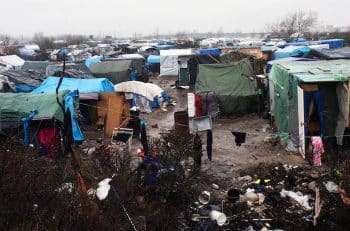
    Hundreds of people line up in a queue as soon as the doors of the van open, each hoping to get a pair of warm trousers. It is a cold November day in Calais, but some of them are wearing just shorts and slippers. In the queue I recognise a Syrian man that I met in the refugee camp on the Greek island of Lesbos just three months ago. He is so thin that it is hard to find him a slim enough pair. But what strikes me even more is his eyes – their sadness and exhaustion – that seem to reflect the cumulation of hardships of the past months, starting in his home country, and now continuing in Europe. That moment of hope and relief, when the overcrowded flimsy rubber dinghy he was on reached the shores of Europe, has now turned into hopelessness at being stuck in one of the worst makeshift refugee camps in Europe, the Calais camp, also known as the Jungle. It’s not a jungle though: it’s more of a disaster zone. Shabby tents and improvised shelters made out of pallets reach as far as the eye can see. The site is far from ideal for camping, the less so during this chilly rain; the sandy ground has become just muddy. Some parts of the camp are exposed to a heavy wind, and people are looking for help to fix their collapsed shelters. There is no electricity. Sanitation is severely inadequate. No more than 40 toilets are currently serving over 6,000 inhabitants – one for every 150, while the UNHCR recommendation is one toilet per 20 users. With only three taps in the camp, there are not many opportunities to wash hands. Litter is everywhere, and some areas are covered with human extracts. At one of the two refuse points of the camp I meet representatives of the Médecins Sans Frontières, who have come to collect the rubbish. They remind me to be careful what I touch due to the threat of scabies and other infectious diseases. A recent investigation by the University of Birmingham, supported by the Médecins du Monde, further highlights detrimental health situations in the camp including the prevalence of ‘white asbestos’, sometimes used to weigh down tenting. As food in the camp cannot be stored safely, much of it carries infective amounts of pathogenic bacteria, causing diarrhoea and vomiting. Several water storage units exhibit levels of bacteria exceeding the EU safety standards, too. The lack of washing facilities prevents the effective treatment of scabies, lice and bedbugs. Many here are suffering from mental illnesses. The makeshift hospital in the camp has the capacity of treating only up to 90 patients a day and there is a constant shortage of medical supplies. It is especially hard to provide treatment for long-term medical conditions such as tuberculosis. Many patients also come in with serious injuries, often resulting from unsafe conditions in the camp, or failed attempts to cross the border. I meet a young boy who has a broken arm, after a failed attempt to jump an England-bound train – a typical case. The United Nations High Commission for Refugees (UNHCR) has continually expressed about the reception conditions for refugees and migrants in Calais, stressing that security measures alone are unlikely to be effective, and urging the French authorities to relocate the refugees to proper reception facilities in the Nord Pas de Calais region and further afield. Some relief is expected from the proposed EU- supported refugee centre, that is expected to be opened in Calais in 2016. It will reportedly be equipped to deal with 1,500 persons. Another alternative would be to involve experienced non-governmental aid organisations such as the Red Cross to act as auxiliaries for the public authorities in the humanitarian field. Charities and voluntary organisations offer an invaluable contribution to the current European challenge, but they cannot be expected to supersede the responsibilities of European governments. Of course, permanent aid mechanisms will be required for as long as the conflicts causing the crisis, sometimes exacerbated by Western military interventions, are allowed to continue. Naiim Sherzai is standing at the exit of the camp, watching the trucks headed for British ports. Sherzai, who comes from the Helmand province in Afghanistan, is a former translator for the British forces, and had to leave the country because of the threat of the Taliban. He now wants to seek asylum in the UK, and ultimately to bring his wife and two children there. He asks whether we could recommend him any legal ways to enter the UK. But in Calais, there are no such routes available for a refugee. Lack of alternatives drives many to desperate acts, trying to hide in the trucks headed for the ferries or the Eurotunnel, or cutting the fence to hide in the trains. At least 16 people have died this year trying to get across the Channel. Tear gas fills the camp regularly as the police tries to drive out refugees from the proximity of the trucks entering the port of Calais. Although the tightened security measures and border controls have decreased the numbers of those who try to leave, groups of refugees lunge for their freedom every night. The rest, like Sherzai, find themselves lost – the road ahead blocked, but with no turning back either. In the jungle. In limbo. Johanna Kaprio

    Loading

    Read more