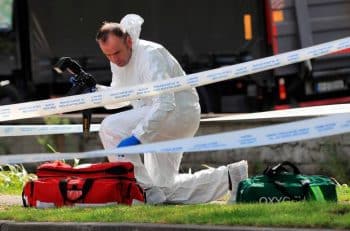
Gardaí

Random entry RSS

  • Posted in:

    Gardai look again at white collar acquittals

    Acounty meath businessman has fought a prolonged battle to recover what he claims are millions of euro in losses and damages caused by former employees who set up a company using his business name and equipment. Paddy Sheils of P Sheils Plant Hire (PSPH) has claimed that three former employees established a company also called PSPH, in 2008, to supply customers, including Meath County Council, with road digging, maintenance and other services using his equipment. One former employee, Siobhan Ryan, pleaded guilty in the District Court in 2014 to offences related to the fraud. Another former employee, David O’Donoghue, was acquitted following a jury trial in 2016. The charges against a third, Sinead McNamara, were withdrawn. The complaint by Sheils has been the subject of investigation by the Garda and by the local authority but he has never received compensation from Meath County Council for his alleged losses. Last week, the state solicitor for Meath, Vincent O’Reilly, was given leave in the Trim District Court to obtain transcripts of the trial of David O’Donoghue as it has been alleged that incorrect evidence was given to the court in his case. Paddy Sheils started his plant hire business in 1989 at Garballagh, Duleek, County Meath and by 1993 was obtaining civil and contract work from Meath County Council. In 1996, he incorporated P Sheils Plant Hire Ltd. (PSPH) and purchased a yard with offices at Rathdrinagh, Beauparc in Navan. He was managing director running the day-to-day operations of the company while his brother Fergus held a 1% share and was also a director. He purchased a quarry at Knockmooney in Slane in 2004 from which he supplied stone for building sites and motorway projects. He did extensive road and footpath work, water repairs, and maintenance for Meath County Council. His workforce grew to more than 80 employees over the next few years. In September 2009, he noticed discrepancies in the company’s financial records, including in relation to cheque-book payments. His accountant found that there were irregularities in cash receipts and in the payment of wages for goods and services provided by the company. Siobhan Ryan of Kells, County Meath had worked for the company since February 2008 being responsible for financial accounts, before she departed in April 2009. David O’Donoghue, from Collon in Louth, had worked with Sheils’ company since 2006, starting out as a lorry driver before being given responsibility for organising the servicing, repair and replacement of plant and machinery at the company. He left the job in February 2009. Sinead McNamara from Drumconrath, near Navan took worked with P Sheils Plant Hire from 2007 to 2009 managing contracts for clients, including the local authority, as well as holding responsibility for health and safety matters for the company. After they left, Sheils discovered that his company had been defrauded and that the three former staff had established their own company, also called PSPH, in 2008. His company logo, evidence of its health and safety compliance as well as insurance documentation, had been used by the new rm to tender for work from Meath County Council. He discovered that invoices had been submitted by former staff to the local authority for work done by his company with his equipment. The money was paid into an account in a bank in Ardee, County Louth, according to gardaí. When she pleaded guilty to the offences, Siobhan Ryan told gardai that all three were acting in concert. However, O’Donoghue was acquitted following his trial in 2016 and the charges against McNamara were withdrawn earlier. Siobhan Ryan admitted that she was responsible for false entries on the accounts system which she operated. She made a compensation payment of 120,000 to Sheils, and the Probation Act was applied by the court in February 2014. O’Donoghue was tried in the Circuit Court in Trim where he was found not guilty. Sinead McNamara provided evidence in this case on his behalf. Sheils has since produced information that contradicts the evidence of McNamara. He has also questioned why the charges against her were dropped given that investigating gardai had established that she had collected a cheque payment from Meath County Council which was lodged into the account of PSPH, the company his former staff established in 2008. Sheils has also pressed for an investigation into the role of Council officials and employees who dealt with his former staff and authorised payments to them and has sought the return of these monies to him. He claims that his company suffered losses of hundreds of thousands of euro as a result of the fraud and that the original Garda investigation was less than satisfactory. A new investigation was prompted following Dáil questions by County Louth Fine Gael deputy, Fergus O’Dowd, to then justice minister, Frances Fitzgerald, in December 2016 and March 2017. This led to a successful application by garda Michael Devine to the Trim District Court on 30 May for the transcripts of the earlier trial of David O’Donoghue which took place in the Circuit Court in 2016. Frank Connolly

    Loading

    Read more

  • Posted in:

    Masterclass in spin by Garda Ombudsman

    The independent Garda watchdog produced a report about the Corrib Garda ‘rape tape’ that misinformed the public and undermined the women who brought the recording to public attention. By William Hederman. It was one of the most extraordinary news stories of 2011. On March 31st, Gardaí in north Mayo arrested two anti-Shell campaigners and seized a video camera. The Garda sergeant and colleagues then inadvertently recorded themselves joking about threatening to rape and deport one of the two women in their custody before handing the camera back. The recording was posted online, where it was listened to by more than 100,000 people within days. It provided a disturbing glimpse into the minds of some of the very people to whom women are expected to report rape. However, the saga took a more worrying twist four months later. In late July, the Garda Síochána Ombudsman Commission (GSOC), which was conducting a ‘public interest’ inquiry into the incident, announced it had sent an “Interim Progress Report” to the Minister for Justice, Alan Shatter. Shatter published the report and, within hours, widespread media coverage had implanted several key pieces of false information in the public mind. This three-page report should be compulsory reading for students of PR and political spin. By cleverly juxtaposing several half-truths and omitting most of the crucial information, it created an impression that all was not as it seemed with the ‘rape tape’. It serves Garda interests by undermining the women and creating an impression that these Gardaí might have been victims of Shell to Sea shenanigans. Back in April, the ‘rape tape’ had provoked public outrage. The official Garda response was contrite: the Garda Commissioner apologised and reassured “victims of sexual crime” that they should continue to report those crimes to Gardaí. Behind the scenes, it was business as usual for Garda ‘sources’. Personal details of the two arrested women were leaked to the press (the women had initially hoped to remain out of the public eye). A reporter turned up at the family home of one of them, Jerrieann Sullivan. She said her parents were “extremely upset” by this. Meanwhile, Caoimhe Kerins of Dublin Shell to Sea says she received tip-offs from two crime correspondents that Gardaí were spreading a rumour that the women had shouted “rape” during the arrest. Kerins assured them it wasn’t true and the journalists didn’t print it. The rationale of Gardaí seemed to be that this rumour would mitigate the Garda behaviour in the public mind: a disturbing echo of the old notion that a woman is to blame for rape. This smear finally found its way into print 10 weeks later, when Jim Cusack published the rumour as fact in the Sunday Independent on June 19th. Sullivan complained to the Press Ombudsman and in October he ruled that Cusack’s article was “significantly misleading”. Some Gardaí and their allies had been seeking revenge. But surely GSOC would act more fairly and impartially? The signs were not promising. On April 17th, the News of the World quoted a “source” at GSOC, claiming Sullivan was refusing to hand over the camera. She says she was “shocked at how a supposedly independent public body could feed journalists with information that undermined a witness in its own investigation”. In fact, there was a short delay in handing over the camera, because of a dilemma facing Jerrieann Sullivan and lecturers at NUI Maynooth, where she was doing an MA degree. The camera belonged to the university and contained a research interview she had recorded three weeks before the “rape” recording. The interview was subject to confidentiality agreements with the participants: academic guidelines meant the confidentiality of the interview had to be protected. When GSOC demanded the camera, the university academics explained their predicament to GSOC and repeatedly offered to have the older file deleted in the presence of GSOC. However, they say GSOC ignored all offers and issued threats of criminal prosecution against Sullivan and her lecturers. A spokesman for GSOC told Village he could not comment because, “This is an ongoing investigation of a criminal nature and we are bound to protect the confidentiality of that investigation.” Jerrieann Sullivan was forced to hire a solicitor. She says that he was, in turn, threatened by GSOC “with a fine or imprisonment for not handing over the camera”. A statement from seven academics – Sullivan’s course directors at NUI Maynooth – describes GSOC’s attitude to Sullivan and the other woman (who has managed to remain anonymous) as “consistently hostile, recalling past treatment of the victims of sexual violence”. Nine days after the story broke in April, the older file , containing the recording of the research interview, was deleted from the camera in the academics’ presence, and the camera given to GSOC. The possible motives behind GSOC’s approach became clearer when the Interim Report appeared. The deletion of the older file was cleverly exploited to give the false impression that the recording of the rape comments had been “tampered with”. The Interim Report makes no mention of Sullivan’s and the academics’ explanations, nor of their offers to reach a compromise. It simply reports that files had been deleted from the camera, implying that this was mysterious: “The significance of these deleted files … was not known”. The report is misleading by implying that GSOC first became aware of the file deletion when examining the camera, whereas in fact Sullivan and the academics insist the file deletion had been explained to them in a series of oral and written communications, involving university authorities and solicitors. When this was put to GSOC, the spokesman pointed out that the interim report “doesn’t say that the recording from March 31st was interfered with.” The report also appears to weigh in behind the insidious Garda rumour that the women said rape first. Jerrieann says she was questioned by GSOC for almost five hours, but her testimony is not referred to in the report. The only person quoted in the report is an

    Loading

    Read more