History

Random entry RSS

  • Posted in:

    Dublin’s North Inner City

    Dublin’s North City fell out of fashion after the flight of the future Duke of Leinster to Kildare St and the Act of Union. That’s more than two centuries ago and the journey back has been slow. It suffered shocking poverty over succeeding generations, the collapse of world-class mansions into tenements, dereliction, the flight of nearly all private residents and a drugs and crime epidemic. In the last twenty-five years it has been subjected to an inundation of third-rate private-sector apartments, the re- division of many old houses including the removal of period features and a pogrom of gang killings. It has also witnessed wholesale immigration and a degree of cultural diversity. It has a dramatic need for new apartments but the focus for new development in 2018 appears to be hotels and (high-quality if expensive) student housing, not – perhaps because standards are in flux – apartments. It seems likely a naïve Minister for Housing and Planning will indulge a reduction in building-height standards that may compromise perhaps the area’s principal attraction, its historic human scale. CONSERVATION The focus of this piece is on one small new pattern of development: some exciting conservation projects. ORMOND QUAY The construction of Ormond Quay Upper and Lower – named after James Butler, 1st Duke of Ormonde – began during the 1670s with the development of the former lands of St. Mary’s Abbey by Sir Humphrey Jervis, and with the setting out of a formal quay-line and carriageway as part of the Corporation’s grant of substantial lands to Jonathan Amory in 1675. These developments were facilitated by the construction of two bridges under the auspices of Jervis linking the walled medieval city with the new north-side suburbs: Essex Bridge (now Grattan Bridge), erected in the late 1670s, and Ormond Bridge (now O’Donovan Rossa Bridge), completed by 1684. The speculative development of the quay front soon followed, with the lands of Ormond Quay Upper developed as a fashionable residential parade with associated commercial uses under the freehold of Lord Santry, Henry Barry.   1-1A ORMOND QUAY LOWER The house on the corner of Capel Street and Lower Ormond Quay is most famous from its appearance on a late-18th-century Malton print (the ones you find on greasy place mats and on bathroom walls in Dublin 6) with a view across the river to the then Custom House where the Clarence Hotel now stands. It’s been derelict for twenty years since it served as offices for a solicitors firm fronted by Liam Cosgrave Junior who was disgraced after unedifying information about planning corruption emerged in the planning tribunal. It comprises an existing four-storey over basement protected structure with four bays and two shopfronts facing Ormond Quay and two bays with one shopfront facing Capel Street. The shopfronts are shuttered and now messy. There was previously a fast food restaurant at street level. The façade of the building is rendered and in a poor state of repair; however, there are interesting features including arched windows at first-floor level and corner quoins. Permission has been granted for development comprising conservation and a change of use at first, second and third floor levels from commercial occupancy to use as short-term-lease guest suites and change of use of the ground floor and basement to restaurant/cafe use, supervised by James Kelly of Kelly and Cogan Architects. Indeed it might be argued that in view of the strategic significance of the site, facing the overblown Temple Bar, in effect an ambassador for the North Side, public uses – pub or restaurant – might have been suitable for the entire building. The site of No 1 Capel Street was originally occupied by a larger house, which also occupied part of neighbouring plots. The exact age of the building is unclear but it is shown on a map dating from 1784, and also on a 1795 image by James Malton. The building was used as the state lottery office before 1800 and was then in a variety of uses including draper, feather merchant, stationer, bookseller and bookbinder in addition to briefly accommodating solicitors’ offices. By the mid-19th-century the building had been stucco-finished, with quoin detailing and decorative moulding added. The facade to the quays was partly blank but included an arched window at street level. During the Civil War in 1922 the façade and shopfront of the building were damaged. A new shopfront was then provided on the façade to Ormond Quay, which was divided into two parts and included a new entrance lobby onto the quays, though access to the building was, and remains, tricky with narrow pavement on two sides and a torrent of parking-free traffic down the quays. By the late 20th century the retail/commercial unit at ground floor level had been subdivided. It is stated that the building has been largely unaltered since the late eighteenth century, with the exception of the alterations to the shopfront and the plastering over the original brick façade. Original fabric, including the gothic rounded headed windows to Capel Street and the quays, survives, as do internal joinery works including architraves, staircase and doors. The building retains its commercial character, while the original plan form is substantially intact. 18 UPPER ORMOND QUAY On Upper Ormond Quay, to the South of the area, the Dublin Civic Trust is leading a project to restore an interconnected pair of riverfront merchant buildings. – the quayside house dates to 1842-43 and the rear building to the 1760s. The four-storey over basement house includes a rare arcaded Georgian shopfront composed from cut granite of, depending on who you listen to, a date of 1789 or around 1810. This is the most challenging and transformative building project the under-celebrated Trust has embarked on since its foundation in 1992 and is one of the most significant initiatives of its kind in Ireland. Both buildings require extensive structural stabilisation and careful conservation of fabric. The project will restore residential use to the upper floors and traditional shop use below. Number 18 started life as a river-fronting

    Loading

    Read more

  • Posted in:

    Yes to history, no to commemoration

    Commemorations for the centenary of the 1916 Rising are well underway. This anniversary is being marked in a much less sanitised way than previous significant Easter Week commemorations. This is very welcome. For far too long, ceremonies celebrating the 1916 Rising were based on a highly simplified, monochrome account of history: Rebels good, Brits bad, civilians ignored. We did not see pictures of dead bodies. Few official accounts mentioned the deaths of women and children caught in the crossfire. This time around, things are different. The vital research work of many historians and others has contributed greatly to the generation of this more complex understanding of the 1916 Rising. We now know that approximately 488 people were killed during Easter Week. Of these, 40 were children, and over 200 were civilians. There were about 120 British soldiers killed, and 60 rebels. These numbers are as significant as the numbers we have traditionally associated with commemorations marking Easter Week: the seven signatories of the Proclamation, and the 16 men executed. It is timely to reflect on four key themes which should shape, and to some extent are shaping, the centenary commemoration process: de-militarisation; contextualisation; inclusivity; and humanisation. Commemorations should not be over-militaristic, nor should any death or killing be ‘celebrated’. This is even more necessary in the wake of the recent Brussels atrocity which showed the immense human tragedy of mixing religion, politics and violence. The events organised throughout Dublin for Easter Monday under the ‘Reflecting the Rising’ banner were far more in keeping with an inclusive spirit of commemoration, than the military parade that took place on Easter Sunday. In a similar spirit, commemorations should reflect the context of the time. The rise of important social movements, in particular the trade union and suffragette movements, as well the Irish cultural revival, should be marked alongside the nationalist struggle. The commemorations must be inclusive. Where official ceremonies include religious services, these must be carried out with respect for humanists, atheists and people of minority religions. Similarly, commemorations must be inclusive of both women and men. We now know, from the great work of feminist historians, that 77 women involved in the 1916 Rising were arrested along with their male colleagues at the end of Easter Week. Inclusivity also means remembering the many thousands of Irishmen who fought and died in World War I, but whose lives and deaths were not officially commemorated for many decades after independence. Commemorations must become humanised. It is welcome to see this happening in this centenary year. Many official and unofficial events have incorporated the telling of individual eye-witness accounts: some noble, some tragic, some humorous, and some poignant. These include stories like that of Catherine Byrne, who jumped through a side window of the GPO to join the male Volunteers inside. They include that of two-year old Sean Foster, who was shot dead in crossfire while being wheeled in a pram by his mother Katie on Church Street, and whose father had died on the Western Front the year before. In bringing these stories to the fore, we come closer to realising the past and to remembering the dead in a respectful and inclusive way. It is very welcome to see these four themes informing the 2016 commemoration process. Yet it appears that they are not embraced universally. The Glasnevin Cemetery Trust has carried out hugely important work in compiling accurate data on all the 488 people killed during the 1916 Rising. It is constructing a Necrology wall to mark all of their deaths in a non-judgemental fashion. It is unfortunate that some of the 1916 Relatives Association do not support this approach to commemoration. And that there was some scuffling at the recent unveiling. It seems that, for them, even 100 years on, there is still a hierarchy of grief. Those who still seek to elevate some deaths over others are themselves harking back to the old monochrome view of Easter Week. Their view should not prevail. The reality is that the concept of ‘commemoration’ is always problematic. Ultimately, we should not seek to replace ‘history’ with ‘commemoration’. Commemoration is a largely artificial concept, itself tending towards sanitisation. History is messy, complex, ambiguous and contradictory. The history of the 1916 Rising should be marked and remembered in a way that is appropriate to that reality. Accurate historical research, inclusive contextualised events, and vivid eye-witness accounts should replace empty commemorative ceremonies. Our process of marking the 1916 Rising should be de-sanitised, to reflect the real complexity of the history of the struggle for Irish independence. Ivana Bacik

    Loading

    Read more

  • Posted in:

    Nationalists as Real Men

    In 1909 Patrick Pearse wrote a short six-verse Irish-language poem, ‘A Mhic Bhig na gCleas’, translated into English as ‘Little Lad of the Tricks’. A relatively disposable piece, it has since gone on to have an infamous status; proof for many that Pearse had dark sexual proclivities: … Raise your comely head Till I kiss your mouth: If either of us is the better of that I am the better of it. There is a fragrance in your kiss That I have not found yet In the kisses of women Or in the honey of their bodies… Ruth Dudley Edwards’ 1979 revisionist biography, ‘The Triumph of Failure’ makes much of this poem, presenting it as evidence of Pearse’s supressed tendencies. And later works have echoed her, to the point that the trope of Pearse-as-Paedophile is now standard fare among Irish historians. Similar speculations have also been made about Eoin O’Duffy and even about Michael Collins. Such tabloid innuendos, though, ignore a central truth about Irish nationalists in the early years of the twentieth century: masculinity mattered for them. Not in the sense of private peccadilloes, but as a key part of their public ideology. Masculinity did much work for organisations like Sinn Féin and the Irish Volunteers, allowing them, as it did, to imagine what national sovereignty and the end of British colonial rule would look like. It allowed them to analyse that British rule as an effeminising influence on Irish men. And it allowed them to attack opponents, such as the Irish Parliamentary Party, as unmanly traitors. The heavy emphasis on masculinity also does much to explain how and why women and leftists were systematically frustrated in their efforts to influence the national movement; imagining the nation as a male fraternity was a convenient way to dismiss feminism or socialism as divisive ideologies that pitted brother against brother. In another of Pearse’s most famous texts, ‘The Murder Machine’, the educator-nationalist railed against the British state schools in Ireland (the “machine”). And in a telling passage, Pearse denounced the contemporary school system as worse than “an edict for the general castration of Irish males”. Anglicised Irishmen, he said, are “not slaves merely, but very eunuchs”. For Pearse, Irish men had been emasculated by British colonialism and by the slow parallel process of Anglicisation. These were common anxieties among almost all Irish nationalists. A recurring theme in Gaelic League publications was that the Irish, by abandoning their native language, had become de cient and deformed and no longer real men. As one turn-of-the-century Gaelic Leaguer said, if the Irish continued to speak only English, then “we can never be perfect men, full and strong men, able to do a true man’s part for God and Fatherland”. The movement to revive the Irish language was thus imagined as a process of reasserting a purified male power and was often associated with a recovery of sovereignty and strength. When the Irish Volunteers were established in 1912, many of their founding members had already imbibed the thinking that saw national revival and masculine revival as two parts of a broader whole. Writing in the Irish Republican Brotherhood’s Irish Freedom newspaper in July 1912, Ernest Blythe, a government minister in the 1920s, discussed the contribution that the Volunteers would make to healthy Irish masculinity. While he criticised the weak “ abby men” that predominated in Ireland, he also spoke of a subterranean manliness still surviving, he said, thanks to both militant nationalists “but also those whose thoughts have gone no further than the running and leaping and hurling which they delighted in”. The future Irishmen, whom physical-culture and physical-force enthusiasts such as these would birth, would be noticeable by their “mighty lungs and muscled frames”. The Volunteers were “the rebirth of manhood unto this Nation”. Their muscular masculinity would replace the abby weakness of Ireland under British rule. Talk of masculine power continued to circulate in the years after the Rising. Indeed, Ernie O’Malley, a medical student turned IRA soldier, later remembered that one positive effect of the war was that the “familiar stage-Irishman had disappeared”, replaced by the confident, armed men of the IRA. The rhetoric of heroic men standing together for the national interest, also lent itself to suppressing the ‘wrong’ kind of politics. A 1921 pamphlet on ‘The Labour Problem’ published by the Sinn Féin-allied Cumann Léigheachtaí an Phobhail presented socialism as an intrusion into the national fraternity of men: “Labour… is like a virulent foreign element in the social system… whatever else we are, capitalist or worker or neither, we are all Irishmen interested beyond anything else in the welfare of our common country, and as an Irishman speaking to Irishmen I put it that these industrial conflicts, if continued, will inevitably impair, if not utterly destroy, our common country”. Feminism was denounced in almost the exact same terms. The tourism-friendly version of Irish nationalism that has featured in the ‘Decade of Commemorations’ has received a large dose of justified criticism. With the government promoting an image of romantic, if depoliticised Irish rebels, it is worth remembering, first, how much Irish nationalism was a product of the encounter with British colonialism. Second, the State that emerged from this national struggle was noticeably coercive, particularly when it came to female citizens or left-wing politics. Masculinity, and the nationalist desire to create a harmonious nation of muscular men, was central to all of that. Masculinity matters. Aidan Joseph Beatty Aidan Joseph Beatty is Scholar-in-Residence at the School of Canadian Irish Studies, Concor- dia University, Montreal and author of ‘Masculinity and Power in Irish Nationalism, 1884-1938’. aidanbeatty.com

    Loading

    Read more

  • Posted in:

    Their daughters’ fathers

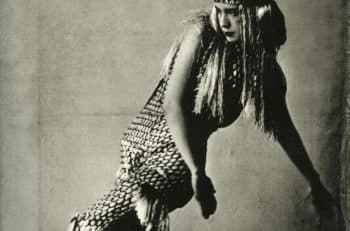
    Way back in 2004, I wrote an article for The Sunday Business Post, entitled ‘Play Boys, but few Play Women’ highlighting chronic gender imbalance in Irish Theatre, on the occasion of ‘Abbey One Hundred’, a virtually all-male programme celebrating the centenary the Abbey Theatre, (apart from one children’s play by Paula Meehan, and a shared run for Marina Carr’s ‘Portia Coughlan’ at the Peacock Theatre). That was before the dawn of social media, and my article, a lone voice in a sea of unquestioned misogyny, was received with resounding silence. Unfortunately, ‘his’ story has a habit of repeating itself, and more than a decade later, on October 28th, 2015 the Abbey Theatre proudly announced ‘Waking the Nation’, its – surprise, surprise – virtually all-male 1916 commemoration programme (apart from a lone monologue by Ali White entitled “Me, Mollser”, jutting out of the programme like Elizabeth O’Farrell’s incongruous little feet behind Patrick Pearse’s iconic 1916 surrender photograph). Nearly as bad was the playing of O’Farrell in both Jordan’s ‘Michael Collins’ and the recent ‘Rebellion’ series on RTE by men. This time, however, Twitter and Facebook ignited with rage at the outrageous gender imbalance, bringing an exciting counter-movement into being, with its own hashtag #WakingtheFeminists, abbreviated, wonderfully, to #WTF. Wasting no time on this occasion, Mná na hEireann, had a “storming of the Bastille” moment at the Abbey Theatre on November 12th, 2015, when over 30 female theatre professionals took to our national theatre’s stage, and the 450-seater auditorium over-owed with women demanding an end to this unacceptable gender imbalance, for ever. A contrite Fiach Mac Conaghail, director of the Abbey Theatre, sat in the auditorium and listened. After each of the 30+ women on stage had had their say, he stood up, looked up, and admitted: “I wasn’t thinking about gender balance. I did not look up. I failed to check my privilege. And I regret that”. If theatre holds up a mirror to society, this recurring gender imbalance at the Abbey Theatre is indeed a perfect reflection of Irish society, and the nature of Irish cultural ‘His’story – so far. We need look no further than to the iconic 1916 surrender photograph of Patrick Pearse for confirmation of this, with its dodgy silhouette of self-effacing inner city nurse Elizabeth O’Farrell who braved snipers to deliver the surrender order throughout Dublin’s rebel garrisons, only to be airbrushed out of the official surrender picture as published by The Daily Sketch. I was delighted to hear artist Jaki Irvine speak of Elizabeth O’Farrell and her 2013 book about the fearless nurse, ‘Days of Surrender’ (as yet unreviewed in Ireland), from the Abbey stage in its Theatre of Change symposium in January. Irvine is going on to set Elizabeth O’Farrell to music, along with her other female 1916 colleagues in her installation “If the Ground Should Open”, at the Irish Museum of Modern Art in September. Like Elizabeth O’Farrell who may indeed, as some claim, have deliberately taken a self-effacing step back when that 1916 Patrick Pearse surrender photograph was taken, making it easy for her little feet and large coat skirts to be airbrushed out of our Cúchulain- style national mythology, Lady Gregory (co-founder of the Abbey Theatre) did not actively seek recognition for co-authoring her iconic 1902 play ‘Cathleen Ni Houlihan’ with WB Yeats either. Similarly, a few decades later the self-effacing but fascinating George Yeats chan-nelled a myriad of voices to – yes – CO-AUTHOR ‘A Vision’ (1937), with her husband WB Yeats, but is rarely acknowledged as having done so. Like Elizabeth O’Farrell, the formidable George Yeats (about whom I am making the rst ever radio documentary, entitled ‘Georgie’s Vision’, funded by BAI Sound and Vision, for broadcast on RTE Lyric FM in Autumn 2016), took a step back, and went so far as to say “thank-you for leaving me out”. But – #WTF – is this shyness reason enough for the rest of us to facilitate, and hence perpetuate, the inaccurate masculinisation of, and erasure of women from Irish cultural history? Another important figure eclipsed by men is Lucia Joyce who could be Ireland’s answer to Camille Claudel, the well-regarded French sculptor who spent 30 years in an asylum (also Rodin’s lover and elder sister to poet, Claude Caudel). Lucia could not have been more different from her mother, Nora, whose entire raison d’être was her man, James Joyce. As well as his lover, cook, maid, and mother to his children, Nora was also James Joyce’s muse, most obviously inspiring Molly Bloom. Even in the Joyces’ modernist milieu, it was alright for a woman to be a muse, but not an artist herself, and certainly not an artist of the body (though in his masterpiece, ‘Ulysses’, James Joyce wrote the epic of the body). A modern young woman in 1920s Paris, Lucia expected her own career and identity, though she had grown up in weirdly close quarters with her unconventional family, and very much in the shadow of her father. When she protested “c’est moi qui est l’artiste”, alas, nobody listened to her. Tragically, Lucia Joyce (1907 – 1982), was never allowed to ful l her dream of being a professional modern dancer, despite her training with greats Emile Jacques-Dalcroze (founder of Eurhythmics); Raymond Duncan (brother of Isadora, who himself lived like a modern-day Ulysses in his Paris commune “Akademia Raymond Duncan”); Margaret Morris (grand-daughter of William Morris and founder of www.margaretmorrismovement.com); despite her seasons dancing with “Les Six de Rythme et Couleur”, and despite reviews like this one in the Paris Times: “Lucia Joyce is her father’s daughter. She has James Joyce’s enthusiasm, energy, and a not-yet-determined amount of his genius… When she reaches her full capacity for rhythmic dancing, James Joyce may yet be known as his daughter’s father”. Instead of being given the space to realise her ‘full capacity’, Lucia, who grew up immersed in iconoclastic counter culture and the avant-garde, found herself consigned to mental institutions – for life. Interestingly, after her father’s death in

    Loading

    Read more

  • Posted in:

    History is not Herstory

    Less than 30% of the writers in Village are women. And only 30% of the articles submitted for publication come from women. What’s going on? Village is politically correct and right-on. Uniquely it never, to take an example, markets magazines by putting attractive women on the cover. Village takes progressive social theory seriously. It consistently takes the most ‘liberal’ stance on abortion and reproductive rights. Most of all, and this is what determines so much of its stance, Village believes in inconvenient and prickly equality of outcome, not shiny and friendly equality of opportunity. In other words not just opening up for all, but giving the worse-off an actual leg up or a quota to compensate for the iniquities of history. This applies to women as much to any group. The new Dáil will have only 35 women out of 158. This is a more-than-50% improvement since 2011 and the number of female candidates was up to 163 from 86 in 2011 when it yielded 22 women out of 166 (up from 3 in 1973 and 22 in 2002 and 2007). Nationally, the average number of first-preference votes per man was 4,205. For women, it was 3,260. Village has given a good bit of of space to women who want to change this, to move towards fty percent female representation in parliament. The Electoral Act 2012, amusingly promoted by Phil Hogan and opposed by Fianna Fáil, applied a gender-quota rule that parties had to have at least 30% candidates of each sex or they lose half of their state funding. All parties except Direct Democracy Ireland applied their quota. Village supports this. I support this. That’s politics. We should push for immediate progress, everywhere. History and culture are different. The Abbey Theatre got into trouble recently because only one of the ten authors chosen for its 1916 commemorative programme, Waking the Nation, was a women. Other theatres and film bodies have taken similar flak. A recent rather unconvincing evocation of the Rising, Rebellion, made efforts to portray the events of that era with women to the fore. I disagree with these approaches. As to the Abbey’s Programme, what if the women took bog-standard anti-feminist positions, would they still merit advancement in the programme? Is it that a third of the writers should usually write pro-feminist pieces or is it that the third should have written pro-feminist pieces in this instance? Should there also be a certain number of works produced that have been written authors from racial minorities, from the young and the old, from LGBT and straight? Should it be the same with the actors? What about the audience? The answer to much of this is No. And as regards history, you’re trying to record the way things were: history. You shouldn’t, and you don’t need for any political reason to, distort it. All you can do with history is acknowledge and let it inform, though never determine, your politics. For the same reason that you don’t make the ruling classes working classes or younger than they were in the interests of some perceived correctness, you don’t pretend that women were the protagonists in the Rising. Unfortunately they were not. I also disagree more generally with distorting the facts to suit the ideology. The idea underpinning politics is to resolve the facts objectively and then apply the ideology. Not the other way around unless you thing your ideology is so weak that it won’t fit certain facts. In which case change your ideology, it was wrong. When the facts don‘t suit your ideology it is time to find a new ideology, or stay quiet; and more precisely to realise you should have had a better ideology in the first place The debate on women’s rights has become unintellectualised, entrenched and sometimes underinformed. For example a recent only partly-corrected Una Mullally article in the Irish Times misreported that Fianna Fáil’s policy was to have “up to a third of its candidates women”. She ridiculed the policy even though the policy did not, and legally and logically could not have, said this. It would certainly have been nice for those of us who believe that the point of that party is only ever to adopt progressive agendas, at the very last minute, if Fianna Fáil had got it so skewed, but they had not. Between Una Mullally and her employer they could not bring themselves to correct the article properly. The reason for the politics of women’s equality is that it has been an unequal world. It was an unequal world when they (men) made God a Man, it was unequal in 1916 and it’s still unequal because women earn less, are politically less powerful and have less autonomy than men. Only a fool would deny it. Because of the legacy of thousands of years of suppression women have not written as good, or indeed nearly as many, plays as men. Women also write differently from men, largely for socio-cultural reasons but also sometimes for reasons based in their physiological natures. The point is to change that by counterbalancing. Women of today who want it and show talent should get more training in playwrighting paid for by the state and its institutions, than that available to similar men, particularly training that helps them break down prejudices and that facilitates overcoming sexist obstacles to success. An admirable recently announced initiative from the Irish Film Board is doing roughly this. Such initiatives tend to generate equality of outcome. Regrettably in the arts it will be some generations before the volume of brilliant works by women rivals the volume of brilliant works by men, created over the aeons, even controlling for the heightened relevance of contemporariness. It is different with politics which, unlike history, does not or should not, trade in the past. It is possible, indeed imperative, to push for progressive change. It is, because of the nature of the discipline, and the period in which it trades – the past, not possible to push for change of

    Loading

    Read more