independent

Random entry RSS

  • Posted in:

    Seeya print

    The recent Audit Bureau of Circulation (ABC) figures for newspaper sales for January-June 2016 show an alarming decrease for nearly all Irish newspaper titles, with the demise of the industry itself now, for many, inevitable. Of the national newspapers, The Irish Times dropped 5.5 percent compared to the first half of last year, The Irish Independent is down 6.4 percent, The Irish Examiner 6.7 percent and The Evening Herald 8.4 percent in the same period. Most daily tabloids are down, apart from the Irish Sun, which saw a rise of 4.6 percent year on year. The Sunday Independent dropped 6.7 percent year, The Sunday Business Post 3.5 percent, The Sunday Times 6.4 percent and The Sunday World 8.9 percent. The Irish Mail on Sunday fell by 7.2 percent while the Irish Sun on Sunday recorded the only rise in circulation at +9 percent. Overall, the circulation of daily print titles was 5.7 percent lower and of the Sundays 6.3 percent lower. Globally, the threat to newspapers is epidemic. In May 2016, the 121-year-old Tampa Bay Tribune, Florida, ceased publication; in March, the London Independent and Independent on Sunday ceased their print publications and November 2015 saw Russia’s only independent English-speaking title The Moscow Times end its daily edition in favour of a weekly format. In 2013, The Washington Post was sold to Amazon.com founder and chief executive Jeffrey P Bezos for $250m. In September 2010, the Chairman and Publisher of The New York Times announced to an International Newsroom Summit that: “We will stop printing the New York Times sometime in the future, date TBD”. The Guardian, whose web edition is the world’s second most popular English-language newspaper website – after the Daily Mail online, has shed 200 jobs and clocked up losses of £69m for the last financial year with falls in both print and digital revenue leading to an £8m fall in total turnover to £209.5m. Digital revenues were £81.9m, down almost £2m from the preceding year as Facebook and Google ate up the bulk of the money it had made from mobile advertising. Based on current trends, commentators have predicted that only the Sunday and weekend newspapers will survive in a culture immersed in Facebook, Twitter, Snapchat and Youtube and with the proliferation of citizen journalism offering free ‘news’ content. What New Media offer is ‘free’ news as it happens from an infinite number of sources around the globe; in the age of New Media, traditional values of accuracy, accountability and professionalism are at risk from unverifiable facts, unconfirmed sources and the constant need for instant news; and gossip. With daily newspapers, today’s news is essentially yesterday’s, or this morning’s at best. Newspapers have made a concerted effort to shift content towards analysis and commentary, but this hasn’t been enough. What the recent ABC gures don’t reveal is where these disenfranchised readers are migrating. The loss of newspaper revenue may be partly attributable to growing internet usage and online culture, but this does not necessarily mean those same readers are now reading news online. A decline of 10,000 readers for a national newspaper does not equate to an additional 10,000 people reading or accessing news online. Youtube, Facebook, Twitter and other social media account for most internet usage, so perhaps not all migrated readers/users will be regular perusers of the Guardian online edition. A ‘cornerstone of democracy’ for over 400 years is now in danger of imploding. Attempts by newspapers to embrace New Media by offering pay walls for access to online content have so far been largely unsuccessful (though the Guardiannow boasts 50,000 ‘subscribers’); cynics point to the obvious – there is simply too much ‘free’ news to be harnessed online. Print Media’s only hope is to reinvent their current business model and somehow embrace their biggest rivals. What that does for journalism is another story. Ken Phelan

    Loading

    Read more

  • Posted in:

    Independent Living

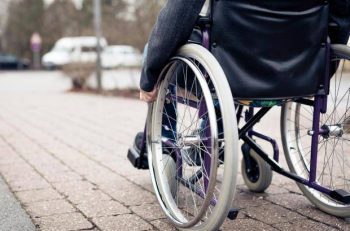
    2016 marks another anniversary, the 20th anniversary of a ‘Strategy for Equality’. This was the report of the Commission on the Status of People with Disabilities. Their task was to establish what life was like for people with disabilities in Ireland and to prepare a roadmap to equality for people with disabilities. Before deciding on the appropriateness of any celebrations, it is timely to ask a question: has Ireland become more equal for people with disabilities? The Commission took what it described at the time as “the unusual step” of consulting with people about their ‘lived’ experiences. It reported that people with disabilities experienced outdated social and economic policies and public attitudes, and pointed to “justifiable anger” felt by people with disabilities and their families. In the intervening years a multitude of laws and policies have been introduced but the question remains. Let me state it again: has Ireland become more equal for people with disabilities? A cursory look at the Strategy and subsequent developments would suggest that quite a lot has been achieved on many of its recommendations. A National Disability Authority (NDA) has been established, a Disability Act was passed into law, a National Advocacy Service was established, and a swathe of legislation was brought into force on equality, assisted decision-making and education. However, if you dig a little deeper, there is a different story to be told. Most of these measures were poorly thought out or half-implemented. The Disability Act 2005 created little by way of the rights-based legislation envisaged. Instead it provided a basic right to a person with disabilities to an assessment of need. However, no rights to services follow on from that assessment. Even this limited ‘right’ to an assessment has been only partly commenced and currently just caters for children. The Strategy envisaged an independent advocate for people with disabilities. In 2007 the Citizens Information Act was passed. This provided for “Personal Advocates” with statutory and wide-ranging powers. Four years later a limited non-statutory service called the National Advocacy Service was commenced. A total of 35 advocates operate across a country where there are an estimated 600,000 people with disabilities. The Education for People with Special Educational Needs Act 2004 has been stalled indefinitely. This means that children in mainstream schools struggle to get educational supports. Successive Governments have failed to address the issue of the cost of disability. Many of the manifestos for the recent election used the term “cost of disability” to describe plans to give people an extra ten euro on their welfare payment. This is a regrettable approach. Cost of Disability demands than an increase in welfare payments. It requires a genuine recognition that having a disability can be expensive and moving to alleviate that additional expense. The Strategy recommended that the Department of Environment develop a policy with “the right of people with disabilities to live as independently as possible” as its aim. In 2011 the ‘Congregated Settings’ report was published by the HSE, the agency responsible for care services. This was premised on moving people with disabilities back into the community. Progress on this ambition has been unacceptably poor. The Fine Gael manifesto for the recent election includes a target for 1/3 of residents to move back into the community by 2021, three years after the initial deadline for moving all residents. This is an acknowledgement that the policy has failed and that a generation of people will probably die in institutions. The Strategy stated that ful lment through relationships and sexuality is a basic right. Since 1993, the criminal law has cast a legal shadow over sex and people with disabilities, particularly those with intellectual disabilities or mental illness. The law has provided an easy excuse to opt-out of providing sex education that would strengthen their ability to protect themselves and possibly open the door to a ful-filling, intimate relationship. This is a bleak landscape, but it’s not all negative. We are beginning to win the ideological battle. Concepts of person-centredness, independent living and autonomy are creeping into the parlance of the body politic. The battle now must be to get our partially commenced legislation fully implemented. This will involve resources in many cases and a change in culture in others. Any marking of this 20th anniversary of the ‘Strategy for Equality’ must reflect that not much has changed and must pose the challenge to find the political will for equality. We have all the tools at our disposal. Sarah Lennon Sarah Lennon is Training and Development Of cer with Inclusion Ireland

    Loading

    Read more