international

Random entry RSS

  • Posted in:

    Spooks spooked

    The poisoning of a Russian espionage agent and the naming of a politically coercive company in March 2018 proved a rare set-back for two British apparatchiks. Normally regarded as masters of their craft – and tradecraft – Christopher Steele and Alexander Nix were hoist by their own petard in areas of proven expertise, Espionage and Influencing. Steele’s expertise worked for MI6 (SIS – Secret Intelligence Service) where his career followed a predictable trajectory after Cambridge University, where he studied Russian and was President of the Union – to the SIS section of the Foreign Office, thence to the intrigues of 1990s Moscow. Along the way he made a reputation for being reliable and not given to alarmism. His basic espionage training included military skills in fire-arms and physical endurance, disguise and counter-surveillance. As a professional intelligence officer, Steele’s success rate was high in negotiating with, and ‘exfiltrating’ to, European countries defectors from his host’s intelligence services. His own country’s spies thought so highly of him that at a discreet get together with CIA counter-parts he was described as ‘the real James Bond’. By his 40s he had been recalled to the London Russian desk of SIS, supervising a clutch of Russian defectors, among them Alexander Litvinenko, poisoned by the Russian intelligence service, FSB, in tea-rooms off Grosvenor Square, in revenge for working with SIS. More recently another defector, Sergei Skripal, was also targeted and perhaps brain damaged in revenge as a warning to potential other defectors. Steele left SIS to, along with other ex-colleagues, found a business research firm, Orbis, which in turn was hired by US political interests and allegedly produced, via Steele’s former Russian network, a dossier on Trump which became known as the Dirty Dossier, as it included episodes of The Donald cavorting with Russian call-girls who, among other services, urinated on Trump in the hotel bed once occupied by his rival Hilary Clinton. Which seemed the point of the exercise. Though now being handsomely paid by corporate interests, Steele’s past as a skilled agent came back to haunt him when his authorship of the dossier was made public. One of his Russian sources was summarily dragged from a meeting by masked abductors; another source was found dead in his car with a cranial gunshot wound. Steele went to ground with his family, leaving requests with a neighbour to feed the cats … revealing the ‘ordinary life’ many spies inhabit. Weeks later he surfaced in the Orbis offices after, presumably, he had received some kind of assurance from – whoever. No such assurance was forthcoming for Alexander Nix, another achiever who was a co-founder of Cambridge Analytics, ostensibly another business ‘consultancy’ which also dealt in the black arts of power, deception and betrayal. Like Steele, Nix was a high academic achiever. MI6 specifically trained him in and ex-Etonian and Saatchi executive Nigel Oakes in ‘psycho ops’ – developed in the live laboratory of the Northern Ireland conflict, with the aim of inducing paranoia among paramilitaries. With input from security services personnel whose refining of paranoia among Irish paramilitaries had induced self-destruct, Oaks and Nix were plausible in being contracted to win elections by governments floundering in remnants of Empire. In Asia and Africa, Cambridge Analytica plausibly persuaded leaders to give the company vast sums of money and, in some cases, land – in return for mounting psychological campaigns against opponents. In Kenya particularly where politicians were prone to the post-colonial reflex of believing the White Man’s magic was superior to the native version, Cambridge Analytica by its own boasting “wrote speeches [and] honey- trapped – all on camera”. Unable to resist the lure of explaining to a potentially powerful Asian client (full marks to Central Casting) Nix was filmed by a camera left casually in a briefcase at a meeting. The resultant exposure on Channel 4 provoked investigations by the UK authorities, embarrassment for the Conservatives, and for the DUP and UKIP parties which had business relationships with it; and a deeply traumatised Nix being hustled away from reporters by heavies. Steele’s enforced purdah from Orbis and the departure of Nix from Cambridge Analytica seem to point to the enduring tactical importance of using long spoons when supping with devils. Steele can hardly have predicted his dossier on Trump would have generated such a personal backlash as to force his family into hiding to avoid revenge of the type that afflicted his one-time charge, Litvenko. Nix, boaster about the black arts of entrapment, fell foul of an ostensibly wealthy ‘client’ from a Sri Lankan political party seeking guidance. The client was a TV investigations unit, replete with convincing actors, a working camera and sound system. His own methods were used against him to devastating effect. The collateral ruin far exceeded his original success, with Facebook, Twitter and other giants of the digital universe suffering not only losing users and and revenue but attracting legislative penalties sufficient to deter them from making data available to sinister conspirators like Cambridge Analytica. Technology has a price, as Nix and Steele can vouch. Kevin O’Connor

    Loading

    Read more

  • Posted in:

    Israel Politik: Illegal settlement

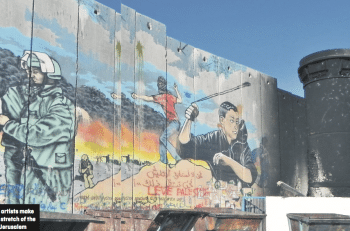
    After completing his Ph.D in the University of Pennsylvania, the former Palestinian foreign minister, Nabil Shaath, lectured in financial economics at the elite Ivy League Wharton School in the US. Among his students was a brash undergraduate named Donald Trump who did little study, flunked his exams and was expelled from the university. With the help of his very rich father, Trump was readmitted and, despite his poor academic credentials, went on to greater things. “He was not a good student. He dropped out and his academic standard did not come up to scratch. I was teaching advanced corporate finance and he flunked the courses. The idea of this man as President of the US to me shows the decline of American civilisation”. Some half a century later, Trump is leading the latest assault on the historic right of the Palestinian people to their own land, including international recognition of Jerusalem as the capital of their independent state. Last December, President Trump confirmed that he intended to move the US embassy in Israel from Tel Aviv to Jerusalem in a move that deeply angered the Arab world while elating many Israelis who have long had their sights on ultimate control of the holy city, which has been traditionally shared by Muslim, Christian and Jewish religions. The decision to move the embassy to Jerusalem was authorised by the US Congress some years ago but was put on hold by President Barack Obama, who believed the decision could only hamper efforts to find a lasting peace in the region and, in particular, the achievement of a two-state solution with east Jerusalem as capital of Palestine. For the Palestinian president, Mahmoud Abbas, and for Nabil Shaath who acts as foreign relations advisor to him, this divisive action by the Trump administration has confirmed a view they have long held privately: that the US cannot be considered as an honest broker in the search for a just solution to the Middle-East crisis, arguably one of the world’s most egregious human rights scandals. Over recent weeks, 35 Palestinian people have been killed and over 1500 injured by live rounds fired by Israeli army snipers from behind a fortified security fence erected in Gaza. Each Friday thousands of people from the besieged and almost destroyed Gaza Strip have protested for their “Right to Return” to the lands from which they and their families were expelled during the Nakba or catastrophe when the state of Israel was declared in 1948, and over the decades since. The policy of the government led by Benjamin Netanyahu and of the Israeli Defence Forces (IDF) is that the right-to-return protests must be resisted with maximum force, including by the killing of unarmed activists and the maiming of thousands. Already overstretched and under-resourced Gazan hospitals have been unable to cope with the recent slaughter, while their efforts to transfer shooting victims with serious injuries to hospitals in the West Bank have been obstructed by the IDF. Two young men who each had had a leg amputated after suffering severe bullet wounds lost their other leg after doctors were prevented by Israeli authorities from transferring them from Gaza to better-equipped hospitals for treatment. The reason they were refused access to urgent medical care in Ramallah was because their “medical condition is a function of their participation in the disturbances”, the Israeli authorities confirmed. One of the young men, Yousef Karnez, said that he was a trainee journalist and was holding a camera at the demonstration which he sought to document. “I got two bullets. One hit my left leg and crushed it and the other hit my right leg, where it gravely injured my shin. Doctors have already amputated my left leg and I am begging; I don’t want to lost my other leg,”, he pleaded in the days after he was shot in early April. A young journalist, Yaser Murtaja, who was wearing a white ‘Press’ sign on his chest during the same protest on 6t April, was shot dead by IDF snipers and wrongly accused by the Israeli defence minister, Avigdor Lieberman, of being a member of Hamas who had been operating a ‘spy drone’ before he was killed. His claims were denied by the International Federation of Journalists who said that Murtaja had worked for both national and international media over recent years including for the BBC and Al Jazeera, and that his company Ain Media had been funded by the US Agency for International Development. His production company had used drones for aerial filming and he was due to start a new job with the Norwegian Refugee Council two days after he was shot. Nabil Shaath, a Gazan, believes the people of the strip are desperate and the large ‘Right to Return’ protests are a reflection of their appalling living conditions. The electricity in Gaza, where some 2.5 million Palestinians live, is turned off for sixteen hours each day, there is no clean water, and there are severe shortages of food and medical supplies. Efforts to establish a unity government across the West Bank, east Jerusalem and Gaza which commenced last year have so far been unsuccessful due to the inability of the Palestinian Authority (PA) and Fatah (the political organisation led by President Mahmoud Abbas) and Hamas to reach agreement. At the core of their disagreement is the refusal of Hamas, which took political power in Gaza following elections in 2006, to cede control of security to a new government of Palestine. “We have a presidential system in Palestine and the President is in charge of security and foreign relations,” Shaath explains. “Hamas was elected in Gaza in 2006 by popular vote and we accepted that mandate. However, the PA remains responsible for ensuring that the people of Gaza have sufficient finance to cover the costs of education, health, water and electricity. We have now said to Hamas that we can only continue to pay the bills if they agree to complete discussions for a unity government that will include security”. This

    Loading

    Read more

  • Posted in:

    As sad as Assad

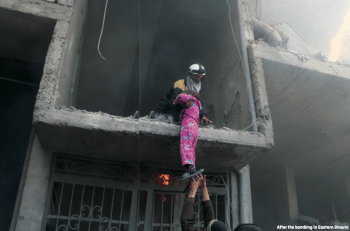
    Unthinkable suffering The Syrian army’s apparent chemical attack on Douma on April 7 was the worst atrocity of an infernal six-week military campaign in Eastern Ghouta. This in turn was the latest horrific chapter in a war lasting seven years which has brought unthinkable suffering to millions of innocent civilians. The relentless bombardment of Eastern Ghouta, backed by Russia and Iran, follows a cruel siege of the area lasting almost five years. These events reflect the most destructive and tragic elements of human nature: when ruthless powers encircle and terrorise the vulnerable, unchecked by any higher authority. The scenes being broadcast from the region are glimpses into an abyss of inhumanity – children being dragged from underneath rubble, parents convulsed with grief, neighbourhoods reduced to debris. The repeated bombing of hospitals and obstruction of aid convoys entering Ghouta are the most depraved aspects of the Syrian army campaign. They are examples of what Holocaust survivor Primo Levi called “useless violence” – suffering inflicted for its own sake and for no other purpose. Putin’s geo-political game Russian President Vladimir Putin has been providing military and diplomatic support to Bashar al-Assad since 2015 when he was losing the Syrian civil war – partly to secure Russian economic interests and partly to assert Russia’s dominance over the US in the region. The civilians of Eastern Ghouta are pawns in Putin’s geo-political game, and it appears he faces little consequence for directing this inferno of mayhem and bloodshed from Moscow. The wholesale destruction of Eastern Ghouta resembles the fate suffered by Aleppo and Homs earlier in the Syrian war and by Grozny, capital of Chechnya, during Putin’s first venture in politicised mass killing, a year into his reign. In each of these war zones the wretched plight of civilians incited him to an extreme of merciless aggression. Putin and al-Assad appear to share a psychopathic relish for attacking the weak. Aerial footage of Aleppo after the worst bombardments in 2016 showed apocalyptic scenes of ruination. The Russian and Syrian forces may as well have dropped a nuclear bomb on this once thriving, exotic city. Night after night on our television screens we are witnessing similar destruction and misery visited upon another mass of civilians, and hearing the same lies from Russian and Syrian officials who deny appalling events that are plain for all the world to see. Footage now emerging of Eastern Ghouta reveals almost a carbon copy of the haunted, hollowed-out cityscape that remains of Aleppo. Syria abandoned Article 1 of the Charter of the United Nations, set out at its inception in 1945, committed members to “tak[ing] effective collective measures for the prevention and removal of threats to the peace, and for the suppression of acts of aggression or other breaches of the peace”. Humanitarian protections for civilians in war zones were enshrined in the UN’s Fourth Geneva Convention of 1949. Grave breaches of these conventions include “wilful killing”, “wilfully causing great suffering or serious injury” and “making the civilian population or individual civilians the object of attack”, all of which have without question been perpetrated on Eastern Ghouta. The UN as it currently stands is nothing more than a politically redundant talking shop for Syria. Hand-wringing about the awfulness of the latest atrocity is invariably followed by diplomatic paralysis. Where power is concentrated most – among China, the US and the EU – moral courage appears absent. The US government, supported by the UK and France, mounted a sharp military response to the chemical assault on Douma, as it did last April when 80 civilians were killed by nerve agents dropped by Syrian army planes in Idlib province. We could ask why the relentless killing of civilians by every other weapon imaginable does not warrant intervention. As before, it is likely that such a measure will not be followed by substantive protections for Syrian civilians who will remain at the mercy of al-Assad and Putin. It primarily served as a show of US military might and of Trump’s willingness to impose a supposed tougher line than Obama on chemical weapons. It   also conveniently shifted public attention from the Mueller investigation into Trump’s alleged links with the Russian administration during his election campaign. An international peace-keeping force The Syrian conflict is a complex and deadly quagmire, involving armies and militias from several countries. Any attempt to resolve it is fraught with risk. And yet the choice to allow this slaughter of innocents to continue is a defilement of our collective humanity. If a large international peace-keeping ground force were based in Syria Putin would be far more cautious in the use of his military power there, and in his sanctioning of al-Assad’s violence. This would require courage from several of the world’s most powerful nations and would involve some risk to the domestic popularity of their leaders. It would be a show of collective strength to cold-blooded autocrats who answer to nothing else. A long-term political settlement is another challenge altogether, but in the interim this would give some protection to civilians caught up in the war. Putin and his allies have been emboldened for too long by having no limits placed on their behaviour and by the implied international attitude that the lives of Syrian civilians are not of much value to the rest of the world. Liam Quaide Liam Quaide is a clinical psychologist and the Green party election candidate for East Cork

    Loading

    Read more

  • Posted in:

    Panoramaphosa

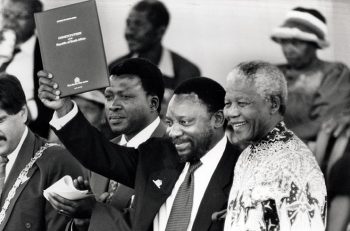
    On a recent drive to Cape Town International airport the ‘Rainbow Nation’ was nowhere to be seen. Instead it was like old times when I was the Irish Times Correspondent there in the 1990s. The scene carried a strong message of the work that faces the country’s new President Cyril Ramaphosa. Along the motorway known as ‘Settlers Way’ there was a clear run out of town to deposit the hired car and catch the early-morning flight to Lanseria north of Johannesburg. The other carriageway, the one carrying traffic into the city centre, told an entirely different story. On that side the traffic was chock-a-block and consisted almost in its entirety of white minibuses carrying black workers from the vast townships of Gugulethu, Langa and elsewhere. They were travelling in their thousands to service the needs of the white population of the city and its wealthy suburbs. Earlier that week in Franschhoek, a tourist and wine-producing town , it was also like old times. The restaurants were full of white folk of retirement age being served by waiters from the Black and Cape Coloured Communities. In Johannesburg restaurants things were different but only slightly. There were tables occupied by white clients and tables occupied by black clients but no tables at which blacks and whites dined together. These casual and anecdotal observations don’t tell the full story but they are an indication of how deeply-ingrained apartheid and its legacy have been in South African society. It will take a very long time and a great deal of patience to make significant changes but there is no doubt that the country’s new President, Cyril Ramaphosa, is a patient man. -Nelson Mandela indicated that Ramaphosa was his preferred successor but the African National Congress (ANC) was, and still is, a very complicated organisation and as in most African countries ethnic loyalties played their part in the succession stakes. Ramaphosa is a member of the small Venda nation. His opponent for the vice- presidency and eventual presidency, Thabo Mbeki, was a Xhosa, a group that produced Mandela himself, his political partners Oliver Tambo and Walter Sisulu as well as the influential churchman Archbishop Desmond Tutu. Nelson Mandela merely indicated a preference for Ramaphosa but his estranged wife Winnie mobilised the ANC Youth League behind Mbeki’s candidacy. Ramaphosa’s time for campaigning had been limited due to his involvement in negotiations on a new Constitution. All these factors: tribes, internal ANC politics and time constraints played their part in his defeat by Mbeki. Ramaphosa had to wait until December of 2017 before he could make his move. Mbeki, a small bookish man with a penchant for the poetry of W B Yeats, fell under the spell of American pseudo-scientists who peddled the theory that HIV did not cause AIDS. The result for South Africa was disastrous but the ANC’s response was predictable. As a former liberation movement, loyalty had been vital to the organisation’s very existence during the struggle against the apartheid regime but it became a hindrance to progress after the party came to power. ANC loyalty kept Mbeki in power amid a catastrophic AIDS epidemic, just as it kept Jacob Zuma in a presidency that smacked of intense corruption and maladministration. After Mbeki had won the nomination to become Mandela’s vice-president, Ramaphosa made a rare rash decision. He refused to attend Nelson Mandela’s presidential inauguration in Pretoria in 1994. From then on, however, he matured and played a political waiting game, concentrating on business opportunities that made him one of South Africa’s wealthiest men with a personal fortune of more than $550 million. During that time Zuma, a member of the Zulu nation, the country’s largest ethnicity, became entangled in a web of deals with the Guptas, a wealthy Indian business family. Corruption allegations abounded and a new glossary of political terms was spawned, the most prominent of which was ‘State Capture’ suggesting much more than personal corruption. The phrase indicates the belief that the entire State and its institutions had been ‘captured’ by the Guptas and their allies in the ANC. And Zuma was not the only ‘captured’ ANC member. In Parliament, as the popular newspaper City Press recently put it, six ministers sat in what it has been tempted to call the “Gupta Corner” of the Government front bench. Ramaphosa has recaptured the cabinet in a quick reshuffle in order to get moving but by doing so has increased tensions and enmity within his own party. The ANC’s traditional loyalty to its leader in this instance could provide a positive counteraction to its negative effects in the past. He has got off to an energetic start, setting out on early-morning exercises in his Ronald McDonald socks in various parts of the country, ranging from the promenade at the prosperous Cape Town suburb of Sea Point, to the beach at East London; and on a long walk at 5.30 am in the Cape from the black Township of Gugulethu to the ‘coloured’ community of Athlone. In each case these were exercises in building up his profile in local communities as a man of the people instead of his image as a wealthy man who loves fast cars and good wine. In parliament his State of the Nation address was delivered without interruption, a very rare happening in a place where raucous heckling is frequent. In that address he touched on the country’s problems which he has vowed to solve. The education system is in a parlous state. Poverty abounds mainly in non-white areas but also amongst Afrikaans-speaking people who have always had a “poor white” section of their community. Health services need reform. Public transport is almost non-existent with Uber taking over its role especially in white areas. There have been a number of murders of white farmers, and Ramaphosa caused raised eyebrows among them by stating in his address that he would pursue the expropriation, without compensation, of land that had been confiscated from blacks. Right-wing commentators saw their chance and

    Loading

    Read more

  • Posted in:

    Irexit

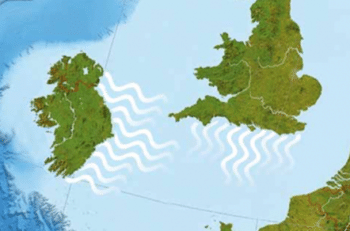
    Since the Brexit referendum in June I have been rapporteur of a Private Study Group of Irish economists and constitutional lawyers who have been examining what we should do when and if the UK leaves the EU. In August their report was sent to the Taoiseach, his Ministers and the Secretary-Generals of all Government Departments. It has been sent also to the EU embassies in Dublin, to UK Prime Minister Theresa May, her key Ministers and senior civil servants concerned with Brexit, and to a wide range of British Brexiteers whom my colleagues and I have got to know over the years. The report’s basic conclusion is that it is in the interest of the Irish people that Brexit should be accompanied by “Irexit” – Ireland exit. We applied to join the then EEC in 1961 because Britain and Northern Ireland did so. We joined simultaneously with the UK and Denmark in January 1973. Now that Britain and the North are leaving, we should do the same, for three principal reasons. The first is that Ireland is nowadays a loser, not a gainer, from EU membership. In 2014 we became a net contributor to the EU Budget for the first time, paying in €1.69bn and receiving €1.52bn. This means that in future any EU moneys that come to the Republic under the CAP, EU cohesion funds, research grants, support for community groups and the like, will be Irish taxpayers’ money coming back, employing some Brussels bureaucrats on the way. Henceforth the EU will no longer be the ‘cash cow’ most Irish people have regarded it as for decades, and which is the basis of much of our official and unofficial europhilia. A bonus would be that outside the EU Ireland can take back control of its sea-fishing waters. Eurostat’s estimates of the value of fish catches by non-Irish boats in Irish waters since 1973 are a many-times multiple of the EU cash we got over that time. The second reason why Irexit should go along with Brexit is that that is the only way of preventing the North-South border within Ireland becoming an EU external frontier, with new dimensions added to Partition, affecting trade, travel and different EU laws and legal standards as between Dublin and Belfast. For example without the UK as an EU Member alongside it, the Republic would be in a much weaker position to withstand pressure to adopt continental norms in EU crime and justice policy, which differ signi cantly from Anglo-Saxon ones in such areas as trial by jury, the presumption of innocence and habeas corpus. Such divergence would adversely affect good relations within Ireland as a whole and while it would not undermine the Peace Process, it would not help it either. If we stay in the EU while the UK leaves it would mean that for Irish reunification to come about at some future date the people of the North would have to rejoin an EU that Britain had long left, adopt the euro-currency, take on board a share of the €64bn of private bank debt which the ECB insisted that Irish taxpayers nance during the 2008-2010 currency crisis, and implement the further integration measures that are likely to be needed over the coming years if the Eurozone is to be held together. It would give 26 EU Governments in addition to the UK and the Republic a veto on eventual Irish reunification. Such a development should be unacceptable to all Irish nationalists. Another consideration is that if the South remains in the EU while the North leaves along with Britain, future Irish reunification would make the whole of Ireland part of an EU military bloc that is likely to come under greater Franco- German hegemony following Brexit. That potentially could be a security threat to Britain. This will surely change significantly the calculus of British State interest and give Britain a strategic reason for keeping the North inside the UK, an interest it has not got today. The third reason why most Irish people should now reassess their attitude to the EU is that the business case for Ireland remaining an EU member diminishes significantly if the UK leaves. Most foreign investment that comes here is geared to exporting to English-speaking markets, primarily the UK and USA, rather than to continental EU ones. Once the UK leaves the EU two-thirds of Irish exports will be going to countries that are outside it, as they are going today to countries outside the Eurozone, and three-quarters of our imports will be coming from outside. Outside also, Ireland’s 12.5% corporation tax rate would no longer be under EU threat. Of course our relations with the UK and the EU in the Brexit context are complicated by our membership of the Eurozone. Irish policy-makers abolished the national currency and joined the Eurozone in 1999 on the assumption that the UK would do so also and that by going first they would show how communautaire they were. It was an utterly irresponsible action in view of the fact that the Republic does most of its trade with countries that do not use the euro. With the pound sterling falling against the euro as the UK disengages from the EU, Ireland desperately needs an Irish pound that can fall with it, so maintaining its competitiveness in its principal export markets – the UK and America. That is why the Irish State urgently needs to get its own currency back. Economist Chris Johns noted in the Irish Times on 20 August that if the Irish pound existed today it would be worth some 10 percent more than the pound sterling. This was the level it reached in January 1994, when Irish industry was in crisis because of its overvalued exchange rate – explicitly then, implicitly today. That in turn precipitated the major devaluation which inaugurated our ‘Celtic Tiger’ years. Ireland needs to regain the freedom of being able to determine its own exchange rate. There is no legal way to

    Loading

    Read more

  • Posted in:

    Oxford, Britain

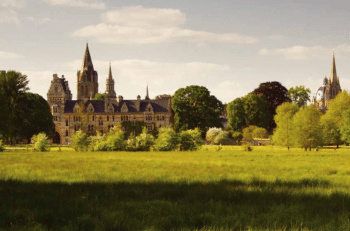
    North Oxford is a heartland of academia where leafy halls of residence mingle with stately homes and rarefied hostelries. Situated in almost the very centre of Britain a windless calm favours scholarly reflection removed from modernity’s fugue. Even the traffic is orderly with bicycles sensibly preferred. It is one of the most attractive places in the world. Spend an afternoon on the lawns at Christchurch if you doubt it. Oxford is world-class in so many ways: the city and the university. PWC and Demos rated it the best place to live in Britain, in 2012, across a wide range of criteria. Shanghai ratings names Oxford University the seventh best in the world. South Oxfordshire was recently named Britain’s best rural place to live. It is transcendent England. What has this to say about Brexit, the political issue of this generation? The City of Oxford is located on the confluence of the Isis (the idiosyncratic name for the Thames here) and Cherwell rivers. Broadly, it may be divided into three zones with a clear north-south divide: that affluent and mature north Oxford of Jericho and Wolvercote; predominantly twentieth-century suburbs including Cowley to the south; and the historical and commercial centre linked to Botley and Osney Island, built around an Anglo-Saxon settlement of which little remains. This contains renowned colleges such as Christchurch, Balliol and Magdalen. The first sign of incongruity is how close it nestles to the ‘any-town-UK’ commercial centre and its array of gaudy chains. Moving south, there is yet another Oxford as housing gets cheaper and industry is evident. The first industrial revolution passed Oxford by as colleges objected to the contagion of commerce. Only after World War II did significant manufacturing arrive as the city attracted a car industry. By the early 1970s, 20,000 people were employed in the sector and the original Mini Minor was developed here in 1959. Unfortunately, as in much of the country, a significant proportion of heavy industrial jobs have departed. The working class areas now face social problems familiar in many English cities. Living as a jobbing tutor and supply teacher in Oxford for two years I encountered classroom behaviour that made experiences in schools in socially-deprived areas of Dublin seem almost meditative. Oxford is a place of profound educational inequality. Oxford accomodates a great literary tradition: JRR Tolkien, CS Lewis, Lewis Carroll, Kenneth Graham and Irish Murdoch wrote from Oxford. The number of Prime Ministers that have passed through Oxford University is startling. 28 overall. Only Jim Callaghan and John Major, who revelled in his immersion in the university of life, among English Prime Ministers since Winston Churchill (who finally left office in 1955) did not pass along its quads. Alumna Theresa May (St Hugh’s, 1974) joins a list that includes Labour Prime Ministers Tony Blair (St John’s, 1974), Harold Wilson (Jesus College, 1937) and Clement Atlee (University College, 1904) as well as Tories Anthony Eden (Christchurch College, 1922), Harold MacMillan (Balliol College, 1914) Edward Heath (Balliol College, 1939), Margaret Thatcher (Somerville College, 1947), and David Cameron (Brasenose College, 1988). Oxford indubitably has seeded the post-War UK political establishment. Moreover, numerous Tory politicians maintain an association with the wider shire. Churchill himself was born in the nearby ancestral estate of Blenheim Palace (though he passed some of his early childhood in Dublin’s Phoenix Park). David Cameron, MP for Witney, Oxfordshire, lives in Chipping Norton close to Rebekah Brooks, Jeremy Clarkson and the rest of the well-placed Chippy set. Michael Heseltine (Pembroke College, 1954) dwells in style nearby though one imagines he looks slightly askance at the gobby neighbours. Theresa May grew up in the village of Wheatley a few miles east of Oxford where her father served as vicar. Further east towards London, Boris Johnson (Balliol College, 1987), the new foreign secretary, lives in Henley-on-Thames. Jeremy Paxman, Richard Branson, Kate Moss, Kate Winslet, Rowan Atkinson, Jeremy Irons and Ben Kingsley: celebrities, high-and-low-brow, live in Oxfordshire. Perhaps the county has a quality – an England of the imagination – that grandees of all sorts gravitate towards. It could be the low rural population density, a legacy of the Enclosure Acts (1760-1830) that placed formerly common land in the hands of expanding gentlemen farmers. Today, though located only an hour from some of the most in ated land prices in the world in London, it is possible to drive for long stretches without seeing a single dwelling. The hoi polloi were kept at bay, in Oxford and swathes of its hinterland. As an Irish person living in the city of Oxford I never had a sense that I was unwelcome, or at least any alienation was no different to that felt by the bulk of the population before a converging aristocratic and mercantile elite: unlike the ancient regime in France since the Tudor era, nobility has been open to the highest bidder and an Oxford education provides the polish. One must however acclimatise to the southern English reserve and a sardonic sense of humour. The historian Tony Judt (St Anne’s College 1980- 87), who concededly knew little of Ireland, wrote that the English are perhaps “the only people who can experience schadenfreude at their own misfortunes”. Succumbing to generalisation I regard English friendships as firmer than Irish for all the latter’s sociability. But these societies of companions generate mosaic communities often hostile to one another. Better the devil you know and bugger the rest. In the era of the Internet there is a growing suspicion of the ruling class of politicians. Many do feel “shat on by Tories, shovelled up by Labour” in the words of Uncle Monty in ‘Withnail and I’. They are often seen as a separate cast reflecting the cultural dominance of Oxford and Cambridge Universities (‘Oxbridge’) which extends to the media and business. This trend perhaps explains why maverick and grumpy (though otherwise profoundly different) outsiders such as Jeremy Corbyn, Nigel Farage (and Boris Johnson who went rogue over Brexit) are appealing to a jaded electorate; a state of

    Loading

    Read more

  • Posted in:

    Braced for Brexit

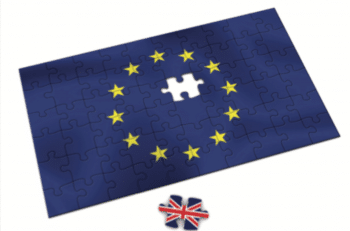
    Back in the 1960s I once stood on the plinth of Nelson’s column in Trafalgar Square, London, between Landseer’s lions, at a Connolly Association rally against anti-Catholic discrimination by the Northern Ireland Stormont regime. Lots of people were waving tricolours. Forty years later I spoke again in the same spot, at an anti-EU rally organised by the Democracy Movement, one of Britain’s EU-critical bodies, before a sea of little Union Jacks. I smiled to myself. Here were the English discovering the drawbacks of being ruled by foreigners, by people they did not elect, and how EU laws had come to have primacy over those of their own Parliament. They were reacting against losing their democracy and national independence. British Euroscepticism is largely English nationalism. The political psychology of the governing élites in England and Ireland is very different, not least in their attitudes to the EU. The lack of self-confidence of the Irish élite is shown by their continual anxiety to be seen as ‘good Europeans”’. Hence for example Enda Kenny’s boast that our recent modest economic improvement has “restored our reputation in Europe”. I was at the EU summit in Gothenburg, Sweden, a few days after Irish voters rejected the EU’s Treaty of Nice in 2001. The then Taoiseach, Bertie Ahern, was virtually beating his breast there as he explained apologetically to the international media how Irish voters were mistaken, but they would have a chance to change their minds in a second referendum – which of course duly happened. By contrast England’s governing élite has the psychology of a ruling power. For centuries they backed the second strongest powers of Europe against the strongest, thereby preventing any one power dominating the continent. When the EU came along after World War II they joined it in the hope of either prising France and Germany apart or else of being co-opted by the Franco-Germans as an equal partner to run ‘Europe’ as a triumvirate. Both hopes have proved illusory. Hence English disillusion with the EU. They never shared the Euro-federalist visions of the continentals – something that former Commission President Jacques Delors expressed when he said in 1993: “We’re not here to make a single market – that doesn’t interest me – but to make a political union”. Prime Minister Cameron wants to stick with the EU. But most of his party and large swathes of British public opinion see the EU as a low-growth economic area mired in recession, with a dysfunctional currency and high unemployment. They want to regain their freedom of action, especially over trade, by leaving. They want to develop trade and investment links with the five continents and the far-flung English-speaking world. The obvious power imbalance between the two sides would make it extraordinary if the “Leave” people were to prevail over the “Remain-Ins” in the Brexit referendum. On the one side are the British Government, the American Government, the German and 25 other EU Governments, Wall Street, the CBI, the TUC, the British Labour Party, the Brussels Commission, the European Movement, most EU-based High Finance and Transnational Corporations, plus in Ireland all the parties in the Oireachtas. On the other side is a diverse and sometimes quarrelsome range of groups and individuals on the Left, Right and Centre of British affairs, united only by their desire to get back their right to make their own laws, control their own borders and that their Government should decide independently its relations with other countries. It would be unrealistic though to think that a “Remain-in” vote in June will decisively settle the matter. It is likely merely to delay the inevitable divorce, for the interests of the continentals and the island Britons are just too fundamentally opposed. And what of the Celtic fringe? Contrary to the received wisdom there could well be a substantial “Leave” vote in those areas too. If the UK as a whole votes to leave, will Scotland want to break away from the rest of the UK in order to remain in the EU, abolish sterling and adopt the euro – that being a requirement for all newly acceding States to the EU? It is very doubtful. The Irish media have not yet picked up on one big downside for Irish people of the deal David Cameron concluded in Brussels before he launched his referendum. This is the implication of the EU agreement that if the UK votes to remain, new immigrants to the UK are liable to have lower social benefits for some years than those already there. It will be impossible under EU law to differentiate between Irish immigrants on the one hand and non-Irish ones on the other. This means that new Irish immigrants to Britain or the North must face cuts in social bene ts too if the “Remain” side wins. This proposal will not affect Irish people already settled in the UK, but solidarity with their fellow countrymen and women should still cause lots of them to vote Leave. If a booming British economy, freed of EU regulation, becomes the Singapore of Europe outside the EU, which is perfectly possible, it can only benefit Ireland economically. Lurid scenarios are being painted of the consequences of Britain leaving the EU while Ireland remains in it. If Brexit happens some uncertainty is inevitable for a year or two, but it will not be the end of the world. Free trade will continue between Ireland and the UK under all realistic “Leave” scenarios, so there will be no customs posts on the North-South border within Ireland, no passport controls or anything like that. Such claims are simply scaremongering, part of “Project Fear”. What of Northern Ireland in the event of Brexit? Over the past decade the UK has paid over £150 billion to the EU budget – far more than it has got back. It sends £350 million to Brussels every week. This is some ten times the Northern Ireland schools budget. EU subsidies to the North in the form of

    Loading

    Read more