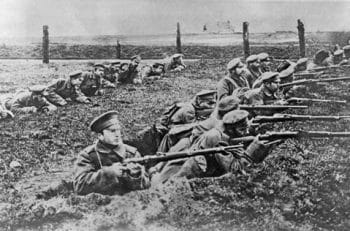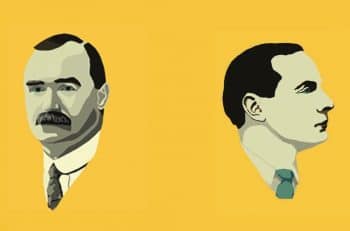
Much is made of the choice made by James Connolly to join the Irish Citizen Army (ICA) with the Irish Volunteers led by Pádraig Pearse for the Easter Rising in 1916. Across the British and European Left, notably but not exclusively among those on the side of the allies in World War I, there was a mixture of horror and disdain at the Irish merger of socialism and nationalism into a revolutionary force. Within the ICA itself there was some opposition to any collusion by socialists with the nationalists with one of its founders, Sean O’Casey, to the fore in condemning Connolly whom he described, retrospectively, in 1919, as having “stepped from the narrow byway of Irish Socialism onto the broad and crowded highway of Irish nationalism”. For many years since, and particularly since the outbreak of conflict in the North in the late 1960s, Connolly’s decision to join the military council of the Irish Republican Brotherhood and to set a date for the Rising after a three-day secret meeting with Pearse, Sean MacDiarmada and Joseph Plunkett in January 1919 has been the subject of much criticism, including by many on the Left. However, in the light of so much recorded material including the invaluable statements of participants to the Bureau of Military History becoming available since then, the rationale behind Connolly’s decision, however reluctant, has become much clearer. Equally, the motivation and coherence of Pearse and his comrades in the Volunteers in striking a blow for freedom is also now more credible than many of their detractors would allow. In 1915 Connolly did use the words “blithering idiot” to describe anyone who would celebrate the “red wine of the battlefields” – comments widely believed to have been in response to Pearse’s exhortations. He said: “No, we do not think the old heart of the earth needs to be warmed with the red wine of millions of lives. We think anyone who does is a blithering idiot. We are sick of such teaching and the world is sick of such teaching”. He was referring to a Victorian tradition in literature and poetry which was widespread in Ireland and Britain as well as in mainstream, including socialist, European thinking which glorified blood sacrifice and martyrdom. What is more important though is the practical opposition of Pearse and Connolly to the actual blood sacrifice which saw hundreds of thousands of young men wasting their lives on the killing fields of Flanders and beyond in an imperialist war. For this was the central reason why both men found common cause in the Spring of 1916. As President Michael D Higgins said at a commemoration for the ICA in Áras an Uachtaráin at Easter: “The suggestion that, when WWI broke out, James Connolly scrapped his faith in socialism to embrace pure nationalism is contradicted by Connolly’s writing and journalism both before and after 1914. James Connolly was deeply concerned with the context of turmoil in Europe and the world, whose revolutionary potential was, in his view, being squandered in defence of imperialist adventurism. In Connolly’s estimation, a blow against Empire was a clearing of the ground for future socialist struggle. It is important, therefore, not to rush to judgement on what James Connolly’s motivations were for orchestrating a joint action with the Volunteers. One can understand how, in despair at the collapse of his and other socialists’ internationalist hopes after the outbreak of the War, appalled by the breakdown of the international proletariat into nationalities which were slaughtering each other on the Western Front and in the Middle East, James Connolly resolved to seize the opportunity of the war to strike a blow again the British Empire”. At the secret meeting in January 1916, Connolly accepted an invitation to join the IRB council and agree a date for the Easter Rising while conscious of the ideological differences that existed between the ICA and the nationalists of both the Irish Volunteers and the larger force of nationalists under John Redmond. Connolly had worked with the trade union movement against the capitalists in the US, and on return to Ireland led the Dublin workers against the brutal onslaught by employers, some of whom were prominent in the nationalist movement during the 1913 Lockout. That struggle led directly to the creation of the ICA the constitution of which influenced key sentiments of the 1916 Proclamation including its call for equality for women and children and “the right of the people of Ireland to the ownership of Ireland”. Further, Connolly was an internationalist who understood that the world war was essentially a contest between the great powers over global resources. Pearse clearly shared more in common with this perspective than many of his former nationalist allies as he agreed to include the progressive thinking of the ICA in the Proclamation he drafted and read at the GPO, a document that had of course been printed by union labour in Liberty Hall the night previously. Redmond on the other hand was prepared to encourage tens of thousands of young, mainly impoverished, Irishmen to their deaths in the imperialist war in order to gain advantage for his wealthy compatriots through the fading promise of limited home rule. As President Higgins remarked, “the ranks of mainstream nationalists, and particularly those of the Irish Parliamentary Party, comprised a significant number of industrialists and graziers who were happy to secure the advantages of a political independence within the Empire but who would resist economic, social, or as both O’Casey and Synge would learn, cultural, innovation”. Many of those who fought heroically with the Irish Volunteers during Easter Week went on to reveal just how divergent their view of the type of Ireland they were ghting for was from their comrades in the ICA, and indeed many in Cumann na mBan. Some of those drafting the 1922 Constitution of the Free State just six years later described how the proposed inclusion of Pearse’s words on equality was dismissed as “Bolshevist” by the British authorities