justice

Random entry RSS

  • Posted in:

    Wild geese

    In April An Bord Pleanála surprisingly granted permission to Crekav Trading for 104 houses and 432 apartments on playing fields east of St Paul’s College on Sybil Hill Road in Raheny, despite receiving more than 1,000 objections, and a recommendation for refusal from Dublin City Council. The site was originally part of the St Anne’s estate, the home of the Guinness brewing family on which Lord Ardilaun forged a magnificent Palazzo out of the original seventeenth century house. According to Dublin City Council’s Parks Division, St Paul’s is the most important ex-situ (ie outside of the North Bull Island) feeding site for Brent Geese in Dublin, based on numbers (a large majority of the Dublin population feed at this site), regularity of use, geographical location in relation to North Bull Island, size, and the relative lack of disturbance. The Brent Geese on the North Bull Island Special Protection Area are now largely reliant on the availability of inland feeding grounds, like St Paul’s. These lands are not designated but are nonetheless protected under habitats legislation. The only exception whereby development might be deemed to be compliant with this protection would be in exceptional cases where there is overriding public interest, and even then, only when no feasible alternative for the development has been demonstrated, and compensatory measures to offset the ecological damage are implemented. There is no suggestion that these exceptional circumstances and compensatory measures are to be found in the case of this development. Development on feeding areas forces the geese to travel greater distances to feed and potentially brings them into conflict with agricultural interests feeding on winter cereal crops. This results in greater expenditure of energy which affects the condition of the birds and their ability to complete the annual migration to their breeding grounds. The cumulative effects of this residential development proposal alongside existing impacts on geese arising from other already permitted developments which have removed some of their feeding sites, should have been assessed by An Bord Pleanála. In addition it should have considered whether adequate feeding areas will be left for Brent Geese after these developments are complet and whether any such areas are zoned appropriately in the Dublin City Development Plan. An Bord Pleanála is obliged to comply with European law on these issues . In considering the proposal, An Bord Pleanála’s inspector noted that the extent of potentially suitable feeding areas for the geese within Dublin city is finite and that the currently recognised feeding sites that are considered to be an alternative to the lands at St Paul’s may currently be experiencing pressures, including recreational disturbances, that may limit their capacity to accommodate the loss likely to occur as a result of the proposed development. Not withstanding this concern by its inspector, the planning board went on to grant consent for the development at the St Paul’s site. Of course Bord Pleanála decisions are formulaic and legalistic but we can take some indirect insight into its possible thinking from the reasoning in the report of its inspector whose conclusion it adopted: “The numbers of inland feeding areas are relatively significant, the geese appear to be thriving based on their increasing populations and I consider that the loss of this site as a feeding ground will not adversely impact on the conservation objectives of any of the five designated sites. In light of this assessment, I am of the opinion that there is capacity for the existing ex-situ inland feeding areas to absorb the loss of St Paul’s and I consider it reasonable to conclude on the basis of the information on the file, which I consider adequate in order to carry out a Stage 2 Appropriate Assessment, that the proposed development, individually or in combination with other plans or projects would not adversely affect the integrity of the five relevant European sites, in view of their Conservation Objectives”. However, whether this reasoning meets the requirements of European law and related case law remains to be seen. Bord Pleanála is under political pressure to approve housing schemes, in a housing crisis and the government is infamously unconcerned with environmental and planning niceties. In particular, for instance. The lack of certainty around the capacity of alternative sites to absorb geese displaced from the St Paul’s site may be problematic. Dublin City Council had eloquently warned in its submissions to An Bord Pleanála that the suggested capacity of alternative sites to accommodate the displaced geese is questionable and may not be achievable. The St Paul’s site is one of the top eight inland feeding sites for Brent geese. Accordingly, Bird-Watch Ireland and the Irish Brent Goose Research Group commented in their submission to An Bord Pleanála on this application: “We conclude that is an unacceptably high proportion of the population to be expected to be displaced to and absorbed within the existing network of sites and not in keeping with the conservation objectives of adjacent European protected sites” and furthermore that: “To suggest that these birds are flexible and will simply move elsewhere is simplistic and is especially weak given the recent pattern of development (all representing habitat loss) in the area”. The application was made under the new Strategic Housing Development ‘fast track’ planning system. This allows applications for schemes of more than 100 homes to be made directly to An Bord Pleanála, bypassing the local authority decision phase and excluding the possibility of an appeal. This leaves judicial review as the only course of action for those aggrieved by the planning consent. A miffed Dublin City Council, which turned down a less intrusive application for an associated application for sports facilities on a site at St Paul’s adjoining this one (on grounds of impacts to Brent geese) is hostile to the decision. City Manager Owen Keegan told the Council: “My recommendation, based on planning advice, was the board should not have granted this”. He obtained, presumably suitably conservative, legal advice that it did not have “locus standing” or legal standing to take

    Loading

    Read more

  • Posted in:

    Judge Horner brazens it out

    The Fourth Defendant in the recent rape trial of rugby players in Belfast was Rory Harrison of Manse Road Belfast. He was acquitted of perverting the course of justice by lying to police when he gave a witness statement about his dealings with the complainant woman and deliberately omitting information. He was also acquitted of withholding information from the police. After dropping the woman home and walking her up her driveway, the court heard Mr Harrison texted the woman: “keep the chin up you wonderful woman” and she said she had absolutely no complaint against him. The day after the incident Harrison wrote to Blane McIlroy: “Mate the scenes last night were hilarious. Walked upstairs and there were more flutes than July 12”. Rory who has lived in Dublin and played as prop for UCD and Terenure College Club, is the son of Terence Harrison, a solicitor and partner in Harrison & Hardstaff, 7 Donegal square West Belfast. A former partner is Ian Hardstaff, current Master of the High Court in Belfast. Terence Harrison is the present sole director of TMKK limited, a property company registered in Belfast and incorporated on 13 February 2001. TMKK limited came to prominence last year when a lay litigant was defending an action by Bank of Ireland which was seeking repossession of some property in Northern Ireland. The action had taken nearly four years and was finally heard by Judge Horner. At the very last moment in March 2017 the litigant in question received information, quite accidentally, that the Judge was a shareholder and former Director of TMKK limited; that his wife Karin Horner at that time was a director; and that the company was grossly indebted to the Bank of Ireland, having borrowed substantial sums to fund the purchase of property in Belfast. Checking the records in companies house it was discovered that not only was the company indebted to the Bank but that in 2016 its assets had been devalued from £2,0650,40.00 to £950,000.00, having remained unchanged in value since mortgages were taken out in 2007 when Judge Horner was a QC – barrister – and Director of the company. Property values generally in Northern Ireland had collapsed in that same period but, uniquely, not those owned by TMKK limited. In the notes to the 2016 accounts it was stated that the company was considered a going concern only because of the support of Bank of Ireland: it is questionable whether or not the company was trading while insolvent and whether the value of its assets was properly reported between 2007 and 2016. If its directors knew that the value of the assets was being overstated further issues might arise. The lay litigant brought these matters to the attention of Judge Horner forcing him to recuse himself from the trial while, bizarrely, claiming that he was doing so not because he had been caught out in a manifest conflict of interest that he had not disclosed but because the defendant would not accept any judgment he made. On 14 March the lay litigant made an official complaint to the lord chief Justice’s office but has not yet received a substantive reply, as the office seems wrongfooted. The Lord Chief Justice’s office still seems nowhere close to convening the Tribunal envisaged in the Code of Practice on Judicial complaints. It has produced increasingly forlorn excuses as to why this has not happened. On 27 March 2017 Justice Horner recused himself from the lay litigant’s case giving a statement saying that the reason he recused himself was because the litigant in person would not accept his judgment. This is judicial nonsense. No judge ever should doubt the acceptance of his judgment by a party. The Lord Chief Justice’s office told Village: “Mr Justice Horner stated in open court that he was recusing himself in the case involving the Bank of Ireland and the lay litigant. He said he was satisfied that there was no question of actual bias or that he had any conflict of interest in the case, but that it was apparent to him that ‘the party would never feel able to accept [his] verdict’”. Judge Horner was forced to recuse himself from another long-running trial involving Bank of Ireland at the same time. In that case it was the Bank that asked him to recuse himself and not the other party: he admitted to counsel involved that he was “seriously under water” with the Bank. It appears that he may have given a personal guarantee or guarantees to the Bank to cover at least part of the company’s borrowing in the normal way and that with the company now a loss-making venture those guarantees would fail to be paid. It is the belief of the litigants and of the NI Bar, where this subject is still hot news, that the Bank was well aware of the conflict of interest as were the solicitors then instructed. The failure by the judge to raise the conflict of interest is seen as a very serious matter and the later application by the Bank itself that he recuse himself from a case in which things were not going well for the Bank is seen as scandalous. A question remains as to whether the Bank did not raise the issue of his conflict of interest in cases that were going well for it: if that were the case then it would be shockingly serious for the administration of justice. Further questions remain as to how many other judicial officers including those holding the office of master or similar in NI are or ever have been in the same position as Judge Horner and the extent of the potential hold that the Bank of Ireland, and other banks, may have over others. Bank of Ireland still holds a charge over the assets of TMKK limited of which Terence Harrison is now the sole director. There can be little doubt that officials of the Bank will have been

    Loading

    Read more

  • Posted in:

    Ireland, Italy and the Disclosures Tribunal

    Leonardo Sciascia was an Italian political journalist, an elected radical member of parliament and the most prominent anti-mafia critic. All of this features in his famous detective novels which are in fact anti-detective novels or works of political observation. Coupled with his masterly analysis of the assassination by the Red Brigade of the Christian Democrat conciliator and former Prime Minister Aldo Moro they amount to a sustained critique of Italian and Sicilian political and cultural life. They reflect the complex interstices of corruption and collusion between extreme-right-wing Catholicism, organised crime and the shadowy self-protection syndicates of big business, politics, a malevolent state bureaucracy and crime. His books show the lethal effects of innuendo, smoke, mirrors and sighs, the nefarious rumour mill, shadows. Sciascia was a specialist in the mafia and he demonstrated how they kill and destroy. First they isolate, disempower and then denigrate. They in effect demonise their prey. And those who seek to investigate them, such as Judge Giovanni Falcone, who act on principle are destroyed in the process. This is exquisitely detailed in ‘Equal Danger’, his best book. In Sciascia’s fiction, it is the detective, not the murderer, who is isolated and suspected. Ironically in the end Sciascia attacked the crusading judges as putting civil rights at stake in an article, when he was dying, that irredeemably punctured his reputation, by attacking Falcone as a celebrity judge. This is deeply relevant to Ireland. Our mafia are our corrupt politicians, bankers and lawyers and the toxic relationship of our shadow state of governance between the police and the justice department. Those who challenge corruption or blow the whistle are reputationally destroyed, personally attacked, framed, driven to self-destruction or simply disposed of. Ireland is Italy and “equal danger” a cautionary text. The smearing of the state knows no boundaries and frequent collusion with Tulsa a criminal conspiracy maintained by many lawyers who should be disbarred. Another Sciascia theme, particularly evident in his most famous text, ‘The day of the Owl’ is the Sicilian trait of anomie or indifference. A shrug of the shoulders. It is what it is. Life moves on. Principle, justice and the truth are a waste of time. In controlled societies such as Ireland and Italy Sciascia’s books show the lethal effects of innuendo, smoke, mirrors and sighs, the nefarious rumour mill, shadows, in Italy trivialisation amounts to a resigned admission that the victims of crime had it coming to them in some obscure way. It betrays a desire for yourself not to go the same way. Being principled in an unprincipled society is very difficult. We know more than 10 black sacks of shredding left the office of the Commissioner under the supervision of a superintendent who has given evidence twice already to the Tribunal. The phone of the two past heads of national intelligence, Callinan and Ms. O’Sullivan are gone…vanished, destroyed. Yet no issue of the destruction of crucial evidence seems to be of concern to the Tribunal. It was the husband of the former Commissioner O’Sullivan who was appointed to take charge of the investigation into Superintendent Taylor. The phone of the Superintendent was taken but that crucial evidence too is lost. It seems to be simply a matter of no consequence. A judge whose orientation in private practice was prosecutorial and who, on the bench, has been somewhat indulgent of changes to evidential exclusionary rules to the advantage of fact-gathering gardaí, risks steering a Tribunal away from the glaringly obvious criminality of the highest level of the Department of Justice and the police. Moreover Maurice McCabe is represented at the Tribunal by former Minister for Justice Michael McDowell SC, a long-time and visceral political defender of the police and law and order. If I were McCabe I would contemplate refreshing my legal representation and wonder how the now ascendant narrative is that a cock-up rather than obvious state criminality smeared him. He should dwell on whether it was in fact appropriate for him to concede that the evidence established that the inclusion of the false allegation against him of rape in the 2013 Tusla report “was some form of cut and paste error”, and that the error was not the result of any deliberate action or ill will. And he should consider how the damning evidence of the press secretary Dave Taylor was not addressed first, as the Tribunal’s first module, as dictated by the terms of reference; and how the sequence of modules was altered so the less clearcut Tusla model was heard first. Instead the Tribunal opened with an arbitrarily selected series of smokescreen narratives implying a cock-up by Tulsa, and culpability for outlying zealot Callinan perhaps. Noel Waters, former Secretary General of the Department of Justice, has suffered from amnesia. In his evidence to the Tribunal he declared he could not remember, on nearly 50 occasions. Most damningly, he spoke to Nóirín O’Sullivan at a crucial moment during the O’Higgins Commission which in 2015 was looking at allegations of poor policing in Cavan/ Monaghan made by Sergeant McCabe, phone records indicate. However, neither Waters nor O’Sullivan can remember the 14-minute call on May 15, 2015. The crucial moment was when O’Sullivan’s lawyers were asked by the commission to confirm that they had been instructed to attack Sergeant McCabe’s motivation, and the commission adjourned briefly so that she could be contacted. The Tribunal had previously heard that O’Sullivan “sought time to speak to the Department of Justice” before confirming her original instructions. The Department has maintained neither it nor then Minister for Justice Frances Fitzgerald had prior knowledge of, or input into, the legal strategy. Waters said he could not remember the call, and insisted the Department had played no role in the strategy. When it was put to him by Tribunal counsel, Diarmaid McGuinness SC, that it was reasonable to assume he and O’Sullivan discussed what was occurring at O’Higgins that day, Waters replied: “I have to say in response that I have no recollection of that at all”.

    Loading

    Read more

  • Posted in:

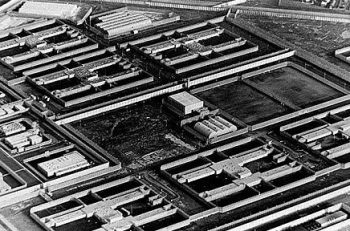
    The Right to have Rights

    Hannah Arendt’s famous phrase ‘the right to have rights’ was coined in her 1958 book ‘The Human Condition’. The condition of being stateless, of being a displaced person, which began its modern history in Europe with World War I, has been experienced since by untold millions who have had to listen to the claim that ‘human rights’ are universal and fundamental – but not for them. Once we had the glamorous figure of the cosmopolitan, the person who belonged to the world, the global community; that figure has been displaced by the refugee, who belongs nowhere, but is to be found everywhere in the paradigmatic settings of the modern and contemporary world – the prison camp, the internment zone, the refugee camp, the ghetto, the jail, the arena of suspension where people live in a place that is always outside the country that it is inside. Arendt pointed out that the creation of such places and conditions is a political decision, not just a terrible catastrophe. It is the prevailing form of the penal colony, the new home that we have built to house the theory of human rights. Since Arendt, and most especially in the indebted work of Giorgio Agamben, it has become clear that the concentration camp of the twentieth century was not some historical anomaly, but that it is actually one of the paradigm sites of Western modernity. The internment camp is a zone of suspension, of ‘rendition’, a place that is always outside the country it is inside – Guantanamo is the best-known example, although there many such places – our best- known example was The Maze in Northern Ireland. Those entrapped there expose the hollowness of any claim to universal human rights, to having rights just on the basis of being human. Arendt said it plainly: the refugee, the displaced person, has regularly been denied the right to have rights. The denial is a political decision. It takes its most popular form in the denial that there are any ‘political prisoners’ in the denying country, although enemy countries are full of them. Its political nature has been counterpointed more clearly since 1948, since the United Nations began its series of declarations of Human Rights, unabated since that date; rights of men, women, children, of minorities, of the disabled, of all indeed who can be characterised as having been ‘excluded’, which means that even the ‘poor’, a constituency which enlarges globally by the hour, faster than ever since the almost perpendicular rise of neo-liberalism in the decades before and after the financial crash. Reading these rights, as ‘declared’ (whatever that means), in that bland United Nations universalistic rhetoric, it is hard to know whether to laugh or cry. Such noble vacuities, such actual atrocities – produced by the same state systems that have prevailed since 1945. It was part of Arendt’s long argument, which began in 1943 with her essay “We Refugees” (about Jewish migrants who had become ‘stateless’, that condition in which they had no rights) that asked why European civilisation had so successfully produced the barbarism that made statelessness pandemic and human rights so unavailable to the millions of ‘displaced persons’ of World War II. Part of her answer was that this barbarism was so successful precisely because it was so concealed within or behind the declarations of universal rights and justice which the West, in the case of the American and the French Revolutions, had made central to the powerful ideology of what mutated into Western ‘freedom’. Arendt’s question then was: how could such an ideology be developed (as through the UN declarations) and simultaneously traduced (as in American foreign policy)? It is too feeble an explanation to put it down to hypocrisy. Hypocrisy on this scale occurs when the people who most sincerely believe in the peaceful principles are those who most regularly betray them in violent action. The British spent three centuries in perfecting their international reputation as hypocrites, a nation that believed itself to be peaceful even as it waged endless wars. Now that role has been assumed, largely, by the Americans. But, to achieve world domination is one thing; world hegemony is another. That’s what the World Wars were fought for. Arendt achieved notoriety with her reporting on the 1961 trial of the Nazi Adolf Eichmann, which was published in book form as ‘Eichmann in Jerusalem: A Report on the Banality of Evil’, where she developed the central figure of the ‘desk-murderer’, the bureaucrat who administered the death-camps. But her key point was that this was a show-trial, that pretended to be an example of universal justice triumphing over universal evil. Rather, it was in fact a national victory of the Israelis over their Nazi persecutors. In this exemplary instance, we are shown how the language of universalism can be used as a disguise for a state’s policies. The jurist who had the ambition to do that for a successful Nazi state, Carl Schmitt (1888-1985), described in his ‘Nomos of the Earth’ (1950), how the European system of international law had been replaced by an American one, with the UN as its legislature and the International Tribunal or Court as its executive. In effect, the language of universal rights was used to ratify the aims of American foreign policy; Nuremberg, Tokyo, Damascus, the Hague were, like the Moscow show trials of the 1930s, elaborate pretences that something objectively true was being defended from the current version of sectarian betrayal – war criminality, terrorism, the new terms of ‘war crime’ and its flourishing neighbourly companions, such as ‘ethnic cleansing’. Danilo Zolo has demonstrated in Victor’s Justice how the Kosovo war of 1999, that infamous intervention (to be followed by interventions in Iraq, Afghanistan , Libya and elsewhere, saving the ‘people’ of those countries for democracy, largely by killing and dispossessing them), with its International Court at the Hague, which could try anybody but Americans, is the most egregious example so far of how the language of universal rights has been perverted

    Loading

    Read more

  • Posted in:

    The cost of costs

    Real justice requires access to justice, which requires effective access to courts, which requires that courts be accessible without the threat of prohibitive costs. Some 90%, or an even higher percentage, of people in Ireland have no realistic access to justice, due to the prohibitiveness of the costs associated with legal actions via the courts. The Irish system of access to justice is permeated with unfair procedures, unconstitutional laws, and conflicts of interests, which means that most court users in Ireland are vulnerable users. BalaNCiNG CONFliCTiNG CONSTiTUTiONal RiGHTS: The English rule (Loser pays rule) on legal costs does not balance two conflicting rights – (1) the property rights of winning litigants, and (2) the right of persons to have access to the courts, without being threatened by unpredictable and prohibitive legal costs. Notionally, proponents of the English rule claim that winners are entitled to be 100% vindicated, and so be in a position to cover all their legal costs. However, this is a very narrow view, which fails to assess the big-picture consequences: (a) winners are also threatened, up to the point of winning, and can be threatened as defendants, in circumstances where they have no chance of recovery of costs from penny-less plaintiffs. (b) the English rule creates all sorts of conflicts of interests and market distortions, which enormously inflate the costs payable. (c) wealthy litigants can threaten persons of lessor wealth, with adverse costs, such that the case is determined more often by issues of fear, rather than justice. (d) the state, and most government actors become unaccountable, as the decision makers are immune from costs (lumped ontaxpayers, often, with little transparency), but can pursue political goals, or engage in abuse of power, with no financial downside, and can still threaten all challengers with financial ruin; this inequality of arms, means that citizens are generally unable to challenge the unconstitutional laws and conduct of government. HeNCe, THe eNGliSH RUle iS NOT COMPaTiBle WiTH a Real CONSTiTUTiONal deMOCRaCy: Costs Allocation Rules incentivise Unfair Adjudication Rules which also incentivise Inefficiencies into the system. Because the government is allowed to intimidate its challengers with unlimited adverse costs, it then wants to maximise those costs, so as to bolster its threat and avoid oversight; High Legal Costs has been the default weapon of choice for all governments since the commencement of the state; the “Big Stick” is maintained to bounce its opponents out of the ring, and this has so far been achieved with little condemnation by international institutions, which have largely failed to recognise the stealth threat that prohibitive costs represents as a threat to the rule of law. The Big Stick undemocratically deters citizens and/or NGOs from challenging the government when it passes unconstitutional laws, or acts unconstitutionally – this allows the government to pander to its own electoral constituency while depriving less well represented persons access to rights protection, leading to violations of minority rights and individual rights. When populist demands call for adjudicative processes which affect specific rights of connected groups, QUANGOs are often created in order to parry off populist demands for accessible justice. The substitute QUANGO justice can rarely be as independent as courts, and the outcomes are often secretised, thus bypassing democratic oversight. Hence, the government passes unfair laws for legal costs adjudication, so as to frighten all challengers – this allows it to exercise power with minimum oversight. THe Need FOR CCOS (COSTS CaPPiNG ORdeRS) In the ex parte application by Dymphna Maher [2012], the applicant effectively sought an assurance from the High Court that any adverse costs would not be prohibitively expensive, if her lawsuit was subsequently deemed not to have fallen under the ambit of the special costs regime (related to some environmental cases). Judge Hedigan insisted that there was no legal authority to permit him to make the order sought by the applicant. However, he observed that: “[It was] very arguable that the absence of some legal provision permitting an applicant to bring such a motion, without exposure to an order for costs, acts in such a way as to nullify the State’s efforts to comply with its obligation to ensure that costs in certain planning matters are not prohibitive. As things stand, I have no power to change this”. This case along with 12 other cases was appealed to the Supreme Court (SC) on an ex parte basis – where only one of the parties is heard. The SC held that it could not provide such an assurance, on an ex parte basis, as the other side (the EPA) needed to be heard first. The SC decision in the Coffey case means, in effect, that any person seeing to access the courts in Ireland is threatened with financial ruin, even if just seeking a CCO. The court failed proportionately to balance the right of access to the courts as a right conflicting with the property rights of government, particularly in the context of the need for real separation of powers. The judicial sphere of power is rendered inaccessible to most citizens, when the loser-pays rule is applied to challenges to executive power, and so the judicial sphere of power is inappropriately diminished; this undermines the checks and balances necessary in a liberal democracy between the legislative, executive an judicial functions. SePaRaTiON OF POWeRS By dividing power between these traditional three spheres, the courts, the government, and the Oireachtas, we help to disperse power and make less probable the accumulation of power to one person, or a small elite, as often happens in what are referred to as illiberal democracies. Diagram 1, above, displays the traditional Montesquieu view of three spheres of power. However the (Montesquieu) tripartite division of power, is a poor reflection of reality. This is largely because it generally fails to engage with the level of real power held by each of the three spheres, in practice. A second flaw, is that there should really be five spheres of power, and not three; the people should be seen

    Loading

    Read more

  • Posted in:

    It's different up here

    Justice is not a motif found emblazoned around Donegal. Its outing accounts for much in my home town of Bundoran and elsewhere in the county. In particular the power the late sean McEniff had over local governance is very unsettling – through politics and wealth. He was Fianna Fáil’s longest-serving councillor and perhaps its richest man. His hotel empire extended to ten hotels countrywide including the Skylon in Dublin and the Great Southern in Bundoran. Journalist Gemma O’Doherty and others have alleged that McEniff interfered with the Garda investigation into the death in 1977 of six-year-old Mary Boyle, but it is the power his empire wields over the slot machines that have for fifty years dominated and blighted once-elegant Bundoran that particularly concerns me here. McEniff’s empire traces its foundation to slot machines. McEniff was by far the largest slot machine operator in the town, and ignored the law: his slots would make big pay-outs, just enough to keep the key punters, most of them poor or old – or both, hooked. In 2009 Bundoran town council adopted a submission from the slot-machine operators – McEniff being the largest – to the Department of Justice – as its own submission. the submission had been adopted by the council on the same day at a special meeting which had only three councillors present. The quorum for any meeting was four councillors to be present, though nobody called halt. The submission said Bundoran’s 1,000 machines were “an integral part of the overall Bundoran product, both on and off the season, and a key reason why visitors continue to be attracted to the town”. Growing up in Bundoran, I remember from a young age the dangers of gaming machines. A friend of my mother came down from the North on the bus with her wages on a Friday and rushed up to play gaming machines in the town. By Sunday evening she had to ask my mum for money to get back home, after losing everything. The 2008 Department of Justice report on ‘regulating Gaming in Ireland’ states “the committee is aware of the type of gaming machine which accepts €500 notes. The Act of 1956 provides a maximum stake in gaming machines of 6d and a maximum prize of 10 shillings. The Act is not being enforced and that brings the law into disrepute”. The Garda Síochána, the Revenue and the Council have long since abjured responsibility for enforcing the gaming laws. A 1985 ‘Today Tonight’ programme on RTÉ focused on Law and Order in south Donegal, particularly Seán McEniff’s gaming. Donegal county council sued RTÉ for defamation for what it said about the inappropriate relationship between Donegal [county] council and the Garda but a legal settlement saw it agree to remove the programme, on the steps of the High Court. One of the last convictions for illegal gaming in Bundoran was in 2000 after Charlie Bird did the exposé on illegal gaming here. The solicitor for McEniffs Bundoran Limited said to the Judge at the time that “Charlie Bird should be prosecuted” as he had played an illegal gaming machine. Poor Sean died last year but his empire remains in the family. I recently objected in the District court to renewal of the gaming licence to McEniffs Bundoran Limited. The first Judge and McEniffs’ solicitor removed themselves from the case, the solicitor coming off record after I raised a concern of conflict of interest. I objected as a member of the Public, though I have had my travails with sean McEniff when I was Bundoran’s traffic warden. When I objected that gaming machines accept notes while the 1956 act maximum is 20 cent, the solicitor for the McEniffs Gerry McGovern did not deny it. Instead he just noted that revenue issued certificates and that gardaí and fire officers had no objections. “If there was a difficulty, the gardaí and revenue wouldn’t be long moving in”, he said. But that is the core of the problem. As to my objection that there were too many machines in Bundoran, Judge Denis McLoughlin said that would only be valid in case of a new application. McGovern said it was an application that had been renewed umpteen times and hadn’t been changed. And in Donegal it seems that is the main thing. The Revenue’s webpage states that it up to the District court to “limit the amount of the stakes and prizes and limiting the number of gaming machines”. But Judge McLoughlin was not interested. I have been before the District, circuit and High Courts on occasion, always representing myself. In 2012 in Donegal Circuit Court, Judge Keenan Johnston highlighted that as a lay litigant “She`d be entering the court with one hand tied behind her back”. The dysfunctionality of Donegal from policing to planning to electoral fraud to unemployment to paedophila is now well documented. Sometimes you feel fighting for justice here leaves you very much alone. Patricia McCafferty

    Loading

    Read more

  • Posted in:

    Conflict in Corner

    A situation is unfolding in the Northern Ireland Royal Courts of Justice which calls into question the integrity of the Administration of Justice, the right to a fair hearing and fair procedures on which the entire system depends. It is the worst kept secret in legal circles in Northern Ireland and yet not one media organisation has chosen to run the story. On 9th March 2017 Justice Mark Horner, a well-regarded judge best known for a recent liberal judgment on abortion rights in the North, was asked by a litigant-in-person to recuse himself from a case involving Bank of Ireland (UK) Plc as it had been brought to the litigant’s attention that Justice Horner had a serious conflict of interest which he had failed to bring to the court’s attention at any stage while he sat as Judge on the case. Justice Horner was a director up until late 2011 and is currently a shareholder in TMKK Limited which was a financially-troubled client of the bank. On 14 March the litigant-in-person made an official complaint to the Lord Chief Justice’s office and has yet not received a substantive reply as the office seems wrongfooted. The Lord Chief Justice’s office seems nowhere close to convening the Tribunal envisaged in the Code of Practice on Judicial complaints. On 27 March Justice Horner recused himself from the litigant-in-person’s case giving a statement saying that the reason he recused himself was because the litigant in person would not accept his judgment. This is judicial nonsense. No judge ever should doubt the acceptance of his judgment by a party. The Lord Chief Justice’s office told Village: “Mr Justice Horner stated in open court that he was recusing himself in the case involving the Bank of Ireland and the personal litigant. He said he was satisfied that there was no question of actual bias or that he had any conflict of interest in the case, but that it was apparent to him that ‘the party would never feel able to accept [his] verdict’”. On 4 April in a separate case involving the same plaintiff i.e. Bank of Ireland (UK) Plc, the bank itself, presumably sensing the dangers of compromise and appeal, actually instructed its own QC, Patrick Good, to request that Justice Horner recuse himself from that case. Horner had little choice but to stand down from this case also. The same legal firm, C & H Jefferson now DWF, represented the plaintiff, Bank of Ireland (UK) Plc in both cases described above. It is obvious that the plaintiff was aware of the conflict of interest with Justice Horner as the judge had for many years been a director and is currently a shareholder in TMKK Limited which was a client of the bank. However, neither the bank nor its legal team made the court aware of the conflict though, as solicitors are officers of the court, it is normally their duty to do so. The solicitor who acted for the plaintiff in both cases seems not to have fulfilled that duty. She is no longer acting for her rm in either of the cases. After that Justice Horner stopped sitting on any cases involving Bank of Ireland in the Chancery court but moved to the Commercial Courts in September and has sat on a number of Bank of Ireland cases. On 4 october 2017, as Village was going to press, a Bank of Ireland case was listed in the Commercial Court [image C, 1] (Interestingly another case was listed for the same day (not involving Bank of Ireland) where the defendant is the current master of the High Court in Belfast, Ian Thomas Hardstaff, who was in partnership with the Harrison referred to in the list who is still a shareholder and director of TMKK Limited) [image C, 7]. Moreover Justice Horner also has dealings with The Northern Bank Ltd through TMKK Limited. Here too he sat on many cases and did not inform the parties of this. The defending party in one such case is aware of his recusal in the two Bank of Ireland cases. That defendant is currently appealing a case involving Northern Bank Ltd in which Justice Horner gave a judgment against them. They brought his conflict of interest with Northern Bank Ltd to the Appeal Judges’ attention and the court remitted the matter back to the Chancery Court as it is the appropriate court to determine such matters. Justice Horner resigned as a director of TMKK Ltd before applying for appointment to the High Court – though he and his wife both remain shareholders. Indeed his wife replaced him as a director. Relevant accounts (page 144 section 4 [image A]) for TMKK Ltd available from the Companies office show that it is indebted to Bank of Ireland and Northern Bank (now Danske bank). However, much more dramatically the company is insolvent. The final paragraph of the accounts entitled “Going concern” [image b] clearly states that TMKK Ltd is only trading at the discretion of Bank of Ireland. By any standard this Judge should not be hearing any cases involving Bank of Ireland. He has immense power and has given possession orders in favour of Bank of Ireland and Northern Bank while he has been seriously conflicted. This could have involved both commercial properties and family homes. All of his cases are on public record. Anyone who has had a case under Justice Horner involving Bank of Ireland or Northern Bank Ltd/Danske Bank may be able to have their judgment set aside due to failure to disclose a serious and fundamental conflict of interest. The Lord Chief Justice’s office notes that while the judge may be considering Queen’s bench actions which are listed for mention he is not now “adjudicating on any commercial or Chancery cases involving the Bank of Ireland”. The Lord Chief Justice’s office said it was “unable to comment further as the Justice (NI) Act 2002 provides information on complaints on judicial office holders is confidential and must

    Loading

    Read more

  • Posted in:

    Ross hits judicial soft spot

    There is this extraordinary conjunction of interest between the legal profession and parliament. Lawyers in Ireland play a very active part in the political system. In 2010 there were 16 barristers and solicitors in Dáil Eireann – ten percent of the total. There are strong historical associations between the professions of politics and the law. In Ireland’s case the association has been grandly embedded at least since the time of Daniel O’Connell, arguably the greatest Irish parliamentary figure and agitator a popular and crusading barrister whose campaign for Catholic emancipation earned him the sobriquet ‘the Liberator’, Radical nationalists following in O’Connell’s wake quite often, unfairly, depict his achievement of Catholic emancipation as being only of benefit to the Catholic middle class or the well-heeled lawyerly professionals. Wolfe tone and Padraig Pearse were also members of the legal profession. In more modern times lawyers have in many ways dominated the new state. The story of the first half of the Irish state (1916-1966) was in large part an economic failure – weak domestic industry and continued emigration. The safe and prestigious jobs were in medicine, the professions, banking, the civil service and the law. The meagreness of economic growth and wealth imbued these positions with an enviable mobility for those with social or class aspirations. A great many lawyers also gravitated towards politics. Traditionally the appointment of judges was a rather rarefied activity monopolised by the cabinet. In Ireland judges must have 12 years (10 for the District Court) experience as a barrister or solicitor. Interestingly, the US alone among common law countries has literally no requirements for appointment to its courts, though of course there is stringent scrutiny of supreme Court candidates by the legislature including a senate Judiciary Committee. Historically in Ireland, the whole thing had the feel of an insiders’ game. For example, there was a kind of informal, lawyers’ club within the cabinet when my father, the late Brian Lenihan senior, was in politics. My father, needless to add, was highly active, along with other cabinet-rank lawyers, when it came to the appointment of people as members of the judiciary. Friends and former colleagues of his in the bar library were constantly discussed as possible or actual appointments to the bench. In my father’s time Fianna Fáil and Fine Gael dominated the appointments with an occasional Labour party twist. The two big parties were careful enough to appoint supporters of the opposite political persuasion to create the impression that the process itself was fair and impartial. By the time i had been elected to the Dail in 1997 the appointment of judges had become an extraordinary example of indiscreet lobbying and jockeying for place and position. TDs were frequently canvassed to promote a particular individual. I even became involved myself and managed, along with others to get two or three lawyers appointed who I felt would be good people to be members of the judiciary. In her recent book on ‘the politics of Judicial selection in Ireland’, Jennifer Carroll MacNeill concludes of judicial appointments: “some systems are exclusively based on the preferences of the executive, some systems require approval of nominations by the legislature, some appoint judges according to a quota by different branches of the political system and some restrict the involvement of politicians to selecting among individuals who have been pre-screened by an independent body comprising judges and representatives of the legal profession”. For the last 20 years in Ireland, High Court, Court of appeal and supreme Court judges have been recommended by the Judicial appointments advisory Council and the Cabinet (ie the executive) makes the decision on advice from the minister for Justice and Attorney General and with the consent of the Taoiseach. In reality, of the ‘executive’ only the Taoiseach, minister for Justice and leaders of any coalition partner, are involved in the selection. Unlike in England and Wales (where the Prime minister selects the judge after nomination of one candidate by the Judicial appointments Commission) and unlike Israel (where the Judicial selection Committee selects the judge), the Irish government retains significant discretion to choose any person to fill a judicial vacancy. Reform has certainly been tame but efforts to curtail, control or otherwise reform the legal profession are often the subject of a cacophony of protest by the profession who are very adept at deploying well-orchestrated campaigns against hostile regulation of the profession. This is because unfortunately, according to Carroll MacNeill: “over the 20 years of its operation, the advisory board did not use the range of powers given to it to assess judicial candidates, was not provided with sufficient secretarial or professional supports and suffered from a substantial absence of process and Oireachtas oversight”. Worse, Carroll MacNeill says, the board made a “crippling“ change of strategy when it decided to change its process for recommending judges. Instead of performing a careful selection that would recommend the seven (or fewer) best candidates as provided in law, the board decided it would in the future simply approve all applicants deemed not to be explicitly “unsuitable”. The number of names recommended to government “increased substantially from about seven to roughly 20, 50 or 100 names for a High Court, Circuit Court or District Court vacancy respectively”. In Ireland this means the executive has almost free reign to appoint someone whose – real or perceived – politics they favour or, more pertinently, who favours theirs. Against this domestic background, Shane Ross is either very brave, or very foolish, to take on the task of reforming the country’s judiciary and how it regulates itself. His proposal to create a new body, composed mainly of non-lawyers, to guide the judges in their work, recruit appointees and register their financial interests is a welcome and well overdue piece of work. Ross is often accused by his opponents of coat-trailing a brand of opportunistic populism that is once off and designed to secure him maximum publicity. in the case of the judiciary however Shane Ross has been remarkably consistent.

    Loading

    Read more

  • Posted in:

    Unruly

    What is meant by the Rule of Law and is such a concept honoured in Ireland today? I believe that the rule of law though arguably an unqualified good is not being adhered to in this state save mostly by the judiciary and that the legal system and erratic observance of legality by state officials renders our democracy fragile. In my view Ireland draws close to that amorphous notion, a failed state that cannot in reality uphold the rule of law. This opinion piece will not be a comprehensive pathology but will point out many of the salient practical features which show how the rule of law is breaking down. The Rule of Law: Theoretical Incoherence? We first need to probe the many senses in which the rule of law is described. Joseph Raz, a legal positivist who believes in “perfectionist liberalism” has suggested that the rule of law is merely a kind of shorthand description of the positive aspects of any given political system. From a different vantage point the fundamentalist Christian legal philosopher John Finnis considers that the rule of law is: “[t]he name commonly given to the state of affairs in which a legal system is legally in good shape”. Another philosopher Brian Tamanaha chimes to negative effect that the rule of law is “an exceedingly elusive notion” which leads to “rampant divergence of understandings” and is similar to the amorphous concept of Good in that “everyone is for it, but has contrasting convictions about what it is”. At bottom, there is no consensus: it is elusive at best: a form of smokescreen or professional hypocrisy at worst. But let us endeavour to be constructive. For example Carothers, though sceptical, adds a worthwhile positive definition of the rule of law as: “a system in which the laws are public knowledge, are clear in meaning, and apply equally to everyone. They enshrine and uphold the political and civil liberties that have gained status as universal human rights over the last half-century. In particular, anyone accused of a crime has the right to a fair, prompt hearing and is presumed innocent until proved guilty. The central institutions of the legal system, including courts, prosecutors, and police, are reasonably fair, competent, and efficient. Judges are impartial and independent, not subject to political influence or manipulation. Perhaps most important, the government is embedded in a comprehensive legal framework, its officials accept that the law will be applied to their own conduct, and the government seeks to be law-abiding”. Now let us stress-test certain aspects of this detailed expurgation against the patient – in this context Ireland Inc. Yes of course rights exist in our still fine, if shopworn, constitutional matrix and are enforced by the courts in many instances but there is also an undue deference to the executive that has led to the non-enforcement of social and economic rights particularly the right to housing by the courts. There is an excess of judicial caution on other rights-based claims, particularly where issues of financial iniquity and the countervailing amorphous blob, public policy, are implicated. There is also widespread violation of privacy by the state and its police force, in particular. The overly sanguine way we as a nation have accepted, in effect, what has been police and state criminality with respect to privacy for the last thirty years without widespread outcry is baffling. At least there are signals of an upsurge in civil disobedience, which when peaceful, as Habermas, the German sociologist of critical theory and pragmatist, would contend, leads to a vitalisation of democracy. Not here. Further, the scandal that is our banking structures, the disgrace of the banks varying interest-rate repayments in breach of agreements, the sometimes unconscionable evictions, are not conterminous with the rule of law. NAMA is a mess formulated by the neoliberal club which did its best to avoid a proper new deal for the Irish people. The banking inquiry was a poorly performed French farce. What is desperately needed is a right to housing. Eviction should be rare, require rehousing, and should only follow meaningful intervention by an arbitrator who can determine whether the consumer can repay and whether the bank – with or without the enlistment of a vulture fund – is bundling the mortgage at a bargain-basement rate to private-law profiteers. Further, many of our state institutions have major structural problems. The Garda are not progressive in training and intent: they do not seek justice or the truth, but rather a result. They, at times spin, embellish or at worst, manufacture evidence – and, to be candid, at times act criminally and in violation of the rule of law. Finally, there are limited independent checks and far too close a nexus between politicians and the police. The recent moving of the deckchairs by the Garda Commissioner will not change the culture or training of the force, its group think or, arguably, its competence. It needs a radical ovehaul and a redirection so primarily promotes truth- seeking, investigative process. The impartiality and independence of our judiciary needs at times to be severely questioned because there is far too close a nexus between politics and judicial appointments. Though most are appointed on merit, many of our judges are appointed for their proximity to political parties. Further, some judges have an aggrandised sense of themselves: certainly they are not servants of the state as that is not a judicial function, but rather, they are the servants of the constitution which is a bulwark to protect the people against state excess. Judges also need, in the interest of public confidence as to their impartiality, to declare their share-holdings and indebtedness to the banks. Moreover, parts of the government left itself open to the accusation, during the bugging crisis, that it was also mired in corruption. In the strictest sense it observed the rule of law but, in manner, it laid itself open to the criticism levelled elsewhere by the late great Christopher Hitchens of being crypto-fascist, pursuing a

    Loading

    Read more