• Posted in:

    Israel Politik: Illegal settlement

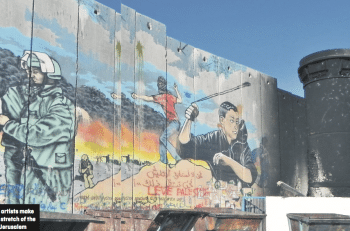
    After completing his Ph.D in the University of Pennsylvania, the former Palestinian foreign minister, Nabil Shaath, lectured in financial economics at the elite Ivy League Wharton School in the US. Among his students was a brash undergraduate named Donald Trump who did little study, flunked his exams and was expelled from the university. With the help of his very rich father, Trump was readmitted and, despite his poor academic credentials, went on to greater things. “He was not a good student. He dropped out and his academic standard did not come up to scratch. I was teaching advanced corporate finance and he flunked the courses. The idea of this man as President of the US to me shows the decline of American civilisation”. Some half a century later, Trump is leading the latest assault on the historic right of the Palestinian people to their own land, including international recognition of Jerusalem as the capital of their independent state. Last December, President Trump confirmed that he intended to move the US embassy in Israel from Tel Aviv to Jerusalem in a move that deeply angered the Arab world while elating many Israelis who have long had their sights on ultimate control of the holy city, which has been traditionally shared by Muslim, Christian and Jewish religions. The decision to move the embassy to Jerusalem was authorised by the US Congress some years ago but was put on hold by President Barack Obama, who believed the decision could only hamper efforts to find a lasting peace in the region and, in particular, the achievement of a two-state solution with east Jerusalem as capital of Palestine. For the Palestinian president, Mahmoud Abbas, and for Nabil Shaath who acts as foreign relations advisor to him, this divisive action by the Trump administration has confirmed a view they have long held privately: that the US cannot be considered as an honest broker in the search for a just solution to the Middle-East crisis, arguably one of the world’s most egregious human rights scandals. Over recent weeks, 35 Palestinian people have been killed and over 1500 injured by live rounds fired by Israeli army snipers from behind a fortified security fence erected in Gaza. Each Friday thousands of people from the besieged and almost destroyed Gaza Strip have protested for their “Right to Return” to the lands from which they and their families were expelled during the Nakba or catastrophe when the state of Israel was declared in 1948, and over the decades since. The policy of the government led by Benjamin Netanyahu and of the Israeli Defence Forces (IDF) is that the right-to-return protests must be resisted with maximum force, including by the killing of unarmed activists and the maiming of thousands. Already overstretched and under-resourced Gazan hospitals have been unable to cope with the recent slaughter, while their efforts to transfer shooting victims with serious injuries to hospitals in the West Bank have been obstructed by the IDF. Two young men who each had had a leg amputated after suffering severe bullet wounds lost their other leg after doctors were prevented by Israeli authorities from transferring them from Gaza to better-equipped hospitals for treatment. The reason they were refused access to urgent medical care in Ramallah was because their “medical condition is a function of their participation in the disturbances”, the Israeli authorities confirmed. One of the young men, Yousef Karnez, said that he was a trainee journalist and was holding a camera at the demonstration which he sought to document. “I got two bullets. One hit my left leg and crushed it and the other hit my right leg, where it gravely injured my shin. Doctors have already amputated my left leg and I am begging; I don’t want to lost my other leg,”, he pleaded in the days after he was shot in early April. A young journalist, Yaser Murtaja, who was wearing a white ‘Press’ sign on his chest during the same protest on 6t April, was shot dead by IDF snipers and wrongly accused by the Israeli defence minister, Avigdor Lieberman, of being a member of Hamas who had been operating a ‘spy drone’ before he was killed. His claims were denied by the International Federation of Journalists who said that Murtaja had worked for both national and international media over recent years including for the BBC and Al Jazeera, and that his company Ain Media had been funded by the US Agency for International Development. His production company had used drones for aerial filming and he was due to start a new job with the Norwegian Refugee Council two days after he was shot. Nabil Shaath, a Gazan, believes the people of the strip are desperate and the large ‘Right to Return’ protests are a reflection of their appalling living conditions. The electricity in Gaza, where some 2.5 million Palestinians live, is turned off for sixteen hours each day, there is no clean water, and there are severe shortages of food and medical supplies. Efforts to establish a unity government across the West Bank, east Jerusalem and Gaza which commenced last year have so far been unsuccessful due to the inability of the Palestinian Authority (PA) and Fatah (the political organisation led by President Mahmoud Abbas) and Hamas to reach agreement. At the core of their disagreement is the refusal of Hamas, which took political power in Gaza following elections in 2006, to cede control of security to a new government of Palestine. “We have a presidential system in Palestine and the President is in charge of security and foreign relations,” Shaath explains. “Hamas was elected in Gaza in 2006 by popular vote and we accepted that mandate. However, the PA remains responsible for ensuring that the people of Gaza have sufficient finance to cover the costs of education, health, water and electricity. We have now said to Hamas that we can only continue to pay the bills if they agree to complete discussions for a unity government that will include security”. This

    Loading

    Read more

  • Posted in:

    Nay to the Mayor Yayers

    In any discussion about Mayoral governance’ in Dublin there are assumptions: firstly, that it is a good thing, that it will solve lots of problems in the city; and second, that the mayor should be directly elected. We usually hear the paraphrased quote – ‘who do I ring if I want to talk to Dublin?’. We want to be able to identify who runs the place. We want someone to be running the place. Directly-elected mayors give us that. The ‘direct’ in direct election, a bit like in direct democracy, is a ‘Yay’-word. It is seen as an unarguable good. Who could not be in favour of giving people a direct say in, a direct link to, who runs the city? These assumptions ignore the relationship between central government and city government and what competencies are appropriate for the mayor, what geographical area the mayor might rule over, and the central issue of funding. They also ignore the fact that we can and do have strong political leaders who are not directly elected. There are broadly three models for city governance. One is the Council-Manager system we currently have – where the mayor has no executive powers. There’s an assumption that it is a bad thing. It certainly isn’t very democratic: it is not responsive to voters’ wishes and there are no clear links between the vote in local elections and local government policy. It’s also not very transparent – though that might be due to the absence of real media reporting of city government. It in turn might be a function of the lack of clarity in decision-making. The second model is the directly-elected mayor or Mayor-Council system. It is used in London, some other European cities, such as Rome, and about half the big US cities, including New York and Chicago. Probably because our nearest neighbour and biggest influencers adopted and use it, we naturally assume it is the one for us. But within this system, things aren’t uniform. They can be strongly mayoral or weakly mayoral – so the Council’s control of the legislative and financial functions can vary considerably. There is a third model. It is a Council system. The elected councillors appoint a mayor, who has executive functions. As with the directly-elected mayor, depending on rules, the mayor’s power can vary quite significantly. The system is quite common, used in many northern European cities, such as Amsterdam, Berlin, Stockholm and Paris. So which works best? Well I’m not an expert in local government, but even the literature doesn’t have a clear conclusion. So the short answer is, we don’t know. But I am interested in the functioning of central government, and we can think of the two models, the directly and indirectly-elected executive mayors as functional equivalents to the presidential and parliamentary systems at the national level. And there is a long debate in political science about the relative success of the two systems at delivering democratic stability, human development, and a range of other indicators of a country’s success. So which should we choose if we are to be guided by the relative performance of presidential or parliamentary systems? The presidential system, which is the system analogous to directly-elected mayor, has some advantages. Candidates are required to present a vision to the public. It puts power in the hands of one person, on the basis of popular election. That means the presidential system is clearer and appears fairer. We all know who we vote for; and the person who gets most votes becomes mayor. Unlike in parliamentary systems, there is no messing about with coalition-building based on backroom deals that aren’t transparent and over which the voters have little control. Much of the debate in parliamentary elections is about who will coalesce with whom, a debate that could be avoided in presidential-style systems. Instead the rival candidates for mayor could debate the issues facing Dubliners. The presidential system also weakens the power of parties. Many people dislike parties, and regard them as gatekeepers of political ambition. With a presidential system new leaders can emerge without having to be sanctioned by a party. This is much less likely in a parliamentary system. And at a time when people complain that government is unresponsive to their needs, and lacks leadership, the mayor could have clear lines of power to deal with the big problems. A suitably empowered mayor might be able to deal with the housing crisis in a way that the local authorities, minister and agencies can’t. The parliamentary system, that is the indirectly-elected mayor, however, has some advantages of its own. One might seem a weak one, but it might be important. We are used to parliamentarianism – it’s in our political culture. Political culture governs how we behave and are expected to behave. It changes slowly and doesn’t always respond to institutional changes – perhaps not at all, or perhaps not in predictable ways. This is important because picking systems that we are used to means we are less likely to get nasty surprises. A stronger argument in favour of parliamentarianism is the way it divides power. Politics is meant to do at least two things. It should solve collective action problems: those that make us collectively better off if we are guided to behave in certain ways than if we were left to act individually. The classic example is fishing. Individually we have an incentive to extract as many fish as we possibly can from the seas. We would over fish, making us collectively worse off when fish stocks are depleted. So we are made better off being forced to restrict our fishing. Politics is therefore also a mechanism for the resolution of conflicts, such as the fishing one. In parliamentary systems the mechanism for the resolution of conflict is negotiation, and parties representing different interests compromise, strike deals and build consensus, embracing a wide range of views in the decision. This manifests itself in coalitions, with a formal opposition offering alternative policies. In presidential systems conflict

    Loading

    Read more