• Posted in:

    SECOND UPDATE: The Irish government has become complicit in the cover-up of British Royal sexual abuse committed in the Republic of Ireland. By David Burke.

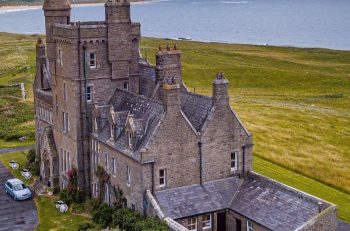
    1. The Classified Garda Files. The information provided by the brothers, John and Pat Barry, confirms that the Garda (Irish police) had a checkpoint at the gate of Classiebawn castle in August 1977. Garda security appears – by some accounts – to have been downgraded in 1979, shortly before Mountbatten was murdered by the Provisional IRA. Hence, while there might be a question mark about the existence of comprehensive Garda logs from 1979, there are no concerns about August 1977. The Classiebawn logs are the key to unlocking the sordid Kincora scandal. Boys from Kincora Boys’ Home in Belfast were trafficked to Mountbatten by Joe Mains, an MI5/6 agent who worked at Kincora. The same boys were trafficked to Loyalist paramilitaries and politicians by Mains as part of MI5 and MI6 ‘honeytrap’ blackmail operations. The Garda have shown no interest in the information at their fingertips. As far as can be told, the Government has displayed no curiosity either. The survivors of child sexual abuse deserve better. 2. Confirmation of a Garda checkpoint at Classiebawn. While the Barry brothers set out to defend the reputation of Mountbatten in their Sligo Champion interview – and did so in good faith – they have nonetheless highlighted a crucial issue about the Mountbatten-Kincora connection. It is one which could yet prove precisely the opposite of what they hoped to achieve with their interview. There is no doubt now that the Garda have a record of the registration plates of the vehicles they stopped at the gates. The existence of the Garda checkpoint was already an established fact, nonetheless, the confirmation by the Barrys is important as they  are living witnesses who can attest to its presence. It would now take a very daring – not to mention corrupt – Garda or Department of Justice official, to interfere with the files. The purpose of the interview with the brothers was to afford them an opportunity to put forward a defence for Lord Mountbatten whom they do not believe was a child abuser. John Barry, who was a boy at the time, made specific reference to a Garda ‘checkpoint’ and also that: “The guards wouldn’t have allowed some guy to come, a warden from Kincora [Boys Home in Belfast] who was supposed to have driven [child abuse victims to Classiebawn], and he was supposed to sit in the car for an hour outside the castle and let the boys in – or a boy in. And you think the guards wouldn’t have asked: ‘What are you doing here?’ No way”. His brother has confirmed the presence of Gardaí at the ‘checkpoint at the gate’. 3. Times and dates. In 2019 Andrew Lownie, author of a book about Mountbatten, sought the Garda logs taken at the checkpoint. Crucially, while the Gardaí refused to declassify the files, they nonetheless confirmed they were still in existenc.  See:  THE MOUNTBATTEN FACTOR: Boris Johnson should not bully Dublin over Brexit because the Irish Government has information which could damage the Royal Family What will the records reveal? In August 1977 Stephen Waring and another boy were abused by Mountbatten in an exterior building. They gained access to the grounds in a car which was driven through a Garda checkpoint. Waring took his own life the following November. See: SECOND UPDATE: Kincora boy abused by Mountbatten committed suicide months later. The Garda logs should contain the date and the arrival time of the car that brought Waring and the second boy through the gates of Classiebawn. They should also reveal when they left, along with the make, model and registration of the vehicle in which they were trafficked. 4. Liaison with the RUC The Kincora boys were driven to Classiebawn by Joseph Mains, the Warden of Kincora in August 1977. As a matter of routine, the registration plate of the car driven by Mains to Classiebawn would have been noted and logged. Next, the Gardaí would have sent them to Garda HQ. Then inquiries would have been made with the RUC. The RUC knew that Mains had connections to the Red Hand Commando (RHC), a Loyalist terrorist group. The Garda inquiry about the visit by Mains to Classiebawn would have raised a red flag. A senior RUC special branch officer would have taken control of the request. It is inconceivable that the Gardaí would have been told about Mains’ links to MI5/6 or the RHCs. The RUC special branch was complicit in the ‘honey trap’ operation that revolved around Kincora. Hence, the RUC undoubtedly told the Gardaí there was nothing to worry about insofar as the car driven by Mains was concerned. The RUC may even have expected a call from the Gardai and were ready for it. Rumours about Mountbatten’s involvement in the abuse of Kincora boys have circulated in security circles in Northern Ireland for decades. The Garda request about the visitor to Classiebawn in August 1977 may be at the root of the gossip. 5. A report on Mains may reside in Garda files at its Phoenix Park HQ in Dublin. The Garda inquiries that took place after Mountbatten was murdered on 27 August 1979, reached back to 1974. All of those who came into contact with him formed part of a massive inquiry. All of those who visited Classiebawn were investigated. A short report on Joe Mains may very well have come into existence as early as September 1979. Indeed, a record of his identity may have existed since his visit in August 1977 (and perhaps other visits in the 1970s). The Kincora scandal did not erupt until January 1980. Thus, when the Gardaí were making inquiries with the RUC in 1977 and/or 1979, about the car Mains drove to Classiebawn in 1977, there was no particular need to conceal his name, at least insofar as Kincora was concerned. The RUC hardly anticipated that Mains would become known as a child abuser in 1980. Mains was convicted of child abuse in December 1981. 6. 60 years

    Loading

    Read more

  • Posted in:

    Bloody Sunday murderers operated a mobile torture chamber. By David Burke.

    Introduction. The brutality displayed by David Cleary (Soldier F) and Ron Cook (Soldier G) of 1 Para on Bloody Sunday in Derry on 30 January 1972 was not an aberration. After murdering a string of unarmed civilians,  they were taken to Fort George where they beat up a group of innocent prisoners including a priest. They then returned to Belfast. What is revealed here for the first time is how they used the armoured personnel carrier or ‘pig’ assigned to them as a mobile torture chamber to electrocute people in Belfast in the weeks after Bloody Sunday. 1. Murder Cleary is alive and may yet face criminal charges for his actions on Bloody Sunday when he and Cook (who is dead) were conveyed in their ‘pig’ into the Bogside at speed. They leapt out of the vehicle and took up positions behind a low wall adjacent to a ramp on Kells Walk from where they shot Michael Kelly. Kelly was unarmed and standing at a nearby rubble barricade, a threat to no one. Cleary, Cook, ‘Corporal E’  and ‘Private H’, [the EFGH unit] moved into Glenfada Park North, where their killing spree continued. The Saville Inquiry found that Cleary or Soldier H shot William McKinney dead; also that this unit was responsible for the shot that wounded Joe Mahon;  and that either Cleary or Cook fired the shot that wounded Joe Friel. Saville opined that the EFGH unit also murdered William Wray; injured Joe McMahon, Joe Friel, Michael Quinn and Patrick O’Donnell; and possibly injured Daniel Gillespie. There was no excuse for their behaviour. According to Saville: In our view none of the soldiers fired in the belief that he might have identified a person in possession of or using or about to use bombs or firearms. Saville also found that: The last gunfire casualties were Bernard McGuigan, Patrick Doherty, Patrick Campbell and Daniel McGowan, all shot in the area to the south of Block 2 of the Rossville Flats within a very short time of each other. We are sure that Lance Corporal F fired at and shot Bernard McGuigan and Patrick Doherty, and it is highly probable that he was also responsible for shooting the other two casualties. This soldier fired across Rossville Street from the Rossville Street entrance way into Glenfada North. Cleary was a cruel, cynical and clinical killer. He shot Patrick Doherty in the buttock while he was on the ground crawling away from him. As Doherty lay crying out in pain, his life draining away from him, Barney McGuigan, an exceptionally brave and humane man, stepped forward with a white handkerchief looking to help Doherty. Cleary dropped to one knee, aimed his rifle and shot McGuigan in the head. 2. ‘Beasting’ of prisoners After the shootings, Cleary and Cook led the ‘beasting’ of prisoners at Fort George in Derry. According to a local priest, Fr Terence O’Keeffe, who was among the prisoners, G had “scary eyes” and an “almost psychotic look”. The pair “roamed” among the prisoners, stamping on their feet, kneeing them in the groin, forcing their faces up against electric heaters, spitting in their mouths and engaging in other acts of “idle brutality”. Fr O’Keeffe recalled Cook as having had “the sadistic edge” on Cleary. See also: Soldier G – real name Ron Cook – the Bloody Sunday killer with ‘the sadistic edge’ over his ‘partner’, Soldier F. By David Burke. 3. Torture and mutilation When they got back to Belfast they showed no remorse.  Byron Lewis (Soldier 027)  was a radio operator who accompanied them on their patrols. In 1975 he provided an account which was discovered by Tom McGurk in 1997. This key discovery led to the establishment of the Saville Inquiry as it constituted new evidence. Some passages from it were published in The Sunday Business Post, and later at Saville. The unpublished passages – quoted here for the first time – reveal that a few weeks after Bloody Sunday, Cleary and Cook and others were briefed by ‘Lieutenant 119’, another veteran of Bloody Sunday, for an operation at the  Divis Flats on the Falls Road. According to Lewis “several blokes”, by which he means young Catholic residents of the area were “beasted severely”.  He was in a pig parked in between the main tower and the annex 30 or 40 metres away was [Redacted] pig on waste ground among some derelict buildings. Beyond that could be seen the glow of the fires. Then I noticed [Cook] and [Cleary] running towards the pig with a bloke bent double between them. They kept him going head first into the armour plating. The bang was quite audible where I was. He was temporarily knocked out but was revived and thrown into the back of the pig. There was a purpose in hauling the prisoner to the back of the ‘pig’. Cleary and Cook had prepared it for the torture of any prisoner they brought back to it.  Lewis wrote: The most fiendish screams and squeals then let loose [Cleary and Cook] had wired [the captive] to the batteries and were electrocuting him. Lewis and his comrades in 1 Para referred to other regiments of the military as ‘crap-hats’. The ‘crap-hats’ on duty with them let the torture session continue. As Lewis has revealed: Meanwhile during this racket the [Commanding Officer] of the crap-hats had walked over to where I was standing. He remarked about what was happening. [Soldier H] and I passed it off lightly. He then went on to ask if we had been in Derry the previous month. On answering, yes, he turned and walked away with an air of turning a blind eye. This deplorable behaviour was not confined to F and G. Lewis reveals that: At this point the other pig disappeared for ten minutes. The bloke inside had been castrated, electrocuted, the features of his face sliced with a knife and generally kicked and beaten. Lt 119 was also aware of what was going on but

    Loading

    Read more

  • Posted in:

    New evidence about Bloody Friday ignored by the mainstream media. By David Burke.

    On Bloody Friday, the Provisional IRA detonated 19 bombs across the city of Belfast, killing 9 people and injuring 130 – most of whom were women and children. Paper Trail discovered secret British military logs in London and “secured their release following prolonged information battles and Public Interest Tests. The organisation made the secret files and newspaper archives available to victims and survivors – research that otherwise would have taken them years of delay and hundreds of hours of work.” One of the most interesting discoveries by Paper Trail relates to a mistake made by the Historical Enquiries Team (HET) about disputed warnings given about the bombs, one of which was at Limestone Road. The report explains that: The Limestone Road bomb exploded 36 minutes after these warnings and without the civilians in the area suspecting a bomb was in the vehicle. It is miraculous that many more civilians were not massacred at this bomb site although many suffered horrific injuries including a woman who lost both legs and a child who lost one. The HET records both of these explosions as “no-warning” bombs and that is how they were reported at the time. This is wrong and we need to interrogate why the authorities did not even attempt to clear these two specific locations. Despite the desperate actions of the British armed forces on Bloody Friday – which undoubtedly saved scores of civilian lives – the families may consider the Oxford Street Bus Station, Cavehill shop and Limestone Road explosions terrible missed opportunities to save lives. The families may also question why they and the Coroner were given false information by the authorities. It goes without saying, that the greater questions lie with the perpetrators of every explosion on Bloody Friday, the IRA. In powerful interviews with the BBC, Robert Gibson said: “The truth is something everybody deserves.” He knows there are Irish Republicans still alive today who can help the families. “I would like to know what my father and his colleagues went into that day… Were the warnings they had given inefficient?” The Paper Trail report can be accessed here:  Bloody Friday – the Missing Warnings (papertrail.pro)

    Loading

    Read more

  • Posted in:

    'God's Cop' has gone to meet his maker. He will have a few questions to answer. By Joseph de Burca.

    The article which featured Anderton was about John Stalker and a number of other honourable English police officers and soldiers who had tried to do the right thing in Ireland. The relevant section  read as follows:   The late John Stalker, the former Deputy Chief Constable of Manchester, investigated the RUC’s shoot to kill programme in Ireland in the 1980s. He discovered, for example, that the RUC and MI5 had murdered a teenage boy who had stumbled across an IRA arms dump in a hay shed. Stalker refused to back off and was stabbed in the back by his own side. The deepest wounds were those inflicted by his boss, James Anderton,  a man who believed that God spoke ‘to him and through him’. In reality Anderton became an accessory after the fact to the murder of the boy at the hay shed. Stalker was smeared by a corrupt press in Britain, linked to criminality and taken off his inquiry. The killers got away Scot free as did all of those involved in shafting Stalker. Few in Britain could have cared less. Although he cleared his name, Stalker retired from the police early a demoralised man. The photo which accompanied the article appeared and read as follows: Former Chief Constable James Anderton. He stabbed his own deputy in the back to help MI5 cover up the murder of an innocent teenager. The original article can be found here: Updated: The very best (and worst) of British.   Anderton was also a homophobe. He claimed homosexuals with AIDS were ‘swirling in a human cesspit of their own making’. According to The Guardian he ‘encouraged his officers to stalk [Manchester’s] dank alleys and expose anyone caught in a clinch, while police motorboats with spotlights cruised for gay men around the canal’s locks and bridges.’ In 2011, historian Jeff Evans told the Manchester Evening News: ‘I’ve interviewed retired officers who took part in police surveillance of public toilets, lying in the roof space watching men urinate for hours on end.’ He believed that “sodomy in males ought to be against the law”. Anderton was also a Freemason, a clandestine  organisation which rejects Christianity. How Anderton reconciled his membership of that brotherhood with his purported religious beliefs is a mystery.  “God works in mysterious ways,” he said.  Of his religion, he once boasted: “Given my love of God and my belief in God and Jesus Christ, I have to accept that I may well be used by God [in my police work].” Despite all the controversy, he was knighted in 1991 during Margaret Thatcher’s premiership before enjoying a full retirement. Patrick Walker was another criminal who never complained about what was written about him in Village. We accused him of ordering the murder of Patrick Finucane. See The D-G of MI5 who got away with the murder of Patrick Finucane has died. The article pointed out that: “Village magazine accused Walker of the murder years ago. He was named in one story which has been read more than 22,000 times. He did not sue. He did not  even seek a right of reply. His silence now condemns him.”

    Loading

    Read more

  • Posted in:

    UPDATED: Newly discovered evidence of a secret Kitson-RUC plot to safeguard the UVF. By David Burke.

    The campaign for the truth about the infamous McGurk’s bar bombing has uncovered the existence of a covert intrigue hatched by the British Army’s counter-insurgency (i.e., dirty tricks) guru, Brigadier Frank Kitson, and the RUC, to conceal the truth about the UVF’s bomb attack massacre at McGurk’s bar fifty years ago. Kitson and the RUC conspired to blame the attack on the IRA. The explosion caused the building to collapse, killing fifteen Catholic civilians—including two children—and wounding seventeen more. It was the deadliest attack in Belfast during the Troubles. The Ministry of Defence has told the campaign that it has no record of the scheme to switch blame from the UVF to the IRA. The PSNI (as successor to the RUC), is being non-committal. They undoubtedly know full well that (a) there was a secret arrangement and (b) precisely what it entailed, but don’t want to admit the deeply shameful truth. The reason for believing the PSNI knows what happened is because the Police Ombudsman for Northern Ireland has details of the secret compact. It is not prepared to provide them to the families of the deceased, at least not at this stage. What are the MoD and PSNI/RUC trying to hide? What is so controverdial that it merits a cover-up 50 plus years after the event? What are the MoD and PSNI/RUC trying to hide? What is so controverdial that it merits a cover-up 50 plus years after the event? The British Army was deployed in Northern Ireland in 1969 to protect Nationalists from organised Loyalist attacks involving attempts to burn them out of their homes. The Army was sent to their rescue. The soldiers were welcomed by the Nationalist/Catholic community. Their arrival ushered in a ‘honeymoon’ period during which relations between the Army and Catholics were harmonious, if not warm. At the time, the threat to the Army and police emanated from Loyalists. In October 1969 Loyalists rioted and murdered Victor Arbuckle, the first police officer to die during the Troubles. The honeymoon period began to peter out as 1970 dragged on. The reasons for its decline are complex, multifaceted and controversial. What is crystal clear, however, is that Brigadier (later General Sir) Frank Kitson, who had been sent to Belfast in September 1970, chose to abandon peacekeeping and go on the offensive instead. He decided he did not want to take on both Nationalist and Loyalists and opted to attack the IRA (then consisting of the Officials and Provisionals). He used ancient dirty trick tactics which he had brought up to date in colonies such as Kenya and Malaya. In a nut shell, he used Loyalist terror gangs as proxy assassins to kill IRA members. I set out the evidence that Kitson and elements within the RUC were using the UDA assassination squad commanded by Tommy Herron of the UDA’s Inner Council as proxy assassins in my recent book on Kitson. It includes a chapter on Herron and one of his top killers, Albert ‘Ginger’ Baker. If the UVF attack on McGurk’s had sparked  the internment of the UVF, it was likely that figures in the UDA such as Herron and Baker would have become targets too. When internment was introduced in August 1971, Kitson’s Loyalist cats’-paws were not interned. The McGurk’s bar bomb atrocity of December 1971 – four months later – threatened to change this set of affairs. Had the truth about the bomb attack emerged, i.e. that the UVF was responsible for the bomb in the bar – not the IRA, it would have amplified calls to intern members of the UVF and UDA. Who would carry out Kitson’s assassination programme if the Army and RUC were ordered to intern Loyalist gunmen? At the time, Kitson and the SAS were also training a secret army, the MRF. Its personnel were drawn from the Army. The MRF had an assassination wing. When the MRF was deployed on shoot to kill missions in 1972, they wore civilian clothing thereby inviting the public to conclude they were Loyalist terrorists when the circumstances so demanded. If Loyalists were to be interned in a widespread and effective manner, it had the potential to strip the MRF assassins of their cover i.e., the public perception that MRF hits were the work of the UVF and UDA. Overall, the McGurk bar bombing was a threat to Kitson’s various lethal strategies. Hence, the McGurk attack was portrayed as an IRA ‘own goal’. Kitson, a black propaganda expert, saw to it that the attack was blamed on a non-existent IRA unit which was meant to have carried the bomb into the pub en route to its final destination, but that it exploded prematurely. Kitson knew that this was a lie. Kitson’s template for the exploitation and manipulation of Loyalist gangs as proxy assassins was pursued for three decades by MI5, the MRF, RUC Special Branch, the FRU and a host of other secret departments. The UVF was deeply involved in these clandestine programmes. Robin ‘the Jackal’ Jackson of the UVF featured prominently in collusive murders during the 1970s and 1980s. The newly discovered Kitson-RUC arrangement by the McGurk’s bar bomb campaign for justice threatens to reveal some of the early roots of this practice. UPDATE 2 May 2022: The following information is from a press release from the campaign for the truth about the McGurk’s bar massscre Chief Constable Snubs Massacre Families and Withholds Evidence The Chief Constable of Police Service Northern Ireland has yet again snubbed the families of the McGurk’s Bar Massacre despite a protest at the Policing Board to mark the 50th anniversary of the atrocity and an official request to meet with him. Instead, a police representative of the Chief Constable has informed the families that PSNI is withholding critical evidence of the police and British Army cover-up of the massacre. On 2nd December 2021, families of those killed and injured in the McGurk’s Bar Massacre were left out in the cold at the Policing Board when Chief Constable Simon

    Loading

    Read more

  • Posted in:

    Lord Widgery, the judge who covered-up the murders of Bloody Sunday. How and why he did it.

    By David Burke. This article was first published on 2 July 2021. It is republished to mark the 50th anniversary of the publication of Lord Widgery’s infamous report which defamed the victims of Bloody Sunday and exculpated those who murdered them. 1. Brigadier Frank Kitson subverts the law. Brigadier Frank Kitson of the British Army was a so-called counterinsurgency guru. He was sent to Northern Ireland in 1970 to tackle the IRA. The following year his astonishingly indiscreet book, ‘Low Intensity Operations’ was published. In it he explained that there were two ways of administering the law during a counterinsurgency, the first one being that: the law should be used as just another weapon in the government’s arsenal, and in this case it becomes little more than a propaganda cover for the disposal of unwanted members of the public. For this to happen efficiently, the activities of the legal services have to be tied into the war effort in as discreet a way as possible … The other alternative is that the law should remain impartial and administer the laws of the country without any direction from the government. [Kitson (1971), p. 69.] The first tribunal investigating the events of Bloody Sunday – Widgery – is a good example of how the law was used as “just another weapon in the government’s arsenal”. On Monday 31 January 1972, Tory Home Secretary Reginald Maudling announced in the House of Commons that there would be a judicial inquiry into the Derry massacre. That evening British Prime Minister Ted Heath and Hailsham, his Lord Chancellor, asked Lord Chief Justice Widgery to chair it. Widgery had been a surprise appointment as Lord Chief Justice of England and Wales by the Tories the previous year. He was not viewed as a jurist of the first rank by his peers. His career was one which would ultimately descend into bedlam. Private Eye magazine would report that “he sits hunched and scowling, squinting into his books from a range of three inches, his wig awry. He keeps up a muttered commentary of bad-tempered and irrelevant questions – ‘What d’you say?’, ‘Speak up’, ‘Don’t shout’, ‘Whipper-snapper’, etc”. [Private Eye Issue 436, 1 September 1978.] These comments were published two years before he stepped down from the bench. The view expressed by the Eye is reflective of Widgery’s reputation for having been ‘difficult’ by members of the Bar in Britain. ‘Difficult’ in this context is a polite euphemism. Widgery was despised by the legal profession which viewed him as a second rate political appointee who strove to conceal his shortcomings in the traditional manner of the lower tier judge:   by hectoring, pelting and bullying. 2. Judicial compromise The night before Heath asked Widgery to conduct an inquiry, he had expressed his belief to Taoiseach Jack Lynch that Kitson’s paratroopers had behaved properly in Derry. If Heath truly believed what he had said to Lynch, he had an unusual way of showing it. He chose Widgery – a safe pair of hands – and left him in no doubt that he was to pervert the course of justice. At the meeting on 31 January Heath told Widgery that it “had to be remembered that we were in Northern Ireland fighting not only a military war but a propaganda war”. It is hard to conceive of a more compromising comment made by a British prime minister to a senior member of the judiciary, let alone the man at its pinnacle. No matter what way one looks at it, the comment demonstrates a breath-taking lack of esteem on the part of Heath for the independence of the judiciary. Yet Widgery did not rise to his feet and leave the room in protest. Instead, he did what his master bid him to do. 3. An Allegedly Independent Judge pre-judges the Murder Victims by Attending a Meeting at which they were referred to as ‘the other side’ At the same meeting at which Heath had given Widgery his riding orders, the parties to the discussion had also referred to the victims as the ‘other side’. [Para (viii) of minute of meeting of 31 January 1972.]  Moreover, according to confidential notes by a Widgery associate, the “LCJ” [Lord Chief Justice] could be counted on to “pile up the case against the deceased” even though the evidence provided “a large benefit of the doubt to the deceased.” [‘Hidden Truths’ (1998), p. 95. 4. Threats to Muzzle the Ever Compliant British Media In the days after the massacre, the journalist Murray Sayle and his colleagues completed a report which was submitted to the Sunday Times. There was internal opposition to its conclusion, namely  that Colonel Derek Wilford,  who had led 1 Para in Derry on Bloody Sunday, had set out to provoke the IRA into coming out into the open so his troops could wipe them out. Harold Evans, the editor of the paper, decided to ring Widgery. “I said we had done a great deal of interviewing and proposed to publish this Sunday. We also had compelling photographs. I told him I presumed contempt would not apply since nobody had yet been accused. It would be an exaggeration to say he was aghast, but he made it very clear it would be ‘unhelpful’ to publish anything and yes, he would apply the rules of contempt. .. I withheld the article, but that week I took the chance of publishing the shocking photographs by Gilles Peress of unarmed men being shot”.  [Harold Evans,  ‘My Paper Chase, True Stories of Vanished Times’ (Little, Brown and Co, New York, 2009), p 474.] On Sunday 6 February, the paper reported that, “The law is that until the Lord Chief Justice completes his enquiry nobody may offer to the British public any consecutive account of the events in Derry last weekend”. [Sunday Times 6 February 1972.] Heath’s press office rowed in declaring that anything which anticipated the Tribunal’s findings would amount to contempt. This was a highly contentious assertion without

    Loading

    Read more

  • Posted in:

    Updated: The very best (and worst) of British. Simon Danczuk is one of a number of courageous British individuals who has tried to tell the truth about British government crimes in Ireland. He joins the ranks of Colin Wallace, Fred Holroyd, John Stalker, Byron Lewis and John Stevens

    Dolphin Square VIP sex abuse. Dolphin Square was opened in London’s Pimlico in 1936. It soon became a magnet for all sorts of scandal and intrigue:  espionage, political, sexual, not to mention mysterious deaths. ‘Scandal at Dolphin Square’ provides a riveting account of the lives of a rolling maul of fascinating and complex characters. As publicity for the publication accurately proclaims, it was ‘a place where the private lives of those from the highest of high society and the lowest depths of the underworld have collided and played out over the best part of a century’. It was also a cesspit where Prince Andrew’s friend Lord Greville Janner abused children. The two most important chapters in the book, both of which describe the activities of members of a VIP child abuse network, have been ignored by the British press. Cut from the same cloth: the Russian and British press Consumers of the media in the UK, have no appreciation of the extent to which they are kept in the dark about British Establishment scandals. They are completely unaware of the role Buckingham Palace played in suppressing the Jeffrey Epstein scandal for years before it broke in the US media. See: Palace of Discord and Deception. [Updated] Prince William’s officials covered-up his uncle’s involvement in the Epstein-Maxwell sex trafficking scandal. By Joseph de Burca. At the moment, many in Britain are exasperated at the ignorance of the ordinary Russian citizen who is misled by a corrupt Putlin-led media spouting nonsense about Nazism in the Ukraine. If the average Brit knew about what has been going on in Ireland, he and she might not laugh with such disdain at the typically ignorant Russian newspaper reader. The Dolphin Square book will help open a few eyes in Britain about the wretchedness of their ruling classes. However, before I return to Dolphin Square, it may be helpful to look at a few examples from recent history to understand the wider picture which explains how the ordinary British newspaper reader has been left to wallow in ignorance about British establishment crimes in Ireland. The tactic is: injure, insult and ignore. There is a deep well of hurt in Ireland felt by many as a result of the lethal misbehaviour of the British army and intelligence services on this island, a history now more than fifty years in being. Fresh evidence of transgressions continue to emerge with depressing regularity. In recent times, they include reports from the Northern Ireland Ombudsman about collusion between Loyalist paramilitaries and the State involving the murder of Catholics, many of them non-combatants who were simply in the wrong place at the wrong time. The murder of Irish citizens by British State actors is no more news in Britain than Putin’s war crimes in the Ukraine are for ordinary Russians. Astonishingly, there was little or no coverage of the fact that the State paid out £1.4 million to the families and survivors of the Miami Showband massacre. There has been – and continues to be – a pattern of State sponsored injury followed by insult. The insult takes the form of the cover-up after the event. If the cover-up falls apart, then the British press and TV go into ‘ignore’ mode. John Stalker who refused to back down when he discovered RUC-MI5 murder of a teenager. It cost him his career. The late John Stalker, the former Deputy Chief Constable of Manchester, investigated the RUC’s shoot to kill programme in Ireland in the 1980s. He discovered, for example, that the RUC and MI5 had murdered a teenage boy who had stumbled across an IRA arms dump in a hay shed. Stalker refused to back off and was stabbed in the back by his own side. The deepest wounds were those inflicted by his boss, James Anderton,  a man who believed that God spoke ‘to him and through him’. In reality Anderton became an accessory after the fact to the murder of the boy at the hay shed. Stalker was smeared by a corrupt press in Britain, linked to criminality and taken off his inquiry. The killers got away Scot free as did all of those involved in shafting Stalker. Few in Britain could have cared less. Although he cleared his name, Stalker retired from the police early a demoralised man. Byron Lewis, intimidated and vilified for telling the truth about Bloody Sunday David Cleary (better known as Soldier F) was responsible for a large number of the killings which took place on Bloody Sunday in Derry in 1972. Byron Lewis was beside him on the day of the massacre. Lewis killed no one – he was a radio operator. The journalist and broadcaster Tom McGurk conducted an investigation into Bloody Sunday and uncovered a written account by Lewis. He published it in The Sunday Business Post in Dublin. Privately, he supplied additional information to the Irish Government. This, finally, provided the ‘new evidence’ the British government required to establish a fresh inquiry. And what happened to Lewis? Although McGurk was careful not to name him, his identity was leaked – probably by the Ministry of Defence in London to a gang of soldiers who tried to persuade him not to talk to the Savile Inquiry. The soldiers found where he was living. In a case of mistaken identity, his housemate was beaten so badly he was taken to hospital. That same night Lewis’ life was threatened and he had to go into hiding. When he appeared at the Saville Inquiry, attempts were made to tear his character apart. Lewis has never emerged from hiding. And what of Cleary? The British government of Boris Johnson is presently trying to enact legislation so that he and others like him will not have to face murder charges. Fred Holroyd: smeared and vilified for exposing Robert Nairac and the Dublin  and Monaghan bombers of 1974 When Fred Holroyd, a former undercover British soldier, refused to go along with MI5’s murderous collusion with Loyalist paramilitaries in

    Loading

    Read more

  • Posted in:

    Village Editorial: NI Institutional Abuse apology is meaningless because the extent to which MI5 used Kincora to compromise senior figures remains uninvestigated.

    After an inexplicable delay of five years, the public apology recommended in the final report of the Historical Institutional Abuse Inquiry will finally be made by the Northern Ireland Assembly (on 11 March). The announcement of the apology has been received with little enthusiasm by some of the abuse victims who say that they will not attend the event because it is “insincere and futile”. Understandably, some Kincora victims believe that the announced apology and the decision to demolish the Kincora Home will now be used by the authorities in a futile attempt to draw a line under the abuse allegations that linked British Intelligence with what happened at that establishment. The victims also feel that the apology will be totally meaningless, if the role of senior Government officials and Intelligence officers in deliberately inhibiting the setting up of a much preferred judicial tribunal, as allowed by the Tribunals of Inquiry (Evidence) Act, 1921, into such abuse is not now admitted by the relevant Government departments as part of the apology.  So far, there is no indication that any such admission will be forthcoming.  It is also believed that there will be no apology made on behalf of MI5 and other Intelligence agencies for misleading the British Parliament about abuse issues and for obstructing past investigations. The concerns of the victims are understandable given the abysmal record of dishonesty by past Inquiries.  Bearing in mind the threat to democracy posed by unelected officials unduly influencing elected politicians, it is important to examine how past Inquiries were manipulated for the benefit of the Intelligence Services and at the expense of the victims. The concerns of the victims are understandable given the abysmal record of dishonesty by past Inquiries.  Bearing in mind the threat to democracy posed by unelected officials unduly influencing elected politicians, it is important to examine how past Inquiries were manipulated for the benefit of the Intelligence Services and at the expense of the victims. When the HIA Inquiry was set up Prime Minister David Cameron and Home Secretary Theresa May assured Parliament that “no stone would be left unturned” in establishing the truth about the abuses. In a letter to one Member of Parliament, Theresa May stated: “I want to take this opportunity to make it absolutely clear that all officials, Government departments and agencies will give their fullest possible cooperation to his Inquiry. This includes the Security Service and the Ministry of Defence, if it transpires they have any relevant information to share”.  Theresa May’s letter was triggered by a report in the Belfast Telegraph on 1 August 2014, which said: “Retired judge Sir Anthony Hart, who is leading the Historical Institutional Abuse Inquiry (HIA), has said the inquiry “does not have sufficient powers” in its present form to investigate issues relating to the Army or MI5“. Sadly, despite Sir Anthony Hart’s publicly admitted concerns, Theresa May gave him no added powers and his Inquiry was doomed to failure.  In the light of the failures of the earlier Terry and Hughes Inquiries, Sir Anthony Hart must have known that he had been given a ‘poisoned chalice’.   For example, despite what Theresa May said, a telex message from MI5 staff at the Northern Ireland Office on 5 August 1982 to MI5’s Legal Adviser, Bernard Sheldon, in London, restating a general directive by the Director General of MI5, made it clear that: “no serving or former member of the Security Service should be interviewed by the police”. Sir Anthony Hart must have been aware that the Terry Inquiry, which was established by James Prior in 1982 and led by Sir George Terry of the Sussex Police, misled Parliament by failing to disclose that a senior MI5 officer at Army HQ NI, Ian Cameron, had ordered an Army Intelligence Officer, Captain Brian Gemmell, to stop investigating allegations of sexual abuse by William McGrath at Kincora.  Moreover, contrary to what James Prior told Parliament, Sir George was not a truly ‘independent’ chief constable. Records now show that he was actually “the preferred choice of Sir John Herman”, Chief Constable of the RUC, whose officers had been accused of covering up the Kincora abuse!  Had Parliament been told the full truth about these matters, a public inquiry would, almost certainly, have been inevitable. It is also likely that Sir Anthony Hart would have known that, during the Terry Inquiry, senior officials at the Northern Ireland Office had stated in one report that the Director and Coordinator of Intelligence at Stormont (Hal Doyne Ditmas MI5):  “..was worried about the likely intrusion of the inquiry into Intelligence matters if the terms of reference were as wide as those we had in mind.  He went on to say that “at least two possible witnesses who could come forward (i.e. Fred Holroyd and Colin Wallace) with evidence which (unless restrictions were imposed on what could be said) might touch directly on the extent to which the Intelligence services were or were not aware of homosexuality in this area, and might reveal (perhaps gratuitously) information about the structure and range of activities of these services at the time in question.  Names might be mentioned“. According to official records, the DCI: “.. was also concerned about what would be said about the secret work very close to extreme Protestant organizations, and close therefore to some politicians.  If these activities were to be revealed – through a leak if not through a public session of the inquiry – there could be a brisk reaction”. To cater for the DCI’s concerns, the NIO officials believed the Secretary of State for Northern Ireland “might want to suggest” to the Home Secretary and the Attorney General that  “an inquiry limited to the child care aspects (presumable therefore under the NI Powers, not the 1921 Act), or a 1921 inquiry with limited terms of reference“. That proposal by a senior official is appalling given the assurances that Theresa May and David Cameron had given Parliament.   It is very clear that MI5 was not only

    Loading

    Read more

  • Posted in:

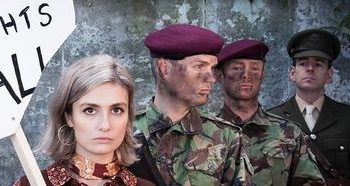
    Shot at by a handkerchief. A review of 'One Para' at the New Theatre, Dublin. By David Burke

    When Stephen Spielberg was making ‘Schindler’s List, in the early 1990s, he invited some of the Holocaust survivors who had been saved from the gas chambers by Oscar Schindler onto his movie set. The guests mingled with the actors and crew during a break. Amid all the lights, the electrical wires criss-crossing the set,  the extras who were playing the SS chatted amicably with each other. Someone noticed something odd: the SS group – and they alone – were being shunned by Spielberg’s special guests, the survivors. This was because the extras looked so much like the real thing, they exuded a cruelty that, nearly half a century later, disturbed the visitors. I felt something similar watching  the actor playing Sergeant Hutton of 1 Para during Gerard Humphrey’s riveting new play about Bloody Sunday, ‘One Para’ at the New Theatre. Andrew Kenny plays a foul mouthed, racist bigot who bullies one of his more junior colleagues, Scarrif, urging him to shoot at the unarmed and harmless civil rights marchers in the Bogside. His bragging about his colonial exploits in 1 Para is a whirlwind education in the crimes committed by men like him. Every so often he cracks a crass joke or make a jibe that should make the audience wince but something more disturbing happens: there is nervous laughter. The audience out in the dark is cowed by Hutton. If you want to know what Stockholm syndrome is like, go and see this play. Sergeant Hutton on internment and the Ballymurphy massacre: We sorted Belfast out in one night… You saw the photos put up on the wall in the corporal’s mess. .. we swept down the Black Mountain straight into Ballymurphy and shot forty bogwogs – we wasted eleven of them. Victor got himself a priest and all. He won the regimental sweepstake! The UDR wallahs told him he should put in for a bounty! While the menace and darkness of this 75 minutes play shoots at the audience through the mouth of Kenny, the piece works because each cast member hits their target dead centre. The overarching ingredient, however, is the crisp dialogue Gerry Humphreys places in their mouths. He manages to convey the complexities of  Brigadier Frank Kitson, the MRF death squads, the Ballymurphy and Bloody Sunday massacres with rapid fire shots of succinct dialogue that hits you in the solar plexus. He has a genius for boiling down the complex into brilliant historical one liners. When Hutton is asked about his actions by a military police officer he barks: “I am a professional soldier. If I had not shot – I truly believe he would have shot me! The military police officer snaps back at him: With a handkerchief? Humphreys sprinkles the script with the occasional piece of humour to lighten the brutal dialogue, but he does so with such subtlety and deftness that he never once crosses the line or disturbs the equilibrium of what is a deadly serious issue. One Para is directed by Anthony Fox. The set design is by Robert Ballagh. The show continues until the weekend. If you can, catch it. The run comes to an end on Saturday. OTHER STORIES ABOUT BLOODY SUNDAY, THE BALLYMURPHY MASSACRE, BRIGADIER FRANK KITSON AND COLONEL DEREK WILFORD ON THIS WEBSITE: Bloody Sunday: Brigadier Frank Kitson and MI5 denounced in Dail Eireann   The covert plan to smash the IRA in Derry on Bloody Sunday by David Burke Soldier F’s Bloody Sunday secrets. David Cleary knows enough to blackmail the British government. Learning to kill Colin Wallace: Bloody Sunday, a very personal perspective Lying like a trooper. Internment, murder and vilification. Did Brigadier Kitson instigate the Ballymurphy massacre smear campaign? Where was Soldier F and his ‘gallant’ death squad during it? Another bloody mess. Frank Kitson’s contribution to the wars in Afghanistan and Iraq. 300,000 have died in Afghanistan since 1979. Lying like a trooper. Internment, murder and vilification. Did Brigadier Kitson instigate the Ballymurphy massacre smear campaign? Where was Soldier F and his ‘gallant’ death squad during it? A Foul Unfinished Business. The shortcomings of, and plots against, Saville’s Bloody Sunday Inquiry. Kitson’s Private Army: the thugs, killers and racists who terrorised Belfast and Derry. Soldier F was one of their number. Soldier F and Brigadier Kitson’s elite ‘EFGH’ death squad: a murderous dirty-tricks pattern is emerging which links Ballymurphy with Bloody Sunday. A second soldier involved in both events was ‘mentioned in despatches’ at the behest of Kitson for his alleged bravery in the face of the enemy. Mentioned in Despatches. Brigadier Kitson and Soldier F were honoured in the London Gazette for their gallantry in the face of the enemy during the internment swoops of August 1971. Soldier F, the heartless Bloody Sunday killer, is named. Mission accomplished. The unscrupulous judge who covered-up the Bloody Sunday murders. Soldier F and other paratroopers have been protected by the British State for five decades. None of them now face prosecution. This perversion of justice began with the connivance of the Lord Chief Justice of England and Wales, John Widgery, a former British Army brigadier, Freemason and oath-breaker. Counterinsurgency war criminals, liars and cowards: Kitson and Wilford, the brigadier and colonel who led the soldiers who perpetrated the Ballymurphy Massacre. Brigadier Kitson’s motive for murdering unarmed civilians in Ballymurphy. The McGurk’s Bar cover-up. Heath’s Faustian pact. How a British prime minister covered up a UVF massacre in the hope of acquiring Unionist votes to enable the UK join the European Economic Community, the forerunner of the EU.

    Loading

    Read more