• Posted in:

    Scappaticci, MI5 and the murder of a Westminster MP. The stench of death associated with the Kincora scandal is heady. By David Burke

    The stench of death associated with the Kincora child sex abuse scandal is heady. It includes the murder of a Westminster MP by an MI5 agent inside the IRA. The murderous agent was Alfredo ‘Freddie’ Scappaticci. The victim was Robert Bradford, a member of the Ulster Unionist Party and the Vanguard Progressive Unionist Party. He represented Belfast South. The death of Scappaticci earlier this year shut the door on the last realistic opportunity to solve Bradford’s murder.  Operation Kenova, which has been probing the Scappaticci scandal for seven years, and has cost approximately €40,000,000, is unlikely now to establish what took place. The killing was linked to the cover-up of the Kincora Boys’ Home scandal. There are other murders which are associated with Kincora. One of the most significant Loyalist terrorists of the period 1968-82, was John McKeague, a paedophile. He knew all about Kincora. McKeague was murdered by British agents when he threatened to spill the beans on the scandal. William McGrath, who was the ‘housefather’ at Kincora, was a British agent. He was involved in the clandestine importation of arms for Loyalist terrorists, including his own paramilitary organisation, Tara. Many people were shot dead due to the arms smuggling efforts of British agents inside Loyalist paramilitary circles such as McGrath. The cascade of death connected to Kincora did not end with murder. Sex-abuse victims committed suicide. One Kincora boy took his life after being violated by Lord Louis Mountbatten. Rishi Sunak’s proposed legacy legislation, if passed, will help conceal the full extent of State-Loyalist collusion, some of which was linked to McGrath. 1. Honey Trap MI5 and MI6 ran a ‘honey trap’ operation at Kincora Boys Home, a residence in Belfast for boys, aged 14 years and upwards, in the 1970s. Residents were trafficked to Loyalist politicians and paramilitaries, as well as VIPs, for sexual abuse. Some were molested at the home, others at hotels such as the Europa, Girton Lodge and Park Avenue in Belfast, as well as the Queen’s Court in Bangor. ‘Kompromat’ or dirt was collected about politicians and paramilitaries. Some were blackmailed into working for the intelligence services. The British Establishment applied a double coat of whitewash over Kincora in an attempt to cover up the full extent of this scandal decades ago. A lot – but not all of it – has been peeled away by survivors, whistleblowers and obstinate truth-seekers. 2. Driven to suicide Eric Witchell is a paedophile. He now lives in London. In the 1970s he ran Williamson House in Belfast where he preyed on pre-pubescent boys and young teenagers. He and his accomplices drove at least three of them to commit suicide; another two to attempt it. A select few were transferred to Kincora when they reached 14. Witchell was not interviewed by any of the various inquiries into Kincora. Stephen Waring, one of the residents of Kincora, ran away from the home in November 1977, a few months after being abused by Lord Mountbatten at Classsiebawn, County Sligo. Waring made it as far as Liverpool where he was captured and put on the Ulster Monarch car ferry destined for Belfast. He never made it home. Apparently, he jumped overboard to his death. His body was never found. The Garda have retained the security logs which record the visitors to Classsiebawn in 1977  but have declined to disclose them to me and Andrew Lownie, Mountbatten’s biographer. They undoubtedly record the arrival of Joe Mains, the Warden of Kincora, in a vehicle with boys, including Waring, who was seated in the rear. I am frankly aghast that the Irish government – which could intervene – has no interest in helping the survivors of sex abuse committed in Sligo by ordering Garda Commissioner Drew Harris to release the security logs. 3. A dismembered child’s body in the Lagan Brian McDermott, aged 10, disappeared from Ormeau Park on 3 September 1973. Part of his dismembered and charred body was found in a sack in the River Lagan a week later. The RUC discovered evidence that he was abducted and murdered by Alan Campbell, a founding member of the DUP. Campbell was also in Tara, a Loyalist paramilitary organisation, and was a friend of the paedophiles who ran Kincora. Colin Wallace, who worked at the British Army’s HQ at Lisburn, has told Village that the British Army, which had an interest in Tara, was alerted by the RUC that they were about to arrest Campbell. Then, suddenly, the police were ordered to stand down. Only the Northern Ireland Office (NIO) possessed that sort of authority. The security apparatus of the NIO was run by MI5 and Ministry of Defence officials. The manoeuvre ensured that the Kincora ‘honey trap’ operation did not unravel at that time. Significantly, Campbell was a British agent. Authors Jack Holland and Henry McDonald, referred to him as the ‘Demon Preacher’ in their books, describing him as an obvious British agent. Campbell and his cabal are suspects in the abduction of four other Belfast boys whose bodies were never recovered: Jonathan Aven, age 14, who disappeared on 20 September 1969; David Leckey, aged 12, who went missing on 25 September 1969; Thomas Spence, age 11, and John Rogers, aged 13, who both vanished on 26 November 1974. Had the RUC been permitted to arrest Campbell, it is probable that young Spence and Rogers would still be alive today. The BBC commissioned a documentary about the disappearance of these boys. It was completed in 2021 and entitled, ‘The Lost Boys of Belfast’. It was intended to be broadcast in May 2021 but was pulled by management. It is not certain if it will ever be aired. It uncovered evidence of MI5 involvement in the protection of Campbell and the Kincora cabal. RUC officers went on record in front of the cameras. Campbell was not interviewed by any of the various inquiries into Kincora. 4. The gunrunning operations of the ‘housefather’ of Kincora, William McGrath Colin ‘Jay’ Wyatt, joined Tara following the

    Loading

    Read more

  • Posted in:

    Kincora, an Orwellian child abuse nightmare at the BBC. By David Burke.

    Introduction. Chris Moore, formerly a reporter with  BBC NI, was among a small group of – genuinely – courageous journalists who put their lives and careers at risk by reporting the hard truth about the Kincora child abuse scandal when it first erupted in the 1980s. He has never stopped. Moore has posted a story on Ed Moloney’s ‘Broken Elbow’ website. It blows the lid on the attempts by MI5, the RUC and management at the BBC, to suppress vitally important facts about the scandal. 1. A ‘honey trap’ baited with children. Put simply MI6, MI5 and the RUC special branch ran Kincora and other homes as ‘honey traps’ to ensnare and blackmail Unionist politicians and paramilitaries who abused children. Kincora is arguably the worst scandal of the entire Troubles. Children were abused for decades at a variety of care homes and Portora Royal College. The abuse was organised by Stormont civil servants and politicians (such as Joss Cardwell MP) as well as by figures at the level of local authority, and by court officials (such as Ken Lamour). Joe Mains, the Warden of Kincora, was close to Loyalist terrorists such as John McKeague. William McGrath, was placed in the home as ‘housefather’ in June of 1971 – most likely by Sir Maurice Oldfield of MI6. McGrath was close to Paisley, the UVF and UDA. He was also an arms smuggler and commander of Tara, yet another paramilitary group. Mains and McGrath trafficked the boys to Loyalist terrorists and politicians. MI5 recorded sex sessions at the Park Avenue hotel in Belfast and elsewhere. The RUC special branch protected these operations. Loyalist killers were recruited via blackmail to murder on behalf of MI5. Politicians were compromised. VIPs such as Lord Mountbatten and other VIPs such as James Molyneaux MP, enjoyed access to a steady supply of vulnerable children. Hence, we have: child abuse, blackmail, the subversion of democracy, perversion of the course of justice, state sponsorship of terrorism, gunrunning, State malfeasance and murder, all rolled up into one compond of evil. After the scandal erupted, more crimes took place: police cover-ups, attacks on the freedom of the press, interference with the charter of the BBC, the intimidation of witnesses, perjury on an industrial scale at various inquiries, the misleading of Parliament, the forgery of documents and murder (McKeague was assassinated by British agents inside the INLA). This is why the Kincora scandal will not go away. This is why files on Kincora are to be locked away for decades yet. Kincora was so evil, the British state will never be able to admit the truth. It is simply too embarrasing. It would destroy Britain’s reputation around the globe if it came clean, even now. The British Royal family and the Conservative Party would sustain considerable reputational damage. Moore’s article, however, shines a considerable amount of light on the sordid Kincora cover-up. 2. An honest cop in the RUC. A particularly shocking passage in Moore’s article describes the role of ‘David’, an officer of the RUC, who discovered what was going on at the home five years before the Irish Independent finally brought the scandal to light. ‘David’ was quite clearly a diligent and honourable cop. If only there had been more like him in the RUC, a lot of children would have escaped the clutches of the Kincora paedophiles. Instead, the RUC was dominated by indisputably evil men who let the child abuse continue, and then covered-up the State’s role in this shameful scandal. 3. The Police Ombudsman of Northern Ireland In September 2022 the Police Ombudsman of Northern Ireland published a report which confirmed that the RUC knew about the abuse at Kincora yet failed to halt it. The excuse put forward for the RUC’s failure to intervene was that they were over stretched. Moore demolishes that myth. David had done all the work. Moore describes how: David’s inquiries led him to Kincora.  He began to watch Kincora.  He built up a profile of people coming and going at Kincora who had no legitimate business in going into the building.  He told me he took photographs of individuals; captured car registrations and identified the owners. Among those he says he positively identified were Justices of the Peace; two police officers; businessmen and two Englishmen who were officials from the Northern Ireland Office based at Stormont. The Kincora scandal is one of the darkest stains on the reputation of the RUC. ‘David’ is the only RUC figure to emerge from it thus far with his honour intact. 4. MI5’s Ministry of Truth. The machinations at the BBC to destroy Moore’s relationship with ‘David’ were nothing less than Orwellian. Moore describes how: David said he had been hauled over the coals because one of my superiors in the BBC had allegedly informed an Asst. Chief Constable that David was my source and had identified him by name. Wow! Really? If David was correct, in my first ever investigative story I had been betrayed by someone within my place of work and who had also betrayed the principle of source protection adopted by journalists. I learned a painful lesson about trust. I thought I knew who had given up my source but never confronted that individual. Just learned an important message about trust! Understandably David severed all communication with me.   With his disappearance from my life went all the material he had gathered and which he said he might hand over to me someday as it was obviously extremely relevant to Kincora.  So if the aim was to kill off any prospect of a Kincora story emerging, it was now gone.  Dead in the water, as they say.  Somehow someone had managed to close down this potentially harmful information about Kincora.” 5. Moles at the Beeb. MI5 ran a secret office at the BBC in London from where it exerted a malign influence over the corporation. Moore’s revelations indicate it had a firm grip over key decision makers in BBC NI too. The assistant D-G of the BBC in the 1980s, Alan Protheroe, had links to the intelligence services, as did others.  The corporation employed many ex-Ministry of

    Loading

    Read more

  • Posted in:

    The covert British Army “ambush observation post” near to McGurks Bar. By David Burke.

    The Information Commissioner’s Office has just upheld a complaint about the infamous bombing of McGurk’s bar in Belfast. The complaint was made against Police Service Northern Ireland (PSNI). It concerned the discovery of the covert British Army “ambush observation post” in the vicinity of McGurk’s Bar on the night of the Massacre. The overwhelming odds are that the post was manned by a unit of the notorious MRF on the night. The MRF was a covert unit set up to confront the IRA by Brigadier (later General, Sir) Frank Kitson. It engaged in surveillance and assassination. The British state has been – and continues to be – severely embarrassed by the actions of the MRF. It has denied for decades that it had an assassination role. Whenever the MRF has been attacked in the press, the defence raised by the British state is that it was little more than an organisation that engaged in the surveillance of suspected terrorists. When an organisation lies for decades, one can – I hope –  be forgiven for becoming cynical and suspicious. I am deeply suspicious about the lies the British State has been spewing about the observation post which was located near McGurks bar and another licensed premises allegedly frequented by members of the Official IRA. My concerns are heightened by the fact the British state has been lying about every facet of the McGurk atrocity for decades. A detailed  account of some of this deception can be found by clicking this link The McGurk’s Bar cover-up. Heath’s Faustian pact. How a British prime minister covered up a UVF massacre in the hope of acquiring Unionist votes to enable the UK join the European Economic Community, the forerunner of the EU. In summary, a UVF gang planned to attack a pub which they believed was frequented by Official IRA volunteers. The plan was thwarted by the presence of guards who were posted outside the pub. The bombers opted instead to attack McGurk’s bar which was nearby. Eleven people were killed. Kitson and the RUC went into cover-up mode immediately. For reasons which appear perplexing – at least on the surface – they pretended that the bomb was one made by the IRA which had exploded prematurely inside the building; moreover, that the bomb was in transit, the intention to attack another venue entirely. The cover-up was expansive. It employed numerous individuals on both sides of the Irish Sea. Propagandists (probably Hugh Mooney of the infamous IRD) prepared scripts containing questions and answers for a recital of lies to be performed in the House of Commons. It is impossible to think of a more blatant attempt to mislead Parliament than this. Boris Johnson’s deceit pales in comparison. The organisation, Paper Trail, has shown that not only was this deception executed, but that additional scripts were prepared. The extra lines were not spoken as the public had swallowed the deception that the attack was an IRA ‘own goal’. The Tory Party and Official Unionist party, then led by Brian Faulkner, had a motive for disseminating the fiction about the IRA ‘own goal”: they did not want public pressure brought to bear on the Tory government to intern Loyalist paramilitaries. At the time, the British government was interning Republicans but not Loyalists. (Internment was arrest and detention without trial.) For decades, the families of the victims have called upon the British government to release all of the files they have about the atrocity. Nothing less than a full judicial inquiry is merited. Britain will not do so voluntarily. If the proposed legacy legislation is defeated, US Congressional pressure should be sought to bring about an inquiry into McGurks. In the absence of an inquiry, it is inevitable that speculation will fill the void. If the British state feels that this speculation is unfair, it has no one to blame but itself. One possible scenario which explains all the lies is that the MRF was the mastermind behind the attempt to bomb the pub which they believed was frequented by the Official IRA. They may have prepared the bomb, or at least helped in its preparation. At least one member of the UVF gang could have been working with them. In this scenario, the MRF agent inside the gang was not able to stop his colleagues from attacking McGurks after they became frustrated waiting outside the perceived Official IRA pub. In this scenario, it is easy to understand why figures such as Brigadier Kitson, the RUC and an array of ‘useful idiots’ in the House of Commons, became embroiled in a sordid cover-up and smear campaign that continues to this day. The possibility that Kitson was behind the bombing, does not undermine or contradict the theory that the cover-up was designed to avoid the internment of Loyalists. Sadly, both theories dovetail perfectly. There are even more sinister possibilities: the plan might have been to bomb the alleged Official IRA-frequented pub and either {i} portray it as an Official IRA own goal, or {ii} pretend the bomb was placed by the Provisional IRA in order to stimulate a feud between the Officials and the Provisionals. This is not as far-fetched as it seems. I have spoken directly to a Special Military Intelligence Unit officer who was active in Belfast in the 1970s. He told me how he once lifted guns from an Official IRA arms dump planted them with a Provisional IRA cache. Next, British intelligence leaked the whereabouts of the stolen weapons to spark a feud between the two wings of the IRA. This sort of divide and conquer tactic was straight out of Kitson’s play book. The Official and Provisional wings did engage in a murderous feud in the 1970s. If a judicial inquiry into McGurks is ever established, the terms of reference should be wide enough to explore all of the foregoing possibilities by references to the archives of the British Army at HQNI Lisburn, the MoD, MRF, MI5 at the Home Office, MI6 and

    Loading

    Read more

  • Posted in:

    Britain’s Capt. Dreyfus affair. By David Burke.

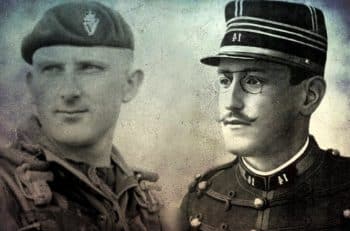
    1. France came to terms with its most shameful military scandal, the framing of Capt. Dreyfus. Britain still clings to the wreckage of its attempt to destroy Capt. Wallace after 50 years of lies and deception. L’Affaire Dreyfus convulsed France for over a decade, 1894-1906. The scandal has come to symbolise an injustice perpetrated by a state against an individual, characteristically a whistle-blower who has exposed state malfeasance. L’Affaire Dreyfus began in December 1894. Capt. Alfred Dreyfus, a 35-year-old Alsatian French artillery officer, spent five years imprisoned on Devil’s Island in French Guiana for allegedly spilling State secrets to the Germans. The real culprit was  Ferdinand Walsin Esterhazy, a treacherous French Army major. When evidence emerged against Esterhazy, the military  was obliged to convene a trial against Esterhazt, but acquitted him after two days. The Army then laid additional charges against Dreyfus, based on forged documents. Subsequently, Emile Zola produced his celebrated denunciation of the scandal, J’Accuse! It ignited public fury. A new trial of Dreyfus resulted in another conviction for the innocent captain and a 10-year sentence. This, however,  did not wash with the public and eventually Dreyfus was pardoned and released. Finally, in 1906, he was exonerated and reinstated as a major in the French Army. He died in 1935. Colin Wallace was also a captain in the military. False evidence was concocted to blame him, inter alia, of leaking military secrets which had been spilt by others. He was unfairly dismissed from his Army post in 1975. He was later accused of murder. As in L’Affaire Dreyfus, the prosecution relied upon perjury to secure the conviction. Dr Ian West, a Home Office pathologist, used his time in the witness box to disgorge one lie after another. Wallace spent six years in prison, a year longer than Dreyfus. Like Dreyfus, his conviction was eventually overturned. One of Wallace’s supporters in the British media was the late Paul Foot. He wrote of Wallace in April 1987 that the ‘most fantastic thing about Colin Wallace’s fantastic story is that every time you check it against the facts, it fits them’. The same cannot be said about the outpourings of Her Majesty’s Government (HMG). Despite repeated humiliations, the British Establishment is still swearing that black is white. 2.  Wallace exposed PSYOP dirty tricks. HMG said he was lying. When proof of dirty tricks emerged,  HMG had to rewrite its lies. HMG lied about the work Wallace carried out while at HQNI at Lisburn. One of Wallace’s tasks was to plan psychological operations (PSYOPs). In 1987 and 1988 when Wallace’s case became a cause célèbre in Britain, HMG assured the Commons that Wallace had never had a PSYOPS role. HMG also denied the existence of a particularly sinister programme run under the rubric of ‘Operations Clockwork  Orange’. Clockwork Orange fed lies to the media about British parliamentarians such as Harold Wilson, Denis Healey, Tony Benn and others. Then, in 1989, files emerged which proved that Wallace had indeed served as a PSYOPs officer; moreover, that Clockwork Orange files existed. Defence Secretary Tom King conspired with Margaret Thatcher to push this particularly embarrassing genie back into the bottle. Rather than hold a wide ranging inquiry, as certain civil servants had expected, King curtailed the terms of what became the Calcutt Inquiry. David Calcutt QC turned out to be an honest man. He confirmed that Wallace had been dismissed unfairly, but little else. This was not Calcutt’s fault. His terms of reference were narrow and restrictive. Wallace was paid £30,000 compensation. 3. Wallace raised the spectre of collusion and was accused of being a Walter Mitty. Now HMG is doling out millions to victims of collusion. What had Wallace discovered during his time as a PSYOPs officer? Wallace came to suspect the existence of collusion long before this became an accepted fact for which HMG has compensated many victims such as the families and survivors of the Miami Show band atrocity. Yet, when Wallace raised the spectre of collusion between the British state and Loyalist paramilitaries, he was denounced as a liar. In addition to the payment of compensation to victims of State-Loyalist collusion, a string of enquiries including that of the Police Ombudsman for Northern Ireland, the Historical Enquiries Team, along with the publication of various books,  have confirmed that British agents were working inside Loyalist paramilitary organisations. The most infamous of these killers was Robin ‘The Jackal’ Jackson. He was one of the gang which bombed Dublin and Monaghan in 1974 murdering thirty-three people. Wallace has maintained for decades that there were reasons to believe the State had colluded with the UVF gang that bombed Dublin and Monaghan in 1974. Various British government have refused to release their files on the twin atrocity. 4.  Wallace said the State knew about the child abuse at Kincora. He was vilified for decades. In 2022 the Police Ombudsman criticised the RUC for having failed to act on knowledge it had of the scandal. What else did Wallace reveal only to be traduced as a Walter Mitty type fantasist? Wallace has told the truth about the infamous Kincora Boys’ Home child sex abuse scandal. All of the inquiries set up by HMG have ordained that the only abuse suffered by the residents of Kincora was that perpetrated by the staff members at the home. This is entirely wrong. In recent decades countless former victims have come forward with detailed accounts describing how they were abused by people from outside of the home. HMG still libels the victims as liars and fantasists. One of the victims, Richard Kerr, is trying ti get his case heard in Belfast. He has become frustrated at one delay after another in the case. Wallace has produced contemporaneous records which prove that he and others in the Army knew about the abuse at the time. RUC records prove that the police knew about it too in the 1970s. In 2022 a report by the Police Ombudsman for NI acknowledged this and criticized the RUC

    Loading

    Read more

  • Posted in:

    An appalling vista: disturbing indications of Kitson's foreknowledge of a third massacre of innocent civilians. Tragedy took fifteen lives including two children. By David Burke.

    New evidence has emerged about the UVF’s bombing of McGurk’s Bar in Belfast in December 1971. The explosion caused the entire structure of the premises to collapse, killing fifteen Catholic civilians – including two children – and wounding seventeen more. It was the deadliest attack in Belfast during the Troubles. Brigadier (later General Sir) Frank Kitson commanded the British Army in Belfast 1970-72. He was a counter-insurgency guru who created havoc on the island before he was drummed out of it by William Whitelaw, the first British secretary of state for Northern Ireland. One of the conscious choices Kitson made while still in Ireland was to take on the IRA but not Loyalist terrorist gangs such as the UVF. This coincided neatly with the policy of the British government of Edward Heath which decided to intern  members of the IRA but not Loyalist paramilitaries. On these grounds alone, the British state became indirectly responsible –  through inaction – for the crimes of the UVF, including the McGurk tragedy. Worse still, there are indications that Kitson may have exploited elements of the UVF as a proxy assassination apparatus for the British state in Belfast. 1. Redaction of Evidence The sliver of new information about the massacre was recorded in a log by the 2nd Battalion Royal Regiment of Fusiliers (2RRF)  approximately forty-two minutes after the bombing. It relates to the proprietor of the bar, Patrick McGurk, and the nearby Gem Bar. Britain’s Information Commissioner’s Office has upheld a decision by Britain’s National Archives to withhold a section of the log from the families of the victims of the massacre. The Archive acted in consultation with the British Ministry of Defence (MoD). The 2RRF log reveals: Owner of pub a moderate RC [Roman Catholic] unlikely to have allowed people to use it as a mtg [meeting] place. Bar close to Gem Bar which is a [REDACTED]. 2. The Gem Bar The information relating to the Gem Bar remains withheld even though the venue no longer exists. When they were making their case for a full declassification of the log, the families of the victims of the attack presented archival evidence to the Information Commissioner’s Office that the Gem Bar was: The original target of the bombers; Known as an Official IRA bar; Recorded in British Army files as the local HQ of the Official IRA; Under British Army surveillance; And that the premises had been targeted by 2 RRF two nights before the bombing during which 2 RRF arrested and questioned six customers from the Gem Bar raid. Put simply, the perceived connections between the Gem and the Official IRA was a known fact and therefore any information pointing in that direction was not going to endanger anyone, especially as the pub has long since closed. Moreover, former known members of both wings of the IRA walk about Belfast without any concern for their safety. Some of them have published books about their paramilitary careers, others have been interviewed on the record by the press, radio and TV Despite this reality, the log remains redacted. 3. Reaction of the families Ciarán MacAirt is a grandson of two of the victims of the McGurk’s Bar Massacre and has been fighting for sight of the information – all of it – for five years. He said: After 50 long years fighting the British state’s lies, our families are outraged but unsurprised that it is withholding evidence relating to the mass murder of our loved ones in McGurk’s Bar. The British state has lied to us from the moment the bomb exploded up to this very day.  Police Service Northern Ireland and the Office of the Police Ombudsman either failed to find this evidence or found it and buried it again as it has been left to the families to expose the truth about the McGurk’s Bar Massacre and its cover-up by the British state. Nevertheless, even when we discover new evidence, the British authorities withhold it from us and deny us access to the truth. In the meantime, many of our older family members are infirm or have gone to their graves without any justice. A video about the attack can be accessed here: https://www.youtube.com/watch?v=uQRLFnBxoWQ 4. The shape of an extremely disturbing state of affairs. The redaction is deeply disturbing. There is no good explanation for it. Why do the MoD censors want the redacted words withheld from public scrutiny, even after more than fifty years? The shape of an extremely disturbing state of affairs involving dirty tricks, collusive murder and black propaganda is swimming into focus. The following scenario is one that offers an explanation for what happened in 1971, and why the British State still feels it necessary to redact the document. 5. Kitson and the IRD Brigadier Frank Kitson was involved in a black propaganda operation that swung into action shortly after the bombing. He was almost certainly aided and abetted by Hugh Mooney who worked for the Information Research Department (IRD) of the Foreign Office. Mooney had been sent to Belfast to destabilise the IRA through the deployment of psychological operations (PsyOps). Kitson, who commanded the British Army in Belfast and its environs, was a meticulous planner who became deeply engaged in propaganda operations during his two years in Belfast. He was also the British army’s foremost counterinsurgency expert having honed and developed his skills in Kenya, Malaya, Oman and Cyprus. His infamous treatise about counterinsurgency, ‘Low Intensity Operations’ was published in 1971. One of the hallmarks of Kitson and Hugh Mooney was the meticulous manner in which they planned their operations in Ireland, invariably well in advance of their deployment. The black propaganda operation that swung into action after the bombing of McGurk’s Bar was up and running a little over four hours after the attack. The operation was a sophisticated affair, one that involved the coordination of senior British Army officers (including Kitson and his superior Lt. General Sir Harold Tuzo, General Officer Commanding Northern Ireland), the

    Loading

    Read more

  • Posted in:

    Kincora coincidence: latest sex abuse report released during Queen's funeral; last one appeared during Trump's inauguration. The disinterest in taking any step to resolve the Kincora scandal is the only issue which now unifies the British and Irish governments. By Joseph de Burca.

    1. An amazing coincidence. The latest report into the squalid MI5/6-Kincora Boys’ Home child sex abuse scandal was released on 19 September 2022- the same day as the funeral of Queen Elizabeth II. The error strewn Hart Report was released during Donald Trump’s inauguration in January 2017. The Hart report received little or no real coverage as the airwaves and pages of Britain’s newspapers were swamped by the start of Trump’s shambolic presidency. Village readers are requested, where possible,  to draw attention to the  publication of the Ombudsman’s  report – despite its manifest and multifarious  shortcomings –  and, more importantly, to highlight the following story about Richard Kerr, the brave Kincora survivor who is still looking for justice:  Kincora survivor  By an amazing coincidence, the latest Kincora report – which is no more than mildly critical of the RUC – will receive little or no coverage outside of Northern Ireland. It is a certainty there will be no coverage in Britain where the public has been taken for fools by the Murdoch press and its ilk for decades. So far, even this rather limp new report has been ignored  – completely – by the mainstream media in Britain. Richard Kerr, a Kincora survivor, has told Village today that: “We were treated like throwaways but this throwaway is not going anywhere and the truth will come out one way or another”. Richard Kerr, a Kincora survivor, has told Village today that: “We were treated like throwaways but this throwaway is not going anywhere and the truth will come out one way or another”. 2. The scandal that still terrifies Whitehall and the Conservative Party. The Kincora scandal is one which will not go away despite the best efforts of Whitehall. It involves child sex abuse, the collection of ‘kompromat’, the blackmail of Loyalist politicians and paramilitaries; State-Loyalist collusion in murder, the protection of a gang of serial killing paedophiles,  the trafficking of children to royal and VIP sex abusers, perjury, the perversion of justice, the making of  threats to witnesses, the assault of at least one victim to deter him from attending a trial, the disappearance of evidence, the disappearance of court files, the misleading  of the House of Commons by corrupt Tory ministers, a forty-year history of failed investigations and the ongoing vilification of survivors as liars and fantasists, some of whom have been driven to suicide. The Kincora scandal is one which will not go away despite the best efforts of Whitehall. It involves child sex abuse, the collection of ‘kompromat’, the blackmail of Loyalist politicians and paramilitaries; State-Loyalist collusion in murder, the protection of a gang of serial killing paedophiles,  the trafficking of children to royal and VIP sex abusers, perjury, the perversion of justice, the making of  threats to witnesses, the assault of at least one victim to deter him from attending a trial, the disappearance of evidence, the disappearance of court files, the misleading  of the House of Commons by corrupt Tory ministers, a forty-year history of failed investigations and the ongoing vilification of survivors as liars and fantasists, some of whom have been driven to suicide. The latest miserable Kincora report is by the Northern Ireland Police Ombudsman. The mild criticism it  contains relates to the fact that the RUC had a number of opportunities to end the sex abuse at Kincora but did nothing. Suffice it to say, like the Hart report, it does not get anywhere near the real dark heart of the story. It does not expose and traduce the key figures in MI5 and MI6 who exploited a string of children’s homes to collect ‘kompromat’ on key Loyalist political and paramilitary figures. Certain Kincora files remain classified until 2060. 3. The BBC continues in its failure to broadcast its own investigation into Kincora. The BBC has still not yet broadcast an investigation it has made about the murder of a group of boys by Alan Campbell. Campbell was a friend of Joe Mains and William McGrath. The report has also unearthed new evidence of MI5 complicity in the Kincora scandal. See a recent report from Phoenix magazine below: 4. The Irish government is singing from the same hymn sheet at London. In the Republic of Ireland, the Irish government is aiding and abetting the Kincora cover-up by withholding police logs which list the visitors to Lord Louis Mountbatten at Classiebawn Castle. One of those visitors was Joe Mains, the Warden of Kincora, who trafficked boys to Mountbatten. 5. MI5 admitted to Hart that it had ‘compromising’ film of a member of the Kincora gang – John McKeague a serial killer and paedophile. One of the key figures in the paedeophile gang which revolved around Kincora was John McKeague. MI5 admitted at the Hart Inquiry that it had compromising film of him and considered recruiting him as an agent, but, in the end, decided not to. They were, of course, lying. McKeague became one of their agents. McKeague  was in charge of the Red Hand Commando (RHC) unit which murdered Seamus Ludlow in Co. Louth (in the Republic of Ireland) in 1976. The murderers reported to him after they carried out the murder. The RUC special branch suppressed evidence about the RHC unit which carried out the killing. Evidence was offered to Larry Wren, the former head of Garda intelligence. Wren rebuffed the offer. Why? Is the murder of Seamus Ludlow and the behaviour of Wren – who went on to become Garda Commissioner, 1983-87, not enough to get the Taoiseach and his ministers to act? 6. Britain’s guilty spies. The culprits who exploited the misery of the children include Sir Maurice Oldfield, Allan Rowley and Craig Smellie of MI6. Also, Ian Cameron and Denis Payne of MI5.  Yet, even the tepid new report by the Ombudsman –  as lukewarm as the risible Hart report – is still embarrassing to the British Establishment. One can only imagine their consternation were the real truth emerged. Village readers are requested, where possible, to

    Loading

    Read more

  • Posted in:

    Spying on the prodigal prince and his American wife. Harry and Megan are surely the targets of surveillance by His Majesty's secret services. MI6 reported to Queen Elizabeth II for 70 years. By David Burke.

    Introduction. Queen Elizabeth II received briefings from fifteen chiefs of the British Secret Service during her 70-year reign, much of it about Ireland. The briefings undoubtedly covered a wide spectrum from Charles Haughey, the bogeyman of Irish politics – as the UK saw it – to Martin McGuinness and the murder of Lord Louis Mountbatten. In the modern era the communications of Prince Harry and his American wife are surely being monitored by Britain’s vast espionage network, in particular, GCHQ. 1. Royal briefings. Richard Moore, the Chief of the British Secret Service (MI6/SIS), has offered his “deepest sympathy and condolences to the Royal Family”, adding that: Fifteen Chiefs of SIS held office during her long reign. Each of us were honoured to oversee the provision of intelligence to the longest running reader of intelligence reports. In my meetings with The Queen, I was always struck by her candour, wit and burning sense of duty. MI6 is Britain’s overseas intelligence service. It is part of the Foreign Office. (MI5 operates inside the UK and Britain’s colonies.) The fact that Queen Elizabeth II enjoyed meetings with no less than fifteen MI6 chiefs and that reports were submitted to her, may come as a surprise to some. However, readers of ‘The Secret Royals’ by Rory Cormac and Richard Aldrich will not be surprised. ‘Secret Royals’ came out in hardback last year and is about to be published in softcover shortly. The book is a genuine page-turner packed with one fascinating story after another, the cumulative effect of which is to afford a fascinating insight into the relationship between the British intelligence community and Buckingham Palace. It is no exaggeration to say that the TV series ‘The Crown’ is drab by comparison to it. (The book is known as ‘Spying and the Crown’ in some jurisdictions.) In full, the statement issued by MI6 Chief Moore (also known as ‘C’) reads as follows: 2. Charles Haughey was perceived as an enemy of the Crown. Many secrets, however, remain buried in the vaults. It would be fascinating to know what type of material MI6 showed to Queen Elizabeth about this country. Did they, for example, reveal what they knew about Charles Haughey, the perceived bogeyman of Irish politics? MI6, like the British establishment, never understood Haughey and tagged him as a clandestine IRA godfather, at least during the 1970s. In 1980, Robin Haydon, Britain’s ambassador to Dublin, described Haughey to Lord Peter Carrington at the Foreign Office as ‘no friend of ours’ and as a man who had the potential to become ‘hostile’ towards the UK. Haydon was known as ‘Sir Spy’ among Haughey’s inner circle. No doubt MI6 was just as critical of Haughey in its briefings at Buckingham Palace. 3. Reports about the Provisional IRA. The information furnished to Buckingham Palace in 1979 must have made for sombre reading. Did Martin McGuinness’ name crop up in the briefing about the murder of Lord Louis Mountbatten? If MI6 was any good, it should have. In later years, both parties shook hands with each other as part of the peace process. And what of the reports on Haughey after he became Taoiseach (Irish prime minister) in December 1979? An intriguing thought is that these reports may still exist in some shape or form at Buckingham Palace and may one day fall into the hands of historians such as Aldrich and Cormac. 4. MI6 and damage to Anglo-Irish affairs. How much damage did MI6 chiefs such as Sir John Rennie, 1968-73; Sir Maurice Oldfield, 1973-78; and Sir Arthur Franks, 1978-82,  occasion to Anglo-Irish affairs by briefing Queen Elizabeth with faulty information about Haughey, Fianna Fail and the attitude of people in Ireland towards the IRA? A file released by Britain’s National Archive in London in 2009 revealed Queen Elizabeth’s  “alleged dislike of the Irish”. The comment was made by a Foreign Office official in 1979. This (and other factors) shut down the possibility of a state visit to London by Irish President Patrick Hillery. A more extensive analysis of the queen’s hostility towards Ireland was not released. The effect of a state visit by the late President Hillery and a reciprocal one by Queen Elizabeth in 1979/80 is now difficult, if not impossible, to guage save to say that it could only have improved relations. Haughey’s first term as taoiseach spanned December 1979 to June 1981. In 1979, during a trip to Chicago, Princess Margaret commented at a reception hosted by the city’s mayor, Jane Byrne, that: “The Irish, they’re pigs.” (A claim was later made that she had uttered the word ‘jigs’ not ‘pigs’.) 5. A regular visitor to Ireland. Henceforth, Richard Moore will report to King Charles III. The new monarch, a popular figure in Ireland, will be eager to learn all he can about the Irish dignitaries he has met, and those he has yet to meet. Those who have met King Charles on his many visits to Ireland, such as President Michael D. Higgins, have praised him for the depth of his knowledge about the island. The President has even opined that he knows more about this country than ‘some’ British politicians. In private, senior Irish diplomats are voicing alarm not merely about the profound ignorance of senior Tory politicians, but also their advisers at the FCDO. 6. On Her – and now – His Majesty’s secret service. MI5 and GCHQ will also report to the new king. GCHQ monitors global communications including those of Ireland. King Charles has already established an excellent relationship with the intelligence community. As prince, he was patron of GCHQ, MI6 and MI5. On one visit to GCHQ he told his hosts that: Few people in this country will ever know just how great a debt we all owe you. But for those privileged enough to understand something of what you do, the difference you make to our security, our prosperity and to the defence of our values is both clear and invaluable. During a visit to

    Loading

    Read more

  • Posted in:

    Vilifying the victims: two of the most vile British Intelligence smear campaigns of the Troubles blamed innocent murder victims for their own demise. By David Burke.

    The Information Research Department (IRD) of Britain’s Foreign Office sought to smear the victims of Bloody Sunday and the McGurks bar bomb atrocity. They even went so far as to attack a group of British politicians by linking them to a campaign for justice for the victims of Bloody Sunday. To the IRD, any association with the campaign for justice for the victims of Bloody Sunday was a shameful act. On 30 January 1972, British paratroopers murdered 13 unarmed civilians in Derry, none of whom posed any sort of a threat to the military – unless, that is, you consider the waving of a white piece of cloth in the air a potentially lethal act. Within minutes Britain’s black propaganda machine swung into action. The head of the Army’s PsyOps department, Col Maurice Tugwell, who had joined the British Army in Derry, was among them. Upfront, Col Derek Wilford, the cowardly commander of 1 Para (cowardly because he has sacrificed his own men by lying about the orders he gave them to save his own skin) spewed out a torrent of lies about an imaginary attack on his troops by the IRA. Later, the Information Research Department (IRD) of the Foreign Office took over the smear campaign against the Bloody Sunday campaigners. A man with deep Irish roots – Hugh Mooney – led the IRD charge. Mooney was a graduate of Trinity College Dublin. He had once worked for the Irish Times. As an IRD officer, Mooney was complicit in a multiplicity of MI6-IRD smear campaigns. An indication of his mindset can be gleaned from the fact that when he later tried to smear leading members of the British Labour Party, he felt the best way to bring them into disrepute was to link them to the families of the victims of Bloody Sunday. (This episode, and a forged document the IRD created to further it, are described more fully later in this article.) Mooney had assets in the British press. One of them was a Tory guru called Tom Utley. Ultley was a British intelligence ‘agent of influence’ or in modern parlance, an ‘influencer’.  At the time of the Bloody Sunday massacre, Utley was working for the Daily Telegraph and Sunday Telegraph, both pro-Tory papers popular with middle and upper class Britain. Mooney and Utley discussed the Bloody Sunday problem together. It was ultimately resolved that Utley would write a paperback about it. According to a confidential letter dated 24 March 1972, the FCO reported to the MoD that Utley hoped to ‘complete the writing in about six weeks, though this may be a little over-ambitious’. According to the letter, he was ‘obviously’ going to ‘need a certain amount of help from Army PR, particularly on the propaganda aspect’. While Utley failed to produce the book, in 1975 he published the rather grandiosely titled ‘Lessons of Ulster’ which took a broader look at Northern Ireland and a litany of developments that had occurred in the meantime. An indication of his mind-set can be gauged from the fact that he objected to the use of the phrase ‘Bloody Sunday’, something he described as ‘slavish obedience to IRA mythology’. He argued that some of those killed were ‘fresh-faced boys who might otherwise have lived to swell the ranks of patriotic militancy’. In other words, they probably would have joined the IRA if they had not been shot. An indication of his mind-set can be gauged from the fact that he objected to the use of the phrase ‘Bloody Sunday’, something he described as ‘slavish obedience to IRA mythology’. He argued that some of those killed were ‘fresh-faced boys who might otherwise have lived to swell the ranks of patriotic militancy’. In other words, they probably would have joined the IRA if they had not been shot. The IRD demonised the families of the victims of Bloody Sunday and those who supported them. Clearly, they believed they had turned them into political untouchables. Hence, they felt they could undermine British Labour Party MPs by associating them with the Bloody Sunday quest for justice. Towards this end, the IRD forged a pamphlet based on a genuine Bloody Sunday campaign leaflet. The original is reproduced hereunder: Merlyn Rees, who served as Secretary of State for Northern Ireland (and later as Home Secretary) was undermined – at least in the eyes of Mooney and his IRD colleagues  – by linking him to the Bloody Sunday campaign.  His name was added to the IRD forgery which appears under this paragraph. (See the bottom of the left hand column). A man called Stan Newens appears on the authentic pamphlet. He was supplanted by Stan Orme MP on the fabricated version. In a similar fashion, Tony Smythe became Tony Benn. David Owen MP was added to the list too.  Owen, however, had the last laugh: when he became Foreign Secretary later in the 1970s, he abolished the IRD. Mooney deployed a similar tactic to smear Charles Haughey TD of Fianna Fail, i.e., he took an original document produced in Ireland and doctored it to include smears about Haughey before printing his own version in London. Mooney was also responsible for the smear campaign against the victims of the McGurks bar bomb atrocity. 15 innocent people were murdered when the UVF attack McGurks bar in Belfast in December 1971. The black propagandists issued a statement insinuating that at least some of the victims of the attack were responsible for their own demise. The propagandists alleged that the bomb had been brought inside the pub by an IRA unit and had exploded prematurely – a so-called ‘own goal’. The campaign was furthered by statements by politicians. See Alleged disappearance of UVF Bomb Massacre Files: MoD excuse for destruction of Brigadier Kitson’s logs is far from convincing. By David Burke. Despite the best efforts of David Owen, the black propagandists found other avenues through which they managed to smear their victims including Charles Haughey. David Burke is the author of 

    Loading

    Read more

  • Posted in:

    Alleged disappearance of UVF Bomb Massacre Files: MoD excuse for destruction of Brigadier Kitson's logs is far from convincing. By David Burke.

    On 4 December 8:45 p.m., a UVF gang set out on a bombing mission. One of those involved was Robert James Campbell. The UVF bomb exploded outside a small pub in Belfast called McGurk’s, a cosy place where Catholics and Protestants from the same neighbourhood – all of whom knew each other well – met for a few drinks. The UVF unit left the bomb outside the pub, not inside it. It consisted of forty to fifty pounds of gelignite. It was ignited by lighting a fuse, not a timer. A paper boy saw the UVF car pull up and a man deposit the bomb outside the pub before fleeing. He spotted the fuse sparking and warned the man not to go up the road. According to Robert James Campbell, his unit had originally wanted to attack another establishment which they believed was frequented by the Official IRA and its supporters, but it had two guards posted outside. After waiting for an hour for them to go inside, the UVF unit decided to go elsewhere. They drove to McGurk’s. The British Army had two Ammunition Technical Officers, i.e., bomb disposal experts, circulating around Belfast on standby in case a bomb was detected. They attended at the scene in the immediate aftermath of the explosion.  Because of the darkness and the debris, they were unable to determine the exact location of the detonation. They decided to carry out a further inspection at daylight the next day. Following the daylight inspection, the Army’s 39 Brigade HQ in Lisburn recorded in its Ops Log at 11.10am: “ATO is convinced bomb was placed in the entrance way on the ground floor. The area is cratered and clearly was the seat of the explosion.  The size of the bomb is likely to be 40/50 lbs”. This information corroborated what the paperboy had witnessed. The bomb killed fifteen people, two of whom were children. Another seventeen were badly wounded. The building was demolished. A knowingly and thoroughly dishonest statement was issued stating that the bomb had been brought inside the pub by the IRA and detonated prematurely. The insinuation was that the bar was a safe haven for the IRA to stage operations, and that at least some of the victims were IRA sympathisers. The disinformation charge was led by Frank Kitson. Kitson is still alive. At the time, he was in charge of British military activities in Belfast and its environs. He was also an expert in  counter-insurgency (i.e. dirty tricks, collusive murder, torture and black propaganda). Paper Trail, a charity which helps victims of atrocities such as McGurk’s, has been digging into Britain’s National Archives to try to understand what happened. The work it has undertaken has proven beyond a shadow of a doubt that the bomb was not an ‘IRA own goal’. Aside from a few die-hard Unionist bigots, no sane and respectable commentator bothers to recirculate Kitson’s lies any more. But there is more, a lot more to this scandal, than meets the eye.  Paper Trail uncovered military logs relating to the attack which the Ministry of Defence (MoD) had failed to release when it made other logs available. Happily, the same logs were available elsewhere. Paper Trail submitted a complaint about this development to Britain’s Information Commissioner’s Office (ICO).  The ICO has just announced that it accepts the MoD’s explanation, namely that the relevant logs were in the process of being scanned before allegedly being destroyed and that the crucial logs were accidentally omitted during the scanning process. This explanation is trite. The time has long since passed for a full judicial inquiry. A full breakdown of the Information Commissioner’s conclusion and the evidence unearthed by Paper Trail can be found here: https://mcgurksbar.com/ico-accepts-mod-excuses-for-missing-massacre-files/ The Paper Trail website can be accessed here: https://www.papertrail.pro/ David Burke is the author of  Kitson’s Irish War, Mastermind of the Dirty War in Ireland  which examines the role of counter-insurgency dirty tricks in Northern Ireland in the early 1970s and the template it set for the Troubles. His next book, An Enemy of the Crown, the British Secret Service Campaign against Charles Haughey, will be released at the end of September 2022. Both books can be ordered/purchased here:  https://www.mercierpress.ie/irish-books/kitson-s-irish-war/ https://www.mercierpress.ie/irish-books/an-enemy-of-the-crown/ Other stories about British Intelligence black propaganda operations, dirty tricks, Bloody Sunday, the Ballymurphy massacre, McGurks bar bombing, Brigadier Frank Kitson and Col Derek Wilford on this website include the following:  Bloody Sunday murderers operated a mobile torture chamber. By David Burke. Soldier G – real name Ron Cook – the Bloody Sunday killer with ‘the sadistic edge’ over his ‘partner’, Soldier F. By David Burke. Bloody Sunday: Brigadier Frank Kitson and MI5 denounced in Dail Eireann   The covert plan to smash the IRA in Derry on Bloody Sunday by David Burke Soldier F’s Bloody Sunday secrets. David Cleary knows enough to blackmail the British government. Learning to kill Colin Wallace: Bloody Sunday, a very personal perspective Lying like a trooper. Internment, murder and vilification. Did Brigadier Kitson instigate the Ballymurphy massacre smear campaign? Where was Soldier F and his ‘gallant’ death squad during it? Another bloody mess. Frank Kitson’s contribution to the wars in Afghanistan and Iraq. 300,000 have died in Afghanistan since 1979. Lying like a trooper. Internment, murder and vilification. Did Brigadier Kitson instigate the Ballymurphy massacre smear campaign? Where was Soldier F and his ‘gallant’ death squad during it? A Foul Unfinished Business. The shortcomings of, and plots against, Saville’s Bloody Sunday Inquiry. Kitson’s Private Army: the thugs, killers and racists who terrorised Belfast and Derry. Soldier F was one of their number. Soldier F and Brigadier Kitson’s elite ‘EFGH’ death squad: a murderous dirty-tricks pattern is emerging which links Ballymurphy with Bloody Sunday. A second soldier involved in both events was ‘mentioned in despatches’ at the behest of Kitson for his alleged bravery in the face of the enemy. Mentioned in Despatches. Brigadier Kitson and Soldier F were honoured in the London Gazette for their gallantry in the face of the enemy during the internment swoops

    Loading

    Read more