• Posted in:

    The State is abdicating responsibility for National Defence. By Gerard Humphreys, former army officer.

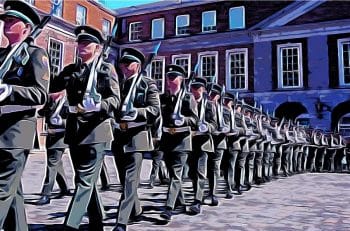
    Introduction. As the lights begin to go off in Europe, the State continues to abdicate responsibility for national defence and is failing to fulfil its key obligations as an independent entity  in international law. The geopolitical situation continues to rapidly deteriorate yet the government is engaged in a massive PR exercise ostensibly  celebrating the centenary of independence. Because of a reckless disregard for our security we have insufficient numbers of defence personnel to deploy our ships or put aircraft fit for purpose into the sky. Rather than discharging their duty to properly maintain and equip the defence forces the government response is to reduce the number of ships and seek to privatise the role of the defence forces. War in Europe 1939 On 1 September 1939 the government ordered the full mobilisation of the Defence Forces including all reserves. By the end of that month some 19,000 troops were under arms which was 50% of the agreed war establishment strength of 37,000. However, this limited expansion was objected to by the Department of Finance. Within two months of mobilisation Finance had forced the Army to contract its size in the interests of economy. By January 1940 Defence Force numbers had fallen to 16,000 and by May to 13,500. In January 1940 the government appointed General McKenna as Chief of Staff. He reported “a complete absence of the most important weapons, … namely anti-tank weapons, anti-aircraft weapons …”. He also had no officers. The dead hand of the Department of Finance Since the foundation of the Officer Cadet School at the Military College in 1928 up to 1939, the State had only commissioned about 100 officers through the Cadet School most of whom spent over 9 years as Second Lieutenants without promotion. No adequate provision was made by Finance for the Army. By May 1940 following the collapse of France, Germany was in possession of the Atlantic coastline from Norway to the South of France. Ireland was an obvious candidate for invasion: by Germany to seize ports and airfields with which to assist the invasion of Britain and threaten Britain’s Atlantic lifeline. It was also at risk of an invasion by Britain to seize the treaty ports. This was within seven months of the Department of Finance having drastically cut the Army. The Government finally acted, and the leaders of Fianna Fáil and Fine Gael issued a call to arms which had a dramatic effect. Those who fought on both sides of the Civil War, rallied to the colours and by March 1941 the Army was over 41,000 strong and the Local Defence Force (later the FCA now called the Reserve) had a strength of 88,000. By 1941 Britain was putting an economic blockade into effect against Ireland and denying key materiel to Ireland. The aim of the blockade was to extract Irish concessions on defence, in particular the Treaty ports. We will come back to this later. However, the dead hand of Finance was still causing major problems for the Army with Finance refusing to sanction the commissioning of experienced NCOs as officers to fill a drastic shortage of officers and further compounded the difficulty of recruiting good officer material. The Department of Defence is a decoy department; the decisions are made by the Department of Finance. Complaints about Finance obstructing NCO promotions were repeated in 1941–42. The Department of Defence is a decoy department; the decisions are made by the Department of Finance. Complaints about Finance obstructing NCO promotions were repeated in 1941–42. History Repeats Itself with War in Europe in 2022 Today, the current establishment as of the 30th of November 2021 shows a total strength of 8,539 for the Army, Navy and Air Corps against an establishment of 9,500 that is for the Permanent Defence Force. The total strength of the Reserve Defence Forces is down to 1,611 out of an establishment of 4,069. Over the 6-year period from 2015 – 2020 military expenditure as a percentage of government expenditure accounted for on average just under 1.2% of the Government of Ireland’s expenditure in contrast to eight  comparator countries where average expenditure accounted for some 2.6% of total government expenditure. The comparator countries were Austria, Belgium, Denmark, Finland, the Netherlands, Norway, Portugal and Sweden. Ireland also spends considerably less on defence in per capita terms as a percentage of overall government expenditure and as a percentage of GDP/GNI, than any of the comparator countries selected. Ireland does not maintain a defence force from a military point of view in sufficient strength to fulfil the security obligations required by international law for a neutral state. In 1986 the Permanent Defence Forces had a combined strength of 13,600 and the Reserve Forces had a strength of 15,800 which means the strength of the Army, Navy and Air Corps is 40% below what it was in 1986 and the Reserve Forces are 10% of what they were in 1986. Commission on Defence presented Government with three options The Defence Forces as constituted at present are not capable of fulfilling its primary objective of defending the State against external aggression. The Defence Forces as constituted at present are not capable of fulfilling its primary objective of defending the State against external aggression. In 1982, Ireland’s permanent representative to the United Nations, Noel Dorr told the General Assembly’s first meeting on disarmament: “We are small, militarily insignificant and outside any alliance and we have acknowledged our own vulnerability. Our armed forces are about the same size and serve the same peacekeeping and other purposes as those which every country would be allowed to maintain even in a disarmed world.” The Government needs to understand, however, that we do not live in a disarmed world. Disconnect There is a disconnect between the Government’s stated policy and the current funding of the Defence Forces. More recently, the Government engaged in a public relations exercise when it announced an increase in Defence spending. The Commission on Defence identified three levels of Ambition. Level One

    Loading

    Read more

  • Posted in:

    Reckless disregard for our security. By Gerard Humphreys, former army officer.

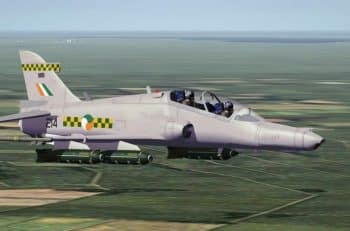
    The Constitution of Ireland declares Ireland to be a sovereign independent democratic state. This declaration of sovereignty means that the State is not subject to any power or government. But sovereignty to be recognised in International Law brings with it rights and duties. International law is based upon the concept of the state and the exercise by that state of effective control over it’s own territory. Territorial sovereignty is the key concept in International Law in particular in regard to territorial defence. Ireland is not fulfilling its key obligations in International law. The Russians have already hacked our health system, and acted in a hostile manner in positioning warships over our crucial underseas cables (our south-western approaches) yet because of our reckless disregard for our own security we had insufficient number of naval personnel to deploy our ships or put an adequate number of aircraft in the sky. Yet the government are engaged in a massive PR exercise on celebrating a centenary of independence. Rules of international law come from two main sources, treaties and customary international law, both of which are created by States. States are bound by the rules to which they have chosen to bind themselves. Every State has jurisdiction over its territory. That is obvious given the concept of Statehood with which international law operates. Article 5 of the Constitution Proclaims: “Ireland is a sovereign, independent democratic state.” The territory of the State is the whole of the area within its borders and also the adjacent territorial seas up to 12 miles from the coast. It includes the airspace above and the subsoil below. The 1982 UN Convention on the Law of the Sea provides a comprehensive legal framework for the use of the seas along coastal States to exercise jurisdiction over the living, fish, whales etc. and non-living resources, oil, gas etc. of the sea and seabed and over certain other matters including pollution, scientific research and other installations such as oilrigs in a 200-mile exclusive economic zone adjacent to its coast. What does this mean? Therefore, it is not open to Ireland to abandon its responsibilities for its territory, airspace and exclusive economic zone. It is the sovereign duty of the State to deploy its ships into our exclusive economic zones off our coasts. It is our sovereign duty to police our airspace. It is questionable whether it is a permissible delegation in international law to have another sovereign State police our airspace to interrogate aircraft. It would appear that the Government have authorised British military aircraft to interrogate unidentified civil aircraft that fails to identify itself by radio or radar as it approaches Ireland from the Atlantic. It begs the question after interrogation if it is unsatisfactory and the aircraft is perceived as being hostile either by being hijacked or otherwise is there a power of interdiction also delegated? It would appear that the Government have authorised British military aircraft to interrogate unidentified civil aircraft that fails to identify itself by radio or radar as it approaches Ireland from the Atlantic. It begs the question after interrogation if it is unsatisfactory and the aircraft is perceived as being hostile either by being hijacked or otherwise is there a power of interdiction also delegated? It would appear that the British Prime Minister can authorise the interdiction of a civilian aircraft that is being weaponised. We do have a National Security Committee and the risk of an aircraft being weaponised is real but there is no effective democratic oversight of national security in Ireland. The Oireachtas and members of the Dáil and Seanad do not have access to classified information at any level. Ireland is one of the most secretive democracies when it comes to democratic oversight of national security issues. The Oireachtas and members of the Dáil and Seanad do not have access to classified information at any level. Ireland is one of the most secretive democracies when it comes to democratic oversight of national security issues. But this is a questionable delegation or power; it has all the hallmarks of an abdication of responsibility by our Government. Our duty of impartiality in International Law may not be viewed as neutral delegating to a NATO Country a power of interruption and possible interdiction. Of course we can request assistance, but the duty falls primarily on us under the self help principle. These are the real questions that our democratic representatives should be raising in the Dail and Seanad. The right to raise and maintain armed forces is vested in the Oireachtas. Why is our navy not capable of deploying naval vessels in our seas and exclusive economic zone? Why has our air corps not capable of policing our airspace a task that could be executed by the Air Corps in the 1960’s with Vampire jets then replaced by Fouga magisters but not now equipped with aircraft fit for purpose and the discharge of their primary task. Are we to spend the next 50 years pointing an accusing finger at the British for the destruction of an aircraft interdicted by them in our airspace when we have already spent 50 years pointing an accusatory finger at Britain in the media for the possibility that the Aer Lingus Viscount St. Phelim was accidentally shot down by a British missile off the coast of Wales? On that occasion the recovery of the Aer Lingus wreckage was carried out by the Royal Navy. The failure of a State to carry out its assigned duties as a State undermines the very existence of that State. It was the sovereign duty of the State to deploy its Navy off the south-west coast when there was suspicious activity being carried out by Russian vessels. That is the task of our naval vessels. ..we have already spent 50 years pointing an accusatory finger at Britain in the media for the possibility that the Aer Lingus Viscount St. Phelim was accidentally shot down by a British missile off the coast of Wales? On

    Loading

    Read more

  • Posted in:

    Villager May 2018

    No Catholics or bastards please, we’re British Villager despises royalty, as anyone who believes in equality, merit or good taste, must. Interesting though that new-born Prince whatsit will come in fifth in line to the “throne”. Time was the new “Prince” would have been advanced to it over his older sister (Princess whatsit), as a male. The Bill of Rights 1689 and the act of settlement 1701, restrict succession to the legitimate Protestant descendants of Sophia of Hanover, of which there are over 5000, who are in “communion with the Church of England”. Spouses of Roman Catholics were disqualified from 1689 until the law was amended in 2015. The succession to the Crown Act 2013 leaves succession to the Crown no longer dependent on gender for lucky heirs born after 28 october 2011. With such incremental progress it will only be a few aeons now before the monarchy passes for democratic. INMajor trouble 23 years ago Vincent Browne got €90,000 in a private settlement with the state because the Garda tapped his phone over an eight-year period in part believing he was talking to IRA leaders for Magill Magazine. a decade earlier journalists Geraldine Kennedy and Bruce arnold were awarded £20,000 in the high court after their phones were tapped for a short period, for absolutely no reason. So how much will the around 200 lucky victims of Leslie Buckley’s version of phone-tapping – data breach – collect? INM has a cash pile of €90m but a stock-market value of only €110.9 million valuing INM in effect at less than €20 million, plus the cash. The problem is that 200 complaints of data breaches could easily hoover up most of that sum. O’Brien has spent €500m building up his stake, partly to show the O’Reilly family what good management looked like and er partly to boost his popularity, but his holding is now worth only €33m and shares are down 40% over the last year. This is an investment even worse, though not nearly as predictably so, as one in Village Magazine over the last decade. STabbing the competition On 22 april The Sunday Times (Irish edition) unkindly editorialised that the INM group was leaking selective extracts from the 240-page affidavit of the ODCE on which it has grounded its application for the appointment of high court inspectors who would examine various allegations against the media group and its former chairman, leslie Buckley. In particular, The Sunday Times claimed that INM was strangely silent on the allegations leaked from the affidavit that the largest shareholder, Denis O’Brien, had access to sensitive commercial information, courtesy of communications minister, Denis Naughten, before other shareholders. But ironically The Sunday Times is part of the Rupert Murdoch stable, news International, which was forced to close down its News of the World brand in 2011 in the light of damning revelations that some of its senior editorial staff had condoned the widespread tapping of phones and other criminal offences. At one point former Taoiseach, Bertie Ahern, soon after his inelegant departure from office in 2008 amid evidence of financial wrongdoing, graced a TV advertisement for the News of the World from inside a kitchen cupboard, his most ignominious television appearance until the recent Tim Sebastian interview. The Sunday Times was famously less than wholehearted in pursuing the politician for failing to account for over £200,000 unexplained in various bank accounts while he was Minister for Finance in the 1980s. ahern cultivated Murdoch whose sky division famously obtained rights to cover the Ryder cup in Ireland under Bertie’s premiership. Equally intriguing is the insistence by O’Brien that the leaks to INM from the affidavit came from the ODCE rather than from the copy provided to the newspaper organisation in which he is the largest, though – significantly – non-controlling, shareholder. The leaks came from people close to the non- O’Brien wing of INM. Radio Caroline ended party early Chris Donoghue, Niall O’Connor and Ed Carty have joined the ranks of independent journalists who now advise government. Government Press advisor Nick Miller once toiled for regional titles such as the Kerryman, Tullamore Tribune and Evening Echo. Now the one-time series producer of RTÉ’s ‘The Sunday Game’, and regular voice of ‘It says In The Papers’ on ‘Morning Ireland’, Caroline Murphy, has become press advisor to Minister for Justice Charlie Flanagan. She is of course married to Sean O’Rourke, presenter of RTÉ Radio 1’s flagship current affairs programme, the ‘Today show’. The formidable Murphy described some years ago to the Irish Times how she fell for the uncontroversial presenter: “We met around 1983, when I had a singles BBQ in a house I’d bought in Killiney: everyone invited had to bring a friend of the same sex and Fintan Drury (later chairman of the RTÉ authority who resigned because of a conflict of interest over rights to cover the Ryder cup) brought Seán. He was still there with Fintan at 2am when I threw them out – Seán was shocked. I couldn’t believe anyone would think it wasn’t my right to say the party’s over”. Murphy told the Irish Independent her work at the national broadcaster has been “marginal” in recent years. Neutering neutrality Cosying up to NATO is now de rigueur inside ‘modern’ Fine Gael. Four of the party’s MEPs, Seán Kelly, Brian Hayes, Deirdre Clune and Máiread McGuinness, advocate a policy which would see us dilute neutrality by falling in line with deepening EU military co-operation. In a statement issued to accompany the launch of a discussion paper ‘Ireland and the EU: Defending our common european home’, by Brian Hayes on 9 March, the MEPs stated, “We want to make it clear that we do not support the creation of an EU army. However, Ireland can do so much more in collaboration with our EU partners in the area of security and defence”. These MEPs have not gone off on a frolic of their own volition. This is now FG and Varadkar’s euro-military policy. Ironically, the Taoiseach is known to

    Loading

    Read more

  • Posted in:

    Technology neutralises our neutrality

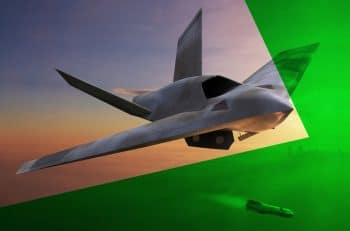
    Margaretta D’Arcy found herself jailed in January 2014 on the back of a protest she mounted at Shannon Airport in 2012. What was she protesting about? US troop aircraft using Shannon as a stopover on their journey to the warzones of Iraq and Afghanistan among other things. D’Arcy is a rare stalewart against the steady erosion of Ireland’s vague understanding of its declared neutrality. The New Battlefields Unfortunately, in our increasingly connected technological world she was fighting the right battle on the wrong battlefield. Troops landing on the ground have increasingly been replaced by drones in the sky commanded by the video-game generation from air-conditioned facilities in the comfort of their own country. This arms-length war is conducted in part through the use of the numerous transatlantic cables that crisscross the seabed, many of which land in Ireland before continuing on their journey to the United Kingdom and the rest of Europe. As to the number of deaths that can be attributed to commands that were routed through cables that land in Ireland we can only speculate, but as the Galway Alliance Against War statement asserted on the occasion of the conviction of Margaretta D’Arcy: “By allowing the US Military to use Irish airspace and Shannon airport to wage these wars we have become a willing accessory to mass murder. We have blood on our hands…”. By logical extension, by allowing the command and control systems to communicate across infrastructure that connects through Ireland we continue to support these military operations in opposition to the basic principles of our perceived neutrality. Not a New Problem The first transatlantic communications cable was laid between Newfoundland and Ireland in 1866. One of the first communications transmitted across that cable was from Queen Victoria to then President James Buchanan: “A treaty of peace has been signed between Austria and Prussia”. The cost of transmitting messages across the transatlantic cable was prohibitive, limiting its usefulness to the affluent, wealthy organisations and of course governments. The strategic value of the cable was further emphasised in the explicit agreement for the UK to retain the right to determine control of it after the establishment of the Irish Free State in 1922.     We might like to think that in the intervening years Ireland had grown to the point where it exercises control over the cables that land here. In 2014 Edward Snowden’s WikiLeaks revealed the degree to which the influence of Britain’s security services and General Communications Headquarters (GCHQ) has hardly diminished. The Irish Government has failed to address this issue. The actual number of cables connecting the US to its closest strategic partner, the UK, is startlingly few: discounting cables that form loops, there are seven. Eliminating those that connect through the rest of Europe, such as France or Denmark, the number reduces to four. Of those four three are routed through Ireland. The relevance of these connections can be easily understood when one looks at what traffic is going through these cables. Nippers and Slippers The United States Military operates a number of private networks, that are not connected to the public Internet. They have fantastic names such as JWICS (Joint Worldwide Intelligence Communications System), Secure/Secret Internet Protocol Router Network (SPIRNet or slipper), Non-classified Internet Protocol Router Network (NIPRNet or nipper) and National Security Agency Network (NSANet). These networks all fall under the umbrella of the Defence Information System Network (DISN), a worldwide system that connects US interests. These interests include in this case: command and control centres, intelligence agencies, embassies all the way out to Joint Task Force/Coalition Task Force troops on the ground. Included in the numerous global points to which slipper and nipper connect is the US Embassy in Dublin. You may wonder how the US Military managed to get access to all of the required jurisdictions to lay a private network of cables across the globe. The answer, unsurprisingly, is that they didn’t. Instead they purchase services from private infrastructure companies which have already laid the required cables. Companies like those which land in the likes of Dublin, Cork or Sligo. These networks are designed to be ‘Airgapped’ i.e. they are intended to operate physically isolated from each other and physically separated from the public Internet. According to protocol, any device connected to slipper for example, is supposed to automatically fall under the control of the slipper protocols and by extension the DISN protocols. The allegations against Hillary Clinton during the 2016 elections specifically relating to the handling of secret information are based on her having access to information from slipper but using an insecure device. Slipper, nipper, JWICS and the rest leverage private infrastructure but are supposedly separated from the rest of the Internet, but there is some evidence to suggest that this isn’t entirely the case. Marines Building Tunnels In 2002, as the US was starting to land troops on their way to Afghanistan and the Middle East, in Shannon Airport, a resourceful team of Marines developed a new mechanism for accessing the nipper and slipper networks. In consultation with a private contractor, the Marines built a ‘tunnel’ that allowed a secure channel to be established to slipper from a lower classified network – lower classified networks include nipper of course but also the public internet. The tunnels are now understood to be Virtual Private Networks (VPNs) that are in daily use by private industry. The implication of this ostensibly innocuous development is that the military themselves have transcended the security of their own private network using what is now off-the-shelf technology. Did You Lose Control of the Drones? At the intersection of the video-games universe and the US military is Creech Air Force Base, just outside Las Vegas, Nevada. From there Air Force pilots remotely control the surveillance, information-gathering and ‘targeted killing’ Drone operations. Among the many different forms of information communicated to and from Creech is target-designation information – focusing on who is to be killed. This information is communicated via our now familiar

    Loading

    Read more