Northern Ireland

Random entry RSS

  • Posted in:

    Agent Broccoli and the origins of British State-Loyalist Collusion. Risi Sunak's legacy legislation will bury the truth about this killer - who is still alive. Garda Commissioner is hopelessly conflicted. By David Burke.

    Introduction. In the very early 1970s, Brigadier (later General, Sir) Frank Kitson and his colleagues decided to confront the IRA, and only the IRA. Kitson’s superior, Lord Michael Carver,  revealed in his memoirs that “a direct armed clash between the army and the [Loyalist Ulster Defence Association], when the former was already facing the IRA, was not a situation that anybody wished to provoke”. What Carver did not reveal was that the UK’s military, police and civilian intelligence services proceeded to exploit the UDA, and other Loyalist groups, as proxy assassins. This has become known as ‘collusion’, i.e., the British state used Loyalists to murder on their behalf. Paper Trail, a non-sectarian charity which helps the victims and families of people killed and injured during the Troubles, has unearthed records which shine a light on the co-operation which flourished between the British Army and the UDA in the 1970s. They prove that the State was in receipt of intelligence about the criminal activities of the UDA. Clearly, the State had informers inside the UDA’s death squads. The RUC and British Intelligence did not act on the intelligence to stop the torture and murder. The tortures took place in the UDA’s horrific ‘Romper Rooms’. What now follows is largely an extract from my 2021 book, ‘Kitson’s Irish War’. It relates primarily to Albert ‘Ginger’ Baker, an alleged British Army deserter who infiltrated the UDA. He became a member of the UDA’s most notorious assassination squad of the time. Baker’s true loyalty was to the British army. He was – or became – a deep cover penetration agent after he “deserted” from the British army and returned home to Belfast. His codename was ‘Broccoli’. Baker features heavily in the Paper Trail revelations. It is now becoming increasingly clear that British officials and RUC officers were guiding the UDA murder gangs through agents such as Baker. The Paper Trail revelations can be found here: https://www.papertrail.pro/british-soldiers-british-agents-uda-romper-rooms/ 1. Baker’s handlers walked free. Baker is still alive. He was convicted of some of his crimes in 1973. He went to prison. His intelligence handlers walked free. He has spoken – and written – extensively about his crimes. He was once prepared to co-operate with the Gardai in the resolution of crimes in the Republic. The late Laurence Wren, Garda Commissioner, 1983-87, and others, failed to exploit Baker’s offer The RUC and PSNI have covered up the full truth about the Baker case for more than half a century. Frank Kitson was the instigator and architect of State-Loyalist collusion. Baker was among the first wave of State-Loyalist killers. Kitson is being sued by one of Baker’s murder victims, Patrick Heenan. Risi Sunak’s legacy legislation – if passed – will let Kitson and the British Establishment off the hook and copper fasten the collusion cover-up. 2. Baker and the Dublin bombing of 1972. In 1976 members of Baker’s family implicated him in the bombing of Dublin in December 1972. It caused the death of two CIE employees. Baker transported explosives during a preliminary stage of the attack. He took them to Derry. Baker was a known associate of a senior UDA figure in Derry. His name also appears in the Paper Trail files. The senior UDA figure bears a passing resemblance to one of the Dublin bombers. The gardai prepared a photofit of the bomber. Larry Wren, the head of C3, Garda Intelligence, 1971-79, failed to circulate or publish the photofit. The suspect is still alive. Sunak’s legislation will also undermine any possible future inquiry into that attack. In a functioning democracy, Paper Trail’s discoveries would instigate an inquiry into State collusion with paramilitaries. Paper Trail appears to have found further files which they have yet to release which will cast further light on Baker and his associates. 3. Garda Commissioner Drew Harris. Garda Commissioner Drew Harris may have seen the British Intelligence files on the 1972 double murder in Dublin in his former capacity as the RUC/PSNI liaison officer with MI5. When Harris was appointed as Garda Commissioner, Fine Gael assured the public his former role as a senior RUC-PSNI officer would not generate a conflict of interest. As things stand, the Gardai have no interest in Baker or the resolution of the 1972 attack. This is not the only severe conflict of interest of interest involved in the appointment of Commissioner Harris. A former British military intelligence operative known by the pseudonym, Sam Rosenfeld, has divulged that a senior Irish government figure has served as an agent of British intelligence. Rosenfeld was attached to the clandestine Joint Support Group (JSG) and had some direct dealings with the Irish agent. The JSG carried out its duties on behalf of MI5. Rosenfeld was once brought inside Leinster House by a senior official who worked for London. Last December Rosenfeld told the Irish News: I will tell you what they (British intelligence) are super, super, super, sensitive about, they have somebody still working, and I am assuming there’s many still working in the Irish Republic, but one of them holds a very senior position in the Irish government. Rosenfeld added that he recently that he had looked and they are now even in a (more) senior position than they were previously and they still work for the British government, i.e., the army. Suspicion as to the identity of the Leinster House agent is gathering around one particular individual, a person active in the political sphere. For further details see: https://coverthistory.ie/2022/12/22/his-and-her-majestys-spies-in-the-dublin-government/ 4. Tuzo and his UDA allies A key date in the Baker case is 9 July 1972, when Maj-Gen. Harry Tuzo submitted a paper suggesting that the British government should “acquiesce in unarmed UDA patrolling and barricading of Protestant areas. Indeed, it was arguable that Protestant areas could be almost entirely secured by a combination of UDA,  Orange Volunteers and RUC.” He also suggested that they be allowed retain weapons in the districts they controlled. Tuzo’s views were aligned to those outlined in Volume III of the MoD’s

    Loading

    Read more

  • Posted in:

    An appalling vista: disturbing indications of Kitson's foreknowledge of a third massacre of innocent civilians. Tragedy took fifteen lives including two children. By David Burke.

    New evidence has emerged about the UVF’s bombing of McGurk’s Bar in Belfast in December 1971. The explosion caused the entire structure of the premises to collapse, killing fifteen Catholic civilians – including two children – and wounding seventeen more. It was the deadliest attack in Belfast during the Troubles. Brigadier (later General Sir) Frank Kitson commanded the British Army in Belfast 1970-72. He was a counter-insurgency guru who created havoc on the island before he was drummed out of it by William Whitelaw, the first British secretary of state for Northern Ireland. One of the conscious choices Kitson made while still in Ireland was to take on the IRA but not Loyalist terrorist gangs such as the UVF. This coincided neatly with the policy of the British government of Edward Heath which decided to intern  members of the IRA but not Loyalist paramilitaries. On these grounds alone, the British state became indirectly responsible –  through inaction – for the crimes of the UVF, including the McGurk tragedy. Worse still, there are indications that Kitson may have exploited elements of the UVF as a proxy assassination apparatus for the British state in Belfast. 1. Redaction of Evidence The sliver of new information about the massacre was recorded in a log by the 2nd Battalion Royal Regiment of Fusiliers (2RRF)  approximately forty-two minutes after the bombing. It relates to the proprietor of the bar, Patrick McGurk, and the nearby Gem Bar. Britain’s Information Commissioner’s Office has upheld a decision by Britain’s National Archives to withhold a section of the log from the families of the victims of the massacre. The Archive acted in consultation with the British Ministry of Defence (MoD). The 2RRF log reveals: Owner of pub a moderate RC [Roman Catholic] unlikely to have allowed people to use it as a mtg [meeting] place. Bar close to Gem Bar which is a [REDACTED]. 2. The Gem Bar The information relating to the Gem Bar remains withheld even though the venue no longer exists. When they were making their case for a full declassification of the log, the families of the victims of the attack presented archival evidence to the Information Commissioner’s Office that the Gem Bar was: The original target of the bombers; Known as an Official IRA bar; Recorded in British Army files as the local HQ of the Official IRA; Under British Army surveillance; And that the premises had been targeted by 2 RRF two nights before the bombing during which 2 RRF arrested and questioned six customers from the Gem Bar raid. Put simply, the perceived connections between the Gem and the Official IRA was a known fact and therefore any information pointing in that direction was not going to endanger anyone, especially as the pub has long since closed. Moreover, former known members of both wings of the IRA walk about Belfast without any concern for their safety. Some of them have published books about their paramilitary careers, others have been interviewed on the record by the press, radio and TV Despite this reality, the log remains redacted. 3. Reaction of the families Ciarán MacAirt is a grandson of two of the victims of the McGurk’s Bar Massacre and has been fighting for sight of the information – all of it – for five years. He said: After 50 long years fighting the British state’s lies, our families are outraged but unsurprised that it is withholding evidence relating to the mass murder of our loved ones in McGurk’s Bar. The British state has lied to us from the moment the bomb exploded up to this very day.  Police Service Northern Ireland and the Office of the Police Ombudsman either failed to find this evidence or found it and buried it again as it has been left to the families to expose the truth about the McGurk’s Bar Massacre and its cover-up by the British state. Nevertheless, even when we discover new evidence, the British authorities withhold it from us and deny us access to the truth. In the meantime, many of our older family members are infirm or have gone to their graves without any justice. A video about the attack can be accessed here: https://www.youtube.com/watch?v=uQRLFnBxoWQ 4. The shape of an extremely disturbing state of affairs. The redaction is deeply disturbing. There is no good explanation for it. Why do the MoD censors want the redacted words withheld from public scrutiny, even after more than fifty years? The shape of an extremely disturbing state of affairs involving dirty tricks, collusive murder and black propaganda is swimming into focus. The following scenario is one that offers an explanation for what happened in 1971, and why the British State still feels it necessary to redact the document. 5. Kitson and the IRD Brigadier Frank Kitson was involved in a black propaganda operation that swung into action shortly after the bombing. He was almost certainly aided and abetted by Hugh Mooney who worked for the Information Research Department (IRD) of the Foreign Office. Mooney had been sent to Belfast to destabilise the IRA through the deployment of psychological operations (PsyOps). Kitson, who commanded the British Army in Belfast and its environs, was a meticulous planner who became deeply engaged in propaganda operations during his two years in Belfast. He was also the British army’s foremost counterinsurgency expert having honed and developed his skills in Kenya, Malaya, Oman and Cyprus. His infamous treatise about counterinsurgency, ‘Low Intensity Operations’ was published in 1971. One of the hallmarks of Kitson and Hugh Mooney was the meticulous manner in which they planned their operations in Ireland, invariably well in advance of their deployment. The black propaganda operation that swung into action after the bombing of McGurk’s Bar was up and running a little over four hours after the attack. The operation was a sophisticated affair, one that involved the coordination of senior British Army officers (including Kitson and his superior Lt. General Sir Harold Tuzo, General Officer Commanding Northern Ireland), the

    Loading

    Read more

  • Posted in:

    Vilifying the victims: two of the most vile British Intelligence smear campaigns of the Troubles blamed innocent murder victims for their own demise. By David Burke.

    The Information Research Department (IRD) of Britain’s Foreign Office sought to smear the victims of Bloody Sunday and the McGurks bar bomb atrocity. They even went so far as to attack a group of British politicians by linking them to a campaign for justice for the victims of Bloody Sunday. To the IRD, any association with the campaign for justice for the victims of Bloody Sunday was a shameful act. On 30 January 1972, British paratroopers murdered 13 unarmed civilians in Derry, none of whom posed any sort of a threat to the military – unless, that is, you consider the waving of a white piece of cloth in the air a potentially lethal act. Within minutes Britain’s black propaganda machine swung into action. The head of the Army’s PsyOps department, Col Maurice Tugwell, who had joined the British Army in Derry, was among them. Upfront, Col Derek Wilford, the cowardly commander of 1 Para (cowardly because he has sacrificed his own men by lying about the orders he gave them to save his own skin) spewed out a torrent of lies about an imaginary attack on his troops by the IRA. Later, the Information Research Department (IRD) of the Foreign Office took over the smear campaign against the Bloody Sunday campaigners. A man with deep Irish roots – Hugh Mooney – led the IRD charge. Mooney was a graduate of Trinity College Dublin. He had once worked for the Irish Times. As an IRD officer, Mooney was complicit in a multiplicity of MI6-IRD smear campaigns. An indication of his mindset can be gleaned from the fact that when he later tried to smear leading members of the British Labour Party, he felt the best way to bring them into disrepute was to link them to the families of the victims of Bloody Sunday. (This episode, and a forged document the IRD created to further it, are described more fully later in this article.) Mooney had assets in the British press. One of them was a Tory guru called Tom Utley. Ultley was a British intelligence ‘agent of influence’ or in modern parlance, an ‘influencer’.  At the time of the Bloody Sunday massacre, Utley was working for the Daily Telegraph and Sunday Telegraph, both pro-Tory papers popular with middle and upper class Britain. Mooney and Utley discussed the Bloody Sunday problem together. It was ultimately resolved that Utley would write a paperback about it. According to a confidential letter dated 24 March 1972, the FCO reported to the MoD that Utley hoped to ‘complete the writing in about six weeks, though this may be a little over-ambitious’. According to the letter, he was ‘obviously’ going to ‘need a certain amount of help from Army PR, particularly on the propaganda aspect’. While Utley failed to produce the book, in 1975 he published the rather grandiosely titled ‘Lessons of Ulster’ which took a broader look at Northern Ireland and a litany of developments that had occurred in the meantime. An indication of his mind-set can be gauged from the fact that he objected to the use of the phrase ‘Bloody Sunday’, something he described as ‘slavish obedience to IRA mythology’. He argued that some of those killed were ‘fresh-faced boys who might otherwise have lived to swell the ranks of patriotic militancy’. In other words, they probably would have joined the IRA if they had not been shot. An indication of his mind-set can be gauged from the fact that he objected to the use of the phrase ‘Bloody Sunday’, something he described as ‘slavish obedience to IRA mythology’. He argued that some of those killed were ‘fresh-faced boys who might otherwise have lived to swell the ranks of patriotic militancy’. In other words, they probably would have joined the IRA if they had not been shot. The IRD demonised the families of the victims of Bloody Sunday and those who supported them. Clearly, they believed they had turned them into political untouchables. Hence, they felt they could undermine British Labour Party MPs by associating them with the Bloody Sunday quest for justice. Towards this end, the IRD forged a pamphlet based on a genuine Bloody Sunday campaign leaflet. The original is reproduced hereunder: Merlyn Rees, who served as Secretary of State for Northern Ireland (and later as Home Secretary) was undermined – at least in the eyes of Mooney and his IRD colleagues  – by linking him to the Bloody Sunday campaign.  His name was added to the IRD forgery which appears under this paragraph. (See the bottom of the left hand column). A man called Stan Newens appears on the authentic pamphlet. He was supplanted by Stan Orme MP on the fabricated version. In a similar fashion, Tony Smythe became Tony Benn. David Owen MP was added to the list too.  Owen, however, had the last laugh: when he became Foreign Secretary later in the 1970s, he abolished the IRD. Mooney deployed a similar tactic to smear Charles Haughey TD of Fianna Fail, i.e., he took an original document produced in Ireland and doctored it to include smears about Haughey before printing his own version in London. Mooney was also responsible for the smear campaign against the victims of the McGurks bar bomb atrocity. 15 innocent people were murdered when the UVF attack McGurks bar in Belfast in December 1971. The black propagandists issued a statement insinuating that at least some of the victims of the attack were responsible for their own demise. The propagandists alleged that the bomb had been brought inside the pub by an IRA unit and had exploded prematurely – a so-called ‘own goal’. The campaign was furthered by statements by politicians. See Alleged disappearance of UVF Bomb Massacre Files: MoD excuse for destruction of Brigadier Kitson’s logs is far from convincing. By David Burke. Despite the best efforts of David Owen, the black propagandists found other avenues through which they managed to smear their victims including Charles Haughey. David Burke is the author of 

    Loading

    Read more

  • Posted in:

    Alleged disappearance of UVF Bomb Massacre Files: MoD excuse for destruction of Brigadier Kitson's logs is far from convincing. By David Burke.

    On 4 December 8:45 p.m., a UVF gang set out on a bombing mission. One of those involved was Robert James Campbell. The UVF bomb exploded outside a small pub in Belfast called McGurk’s, a cosy place where Catholics and Protestants from the same neighbourhood – all of whom knew each other well – met for a few drinks. The UVF unit left the bomb outside the pub, not inside it. It consisted of forty to fifty pounds of gelignite. It was ignited by lighting a fuse, not a timer. A paper boy saw the UVF car pull up and a man deposit the bomb outside the pub before fleeing. He spotted the fuse sparking and warned the man not to go up the road. According to Robert James Campbell, his unit had originally wanted to attack another establishment which they believed was frequented by the Official IRA and its supporters, but it had two guards posted outside. After waiting for an hour for them to go inside, the UVF unit decided to go elsewhere. They drove to McGurk’s. The British Army had two Ammunition Technical Officers, i.e., bomb disposal experts, circulating around Belfast on standby in case a bomb was detected. They attended at the scene in the immediate aftermath of the explosion.  Because of the darkness and the debris, they were unable to determine the exact location of the detonation. They decided to carry out a further inspection at daylight the next day. Following the daylight inspection, the Army’s 39 Brigade HQ in Lisburn recorded in its Ops Log at 11.10am: “ATO is convinced bomb was placed in the entrance way on the ground floor. The area is cratered and clearly was the seat of the explosion.  The size of the bomb is likely to be 40/50 lbs”. This information corroborated what the paperboy had witnessed. The bomb killed fifteen people, two of whom were children. Another seventeen were badly wounded. The building was demolished. A knowingly and thoroughly dishonest statement was issued stating that the bomb had been brought inside the pub by the IRA and detonated prematurely. The insinuation was that the bar was a safe haven for the IRA to stage operations, and that at least some of the victims were IRA sympathisers. The disinformation charge was led by Frank Kitson. Kitson is still alive. At the time, he was in charge of British military activities in Belfast and its environs. He was also an expert in  counter-insurgency (i.e. dirty tricks, collusive murder, torture and black propaganda). Paper Trail, a charity which helps victims of atrocities such as McGurk’s, has been digging into Britain’s National Archives to try to understand what happened. The work it has undertaken has proven beyond a shadow of a doubt that the bomb was not an ‘IRA own goal’. Aside from a few die-hard Unionist bigots, no sane and respectable commentator bothers to recirculate Kitson’s lies any more. But there is more, a lot more to this scandal, than meets the eye.  Paper Trail uncovered military logs relating to the attack which the Ministry of Defence (MoD) had failed to release when it made other logs available. Happily, the same logs were available elsewhere. Paper Trail submitted a complaint about this development to Britain’s Information Commissioner’s Office (ICO).  The ICO has just announced that it accepts the MoD’s explanation, namely that the relevant logs were in the process of being scanned before allegedly being destroyed and that the crucial logs were accidentally omitted during the scanning process. This explanation is trite. The time has long since passed for a full judicial inquiry. A full breakdown of the Information Commissioner’s conclusion and the evidence unearthed by Paper Trail can be found here: https://mcgurksbar.com/ico-accepts-mod-excuses-for-missing-massacre-files/ The Paper Trail website can be accessed here: https://www.papertrail.pro/ David Burke is the author of  Kitson’s Irish War, Mastermind of the Dirty War in Ireland  which examines the role of counter-insurgency dirty tricks in Northern Ireland in the early 1970s and the template it set for the Troubles. His next book, An Enemy of the Crown, the British Secret Service Campaign against Charles Haughey, will be released at the end of September 2022. Both books can be ordered/purchased here:  https://www.mercierpress.ie/irish-books/kitson-s-irish-war/ https://www.mercierpress.ie/irish-books/an-enemy-of-the-crown/ Other stories about British Intelligence black propaganda operations, dirty tricks, Bloody Sunday, the Ballymurphy massacre, McGurks bar bombing, Brigadier Frank Kitson and Col Derek Wilford on this website include the following:  Bloody Sunday murderers operated a mobile torture chamber. By David Burke. Soldier G – real name Ron Cook – the Bloody Sunday killer with ‘the sadistic edge’ over his ‘partner’, Soldier F. By David Burke. Bloody Sunday: Brigadier Frank Kitson and MI5 denounced in Dail Eireann   The covert plan to smash the IRA in Derry on Bloody Sunday by David Burke Soldier F’s Bloody Sunday secrets. David Cleary knows enough to blackmail the British government. Learning to kill Colin Wallace: Bloody Sunday, a very personal perspective Lying like a trooper. Internment, murder and vilification. Did Brigadier Kitson instigate the Ballymurphy massacre smear campaign? Where was Soldier F and his ‘gallant’ death squad during it? Another bloody mess. Frank Kitson’s contribution to the wars in Afghanistan and Iraq. 300,000 have died in Afghanistan since 1979. Lying like a trooper. Internment, murder and vilification. Did Brigadier Kitson instigate the Ballymurphy massacre smear campaign? Where was Soldier F and his ‘gallant’ death squad during it? A Foul Unfinished Business. The shortcomings of, and plots against, Saville’s Bloody Sunday Inquiry. Kitson’s Private Army: the thugs, killers and racists who terrorised Belfast and Derry. Soldier F was one of their number. Soldier F and Brigadier Kitson’s elite ‘EFGH’ death squad: a murderous dirty-tricks pattern is emerging which links Ballymurphy with Bloody Sunday. A second soldier involved in both events was ‘mentioned in despatches’ at the behest of Kitson for his alleged bravery in the face of the enemy. Mentioned in Despatches. Brigadier Kitson and Soldier F were honoured in the London Gazette for their gallantry in the face of the enemy during the internment swoops

    Loading

    Read more

  • Posted in:

    SECOND UPDATE: The Irish government has become complicit in the cover-up of British Royal sexual abuse committed in the Republic of Ireland. By David Burke.

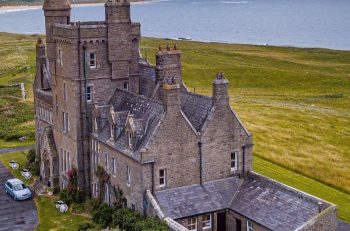
    1. The Classified Garda Files. The information provided by the brothers, John and Pat Barry, confirms that the Garda (Irish police) had a checkpoint at the gate of Classiebawn castle in August 1977. Garda security appears – by some accounts – to have been downgraded in 1979, shortly before Mountbatten was murdered by the Provisional IRA. Hence, while there might be a question mark about the existence of comprehensive Garda logs from 1979, there are no concerns about August 1977. The Classiebawn logs are the key to unlocking the sordid Kincora scandal. Boys from Kincora Boys’ Home in Belfast were trafficked to Mountbatten by Joe Mains, an MI5/6 agent who worked at Kincora. The same boys were trafficked to Loyalist paramilitaries and politicians by Mains as part of MI5 and MI6 ‘honeytrap’ blackmail operations. The Garda have shown no interest in the information at their fingertips. As far as can be told, the Government has displayed no curiosity either. The survivors of child sexual abuse deserve better. 2. Confirmation of a Garda checkpoint at Classiebawn. While the Barry brothers set out to defend the reputation of Mountbatten in their Sligo Champion interview – and did so in good faith – they have nonetheless highlighted a crucial issue about the Mountbatten-Kincora connection. It is one which could yet prove precisely the opposite of what they hoped to achieve with their interview. There is no doubt now that the Garda have a record of the registration plates of the vehicles they stopped at the gates. The existence of the Garda checkpoint was already an established fact, nonetheless, the confirmation by the Barrys is important as they  are living witnesses who can attest to its presence. It would now take a very daring – not to mention corrupt – Garda or Department of Justice official, to interfere with the files. The purpose of the interview with the brothers was to afford them an opportunity to put forward a defence for Lord Mountbatten whom they do not believe was a child abuser. John Barry, who was a boy at the time, made specific reference to a Garda ‘checkpoint’ and also that: “The guards wouldn’t have allowed some guy to come, a warden from Kincora [Boys Home in Belfast] who was supposed to have driven [child abuse victims to Classiebawn], and he was supposed to sit in the car for an hour outside the castle and let the boys in – or a boy in. And you think the guards wouldn’t have asked: ‘What are you doing here?’ No way”. His brother has confirmed the presence of Gardaí at the ‘checkpoint at the gate’. 3. Times and dates. In 2019 Andrew Lownie, author of a book about Mountbatten, sought the Garda logs taken at the checkpoint. Crucially, while the Gardaí refused to declassify the files, they nonetheless confirmed they were still in existenc.  See:  THE MOUNTBATTEN FACTOR: Boris Johnson should not bully Dublin over Brexit because the Irish Government has information which could damage the Royal Family What will the records reveal? In August 1977 Stephen Waring and another boy were abused by Mountbatten in an exterior building. They gained access to the grounds in a car which was driven through a Garda checkpoint. Waring took his own life the following November. See: SECOND UPDATE: Kincora boy abused by Mountbatten committed suicide months later. The Garda logs should contain the date and the arrival time of the car that brought Waring and the second boy through the gates of Classiebawn. They should also reveal when they left, along with the make, model and registration of the vehicle in which they were trafficked. 4. Liaison with the RUC The Kincora boys were driven to Classiebawn by Joseph Mains, the Warden of Kincora in August 1977. As a matter of routine, the registration plate of the car driven by Mains to Classiebawn would have been noted and logged. Next, the Gardaí would have sent them to Garda HQ. Then inquiries would have been made with the RUC. The RUC knew that Mains had connections to the Red Hand Commando (RHC), a Loyalist terrorist group. The Garda inquiry about the visit by Mains to Classiebawn would have raised a red flag. A senior RUC special branch officer would have taken control of the request. It is inconceivable that the Gardaí would have been told about Mains’ links to MI5/6 or the RHCs. The RUC special branch was complicit in the ‘honey trap’ operation that revolved around Kincora. Hence, the RUC undoubtedly told the Gardaí there was nothing to worry about insofar as the car driven by Mains was concerned. The RUC may even have expected a call from the Gardai and were ready for it. Rumours about Mountbatten’s involvement in the abuse of Kincora boys have circulated in security circles in Northern Ireland for decades. The Garda request about the visitor to Classiebawn in August 1977 may be at the root of the gossip. 5. A report on Mains may reside in Garda files at its Phoenix Park HQ in Dublin. The Garda inquiries that took place after Mountbatten was murdered on 27 August 1979, reached back to 1974. All of those who came into contact with him formed part of a massive inquiry. All of those who visited Classiebawn were investigated. A short report on Joe Mains may very well have come into existence as early as September 1979. Indeed, a record of his identity may have existed since his visit in August 1977 (and perhaps other visits in the 1970s). The Kincora scandal did not erupt until January 1980. Thus, when the Gardaí were making inquiries with the RUC in 1977 and/or 1979, about the car Mains drove to Classiebawn in 1977, there was no particular need to conceal his name, at least insofar as Kincora was concerned. The RUC hardly anticipated that Mains would become known as a child abuser in 1980. Mains was convicted of child abuse in December 1981. 6. 60 years

    Loading

    Read more

  • Posted in:

    Updated: The very best (and worst) of British. Simon Danczuk is one of a number of courageous British individuals who has tried to tell the truth about British government crimes in Ireland. He joins the ranks of Colin Wallace, Fred Holroyd, John Stalker, Byron Lewis and John Stevens

    Dolphin Square VIP sex abuse. Dolphin Square was opened in London’s Pimlico in 1936. It soon became a magnet for all sorts of scandal and intrigue:  espionage, political, sexual, not to mention mysterious deaths. ‘Scandal at Dolphin Square’ provides a riveting account of the lives of a rolling maul of fascinating and complex characters. As publicity for the publication accurately proclaims, it was ‘a place where the private lives of those from the highest of high society and the lowest depths of the underworld have collided and played out over the best part of a century’. It was also a cesspit where Prince Andrew’s friend Lord Greville Janner abused children. The two most important chapters in the book, both of which describe the activities of members of a VIP child abuse network, have been ignored by the British press. Cut from the same cloth: the Russian and British press Consumers of the media in the UK, have no appreciation of the extent to which they are kept in the dark about British Establishment scandals. They are completely unaware of the role Buckingham Palace played in suppressing the Jeffrey Epstein scandal for years before it broke in the US media. See: Palace of Discord and Deception. [Updated] Prince William’s officials covered-up his uncle’s involvement in the Epstein-Maxwell sex trafficking scandal. By Joseph de Burca. At the moment, many in Britain are exasperated at the ignorance of the ordinary Russian citizen who is misled by a corrupt Putlin-led media spouting nonsense about Nazism in the Ukraine. If the average Brit knew about what has been going on in Ireland, he and she might not laugh with such disdain at the typically ignorant Russian newspaper reader. The Dolphin Square book will help open a few eyes in Britain about the wretchedness of their ruling classes. However, before I return to Dolphin Square, it may be helpful to look at a few examples from recent history to understand the wider picture which explains how the ordinary British newspaper reader has been left to wallow in ignorance about British establishment crimes in Ireland. The tactic is: injure, insult and ignore. There is a deep well of hurt in Ireland felt by many as a result of the lethal misbehaviour of the British army and intelligence services on this island, a history now more than fifty years in being. Fresh evidence of transgressions continue to emerge with depressing regularity. In recent times, they include reports from the Northern Ireland Ombudsman about collusion between Loyalist paramilitaries and the State involving the murder of Catholics, many of them non-combatants who were simply in the wrong place at the wrong time. The murder of Irish citizens by British State actors is no more news in Britain than Putin’s war crimes in the Ukraine are for ordinary Russians. Astonishingly, there was little or no coverage of the fact that the State paid out £1.4 million to the families and survivors of the Miami Showband massacre. There has been – and continues to be – a pattern of State sponsored injury followed by insult. The insult takes the form of the cover-up after the event. If the cover-up falls apart, then the British press and TV go into ‘ignore’ mode. John Stalker who refused to back down when he discovered RUC-MI5 murder of a teenager. It cost him his career. The late John Stalker, the former Deputy Chief Constable of Manchester, investigated the RUC’s shoot to kill programme in Ireland in the 1980s. He discovered, for example, that the RUC and MI5 had murdered a teenage boy who had stumbled across an IRA arms dump in a hay shed. Stalker refused to back off and was stabbed in the back by his own side. The deepest wounds were those inflicted by his boss, James Anderton,  a man who believed that God spoke ‘to him and through him’. In reality Anderton became an accessory after the fact to the murder of the boy at the hay shed. Stalker was smeared by a corrupt press in Britain, linked to criminality and taken off his inquiry. The killers got away Scot free as did all of those involved in shafting Stalker. Few in Britain could have cared less. Although he cleared his name, Stalker retired from the police early a demoralised man. Byron Lewis, intimidated and vilified for telling the truth about Bloody Sunday David Cleary (better known as Soldier F) was responsible for a large number of the killings which took place on Bloody Sunday in Derry in 1972. Byron Lewis was beside him on the day of the massacre. Lewis killed no one – he was a radio operator. The journalist and broadcaster Tom McGurk conducted an investigation into Bloody Sunday and uncovered a written account by Lewis. He published it in The Sunday Business Post in Dublin. Privately, he supplied additional information to the Irish Government. This, finally, provided the ‘new evidence’ the British government required to establish a fresh inquiry. And what happened to Lewis? Although McGurk was careful not to name him, his identity was leaked – probably by the Ministry of Defence in London to a gang of soldiers who tried to persuade him not to talk to the Savile Inquiry. The soldiers found where he was living. In a case of mistaken identity, his housemate was beaten so badly he was taken to hospital. That same night Lewis’ life was threatened and he had to go into hiding. When he appeared at the Saville Inquiry, attempts were made to tear his character apart. Lewis has never emerged from hiding. And what of Cleary? The British government of Boris Johnson is presently trying to enact legislation so that he and others like him will not have to face murder charges. Fred Holroyd: smeared and vilified for exposing Robert Nairac and the Dublin  and Monaghan bombers of 1974 When Fred Holroyd, a former undercover British soldier, refused to go along with MI5’s murderous collusion with Loyalist paramilitaries in

    Loading

    Read more

  • Posted in:

    Palace of Discord and Deception. [Updated] Prince William's officials covered-up his uncle's involvement in the Epstein-Maxwell sex trafficking scandal.

    Buckingham Palace went to extraordinary lengths to cover-up the involvement of Prince Andrew, the Duke of York, in the Jeffrey Epstein-Ghislaine Maxwell sex trafficking scandal. The Royal was supplied with a 17-year-old-girl, Virginia Roberts (Giuffre), who was commanded to have sex with him three times, once in London. Palace officials threatened to blackball ABC, an American TV station which got hold of the story in 2015. The latest development is that Prince Andrew has sold his Swiss chalet which will provide him with millions with which to finance a settlement with Roberts. The case will proceed as the judge in the US has rejected his application to discontinue it. What if it is now to late to settle with his victim having branded her a liar? To make matters worse for the Duke, a witness has come forward who can confirm that Roberts spoke to her about her involvement with the Duke at the time of the abuse. The witness saw the infamous picture of the Duke with Roberts and Ghislaine Maxwell shortly after it was taken. What will the Metropolitan Police do if he  manages to settle the civil action by handing over five or six million – or even more – to Roberts? An innocent man would fight his corner rather than enrich a liar who has destroyed his reputation, especially to the extent of making her a multi millionairess. The Duke will hardly settle with Roberts without a guarantee from her  that she will boycott any future criminal prosecution brought against him in London. A criminal prosecution would be doomed to failure without her full co-operation and testimony. Surely, Met. Comissioner Cressida Dick would have to resign if a deal on those terms Is concluded. She refused to investigate the case when Roberts was prepared to co-operate fully. The behaviour of the Royal Family has been a shambolic disaster thus far. In 2015 ABC was warned  that Prince William and Kate would shun them in the future if they ran an interview they had recorded with Roberts. She was 17, he was 41. ABC backed down. More details can be found here: Judge a (future) king by his courtiers: Prince William and the Duchess of Cambridge, pawns in the cover-up of a transatlantic paedophile network. A video of Amy Robach, the ABC reporter can be accessed via the video in the links below: Remember when @ABC dropped the ball on this investigation, because they were threatened by #PrinceAndrew family? #JeffreyEpstein #GhislaineMaxwell pic.twitter.com/SwDGUaAaDb — Resilient (@KaindeB) January 4, 2022 https://twitter.com/AliciaJ1985/status/1477687840473554944?t=B8z0BI8jD34n1oEQEfJUcA&s=19 In the wake of the conviction of Ghislaine Maxwell, the Palace is now trying to rewrite its sordid role in the cover-up. So-called ‘anonymous’ sources are pretending that there was no concealment, rather that matters got out of hand because of the arrogance of the Duke. The Duke has enjoyed the  unwavering support and protection of his devoted mother,  Queen Elizabeth. Clearly, he is now being thrown to the wolves by her courtiers. It is not fanciful to speculate that the monarch is  viewed as a lame duck by her senior retainers as she battles ill health, fatigue and great old age. If the control of Buckingham Palace is indeed passing to Prince Charles, it can be inferred that he has decided that his brother’s sexual excesses are not going to ruin his forthcoming reign as king. The latest message from the Palace via The Daily Mail  is that the Queen is refusing the bail out Prince Andrew, her reputed favourite child. It is more likely that she has had her elderly arm twisted than that she has abandoned Prince Andrew out of a sudden disgust at his behaviour. The Daily Mail was the conduit for the new PR line which the Palace began taking last week. It reported last week that: “Speaking on condition of anonymity, a senior former royal adviser stressed that while there was no knowledge of the extent of the duke’s friendship with Epstein and Maxwell to anyone outside of the prince’s private office, the ‘Andrew problem’ was a long-running issue for the royal household in general. ‘Anyone who even dared to offer their professional advice that maybe his way wasn’t the right one was met with a decisive ‘f*** off out of my office’,’ the source said”. The account is backed up by other former royal staff, all of whom claim the prince acted as if he “didn’t have to answer to anyone” and was allowed to “go rogue”. Particularly troublesome, it was said, was Andrew’s role as a roving trade ‘ambassador’, which saw him repeatedly criticised for cosying up to highly controversial world leaders and businessmen. A former Buckingham Palace staff member recalled how it was an “impossible job” to persuade the prince or his advisers to take any instruction. “The duke made clear that the only person he answered to was the Queen”, they said. “He wouldn’t take advice from anyone. [He] acted with total impunity and staff were just too scared to stand up to him as a member of the Royal Family. Her Majesty almost always backed him and he fully exploited that. There’s an element of Buckingham Palace sleepwalking into his whole crisis. Andrew would tell his family that it was all untrue and it would all go away”. It would stretch credulity beyond breaking point to suggest that the Mail’s primary ‘source’ and the other ‘former’ courtiers have all emerged at the same time with the same deceptive story by coincidence. The sources also appear to have no fear of any repercussion for breaking their duty of silence to the Palace. There can only be a tiny pool of people with this background who have retired in the recent past. It would be easy to identify them. Would they all risk losing a pension just to vent some exasperation at the Duke? Or is this all part of a structured PR offensive? More importantly, why are the Mail’s sources concealing the true history of the Royal

    Loading

    Read more

  • Posted in:

    Soldier F’s Bloody Sunday secrets. David Cleary knows enough to blackmail the British government.

    By David Burke, author of ‘Kitson’s Irish War: Mastermind of the Dirty War in Ireland’. 1. Kitson’s Private Army. Lance Corporal David Cleary was a member of the elite Support Company of the 1st Parachute Regiment which was commanded by Colonel Derek Wilford. Wilford reported upwards to Brigadier Frank Kitson. All were assigned to 39 Brigade area which operated in Belfast and its environs. Support Company of 1 Para was known as ‘Kitson’s Private Army’ and was infamous for its brutal behaviour in Belfast. Kitson reported upwards to General Ford at British Army HQNI at Thiepval Barracks, Lisburn. Lance Corporal Cleary was ‘gazetted’ or  ‘mentioned in dispatches’ for his “gallant” behaviour during the internment swoops of August 1971. Cleary could not have received that minor honour without the full support of his superiors. Clearly, he was one of the more important soldiers in Kitson’s Private Army. 2. Kitson’s Private Army is sent ‘on loan’ to Derry. Brigadier Patrick MacLellan of 8 Brigade in Derry also reported to General Ford. 1 Para was sent on loan to Brigadier MacLellan to assist him block a NICRA march from reaching the centre of Derry city on 30 January 1972. The troops of 1 Para were merely meant to man a few barriers and be on standby to conduct a possible snatch and arrest operation if rioting by youths got out of hand. On the afternoon of 30 January 1972, Cleary perpetrated his infamous murder spree. There are a number of indications that his behaviour was part of a ruthless counter-insurgency strategy formulated in Belfast behind the back of 8 Brigade. The plan was  to wipe out the IRA in the Bogside and Creggan and put an end to the ‘no-go’ area that had become known around the world as “Free Derry”. The official British narrative is that of Lord Saville. His inquiry concluded in 2010 that Cleary and his colleagues span out of control at the same time, disobeyed orders in unison and murdered unarmed civilians as a pack for some utterly inexplicable reason. 3. Military Intelligence and MI5. A clue as to what happened on Bloody Sunday can be gleaned from the fact British military intelligence and MI5 were in receipt of information that 40 Republican gunmen were going to be present in the vicinity of the Rossville Flats (shown on the map below). The information, however, was fallacious. What is crucial to appreciate is that the spy’s handlers believed the information was true. On Bloody Sunday the troops of Support Company raced up Rossville Street in a convoy of military personnel carriers (‘pigs’) which fanned out into an attack formation as if to confront a salvo of bullets from IRA gunmen. Instead, they encountered the harmless occupants of a nearby barricade and then proceeded to murder them before killing other unarmed civilians in the vicinity. The overwhelming majority of their victime were male and young. Typical, IRA volunteers were young men. Cleary was one of the most violent of the killers. He shot a number of people in the back. One of them was lying on the ground. He aimed at his anus so the bullet would travel up and demolish his spine. He blew apart the skull of another man who was walking towards a fallen victim while waving a piece of cloth. 4. Secret Orders. Aside from two or three Official IRA members who fired a few shots on Bloody Sunday, there were no armed and active Republicans in the Bogside. The Official IRA discharges did not spark the massacre. The Provisional IRA did not take up any arms at all that day. Support Company ended up murdering unarmed civilians, none of whom presented them with any danger. Shortly before the massacre,  Cleary (Soldier F) received a visit from his commander, Colonel Derek Wilford at the yard which the company was using as its temporary HQ beside a church. As Cleary let slip in a statement he made nearly 50 years ago to the Widgery tribunal, the visit was an ‘unusual’ development. For the avoidance of any doubt the word he – Cleary – used in that statement was ‘unusual’. Cleary and his Widgery tribunal minders must have included the reference to Wilford’s visit in the statement as there were multiple witnesses to it. Furthermore, Wilford was scheduled to testify at the Widgery tribunal where he was likely to describe his movements anyway. Cleary, however, did not reveal what orders Wilford gave him during their discussion. Soldier G, another of the  Bloody Sunday killers, was present for the meeting. Wilford probably gave them orders – or confirmed  earlier instructions  – to open fire as soon as they got out of their ‘pig’ at the 40 IRA gunmen the dubious intelligence source has said would be waiting for them. 5. C Company, the fig leaf for the assassins of Support Company. Wilford had taken C Company and Support Company to Derry. The soldiers of C Company dressed in the type of outfits they wore when arresting rioters in Belfast. Their clothing was light. They were unencumbered by equipment. All of this enabled them to run at speed to catch fleeing rioters. They formed up behind Barrier 14 (which can be seen on the left of the illustration with this article). MacLellan’s plan was to divert the NICRA march around the corner between William Street and Rossville Street up towards the Rossville Flats. Officially, C Company was under the command of Brigadier MacLellan of Derry’s 8 Brigade for the day. He had instructed all of the troops of 1 Para to remain on foot and confine their actions to the vicinity of William Street where the rioting was expected to take place. Unlike Support Company which disregarded most of MacLellan’s orders, C Company paid them some heed. 6. General Ford. Bloody Sunday would not have happened if C Company and Support Company had not been ordered into action. MacLellan had not wanted to release them but was told so to

    Loading

    Read more

  • Posted in:

    Judge Horner’s ruling creates the framework for a new Omagh inquiry.

    By Deirdre Younge. On 8 October 2021, Judge Mark Horner in the High Court in Belfast gave the reasoned judgment behind his decision of 21 July that there should be a new Human Rights compliant investigation into the catastrophic bombing of Omagh on 15 August 1998. He suggested that preferably there should also be one conducted simultaneously in the Republic of Ireland. The judgment was on foot of a Judicial Review brought by Michael Gallagher in 2013. Gallagher was appealing the decision of the then Secretary of State for Northern Ireland Theresa Villiers not to set up a public inquiry into the bombing of Omagh by dissident republicans (referred to as DRs by Judge Horner).  Michael Gallagher’s son Aiden was one of the 29 people who died.  Judge Horner found that there were reasonable grounds for believing that the Omagh bomb could have been prevented. The case, conducted largely in closed session, heard closed (secret) intelligence from MI5 and other agencies as well as evidence in open court. The Judicial Review was of course a civil case but one which engaged issues of (UK)  National Security because of the intelligence material from M15 and other agencies which was revealed to the court. Mr Justice Horner put heavy emphasis on the intelligence given to his RUC CID handlers in 1998 of a British  agent/informant  ‘Kevin Fulton’ who had also been the central witness at the Smithwick Tribunal in Dublin, giving evidence in 2011. Fulton was a former FRU, Special Branch, MI5 and latterly RUC CID agent and informer ‘embedded’ with the IRA in Dundalk and Newry in the 1980s and 1990s. The Secretary of State for Northern Ireland is setting up a statutary inquiry into the Omagh bomb using the grounds on which Mr Justice Horner made his ruling, as the terms of reference. In an endorsement of Fulton’s highly contested intelligence leading up to the bombing the Judge said: “I am satisfied that it is arguable that the intelligence supplied by Kevin Fulton, either on its own or more importantly in conjunction with other intelligence about the activities of those who planned the Omagh bomb and other bombs had a real prospect of preventing this tragedy”. Neither Fulton nor his handlers claimed to have foreknowledge of the Omagh bomb itself but said he had warned handlers that a huge bomb was being prepared that was about to be moved north of the border days before the bomb.   The former Police Ombudsman Nuala O’Loan in her 2001 report and now Judge Horner believe that the intelligence Fulton gave his RUC handlers in the months, days and weeks running up to the bombing was crucial information that should have been acted on to prevent the bombing. Fulton and his handler gave evidence about this intelligence concerning dissident republicans to O’Loan and Smithwick.  The October /November print  issue of Village magazine contains an extensive analysis of the evidence of Fulton and his handler  leading up to the Omagh bombing and its aftermath, and explains the significance of this intelligence in detail. Reliable sources maintain that Keeley was not in fact a detached observer of events leading up to Omagh, as he maintains, but was deeply involved himself.    In his evidence to Smithwick in December 2011 Fulton describes the operation of the timer unit of a bomb. In Queen v Hoey (2006) Mr Justice Weir describes how such a safety mechanism was added to timer units in the run up to the Omagh Bomb. Of the ten arguments put forward by the applicants Mr Justice Horner accepted the following –  Ground 2: Information passed to police between June and August 1998 by a former British security agent known by the name of Kevin Fulton relating to DR* activity. Ground 6: Surveillance operations relating to events surrounding the Omagh bomb that were reported on in a BBC Panorama; in particular telephone and vehicle monitoring carried out by GCHQ. Ground 7/9: the tracking and pattern of telephone usage by DRs and the connection arising between different bomb attacks, including the same mobile telephone being used in the Omagh bomb and the bomb in Banbridge on 1 August 1998. Detective Chief Superintendent Norman Baxters evidence to the NIAC, [Northern Ireland Affairs Committee HOC] to the effect that investigators into previous attacks in 1998 did not have access to intelligence which may have enabled them to disrupt the DR gang by way of arrest or house searches prior to the Omagh bomb. There were a number of arguments put forward by the applicants which the Judge did not accept as grounds for a new inquiry: Ground 3: Information provided by David Rupert  Ground 4: Information sent to the RUC by AGS on 13  August 1998 relating to the particulars of the red Vauxhall Cavalier that was used in the Omagh bomb. Ground 5: Information shared by AGS with the RUC relating to intelligence obtained by Detective Sergeant John White from the agent known by the name of “Paddy Dixon” [in] relation to DR activity. Judge Horner concluded: “I am satisfied that grounds 2, 6, 7 and 9 when considered together give rise to plausible arguments that there was a real prospect of preventing the Omagh bombing. Judge Horner’s judgment is a vindication for Kevin Fulton over Omagh but like all informants and agents operating in the stygian underworld there is a dark side to Fulton which Village Magazine has also explored at length. (Like many British agents Fulton has a dark side: see Investigation: Killusion and How Drew Harris diverted the Smithwick Tribunal. The High Court  judgment was in the context of Mr Gallagher’s civil proceedings. Many victims or their families are taking civil actions against the State, not just to achieve some form of redress, but to gain an understanding of events through the discovery process.   Since 2013 such proceedings are often  conducted partly or wholly as ‘Closed Material Proceedings’  ( CMPs) for reasons of ‘National Security’ and to comply with human rights legislation to protect

    Loading

    Read more