Pro-EU

Random entry RSS

  • Posted in:

    Oxford, Britain

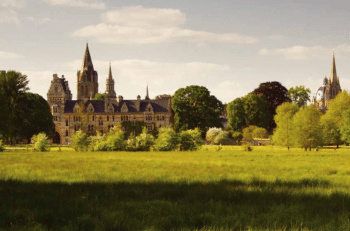
    North Oxford is a heartland of academia where leafy halls of residence mingle with stately homes and rarefied hostelries. Situated in almost the very centre of Britain a windless calm favours scholarly reflection removed from modernity’s fugue. Even the traffic is orderly with bicycles sensibly preferred. It is one of the most attractive places in the world. Spend an afternoon on the lawns at Christchurch if you doubt it. Oxford is world-class in so many ways: the city and the university. PWC and Demos rated it the best place to live in Britain, in 2012, across a wide range of criteria. Shanghai ratings names Oxford University the seventh best in the world. South Oxfordshire was recently named Britain’s best rural place to live. It is transcendent England. What has this to say about Brexit, the political issue of this generation? The City of Oxford is located on the confluence of the Isis (the idiosyncratic name for the Thames here) and Cherwell rivers. Broadly, it may be divided into three zones with a clear north-south divide: that affluent and mature north Oxford of Jericho and Wolvercote; predominantly twentieth-century suburbs including Cowley to the south; and the historical and commercial centre linked to Botley and Osney Island, built around an Anglo-Saxon settlement of which little remains. This contains renowned colleges such as Christchurch, Balliol and Magdalen. The first sign of incongruity is how close it nestles to the ‘any-town-UK’ commercial centre and its array of gaudy chains. Moving south, there is yet another Oxford as housing gets cheaper and industry is evident. The first industrial revolution passed Oxford by as colleges objected to the contagion of commerce. Only after World War II did significant manufacturing arrive as the city attracted a car industry. By the early 1970s, 20,000 people were employed in the sector and the original Mini Minor was developed here in 1959. Unfortunately, as in much of the country, a significant proportion of heavy industrial jobs have departed. The working class areas now face social problems familiar in many English cities. Living as a jobbing tutor and supply teacher in Oxford for two years I encountered classroom behaviour that made experiences in schools in socially-deprived areas of Dublin seem almost meditative. Oxford is a place of profound educational inequality. Oxford accomodates a great literary tradition: JRR Tolkien, CS Lewis, Lewis Carroll, Kenneth Graham and Irish Murdoch wrote from Oxford. The number of Prime Ministers that have passed through Oxford University is startling. 28 overall. Only Jim Callaghan and John Major, who revelled in his immersion in the university of life, among English Prime Ministers since Winston Churchill (who finally left office in 1955) did not pass along its quads. Alumna Theresa May (St Hugh’s, 1974) joins a list that includes Labour Prime Ministers Tony Blair (St John’s, 1974), Harold Wilson (Jesus College, 1937) and Clement Atlee (University College, 1904) as well as Tories Anthony Eden (Christchurch College, 1922), Harold MacMillan (Balliol College, 1914) Edward Heath (Balliol College, 1939), Margaret Thatcher (Somerville College, 1947), and David Cameron (Brasenose College, 1988). Oxford indubitably has seeded the post-War UK political establishment. Moreover, numerous Tory politicians maintain an association with the wider shire. Churchill himself was born in the nearby ancestral estate of Blenheim Palace (though he passed some of his early childhood in Dublin’s Phoenix Park). David Cameron, MP for Witney, Oxfordshire, lives in Chipping Norton close to Rebekah Brooks, Jeremy Clarkson and the rest of the well-placed Chippy set. Michael Heseltine (Pembroke College, 1954) dwells in style nearby though one imagines he looks slightly askance at the gobby neighbours. Theresa May grew up in the village of Wheatley a few miles east of Oxford where her father served as vicar. Further east towards London, Boris Johnson (Balliol College, 1987), the new foreign secretary, lives in Henley-on-Thames. Jeremy Paxman, Richard Branson, Kate Moss, Kate Winslet, Rowan Atkinson, Jeremy Irons and Ben Kingsley: celebrities, high-and-low-brow, live in Oxfordshire. Perhaps the county has a quality – an England of the imagination – that grandees of all sorts gravitate towards. It could be the low rural population density, a legacy of the Enclosure Acts (1760-1830) that placed formerly common land in the hands of expanding gentlemen farmers. Today, though located only an hour from some of the most in ated land prices in the world in London, it is possible to drive for long stretches without seeing a single dwelling. The hoi polloi were kept at bay, in Oxford and swathes of its hinterland. As an Irish person living in the city of Oxford I never had a sense that I was unwelcome, or at least any alienation was no different to that felt by the bulk of the population before a converging aristocratic and mercantile elite: unlike the ancient regime in France since the Tudor era, nobility has been open to the highest bidder and an Oxford education provides the polish. One must however acclimatise to the southern English reserve and a sardonic sense of humour. The historian Tony Judt (St Anne’s College 1980- 87), who concededly knew little of Ireland, wrote that the English are perhaps “the only people who can experience schadenfreude at their own misfortunes”. Succumbing to generalisation I regard English friendships as firmer than Irish for all the latter’s sociability. But these societies of companions generate mosaic communities often hostile to one another. Better the devil you know and bugger the rest. In the era of the Internet there is a growing suspicion of the ruling class of politicians. Many do feel “shat on by Tories, shovelled up by Labour” in the words of Uncle Monty in ‘Withnail and I’. They are often seen as a separate cast reflecting the cultural dominance of Oxford and Cambridge Universities (‘Oxbridge’) which extends to the media and business. This trend perhaps explains why maverick and grumpy (though otherwise profoundly different) outsiders such as Jeremy Corbyn, Nigel Farage (and Boris Johnson who went rogue over Brexit) are appealing to a jaded electorate; a state of

    Loading

    Read more