refugees

Random entry RSS

  • Posted in:

    Processing payments to Ukrainian accommodation providers costing the Government millions

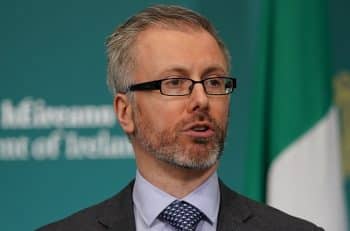
    Processing invoices for Ukrainian accommodation providers is costing the Department of Children millions every year. By Conor O’Carroll. A new report from consultancy firm Auxilion has found that processing invoices for Ukrainian accommodation providers is costing the Department of Children millions of Euro each year. The report, which was obtained by Village, states that “based on assessed processes and current assumptions, the current cost per invoice processed is approximately €902”. With the Department processing a minimum of 700 invoices per month, the cost quickly spirals. Based on 8,400 invoices processed over the course of a year, the projected cost rises to €7.5 million. By comparison, the worst-case performers across industry are able to operate at €9 per invoice, substantially less than the Department, while “best in class organisations process at a cost of less than €1.80 per invoice”, the report says, over 500 times better than the Department. Some of the reasons for the extraordinary cost relate to the number of staff involved. Close to 70 people in the Department are involved across the entire payment cycle, from contracts and procurement to the payments team. A proposed headcount increase of 70 people would significantly worsen the cost associated with processing invoices according to the report, bringing the cost per invoice to €1,817 Other challenges noted in the report include a shared Excel document containing information the entire system relies on that can only be accessed by one person at a time. “This is creating a significant bottleneck in the process”, the report notes. Most of the accommodation suppliers are procured without proper contracts, with the limited number of beds available and uncertainty surrounding the number of arrivals forcing the procurement team to constantly add new suppliers. According to the most recent update from the United Nations Refugee agency, UNHCR, Ireland has taken in over 100,000 Ukrainians fleeing the war. In September, an extra €1 billion in funding was provided to the Department to aid in accommodating Ukrainians and others seeking international protection. A significant backlog in processing invoices is also created with each payment form from suppliers requiring approximately 25 minutes to check and ensure the information is correct. Up to 90 of these forms are processed every week, falling far short of the numbers required to clear the number of invoices received. There is also a substantial amount of checking and re-checking of the same data according to the report, with the manual nature of the work contributing to the time-intensive task. Other challenges noted in the report include that the Excel document containing information the entire system relies on is shared and can only be accessed by one person at a time The report makes clear that staff at the Department “recognise the need to improve, but have not been able to take a step back and reflect due to the ongoing challenges”. However, a proposed headcount increase of 70 people would significantly worsen the cost associated with processing invoices according to the report, bringing the cost per invoice to €1,817. Based on current figures, that would result in an annual cost to the Department of over €15 million, the report states. Instead, the report recommends that the process be re-designed and technology be introduced to automate some of the processes and reduce the demands placed on staff. The Department of Children has been contacted for comment.

    Loading

    Read more

  • Posted in:

    The Right to have Rights

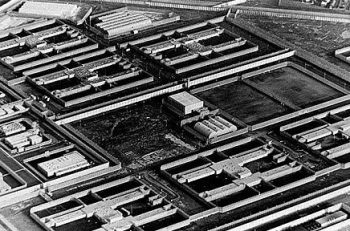
    Hannah Arendt’s famous phrase ‘the right to have rights’ was coined in her 1958 book ‘The Human Condition’. The condition of being stateless, of being a displaced person, which began its modern history in Europe with World War I, has been experienced since by untold millions who have had to listen to the claim that ‘human rights’ are universal and fundamental – but not for them. Once we had the glamorous figure of the cosmopolitan, the person who belonged to the world, the global community; that figure has been displaced by the refugee, who belongs nowhere, but is to be found everywhere in the paradigmatic settings of the modern and contemporary world – the prison camp, the internment zone, the refugee camp, the ghetto, the jail, the arena of suspension where people live in a place that is always outside the country that it is inside. Arendt pointed out that the creation of such places and conditions is a political decision, not just a terrible catastrophe. It is the prevailing form of the penal colony, the new home that we have built to house the theory of human rights. Since Arendt, and most especially in the indebted work of Giorgio Agamben, it has become clear that the concentration camp of the twentieth century was not some historical anomaly, but that it is actually one of the paradigm sites of Western modernity. The internment camp is a zone of suspension, of ‘rendition’, a place that is always outside the country it is inside – Guantanamo is the best-known example, although there many such places – our best- known example was The Maze in Northern Ireland. Those entrapped there expose the hollowness of any claim to universal human rights, to having rights just on the basis of being human. Arendt said it plainly: the refugee, the displaced person, has regularly been denied the right to have rights. The denial is a political decision. It takes its most popular form in the denial that there are any ‘political prisoners’ in the denying country, although enemy countries are full of them. Its political nature has been counterpointed more clearly since 1948, since the United Nations began its series of declarations of Human Rights, unabated since that date; rights of men, women, children, of minorities, of the disabled, of all indeed who can be characterised as having been ‘excluded’, which means that even the ‘poor’, a constituency which enlarges globally by the hour, faster than ever since the almost perpendicular rise of neo-liberalism in the decades before and after the financial crash. Reading these rights, as ‘declared’ (whatever that means), in that bland United Nations universalistic rhetoric, it is hard to know whether to laugh or cry. Such noble vacuities, such actual atrocities – produced by the same state systems that have prevailed since 1945. It was part of Arendt’s long argument, which began in 1943 with her essay “We Refugees” (about Jewish migrants who had become ‘stateless’, that condition in which they had no rights) that asked why European civilisation had so successfully produced the barbarism that made statelessness pandemic and human rights so unavailable to the millions of ‘displaced persons’ of World War II. Part of her answer was that this barbarism was so successful precisely because it was so concealed within or behind the declarations of universal rights and justice which the West, in the case of the American and the French Revolutions, had made central to the powerful ideology of what mutated into Western ‘freedom’. Arendt’s question then was: how could such an ideology be developed (as through the UN declarations) and simultaneously traduced (as in American foreign policy)? It is too feeble an explanation to put it down to hypocrisy. Hypocrisy on this scale occurs when the people who most sincerely believe in the peaceful principles are those who most regularly betray them in violent action. The British spent three centuries in perfecting their international reputation as hypocrites, a nation that believed itself to be peaceful even as it waged endless wars. Now that role has been assumed, largely, by the Americans. But, to achieve world domination is one thing; world hegemony is another. That’s what the World Wars were fought for. Arendt achieved notoriety with her reporting on the 1961 trial of the Nazi Adolf Eichmann, which was published in book form as ‘Eichmann in Jerusalem: A Report on the Banality of Evil’, where she developed the central figure of the ‘desk-murderer’, the bureaucrat who administered the death-camps. But her key point was that this was a show-trial, that pretended to be an example of universal justice triumphing over universal evil. Rather, it was in fact a national victory of the Israelis over their Nazi persecutors. In this exemplary instance, we are shown how the language of universalism can be used as a disguise for a state’s policies. The jurist who had the ambition to do that for a successful Nazi state, Carl Schmitt (1888-1985), described in his ‘Nomos of the Earth’ (1950), how the European system of international law had been replaced by an American one, with the UN as its legislature and the International Tribunal or Court as its executive. In effect, the language of universal rights was used to ratify the aims of American foreign policy; Nuremberg, Tokyo, Damascus, the Hague were, like the Moscow show trials of the 1930s, elaborate pretences that something objectively true was being defended from the current version of sectarian betrayal – war criminality, terrorism, the new terms of ‘war crime’ and its flourishing neighbourly companions, such as ‘ethnic cleansing’. Danilo Zolo has demonstrated in Victor’s Justice how the Kosovo war of 1999, that infamous intervention (to be followed by interventions in Iraq, Afghanistan , Libya and elsewhere, saving the ‘people’ of those countries for democracy, largely by killing and dispossessing them), with its International Court at the Hague, which could try anybody but Americans, is the most egregious example so far of how the language of universal rights has been perverted

    Loading

    Read more

  • Posted in:

    No civilisation in this jungle

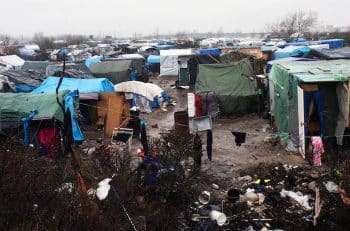
    Hundreds of people line up in a queue as soon as the doors of the van open, each hoping to get a pair of warm trousers. It is a cold November day in Calais, but some of them are wearing just shorts and slippers. In the queue I recognise a Syrian man that I met in the refugee camp on the Greek island of Lesbos just three months ago. He is so thin that it is hard to find him a slim enough pair. But what strikes me even more is his eyes – their sadness and exhaustion – that seem to reflect the cumulation of hardships of the past months, starting in his home country, and now continuing in Europe. That moment of hope and relief, when the overcrowded flimsy rubber dinghy he was on reached the shores of Europe, has now turned into hopelessness at being stuck in one of the worst makeshift refugee camps in Europe, the Calais camp, also known as the Jungle. It’s not a jungle though: it’s more of a disaster zone. Shabby tents and improvised shelters made out of pallets reach as far as the eye can see. The site is far from ideal for camping, the less so during this chilly rain; the sandy ground has become just muddy. Some parts of the camp are exposed to a heavy wind, and people are looking for help to fix their collapsed shelters. There is no electricity. Sanitation is severely inadequate. No more than 40 toilets are currently serving over 6,000 inhabitants – one for every 150, while the UNHCR recommendation is one toilet per 20 users. With only three taps in the camp, there are not many opportunities to wash hands. Litter is everywhere, and some areas are covered with human extracts. At one of the two refuse points of the camp I meet representatives of the Médecins Sans Frontières, who have come to collect the rubbish. They remind me to be careful what I touch due to the threat of scabies and other infectious diseases. A recent investigation by the University of Birmingham, supported by the Médecins du Monde, further highlights detrimental health situations in the camp including the prevalence of ‘white asbestos’, sometimes used to weigh down tenting. As food in the camp cannot be stored safely, much of it carries infective amounts of pathogenic bacteria, causing diarrhoea and vomiting. Several water storage units exhibit levels of bacteria exceeding the EU safety standards, too. The lack of washing facilities prevents the effective treatment of scabies, lice and bedbugs. Many here are suffering from mental illnesses. The makeshift hospital in the camp has the capacity of treating only up to 90 patients a day and there is a constant shortage of medical supplies. It is especially hard to provide treatment for long-term medical conditions such as tuberculosis. Many patients also come in with serious injuries, often resulting from unsafe conditions in the camp, or failed attempts to cross the border. I meet a young boy who has a broken arm, after a failed attempt to jump an England-bound train – a typical case. The United Nations High Commission for Refugees (UNHCR) has continually expressed about the reception conditions for refugees and migrants in Calais, stressing that security measures alone are unlikely to be effective, and urging the French authorities to relocate the refugees to proper reception facilities in the Nord Pas de Calais region and further afield. Some relief is expected from the proposed EU- supported refugee centre, that is expected to be opened in Calais in 2016. It will reportedly be equipped to deal with 1,500 persons. Another alternative would be to involve experienced non-governmental aid organisations such as the Red Cross to act as auxiliaries for the public authorities in the humanitarian field. Charities and voluntary organisations offer an invaluable contribution to the current European challenge, but they cannot be expected to supersede the responsibilities of European governments. Of course, permanent aid mechanisms will be required for as long as the conflicts causing the crisis, sometimes exacerbated by Western military interventions, are allowed to continue. Naiim Sherzai is standing at the exit of the camp, watching the trucks headed for British ports. Sherzai, who comes from the Helmand province in Afghanistan, is a former translator for the British forces, and had to leave the country because of the threat of the Taliban. He now wants to seek asylum in the UK, and ultimately to bring his wife and two children there. He asks whether we could recommend him any legal ways to enter the UK. But in Calais, there are no such routes available for a refugee. Lack of alternatives drives many to desperate acts, trying to hide in the trucks headed for the ferries or the Eurotunnel, or cutting the fence to hide in the trains. At least 16 people have died this year trying to get across the Channel. Tear gas fills the camp regularly as the police tries to drive out refugees from the proximity of the trucks entering the port of Calais. Although the tightened security measures and border controls have decreased the numbers of those who try to leave, groups of refugees lunge for their freedom every night. The rest, like Sherzai, find themselves lost – the road ahead blocked, but with no turning back either. In the jungle. In limbo. Johanna Kaprio

    Loading

    Read more