victims

Random entry RSS

  • Posted in:

    Some rugger-buggers hooked on group sex

     The George Hook affair – in which he scandalously suggested that a woman might hold a degree of responsibility for being raped – touched on many things, but one overlooked aspect is a connection to a worrying trend in the world of rugby, where he made his name as a trainer and commentator. Irish society is accustomed to cover-ups and prevarication within corporate organisations, especially where there are allegations of sexual abuse. So, does the Irish Rugby Football Union (IRFU) need to address the advent of a dangerous culture of sexism among its professionals? Four current or former Irish rugby players are set for trial in Belfast this year for rape. The precise details are not open for discussion, but Ulster and Ireland players Paddy Jackson (25) and Stuart Olding (24) are accused on two counts each of raping the same woman on June 28, 2016. Both deny the charges. Former Ulster player Blane McIlroy has been charged with exposing himself to cause “alarm or distress” on the same date, and former UCD player Rory Harrison (25) has been charged with perverting the course of justice by allegedly making a false witness statement to police. He is also accused of withholding evidence. Needless to say, anyone accused of a crime is innocent until proven guilty, but we need to consider the autonomous issue of whether rugby has a cultural problem with sexism and alcohol abuse. Superficial similarities Until recently rape was considered a property crime of man against man: women. Women were not their own agents. In a different and ancient way we still see this attitude in Bunreacht na hÉireann. Victims were commonly accused of incitement, and even subject to punishment. In India and Pakistan, unfortunately, that is still sometimes the case. In Ireland, rape within marriage was only recognised as an offence in 1990. Ireland, like most countries, has long had a problem with under-reporting of this heinous crime. The Rape Crisis Centre reported in 2016 that 65% of survivors using their services had not previously reported to any formal authority. The conduct of many Irish men clearly remains hugely problematic. George Hook courted controversy, and lost his job, for offensive comments he made on his Newstalk show regarding a case with superficial similarities to the Ulster players’ case now playing out in Britain. Hook was reacting to details of a court case involving a young woman who returned to the hotel bedroom of British Olympic swimmer Ieuan Lloyd and had consensual sex with him, where upon, she alleges, she was “passed on” to his friend Otto Putland who, she claims, raped her. Hook said: “Why does a girl who just meets a fella in a bar go back to a hotel room?”. “Should she be raped? Of course she shouldn’t. Isn’t she entitled to say no? Of course she is. Is the guy who came in a scumbag? Certainly. Should he go to jail? Of course. All those things”. And then the clanger – “But is there no blame now to the person who puts themselves in danger?”. The answer, to be clear, is that there is none. A woman always has a right to choose with whom, and when, she has sexual relations. Provocateurs George Hook is a proud rugby man, whose hulking six-foot-three frame equipped him for the playing fields of Presentation Cork. He would find elusive success as a rugby coach, with Connacht and London Irish, and also the United States in the first Rugby World Cup in 1987. But it was as a pundit on RTÉ sports television, beginning in 1997, that he really shot to prominence; copying the role Eamon Dunphy plays in soccer commentary – as a provocateur who stands up for the values of his game. Having found fame in his twilight, he embarked on a successful media career as conservative columnist for the Sunday Independent, and then as Ireland’s first ‘shock jock’ on Newstalk. Along the way he has championed “beleaguered” motorists against girlie-men cyclists, infuriated feminists, and proclaimed himself an unashamed Blueshirt, reaching out to those who eat their dinner in the middle of the day. When TV3’s Colette Fitzpatrick suggested he was “controversial” he lost his temper, saying it was an “outrageous accusation” which was the same as calling him a “liar” and a “fake”, that it was a stereotype that he battles every single day. George Hook may not represent mainstream views on rape in the rugby community, but his success on the airwaves attests to a constituency of angry, middle-age men among them who inveigh against a rapidly changing world. To that mindset perhaps, the scantily-clad, inebriated girl – the tart – who returns to a hotel room with a group of men should not expect to halt proceedings once she puts herself in that position. Worryingly, the Ulstermen are not the only Irish professional rugby players to have been accused of rape this year. In March Denis Coulson (23), then playing in France for Grenoble, was detained along with two non-Irish team-mates in Bordeaux after a 21-year-old woman alleged she was drugged, taken to a hotel room and raped. He strenuously denies a charge that did not prevent the IRFU re-integrating him into the Irish game as a member of the Connacht squad. It might appear that group participation in sex is a form of currency among elite rugby players. In 2013 another incident of group sex involving two other prominent Irish rugby players, being filmed by a third, was widely reported in the media, especially the Irish Independent which lapped up the sordid details. A video went viral via social media, and soon afterwards the woman involved felt compelled to leave the country. There is no suggestion that consent was absent or withdrawn, or any sexual assault committed, but there was nonetheless a serious violation of privacy. The players faced no public sanction, and the IRFU did not deem it necessary to investigate whether a culture of sexism operates among rugby players in

    Loading

    Read more

  • Posted in:

    Rape Disgrace

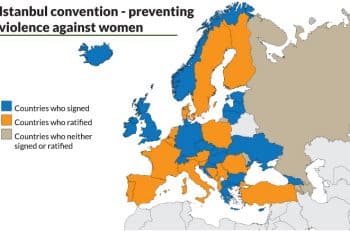
    We’re living in a “rape culture”, even though the term seems to annoy some people. So let’s just say we’re living in a culture in which rape is routinely trivialised, where victims are frequently blamed for its occurrence and their testimony is denied and ridiculed, and where the onus is placed on them to prevent rape from happening. Just under a third of female respondents to a recent survey among Trinity College Dublin students said they had experienced unwanted physical contact while at Trinity. A quarter of female students had been sexually assaulted, or had a “non-consensual sexual experience”. The Dublin Rape Crisis Centre (DRCC) has recorded a shocking increase of 36% in the number of victims of rape and sexual assault to the Sexual Assault Treatment Unit in the Rotunda Hospital in Dublin in 2015. Ellen O’Malley-Dunlop, CEO of DRCC, said: “The 36% increase in the number of victims accompanied to the Sexual Assault Treatment Unit in Dublin, for 2015 in comparison with 2014, is very concerning. We have yet to analyse these figures as to why there has been such an increase”. Surprisingly, 24% of callers were male and there has been a steady year-on-year increase in males using the Helpline since 2008 when the gure was 14%. There was an increase of 30% in first-time callers to the National 24-Hour Helpline in 2014 (the latest year for which statistics are available), compared with 2013 figures. Calls relating to adult rape showed an increase of 14% compared with 2013 figures. There was an increase of 71% in crisis appointments for recent rape and sexual assault delivered by therapists in 2014, compared with 2013 figures. Our statistics on sexual crime are shocking. It is now thirteen years since publication of the Sexual Abuse and Violence in Ireland Report (SAVI) detailing the prevalence of sexual violence in relation to age and gender for over 3,000 adults, it remains a very distressing document. So with a general election looming what’s to be done? Ratification of the Istanbul Convention would generate change. The convention deals with prevention, requiring us to put in place measures to challenge the gender stereotypes, roles and attitudes that promote this culture of violence against women. It obliges us to ensure that the Garda respond immediately to calls for assistance and that all victims have access to special protection measures during investigation and judicial proceedings. The convention crucially deals with protection, ensuring that the needs and safety of survivors are placed at the heart of all measures. It demands the setting up of specialised support services that provide medical assistance as well as psychological and legal counselling to survivors and their children. The convention also stipulates the number of refuges that are needed to adequately respond to women, that of one refuge place per 10,000 of population – we’re well behind this target right now. The Istanbul Convention provides the framework for structural and personal reforms and provides a mechanism to hold the Government to account. We need stronger legislation. Domestic violence should be a crime of itself, accompanied by appropriate sanctions that match the seriousness of the act. Within the proposed sexual-offences legislation, a definition of consent should be included. Consent should be freely given – an enthusiastic, clearly communicated and ongoing Yes. Right now one in ten victims of sexual crime in Ireland reports that crime. Of that one in ten, only 7% lead to a conviction. We urgently need sanctions that are effective, consistent, proportionate and dissuasive. The appallingly high attrition rates within our criminal justice system and send out a message to women that if they report a crime justice will be done. We must provide a supportive environment for women to continue through the system and seek justice. Setting up the new Garda unit – The Human Protective Services Bureau – was a great move but it requires increased personnel and financial resources to target domestic and sexual violence. Specialist units in each Garda Division should now be established to address domestic and sexual violence ,and ongoing training is required at all levels to develop an expertise within the force that both supports the victim and pursues perpetrators to arrest and conviction. We will only seriously address this issue when we shift the focus from women, from asking what did she do, why was she there at that time, why did she stay, and place the focus on men who perpetrate these crimes. We must break the malicious disbelief, victim-blaming and perpetrator-excusal that surrounds rape. We must restore funding to the organisations that help victims. We must shatter this culture of rape. Lorraine Courtney

    Loading

    Read more