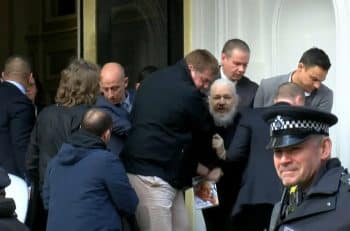
London extradition hearing was the last stand of either Wikileaks founder or Western Intelligence Imperialism, and awaits January decision By Caroline Hurley Queensland-born Julian Assange (49) founded Wikileaks in 2006. Four years later it published several huge and devastating leaks provided by US Army intelligence analyst Chelsea Manning, including: the Afghanistan war logs, the Iraq war logs and Cablegate. Wikileaks notably published 250,000 redacted documents and footage of US troops in an Apache Helicopter gleefully shooting dead what turned out to be two Reuters employees and Iraqi civilians fleeing in Baghdad (Collateral Murder video). Evidence of torture of Guantanamo Bay detainees also created shockwaves, as did revelations of Hilary Clinton’s entanglement with Wall Street and military regimes.The model of public-interest publishing pioneered by Wikileaks, which facilitated anonymous submission of classified material and organised collaborative reporting across jurisdictions, is now widely practised in mainstream media. The threatened indictment of Assange, symbol of press freedom, puts all investigative journalism on trial.Critics of Wikileaks’ releases included Julia Gillard, then Australian Prime Minister, who said they were illegal, and the then US Vice-President, Joe Biden, who significantly called Assange a terrorist. In 2017 then-CIA director Mike Pompeo declared that Wikileaks was a “hostile intelligence service” aided by Russia.AccoladesOn the other hand, Julian Assange was named Time Magazine Person of the Year in 2010, and then awarded the Martha Gelhorn Prize in England and the Walkley, an Australian Pulitzer Prize equivalent. However, the US Justice Department embarked on a mission to criminalise him and his associates. Swedish Rape Allegations As Assange kept slipping through his pursuers’ fingers, new jeopardy swooped in 2011 from Sweden where, surviving largely without a fixed address, Assange had been spending much of his time. He was recalled there for questioning about two women’s accusations of sexual assault. He agreed to travel from his temporary UK base to answer the charges on condition the Swedish government promised not to extradite him onwards to America. Assange Seeks Asylum Refused these terms, and after exhausting British legal options, in 2012 Assange sought asylum at the Ecuadorian embassy in London.In 2016, the UN Working Group on Arbitrary Detention upheld Assange’s plea as eligible, supported by various statements including one signed by 500 high-profile figures from more than 60 countries. Nothing changed. His house-arrest-like limbo lasted until 11 April 2019 when he was handed over to police.On 20 February 2019, the International Monetary Fund had given Ecuador a $4.2 billion financial package subject to Washington’s approval. Within days, Wikileaks’ prize source, Chelsea Manning, was subpoenaed to inform on Assange, and punished for non-co-operation by a month in almost total solitary confinement, during which time Ecuadorian president Moreno, formerly a fan, came out against Wikileaks.With Assange firmly in the clutches of Anglo-American law enforcement, the Swedish sexual assault charges were finally dropped. Assange Jailed After the police arrest, Assange appeared at Westminster Magistrates’ Court. The District Judge remanded him to Belmarsh maximum security prison until 2 May 2019, when another Judge at Southwark Crown Court sentenced him to fifty weeks in jail for violating his 2012 bail conditions.Handled like a violent criminal, Assange was held in an isolation cell and denied virtually all contact with other prisoners, visitors and his legal representation. Reports of his deteriorating mental and physical health spread. US Indictment The US government launched a criminal investigation into WikiLeaks and is now seeking Assange’s extradition from the UK. He faces one charge of conspiracy and 17 charges of espionage.On 11 April 2019, the US District Court for the Eastern District of Virginia unsealed a 2018 indictment charging Assange with conspiring to commit computer intrusions by assisting Chelsea Manning with breaking a US-government password. Having, under extradition rules, only a 60-day window from the date of Assange’s arrest in London to add more charges, the US Department of Justice unveiled a further seventeen criminal charges against Assange on 23 May 2019, alleging he contravened the Espionage Act of 1917 by publishing the names of classified sources and conspired with and assisted Manning in obtaining access to classified information. The eighteen charges mean a potential cumulative 175 years in prison on conviction.The US-UK extradition treaty cited in the demand that Assange be handed over explicitly forbids political extraditions – and the US government itself had designated him a political actor in 2010.Human Rights Watch and others condemned the move as a regulatory weapon of mass destruction aimed at journalists, whistle-blowers and other truth-tellers. Pariah Assange remains a controversial figure, due mainly to allegations about his temperament and conduct, to the sexual assault allegations and to his alleged support for Donald Trump during the 2016 US Presidential Election when WikiLeaks released documents from the Democratic National Committee (DNC) showing that it favoured Hillary Clinton and had tried to subvert Bernie Sanders. In 2018, Special Counsel Robert Mueller charged twelve Russian intelligence officers with computer hacking and working with WikiLeaks and other organisations to disseminate the documents but Assange said that the Russian government was not the source of the DNC documents. In 2019 CNN reported that Assange had used the Ecuadorian embassy to meddle in the 2016 election.Perhaps partly because of this record, the media internationally went cold on Julian Assange. The BBC’s website covered the hearings in just four – unquestioning – pieces. The Logistics of the Hearing The extradition hearing began at Woolwich Crown Court on 24 February 2020 but was largely adjourned until 7 September. Consortium News and Courage Foundation supplied coverage daily; Counterpunch and Defend Wikileaks did frequently. Even The Guardian engaged though not enough to impress demonstrators outside its offices or signatories of a petition complaining it profited from publishing his leaks yet did not cover the extradition hearing every day one of many leading news outlets, including the Bureau of Investigative Journalism that had extensively exploited Wikileaks files.Reporters Without Borders (RSF) was the only NGO permitted court access. A crowd of hundreds gathered outside the Old Bailey as the case began – speakers included Wikileaks’ Editor Kristinn Hrafnsson, journalist