Kevin Brannigan

  • Posted in:

    Don’t go: despite structural problems, no time for local government defeatism (March 2009)

    “Should I Stay or Should I Go?” – so sang The Clash in their classic hit of the 1980s. According to two contributors to the December edition of Village, it is a question being asked by many members of City and County Councils, particularly in the Dublin area. In the December issue, former Councillor Mick Rafferty told us why he was leaving and Fine Gael’s Councillor Gerry Breen why he was staying. The common feature of both was their sense of defeatism. Mick is calling it a day because he thought the procedures and politicking were too much and Gerry is staying, even though he is unhappy with the ways things work, or more accurately don’t work. Regrettably Gerry offered no new ideas and Mick retreated to the concept, so beloved of those who actually wield power, of “participative democracy”. A policy that sounds good in theory but ensures in practice that real power remains with the elite. The picture Mick painted of the role of a Councillor, is not one I recognise. The reality is that these Strategic Policy Committees were designed to contain Councillors rather than empower us. “Keep them busy and they will be less of a nuisance”. In my sixteen years as a member of Dublin City Council I am proud of a record of achievement that has benefited both Dublin and my own electoral areas. I have also by and large enjoyed the work. Nor do I agree with Mick’s apparent view that all Councillors somehow share the same agenda and should work as if we are all on some agreed common course. I am a Labour member of the Council. I seek to advance my Social Democratic policies. I do not share the political objectives of Fianna Fail, Fine Gael or Sinn Fein. It is worth noting that of the sixteen, some went because they were elected to the Oireachtas, others because a political career had effectively been closed off by rivals, one moved to live abroad and some because their personal lives had changed since their initial election. In general we as Councillors do not set the rules by which the Council operates. More often than not they are imposed on us from the Department of the Environment in the Custom House. It was from there that the Strategic Policy Committees, Corporate Policy Groups and City and County Development Boards were dreamt up. It is these unproductive structures that impose the wasteful time constraints on Councillors. These are but some of the areas we need to change. Mick is correct that the Housing Strategic Policy Committee, chaired by my colleague former Councillor Mary Murphy, over the last few years published progressive policy papers on housing and related matters. In better times I hope that these yield fruit. Yet, the reality is that during our “Celtic Tiger” years, as the policy papers piled up, the housing and homelessness list of Dublin City Council rose in parallel. The reality is that these Strategic Policy Committees were designed to contain Councillors rather than empower us. “Keep them busy and they will be less of a nuisance”. We will not however force change by walking away from the problem. For me Local Government matters. In terms of planning, housing, community development, provision of accessible recreational, cultural and sporting opportunities it is very often the first point of call. The fact that it has been starved of funding over the last decade should not obscure that fact. While the detail of such reform is extensive the essentials are not. If they are to be in any way meaningful they must include: An Independent source of funding for Local Authorities – not subject to the whims of the Department of the Environment. Reform of the City and County Managers Act, creating a new post of Chief Executive Officer – accountable to and appointed by the relevant Local Authority following recruitment through the Public Appointments Commission. A directly elected Mayor of Dublin with a five-year term and accountable to an enhanced Dublin Regional Authority. The extension of the role of the Dublin Regional Authority to include Transport and Planning and subsuming bodies such as the Dublin Transport Authority and the Affordable Housing Partnership. Real controls and limitations on electoral spending at local elections. Yes, I want real reform. I sought election many years ago to improve my local community and because I enjoyed the cut and thrust of political life. In one of the many deserving tributes to the late Tony Gregory, one person wrote of Tony’s legal struggle to remain a member of the City Council following the ban on holding the dual mandate. Tony sought to retain his Council seat because he too knew that Local Government matters. The author of that tribute was Mick Rafferty. Mick was right. I have never regretted my decision to seek election to the Council and my belief that local government is the best model to deliver real reform to Irish Society has intensified over those years. The Public need and deserve a better system. It is time for those who agree to Stand up for Democracy, Stand up for Local Government and in my case Stand up for Dublin.

    Loading

    Read more

  • Posted in:

    Our Thatcherite in Europe

    One thing you can’t fault Charlie McCreevy for is his consistency. The palpitations in the world economy might have exposed his allergy to financial regulation as reckless, yet McCreevy’s faith in unfettered capitalism remains undimmed. Since taking up his post as the EU’s single market commissioner in 2004, McCreevy has repeatedly recited the mantra ‘less is more’. “For far too long the EU has been adopting rules at EU level, simply for the sake of having rules at that level”, he told a conference in Cape Town during 2007. “Once adopted the rules have been left to gather dust on the statute book. My approach is a different one. We should adopt fewer, better quality rules and then devote our energy to making sure they are properly enforced”. Superficially, this appears like McCreevy has been trying to replace the Euro-twaddle of the Brussels elite with the plain-speaking of Kildare racecourses. The truth, however, is that he has gone to enormous lengths to shield some of the most dubious practices in modern finance from oversight. During January, The Financial Times described McCreevy’s approach to hedge funds and private equity as “more nuanced” than those of his direct boss, European Commission president José Manuel Barroso. Leaving aside that this may be the first time the word ‘nuanced’ has been applied to anything advocated by McCreevy, the FT claim is untrue. McCreevy has maintained that hedge funds should be subject to no more than voluntary codes of conduct. He has, however, been pressurised by Barroso into drawing up plans for binding regulation so that they can be formally proposed ahead of the European Parliament elections in June. By arguing that hedge funds can manage themselves, McCreevy is out of sync with a growing body of international opinion. Barack Obama’s nominee as Treasury Secretary Timothy Geithner has signalled that he is in favour of mandatory registration and surveillance in this field. So, too, have Angela Merkel and Nicolas Sarkozy. He has an extremist position and is a full believer in the casino style of capitalism that has now collapsed. McCreevy has maintained that hedge funds play a largely positive role, ignoring how they helped trigger the sub-prime crisis in the US and how they have engaged in shortselling banks on this side of the Atlantic. “I think he is finding it very hard to accept that his beloved unregulated market has failed”, said Poul Nyrup Rasmussen, the former Danish prime minister and now a Socialist MEP. “He has certainly been trying to delay and where possible avoid regulation on hedge funds and private equity. I can’t say what lessons he has learned from the crisis but he does not seem to have changed his dislike of market regulation which is a pity because practically everyone else has realized that better regulation is unavoidable and necessary. I suspect we will encounter further efforts by him to put off regulation”. Some clues as to why McCreevy remains so convinced of the virtues of hedge funds may lie in time in domestic Irish politics. Although hedge funds were banned in Germany until 2004 because their speculative activities were considered too risky, McCreevy had no qualms about welcoming them to Ireland as the country’s finance minister. And by the time their global value was estimated at $2.5 trillion last summer, the IFSC in Dublin stood alongside London and New York as one of the major onshore centres of hedge funds in the world. “Mr McCreevy behaves like a lobbyist for the hedge fund industry,” says Peter Wahl from World Economy, Ecology and Development (WEED), a German anti-poverty group. “He has an extremist position and is a full believer in the casino style of capitalism that has now collapsed”. Once dubbed the most right-wing finance minister in Europe by Proinsias de Rossa, McCreevy has used his platform as a commissioner to identify with the chief architects of market fundamentalism. While his ideological preferences were never really in doubt, he nonetheless chose December 2005 as his ‘coming out’ month. He praised Margaret Thatcher for how she had “economically transformed” Britain. And he quoted Milton Friedman, intellectual guru to Ronald Reagan and Augusto Pinochet, to support his contention that tax competition between nations is healthy. Again, McCreevy finds himself marginalised in holding that view. In December last year, a UN conference in the Qatari capital Doha recognised the kind of tax competition McCreevy favours as a major contributor to global poverty. Obama has also promised to crack down on tax havens. According to the World Bank up to $800 million in untaxed capital leaves poor countries or economies in transition each year, frequently because multinational firms have received tax breaks from the host countries. This dwarfs the $100 billion that such countries receive in annual development aid. Accountancy firms have provided invaluable advice to companies about how they can conceal their profits and thereby evade tax. The four biggest firms with global reach – PricewaterhouseCoopers, KPMG, Ernst & Young and Deloitte – have all paid huge settlements in recent times after they were sued for breaching financial rules. Yet they have a staunch ally in McCreevy, himself an accountant by training, who has recommended that the four (joined together in the International Accounting Standards Board) should effectively set the rules that companies listed on the EU’s stock exchanges should follow. This has thwarted moves to introduce the kind of international system that is needed to tackle tax evasion: one where every multinational firm has to state what profits it makes and what taxes it pays in every country where it operates. “Published accounts will always be like bikinis – much more interesting for what they conceal than for what they reveal”, McCreevy has said. “The view that more frequent reporting by companies increases transparency is one about which I am deeply sceptical”. Despite speaking about opaque financial transactions in colourful and accessible terms, McCreevy has snuggled up to a largely unaccountable corporate elite. “The IASB is a private company,” said

    Loading

    Read more

  • Posted in:

    Tensions rise as media standards fall Media need to look to the facts, not ideology Tensions between the local community and the Shell-led gas consortium in north-west Mayo have considerably deepened following the sinking of the shellfish boat owned by Pat ‘the Chief’ O’Donnell in mid June. The sinking of his boat and the arrest of his son, Jonathan, as they exercised their historic rights to fish in Broadhaven Bay have removed a key obstacle in the company’s attempts to lay a pipeline from Glengad to the Corrib gas field. Last summer, close observers of the controversy surrounding the proposed high pressure gas pipeline and terminal at Bellanaboy suspected that the withdrawal of the massive pipe-laying vessel, the Solitaire, was primarily influenced by a fear on Shell’s part that O’Donnell might be successful in a High Court application to protect his historic fishing rights. Shell to Sea activist, Maura Harrington, was for a number of days also on hunger strike in protest at the presence of the ship in Irish waters before the sudden departure of the Solitaire last year although the company claimed that the pipe laying exercise was suspended due to technical problems. Many suspected that a court decision in favour of O’Donnell’s right to fish was a key consideration by Shell executives who feared that such a development could further delay by years an already seriously troubled project. Now with the forced removal of the O’Donnell’s from the water, however temporarily, and relatively mild weather conditions over the coming weeks Shell is hoping that the pipes close to shoreline can be laid without too much further disruption by opponents of the project. Pat O’Donnell and his son Jonathan have been arrested on a number of occasions and another of their boats seized since the shellfish boat Iona Isle was sunk on 11th June off Erris Head. There has yet to be a decision by An Bord Pleanála following its recent oral hearings into Shell’s renewed application for a revised pipe line route during which significant health and safety issues, similar to those raised over the previously unacceptable route, were raised by a number of interested parties. (see Michael McGaughan article page?). There has been some media speculation, fuelled by Shell advisors and spin doctors, that Pat O’Donnell may have sunk his own boat, and his livelihood, in the early hours of 11th June in order to gain sympathy for his position and of many others who want the proposed pipe line and terminal moved to a location where it does not threaten the health and safety of local people or the environment. This notion is rejected by O’Donnell and his crew member in the lengthy and detailed interview with Miriam Cotton which is reported in these pages. Both men are adamant that the boat was sunk when four armed and masked men with Eastern European accents boarded the trawler and held them at gun point while releasing water into the vessel. Similar allegations of attempted media manipulation by those opposed to Shell’s activities were made against local farmer, Willie Corduff, when he complained that he was beaten, again by masked men, after he emerged from under a truck where he was protesting against what he and others saw as Shell’s attempts to illegally fence off from the public an area at the Glengad landfall. In the early hours of April 23rd Corduff claimed that he was attacked and beaten around the head and body at the Glengad site by men wielding batons or heavy rubber instruments and subsequently hospitalised. Among the commentators to question the veracity of Corduff’s account was Peter Murtagh who suggested in The Irish Times that the former member of the Rossport 5 – who was jailed for ninety days in 2005 – was making it all up. Murtagh claimed that Corduff had not provided him with his hospital records which might substantiate his injury claims. The respected IT editorial executive did not record the fact that obtaining hospital records is not something that can be achieved within the deadline demands of a newspaper but can sometimes take weeks, as Village has learned. Witnesses including professional journalists who saw Corduff in hospital testified to his bruised condition as did a photograph published in The Irish Times on the day after the attack and s other photos published subsequently in Village magazine. The hospital and ambulance service records obtained and paid for by Willie and Mary Corduff and furnished to Village are consistent with his account of how he sustained injuries which left him in Mayo General Hospital in Castlebar for twenty-four hours. The diagnosis prepared by Mr Osama Elfaedy, the registrar to consultant surgeon Kevin Barry and sent to Corduff’s GP, Dr Brendan Molloy in Belmullet, records that Corduff suffered from bruising and had been kicked all over the body during an alleged assault at Glengad. Willie Corduff was suffering from kicks, headaches, nausea and vomiting upon his admission on 23 April. It also records that he had suffered a possible loss of consciousness. The hospital carried out a CT scan and X Rays on Corduff’s spine, chest and ankle where the bruising and pain were most pronounced. He also complained of pains to his legs and thigh. He was treated with pain reliefs and analgesia and advised to rest before his release from hospital on 24th April. Ambulance records note that Corduff complained of pains around his head and body when he was collected at Glengad and that he may have lost consciousness after he said he was beaten by masked security guards. In early July, Amnesty International reported that Shell and other oil producers in the Niger delta in Nigeria were responsible for serious environmental pollution along the routes of its pipelines in the West African country. Communities had been ravaged by leaks and explosions devastating farmland and ruining the environment and the health and safety of local people over many years. Amnesty accepted that there had also been a campaign

    Loading

    Read more

  • Posted in:

    The elephant in between the property ads

    “The people who got us into this mess in the first place are not the people to get us out of it”. [David McWilliams, Irish Independent, 19 November 2008] This is the most pertinent advice from any journalist since the simmering economic crisis boiled over. In general, however, a crushing absence of credibility infuses Ireland’s newsrooms. The proverbial elephant in the room remains unfathomably neglected. Media analysis shares the blame for the current economic predicament between the central boom profiteers – what Fintan O’Toole calls “a triangular relationship between politics, development and banking”. The glaring omission is “the media” itself. The media inscribes this triangle, putting it at the virtual helm of the property boom titanic. Media and Property sectors linked Few will dispute that “the Irish media for the last 10-15 years have had a crucial economic stake in a rising property market”. For instance in July 2006 the Irish Times bought the property website MyHome.ie for €50 million and three months earlier Independent News & Media acquired PropertyNews.com, the “largest internet property site on the island of Ireland”. It is uncontroversial then to say that a deflating property bubble is bad for business. However, this relationship between media and business is not a simple one. It is inconceivable that the media, a wildly disparate group of individuals working in a variety of organisations, all with differing codes of practice and economic and ideological objectives, conceived a plan to inflate the property bubble. So if we discount collusion and mere chance, there must be something else. Symbiosis One element of this relationship that could be considered unhealthy is the seeming interdependence of journalism, government and big business. This is no more evident than in the property sector. Estate agents and developers are not only consulted as experts, they themselves file copy. Take for example the Ken MacDonald, veteran Managing Director of Hooke and MacDonald, purveyors of lower-end apartments, and long-term advocate of the relaxation of architectural standards for new homes. He was described by Sunday Independent property editor John O’Keeffe as the “Elvis of apartments and new homes” who “may not yet be able to turn water into wine – but you get the feeling it’s only a matter of time”. As late as March 2007 Mr. MacDonald was hilariously assuring Sunday Independent readers: “I am totally convinced that the market is currently in good shape and that anyone buying now will do extremely well in the years ahead … the Irish love affair with property will continue undaunted despite the knockers”. The Irish Times’ Environment Editor and development expert Frank McDonald wrote how from one month to the next he would be in Sicily to interview one of Ireland’s leading property developers and then Ibiza to attend the birthday party of architect and old friend John Meagher, at which tax exile and part-time developer Denis O’Brien made “the speech”. This cosy relationship is perhaps why developers are incessantly described as “affable”. The term is ubiquitous in the Irish Times and Irish Independent – when capturing the essence of our development Titans. So in these pages, Michael Taggart is the “affable Derryman”, Sean Dunne the “affable but tough former ordnance surveyor”, Joe Moran the “affable Kerryman”, Bernard McNamara the “affable presence in the Fianna Fáil tent” and Seán Mulryan the “affable but shrewd businessman”. The fact this cosy circle of élites exists doesn’t suggest back patting or unprofessional favour. It simply underlies the common interests and shared ideology that constrain media discourse and ultimately billowed the expanding bubble. Futureshock: Property Crash Take for instance RTE’s documentary Futureshock: Property Crash, broadcast in 2006 and presented by Richard Curran and his “Econo-Witches”, as they would later be dubbed. The programme explored the potential problems that might occur if the property market followed the boom-bust scenario of other countries – a timely and important thesis which had rarely been seriously considered in the media. Recent praise of the programme neglects to mention the media’s widespread “outrage” towards RTE’s “sensationalist shock tactics” and “lurid predictions”. The Irish Independent claimed RTE had “broadcast fear” and accused it of trying to “kill the property market”. The Irish Times suggested the programme was responsible for the “big decline in house-building”. It was “perversely irresponsible” according to the Sunday Independent’s Alan Ruddock. Clíodhna O’Donoghue reported on the “irresponsible, partly inaccurate and wholly sensationalist” programme. Marc Coleman, who now, in an absurd self-promoting ad, touts as one of the few prescient soothsayers and then the Irish Times economics correspondent, stated: “We are not on course for a property crash, unless we choose to manufacture one with irresponsible comment.” Other journalists simply found it “difficult to take too seriously”. The Broadcasting Complaints Commission however found that the programme “achieved an overall balance of argument”. Following the wave of criticism readers were comforted with fantastic predictions: “Far from an economic storm — or a property shock — Ireland’s economy is set to rock and roll into the century”. The “Pessimists” There were of course dissenters. It is certainly not the case that the Irish media was completely resistant to contrary views. They were however few and far between. In late 2006 Morgan Kelly, professor of economics at University College Dublin, writing in the Irish Times stated: “Compared with income, rents have actually fallen since 2000. The fact that rents have fallen shows conclusively that our housing boom is a bubble, pure and simple. A soft landing is not so much unlikely as contradictory”. A definitive statement from an authoritative and independent expert on the subject, yet the following month, as consumers returned from their holiday break, Arthur Beesley, the Irish Times’ Senior Business Correspondent reported that “the Irish Auctioneers and Valuers Institute (IAVI) is predicting a soft landing for the residential market in 2007.” Marc Coleman reassured potential buyers “All will be well – if politicians don’t meddle in the property market,” warning however that there would be a “gentle correction in the early year before a recovery”. And

    Loading

    Read more

  • Posted in:

    Declan Ganley, snakeoil salesman

    The honeymoon is over for Declan Ganley and brand “Libertas”. But the brand‘s keeper, having being carried grinning over the publicity threshold by the sycophantic initial media coverage, is none too happy about it. In fact he seems to be verging on a paranoia which is shared, for example, by one of the latest “successful applicants” to join “team Libertas”. Kevin O’Connell, a former deputy director of Europol, has been taken on board to represent Libertas in the UK. O’Connell was employed by Declan Ganley’s group last year as a “security advisor”, whose role included “vetting staff and potential candidates”, as well as monitoring the press coverage that was becoming of mounting concern to Ganley. Ganley was troubled by what he labelled “conspiracy theories” surrounding his American business contracts and the funding of his Lisbon treaty campaign. O’Connell, apparently unperturbed by any possible conflict of interest, concluded that Ganley, “has been the subject of a sustained and co-ordinated information campaign intended to destroy his political credibility”. “I looked into the matter and was concerned at what I found – and decided that if Libertas would have me as a candidate, I would run”, he added. O’Connell obviously passed his own vetting and was taken on board. This, however, was not the first time O’Connell had been involved with Ganley. As Deputy Director of Europol, O’Connell spoke at Ganley’s First Annual Forum On Public Safety In Europe and North America. The conference, which Ganley has hosted several times, along with the University of Limerick, generally lures big names – Al Gore being the most glittering catch so far. And in between the talks on general defence related issue by such luminaries, Ganley and a host of senior ex-US-military Rivada Network employees, plug their own security-related communications products. O’Connell’s 2007 talk focused on how “the requirements of law-enforcement and public safety professionals are falling behind the potential of the technology” – a theme sweet music to the ears of Rivada’s marketing department. All a happy coincidence? Perhaps. The motivation, however, behind the conferences is not humanitarian but is the real-life actualisation of Ganley’s Entrepreneurial Rules [see next article]. The rules are appropriate, or at least normal, in international commerce. However, Ganley was entering a different battlefield with his new brand “Libertas”, a battlefield where Transparency and Accountability – the toxic Unique Selling Points (USPs), were required. We are now well used to the plummy voice of Declan Ganley railing against the “unaccountable elites” in Brussels and calling for greater transparency. Time and time again Ganley responded to interviewers’ questions as to what he and Libertas stood for: Transparency and accountability, now wrapped in a rightwing social agenda, became an integral part of the brand. The problem with such an USP is that it presupposes a standard of behaviour – in its proponents. And therein lay the start of Declan Ganley’s major problem – the potential seeds of his own destruction. Little did he realise, he was now setting himself up for the scrutiny that he had avoided. And as the Celtic Tiger died so too did blind adulation for the buccaneering entrepreneur. The positive became the probing; mystery was being seen as murk. A few postings on the web had alluded to Ganley’s role in Iraq around the time of the launch of Libertas. But it was after the referendum that the unsightly picture got a fuller, more public unveiling. Ganley was part of a consortium chasing the untapped and hugely lucrative Iraqi mobile phone market. Having failed, he picked himself up and went after a police network. Assisting him was the now-disgraced Alaskan Senator Ted Stevens who had slipped his Eskimo loophole into the Iraqi reconstruction effort. Stevens had introduced positive discrimination legislation to boost the Eskimo economy by allowing non-competitive Eskimo tenders for government contracts: get an Eskimo front going in the heady early days of Bush’s Iraq and you had a one-way ticket to boomtown. The igloo factor was mobilising in the desert. But Declan Ganley wanted a bigger boom for his buck, so he covertly inserted a new clause into the police contract, laying the groundwork to roll out a nationwide civilian network, the very network his consortium had just been refused. Like those he now criticises, Ganley wasn’t taking No for an answer. His covert clause, however, was spotted by vigilant officials. And the contract was rescinded. But the officials, later completely vindicated, were accused by Ganley of corruption and fell foul of his Washington big-hitter allies – forcing their resignation. But Ganley and his partners’ scheming for more money led to a two-year delay in the police network at a very critical time. “During that time thousands of American soldiers and Iraqi police officers were killed, at least some of whom could have been saved had they been able to pick up a phone and call for help”, author T Christian Miller states in his book “Blood Money. Wasted Billions, Lost Lives and Corporate Greed In Iraq”. And in a scathing indictment of unaccountable elites, Miller continues: “The whole episode was a shameful victory of narrow business interests over a vital strategic policy”. Ganley, for his part, denies the contract was revoked and says he walked away due to murky affairs he is unable to elaborate on. Stevens’ Eskimo loophole has continued to pay Ganley dividends through “sweetheart” contracts with the US National Guard and other federal bodies. Not illegal. But the exploitation of positive discrimination legislation is hardly the foundation for his transparency and accountability platform. The platform is further eroded by the fact that Ganley’s wife Delia, using her maiden name, contributes to Senator Stevens. As she does to Senator Mary Landrieu of Louisiana, where Rivada got lucrative communications contracts with the National Guard. Nothing wrong there either. Delia Ganley is entitled to use her maiden name and contribute to these two Senators. But what have both senators got in common? They both chart this year in the Citizens for Good Governance Top

    Loading

    Read more

  • Posted in:

    The Legacy of the PDs

    On the last programme of the “Bertie” series on RTE there was a clip of Mary Harney claiming credit for deregulation and tax cuts – the realisation of the PD agenda. And there was another clip of Charlie McCreevy acknowledging that without the PDs in government he would never have been able to achieve the depth of the income tax cuts he accomplished. There is an irony (and a justice?) that such snippets should be broadcast just at a time when the horrors of the deregulated market should have been best exposed and when the consequences of the McCreevy/PD tax cuts have been exposed. The deregulation agenda has resulted in the financial crisis that now has plunged the world into a depression and with it plunged hundreds of millions of people worldwide into misery and destitution. Deregulation spurred bankers, stockbrokers, financiers and other wide boys into a frenzy of greed, unperturbed by the recklessness and inevitable failure of the mortgage bubble. The McCreevy/PD tax cuts has undercut the tax base of this State and consigned it to a prolonged economic downturn, unrelieved by the kind of stimulus that the British and the incoming Obama administration in the US are about to deploy. But the iniquity of the PD presence in Irish politics and its legacy is far more extensive than that. It may seem harsh to write in such damning terms about a party that was founded by Des O’Malley who had/has fine qualities of courage, persistence and forensic analysis. I recall how in the mid-Seventies as Opposition spokesperson on Industry and Commerce, “marking” Justin Keating, one of the supposed intellectual heavyweights of the Fine Gael-Labour Government led by Liam Cosgrave, he unpicked with painstaking precision the deal Justin Keating did with Bula on the Navan zinc deposit, committing the State to an investment that proved disastrous. Justin Keating never recovered from that mauling and lost his seat in the following election. He brought the same talents to bear in exposing the similarly disastrous export credit insurance scheme that Albert Reynolds managed in the period 1987-1989 largely to the benefit of Larry Goodman. It was that persistence that led to the establishment of the Beef Tribunal, now remembered as a massive waste of public monies – and indeed the contrived opacity of the report seems to justify that verdict – but which, in its dense detail, exposed an extraordinary execution of a bizarre policy (we have to be careful here!). Des O’Malley had (I am sure also has) fine talents of intellect, determination and insight but there was a missing bit to do with an appreciation of the vicissitudes of people less fortunate than himself and his class, a missing bit which could have been contained (somewhat) within Fianna Fail had he ever become leader – had he hung in there almost certainly he would have become leader and Taoiseach at some stage. But in the unregulated new terrain of the Progressive Democrats that missing bit became defining. He could not have done it on his own. He was ably assisted by Mary Harney and Michael McDowell. Odd, perhaps, in the case of Mary Harney, for she seemed to have some of the milk of human kindness about her (in her own blinkered eyes she retained that quality). The PDs became more rapacious after Des O’Malley left the leadership. Under Mary Harney and then Michael McDowell, they targeted every vulnerable group in society, distressing the lives of tens of thousands, starting with single mothers in the 1997 election campaign (Mary Harney’s target), going on to Travellers (Michael McDowell cut grants to traveller movements), old people (the attempt by Mary Harney to legalise retrospectively the theft of the social welfare benefits of old people and then the recent medical card debacle), mentally-ill people (the location of the new Central Mental Hospital at a prison site at Thornton Hall, with the resultant additional stigma attaching to mental illness), and asylum seekers. That latter, as represented in the citizenship referendum and constitutional change in early 2004, was an act of deep cynicism. Michael McDowell argued for this on the basis that there was a double “loop-hole” – pregnant women asylum seekers were coming to Ireland to give birth here, so that their children would be Irish citizens (on the basis of the constitutional change brought about following the Good Friday Agreement) and, on that basis, to claim asylum for themselves and their spouses. The second “loophole” being that such women and their spouses would then be able to claim the right of residency in any EU Member State. Both claims were false. The Supreme Court had closed off the first “loophole” in a shocking judgment in January 2003 and the second “loophole” was a mirage. But the effect of that initiative was to bring the asylum issue on to centre stage during the European and Local elections of 2004, with all the attendant racial undertones and racial overtones – and predictably so. But it is the part the PDs played in intensifying the inequality in Irish society that has been its most pernicious legacy. Ireland is now one of the most unequal societies in the developed world and, as a direct consequence of that, the number of premature deaths arising from such inequality is in excess of 5,000 a year. This has been established by Roth Barrington, former head of the Health Research Bureau, on the basis of a report by the Institute for Public Health, “Inequalities in Mortalities”, a report entirely ignored by the PDs and, notably, by Mary Harney, as Minister for Health. Des O’Malley certainly would be discomforted by the realisation that the PDs were responsible, albeit indirectly, for the deaths of far, far more people that the IRA ever was. That is the legacy of the PD. By Vincent Browne

    Loading

    Read more

  • Posted in:

    The political landscape in dire financial times

    The notion that Bertie Ahern would assist a group of US venture capitalists to take a chunk of equity in the major Irish banks is as risible as it is dangerous for the economic future of the country. His role in advising Drumcondra- born Nick Corcoran of the Mallabraca consortium surfaced on the same day that Ahern joined banker, Sean FitzPatrick, of Anglo-Irish Bank to give a talk on the future economic prospects of county Wicklow. Given the roles of both men in the rapid deterioration of the national and public finances one would have thought they would have maintained a dignified silence and allowed the government and others to get on with restoring some stability in the most difficult of financial climates. Ahern and Fitzpatrick in their separate ways fed the monster that was the property boom, and failed to anticipate the inevitable downturn. Ahern enriched a small number of property developers and builders, including some major contributors to his party and his personal organisation through reckless politics while FitzPatrick continued his bank’s equally reckless lending that brought Anglo-Irish to the verge of collapse in September last. The notion that US-based JT Flowers and the Carlyle Group, with its links to the Bush family and a long line of suspect oil industry and military contracts, would use Middle Eastern money to take a slice of Bank of Ireland is ominous and is a certain precursor to the short-term asset stripping of one of the country’s leading financial institutions. Of course the boards and management of the banks and building societies as well as inept regulators have made a glorious cock-up of their responsibilities, and cleaned up with extortionate bonus schemes at the same time, but that is no reason to throw out the baby with the bathwater. Finance minister, Brian Lenihan, will soon reveal the nature of his plans to recapitalise the banks and clearly there is resistance in the financial institutions to any challenge to their previous position as the most powerful untouchables of Irish society. Together with the clique of super rich property speculators and developers they have wielded an inordinate influence on the Fianna Fáil-led administrations over the past decade and more. They are seeking to avoid any of the pain associated with the government’s investment of billions of Euro of tax-payers money in the recapitalisation process while Cowen and Lenihan need to ensure that the risks involved carry a future return for the people’s money. Taking equity in the banks on the basis of a guaranteed payback when the recovery comes is the only fair and moral way of ensuring that the interests of the tax-payer and the pensions of the future are protected. There is some indication that the current crisis has forced the government to make correct decisions that some years ago would have been unthinkable. The levy of 3% on those earning in excess of €250,000 a year is a progressive move that would not have been endorsed by the centre-right FF-PD administration just a year or two ago. Other measures in the Finance Bill are also welcome where they seek to target those who can most afford to pay and who for years have availed of the numerous loopholes open to well advised millionaires. But as sure as night turns to day the first instinct of the government has been to cut and burn across the most vulnerable in a way that has unleashed an unprecedented anger among medical card holders, students, teachers, the disabled and their carers. The cynical cuts to the budgets of the human rights commission, the combat poverty agency and the equality authority are aimed at silencing the voice of those who have been even moderately critical of government policy towards the poor and marginalised in recent years. There are even more insidious and largely invisible cutbacks at the front line of those dealing with the appalling problems thrown up by the endemic discrimination and inequity in Irish society. Hospital beds are being closed at an alarming rate and schools in the most marginalised communities are losing teachers and language assistants where they are most needed. Those tackling the latest heroin epidemic in the country‘s poorest areas through the various drugs partnerships have been starved of resources in the recent round of budgetary slashing. This will feed the culture of drugs and armed crime which is evidently out of control in several city areas. As opinion polls show a rapid downward spiral in fortunes for the Taoiseach, Brian Cowen, and his party those seeking a more radical and realistic political alternative based on programmes of fairness and equality that enhance democracy and the quality of life of working people must hope for something better than that on offer from Enda Kenny and his Fine Gael friends. Does anybody really believe that Fine Gael can lead the country out of recession and towards a fairer society? Kenny’s latest solution is clearly based on further cuts in the standard of living aimed at those with least to give. His plan for a pay freeze and the abandonment of the partnership agreement must have sent shivers down the spine of Eamon Gilmore whose support Kenny will almost certainly require if he is to form an alternative government. The more confident Fine Gael become the more they shift to the right with austerity politics and a blinkered obsession with law and order that fails to recognise the underlying causes of, and solutions to, crime. Gilmore will undoubtedly be kingmaker after the next election which could well take place not long after the local and European polls next year. With the shape of Irish politics facing a radical reconstruction in the wake of the current economic crisis Enda Kenny has an opportunity to break the traditional hold of the two main right-wing blocs and develop a broader, progressive and democratic alternative. That requires a courage and determination which has been markedly absent from his predecessors over the past four decades. By

    Loading

    Read more

  • Posted in:

    Fireworks to come from Mahon Tribunal Report

    What a difference a decade makes! Since the opening of public hearings ten years ago, there has been a sustained effort to transform the perception of the Flood/Mahon tribunal into corruption from a role as ethical saviour of Irish politics to one of a glorious waste of public money. At the outset it was going to expose the depths of corruption in Irish political and corporate life, the role of senior and local politicians as well as public officials in distorting the planning process in Dublin and the manner in which payments totalling millions of pounds were made by businessmen in return for lucrative re-zonings. After its first four years of public hearings in the Printworks in Dublin Castle evidence was presented which resulted in Feargus Flood’s devastating, and hugely popular, report in September 2002 confirming systemic corruption involving former minister, Ray Burke, and a cast of business interests who were greatly enriched by decisions he forced through the political process. Exposed along with Burke was the former city and county manager for Dublin, George Redmond, and the multi-millionaire builders who bribed them, Michael and Tom Bailey. They paid almost €25 million in settlement of unpaid taxes to the Revenue as the result of the investigation while at least the same amount was collected from other errant business interests exposed by the inquiry. In the 588 days of public hearings since three new judges were appointed to the inquiry in 2002, more than 400 witnesses have given evidence which has provided a further insight into the manner in which the planning, and democratic, process was corrupted by illicit payments. A key figure involved in infecting and undermining the integrity of the political system, Frank Dunlop, opened the eyes of the tribunal and the watching public to an even more intriguing web of official deceit and bribery when he had his so called Road to Damascus conversion on Spy Wednesday, Easter week, 2000. Dunlop, a former Fianna Fáil press officer, provided a road map of other corrupt re-zonings across Dublin during the preparation of the 1993 County Development Plan which set out the land banks which would be allowed for residential, industrial and commercial development after consideration by the 78 elected members of Dublin County Council. The largest and most politically sensitive of these concerned the Quarryvale development in west Dublin, now the location for the Liffey Valley retail centre which is currently valued at almost €1 billion by its owners, Cork property developer Owen O’Callaghan and the Duke of Westminster. The closer the tribunal came to investigating the votes at Dublin County Council between 1991 and 1993 on Quarryvale and the allegations of corruption surrounding the development aired by Sligo-born Tom Gilmartin the louder, it found, was the political and media criticism of its work. The main, but not exclusive reason for this growing resentment towards the tribunal was the gradual entanglement of the country’s most powerful politician in the tribunal’s investigation into Quarryvale. Gilmartin had made a series of allegations, many dismissed as “outrageous” and “fantastic” by his detractors during a series of private conversations with tribunal lawyers from early 1998 when he was first contacted by the inquiry at his home in Luton. Later that year he spoke to a couple of journalists, including this writer, about his experience in trying to get two major business projects off the ground at Bachelors Walk in the city and at Quarryvale at a commercially-strategic site on the junction of the N4 and the planned M50 motorway. In his early statements he referred to his contribution to Fianna Fail in 1989 through party treasurer and environment minister, Padraig Flynn, who pocketed the money for himself; the demands for money by former west-Dublin Fianna Fáil TD, Liam Lawlor, for himself and his double act partner George Redmond in return for site maps at Quarryvale and other advices; a demand for £5 million by an unknown man in Leinster House in February 1989 just after a meeting with the then Taoiseach, Charles Haughey and several cabinet ministers; the role of Dunlop in bribing named councillors; and a series of claims by his former business partner, O’Callaghan, of illicit payments to senior politicians including former Taoiseach Albert Reynolds and Bertie Ahern. He also made several claims which were incidental to the Quarryvale issue, some of which proved to be inaccurate but others which were established to have a basis in fact as the Quarryvale hearings continued, with frequent interruption, between 2004 and October last. Among the more apparently outrageous claims was Gilmartin’s suggestion that the line of the Lee tunnel in Cork was routed to emerge at land owned by O’Callaghan at Mahon near the city and that his politicallypowerful partner had contributed to the “demise” of former Fine Gael defence minister, the late Hugh Coveney. Both of these claims were cited, among others, as reasons why the tribunal’s investigation into Quarryvale should be halted, in a minority 2007 Supreme Court judgment by Mr Justice Adrian Hardiman. There was also deep scepticism over the credibility of Gilmartin’s claim that Albert Reynolds was handed £150,000 by O’Callaghan after a Fianna Fáil fundraising dinner in Cork in March 1994 after which the then Taoiseach left in a helicopter in the early hours before connecting to a flight to the US for the annual St Patrick’s Day celebrations. But the real political tensions, and growing antagonism towards the tribunal, were provoked by Gilmartin’s description of alleged payments to the country’s most powerful political figure, Bertie Ahern, between 1989 and 1994. He claimed that he was told by O’Callaghan in 1990 that Ahern was paid £50,000 in return for his assistance with a land acquisition at Quarryvale a year earlier. He was told that Ahern received a further £30,000 in return for a promise by the then finance minister in 1993/94 that a rival retail development at Blanchardstown would not be granted a lucrative tax designation. In the course of his tribunal evidence in more recent years

    Loading

    Read more

  • Posted in:

    Irish Banking – Beware corporate raiders disguised as good Samaritans

    Brian Lenihan’s “Farmleigh Formula” of courting an eclectic group of venture capitalists, hedge funds and Irish oligarchs to re-capitalise the banks appears to be the Government’s only big idea for reforming and restructuring this crucial sector that affects all of our lives. Brian Lenihan should be wary of vulture financiers posing as good Samaritans. The news that former Taoiseach, Bertie Ahern, may be acting as a go-between to get these investors to dig-out our banks is quite scary. Most Irish people over the age of 30 will recall the Eircom flotation, botched by his colleagues in a previous Fianna Fáil Government. This was supposed to be Fianna Fáil’s version of “people’s capitalism”, a chance for everyone to get rich from selling off the state’s crown jewels. Not only did many small investors lose their shirt, but the bungled privatisation led to a number of private equity funds asset-stripping Eircom. This is the principal reason why the Celtic Tiger failed to produce the broadband infrastructure essential to any modern economy. Normally, the run-in to Christmas is the most profitable period for many Irish businesses, particularly the retail sector. However, this Christmas, businesses small and large are finding the going really tough, as credit from their local bank dries up. To make matters worse, tens of thousands of consumers are flocking north of the border for huge price reductions fuelled by lower VAT and weak sterling. Many businesses are hanging on by their fingernails until the January sales. If credit doesn’t get flowing again, and quickly, to sustainable businesses, tens of thousands of jobs will be put at risk in the New Year. Meanwhile, the Government appears paralysed, unable to face up to the banking crisis and its devastating impact on the real Irish Economy The Government has had the specially commissioned PricewaterhouseCooper (PWC) report on the Banks for some time now. Astonishingly, the Taoiseach told the Dáil that the report confirmed to the Financial Regulator that the technical liquidity and solvency situation of the banks was fine as at 30th September. This is akin to saying that the State rooms on the Titanic were all in order; but that the ship was sinking. The core of the problem, which the PWC report appears to have sidestepped, is that Irish Banks, just like Fianna Fáil politicians, are refusing to face up to the levels of toxic bad debts arising from construction and land deals that are poisoning their balance sheets. It seems at times that not just the bankers, but also Fianna Fáil Ministers, expect to wake up some morning and find that the calamitous collapse in construction was all a bad dream. Fianna Fáil seems to be shying away from any notion of the state taking a significant equity stake in our banks via the National Treasury Management Agency, or by using leverage from the National Pension Reserve Fund, to recapitalise and reform our banks. It is difficult to know if this comes from a deep aversion by the two Brians, Cowen and Lenihan, to any form of state activism in the financial sector. This is especially ironic given that the National Pension Reserve Fund has been investing in banks, particularly in the US, and is understood to have lost well over €100m on shares in AIG, Citigroup, Freddie Mac and Fannie Mae. Depending on how you look at it, the NPRF is our very own Sovereign Wealth Fund or Hedge Fund which has been losing large amount of taxpayers’ money in the recent financial meltdown. While the two Brians dither, the economic news keeps getting worse, not least because of a collapse of national and international confidence in the capacity of our Government to handle the situation. Its approach to the banking crisis is the most glaring symptom of that incompetence. The decisions they took on September 30th, and still boast about, have done absolutely nothing to lift the credit squeeze operated by the banks. It is this squeeze that it causing the most economic damage as perfectly viable businesses are unable to raise the loans they need to operate and to expand. Without access to regular credit these businesses shed jobs and die. That is the nightmare scenario which will make an already desperate unemployment situation much worse probably very soon. This is most evident already in the stagnant construction sector but is already spilling over into the wider economy. At present it seems many senior bank executives are unwilling to face up to this nightmare scenario and continue to present an unrealistic over-optimistic picture of their financial position. In that case the Minister has to take some very drastic action to put the entire banking sector on a more secure capital footing to maintain its capacity to service the economy. The alternative is a degree of economic stagnation that would be calamitous for the country. There is an illusion at the heart of many Ministerial arguments about the merit of the scheme they announced. That is the pretence that their scheme made no demands on the exchequer. That is just wishful thinking. The funding of the national exchequer requires an active economy that yields adequate tax returns. If businesses fail due to a shortage of capital then exchequer funds dry up. This has already happened in part but could get much worse if a series of firms were to go bankrupt. Many other Governments have seen the writing on the wall and have reacted aggressively to secure a programme of bank recapitalisation, even by taking threatened banks into public ownership. The Irish Government has effectively jettisoned the so called “moral hazard” argument. The misguided State guarantee now protects those who took foolish risks and operated reckless lending policies. Remember, Irish banks are currently owed €110 billion by builders and developers. Of every €100 that Irish residents have deposited in banks, €60 has been lent for property speculation. Now our Government has put billions of euros of the people’s money at risk to preserve every one of the

    Loading

    Read more

  • Posted in:

    This month’s philosopher of the Left: John Rawls

    John Rawls (1921-2002) is often said to be the greatest political philosopher of the twentieth century. He was a professor at Harvard University in the right-on seventies. His most famous work is A Theory of Justice (1971). He refined it endlessly which made an already over-elaborate theory even trickier. His theory is intricate, full of jargon and somewhat contrived. Still it reflects something that many, perhaps most, reflective liberals, would find fair. In A Theory of Justice, Rawls attempts to balance liberty and equality, the basic components of justice and fairness, in his theory of “justice as fairness”. Utilitarianism advocates the greatest good for the greatest number. It is an appealing practice, possibly the dominant theoretical driver of liberal democracies (The Fine Gael website says that it is Enda Kenny’s long-standing political priority), but it does not have any theoretical justification – unlike Christianity for example which claims to be rooted in the Bible and natural law. Rawls feels the need to find a justification for the theory he is going to offer. He roots it in the idea that if we could work out what people would decide was just if they had no knowledge of the situation they are in, that decision would stand even when they do know the situation they are in. He infers a sort of social contract among people from what he says they would do in this “original position” operating under such a “veil of ignorance”. We would, Rawls argues abstractly, affirm a first principle of equal basic liberties, thus protecting the familiar liberal freedoms of conscience, association, expression, to vote and the like. However, he damagingly says that equal basic liberties must be preceded by meeting very “basic needs” for economic goods – in effect opening his theory to the usual tin-pot dictator excuses for violating rights to free speech etc. Rawls conservatively considers that demanding that everyone have exactly the same effective opportunities in life is a nonstarter since it would undermine the very liberties that are supposedly being equalised. Being American he assumes that free people would not want to be equal, that there are no “lasting benevolent impulses”. The most he would demand is fair equal opportunities not the same opportunities. So, he said, we would agree a two-part second principle requiring fair equality of opportunity – and the famous (and controversial) difference principle. This second principle demands that those with comparable talents and motivation face roughly similar life chances, and that inequalities in society work to the benefit of the least advantaged. Rawls further argued that these principles were to be “lexically ordered”, i.e. he gave priority to basic liberties over the more equalityoriented demands of the second principle. His theory can justify a sort of Tony Blair/Gordon Brown half-baked egalitarianism. The sort that balks at saying it wants an equal (or even “socialist”) society but happily lends its support to fairness. To equality of opportunity. Where he differs from them is that leftish governments now speak the language of community, not of individual rights; and of desert rather than the difference principle. Confusingly, this puts him both to the right and left of them. Rawls justifies inequalities provided they are necessary to increase the amount of stuff we all have. And provided they are not to the detriment of the very worst off. But the likes of Blair and Brown have a lax view of what is “necessary”. And so Rawls’ thinking can be used to justify shoulder- shrugging at inequalities in society. For example, if (as may well be the case) allowing corporate executives to earn annual incomes of ten of millions of dollars helps to generate the economic dynamism that raises living standards, including those of the poor, such inequalities are allowable. If it does not, however, they are not. Interestingly this seems to cut across orthodox contemporary leftish views that all things being equal the rich should be allowed to get richer, and not be taxed for the sake of it. So again Rawls is both to the right and left on the issue of inequalities in society. Of course his “liberal” orientation and even a half-baked egalitarianism has ruled Rawls out of the American debate. And he isn’t exactly a staple of the Irish discourse either

    Loading

    Read more

  • Posted in:

    Ambivalent Berlusconi: Ambivalent Italy

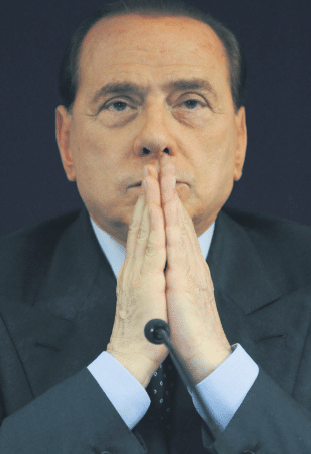
    With the collapse of hands-off capitalism in the Western World, it’s nice to live in a country where the leader has his hands on everything. That, at least, seems to be the mood in Italy, where Berlusconi’s approval rating has soared to seventy per cent as the markets have plunged. The key to understanding the phenomenon that is Silvio Berlusconi, three-time Prime Minister of Italy, is to appreciate that he is driven by a sense of self-interest offset by a powerfully paternalistic impulse. He sees himself as a magnanimous baron, or, to use his own phrase, “the Anointed One”. If anyone – magistrates, students, journalists, other political parties, unions, local governments – challenges his good intentions, he feels as might a father towards an ingrate child. Against the sound of crashing world markets, Berlusconi has skillfully synthesised his paternalistic and selfish impulses to achieve a harmonic style all his own. The falling markets may well constitute exceptional circumstances for the rest of the world, but the way Berlusconi has handled them here epitomises his style of leadership. The old saw that in Italy things are always in crisis but never serious seems to hold true even when the crisis is global. How has Berlusconi arrived at an approval rating of seventy percent? Rather than return to the well-worn theme of his domination of the media, let us consider another sector in which he has considerable interests: banking. Berlusconi is the majority shareholder of Mediolanum SpA, a banking and financial services company (the current England manager, Fabio Capello, used to work in its insurance division). Capello, used to work in its insurance division). On 22 October, it was reported that Berlusconi and Ennio Doris – the bank’s two main shareholders – had decided personally to reimburse Mediolanum SpA’s customers in full for losses incurred by the collapse of Lehman Brothers – to the tune of €120 million. That’s called putting your money where your mouth is. But whatever Berlusconi does, he usually manages to manoeuvre himself into a position where he cannot lose. If he uses his own funds, he seems generous. If he declares a state of emergency and uses public funds, he saves himself some money but, far more important, he extends his political power deeper into the world of finance. The two largest retail banks in Italy are Unicredit and Intesa Sanpaolo. Both of them have seen their stocks take a real hammering during the banking crisis. Neither appears to have serious liquidity or solvency problems, but they are vulnerable. Even so, neither is asking for public funds. Unicredit announced a capital increase on October 5, effectively passing on the risk to its own shareholders rather than running to the taxpayer. Although Intesa Sanpaolo continues to look wobbly, it is valiantly resisting state intervention. Alessandro Profumo, the CEO of Unicredit, and Corrado Passera, of Intesa-San Paolo, are aligned with the centre-left – which goes some way to explaining their heroism. The last thing they want is a government bail-out and the arrival of Berlusconi appointees on their board. They know that no real difference exists between the institution of government and the person of Berlusconi. Italians easily accept the idea that a bank is also a centre of political power. It may well be true of banks everywhere, but in Italy a bank’s political function is overt. Mediobanca is a case in point. It was founded in 1946 as a central pillar of the “Italian miracle” of post-War reconstruction. It enforced its own industrial and financial policy, which remained fixed as various governments formed and fell. In Italian, the word for policy – politica – is the same as the word for politics. Mediobanca’s role has been not just to allocate funds to major industries, but to build networks of cross-holdings among Italian industries. In the old days (until 1993), when the Christian Democrats reigned supreme, Berlusconi was kept out of this salotto buono (posh club) of Mediobanca shareholders. Nowadays, he is at the very heart of it. His Mediolanum bank and insurance group holds a stake of around 3.3% in Mediobanca, while Fininvest, his personal holding company, holds around 2%. With two spokes stuck into this hub of power, he is more influential than Gianni Agnelli ever was. But he is still outgunned by the major shareholder Unicredit (9%); the bank that is resisting the idea of state assistance. The foreign press universally disapproves not just of Berlusconi, but of the Italian people for having elected him. More interesting than the censure itself is the difficulty that many foreign commentators seem to have in explaining why the Italians should have elected Berlusconi to office so many times. Underlying these declarations of disappointment at how Italy has been behaving itself lately is the notion – spearheaded by publications such as The Economist – that Berlusconi’s blatant self-interest is his primary vice. Wilfully blind, Italians have got the government they deserve. All this may very well be true, but what if we consider Berlusconi’s primary vice as also his greatest, perhaps his only, saving grace? To the question of what Berlusconi represents, the answer is simple: Berlusconi. There is no such political creed as Berlusconism. Quite the contrary: he has always presented himself as all things to all people, and was elected thanks mainly to his essential disinterest in ideology. True, he is opportunistically anti-Communist, but that only means he is opposed to any ideology that would take away his companies. He does not have one of his own to put in its place. When his political mentor Bettino Craxi (in theory a Socialist) was hounded from the country, Berlusconi simply assumed direct control of his political as well as business interests. It is this directness that so annoys the Pearson Group and Murdoch press. Berlusconi makes the plutocracy that they defend too explicit. Clowning about on the international stage, while openly catering to his own interests through legislation, Berlusconi has cast off the cloak of invisibility beneath

    Loading

    Read more

  • Posted in:

    The end of Ireland’s low-tax model?

    As lobby groups have organised to try to reverse some of the cutbacks in Brian Lenihan’s first budget, little attention has been paid to the fact that the cutbacks and their impact are the direct consequence of policies that gave us 15 years of unprecedented economic boom. For Ireland’s successful model, which was eyed with envy by small countries around the world, was based essentially on keeping taxes low. It is the consequences of this that we are now facing, in the decision to cut back social services already woefully inadequate for a country with Ireland’s level of wealth, instead of reforming an unjust and inadequate taxation system. Even if protests succeed in reversing some of these cutbacks, this does nothing to change the fundamental realities now facing the population. If citizens want well resourced, efficient and equitable health, education and social protection systems, adequate to protecting the vulnerable in their time of need, there is no way to do this other than through higher levels of taxation. Yet, as Budget 2009 showed yet again, our government remains committed to trying to keep taxes low, thereby ensuring that the most vulnerable among us will continue to pay a high cost. The addition of so-called stealth taxes, including PAYE income tax levies, shows the gyrations this government is prepared to go through to be seen not to raise basic tax rates, in particular corporation tax and income tax. Yet, as former Taoiseach Garret FitzGerald has pointed out, the growing dependence in recent years on asset-based taxes such as stamp duty, capital gains tax and capital acquisitions tax has made the Exchequer extremely vulnerable to the sudden reduction in such taxes that inevitably accompanies an economic downturn. But this was the means through which a steady reduction in income tax was funded. As he has written: “The idea that when the boom ended, our public and social services could be maintained with such a miniscule level of income tax payments was patently absurd, although clearly many people fell for it – including our economically unsophisticated business community” 1. This gets us to the heart of the issue that public debate needs to centre around if we are to chart a way forward out of the mess in which we now find ourselves. For the benefits of the boom went disproportionately to a small, wealthy elite, while successive governments failed to invest sufficiently in public infrastructure and services. There is plenty of evidence for this. For example, the ESRI points out the “substantial increase” in the share of national income that went to the top one percent of income earners at the height of the Celtic Tiger boom. As they put it, “By the end of the 1990s, the share of the top one percent was more than twice the level prevailing through the 1970s and 1980s”2. Similarly, if we examine EU figures on the share of national income going to profits as against wages, we see just how dramatic has been the change in Ireland over the course of the economic boom. In the 1980s workers gained 71.3% of the national income, slightly more than the EU average of 69.6%. However, by the 2000s, this had fallen to 55.1%, while the EU average stood at 64.4%. Even allowing for the growing presence of multinationals in the Irish economy, these figures show a huge increase in the amount of Ireland’s national income going to profit rather than people3. As Ireland’s wealthy elites increased their income spectacularly, state spending on social protection fell as a proportion of our national wealth over the course of the boom. The Central Statistics Office tells us that social expenditure in Ireland as a proportion of GDP fell from 17.6% in 1996 to 14.1% in 2000, but that it subsequently rose to 18.2% in 2005. Over the same period the EU average hovered at around 27%4. To quote Garret FitzGerald again, “Our chaotic health service and our grossly understaffed education system, together with the many serious inadequacies of our social services, reflect very badly upon a political system that has massively maldistributed the huge resources we have created. The harsh truth is we have allowed far too much of our new wealth to be creamed off by a few influential people, at the expense of the public services our people are entitled to”5. It is not surprising, therefore, that Ireland turns out to be one of the most unequal countries in the developed world. But what may surprise many is that the government has no policy to try to reduce the wide gap between rich and poor. In other words, it does not seem to believe that it is worth worrying about. This is dangerous. International research shows that the more unequal a society, the higher its levels of poverty and crime, and the lower its standards of health and public services6. It is an issue we neglect at our peril. In 2005, the Economist magazine published a global quality of life index for 111 countries in which Ireland came out top. This ranking got a lot of publicity at the time, but what received less attention was the fact that Ireland’s highest scores were for family and community life, factors that owed more to the legacies of the past than to the Celtic Tiger; what the Economist called “the interplay of modernity and tradition in determining life satisfaction”. This is consistent with the fact that life satisfaction levels in Ireland in the late 1990s were no higher than they were in the 1970s. Meanwhile, other surveys have shown that Irish people report a deterioration in their quality of life during the Celtic Tiger7. This points to the importance of examining more critically where Ireland’s low-tax model has got us if we are to learn the lessons of the past and plan for a better future. A system of low taxation may attract a lot of investment for a period, but its weakness as a development strategy is

    Loading

    Read more