n September this year I visited cemeteries along the route of the western front of the First World War, where Irish Soldiers lie among the fallen.
by admin
n September this year I visited cemeteries along the route of the western front of the First World War, where Irish Soldiers lie among the fallen.
by admin
Village Magazine offers a €10,000 reward for comprehensive, verifiable information about the funding of the Libertas campaign on the Lisbon Treaty communicated exclusively and before 31 Dec 2008 to Village Magazine (editor@villagemagazine.ie) for possible publication. All contact and information will be treated in strictest confidence. No imputation of illegality is asserted or intended.
by admin
John Drennan – Yer Man About The House
by Kate Fennell
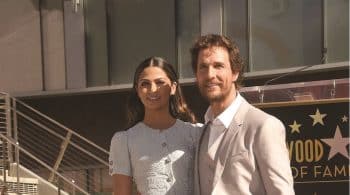
I recently discovered that the famous Hollywood heart-throb, Matthew McConaughey, and myself, have something in common. We would both like our children to learn Irish in a Gaeltacht. I am already ahead of him slightly as I am raising my toddler here in the Connemara Gaeltacht, the same one that I was raised in for the first seven years of my life that rendered me fluent in Irish, and that propelled me around the world learning half a dozen other languages. However, before Matthew takes the plunge, I must counsel that he move quickly so that he won’t find that Irish has been abandoned as the vernacular here by the time his kids are teens. The embarrassment for us and the disappointment for him would be just too much. As odd as it may sound, we desperately need someone with a silver tongue to come here and tell a large majority of the population that their native tongue is in fact dying. This fundamental but tragic news must have somehow not reached these parts because otherwise the attitude about speaking the language would surely not be so lackadaisical, Visitors would feel encouraged to use Irish instead of English. All greetings in shops and pubs would be as Gaeilge. Most importantly, native speakers would be speaking Irish with their children. If they knew? Surely? The key but elusive message is simple: Irish needs to be spoken more than English, to survive. In my mind, McConaughey would then explain to the locals, who need reminding, that the Irish they speak is unique, a gift from their forefathers and practically impossible to learn from sterile textbooks. That their pronunciation, turn of phrase, rhythm, musicality, use and command of the language is theirs alone. That it changes from Gaeltacht to Gaeltacht, from Parish to Parish, from boreen to boreen, from family to family, from individual to individual. That it is spoken in no other country. That this is it: the living, breathing petri dish of Irish. That by fecklessly speaking English they are silently killing their culture. He would then explain to the parents that speaking their native tongue to their children would make them happier, more confident and more connected to their environment in the long run. In some cases he might express intrigue at parents’ reasons, if any, for not passing their heritage on. And then he could heap praise on the parents who are carrying the mantel successfully – raising bilingual children in a challenging linguistic and cultural environment. Just tell them that the effort is worth it. He would also let the teenagers know that they are not to blame, that they have been poorly led and are contending with a globalised world dominated by English. That all languages are suffering a haemorrhage due to English. Can he let them know that trying to emulate an English language community in a Gaeltacht makes them weaker? That they can draw from their own strengths and speak two languages fluently, enrich themselves with two cultures instead of one diluted one? Can he ask them not to be shy about speaking Irish even if they are now making a lot of mistakes in it? Encourage them that gradually they will improve, with practice. He would tell the 17 –year-old girl I met that I was sad when she told me no other family that she knows in the area speaks Irish at home. Ask her to speak Irish to her mum (who goes back generations here) when she goes home. She might even respond in Irish. He would persuade her to continue that with her brother, 10, who has a lovely grasp of the language and should be encouraged, not thwarted. Tell him his Irish is lovely, even though riddled with mistakes. After that, he would let her know that when she goes to her friends’ houses she should try to speak Irish to them even when everyone is answering in English. Just let her know she’s to ignore the awkwardness, the shame, the embarrassment, the famine that never left us. That it’s not hers. That it’s the environment she grew up in. No leadership, no courage, no confidence: environmental, cultural or historical. But, tell her, that that’s all gone now and everyone can have 3G. Or 4G. And emojis. As Gaeilge. The new rule is not to feel less in Irish. That was her parents’ rule and that time is over. Of all the things we have to save in the world – the whales, the donkeys, the trees – this must be one of the easiest. All we have to do in the Gaeltacht is go to our local shop, pub, school , open our mouths, and speak as Gaeilge. Live it. If only Greenpeace had their task so easy. Kate Fennell
Posted in:
You may not be sick of the election yet, but give it time. One of the more depressing aspects of elections is how little coverage is given to discussions of the merits of different policy options or the plausibility of the teams on offer, and how much is given to treating the election as a horse race. The 2011 election was somewhat different, but that’s because Ireland was in peculiar straits and people suddenly cared about Ireland’s bond yields and such stuff. Now that people aren’t so concerned the media is also reverting to type. The big feature of election-as-horse race is the opinion poll. They are useful for voters who can use them to consider which potential coalitions are likely. They are useful for parties which can better understand the concerns of voters and failings in their campaigns. They are especially useful for newspapers which can make an opinion poll fill a few pages, even when nothing at all has happened. Though there are concerns as to the accuracy of polls in recent elections across Europe, they remain the best barometer of public opinion we are likely to have. But because papers are in the business of making the ephemeral seem note- worthy there is a temptation to read too much into polls. To avoid falling into this trap, here are some pointers to keep in mind: 1. Polls draw samples, and the size of the sample matters. Samples only work because of the probability that they are representative of the population (which is what we really care about) though comprising a relatively small number of respondents. A poll with 1,500 respondents will typically be a more accurate representation than one with 900. With a sample of about 1,000 we are pretty certain that the parties’ real support is in a range around what is reported. This is often about +/-3%. Movements within this Margin of Error (MoE) really might be random, not based on any movement in support for the parties in the population. So: look at the sample size. Many constituency polls have small samples, which increases the margin of error to rates that make the poll wholly questionable. 2. Sometimes we see interesting results and the media gets very excited. One poll in the 2014 Scottish referendum showed the Yes side in the lead, though all other polls showed a narrow but consistent lead for the No side. There was a frenzy. The likelihood was that this was a ‘rogue poll’, which isn’t to say it was a dishonest poll. When we are pretty certain that a party’s support is in a range (say +/-3%), we mean we’re confident that it is in this range 95% of the time. About one in 20 polls will be wrong. Unfortunately we don’t know which ones they are. But if a poll is very interesting, then it’s likely to be wrong. To avoid getting excited about potentially rogue polls, look at the trends. If a number of polls show a party going up in support, and it’s sustained over time, then we can conclude they’re capturing real movement. 3. Just because many opinion polls agree about a level of support doesn’t mean that they are right. Polls in the UK election had the Tories and Labour neck and neck for much of the campaign. The MoE assumes perfect random sampling. In practice opinion polls rarely use pure random sampling. Different companies identify and approach respondents in different ways, but all have some selection bias. That is certain groups are more likely to respond than others. This would be fine if these groups all had similar opinions. But they don’t. Older, middle-class men are harder to get to respond than younger, politi- cally active people. This is what caused the failure of polls in the UK to detect the Tory lead. Tory voters weren’t ‘shy’ – embarrassed to admit they voted Tory; they were just less likely to say Yes when asked to respond to a survey. Unfortunately there’s not a lot the lay person can do about this, except retain scepticism. Even when we get accurate poll numbers Ireland offers other challenges. The nature of the electoral system means that converting percentage support into seats is difficult. It is even harder now because the fragmentation of the party system means looking at past trends isn’t all that useful. Also, partly because of the gender quota legislation, many parties have more can- didates than they would like. This splitting of the vote means that while we can be reasonably confident of the first two or three seats in most constituencies, after that the large number of competitive candidates makes predicting the final seats little more than a coin toss. Predictions: Dr Eoin O’Malley is senior lecturer in the School of Law and Government, Dublin City University. If we assume polls in Ireland have the same problem as those in the UK and under sample people who are “content”, and if we assume that larger parties get a seat bonus, and Sinn Féin struggles to attract transfers, then on the basis of recent polling numbers, here are my predicted seat ranges for the parties. Fine Gael 59 ±5 seats Fianna Fáil 34 ±4 seats Sinn Féin 25 ±4 seats Labour 14 ±3 seats We can be even less certain for smaller par- ties, especially for the Greens and Renua, who may return no TDs. Green 1 seat, Renua 2 seats, Social Democrats 3 seats, AAA/PBP 5 seats, Independents 15 seats