Posted in:
Election 2016
More of the same, disappointingly
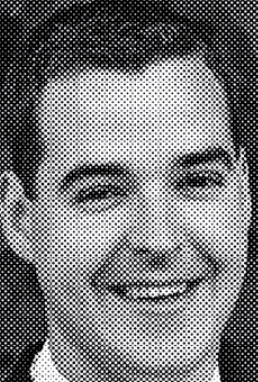
Richard Boyd Barrett is TD for Dun Laoghaire for the Trotskyist People Before Profit (PBP) Party. He is a member of the Socialist Workers Party and will stand for the alliance of that party with the Socialist Party (SP), to be called AAA-PBP in next year’s general election. He is the son of eminent thespians, Vincent Dowling and Sinéad Cusack. He was adopted and grew up in Glenageary, attending St Michael’s School. He is issue-oriented and self-effacing though usually eloquent and has managed to avoid personal scandal throughout his time in politics. Boyd Barrett has a long record of campaigning for improved local services, social housing, youth and community amenities, workers rights and jobs. I met him in his huge office in Agriculture House on Kildare St. The size is no doubt in proportion to its distance to some other accommodations actually in Leinster House, perhaps reserved for politicians closer to the beating heart of government. He is friendly, original, clever and bright-eyed, though in a rush this morning. I wonder what his background is. “I grew up in the Dun Laoghaire area from a middle-class background, with no particular intention of getting involved in politics but started to get involved in it through the music scene, it was all about music and clothes, and I was involved in punk”. I ask if he was one of the Dun Laoghaire Shopping Centre gang and he actually admits it. “I spent a lot of time there. It was great fun”. I don’t say that I remember getting into a scrap with a horde from there in 1978 and finishing up with a pint of gob on my neck, a pint which in my mind’s eye remains as fresh and green as when dispatched. Richard is probably too young to have been behind this, I reflect, and try not to think about it any more. Plus he’s chair of the Irish Anti-War Movement. He says punk was great fun. He had the punk hair, “Statue of Liberty hair, tartans, bondage jackets”. It was political. “There was a political dimension: anti-racism, anti-nuclear, all that“. He got involved in politics initially while a student. He studied English, Philosophy and Psychology in UCD and got a Master’s in English Literature. He’s a big fan of James Joyce, and has given talks about him. And he’s very passionate about “Shakespeare and romantic poetry and you know, everything”. He still reads fiction and poetry. He says his political philosophy is “Socialist” and I ask how important is equality and what does he mean by it. “I dunno that’s sort of technical jargon to me”. He sighs. “Equality is when everybody has the same access to resources, services, opportunity and the income capable of giving them a decent and dignified existence”. To what extent to you have to compensate for the disadvantages of birth? “I want to remove the disadvantage, to change the conditions that lead to it. That’s what being a Socialist is about. If you begin with less resources you should be compensated to bring about an equal playing field”. I note that he’s just given a speech about equality-proofing the finance bill and ask what the best measures of equality are – eg the Gini Coefficient – but it’s not his thing. He’s good-natured about this. “If you don’t have proper housing, decent services and infrastructure you’re at a big disadvantage”. When asked he says that his first actions if he were Taoiseach would be to deal with housing. He’s more interested in the manifestations of inequality than the theory of it. “The practical battle for equality”. So what does that mean? First of all he’d take housing, health, education and basic services out of the private sphere and provide them as a right, not for-profit, speculated on and commodified. He’d have participatory direct democracy. I suggest taxes should rise. Because of the concentration of wealth over the last decades in the hands of a few he envisages wealth taxes. And financial-transaction taxes and taxes on higher incomes. He says he’s “not majored” on Capital Acquisition and Capital Gains Taxes, which seems to me like an error: “Our strategy is to capture it through a wealth tax”. It would be on assets over a million euro, not on the family home”. He’s determined to acutely distinguish the family home from property assets. I suggest that just as income is an impure but useful indicator of wealth because some people have debts or maintenance commitments, that a valuable family home is an impure but useful indicator of wealth, and therefore should be taxed, but he will have none of it. “There are huge anomalies – and all the reports including Credit Suisse’s show there’s a connection between wealth and high income”. I suggest there must be a correlation between having a big house and wealth but he insists: “not particularly. In my area, Ballybrack and Sallynoggin, working-class areas, houses have a high value and it’s the same for the rest of Dublin and urban centres generally”. I suggest that if it’s legitimate to tax to redistribute to promote equality that it’s also legitimate to tax for other progressive policies such as reducing pollution or unhealthy eating. His answer is strong if unfashionable. “I don’t subscribe to the neoliberal view that tax can be used to incentivise behaviour. Taxes are to achieve redistribution of wealth”. Bluntly he does not think property and water taxes are a good idea in principle or otherwise. “No-one should never be charged for water. If you do, privatisation will inevitably follow. So I’m against it for that reason. It’s a basic need not a commodity”. I ask him for his political heroes and he volunteers Connolly, Larkin, Marx and, when probed for someone (fairly) contemporary, John De Courcy Ireland – “a big local influence”, maritime historian, founding member of Irish CND and and one-time member of tbe Labour, Workers’ and Socialist Workers’ Parties. Non-political heroes? “I’ve mentioned Joyce”. He laughs: “Jeez
It has traditionally been difficult enough to like lawyers, except your own. Ask any taxi driver. And now this. The Legal Services Regulation Bill The consumers’ website ‘Rate-Your-Solicitor.com’ was a window on frustrated public legal detestations. It was closed in 2012. Guess by whom? On the order of a judge because it contained defamatory material about one individual. The forerunner of the Law Society of Ireland (LSI), the solicitors representative body, was the suggestively named Law Club of Ireland, founded in 1791. Some would say the LSI is still too like a club, too little like a machine for justice. Solicitors have been mollycoddled. In her book Bust (2010) Dearbhail McDonald showed some of what this meant: “A roll-call of dodgy solicitors has been hauled before the Solicitors Disciplinary Tribunal (SDT) and into the courts, heaping shame on the legal profession and calling into question the efficacy of the LSI’s regulation of solicitors”, she wrote. For instance, Michael Lynn who fled Ireland in 2007 after the LSI closed down his firm and asked the High Court for a bench warrant for his arrest is now incarcerated in Brazil facing extradition. Lynn had used clients’ funds to fund his extravagant lifestyle, and abused solicitors’ undertakings in order to obtain multiple mortgages on the same properties. Thomas Byrne’s practice was also closed down by the LSI, and he is currently serving twelve years in jail for fraud which involved stealing from clients and abusing undertakings to a value of almost €60 million. Like Lynn, Byrne also had a history of previous misconduct. The LSI had prohibited him from being a sole signatory on client accounts in 2002. Then in 2005 it found that €1.7 million was missing. Incredibly he was merely fined €15,000 and allowed to continue in practice, a sanction which was not appealed by the LSI. At times the LSI may exercise poor judgement in pursuing certain practitioners, and failing to adequately examine the motive of a colleague who initiates a complaint. The Kenmare-based solicitor Colm Murphy recently claimed in a detailed submission to the Supreme Court, that his striking off was based upon spurious and inaccurate information which was provided by the LSI and SDT to the High Court ten years ago. The claim by Linda Kirwan of the LSI that he had breached an undertaking he had supposedly given to the President of the High Court was instrumental in his strike off. In an affidavit seen by Village, Kirwan insisted that she had been in the High Court on the day the undertaking was supposedly given. It was only after Murphy was struck off that she admitted, on affidavit and in a letter to Murphy in 2010, that she was not in fact in the court when the supposed undertaking was made. No such undertaking is recorded in the order from the court issued on the day in question. Murphy was also able to prove, again following his strike off, that the LSI had in part relied on a document forged by rogue Frank Fallon who was subsequently jailed for two seven-year terms. The problems are not all down to fraud. Conflicts of interest are the issue for the biggest firms. Arthur Cox, Solicitors, did well from the Fianna Fáil/Green government and no less well from its successors in Fine Gael/Labour. Arthur Cox has been perceived as guruishly close to Fianna Fáil: at one stage the Irish Independent’s Sam Smyth even speculated that Brian Cowen might ultimately join Cox’s, headed by his college class-mate Eugene McCague. In 2010 Arthur Cox was engaged by the NTMA to draft the legislation creating NAMA after it submitted the lowest tender for the services though there was no reason the work could not have been handled by the Chief State Solicitor’s. At the time Arthur Cox commented, ‘‘Once Nama is established, there is undoubtedly potential for conflicts of interest to arise for any firm working with NAMA in its transactions with banks and property owners. This is not what we have been appointed to do”. Nevertheless the Comptroller and Auditor General reported that from ” According to the Competition and Consumer Protection Commission (CCPC), the proposed legislation to regulate solicitors and barristers was subject to a veto from those professions over its provisions: “The views of the Law Society and the Bar Council have been privileged over those of the consumers of legal services – the clients of the legal profession”. September 2009 onwards, Arthur Cox was billing NAMA for €40,000 per month, its biggest retainer. The Department of Finance and its agencies paid a staggering €15m to Arthur Cox alone over the five years to 2012 for legal advice on the bank guarantee scheme, recapitalisation issues, nationalisation, NAMA, restructuring plans and the eligible liabilities guarantee scheme. Law Society Regulations for solicitors state that ‘‘if a conflict of interest arises between two clients in a matter in which the firm is acting, the firm must cease to act for either client in that matter.” However, in exceptional circumstances, one of the clients may consent to the other client remaining. Arthur Cox claims to operate ‘Chinese Walls’ for such clients. For example, once the legal advisor to Anglo Irish Bank, Arthur Cox discontinued to provide legal services to them when hired by the Government to advise on the Bank Guarantee. But it continues to advise Bank of Ireland. Even when that makes it lawyer for the sellers of loans (Bank of Ireland) and for their purchasers (NAMA). More recently though none the less controversially Arthur Cox also represented Siteserv and Millington (Denis O’Brien) both during the sale of Siteserv. An internal investigation found there was no conflict of interest. The LSI is nowhere close to being able to call Arthur Cox to account for conflicts of interest. 187 complaints were received by the LSI in 2012, an increase of over 30% on the preceding year. Its Tribunal made referrals to the High Court in 57% of the cases. Conveyancing, at 56%, dominated
The Dutch Presidency of the European Union released on Thursday, January 21 at the European Commission in Brussels a new ranking of public integrity for the 28 EU Member States. The ranking represents the first objective measurement of public integrity in the EU. It is part of a report on trust and integrity commissioned to a group of research institutes associated in the EU FP7 ANTICORRP project lead by Professor Alina Mungiu-Pippidi at the Hertie School of Governance in Berlin. The ranking is based on six closely associated indicators, which on one hand correlate sufficiently to be aggregated into one index, and on another are strongly associated with existing corruption indicators. These commonly used indicators, for instance Transparency International’s Corruption Perception Index, are based on expert perceptions. The new Index of Pubic Integrity (IPI) is more objective. It is drawing on six transparent indicators: administrative simplicity (time to register a business and pay tax), trade openness, auditing capacity, judicial capacity, e-services offered by government and e-services used by the population. This transparent structure allows for the index to be compared across time (from one year to another), something that should not be done with perception based indicators. It also makes the indicator sensitive to policy reforms, another shortcoming of perception based indices that are notoriously lagging behind reality. For instance, Greece was only ranked as very corrupt in rankings after the euro crisis became public, whereas corruption is seen as a major cause for it. The ranking, shown in Table 1, lists Scandinavian countries and the Netherlands firmly on top, with Bulgaria, Romania and Croatia competing for the bottom of the ranking. The index is offered for 2012 and 2014, the latest available data. It shows positive trends for Romania (which moved ahead of Bulgaria after being last until 2012) and especially Greece, which registered the largest progress in recent years together with Latvia and Lithuania (see Figure 1). The report argues that economic performance alone does not explain the sometimes dramatic decline in trust in government. Europeans in many member states perceive a serious drop in the quality of governance, and the failure of current policies to redress it. Only in a minority of countries in present-day Europe we encounter a clear majority believing that success in either the public or private sector is due to merit. More than half of Europeans believe that the only way to succeed in business in their country is through political connections. Less than a quarter of Europeans agree that their government’s efforts in tackling corruption are effective. The countries where citizens perceive higher integrity and better governance are those that managed to preserve high levels of trust in government despite the economic crisis. In pointing at these factors contributing to the growing loss of trust in national and European institutions throughout EU-28 the report takes major steps in helping to understand this crisis. It formulates lessons learned from this review if evidence and hopes to inform the policy debate on how to address the apparent lack of public integrity in Europe.
by Ed Carroll
So, now we know it. The Arts Council is efficient. The Evaluation Unit of the Department of Arts, Heritage and Gaeltacht produced a Value for Money and Policy Review of the Arts Council that examined its activities from 2009 to 2012. It found: the Arts Council “operated efficiently in a difficult climate by applying a principle of small funding cuts, widely distributed to maintain the ecology of the arts sector in a challenging period”. The Arts Council was commended “for its response to the economic crisis by significantly reducing administration costs; overhauling its organisational structures; and developing on its RAISE initiative”, which helps arts organisations to diversify funding streams. The Review used the Programme Logic Model proffered by the Department of Public Expenditure and Reform. This defines the inputs, activities, outputs and outcomes of an organisation, constructed through a sequence of cause and effect between strategies and actions undertaken and benefits achieved. The approach never questions the starting points – the goals of the organisation. The review, damningly if perhaps inevitably, fails to define or address the societal value of the arts, though it is a central part of their agenda to question the values that underpin each generation. The review fails to balance values of efficiency and equality. The regressiveness of National Lottery funding of the Arts Council is nowhere considered. Those with higher incomes benefit more from, while those on lower incomes pay more for, public provision of the arts. The Review is concerned with diversifying funding for the Arts, in particular from private and philanthropic sources. It endorses festival platforms such as the Guinness Cork Jazz Festival, the Tiger Beer Dublin Fringe Festival and the Absolut Vodka Galway Arts Festival. These are ultimately platforms for the drinks industry. The review claims without evidence that there has been a societal outcome of a more inclusive society The Review suggests that “international evidence in evaluating effectiveness and developing performance indicators is not applicable to the Arts Council”. Only solipsism can ground a view that the Irish arts are so particular that they can learn nothing from international comparison. An unconvincing guff-rich narrative flows. The objective “to improve access to and participation in the arts across all communities” was achieved through a “diverse range of…targeted arts initiatives supported” (outcome) and “provided a range of arts programme throughout the country” (result). In tracing such indicators the review claims without evidence that there has been a societal outcome of a “more inclusive society”. What the Arts Council wants to achieve from its agenda of public engagement is unclear. The review of access and participation, including public awareness; of participation, including by socially excluded groups; and of the geographical distribution of arts programmes; considers what is on offer rather than what has been experienced. Indicators are assessed using data from the Target Group Index, compulsory feedback from the Arts Council’s funded-client base, from box-office analysis for performing-arts, from hits on Culturefox.ie – the online guide to Irish cultural events and from commissioned surveys. The measurement of performance is based on data gathered from funded organisations’ activity and feedback reports. They systemically avoid the impact on those excluded from the largesse. The Arts Council’s largest grant scheme operates on an invitation only basis, and funds organisations like CREATE, Age and Opportunity, Disability and the Arts, and the National Youth Council of Ireland. These groups have traditionally dealt with ‘communities of interest’ for which the Arts Council has a particular responsibility to improve access to, and participation in, the arts. The review ignores the role of a broader civil society, outside these groups, in delivering on the public good through culture. In contrast the Arts Council of England has observed that “healthy ecologies are very dynamic” which means “funding cannot be locked up in one group of organisations”. The review focuses on effectiveness not vision, and has an impoverished approach to inclusiveness, equality and the public interest. There is an alternative narrative. Ed Carroll is a Director of Blue Drum which works with others in an imaginary space where culture, politics and community collide.
Posted in:
by Ciaran Cuffe
In 1991 I was elected as a councillor onto Dublin City Council. Before we took our seats on the new City Council we were deferentially issued with robes to wear for the formal first meeting. As a councillor my robes were green and blue. Councillors first elected in their ward were referred to as aldermen and wore the same robes but with an extra yellow strip indicating their gorgeous ascendancy. However, as I walked into my first meeting in Council Chamber I spied someone wearing bright purple robes. This was Frank Feely, the unelected City Manager, whose self-chosen robes summed up the anti-democratic nature of local government in Ireland since the 1920s. Not only did he get to chose his own spiffing robes, but he, and all other unelected city officials then and now boast pre-eminent powers over decisions locally that affect our lives. Name the last four mayors of Dublin. It shouldn’t be difficult: you only have to go back four years. In fact, because of the limited power and tenure, it is unfair to ask: even aficionados will admit that it would be too much knowledge. A year ago I tweeted that the “Dublin Mayor idea will die a slow painful death by committee. Bad for Dublin, bad for Ireland”. Unless there is a change of heart by Fingal councillors this may well be the outcome. Apparently they aren’t enthusiastic about a directly elected mayor, and have the power to block the proposal. They may well decline, given that their status depends on the status quo. Had the Green Party’s proposals for a directly elected mayor for Dublin come to fruition we would have had a mayor for all of Dublin directly elected by the people of Dublin next May, rather than the Fine Gael proposals that at best will result in a mayoral election in five years time. The blame again slumbers at Phil Hogan’s door for setting up a process that seems doomed to fail, unless there is a change of heart. Even his master plan for local government reform “Putting People First” contains a breath-taking anti-urban bias as he proposes giving Dublin City equal powers to Westmeath on regional issues. It seems clear that, although Phil Hogan is Minister for the Environment, he is wholeheartedly Fine Gael TD for the Carlow-Kilkenny constituency, and doesn’t want to devolve power to Dublin or other cities. Currently national government decide on the important issues that cities should be deciding, and councillors are mostly left to sort out issues of administration, maladministration and zoning. The legislation introduced by the Green Party in the last Government provided for a mayor who would co-ordinate water, waste, transport and planning policies. Time and again, we return to the legacy of bad planning decisions across the country. The people of Dublin are still picking up the tab for mad rezoning decisions that took place in Dublin County Council in the 1980s. Councillors were allowed rezone land without any sense of responsibility and without a mayor who had the bigger picture about what the city might be. It doesn’t have to be this way: a mayor can have serious powers for strategy, policy and implementation – as well as to set a tone and man a bully pulpit. The challenge in Dublin is that the current divide and conquer approach of four different local authorities with four different agendas, managers and mayors elected on a revolving basis is confusing and dysfunctional. Henry Kissinger asked who would he talk to if he wanted to talk to Europe. We need someone to talk to when we want to talk to Dublin. We need someone who has a strong, coherent vision for Dublin. Of course elected mayors can be kicked out in a vote on their performance, effecting significant accountability. All across the world, strong cities have directly elected, strategic, accountable mayors. Georges Frêche one of the most colourful and controversial voices in the south of France was mayor of Montpellier for 27 years. Under his mayoralty the city thrived. That is why most French people when asked say they would like to live in Montpellier. Barcelona would not be the same without the legacy of Pasqual Maragall, who transformed that city from industrial backwater to hosting the 1992 Olympics. He made the city tick, and work effectively because he was a strong and dynamic civil leader who united the city and brought the Games to Barcelona. We all remember the scenes at the diving events, where the divers competed with the city as a backdrop. That was no accident, it happened because there was a strong mayor. Against the odds though we have had some great mayors in Dublin city. I have strong memories of Carmencita Hederman and her fantastic contribution to the city during its Millennium year. Half way through the millennium year, she was replaced by the more prosaic Ben Briscoe, followed by Seán Haughey. Under the current system this cannot happen. It gives the permanent government of Managers, of John Tierneys and Owen Keegans, who serve seven years, the upper hand, and diminishes the role of elected representatives. In many places, a city’s lifeblood – its economy, cultural life and sense of place – is channelled through its mayor’s office. One only has to look at Shirley Clarke Franklin in Atlanta, Martin O’Malley in Baltimore. I can easily recall – dating remarkably back to 1977 – the last four mayors of New York City – Ed Koch, David Dinkins, Rudolph Giuliani and Michael Bloomberg. Dublin too needs mayors who represent a vision, and leave a legacy. And are remembered. Ciaran Cuffe
Hundreds of people line up in a queue as soon as the doors of the van open, each hoping to get a pair of warm trousers. It is a cold November day in Calais, but some of them are wearing just shorts and slippers. In the queue I recognise a Syrian man that I met in the refugee camp on the Greek island of Lesbos just three months ago. He is so thin that it is hard to find him a slim enough pair. But what strikes me even more is his eyes – their sadness and exhaustion – that seem to reflect the cumulation of hardships of the past months, starting in his home country, and now continuing in Europe. That moment of hope and relief, when the overcrowded flimsy rubber dinghy he was on reached the shores of Europe, has now turned into hopelessness at being stuck in one of the worst makeshift refugee camps in Europe, the Calais camp, also known as the Jungle. It’s not a jungle though: it’s more of a disaster zone. Shabby tents and improvised shelters made out of pallets reach as far as the eye can see. The site is far from ideal for camping, the less so during this chilly rain; the sandy ground has become just muddy. Some parts of the camp are exposed to a heavy wind, and people are looking for help to fix their collapsed shelters. There is no electricity. Sanitation is severely inadequate. No more than 40 toilets are currently serving over 6,000 inhabitants – one for every 150, while the UNHCR recommendation is one toilet per 20 users. With only three taps in the camp, there are not many opportunities to wash hands. Litter is everywhere, and some areas are covered with human extracts. At one of the two refuse points of the camp I meet representatives of the Médecins Sans Frontières, who have come to collect the rubbish. They remind me to be careful what I touch due to the threat of scabies and other infectious diseases. A recent investigation by the University of Birmingham, supported by the Médecins du Monde, further highlights detrimental health situations in the camp including the prevalence of ‘white asbestos’, sometimes used to weigh down tenting. As food in the camp cannot be stored safely, much of it carries infective amounts of pathogenic bacteria, causing diarrhoea and vomiting. Several water storage units exhibit levels of bacteria exceeding the EU safety standards, too. The lack of washing facilities prevents the effective treatment of scabies, lice and bedbugs. Many here are suffering from mental illnesses. The makeshift hospital in the camp has the capacity of treating only up to 90 patients a day and there is a constant shortage of medical supplies. It is especially hard to provide treatment for long-term medical conditions such as tuberculosis. Many patients also come in with serious injuries, often resulting from unsafe conditions in the camp, or failed attempts to cross the border. I meet a young boy who has a broken arm, after a failed attempt to jump an England-bound train – a typical case. The United Nations High Commission for Refugees (UNHCR) has continually expressed about the reception conditions for refugees and migrants in Calais, stressing that security measures alone are unlikely to be effective, and urging the French authorities to relocate the refugees to proper reception facilities in the Nord Pas de Calais region and further afield. Some relief is expected from the proposed EU- supported refugee centre, that is expected to be opened in Calais in 2016. It will reportedly be equipped to deal with 1,500 persons. Another alternative would be to involve experienced non-governmental aid organisations such as the Red Cross to act as auxiliaries for the public authorities in the humanitarian field. Charities and voluntary organisations offer an invaluable contribution to the current European challenge, but they cannot be expected to supersede the responsibilities of European governments. Of course, permanent aid mechanisms will be required for as long as the conflicts causing the crisis, sometimes exacerbated by Western military interventions, are allowed to continue. Naiim Sherzai is standing at the exit of the camp, watching the trucks headed for British ports. Sherzai, who comes from the Helmand province in Afghanistan, is a former translator for the British forces, and had to leave the country because of the threat of the Taliban. He now wants to seek asylum in the UK, and ultimately to bring his wife and two children there. He asks whether we could recommend him any legal ways to enter the UK. But in Calais, there are no such routes available for a refugee. Lack of alternatives drives many to desperate acts, trying to hide in the trucks headed for the ferries or the Eurotunnel, or cutting the fence to hide in the trains. At least 16 people have died this year trying to get across the Channel. Tear gas fills the camp regularly as the police tries to drive out refugees from the proximity of the trucks entering the port of Calais. Although the tightened security measures and border controls have decreased the numbers of those who try to leave, groups of refugees lunge for their freedom every night. The rest, like Sherzai, find themselves lost – the road ahead blocked, but with no turning back either. In the jungle. In limbo. Johanna Kaprio