Posted in:
The economics of Culture
Cultural attitudes, including aesthetics, can be modelled and understood through economics


Ireland's political and cultural magazine
Posted in:
Cultural attitudes, including aesthetics, can be modelled and understood through economics

Posted in:
At 10.7 per cent versus an EU average of 17.9% it’s dragging down medium-term economic growth

Sinn Féin is benefitting from the suspension of disbelief
Posted in:
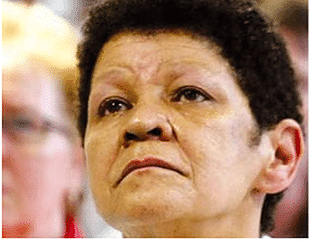
Strong, principled women like Christine Buckley are essential for cultural change

Posted in:
Official Ireland is indifferent. This time about Donegal

Lynn Boylan interviewed by Niall Crowley. Lynn Boylan is a member of the Sinn Féin Ard Comhairle and has been an active Sinn Féin member of the party for eight years. She has worked with Ballymun Global Action Plan as a community programme co-ordinator, running courses for people making the transition from the blocks of flats to houses. She contested the 2007 general election and the 2009 local election in South Kerry. Before she moved to Dublin, she coordinated voluntary camps to remove invasive rhododendron species from Killarney National Park in working for Groundwork, an environmental organisation affiliated to the Irish Wildlife Trust which was set up to protect important Irish habitats. She notes “my background as an ecologist makes the environment an obvious choice for me”. The environment is, alongside employment and workers’ rights and social equality, one of her priorities if elected as an MEP. In 2010 she was appointed chairperson of the Safefood Advisory Board one of the Good Friday Agreement All Ireland bodies, which promotes cooperation over nutrition and food safety. Unsurprisingly, she takes a critical perspective on what is going on at European Union level. She suggests, “Currently the European Union is in crisis, not just an economic crisis but also a social and a political crisis”. “Since Jose Manuel Barroso became President of the European Commission we have seen a neo-liberal agenda that puts the interests of the single market before the interests of the people. This agenda has received broad support from both the European Council and the European Parliament”. “The recession”, she says ,“ has highlighted the flaws of the European institutions when the response, backed up by the Member States, was to socialise the cost of the crisis. Banks were put before the people”. She believes that “many MEPs choose to form part of the cosy consensus when they get to Brussels rather than holding the European Commission and European Council to account”. She refers to the need for MEPs “to be more transparent about any dealings they may have with lobbyists” and points out that “Sinn Féin supports the ‘Full EU Lobby Transparency Now’ campaign”. She points to a “democratic deficit” that flows from the “design and operation of the EU institutions”. “Real reform of the institutions is required to address the democratic deficit”, she says and “that means reducing the power of unelected bodies, increasing transparency, and, crucially, increasing the role of elected institutions”. “Sinn Féin will campaign to reign in the European Commission and return powers to the Member States. We will also campaign to make the European Council more transparent and more accountable to both the European Parliament and Member State parliaments”. Boylan highlights that “Sinn Fein believe in a European Union of equal sovereign states that co-operate on social and economic development”. She says that the party “believes another Europe is possible, one that is more democratic and people-centred, a European Union that promotes workers’ rights and public services”. “Sinn Féin’s agenda for the European Union”, she points out, “is one that puts social equality at the heart of all its decisions” and “we want an end to the failed policies of austerity and a definitive breaking of the link between sovereign debt and banking debt”. She highlights that “The European Union has, in the past, been very important in requiring Member States to protect their environment, but Ireland has one of the worst track records in this area. As an MEP I would campaign to see stronger environmental legislation, particularly on issues such as GMOs and pesticides which can pose significant threats to biodiversity”. “In terms of climate change” she adds “it is crucial that Europe takes a trans-national approach and I will continue the good work that Martina Anderson (Sinn Féin MEP in the North) and her predecessor, Bairbre De Brún, have done in demanding legally binding targets on curbing greenhouse gas emissions, opposing fracking, and looking for a real shift from reliance on carbon fuels to renewable energy sources”. She is concerned that “since the start of the crisis the European Commission, with the strong influence of big business, has led the charge in the call for cuts to wages and working conditions for low- and middle-income earners. Many profitable companies have used the recession as an opportunity to drive down wages. The gap between high income earners and everyone else has widened. In Ireland we now have the fourth highest gap in the OECD”. “As an MEP, I will campaign for decent work with living wages and an end to zero hour contracts. I would also campaign for the introduction of a social progress clause into EU Treaties to ensure that fundamental rights and collective agreements on pay and conditions take precedence over the freedom of the markets”. “Social Europe”, according to Boylan, “has always been more of a rhetorical promise than an actual reality. Some EU Member States have strong records in building socially and economically equal societies. Others, including Ireland, have not even tried. However for more than a decade the policy direction of the EU, driven by both the European Council and the European Commission actively undermined the many social gains secured by the struggles of ordinary people at both a Member State and an EU level”. She points to the example of the Lisbon Treaty. “Changes to the operation of the internal market or international trade which focused on increased liberalisation were strong and binding. Changes dealing with social Europe were vague and rhetorical”. She sees the Lisbon Treaty and the associated referenda in Ireland as one source of another malaise. “Turnout in European elections has been declining across Europe and currently stands at 46% down from 67% in 1979. Trust in EU institutions is at an all time low and 66% of people across the EU feel that their voice does not count according to the Eurobarometer. It is hardly any wonder when we look at the disdain shown for Irish democracy in our EU referendum

Bryan Hayes (Fine Gael) interview

Emer Costello MEP interviewed by Niall Crowley Collaborative, optimistic, garrulous but careful ‘It has to be about people – about more and better jobs, about equality, and combating poverty and social exclusion, about climate change and sustainable development, and about tackling discrimination’ ‘I won the support of the MEPs for my call for the European Council to make good on the June 2012 commitments in relation to Ireland’s legacy bank debt.’ Emer Costello MEP represents the Labour Party as a member of the Socialist and Democrats Group in the European Parliament. She was a member of Dublin City Council from 2003 until 2012 at which point she replaced Prionsias De Rossa in the European Parliament. She served as Lord Mayor of Dublin in 2009/2010. She is conscious of the need to “work to ensure more coordination between the national decision-making structures at Government and Oireachtas level and at EU level in relation to current and upcoming European laws and programmes”. Garrulous but careful, she sees the European Parliament as the guardian of the citizen at European level. “The role of an MEP is firstly and fundamentally to represent the citizen. The European Commission promotes Europe’s “general interest”, the European Council is where the Member States’ governments meet, but the task of an MEP is to ensure that the citizen’s interests are fully taken into account at European level”. She emphasises a European Union that is about markets and people, noting the importance of Europe since “approximately 60% of everything that we produce is exported to other Member States, supporting hundreds of thousands of jobs”. She stresses that “Europe has to be more than just an internal market, a place to do business. It has to be about people – about more and better jobs, about combating poverty and social exclusion, about climate change and sustainable development, and about tackling discrimination in all its forms and promoting equality”. She identifies the role of the European Union as a source of funding as relevant in her commitment to “work to ensure that we access EU funding that maximises job creation. To that end I will work specifically with small and medium businesses to help ensure their access to funding”. Costello is optimistic: “Ireland’s recovery is now heading in the right direction”, but is equally clear that challenges remain for the European Union. “Europe can and must do more to prioritise sustainable growth and jobs, and raising living standards”. She is particularly critical of the role of the Troika. “An even deeper democratic deficit has opened up at European level with the Troika. The Troika’s actions in Ireland and other Programme Countries were not decided or approved by the European Parliament. The European Parliament’s recent report of its inquiry into the role and operation of the Troika in Ireland and the other Programme Countries was extremely critical of this democratic deficit. It recommended the abolition of the Troika and its replacement with a European Monetary Fund that would support Member States in difficulties entirely in accordance with the Treaties and fully accountable to national and European parliamentarians”. She points to a personal success within this inquiry. “I won the support of the MEPs for my call for the European Council to make good on the June 2012 commitments in relation to Ireland’s legacy bank debt. This was the first time the European Parliament has explicitly supported Ireland’s campaign”. Politics is important in ensuring the European Union “lives up to its core values and aims”. She points out “Social Europe is ‘gone off’ the European agenda simply because those who lead Europe at present are not keen on Social Europe. The last time the European Commission was led by someone from the left was with Jacques Delors, almost twenty years ago. Europe’s centre right parties – the EPP, Liberals and Conservatives – form a majority within the European Commission, the European Council and the European Parliament”. She is not defeatist about Social Europe despite this situation. “This is not to say that progress cannot be made on Social Europe. This can be done by building cross-party alliances within and between the institutions on individual issues. I managed to do this by working with the Social Affairs Commissioner, Laszlo Andor (who came from Labour’s political family), with Greens, Christian Democrats, Liberals and others in the European Parliament on the new anti-poverty programme, the Fund for the European Aid to the Most Deprived. By building a broad majority of over 500 MEPs, we succeeded in overcoming the blocking minority within the European Council, to increase the proposed budget for this programme from 2.5 billion Euro to 3.5 billion Euro and to put a much greater emphasis on implementing this programme in partnership with anti-poverty NGOs on the ground”. “I think that the role of national parliaments in European matters can and should be improved, including in Ireland where the Oireachtas has yet to get to grips with its enhanced role in European decision-making. Too few European proposals are being properly scrutinized, if at all, by the Oireachtas. This needs to be improved”. She offers a broad programme of political priorities in seeking election. “My top priority is to get Europe to do more to promote employment, particularly for young people. I want to see the European Youth Guarantee implemented in full so that young people are not lost to a future of long-term unemployment or emigration. I also want to see Europe adopt a similar European Up-Skilling Guarantee for people aged over 30 who are long-term unemployed, who may have left school early, or who need training”. She emphasises, however, that “the best way Europe can help to create employment is by prioritising sustainable growth. Labour’s political group in the Parliament, the Socialists and Democrats, has prepared plans showing how a €200 billion European ‘Green New Deal’ of investments in energy, transport and telecoms would create at least 3.4 million jobs across the European Union within three years, and move Europe towards its climate change