Archives

OK

Random entry RSS

Loading

  • Posted in:

    Shameless Cork

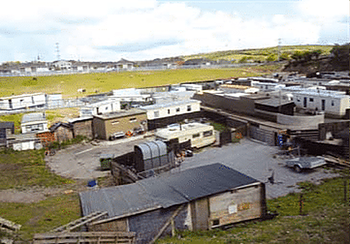
    Travellers have used the area of Spring Lane in Cork for at least four generations. An area known as the ‘old Spring Lane site’ was a traditional camping ground for Travellers. In 1987, Cork City Council created an official ten-bay halting site with very basic facilities – electricity, simple toilets, cold running water and a hard surface. Today, 33 Traveller families with 89 children live on the Spring Lane site. In 2011, then Cork city Lord Mayor Terry Shannon said he was ashamed that the Council could oversee the “Dickensian” conditions there. In the same year, the St Vincent de Paul regional President Brendan Dempsey described the site as being of “third world” standard. Traveller rights groups and some HSE officials view the conditions as a humanitarian crisis. The Spring Lane site prompted three reports through the HSE in 2012, from the Director of Public Health Nursing, the Senior Environmental Health Officer and an independent architect. The reports found acute overcrowding; inadequate sanitary facilities with un-insulated washroom facilities in poor physical repair; issues with rodent infestation; poor surfacing throughout the site; a number of caravans in very poor repair; no safe play space for children; no public footpaths but a poor quality unpaved pathway used by school children to access school; and unstable steep earthen banks on the east side of the site. The architect’s report on the site found that “there is a major lack of standard utilities that are readily available in adjoining residential developments. While electricity is available, there is no natural gas supply, no telecoms supply, no proper water management system for domestic waste, both solid and recyclable, inadequate road network, including an unacceptable road gradient for the site”. The report of the Director of Public Health Nursing highlighted a list of health issues affecting the families on the site, particularly respiratory and urinary tract infections, and linked these to the living conditions. The report of the Senior Environmental Health Officer noted malfunctioning drainage systems and broken non-functioning drains resulting in recurrent flooding in rainy weather, and continuous dampness for the residents. Some residents sleep in a caravan provided by the local authority with a bucket propped up on a shelf above their heads to collect the rain that is pouring through the roof. They must walk out into the cold to an outdoor un-insulated, unheated breeze-block shed containing a steel toilet and tub to help their children get washed for school. These are the lucky families who have a toilet shed. Most of the families live on the periphery of the site without access to any facilities. Cork City Council confirmed last year that the electrical system on the site is overloaded and dangerous. The families have known about this for a long time. The electricity supply on the site constantly ‘trips’ and overloads and residents live in constant fear of electrical fires. Many families cope with resilience, and the site boasts successful activists, volunteers in local youth groups and women’s groups, athletes, carers, as well as very active women’s and men’s groups. It has an above average number of young Travellers who complete their leaving certificate. However, the stress of these conditions and the indifference of the local authority over a long period of time take a toll on people’s health. Some residents talk about battling depression and anxiety. A number of the families have applied to be housed off the site in their local area. However, the number of families securing this housing has been few. The families and their representative organisations, the Traveller Visibility Group and the Cork Traveller Women’s Network have campaigned for better living conditions for over two decades. This has included participating for years on numerous partnership structures with Cork City Council, raising the issues with City Councillors and TDs, linking with the media, and supporting the production of reports on the site. Sadly, in 2011, a proposal to improve conditions, which included additional bays to alleviate overcrowding, was defeated by a Council vote following massive objections from residents in the broader Ballyvolane area. Three years on conditions, and the residents’ lot, continue to deteriorate, disgracefully. Louise Harrington is from the Cork Traveller Women’s Network and Caroline Barnard is from the Traveller Visibility Group.

    Loading

    Read more

  • Posted in:

    CDP into CPP won’t go

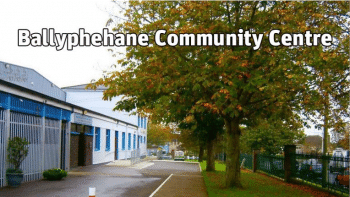
    The Ballyphehane Togher Community Development Project (BTCDP) was accepted into the Community Development Programme in 1993. This was after two years of lobbying, letter writing and submissions. BTCDP recruited a Co-Ordinator and opened its first office, a two-room space over the doctor’s surgery in Pearse Square, in 1994. This year we are celebrating its twentieth anniversary. Two of the first actions of the project, in particular, created a legacy that has endured throughout the twenty years. The first group of management volunteers undertook a UCC night class in Social Studies. They campaigned for it to be delivered in their local college of Further education Scoil Stiofáin Naofa. That early group positioned the project ideologically, framing it in terms of development rather than service provision. They visited another Community Development Project in Galway, assisted by the Combat Poverty Agency, the support agency for the Community Development Programme at the time. This was an early declaration of intent. The project would work with local people to address local needs, but recognised that disadvantage was neither individual nor local and must also look outward to wider concerns and models. The Combat Poverty Agency was key to this perspective as an independent and reputable agency which commissioned research, drafted policy proposals and supported practise to combat disadvantage and exclusion. Those early volunteers had many reasons for giving their time to establish the project. There was a lack of early-years provision in the area and they held a knowledge from their own lives of generational educational disadvantage and wanted to change this as well as to provide opportunities for early school leavers. They had a desire to see children with disabilities integrated into local settings instead of steered toward special schooling or charities organised around a specific disability. Importantly, they wanted a different type of community organisation, that would be less hierarchical and more women-friendly in its structures and membership and that would draw its membership from beyond the ‘usual suspects’ locally. In our twenty years, all the Chairs of BTCDP have been women and there have been no statutory representatives nor elected representatives from any political party on the Board. The essence of community development, that local people alongside paid staff, whom they employed and directed, could make a positive intervention in their community, was attractive to those early volunteers. Their local knowledge could and would influence how and where the project operated, how it targeted resources and addressed needs. Over two decades the BTCDP has resourced children and families, youth initiatives, older people’s groups, people with a disability, refugees and asylum seekers, LGBT communities, and users of mental health services. A huge diversity of people has been supported to engage with the project and with public service allies. We have provided inclusive community childcare, community education, community arts initiatives and community health activities. These activites have harnessed local community energy and made links with statutory agencies. We have engaged with policy formation that affected people and communities experiencing exclusion, and have supported community participation in every major policy consultation impacting on disadvantaged communities. This has included the National Anti-Poverty Strategy and the Green and White papers on Adult and Community Education, and Community and Voluntary Activity. It is striking that while BTCDP celebrates our “Fiche Bliain ag Fás”, in the recent decade community development in Ireland has experienced anything but “fiche bliain faoi bhláth”. In fact, it can be argued that community development has withered under the onslaught of austerity. Perhaps the starkest outcome of this is that the Community Development Programme, which we were so proud to belong within, doesn’t exist anymore. That programme, which was acclaimed for engaging local people in devising local action to challenge and change circumstance in their own community, whether a geographical one or a community of interest, was an early casualty of austerity politics. The then Fianna Fáil/Green Government announced its intention in 2009 to incorporate all 180 Community Development Projects into the local City and County Partnership companies. This, effectively, stood down local communities as agents for their own development. The Fine Gael/ Labour Government has simply carried on that process. Pobal, the state agency now managing the Community Development Programme, has acknowledged that much local community involvement and capacity has been lost to the Programme. Despite this learning, Partnership companies are faced with amalgamation under local authority structures. They are now rehearsing the same arguments made about the Community Development Programme projects over four years ago. The Combat Poverty Agency has been subsumed into the Department of Social Protection. It lost its autonomy and its authority as an independent voice for community sector and civil society organising. The Equality Authority had its budget cut by 40% and is now being merged with the Irish Human Rights Commission. Finally, the Community Workers Co-op, which had supported so many community organisations, and contributed to policy formation around the concerns of these organisations, found itself out of government favour. This was due to its consistently strong challenges to Government policy. Its funding as a specialist support agency was withdrawn. Dismantling and diminishing these organisations has deprived the community sector of an essential architecture with which to interact and through which to impact on national policy. Brian Harvey’s 2011 research, ‘Downsizing the Community Sector’, focuses on this There has been a contraction within the community sector. “Downsizing the Community Sector”, research by Brian Harvey, details the reduction in funding and staffing since the economic crisis in 2008. It reports that the sector will have been diminished by 35% by the end of 2013. But this downsizing is not just of resources and people, although those are significant. There has also been a scaling back of community sector organisations’ vision and capacity to act. Reduced resources and the absence of the enabling scaffold has meant a significant contraction in focus and ambition. BTCDP worked hard, with others, to resist the amalgamation process with the That early group positioned the project ideologically, framing it BTCDP worked hard, with others,

    Loading

    Read more

  • Posted in:

    Town Hall power grab

    The Local Government Reform Bill 2013 is nearly through the Oireachtas. It gives effect to ‘Putting People First: Action Programme for Effective Local Government’, published in 2012 by the Minister for Environment, Community and Local Government. The changes proposed will give ultimate control over local and community development to local authorities. This has been described as bringing coherence to the sector by the Minister. It has been described as a takeover of civil society and a power-grab by practitioners and academics. The Bill provides for the establishment of Local Community Development Committees (LCDCs). These are ostensibly independent of the local authority. But, as the Minister recently stated in the Dáil, they are local authority committees, and membership of these LCDCs will be tightly controlled. The LCDCs are supposed to achieve an alignment between local and community development and the work of local authorities. On the surface this may seem practical and difficult to argue against in these times of limited resources. However, for those of us engaged in the community sector this is more about control. There is a danger that the alignment process will bring to an end any independent community development work that remains at local level. LCDCs are to be responsible for what is done and spent in the fields of local and community development and for the co-ordination, governance, planning and oversight of all publicly funded local and community development work. It is likely that what is left of an independent community sector will have to implement what is decided by the LCDCS. In the future local and community development work will be tendered, opening the way for privatisation of community development. Profit may replace social justice as the driver. The community sector is that element of civil society that works with and represents the most disadvantaged and marginalised communities. It works to challenge and reduce poverty, social exclusion and inequality. It is a key part of our democracy and provides for a form of participative democracy, giving people opportunities to engage in decisions that affect them. Community development is the approach used by the community sector in its work to bring about positive social change. It is based on participation, collective action and empowerment. We had built an impressive, if sometimes imperfect, grassroots infrastructure. State-funded programmes, State-funded, supported the work of independent community organisations within disadvantaged area-based communities and within communities such as Travellers and disadvantaged women. Community organisations often find themselves advocating against policy or legislation that will negatively affect their communities or advocating for changes in policy that will have positive impacts on their communities. They must remain outside the control of the state if this crucial advocacy work is to continue. The 2001 White Paper on a Framework for Supporting Voluntary Activity and for Developing the Relationship between the State and the Community and Voluntary sector had acknowledged this. It stated that “it would be wrong for Government to seek to control and be involved in every aspect of voluntary activity, but there is no doubt that it can provide an enabling framework to help this activity. Where this involves direct supports, a delicate balance must be struck between having a relatively light official involvement and maintaining proper accountability”. This position now appears to have been reversed. One of the most striking findings of the Community Workers Cooperative (CWC) work on this issue is the dearth of information and consultation with those directly affected by these changes. The CWC, along with other national organisations, is now seeking engagement with those most affected by the changes; an open and transparent selection process to the LCDCs; specific inclusion of those who represent the interests of women, Travellers, migrants and other minority groups, and socially and economically disadvantaged communities within LCDC structures; respect for the community sector/civil society to remain independent and autonomous of the State; and adequate resources to make this a reality. The Local Government Reform Bill will bring decision-making further away from disadvantaged communities. Concerted efforts are required to ensure that, at the very least, the interest of these communities is at the core of the work of the LCDCs.

    Loading

    Read more

  • Posted in:

    Thought-food for the left-wing

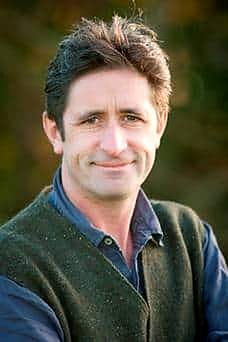
    Seamus Sheridan doesn’t want to talk about cheese. “I love what I do and I know the jobs it supports but this isn’t really about me or Sheridan’s Cheesemongers”, he says. As an advocate for Irish food producers and the slow food movement, Sheridan could talk for Ireland on the subject of food but today he is wearing his political hat as the Green party spokesperson on Agriculture, Food and the Marine. This year he will run for election to Galway city council and he believes that Ireland is facing in to a struggle over food and agriculture that will have broad longterm consequences for the country. Starting from a market stall selling cheese in 1995 Sheridan’s Cheesemongers has evolved into a well-regarded business with shops in Galway, Dublin, Waterford, and a shop and distribution centre in Meath. In recent years they’ve added a new business making brown bread crackers in Cork and they now employ a total of 45 people. These days, ‘Sheridans’ and Irish farmhouse cheese are virtually synonymous, but he says it’s a workaday struggle for small food producers. Starting from a market stall selling cheese in 1995 Sheridan’s Cheesemongers has evolved into a well-regarded business with shops in Galway, Dublin, Waterford, and a shop and distribution centre in Meath. In recent years they’ve added a new business making brown bread crackers in Cork and they now employ a total of 45 people. These days, ‘Sheridans’ and Irish farmhouse cheese are virtually synonymous, but he says it’s a workaday struggle for small food producers. ‘Agri-food’ and fisheries is Ireland’s biggest indigenous industry and under the Food Harvest 2020 initiative, the Department of Agriculture, Food and Fisheries aims for a 33% increase in the primary output in agriculture, fisheries and forestry, and a 40% increase in value added. Sheridan believes that this massive expansion of food production can only come about by ceding control of our food to a handful of multinationals. “What worries me is that we – and particularly this government – seem to have developed very close links with large multinational food producers. Fine Gael is supporting and promoting the agri-food business to the exclusion of artisan and craft food producers and small and medium farmers”. He believes that the government is taking the hard-won reputation of Ireland’s traditional food producers and handing it over to food corporates chiefly interested in producing processed food. Last year, Sheridan challenged Minister Simon Coveney’s characterisation of the opening of the Kerry Foods’ research facility outside Naas as “probably the most significant announcement ever” in Irish agriculture. “I welcomed that investment and the jobs it created, but the most significant announcement ever?” says Sheridan. “Make no mistake, a lot of food science – even though people start in it with good intentions – is used not to feed the world but to generate maximum profits at a maximum price targeting the less-well-off in our society who can least afford it. Look how many ingredients are synthetically developed to mimic flavours – that seems to be the holy grail of Irish food development. But let’s look at what end products they develop. Is it real or synthetic ham?”. Sheridan marvels at the facility with which the corporate food sector has borrowed the language of artisan food production and green policies. “I’m now watching the entire Irish agricultural sector which looks like an ad for the Green Party”, he says. “You’ll see this language: Origin Green, sustainable Ireland, ‘Farm to Fork’. But our green image is not just a marketing tool. It has to be based on an ethos. We’ve seen disgraceful examples in the horse meat scandal. Some of the protagonists’ websites were claiming to be fully-traceable from farm to fork”. Sheridan contrasts government support for multinationals and food corporates with support for small food businesses. “When you take away raw agricultural produce and the multinationals, we have the smallest amount of indigenously owned exporters in Europe. It’s very difficult for small businesses to survive unless you export so we have to be an export-led economy if we are to generate sustainable jobs particularly in relation to food and crafts. As a business person, let me say that we need far more support for small businesses”. Sheridan wants to see more people from business and other areas of the social economy getting involved in politics. “It is possible to be involved in business and be on the left, and we need to strengthen the left wing, in a modern sense. Labour are doing admirable work in social reform but they are letting Fine Gael and multinational corporations run rings around them”. Sheridan’s involvement with party politics began in the late the 1990s when he got involved in a court case to defend the rights of Irish cheesemakers to produce cheese from raw milk. “That case was really my first political involvement with the corporatisation of food”, he says. “Fighting the raw cheese case also gave me a real appreciation for the importance of science in politics and it gave me great faith in the judicial system. Protest all you want, but if you believe your case is valid, go to the district court. In a way that’s what brought me into contact with the Green party, because the only TDs willing to help me at that time were Trevor Sargeant and John Gormley”. “Food” says Sheridan, “is wrongly portrayed in Ireland and the UK as an issue for the middle classes, or even as an elitist issue. Food and the quality of food is a left-wing issue all across Europe. The Slow Food movement [which emphasises the connections between food, community and environment] had its origins in the Italian communist party. Carlo Petrini, who founded the Slow Food movement, asked ‘why shouldn’t we eat good food, and support our local farmers?’ There is a misinformed idea that Greens are anti-farming. When you go to the South of France, you’ll find that José Bové, who is one of the most

    Loading

    Read more

  • Posted in:

    Information drip

    “Governments treat the information in their possession as a resource, to be doled out in amounts as they see fit, either copious flows or mean little trickles. I noted that ultimately, it is the Government that controls the tap” – Emily O’Reilly, Irish Information Commissioner 2003-13 In a serious blow to Freedom of Information in Ireland, the newly appointed Information Commissioner and Ombudsman Peter Tyndall has withdrawn his predecessor’s appeal against a High Court judgment that the constitutional right to cabinet confidentiality can not be superseded by rights under EU. Under EU law, no emission to the environment can be exempted from the access to information legislation for any reason – not “commercial sensitivity” or “internal communications” or even “cabinet confidentially”. Requests for information often fall to many such exemptions. But if the information concerns “emissions to the environment”, that information must be released. Nevertheless in 2008 when Emily O’Reilly overturned the government’s decision not to release a cabinet minute relating to greenhouse gas emissions the Government took her to the High Court, which ruled in June 2010 that the Constitution trumped EU law. O’Reilly appealed to the Supreme Court, where the decision – described by one expert as “questionable in EU law” – could be debated at the highest level and if necessary referred to the European Court of Justice for its views. Scheduled to be heard this year, this prospect has been dashed by the new Commissioner’s withdrawal. Strangely but “strongly” of the view that the appeal would not succeed, the Commissioner admitted that he was aware the case raised issues “which went beyond the single question of access to the single document sought”. He was, however “cognisant of the severe financial constraints within which this office is obliged to operate”. His office also admits that the current Government is increasingly unhappy with its separate agencies fighting in public. It is to be hoped that more fibre is on display on April 7, when the Supreme Court is due to hear the Government’s appeal against O’Reilly’s ruling that NAMA is a public authority subject to Access to Information legislation, in a case brought by Gavin Sheridan. As Welsh Ombudsman, Peter Tyndall, a Trinity graduate and ex head of the Welsh Arts Council, spoke widely and wrote a number of articles emphasising the importance of extending the Ombudsman’s remit to public-service delivery by private-sector organisations “since the distinction in delivery…becomes increasingly blurred”. Public outcry may have led to the inclusion of Irish Water but the FoI Act continues to exclude 37 public bodies – from the largest landowners, Coillte and Bord na Móna – through An Post, Tourism Ireland, the Food Safety Promotion Board, the bus companies, the airport, harbour and port authorities, and the National Lottery. Even so, with a large number of bodies now coming under FoI under the new legislation, the delays that were characterised as “unacceptable” in the last Annual Report are now threatening to bring the whole system to a standstill. Only 18% of the cases dealt with under FoI were decided within the legal timeframe in 2012. No matter how right you are, justice delayed can be justice denied. There was some anger in the Information Commissioner’s office when the first Aarhus Convention National Implementation Report was released last month by Phil Hogan’s Department of the Environment. It breezily dismissed any concerns of chronic under-funding by saying that the Information Commissioner was entitled to seek any necessary funds from the Minister for Public Expenditure and Reform. The Ombudsman had made repeated such requests – and 5 new staff have been appointed to address the new legislation – but while the case closure rate is going up, the number of cases is rising faster. Nor has the Aarhus Convention proved to be the white knight that many had hoped. Designed by NGOs under the auspices of the United Nations – led by Irishman Jeremy Waites – the convention promised better access to information, participation, and justice. Ireland delayed many years in implementing Aarhus and its implementation was in the end immediately starved of funding. Information is often also delayed, not actively disseminated (on websites) and not provided in formats that are most useful to those who need to use the environmental information. Furthermore, UCC’s Dr Aine Ryall drew attention to a submission to Hogan’s Aarhus Report made by the Department of Justice: “In cases where the court does not deliver a considered, written judgment the decision of the court is recorded in a court order which is available only to the parties to the case”. She pointed out that many court decisions are in fact delivered ex tempore and that this was usually true when it came to the awarding of costs – a crucial element of the Aarhus convention. “It follows from this unambiguous statement”, Ryall wrote, “that ex tempore court decisions, where there is no written judgment, are not publicly accessible. This state of affairs is a clear breach of the express requirement in Article 9(4) that court decisions in Aarhus cases must be publicly accessible”. The Convention promised access to justice at a cost that is “not prohibitive” but we are denied the right to see how this has been addressed by the courts. Emily O’Reilly did much to advance Ireland’s tortuous journey towards transparency. Will her successor have the bottle to do the same? Tony Lowes

    Loading

    Read more

  • Posted in:

    Temper-mental MissElayneous

    Everything about Temper-Mental MissElayneous is out of step with the world of modern pop. And that is a criticism of the state of pop rather than the artist I shall refer to as Miss Elayneous. If pop was once the battleground of maverick innovators it is now the playground of rich calculators. Every publicity photo is airbrushed to perfection. Vocals are the product of auto-tuning. Any traces of humanity are corrected in the mix. The image is as meticulously tailored as the marketing strategy. Over the long run, that fulcrum of popular culture, the soap opera has found a new companion. It has been joined by the perfumed monologue of the narcissist. Appropriately enough, this manufactured fragrance is located in aisle number nine of your local supermarket. These icons of individuality, (their individuality – not yours and certainly not ours) can be found in any area of life where the currency is celebrity. And in a realm where these people celebrate nothing but themselves, they hardly merit the title. The non-noun, celeb, as empty and shallow as it is, fits them like their red-carpet designer outfits. The celebs sashay from many directions. They seep from the world of acting; from where cooking is done by spotlight rather than candlelight; even from sport, where many appear far more comfortable in the front row of the fashion show than, well, the front row. Yet perhaps they flood most quickly, fastest and most visibly from the world of pop music. The pop terrain now possesses the reflective sheen of that millennial artefact, the CD. Robin Thicke and Miley Cyrus are the two latest pop music celebs completely deserving of being ignored and simultaneously studied seriously. Their contribution to the mainstream pornification of culture is akin to Ronald McDonald seizing the keys to the Playboy Mansion. Thicke’s most noteworthy accolade was winning the Campaign to End Violence Against Women’s ‘Sexist of the Year Award’ for 2013. Cyrus is just beneath him, and contempt. It was encouraging to see how Sinéad O’Connor called her out on her market-driven, publicity-generating Look-at-Me shenanigans recently. And that brings us to another outspoken, individualistic, distinctive Irish female artist. Most of the last two decades of hip-hop have left me shivering. I m almost exclusively old school, even though I find it funny when Macklemore uses rude words in Thrift Shop. In terms of Irish hip-hop, Marxman, in particular with their early tracks like ‘Ship Ahoy’ and ‘All About Eve’ represented a high point for me. They proved that the terms Irish and hip-hop could work together at the highest level. Not coincidently Sinead O’ Connor was a guiding collaborator with the band. Like Sinead, Miss Elayneous finds wonderful and original people to yoke her talents to. Anyone who witnessed her set opening for The Clash’s Mick Jones and his merry crew in Dublin knows that she is a fearless performer. She’s not afraid to tackle the ageing punks on their home ground. Similarly her work with Paranoid Visions, most notably on the song ‘False Prophet’, added a new dimension to their apparent quest for the impossible sound. That band seem hellbent on destroying the rules of rock and roll by mashing music together in ways that on paper shouldn’t work. Recently they sound like Skinny Puppy brawling with Crass and Brendan Behan. With Miss Elayneous in the mix they approach the post-punk cacophony of bands like the Pop Group and Rip, Rig and Panic. Miss Elayneous has recently begun working with one of the heroes of the Irish music scene. Stano occupies a singular place in the Irish music landscape. His meticulous, painstaking collages of sound and rhythm narrowly escape falling into chaos. In fact, their proximity to chaos makes them exciting and compelling. Having collaborated with members of My Bloody Valentine, Thin Lizzy and Trouble Pilgrims/The Radiators it makes perfect sense for Stano and Miss Elayneous to craft new sounds together. Do I like everything Miss Elayneous does? No. Then again, what artist satisfies on every track? But in a world of fickle fads masquerading as pop I trust in Miss Elayneous. She has something to say. In fact, she has lots to say. And unlike most pop people it isn’t all about herself. He words bespeak immersion in society and community. She raps about back-handers and dirty deeds. I may not buy everything she releases. But I would vote for her. How many other rappers could you say that about? Michael Mary Murphy

    Loading

    Read more

  • Posted in:

    Big bogs bags begs question

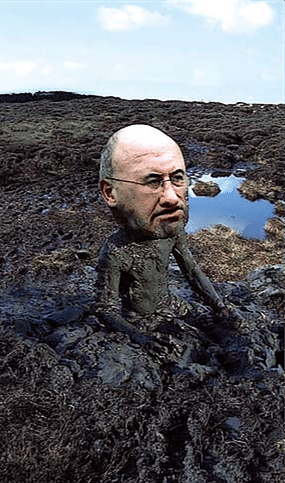
    The Programme for Government’s commitment to review the policy-banning turf-cutting climaxed last month. And no one is sure who won. This is hardly surprising when Minister Deenihan’s full house was revealed to be more than 600 pages of documents – a draft National Peatlands Strategy, draft National Raised Bog Special Areas of Conservation (SAC) Management Plan, and a Review of Raised Bog Natural Heritage Areas (NHAs). Of course the first question to be answered was the one that Jonathan Clinch put to him on the ‘World at One’ radio news. Were the SACs where we had seen stand-off s between turf-cutters and the Guards to be protected or not? His hands were tied, the Minister explained, by European law. The prohibition would remain. Ming Flanagan, the TD who has baited the Minister on this subject since his election, delivered another of his endless clichés: the “devil was in the detail”. Of course the cliché is right. On page 119 of the SAC Management Plan we find that ‘further exhaustive engagement with turf-cutters and representative groups will continue’, explaining ‘this engagement process will also provide opportunities for continued turf-cutting proposals to be considered where relocation solutions prove elusive’ (and where the €23,000 in staged tax-free payments have been refused). The Government already owes the EU for SAC designated bogs lost to turf cutters since their listing in the 1990s. These new reports show that of 1,990 hectares in 1994, more than 730 hectares had been destroyed by 2012. These must be replaced by habitat of equal value and at least equal extent. So too will 48 of the 75 National NHAs raised bogs where the turf-cutting ban announced by John Gormley in 2010 is to be lifted to allow for continued cutting by contractors acting on behalf of several thousand people. Those 75 bogs covered 17,000 hectares. The Minister suggested that he could do this as the EU rules for SACs do not apply to (national) NHAs. But he omitted to mention that in 2005 Ireland had designated these 75 sites as NHAS in the first place only in exchange for the Commission withdrawing proceedings seeking daily fines against Ireland for allowing turf-cutting to continue without assessment, after a 1999 judgment of the European Court of Justice. Worthy of conservation in 2005 to avoid daily fines, eight years later they only have ‘some ecological value’ and their ‘contribution to the attainment of the national conservation objective is expected to be marginal and/or restoration would be prohibitively expensive for the conservation benefits achieved.’ Further ecological concern is being expressed that the selection of bogs for the chop took more account of their turf-cutting value than of their critical position as stepping stones required, under the EU Directive, for protected species – such as the red grouse and the white fronted goose. Like electronic systems, ecological systems must have redundancy built in. It may seem from the turf-cutters point of view that two nearby small bogs is one too many, but a fire on one could lead to local extinctions without a nearby refuge. And at this stage it has to be asked: where are all these replacement bogs coming from? What magic supply of pristine bogs did we not reveal in 2005? Just as it appears Ireland has been exposed as insincerely recognising the conservation value of the 75 bogs designated as NHAs in a desperate, and successful, attempt to end the threat of daily fines, so it now appears that Bord na Móna was less than fully transparent when Dutch influence and the Irish Peatland Conservation Council forced the transfer to the OPW of their raised bogs of high conservation value in the 1990s. Consequently, they were left alone until these recent revaluations unearthed them. But if this is the case, they should have been protected anyway instead of stored up for future destruction, as Bord na Móna is committed to opening no further bogs. We may expect that Ireland has not quite heard the last of this from the EU Commission, though even there an indulgence of national sensitivities to the detriment of environmental science and a conservation imperative has set in with the transfer of key personnel out of the Environment Directorate. To top it all off, the recent decision of An Bord Pleanála that industrial extraction by international corporations like Westlands and Bulrush requires planning permission has been stayed by the High Court. It accepted the companies’ pleas that to cease production while waiting for the Irish Court system would be an unfair competitive bind on their businesses. And the elephant out on the wetland? Greenhouse gas emissions. Bogs are our Amazon. Draining them releases greenhouses gasses. Burning turf releases even more. If there was ever a case of non-joined up thinking in a climate-change world, destroying our bogs is it. Tony Lowes

    Loading

    Read more

  • Posted in:

    Education Department cagey on Bus Eireann

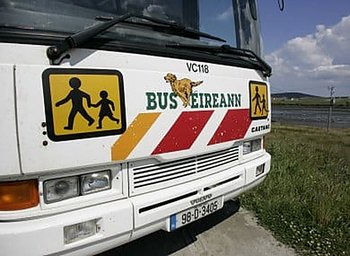
    Student Transport Scheme Ltd (STS), a private company, wants Ireland’s school-bus-service contract put out to public tender and hopes that it will be awarded it on competitive tender. The company, with Tim Doyle and Brian Lynch as shareholders is intended as a tender vehicle for an Irish-American team in the bus industry. It initiated still-ongoing legal action against the Department of Education in October 2011. Bus Éireann was joined as a Notice Party in the proceedings at the direction of the High Court. Given the fact that the company, despite having obviously wealthy backers, had effectively no assets, the High Court gave the Department an order for security of costs. The effect of this was to provide the tax payer with security in the event, as actually occurred, that the Department won the court case and received an order in its favour in respect of its costs. The essential thrust of the legal action was to seek an Order from the High Court setting aside the existing arrangements for the provision of national school transport services. The case was heard over a six-day period in the Commercial High Court in 2012. During this period counsel, on behalf of the company, the Department and Bus Éireann) advanced their evidence and legal arguments to the Court. The Department received extensive correspondence accusing it of illegality, obstruction of a solicitor, tampering with evidence and perverting the course of justice. At trial, Senior Counsel for the company apologised for the excessive zeal of this correspondence. After the court judgment in favour of the Department the company, through its solicitor, Brian Lynch & Associates, initiated an appeal to the Supreme Court. In addition, the company, again through that solicitor, instigated an action against two named officials of the Department, the Chief State Solicitor and a named official of the Chief State Solicitor’s Office. This action alleged contempt and sought committal of the public servants in question. The Supreme Court struck out the contempt/committal issue, saying it was for the High Court. The Department and Bus Éireann also sought security for the legal costs of the appeal to the Supreme Court. Student Transport Scheme Limited duly lodged the €201,000 in security for costs for the Supreme Court appeal bringing the total to €446,000 paid to date. The Department believes litigation in this case continues to be conducted in a most unusual, threatening and aggressive manner. Brian Lynch & Associates on behalf of the company and Tim Doyle, as managing director of the company, between them have written many hundreds of letters to Ministers, Deputies, the Department, Bus Éireann, the Office of the Chief State Solicitor and to individual officials and retired officials of the Department. Elements of this correspondence allege corruption, refer to an ongoing investigation of corruption by Brian Lynch & Associates, and repeatedly raise issues and contentions which were the subject of the court proceedings. It should also be pointed out that earlier correspondence to Bus Éireann contained references to bias, bribery and bullying and these allegations are now the subject of separate defamation proceedings initiated by Bus Éireann against Tim Doyle. The arrangements between the Department and Bus Éireann are set out in a document of 1975 which provides the basis for payment to Bus Éireann. The Department receives a copy of the Statement of Account for School Transport, prepared by the CIE Group auditors, each year which confirms that, in the opinion of the auditors, the Statement of Account has been prepared, in all material respects, in accordance with the Summary of Accounting Arrangements relating to the Transport Scheme for Primary and Post-Primary School children dated 1 January 1975 and with the bases and assumptions disclosed therein. This Statement of Account is not required to contain any statement to the effect that Bus Éireann do not make a profit from school transport. Nevertheless Bus Éireann has confirmed to the Department that they do not make a profit on School Transport and the Department accepts this confirmation. Subject to provision of the appropriate security for costs, junior Minister Ciaran Cannon has said the Department will deal fully with this “in the context of the Supreme Court appeal”. Meanwhile, however, the Department is failing to answer Parliamentary Questions – the facility whereby back bench and opposition TDs can ask questions of Ministers to hold them to account and to ascertain the truth. In effect the legal action is precluding the provision of the facts to the Dáil. Whether the facts will emerge in the legal proceedings is also uncertain. They have not during the litigation so far. Michael Smith

    Loading

    Read more