Archives

OK

Random entry RSS

Loading

  • Posted in:

    Panti support

    On 12 January, Brendan O’Connor’s ‘Saturday Night Show’ featured a performance by drag queen Panti Bliss, followed by an interview with her alter ego, Rory O’Neill. During the conversation, O’Connor reflected that things were a lot better now than they were in the bad old days. O’Neill gave a considered answer to the question, reflecting on everything from the benefits of the intimacy of Irish society (everyone knows everyone, and it’s not so easy to be bigoted about someone you know) to the sometimes subtle nature of homophobia (it’s not just people getting beaten up in the streets). In fact, O’Neill noted, the only place where it was “okay to be really mean and horrible to gays” was online, or in a newspaper column. Then O’Connor asked unwisely, as it turns out, “Who are they?”. O’Neill answered, the audience applauded, and the interview moved on. Within days, in response to legal letters, RTÉ removed the segment from the RTÉ Player. Broadsheet.ie, which had posted the clip online, also took it down after being contacted by RTÉ (they later reinstated it). O’Neill revealed that he too had received legal correspondence. Broadsheet.ie, TheJournal.ie and Krank.ie reported on the removal of the clip from the Player. The next day the Irish Independent reported that John Waters had complained to RTÉ. The Mayo News picked up the story too (O’Neill is from Ballinrobe), and that was about it. Noel Whelan and Una Mullally wrote opinion pieces in the Irish Times from different perspectives, but there was little other reporting in the mainstream press. Meanwhile, bloggers went nuts, poring over everything from the nature of defamation and the defences available if sued, to the definition of homophobia, to previous statements from those who had complained, to the silence of mainstream media, particularly given such elements as the fact that one of those who complained to RTÉ. John Waters, was also a member of the Broadcasting Authority of Ireland at the time. (Waters resigned from the BAI ten days after the broadcast.) The following weekend, Brendan O’Connor apologised for any “distress” caused by comments made by “a guest”, no doubt to the puzzlement of many viewers who were not following the story online. But the story that hardly anyone old media was reporting refused to die. Blogs proliferated and were shared online, journalists were tackled on twitter about why they weren’t covering the story. Then the Iona Institute announced that RTÉ were paying damages. Audrey Carville raised the issue at the beginning of RTÉ’s ‘Late Debate’, leading to an exchange between Breda O’Brien and Colm O’Gorman. The dam finally broke in the dying days of January. Questions were raised in the Dáil and Seanad by Catherine Murphy, Claire Daly, Averil Power and a vituperative David Norris. Pat Rabbitte sent out a press release saying it “would be a matter of serious concern if recourse to our defamation laws was to have a chilling effect on the conduct of public debate”. Panti appeared on stage after ‘The Risen People’ at the Abbey. An Oireachtas backlash complained of the vilification of David Quinn. Editors might have been wary of reporting a story about an alleged defamation, for fear of attracting litigation themselves, but they could report what a minister said, and what was said in the Oireachtas. And RTÉ provided a further platform hosting a follow-up debate on the ‘Saturday Night Show’. The debate format, and the “terms and conditions” imposed, attracted their own criticism, but at least the story was being reported now. And with all that being discussed, the newspapers also reported on the sums that RTÉ had made in payments (€85,000). The old media were off – sort of. RTÉ attracted a lot of heat online for their actions (over 800 complaints about the apology), but the truth is, it could have been anyone. The responses in various editorials and opinion pieces made it clear that the threat of defamation silences the commercial press too. RTÉ estimated that over 2,000 people attended a protest over the affair on Sunday 2 February. In contrast, the reactionary Reform Alliance conference attracted 1,400, after weeks of front pages and endless hyperbole on television and radio. We talk a lot about national debates in this country. But free speech is the essence of debate. The Panti Bliss saga shows Ireland still hasn’t worked out the appropriate paremeters for rigorous debate. It shows the tin ear of newspapers and broadcast media, which failed to register the level of support for Panti – next to no-one sided with the Ionas. It shows the power of social media to colonise stories that old media cannot (or will not) cover. And a bravery which the old media seem tellingly to have forgotten. Gerard Cunningham

    Loading

    Read more

  • Posted in:

    Punching the Telly

    After Christmas my voice was knackered from shouting abuse at the tellybox. Such was the fury, I thought I’d share it with Village, for therapy. For instance, one 30-second Vodafone TV ad tickled my comedy tummy much more racily than three whole hours of sit-com by Jason Byrne? In the advert, a woman runs in to a pub loo to consult a pub quiz expert. Now he confuses whales with Wales, because he is thick. A great dumb gag, but beautifully shot, comically acted by the main player, (a Yank doppleganger of David Walliams). A hard working conceit taking the maximum from excellent timing. With just 30 seconds, bang, job done, that’s enough. Meanwhile, Jason Byrne clattered onto screens in Britain and Ireland on a ‘Mrs Brown’s Boys’ rebound with six, six!, 30-minute episodes of a train wreck called ‘Father Figure’ I cringed at what was more war-crime than sit-com, embarrassed too for some great comedy actors, who looked lost on Byrne’s vanity project. And where exactly was ‘Father Figure’ set? Is it a drab suburb of Dublin, (Ballinteer?) cut and pasted into Huddersfield? Or what? Who cares, it was brutal. RTÉ didn’t promote it at all – see, they knew they had a big fat turkey on their hands. Saints be praised it had no DVD Christmas presence and I pray it won’t be repeated … but you know RTÉ. Still, I heard a swaggering Jason Byrne puff his effort on ‘Front Row’, BBC Radio 4’s flagship arts programme. He described ‘Father Figure’ as – ‘Some Mothers’ Do Ave ‘Em’ meets ‘Outnumbered’. What, exactly: ‘Some Mothers Do Ave ‘Em’ eked a dated humour from nothing more subtle than a whining Man-Girl-Boy and catchphrases “a bit of trouble” and “OOOh… Betty”. Did I do a whoopsee? Yes you did and you made a series out of it, forty years ago. And ‘Outnumbered’ was about as pacy as a family outing to Starbucks, without even SMDH’s Keatonesque pratfalls. You’ll find more sophisticated humour on ‘Peppa Pig’. More energy, credible characters and plot development but then ‘Peppa Pig’ has been professionally worked through. Byrne needs to tiptoe back to comedy writer John Henderson, who saw him through a number of series on RTÉ and BBC, and the tolerable ‘The Lounge’. To the next ad break! This time, Surf. Two studenty English birds are in a laundry room. Dreamy Girl has a vintage dress, which she absolutely adores. Stoic Pal looks on, bored, benignly tolerating her pal’s frock fanaticism and there you have it. Simple. The acting is acute, the humour gentle, sweet and durable, so with each viewing you see another lovely nuance in the performances.The understated genius is the rarity of the gentleness. Topical gems are rare in this provincial country, where history repeats itself but jadedly so as to leave no drama, with no proper celebs (who stick around), unreformed parish-pump politics and an incestuous cabal of self-furthering few Meeja Personalities. Yet in this Depression Éire, we have had at least five newish, topicalish satirical series fighting over a lean funny-bone. Bring me the head of the Head of Comedy, at RTÉ. Wait, there never has been a Head of Comedy at RTÉ. So one gifted impressionist slugs it out with another gifted impressionist, as Oliver Callan goes toe to toe with Mario Rosenstock. Some of Mario’s characters are better judged than Callan’s. Most of Mario’s sketches are produced better than Callan’s. But Mario’s scripts are third world. Feels like Mario needs an editor (let’s be honest: an executioner) for the TV show, but sure the make-up is on, the set is built – Action! Let’s ignore all the trends, timings and lessons learned over 17 years ago, when ‘The Fast Show’ first appeared – sure, linger a while. Half the time you’re left credulous waiting for the punch line as you realise yet another sketch is bearing down on you before you thought the previous one had been terminated. So, why can’t these guys get together, maybe make ONE knockout series? Why that’s as mad as saying “we’re a tiny country with the population of Greater Manchester, we need only one decent bank.” I feel an ad break coming on. Mario’s orange fitness freak on the Aviva campaign is funnier, over a precious 30 seconds, than many of the characters he stretches out over his thirty minute romps. After the metaphorical break the exact same topical leftovers are then scavenged by brave ‘Irish Pictorial Weekly’ and the woegeous ‘Republic of Telly’. Baldy Noonan? Tick. Roy Keane? Tick. First come. First satirised? In 2013 ‘Irish Pictorial Weekly’ went for even more tortured obscurantism than usual, though of the three it’s the success and there are moments of brilliance with appalled Germans and cossetted traitor civil servants. And the self-indulgent (mad, angry and above all loose) but usually brilliant ‘Savage Eye’, with its menagerie of lunatics, grows on you and leaves the taste of vomit when you come back to politics as it is actually practised, in a way that only the disaffected scion of a great dynasty of public men like David Andrews (junior) could conjure so acutely (see Ardal O’Hanlon). Oh no, then there’s ‘Republic of Telly’. Bad Culchie Chic – a terrible, pixellated, rough, RTÉ in-house rag-mag. A bogman’s amateur half hour and Jennifer Maguire trun’ in. The Rubber Bandits look like they’ve turned up on the wrong show? Go Pictorial, next year boys! Bernard O’ Shea features on ‘ROT’ – today’s non threatening, gas craic, RTÉ Golden Balls. A company man, like our Jason, O’Shea is perfect for scrutiny by an uptight Tubbs on the ‘Late Late Show’. See, Tubridy fears those sharp, edgy comics – the ones that answer back and don’t buy his corny feed lines. Tom Cruise. The nation’s toes, nails, hair, skin: they all crawled. O’Shea and Cruise, brothers in edgy comedy, on Tubridy’s ‘Late Late’. Whereas ‘Irish Pictorial Weekly’ feels about five years overdue, back then it should have been at

    Loading

    Read more

  • Posted in:

    RoadMEP

    May’s elections to the European people are far more important than just a test of public opinion about the state of our national political parties. Just over 388 million voters will elect 751 members of the European Parliament (MEPs) who will play a key role in determining whether or not Social Europe can be rescued and the democratic deficit and growing alienation at the heart of the EU can be addressed. These elections are a key opportunity to bring about a fundamental change of direction and to address three interrelated crises that threaten the future of the EU: a solidarity and equality crisis, a crisis of democratic legitimacy and an environmental crisis. At the heart of the solidarity and equality crisis is the rapid increase in unemployment, poverty and inequality across the EU and the growing divergence between Member States. Economic and fiscal policies are being implemented at the expense of social policies and austerity measures are undermining and dismantling welfare states. Over six and a half million more people are living in poverty or social exclusion than in 2008: a total of 123 million people, close to one in four Europeans, in 2012. Children are at greater risk of poverty or social exclusion than adults with a rate of 27.7% against 25. %. Unemployment in the EU is 10.9% and for the first time ever, more than 25 million people are unemployed in the EU, an increase of nearly 9 million since 2008. Over 11 million people are long-term unemployed. Nearly a quarter of economically active young people are unemployed. Nearly one in five third country nationals are without a job. More and more people in employment are being forced into insecure and low paid employment. The working poor represent one third of working age adults at-risk-of-poverty. The burden of economic adjustment is destroying Social Europe and is hitting the most vulnerable groups hardest. Candidates should be committed to supporting and monitoring the implementation of the European Commission’s social investment package and, in particular, campaigning for the active implementation of the Recommendation on “Investing in Children”. All candidates should be asked to sign up to the European Manifesto, “I am a child rights champion”, launched by international and European children’s rights organisations. This calls for a political commitment to promoting children’s rights in the work of the European Parliament. Candidates should be committed to strengthening social protection systems across the EU, supporting EAPN’s campaign for an EU Directive on minimum income schemes, and working for accessible and quality public services for all. The EU’s positive track record on promoting gender equality and anti-discrimination measures must be reinvigorated. Candidates should commit to ensuring that the rights of groups such as migrants and people from a minority ethnic background are fully realised and that support for asylum seekers and refugees is enhanced, with responsibility shared more fairly across the EU. Europe faces a crisis of democratic legitimacy. The EU is increasingly viewed as being controlled by an elite that is taking decisions in the interests of the few. It is imposing austerity measures that are transforming the EU into a Europe of “them” and “us”. The lack of accountability and legitimacy is combining with a growing sense of insecurity and fear as a result of the social crisis. This is leading to a rise in Euroscepticism and a growth in racism, xenophobia, discrimination and nationalism. Not surprisingly many European citizens are turning their back on Europe because they feel Europe has let them down when they most needed it. Candidates must be committed to further strengthening the role of the European Parliament to shape legislation and to hold the European Commission and Council to account and to ensuring that the voice of civil society is heard in European policy making. Economic policies have also been increasingly applied at the expense of environmental policies. The current economic crisis is not just a fiscal crisis. It is the result of an unsustainable model of development which is based on overconsumption and results in an ever increasing ecological deficit. Yet the measures imposed to address the economic crisis are just more of the same. The latest European Commission proposals, the 2030 Framework for Climate and Energy EU2030, reflect this with their rowing back on the obligation on Member States to reach specific renewable energy targets by 2030. Candidates should be committed to revitalising Europe’s employment strategy, building a more environment and climate-friendly economy, and creating jobs through investment in thermal retrofit of housing and in sustainable energy sources. The European elections are an opportunity to demand a change of direction. It is vital we elect MEPs who are committed to addressing these three fundamental crises. Hugh Frazer

    Loading

    Read more

  • Posted in:

    Debt’s dominion

    Is Ireland’s level of debt sustainable? The Troika drew attention to our high public debt in their final review of Ireland’s bailout programme. The first few weeks of 2014 have seen good news on Ireland’s cost of borrowing on the bond markets and the decision by Moody’s ratings agency, after all the others, to upgrade our grading to ‘investment grade’. We also have modest, but consistent improvement across a number of key economic indicators including GDP, employment growth and unemployment, giving us reason to hope that the worst may be over. These recent developments are leading some to think that the crisis is fading. On closer inspection, the improvements in the bond markets are not necessarily due to an improvement in the fundamentals of the Irish and Eurozone economies, and have probably been influenced by the ECB’s decision to introduce an Outright Monetary Transactions (OMT) programme in 2012. Mario Draghi’s “whatever it takes”, did the trick; investors believe the ECB could and would counter rising spread by buying up debt. So where does that leave us with the current levels of debt and more importantly, the sustainability of that debt? Chart 1 illustrates the scale of the debt we are carrying (117% of GDP in 2012) compared to other European countries (EU average, 85% of GDP in 2012). The IMF projects that our debt will have peaked in 2013 at 124% of GDP and decline to 112% by 2018. Many commentators make the case for using GNP as an economic indicator as it more accurately reflects Ireland’s economy and the large multi-national sector. Calculating our debt levels using this indicator brings our debt-to-GNP ratio up to 145% in 2012; and using this measure in Chart 1, our debt levels are the second highest in the EU and much closer to Greece’s. Using existing GNP forecasts, our level of debt will be in the region of 150% of GNP for the next 3 years. It is important to remember that we put €64 billion into the banks, approximately €42 billion of which was borrowed. Our current (public) debt is €205 billion, which means that over 20% of our public debt is a result of the bank bailout, where private bank losses were transferred to the taxpayer. These figures don’t include NAMA loans of just over €30 billion. It is not clear if NAMA will break even, make a pro t or a loss in the future. However, the exchequer will be liable for any shortfalls in the future. The fire-engineering of the IBRC (Anglo) promissory notes in February 2013 improved Ireland’s underlying general government balance by just under €1 billion, but it’s important to remember that this deal included no capital write-down but focussed instead on reducing the interest rate and extending the period of repayments from 7-8 years, to 30-40 years. Adding in private (household and corporate) debt provides a more complete picture of the true scale of the debt burden on the Irish economy. Private household debt remains very high, at almost 200% of disposable income which is just over 100% of GDP (€172 billion). Debt associated with corporate/business sector is measured through ‘non-financial corporation debts’, which are estimated to be 195% of GDP (€318 billion). While a large portion of debt is associated with multinationals and the financial services industry, it also includes SME debts. The total debt in the Irish economy is estimated at €695 billion, which is almost 420% of GDP. This level of (public and private) debt in the Irish economy is one of the main reasons why growth is struggling to take root. Chart 2 illustrates how quickly our debt could rise even further if growth forecasts don’t materialise and the current nascent recovery experiences a ‘growth-shock’. For example, a temporary reduction in growth by two percentage points would result in our debt jumping to over 130% of GDP. Households and businesses are rightly focusing on paying down debt, which is limiting spending in the domestic economy and investment in businesses. There is also evidence of households and businesses that are in a position to borrow, not being able to access credit, which is compounding the lack of demand in the domestic economy, and further dampening growth. Meanwhile, an ever increasing proportion of our taxes are going towards servicing the public debt at the expense of investment in infrastructure and public services such as health and education. The cost of servicing the national debt increased from €2.1 billion in 2008 to €8.1 billion in 2013 – that’s a four-fold increase in debt repayments within five years. To put the scale of the debt burden in context, the total budget for the Department of Education is €8.8 billion. It would cost just over €3 billion to introduce a universal system of early-years education and childcare; and it would cost less than €500 million to introduce free GP care for all, abolish prescription charges for medical card holders and expand community and long-term care. The evidence suggests that growth is likely to be adversely affected by high debt ratios, and continuing fiscal consolidation will undermine growth in the absence of o setting policy stimulus. Ireland’s future potential for growth in output and employment is currently constrained by the fact that we have the lowest level of investment as a proportion of GDP in the European Union. Investment in social, human and physical capital is a key component of medium-term economic growth which is a key ingredient for making debt sustainable. The economy itself is not generating enough income to bring down debt levels without compromising investment in human and physical capital and public services. Action is required on a number of fronts to make the level of debt more sustainable and to create a virtuous cycle of growth: At EU level, definitive action is required to break the link between banking and sovereign debt (including legacy banking debt) and measures should be put in place to write-down and/or restructure legacy banking debts; The Anglo-Irish debt

    Loading

    Read more

  • Posted in:

    Consensus on Seanad change

    A dynamic Seanad Éireann is crucial to a dynamic democracy. The Dáil hosts less and less challenging, expert-informed debate. Since last October’s referendum, many people are coming to a realisation of the need for Seanad reform that strengthens the institution. In its current form, although some great work does get done, the Seanad is only performing to a fraction of its potential. The Government’s recent reform proposals hardly change that at all. Democracy Matters has mapped out a vision for how the Seanad can be energised through a panel system. This is what was envisaged in the 1937 Constitution, but with the six university seats drawn from the entire third-level sector and with every citizen having an opportunity to vote. We propose 43 Seanad seats being drawn from all areas of national life: an agriculture, fishing and related areas panel, an arts, language, education, culture and literature panel, a labour – organised and unorganised – panel, an industry and commerce panel, and a public administration and social services (voluntary and statutory) panel. These panels would replace the politically-loaded, unevenly-weighted, and archaic representation in the current Seanad composition. Currently some citizens have up to seven votes in Seanad elections, while the majority have no vote at all. Our proposal will not require another constitutional referendum. As a cross-political-party [and none] campaign for Seanad reform, Democracy Matters has identified a consensus emerging on a number of areas that are seen as crucial to Seanad reform. Universal citizen suffrage where one person has one vote is a must. Gender equality is an underpinning priority. People of Northern Ireland as well as diaspora citizens need to be able to vote. The Seanad should take on the central function of contributing to and scrutinising EU legislation. The Dáil, for all its strengths, demonstrates an increasing vulnerability to being swayed by Party whips to serve various kinds of political expediency. This stifles real and passionate debate. The last few years have seen a large number of Dáil resignations from ‘conscientious objectors’ to the dictats of larger parties. The proposed Seanad reforms counter this head-on. The Seanad would be a democratically elected chamber in which the aspirations of the 1937 Constitution would be realised. It would be composed of an equal number of men and women on the basis of equality, chosen by all citizens to give a real voice to aspects of our national life that are rarely heard in the present system. A reformed Seanad would make Leinster House the centre of a rich, vibrant and inclusive democracy, bringing new freshness and breadth of vision to the Oireachtas, The Seanad is already far more than a ‘talking shop’, a rubber stamp or a retirement home for failed politicians. But this cross-Party reform agenda can build its energy to become a place of lively debate, expertise and decision-making. This is not just an aspiration, it is a distinct and practical possibility. Based on the referendum, I am hopeful that we can enact Seanad reform by the end of the lifetime of this Government. We could get an agreed Bill through the Dáil in 2014, in time for a general election as early as 2015. It may be 7-10 years before we get another chance to address this issue. Democracy Matters has proposed that an all-party Task Force be designated to see a reform process through to publication of Heads of Bill. In parallel, a Seanad working group should identify and implement the procedural changes required to make the day-to-day business of the Seanad more effective and efficient. Allparty agreement should be sought for the passage of legislation in late 2014. My central hope is that the Irish people will see the relevance of this campaign and make themselves heard through their respective political affiliations at local level, so as to accelerate meaningful Seanad reform with a view to the Oireachtas becoming democratised in its entirety. Senator Katherine Zappone

    Loading

    Read more

  • Posted in:

    Unsung Guantanameros

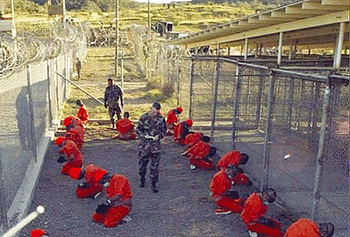
    During his election campaign of 2008, US President Barack Obama made a solemn promise to the American people ‒ to close the detention centre at Guantanamo Bay, Cuba within his first year of office. Since opening in January 2002, Guantanamo had been embroiled in controversy with pervasive reports of mistreatment and torture of inmates, detention of prisoners with no affiliation to al-Qaeda or any other terrorist group, indefinite detention without trial, suicides and the holding of minors. Once elected, Obama’s promise dissipated, facilitated in part by ambivalence from the American people, who were still recovering from the aftermath of the September 11th terrorist attacks, but largely due to a recalcitrant Congress, intent on blocking any moves to transfer prisoners off the site. It consistently thwarted Obama’s plans for closing Guantanamo, making it extremely difficult to repatriate or relocate prisoners who had in fact been cleared for transfer. Congress also ruled out the transfer of detainees to US soil, despite Obama’s objections that so-called ‘high value’ prisoners should be brought before a civilian court and afforded due process. In 2011, Congress mandated that detainees could only be transferred out of Guantanamo if the Secretary of Defense certified they would not engage in terrorism upon release ‒ a seemingly impossible demand. Congress last year afforded the president the authority to waive the certification requirement but in effect this had its own restrictions as, for example, the waiver could not be used in the transfer of detainees to countries on the State Department’s list of states sponsoring terrorism. Though in 2012 Obama reportedly admitted he could have done more for Guantanamo, he nevertheless went on to declare: “No one is going to persuade me that we should run a penal colony in perpetuity in America”. The turning point, both politically and in terms of public perception, came perhaps when the cost of detaining prisoners at Guantanamo was revealed by Defense Secretary Chuck Hagel last year: yearly operating costs of $454 million, or approximately $2.7 million per inmate. By comparison, it was noted by one senator that detention per inmate at a federal, high-security prison costs $72,000 per year. In November of last year, on the twelfth anniversary of its instigation, a letter was sent to all US Senators, from thirty-eight retired generals and admirals – imploring Congress to shut Guantanamo down, describing it as as a “symbol of torture”, and a “betrayal of American values”. The following month, the US General who opened Guantanamo, Marine Major General Michael Lehnert, wrote in the Detroit Free Press that Guantanamo was a mistake and should be shut down because “it validates every negative perception of the United States”. In December 2013, Obama signed the National Defense Authorization Act, which finally makes it easier to transfer detainees to other countries, though transferring any prisoner to US soil is still prohibited. Though praising Congress for allowing the concession, Obama criticised it for enacting “unwarranted and burdensome restrictions” in the past, that had hindered his ability to transfer detainees to US Soil where they could be tried and prosecuted in civilian courts. December 2013 saw prisoners sent home to Algeria, Saudi Arabia and Sudan, and the resettlement of three long-detained Uighur captives, whose release a judge had ordered in 2008. According to the New York Times, leaked dossiers for the three Uighur detainees showed that, at least as early as 2003, the military had determined they were “not affiliated with al-Qaeda or a Taliban leader” and should be released. There are currently 155 detainees remaining at Guantanamo; of those, 76 have been approved for transfer, security conditions permitting. Many have been detained without charge for over ten years. The Guantanamo Bay detention camp opened on January 11th 2002 to detain, interrogate and prosecute what then Secretary of Defense Donald Rumsfeld termed “the worst of the worst” ‒ mostly prisoners from Afghanistan, who had been captured during President George W Bush’s ‘War on Terror’. After the September 11th attacks, the political imperative was to bring the conspirators and terrorists to justice and to protect America from further attacks at all costs. It was asserted by the Bush administration, on legal advice, that Guantanamo ‒ on non-US soil ‒ could be considered outside US legal jurisdiction; it was also claimed by the administration that detainees would not be entitled to any protections under the Geneva Conventions. On this premise, the fate of Guantanamo had been sealed, allowing as it did the gross mistreatment and torture of prisoners ‒ with absolute impunity. It wasn’t until a Supreme Court decision in 2006 that it was ruled that detainees should in fact be afforded minimal protections listed under Common Article 3 of the Geneva Conventions. Rather than housing the 9/11 masterminds and terrorists as claimed, it soon became apparent that the detainee population within Guantanamo was a combination of innocent civilians, Taliban footsoldiers and a relatively small number of ‘high-value’ suspected al-Qaeda terrorists. Also held in Guantanamo were an estimated 17 to 22 minors: ‘juvenile enemy combatants’ ‒ a status not recognised under international law. These ‘combatants’ ranged in age from 13 to 17 years. Wikileaks’ ‘Guantanamo Files’, containing classified documents dating from 2002 to 2008 further alleged that during the invasion of Afghanistan, al-Qaeda and Taliban ‘suspects’ were sold to US forces by Afghan and Pakistani allies. The US allegedly paid bounties of $5,000 per prisoner, with leaflets widely distributed emblazoned with the undiscriminating offer. After the September 11th attacks, the CIA and Department of Defense employed new methods of interrogation sanctioned by the Bush administration. Termed ‘Enhanced Interrogation Techniques’, this was a euphemism for torture. They included: waterboarding, sleep deprivation, hypothermia, 20-hour interrogations, controlled fear (with dogs) and sexual assault/humiliation. In 2002, the Bush Administration told the CIA that unless the intent was to inflict pain or suffering, then it was not torture. Inexplicably, the arrogance of both the administration and the military in the abuses inflicted on Guantanamo detainees led, quite ironically, to a situation where even those inmates considered

    Loading

    Read more

  • Posted in:

    Alan Shatter coming good

    There are few people who are neutral on the subject of Alan Shatter. Almost by definition, Ministers for Justice stand in the eye of the storm almost from the very minute they take up office. Usually, they are blown along by events. The murder of Veronica Guerin in 1996 was the defining moment of Nora Owen’s tenure in the department. The report of the Morris Tribunal arising out of the extraordinary behaviour of senior Garda in Donegal had a huge impact during the period in office of Michael McDowell. Security considerations have always ranked high. The temptation is for the serving Minister to spend too much time defending the status quo while fending off demands for improved pay and conditions from some of the most formidable lobby groups in the State. All too often ambitious reform plans get pushed to one side. Control, aimed at cutting their earnings. Aside from the series of general reductions in pay implemented since 2008, Gardaí have been faced with reductions in overtime. The Minister soon became embroiled in a controversy over penalty points, his own in the first instance. The matter of cancelled penalty points has returned to haunt the Force, in recent months. When Alan Shatter took office in March 2011, he was certainly not a man bearing gifts. His primary task was to implement a series of cost reductions right across the justice and law spheres, involving a programme of closures of Garda stations and courthouses as well as further reductions in payments to barristers and solicitors in civil and criminal aid. The blow back was huge. Gardaí, many of them carrying large loan burdens from property investments, reacted with fury to measures, outside the Minister’s direct control, aimed at cutting their earnings. Aside from the series of general reductions in pay implemented since 2008, Gardaí have been faced with reductions in overtime. The Minister soon became embroiled in a controversy over penalty points, his own in the first instance. The matter of cancelled penalty points has returned to haunt the Force, in recent months. Cutbacks were a feature of Alan Shatter’s early period in office. The programme of Garda station closures soon enmired the Minister in public controversy. More than one in ten of the stations has disappeared include a couple in the Minister’s own Dublin South constituency. Local demonstrations have been staged but the Minister, with the backing of the Garda top brass, has held firmly to the view that it makes little sense for Gardaí to be inside ageing buildings carrying out administrative work. Locals in suburbs like Stepaside, south Dublin, worried about an inevitable surge in burglaries, beg to disagree and some element of payback has been demanded by the Garda. Shatter has been notably indulgent of Garda Commissioner Martin Callinan’s intransigent defence of “his” force over the penalty points debacle, at the Public Accounts Committee, and shows no interest in affording the Garda Ombudsman Commission access to the Garda’s pulse computer system, without which the Commission’s work is hobbled. Meanwhile, the Dublin South TD, who also has the Defence portfolio, has presided over the closure of army barracks too – in Mullingar, Clonmel and Cavan. His willingness to face down local opposition has earned him brownie points at Cabinet, though it remains to be seen whether an electoral blow back could throw his engine into reverse. If Shatter’s efficiency drive in this area has shredded the nerves of local Fine Gael party worthies ahead of the local elections in May, his moves to shake up legal services, unveiled in November 2011, have won more favour with the ordinary punter while provoking a firestorm within the legal profession. The Minister’s plan to establish a new Legal Services Regulatory Authority, ending the current system of self regulation of solicitors and barristers and introducing reforms such as multi-disciplinary practices, has the strong backing of the Taoiseach, Enda Kenny – the two men tend to sit side by side in Cabinet and are said to be close, politically. This particular set of reforms answers to a popular demand for a shake-up of two professional bodies which would not be atop any poll of anyone. At a time when the current administration is regularly assailed for acting at the behest of the dreaded Troika, in implementing unpopular cutbacks, implementing a crackdown on professions viewed as greedy, smacks of clever populist politics. Some members of the legal profession have been their own worst enemy. There is universal rage at the huge payouts to lawyers involved in a succession of Tribunals, particularly Moriarty and Flood/ Mahon which each will cost around €200 million, and the fact that over the last eleven years the Attorney General’s office alone (ie not the HSE or DPP) paid €3.2 million to two barristers, €2-€3 million to another seven and a further €1-€2 million to a further 27. The Department of Finance alone paid a staggering €15 million to Arthur Cox in the five years up to 2012. There is a perception some lawyers have gorged at the expense of the public purse. Certain law firms appeared to garner spectacular costs from the army deafness actions of the late 1990s, leading to a crackdown on costs by the then Defence Minister, Michael Smith. A surge in personal injury actions led to growing concerns about a so-called ‘compo culture’ that led to the establishment a decade ago of the Personal Injuries Assessment Board by the then Justice Minister Michael McDowell. Many practitioners regard PIAB as excessively bureaucratic and they claim that ordinary claimants, many with good causes of action, have lost out, but PIAB has reined in to a degree the upsurge in premiums that was threatening business and social and leisure activities across the country. Lawyers insist that the real beneficiaries have been the insurance companies which pressed hard for the changes – the insurers respond that premium levels, in a competitive market, are determined by the cost of claims. While the personal-injuries bandwagon was halted, the search

    Loading

    Read more

  • Posted in:

    Dissidents and dissenters

    While focus over the past year has been on Loyalist alienation, there is also a significant level of nationalist alienation in the North. Dissident Republicans have small but real support. Far beyond their circles, there is a discontent: a feeling that the Assembly has not delivered, and that the DUP is running government: of dissent. There is no possibility, in the foreseeable future, of either the dissidents or the dissenters significantly eating into Sinn Féin support. A small trickle of recruits is joining dissident groups – despite their weakness on all fronts. Those who claim such groups have no support refuse to recognise a reality they dislike. The dissident groups can operate in a small pool. Support is underestimated because many people will not openly admit to holding an unpopular view. This is analogous to the way that opinion polls understated electoral support for Sinn Féin (and to a lesser extent the DUP) in the past. An older generation of dissidents came from Sinn Féin. To become the largest nationalist party, Sinn Féin dramatically moved to the centre. Its electoral strategists recognised that this meant shedding more hard-line voters. The loss was counterbalanced by taking votes from the SDLP. The more republican voters who left had nowhere to go: the votes taken from the SDLP have reduced that party. The older group which left Sinn Féin is now mostly inactive. Of more current significance is an angry section of Catholic working-class youth which has never accepted Sinn Féin. The dissidents have recruited among them. However, even some young Catholics with jobs consider themselves dissidents. Over the last few months, I have met a scatter- ing of young people who call watch your backs – both of you “ themselves Republicans, but disagree with the strategy of Sinn Féin. Some are in organisations, others not aligned to any. A Real IRA member once explained to me that the peo- ple they were recruiting had been active supporters rather than former members. Most now come from the post-ceasefire generation, tending to be between 20 and 40. Most are from deprived areas, but by no means all. Among dissidents convicted here have people with skilled and white-collar jobs. Militarily the dissident organisations are weak, and riddled with agents. Partly because of what Northern society went through during the Troubles, their military campaign is unpopular. Importantly, the dissidents do not have a cause to mobilise around. There are, though, always dangers of a British government blunder. However, three contentious issues have been resolved. Sixty-three year old Martin Corey from Lurgan has been released: he was a former Republican life-sentence prisoner whose licence was revoked and who was jailed for three years without facing any charges. A dirty protest by prisoners on the Republican wing in Maghaberry prison has been settled. The seriously ill Marian Price, who was a remand prisoner, was released on bail. Dissidents are active on the issue of marches by the Loyal Orders through perceived Catholic areas. These are resented by most residents in those areas, even many who would not call themselves Republicans. Dissidents have members in some of those areas, and oppose the somewhat conciliatory approach of Sinn Féin. There are wider symptoms of discontent than the small dissident groups. ‘1916 Societies’ have developed. These developed first in East Tyrone, the traditional heartland of Northern Republicanism. Initially they attracted an older generation. More recently, they have attracted numbers of young people from the post-Troubles generation. They are a loose network whose only clear policy is promoting Irish unity on the lines of the 1916 Proclamation. Members disagree with Sinn Féin for often conflicting reasons. They disagree on the central issue of Republican tactics: whether or not there should be an armed campaign. They are a network for ex-members of the IRA and Sinn Féin. More generally, there is discontent in the wider Nationalist community. All sections of the community feel the Assembly has not delivered on its initial promise. Among Nationalists, many feel Martin McGuinness is too conciliatory to the DUP. Despite the DUP having moved towards the centre there is a deep distrust of it in the wider Catholic community. Projects which many Nationalists saw as symbolic gains for them like the Maze/Long Kesh Peace Centre and the A5 dual carriageway from Ballygawley in Co Tyrone to Newbuildings, south of Derry City, have been cancelled. All this will have political implications. Of the Nationalist parties, the SDLP’s long decline continues. As Sinn Féin becomes a mainstream party, its active membership has decreased. Could it, like the SDLP ear- lier, lose contact with its electorate, and if so what would the consequence be? Anton McCabe

    Loading

    Read more