
Culture

Random entry RSS

  • Posted in:

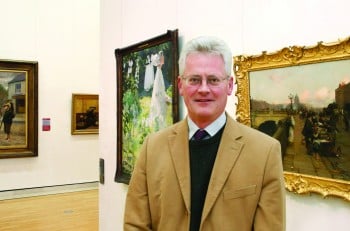
    Interview with National Gallery’s Sean Rainbird.

    By Rónán Lynch. Sean Rainbird grew up in Hong Kong, studied history of art at University College London, joined the Tate where he spent 20 years as a curator of modern and contemporary art before being invited to lead the Staatsgalerie Stuttgart in 2006. He was initially surprised at an invitation into the intensely hierarchical world of German museums, but was delighted at the breadth of the collection. “It had 5,000 to 6,000 works of art and sculpture and some very important archives such as the Sohm archive of the informal interdisciplinary art of the 1960s and 1970s, and ‘happenings, concrete poetry and fluxes’: an absolutely sensational collection”, he says. However, the Staatsgalerie was also plagued with personnel and organisational problems that had built up over several years. “There were a lot of strong personalities who didn’t feel that they should take instruction from anyone, and on occasions they didn’t recognise any authority – me, the ministry, or God”. When Rainbird arrived in Stuttgart  the gallery was changing fast, and his job was to manage shrinking public-service budgets while overseeing a major refurbishment programme. Only 15 rooms were available to show art when he arrived. “That grew over an 18-month period to 50 or 60 galleries, and at each opening we re-hung the entire collection chronologically, which had never been done before. The chronological discussion was to bring all the curators around the table, which again had never really been done in Stuttgart. It was trying to get a bit better teamworking but also to conceive of the institution not as sections in a curator’s head, but as a visitor experience, that people can actually come in and see some kind of direction or, or at least to encounter a curatorial argument that they agree with or disagree with, or like or dislike, but actually grapple with”. Stuttgart turned out to be a good preparation for the National Gallery of Ireland. “The biggest challenge at the National Gallery has been dealing with the effects of austerity politics and the severity of the cuts. The impact of Department of Public Expenditure and Reform (DPER)-led shrinking of the public sector has ended up being a very effective instrument on one hand but an exceedingly blunt instrument on the other hand, and at times it’s definitely curtailed our ability to run the gallery as well as it could be run. One of the things that appears to me to have happened is that the crisis has led some people at the centre to pull more power and influence back towards the centre than perhaps is necessary”. Rainbird arrived to a chorus of promises from the new government to abolish quangos and rationalise services. “Museums are not NGOs or quangos, and there has never been a really strong logic behind sharing services”, says Rainbird. “I think you need a lot of analysis and discussion before you make those steps. I would say that IMMA, Crawford and ourselves were quite confident in bringing counter-arguments, and I would say that we decided to make it a very proactive discussion. In these lean years there has been a lot of discussions between the cultural institutions and a huge amount of exchange of experience about how to get through difficult times”. “I’ve seen my colleagues give a huge amount of support and information to their colleagues – of course also to me and to our board – to define how we look forward from the current phase of refurbishment to what happens next. There are things that you could say sit behind how you present art to the public and are very central to the running of institutions, and how those institutions relate to one another. So we still need to address, for example, storage, collections-care and collections-management, conservation, and access to libraries and archives”. The MDP (master development plan) for the gallery covers several consecutive refurbishment projects that will run for more than a decade. The first phase was the Dargan roof, which finished in 2011 and the second phase should be complete by early 2016. “That’s half way through the MDP. The current phases have been backstopped by a very particular discussion between ourselves, our department and DPER, which led DPER to provide some backstop funding that enabled the whole thing to go ahead, in the amount of around €32 million. That gives us the energy centre under the front lawn, 8 metres deep, which will power the new ventilation system. So you’ll be in an old building but with new services”. Rainbird says that the current refurbishment was “beyond necessary” as the gallery used to be far too cold at various points of the year and far too hot at others. “It led to works of art being in conditions which led to mould” and things of that kind. The conditions weren’t of international standard”.  He believes the changes will make the gallery a more human space. “We’ll open up some windows that have been covered up over the decades. We will have a glazed inner courtyard between the Dargan and Milltown wings so you’ll have a new entry and a great feeling of new things”. The gallery has 11 to 13 galleries open out of the entire complement of 60-plus but is maintaining visitor numbers between around 600,000 and 650,000 per annum. “I do see a great logic for investment in cultural institutions because we generate huge numbers of tourists coming to Ireland”, says Rainbird. He feels, however, that there may never be a return to previous levels of state funding, requiring the gallery to develop its own long-term fundraising strategies. “We’ve been cut over 40 per cent in the last five years along with the rest of the sector. It’s a larger cut for the arts than it’s been for other sectors and ministries. Because we are relatively small, people may think that it doesn’t make much difference or that we don’t deserve the funding because we are not essential for life

    Loading

    Read more

  • Posted in:

    Crevices of culture.

    Review of Rod Stoneman’s Seeing is Believing: The Politics of the Visual. By Richard Callanan. There is nothing to which Rod Stoneman is not willing to turn his attention so a broad canvas had to be created to encompass his writings on everyone from Andrea Mantegna to Banksy. The hoary old statistic about our being daily exposed to three thousand images is trotted out here and might have given Stoneman reasonable cause to consider limiting the five-hundred years covered here. But even having skipped the first thirty-thousand-odd years of human graphic depiction since the Chauvet-Pont-d’Arc Cave animal drawings it remains such a broad canvas that there are occasional grounds for suspecting that Stoneman is in danger of losing himself in his own thesis: “Undermining any tendencies towards the univocal or unequivocal has led me to a degree of continuous uncertainty about the extent to which these analytical perspectives objectively correspond to external realities and the extent to which they are determined by the point and place of the subjectivity from which they are viewed”. Fifty-four short essays and another slightly longer one are bound together with two-hundred photographs in this curious, intermittently engaging publication which melds memoir with philosophical, cultural and academic exploration of the history of the image. The entire production is immaculate and a veritable visual feast as the author might have reported with his unquenchable fondness for alliteration. But ‘virulent vestiges’ and ‘crevices of culture’ hardly prepare the reader for Stoneman’s musings on 9/11 when “3,000 civilians perished, pawns in the pitiless clash”. Rod Stoneman is a political animal who has spent over thirty years operating in the middle and upper echelons of both film and television production on these islands. Yet the fleeting glimpses we get here of his first-hand experiences through these decades leave us feeling short-changed. In 1988, as deputy commissioning editor for Channel 4, Stoneman commissioned Anne Crilly and the Derry Workshop to make a documentary called ‘Mother Ireland’ which included an interview with Sinn Féin activist, Máiread Farrell. The events surrounding the subsequent killing of Farrell by the SAS in Gibraltar and the consequent decision by Michael Grade and the Channel Four board not to broadcast the programme are related with sadly little new insight from Stoneman’s unique perspective on these events. By contrast we are treated to accounts that are mostly second-hand of events extensively covered elsewhere such as those surrounding the deaths of Che Guevara and Captain – ‘I’m just going outside and may be some time’ – Oates. The investigation of an opportunity to make a documentary about Oates which initially provides the slim justification for his inclusion here soon gives way to some beyond bizarre – whoops – speculation as to whether Oates’ and Hitler’s motives for committing suicide were somehow analogous. Stoneman is immensely well read and observant and meticulous in detailing with elaborate footnotes his every cultural reference and observation, when he might instead on occasion have credited his readers with – for instance – knowing, or at least knowing how to find out, what was meant by a Google Adword. It may be a legacy of the author’s many years of public service that every base must not only be touched but numbered, catalogued and cross-referenced. So little faith has Stoneman in his readers that we cannot even be trusted to reach for ourselves the conclusion that the “moth drawn to a flame” in all likelihood “singes its wings”. The number and length of the footnotes necessitated their promotion from the foot of the page to a sidebar where too often they compete for the reader’s attention with the photograph captions. Yet when he writes of “the great castration” (his quotation marks) of 9/11 we are left completely in the dark as to the source of what is an extraordinary take on those events. Has Stoneman extrapolated this unattributed quote from the the financial industry’s own term for its biggest and brashest operators, the ‘big swinging dicks’ of Wall Street? Did the number of financial traders who died in the Twin Towers spark this notion and this phraseology which the author then could not bring himself to omit or – understandably – include as a coinage of his own. Hints of celebrity anecdote pervade the book. It was in Stoneman’s company that Gabriel Byrne went on his last piss-up. Gretta Scacchi was once a fellow tenant in a damp basement flat. Brendan O’Carroll and the then head of the Film Board didn’t see eye to eye. And so the banal litany of fleeting mentions goes on: Peter Greenaway, David Puttnam, Derek Jarman, Neil Jordan, Michael D Higgins. Over thirty years of meeting the great and the great-and-good, is that all there is? If not, is it the author’s recollection or his discretion which leaves us so under-nourished? The individual essays are grouped under five general headings so it was with renewed enthusiasm that I turned over the page from the section on Art/Culture to that on Film/Television which opens with a treatise on the film ‘Born Free’ which came out in 1966, when the author was eleven years of age. “She (Virginia McKenna playing the part of Joy Adamson) … jodhpurs … uprightness … khaki … buttocks … clench” and so it goes on until in a post-adolescent about-face the whole thing turns into an attack on the “pink-skinned English” perpetrating some sort of African cultural colonialism into which David Attenborough is eventually drawn. And, lest any American readers get too comfortable, Stoneman hurries on to shockingly reveal that Humphrey Bogart’s ‘Casablanca’ was actually a backlot in Los Angeles where Hollywood frequently indulged its “Orientalist fantasies” – to bring us full circle, Master Stoneman. Throughout the second half of the book we are battered with constant reminders of what’s amiss with the world. We have a “financial system based on greed and folly” and we inhabit a ‘”destructive reality”. But Stoneman’s greatest scorn is reserved for one of the main sources of his own

    Loading

    Read more

  • Posted in:

    The Irish weekend. Candles and Cake at Avoca.

    By Michael Smith. Avoca: I hate it.  The dead river which has run marinated in copper for a century, the town which spawned the  devil’s tv series, Ballykissangel, and now Avoca – the “store”, the café, the nursery, “the shopping and leisure destination”. In recent months I have discovered the  joys of dedicated walking in the Wicklow Mountains.  That’s organised trips, not the type where you decant from the car at a random gate and head overland between the  barbed wire and slatted sheds before being stopped in your tracks round the first bend by a plastic ranch and a belching four  by four.  It’s walks where you study a map – or a Google Map, wear  gear and get remote.  For this grimy city dweller, Wicklow’s become the best thing about detestable Dublin.  One thing you notice if you bump into anyone else on these treks is that they’re not Irish.  That’s because all the Irish are in Avoca. Or should I say Avocas.  Because Avoca now IS Wicklow.  Its stores are everywhere, not just Avoca Village itself but Powerscourt, Mount Usher and Kilmacanogue which is the one that detained me recently. And it has begotten emulators: Brooklodge/Macreddin Village and Fisher’s of Newtownmountkennedy are every bit as soul-crunching; the  Ritz Carlton much worse still. Moreover, like a virus of good cheer Avoca itself has colonised Suffolk St in Dublin, Malahide Castle, Letterfrack and even Belfast. It shunts me to distraction that there is nothing to do in Ireland at weekends if you tire of Man City on Sky down the boozer.  Dublin is the most scandalous.  I’m not looking for mardi gras: a general market sprawling with artesan food and craftwork, books, antiques, bric a brac, mad clothing and African masks, all challenged by street artists, cascading down Smithfield, in Dublin’s North  Inner City, would be enough – drawing people from all over the  country with its indigenous, organic vibrancy.  But the city architect killed that idea years ago with a revamp of Dublin’s defunct market square that was driven by architecture – an attempt to eradicate the historic,  the gritty and the horizontal – rather than a new attractive USE, such as A MARKET. Every other city of a million people has a market. The model can be Camden Lock in London, the souk in Rabat, the  Chatuchak in Bankok, Union Square in New York or  the St Ouen flea market in Paris. Even the  English Market, in Cork.  Just make it big not like the piddling overdone organic market in Temple Bar. Every other.  Not us. So the weekend comes and no one has anywhere to go in the  city.  Grimly simulating cheer through the  hangover the natives concentrate on avoiding hassle, exertion, the rain.  But they can’t admit it to the kids, to the prickly partner who stayed home last night, or even of course to themselves. So when somebody says “let’s go somewhere”, a reflex rejoinder is “I know – let’s spend the  afternoon in Wicklow”.  And then the  reality comes to mind, and torpor, and no  shoes, and the comfort fetish suffuses the perspiring obescent corpus.  Somewhere in the process going for a walk in Wicklow gets replaced by going to Avoca.  The opposite. Forged out of the billet-like remains of the old handweavers’ mill there, Avoca Kilmacanogue is the shed of the  garden of Ireland. It is a prefab  Dundrum Town Centre plonked in Wicklow and sprinkled with faux rustications and Victorian ‘fern rooms’. This is as much  the countryside as Dundrum is the Town.  Or indeed Kildare Village is a Village. Or Powerscourt any more a country house. They are all SUBURBIA, with all its characteristic mediocre anonymity for people who find cities, villages and the country too spontaneous. Avoca’s blurb proclaims the Kilmacanogue outlet is “set in the grounds of the old Jameson (of whiskey fame) estate, surrounded by ancient trees and rolling gardens”.  Well it was before they crammed in  a parking lot big enough  to fill paradise. I visited at a weekend and I can’t believe anyone goes there during the week.  I visualise dozens of earth-moving machines working Monday to Friday shifting trees and knolls to create a couple of spaces here, a bus reservation there; and of course  shifting remedial diesel all Friday to prepare it so the ladies and occasional gentlemen who lunch  on a Saturday will think the latest addition of asphalt has been there since the time of old John Jameson. Back  to  the  brochure again: “the Avoca store”, it states, “at Kilmacanogue is simply Ireland’s best retail & food experience. (It’s pronounced Kill-ma-cano-guh by the way)”. The fare is twee and predictable, as you’d expect from a corporation  that gives pronunciation guides, though well enough executed that there’s always someone on hand to coo or champ at the fare (you have to call it fare), much of which  is produced in Ireland, to exalt the ethics of the place even if the good is undone in the end by its consumption by motorway-addicts. “From knits to glassware, ceramics to jewellery, toys, books, homewares, aromatics – much of which is exclusive to Avoca – we can go on…”. To me it all looks like jam and blankets. I can go on…this is the place the people who exchange scented candles at Christmas actually bump into each other. It is laid out with all the personality  of an  airport duty free or a Christmas shop.  It’s pushchair central too, evenly dispelling the perfumes of one-year-olds. The  families who flock to Avoca love the ubiquitous  queuing.  It gives them  a chance to savour the texture and weight of their  trays.  They like standing in line for the  same reasons they will like sitting in traffic on the  journey  home. And the prices are pure Brown Thomas:  €2.99 for a yoghurt, I noticed before I persuaded myself just  to  eat and stop thinking. But it’s an icon for people who seek one.  A writer in Dubliner

    Loading

    Read more

  • Posted in:

    Artists should seek change, but not collaborate.

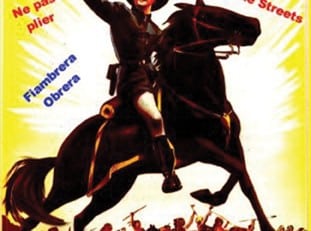
    By Nicola Carroll. ‘My definition of art has always been the same. It is about freedom of expression, a new way of communication. It is never about exhibiting in museums or about hanging it on the wall. Art should live in the heart of the people. Ordinary people should have the same ability to understand art as anybody else. I don’t think art is elite or mysterious. I don’t think anyone can separate art from politics. The intention to separate art from politics is itself a very political intention’       –        Ai Weiwei (2011) So does art have the capacity to offer an alternative way of thinking to the dominant western social, political and economic order that is neoliberal democracy? The answer to this question I believe is to be found somewhere between the fields of art and politics. There are many terms used which encompass the genre of Art activism such as Critical Art, Socially Engaged Art, Social Practice Art, Artivism, Political Art and forms of both Participatory and Collaborative Art. Art activism is a form of art that overtly aspires to effect change in the prevailing social and political order. For change to happen it must take place outside of the existing established order and institutions otherwise any attempt to change will in itself be appropriated by the establishment. It takes the form of collective acts with the public as its medium. Contemporary art has moved away from the formalism of the twentieth century where real innovative success lay in the development of a new genre that displaced conventions of tradition. Contemporary art now looks to displace instead the structures and system of the society in which it exists, the rules that determine what is appropriate in the way that we relate to each other. Contemporary art activism is according to Allan Sekula characterised by the following features: 1. There is a connection between real communities and cyber-communities; 2. It is anti-capitalist /anti-neo liberalism and their intangibilities; 3. It is carnivalesque in nature and aesthetic. The Zapatista movement has strongly influenced contemporary art activism since the 1990s. In 1994 the Zapatista Army of National Liberation movement of the Mexican Chiapas province emerged demanding autonomy. They broadcast their message in a media savvy way that was fresh and interesting, and drew unprecedented international support. They approached their objective through the use of the internet and social networking culture with a poetic and exciting carnivalesque flavour to their activities. The Zapatista movement is characterised by the organising of dances, rock concerts, poetry sessions and sports tournaments. The movement ritualises ‘alegria’ (joy) through celebrations which inspires participation. Zapatista communications captured the imaginations of many, internationally. Lieven De Cauter in Art and Activism in the Age of Globalisation talks about ‘subversion’ and distinguishing ‘subversivity’ from political subversion. Rather than overthrowing the system as political subversion aims to do subversivity is a ‘disruptive attitude that tries to create openings, possibilities in the ‘closedness’ of a system’. Subversivity questions rigid belief systems. Subversivity is eccentricity, a desire to break away from conformity and convention disrupting the tradition. Subversivity does not necessarily want to overthrow the system but it has an aversion to consensus. It is not revolutionary thinking but seeks temporary disruptions. De Cauter maintains that we seem to have lost any desire to negate or criticise and that we are witnessing the end of a tradition of dissent. That even the youth and subcultures have not surfaced since punk. Chantal Mouffe, a Belgian political theorist, advocates the collaborative approach of artists’ ‘engagement with’ the art institution. Her argument is that change must come from within the existing hegemonic order of the art institution. She sees critical art as a way that artistic practices can “contribute to the unsettling of the existing hegemony”. She is also sceptical about demonstration without structures, pointing to the success of the Indignado protests in Spain and how they undermined the Socialist Party only to let in the right wing. She would have preferred collaboration with appropriate political parties. Mouffe uses the Museu D’Art Contemporani De Barcelona (MACBA) in Spain as an example of how engagement with the art institution by art activists can successfully change the hegemonic order of the art institution. But close research suggests even here the experience was negative and the depressing denouement covered up. MACBA opened in November 1995 in the Raval district of Barcelona. In order to build the institution, an area of the Raval district was cleared and a number of residents were relocated. The Raval, once a traditional working class area of the city has since gone through a process of gentrification The civil demonstrations and protests in Seattle in 1999 sought to confront neo-liberalism and much of this happened through performance and activist art. The impact of the ‘Battle for Seattle’ spread across the world. MACBA wanted to create a network of social groups that would become a part of the anti-globalisation movement. In the spring of 1999 MACBA made contact with the art activist collective Fiambrera Obrera, which had been active in Seville and Madrid throughout the 1990s, proposing that they organise a workshop at MACBA to which they would invite various well known and respected art activists groups, such as ‘Reclaim the Streets’, from around Europe to collaborate in a project called ‘’Direct Action as one of the Fine Arts’’. MACBA’s original idea was, according to the Fiambreras, to hold a ‘classic museum-workshop’ where small groups of up to thirty people would be charged an entrance fee and would then sit around and discuss particular subjects around art and activism. The Fiambreras declined MACBA’s invitation initially responding that this was not ‘their model’. In fact they didn’t have a ‘model’ at all but they saw an opportunity to create one in the MACBA invitation. The Fiambreras told MACBA that they were not in favour of inviting a handful of famous art activists from around Europe to spend a few days in Barcelona – the Fiambreras’

    Loading

    Read more

  • Posted in:

    A Happy Christmas

    By Laurence Speight Patrick Kavanagh wrote ambivalently of Christmas in his distinctly anti-modern poem ‘Advent’: “We have tested and tasted too much, lover/Through a chink too wide there comes in no wonder.
But here in the Advent-darkened room
/Where the dry black bread and the sugarless tea
/Of penance will charm back the luxury/
Of a child’s soul, we’ll return to Doom
/The knowledge we stole but could not use”. Christmas marks the birth of Jesus, but the strengths of the icons in contemporary Ireland are an extraordinary contrast; the man himself a force of diminishing dynamism in this society, his birthday is a worshipped commercial commonplace. At its best Christmas is a celebration of all that is good about the human experience including family and community, joy, sociability, generosity, forgiveness, and desire for peace between warring parties. It is a time of hope and new beginnings. In spite of this Christmas is celebrated in a contradictory manner. Ask the innocents: the hundreds of millions of turkeys, chickens and pigs that will be unwitting centrepieces of the traditional Christmas dinner around the world. It is estimated that 22 million turkeys in the United States, 10 million in the UK and 700,000 in the Republic of Ireland will take one for the human team this yule. And it is not a happy time for industrially planted conifers. Christmas elevates consumption of all kinds with a corresponding increase in toxic waste, greenhouse gasses, loss of biodiversity and the suffering of those in low-wage economies. If we took account of the negative impact of Christmas on the biosphere we would no more celebrate it than we would a riot in which vital amenities were torched. Christmas particularly conduces to the exchange of ephemeral dross: a plastic-destined-for-landfill squandermania – Terry-the-Swearing-Turtle in your stocking.  If there were not an increase in unthinking consumption, shopkeepers, economists and politicians would consider it a bad Christmas. Christmas, since the time of Charles Dickens, has been mass make-believe sustained by the retail, advertisement and entertainment sectors (which George Monbiot calls “the global bullshit industries”), rooted in an unspoken agreement between producers and consumers to turn a blind eye to consequences and contradictions. As Eric Fromm, who spent his academic life analysing and criticising the modern mind, wrote in ‘To Have Or To Be?’ (1976): “most people are half-awake, half-dreaming, and unaware that most of what they hold to be true and self-evident is illusion produced by the suggestive influence of the social world in which they live”. As in a grotesques fable, Christmas is a prescribed happy time in which bonhomie and wellbeing can only be realised through material consumption, gluttony and glitter, excess and inoculating inebriation, contrived festive partying, and tantrums – childish and adult. Banal but cheery Christmas-themed television, schlocky ads for mobile phones and department stores, forced attendance at corny reprises of ‘A Christmas Carol’, and threadbare pantos. This all  speaks of the failure of our education system, religious bodies and civic culture to nurture critical, creative and imaginative thinking that allows for the collective seasonal desire for renewal, the expression of appreciation and goodwill to be celebrated in ways that are wholesome, constructive and elevating. Christmas encapsulates our society’s dominant values and cultural norms. It enfranchises the herd instinct – the desire, not to be thought an ‘odd-ball’, or Scrooge. The desire to feel part of the great social mass is achieved at the sacrifice of ‘knowing’ in Eric Fromm’s use of the term, which is “to penetrate through the surface, in order to arrive at the roots, and hence the causes … to ‘see’ reality in its nakedness”. Compassion too must be selectively suppressed to avert isolation from what is considered normal. While austerity has its place in political circles, frugality is certainly not cool. At 1965 per head, according to PWC, Ireland spends twice what even the US throws at Christmas morning. To little advantage. George Monbiot has written: “Bake them a cake, write them a poem, give them a kiss, tell them a joke, but for god’s sake stop trashing the planet to tell someone you care. All it shows is that you don’t”. It is up to progressive individuals to break the mindless mould and celebrate yuletide consumer minimalism. Life-affirming ideas can take root in the collective mind. It is not just Humbug. As Owen Jones wrote recently in the Guardian, “if we can build a society that encourages greed and sentiments which justify inequality, then we can also build a society nurturing solidarity, compassion and equality”. Science casts some credibility on this theory on the premise that if the selfish gene had prevailed during the course of our evolution humankind would be extinct. It’s truly time to “see reality in its nakedness”. Kavanagh’s poem finishes with hope not from Christmas but from its absence. Time to discard the knowledge we never use, to cherish wonder. The hope is in the poem’s final line that “Christ comes with a January flower”. •

    Loading

    Read more

  • Posted in:

    Biome

    _______________________________ Missing Microbes: How Killing Bacteria Creates Modern Plagues Martin Blaser Oneworld Publications 2014 _______________________________ Review by Frank Armstrong The overuse of antibiotics in humans and other animals combined with other medical interventions such as Caesarian sections presages disaster according to a new book by Martin Blaser, Professor of Translational Medicine and Director of the Human Microbiome Program, at NYU. Antibiotic treatments act on bacteria which have colonised every corner of the earth, including our bodies, and have been around for nearly four billion years. We have 30 trillion cells of our own, but play host to more than 100 trillion bacterial and fungal cells. This might lead us to wonder who we really are. Indeed, the evolution of our resident bacteria has probably been just as important as the evolution of our own cells according to Blaser. The welfare of a person’s microbiome, the collective term for resident bacteria, plays a critical role in health and the last seventy years has seen a progressive weakening of these crucial organisms. Blaser links their impoverishment to the onset of a host of modern plagues including obesity, diabetes, heart-burn and GORD (gastro-oesophageal reflux disease), asthma, a host of allergies, IBS (irritable bowel syndrome) and even autism. A parallel problem is the widespread resort to Caesarian sections which deny new-born babies vital sources of bacteria available through conventional birth. But according to Blaser the main source of the microbiome’s decline has been the invention and subsequent over-use of antibiotics the force of which he likens to that of the atomic bomb. Moreover, their over-use in humans and in animal agriculture is giving rise to superbugs such as MRSA that are already killing thousands each year. Moulds were used in Ancient Egypt, China and Central American Indians for centuries to treat infections before Alexander Fleming discovered the anti-bacterial effects of penicillium moulds in 1928. This gave Western medicine access to a life-saving medicine first tested on a nurse called Anne Miller in 1942. Antibiotics have saved millions of lives, and many surgical procedures would not be possible without them. However, their use by doctors and dentists has surged in most Western countries to the extent that in most Western countries the average twenty-year-old has taken almost 20 courses, in many cases unnecessarily. Research in 2012 found antibiotic use in Ireland to be in the mid- to high- range in comparison to other EU countries. The fault does not lie entirely with doctors most of whom are aware of the dangers of over-use. Recent research into their use in Ireland showed that 50% of patients request antibiotics when they visit a doctor with upper respiratory infections (colds and sore throats), an area of over-use identified by Blaser. Embattled general practitioners need more support in terms of patient education to stem this demand. These infections are mainly caused by viruses which do not respond to antibiotics, but the problem is that a throat may already be colonised by bacteria that are not causing the disease. Usually the reason doctors reflexively prescribe antiobiotics for sore throats is out fear of rheumatic fever which typically occurs two or three weeks after an untreated strep infection, and can be fatal. According to Blaser: “Before antibiotics, about one child in three hundred with a strep infection developed rheumatic fever or, if the strep strains were very ‘hot’, one in thirty. Nowadays doctors prescribe an antibiotic for strep throat not to shorten the duration of the infection, because it doesn’t much, but to ward off rheumatic fever”. He asserts that: “Until doctors can readily distinguish viral from bacterial throat infections, they will always follow the safer course”. He also acknowledges they are pressed for time and fearful of being sued. Another problem is the use of antibiotics in animal agriculture. As in humans, untreatable bacterial infections are emerging in farm animals, and are passing the species barrier into human populations. Often farmers use antibiotics not to treat disease but to expedite growth. The practice of using sub-therapeutic doses is now banned in the EU but the law is not enforced. The Department of Agriculture, Food and the Marine does not collect data on antibiotic usage on Irish farms, and according to research by journalist Ella McSweeney antibiotic sales for large animals in Ireland are increasing. Antibiotics of course cause the same weight gains in humans. Blaser connects their over-use to the obesity pandemic with compelling evidence from his laboratory experiments; and this is born out in studies showing obese individuals manifesting smaller ranges of bacterial strains compared to individuals of normal weight. An NHS study, the Avon Longitudinal Study of Parents and Children, showed that children who received antibiotics in the first six months of life were likely to have a higher body-mass index. Controversially, Blaser hypothesises a link with autism the incidence of which appears to have risen considerably since the development of antibiotics. Today one in sixty-five children is diagnosed as autistic or on its spectrum, a condition that was only identified in 1943. Many of the microbes in the gut also make chemicals that the developing brain needs to function normally and these are being compromised by over-use of antibiotics. That there should be crucial interactions is perhaps unsurprising considering there are as many neurons in our guts as our brains. Today most bacterial infections are treated with broad-spectrum antibiotics. According to Blaser: “It is not profitable for companies to go to the trouble and enormous expense of developing new antibiotics”. Targeted antibiotics only applicable in a small number of cases make little sense for companies concerned by their bottom line. Fundamental to the understanding of our relationship with bacteria is the concept of amphibiosis: ‘the condition in which two life-forms create relationships that are either symbiotic or parasitic, depending on the context’. This is apparent in the case of a bacterial strain called Helicobacter pylori (H. pylori) which has been discovered in our stomachs, and which Blaser has spent much of his career pursuing. In 1982 two

    Loading

    Read more