Culture

Random entry RSS

  • Posted in:

    Sean Rainbird

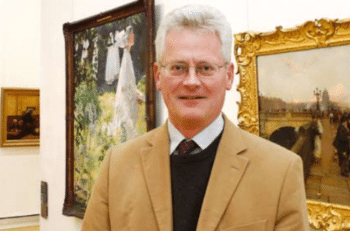
    Rónán Lynch interviews the desk-tied Director of the expanding and improving but still independent, democratic and free National Gallery which has 11 galleries open out of 60 but maintains visitors at over 600, 000 annually despite 40% cuts

    Loading

    Read more

  • Posted in:

    Vegan up, George

    Monb[id]iot Give it up, hero George, and learn how to cook. By Frank Armstrong     In an article published in the last edition of Village George Monbiot exhibits a surprising naiveté towards veganism for a writer who is generally authoritative, and clearly a big Village favourite. He recalls how he had “tried it for 18 months and almost faded away”; although he concedes that he “may have managed the diet badly”. The first point to make here about veganism is that it is not purely a ‘diet’. A vegan can consume tray loads of junk food or arguably the healthiest diet available: a whole-food, plant-based regimen. It is a social movement grounded in a philosophical position that rejects the use of other animals by human animals and promotes equality of consideration for all sentient beings. Its origins are recent: in 1944 Donal Watson broke from mainstream vegetarianism to found the Vegan Society, and there is no Das Kapital for adherents to follow. Unlike most other political ideologies it does not merely seek to regulate inter-human relationships but extends into complex human relationships with the natural world including how we produce food and other materials. Reflective vegans such as Roger Yates of the Irish-based Vegan Information Project acknowledge that not every position has been worked through. Indeed the utilitarian philosophical pronouncements of one of its leading voices Peter Singer are regarded with horror by many in the movement. The commoditisation of animals into chattel is anathema to veganism, but there are many involved who regard the complete overthrow of capitalism as a necessary prerequisite for its flourishing. Ironically, it is in Silicon Valley, a hotbed of capitalism, that many of the alternatives to meat, dairy and eggs are being developed. George Monbiot previously seems to have allowed his own failure to nourish himself adequately to sway his views on the issues involved. Of course if humans were obligate carnivores like cats it would be hard to make arguments in favour of veganism. But Monbiot and the rest of us evolved from herbivorous primates, and those on well-planned vegan diets positively thrive: a host of epidemiological studies, most famously the China Study, have shown higher life expectancy and lower morbidity for those on plant-based diets. The position of the American Dietetic Association is that: “appropriately planned vegetarian diets, including total vegetarian or vegan diets, are healthful, nutritionally adequate, and may provide health benefits in the prevention and treatment of certain diseases. Well-planned vegetarian diets are appropriate for individuals during all stages of the life cycle, including pregnancy, lactation, infancy, childhood, and adolescence, and for athletes”. Of course there are economic and environmental imperatives for veganism. In ‘Animal Liberation’, Peter Singer claims: “[T]hose who claim to care about the well-being of human beings and the preservation of our environment should become vegetarians for that reason alone. They would thereby increase the amount of grain available to feed people elsewhere, reduce pollution, save water and energy, and cease contributing to the clearing of forests”. The livestock sector accounts for 18 percent of greenhouse gas emissions measured in CO2 equivalent. The livestock and fishing sectors don’t pay their external costs – especially environmental and health costs – and are usually heavily subsidised. But in the end Monbiot accepted the arguments of Simon Fairlie articulated in his book with the curious title ‘Meat: A Benign Extravagance’ (2010). Fairlie accepts that the current dominant method of producing meat, by feeding cattle grain and soya, is unsustainable but argues for giving food waste to pigs (some of which was banned after BSE and Foot and Mouth). In Fairlie’s schema pig meat should become more widely available since pigs ‘convert’ feed very economically into flesh. Ruminant animals meanwhile should be restricted to feeding on grass, straw and surplus grains. His prescriptions amount to a reversion to pre-industrial agriculture with far lower consumption of meat than at present. But even Fairlie’s approach is wholly inadequate and inappropriate for a global population that has risen from 1 billion in 1800 to over 7 billion – over half of whom now live in cities – today (with this set to rise to 70% by 2050). Raising animals for small-scale slaughter in cities would present a significant disease risk. To produce meat for the masses there must be industrial scale. So Fairlie’s ideas are dependent on mass re-ruralisation. It is important to concede that there is a threshold up to which meat production is sustainable. Vaclav Smil has calculated that by abandoning the feeding of grain to animals the world could comfortably accommodate an output of 190 million tonnes of meat – two-thirds of current supply – if crop residues could be turned into animal feed, and pasture were used more efficiently. In Smil’s view universal vegetarianism is not necessary or desirable even though animals are just better at digesting some things than humans, notably grass and food waste. On Smil’s model everyone in the world could eat meat, if they wanted to, so long as individual consumption was kept at around 15-30 kg a year: roughly what the average Japanese person eats. But average meat consumption in Ireland is 87.9 kg a year[1]; to get to Smil’s sustainable levels would involve cutting down by at least two thirds the amount of meat currently consumed there (15 kg a year works out at just 41 grammes a day). Meat-eating is addictive. This is observed in the Middle East where meat from locally raised animals, especially mutton from sheep, is highly prized, but according to Tony Allen (1994) “the pressure generated by this demand is greater than any market or other sanctions which might control it”. This process is observed around the globe. It is in part due to meat conferring high social status but also, it seems, because when we consume it habitually we alter the bacterial composition of our guts. According to a paper by Norris, Molina and Gerwirz, (2013) the human gut is: “a highly innervated organ possessing its

    Loading

    Read more

  • Posted in:

    Installing politics through art.

    By Rod Stoneman. Ethics seem very distant for most discussion of Irish art which has been depoliticised, like much contemporary art internationally. In returning any kind of ethical debate to the domain of the visual arts we can usefully examine multi-screen films – film and audio-visual installations which have extended and replenished notions  of fine art. Tracing its origins to expanded cinema and video art in the 1970s, moving-image installation is now ubiquitous in public museums and private galleries. This is at a time when experimental art has all but disappeared from public-service television. For example Channel 4 in the 1980s and 1990s showcased a range of visually-based work in series like ‘Dazzling Image’, ‘Midnight Underground’, ‘Ghost in the Machine’. In the two decades since, as television channels have proliferated, choice has actually narrowed. Moving-image installations are visible in diverse art environments from gallery spaces to site-specific work in urban or industrial pop-ups. Multi-screen configurations are not easily arranged in cinemas or viably watched on television sets, let alone computers. The small portable digital screens may issue a blizzard of information and imagery every day, but their size and scale is not a viable format for most multi-screen films. The combination of images cuts across linear montage and introduces a synchronised horizontal dynamic that changes the linear and vertical succession of a standard film or video screen. At its best the configuration of simultaneous imagery on multiple screens offers an opportunity to glimpse a dimension of the world anew. The wider interaction of sounds and images in some recent examples has unexpected resonance as a naïve invocation of politics. Pretty in Pink Richard Mosse’s multi-screen work ‘The Enclave’ was Ireland’s entry to the Venice Biennale in 2013 and won the £30,000 Deutsche Borse photography prize in May this year. It uses discarded infrared film to re-colour the Democratic Republic of the Cong, particularly its relentless civil war. The way the scenes are coloured on several screens metaphorically colours the country, its villages, landscapes and inhabitants in a way which startles, but also exoticises, aesthetises and perhaps even anaesthetises,  our sense of the distant world it depicts. It is a detached representation of disturbing content without context. It conjures the pitiless Congolese human conflict but without depth of political or historical analysis, or understanding. Consonant with most mainstream media coverage this installation offers a visually spectacular rendition of ‘ the dark continent’ – in which ‘Africans are killing one another again’. The absence of articulation is marked, there is no space for direct speech, explanation or understanding from those who inhabit that reality. Mosse’s piece unintentionally evokes questions about the basis of involvement and degree of participation by protagonists in the way they are represented. This is in contrast to a recent short film by Dearbhla Glynn, ‘The Value of Women in The Congo’, that inhabits a different place outside the art world: it is used for advocacy and shown in the context of human rights and the operations of NGOs. It is an uncompromising, clear-headed and disturbing examination of the effects of the sexual violence perpetrated with impunity against women and girls in war-torn Eastern Congo. The film explores the experience of the victims as well as of the perpetrators who have inflicted  their pervasive, cruel and appalling crimes – footsoldiers, warlords and high-ranking commandants alike. Like Joshua Oppenheimer’s ‘The Act of Killing’ (which recreates the atrocities of CIA-supported 1960s death-squads in Indonesia) and Eyal Silvan’s ‘The Specialist’ (which uses footage of the Eichmann trial in Jerusalem) the banality of evil is exposed but, unlike those documentary films, it is drawn from the present day. Walsh’s short film assembles an arresting and brutal version of how war ravages the land and its people, leaving few victors – least of all women, whose value is often annihilated. Through interviews that talk of their experiences, the film puts together the beginning of an account of the continuing calamity with and through those involved. Richard Mosse’s work brings a forgotten and distant carnage into white-walled galleries in a continent which can be said to already be at risk of ‘compassion fatigue’. Understanding its context and effects is not a question of the artist’s intentions, but rather of the implicit way that the work is received and interpreted by the particular audiences that encounter it in the gallery. ‘The Value of Women in the Congo’ films the same civil war but studiously within the documentary genre. The meaning and effects generated for those that come across the installation are inevitably influenced by its art context. There was a debate several decades ago which connected some of these same issues with a set of paintings, parachuting politics into the gallery. Gerhard Richter’s 1988 15 painting series, collectively entitled ‘October 18, 1977’, depicted four members of the Red Army Faction in black-and-white newspaper and police photos. Contrasting readings of the paintings and attitudes towards the RAF from the hagiographic to the condemnatory fought it out in the art space. Richter refused to be drawn towards resolving the contrary interpretations. The implications of these strategies are clear: while Richter and Mosse both introduce overtly political issues into an art context there is no discourse, visual or verbal, to contest the assumptions perpetuated by the dominant media that surround these images outside the white walls of a gallery. The doxa of common sense has already established that an urban guerrilla group is run by psychopathic terrorists and that in darkest Africa gruesome carnage comes as no surprise. There is a lack of argumentation that could intercept unconscious assumptions and engage the images productively. Such contention would set specific defined meanings in motion to bring contradiction to the fore. A distant antecedent in literature would be Joseph Conrad’s classic ‘Heart of Darkness’ (written in 1898 and based on Conrad’s own journey to the Congo in 1890). It is an extraordinary and resonant short novel, and was redeployed in 1979 as the underlying narrative of Francis Ford Coppola’s Vietnam

    Loading

    Read more

  • Posted in:

    Enduring Irish sculpture

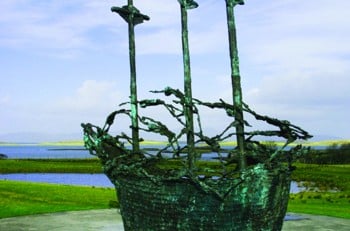
    By Kevin Kiely. Public sculpture in Ireland includes many monstrosities that are heavy and clumpy in their use of materials and ultimately non-artistic. The heavy-gang includes Edward Delaney, John Behan, Rowan Gillespie and Conor Fallon, but there are plenty of others. Delaney is egregious; his ‘Wolfe Tone’ and ‘Thomas Davis’ are part of street-lore. Tone begat ‘Tone-henge’ and Davis, with his attendant figures, is ‘the piddlers on the Green’. They are objects of public derision, and the critical establishment alone consistently pays them homage. Leading art critics Roisín Kennedy, Judith Hill and Peter Murray never question the numbing monolithic dullness. Murray has claimed that Tone and Davis “convey an earthy solidity, a connection with the earth, emphasised by their heavy legs”. Eamon Delaney in ‘Breaking the Mould’, a lengthy paean to his father Edward Delaney, not surprisingly supports Murray who eulogises his Davis as representing “a farmer in from the fields: a man off the bog and on to a pedestal”. The Davis statue does not reflect this, nor does it invoke the Davis of history. Eamon Delaney lauds his father’s ‘Davis’ as superior to works by John Henry Foley: “there is none of the shrill theatre of Grattan, or the arrogant certainty of Burke”. This bludgeoning is untenable. Foley may be eighteenth-century but his O’Connell, Grattan, Burke and Goldsmith retain a transcendent beauty, elegance, and imaginative artistry in execution, expression and realism. Tone and Davis are excessively bulky and heavy. Delaney quotes Aidan Dunne who finds Tone and Davis “frayed by mortality and uncertainty”. But imprecision is Dunne’s actual medium: artspeak. The problem is that in-depth criticism of sculpture is nowhere found. The Irish Arts Review and the Irish Times are not really in the business of criticism. Circa, and magazines like it, feature art and artists, exalted and carefully ‘criticised’ using quotations from international art critics. Circa’s presumption to interrogate is spurious. When  (recently) the magazine asked the question: “What is the role and value of art criticism at present?”, it passed responsibility, by replying with a question: ‘What art?’ Meanwhile, the RHA and commissioned artists link arms, laughing all the way to the pork barrel in this porcine climate of plastic criticism. You will not find any adverse critiques of John Behan’s ‘Famine Ship’ that faces Croagh Patrick where the heavy ghost-figures shrouding the three heavy masts are what can only be honestly described as gate-like. ‘The Flight of the Earls’ (Rathmullan, County. Donegal) with its three Irish chieftains on a gangplank of bronze, waving ‘goodbye’ is not evocative in any way of this major historical event. Behan fails the Famine as subject matter, and fails ‘The Flight of the Earls’. He simply does not find any artistic pitch that could be said to be sublime, haunting, or even satisfying. ‘The Flight of the Earls’ was funded by A.J. O’Reilly and in general funding is plentiful, boosted by the OPW and its capital fund. In 2012 this amounted to €352 million. The OPW has a design and project management service for public-sector building, heritage and art projects. Arts Council payments to sculpture in 2010 amounted to €410,000. County councils play their part in commissioning public works. The Per Cent for Art Scheme, since 1997, “approves the inclusion in budgets for all publicly funded capital construction projects up to 1% as funding for an art project”. The maximum for projects over €12 million is an art budget of €64,000. Public sculpture is generally administered by time-servers without a critical faculty, people like the selection panels, the RHA, and the artists who have lent their names to the pervasive lugubriousness. Alex Pentek’s ‘Rabbit’ on the Ashbourne Road (in Meath) cost €64,000 and has no distinguishing features whatsoever. In essence it is a giant rusty rabbit that any sheet-metal worker or gate-maker could have designed far more subtly and much more cheaply. Pentek is responsible too for ‘Hedgehog’ costing €113,000 along the Gorey Bypass. ‘Rabbit’ and ‘Hedgehog’ are vaguely figurative though their artistic merit is better described as figmentary. The eight-metre-long, four-and-a-half-metre-tall hedgehog is also funded by Per Cent for Art. Pentek’s ‘Violin’ on the N5 by-pass around Longford evokes a minimum of imagination to make it a whole. ‘Perpetual Motion’ by Rachael Joynt and Remco de Fouw is a familiar giant ball with road markings outside Naas. The obvious visual statement may be fun, but is innocuous. It is meant to be art. ‘Dancing at the Crossroads’ on the Carrickmacross Bypass by David Annand is grotesque. “Inspired” by the words “cavorting on mile-high stilts” from a poem by Patrick Kavanagh, it depicts three ‘green’ life-size adults crudely attached to tilted stilts. Debased. Figurative iconic sculpture is problematical as exemplified by ‘Joe Dolan’ by Carol Payne. The thickness and density of the statue with an outstretched arm makes Dolan a lumpish Irish tenor not the show-band star of Mullingar. Rory Gallagher in Ballyshannon and Phil Lynnot in Dublin are better iconic renderings. Rory is in a Chuck Berry hunched pose with guitar. Lynnot’s bronzed chic-look with guitar is a stylised effort. Joyce’s bust in the Green and full-length treatment on Talbot Street by Marjorie Fitzgibbon are both clumsy, heavy and dull – little wonder Dubliners call the latter ‘the prick with the stick’. It cannot compare to the Swiss Joyce in Fluntern Cemetery by Milton Hebald, imaginatively provocative with the cane, book and cigarette midst the cemetery that now holds him. ‘Brendan Behan’ on the Royal Canal by John Coll fails in realist resemblance. The ‘narrative’ of ‘Behan’ looking at a sculpted blackbird perched on the bronze bench is sentimental. The reference to “The Auld Triangle” from ‘The Quare Fellow’ is awkward, using four triangles welded to the bench. Coll’s ‘Patrick Kavanagh’ is equally ludicrous. The fact that the hands and shoes approximate lifesize dimensions is no claim to artistry. Coll disastrously follows Fitzgibbon’s style which is far better done by her in now peripatetic ‘Molly Malone’ ‘the tart with the cart’. The gurrier versions expose the triteness, even

    Loading

    Read more

  • Posted in:

    Ireland raw, happy and dysfunctional.

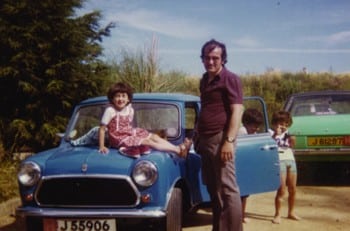
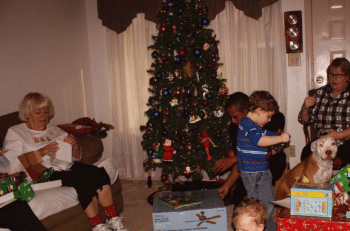
    By Shirley Clerkin. While viewing the images in The Photo Album of Ireland exhibition, currently showing in the Gallery of Photography in Dublin’s Temple Bar, it occurred to me that we know exactly who we are. We just do not always want to admit it, or show it. Photos can make judgements just like words; on a baby: “She’s a wee dote”, or on a good-looking girl: “You would stand to look at her” or on one with confidence “She thinks a lot of herself, that one”. God forbid the family tree would be let down with a “Would you look at the state of her ” or even worse: “It was far from that she was reared”. I am one of those women that was doted on in my chubby, baby years, all softness and pallor. It was okay to be outrageously babyish, as I was in fact a baby. I was an awkward teenager, less doted upon, spotty and pasty (and oft reminded of this). But God, I tried to rise above it all, based on a piece of information I gleaned from a documentary on the human brain which said that humans only used 10% of their grey and white matter. I determined to use more of mine to make up the gap. As a result of my diligence I was fifteen when I found myself on a boat to Station island, Lough Derg, County Donegal to work on St Patrick’s Purgatory. The boatman, Michael, was a hardy, fair (he insisted strawberry blond) fella, with ruddy cheeks and strong arms to match his accent so naturally I bit his head off, as I was a bit above my station with nerves. It was a good come down, working on the island. The nun in charge immediately put me on the back foot and pulled the rug from under my carefully tended confidence, by insisting that I was days late for my duty.  Thankfully though, not a bare one, as staff could wear shoes, unlike the pilgrims. Then she befuddled me with tales of how she had lost six pounds since arriving on the island a week or so previously. I was well put out, and thought I better hold tightly onto my few bob in case someone nicked it. It took me a right while to realise that she was talking about her weight, and subconsciously I suppose, she wanted me to commiserate with her or more likely congratulate her on her figure. You might have stood to look at her. Only she was a nun. Then of course, I made the mistake of climbing down off my salt pillar and striking up a friendship with the boatman, who was only a lad himself. I was found fraternising with the pilgrims one day when some of them were looking for directions. Next thing, I was moved from my post in the Priests and Staff kitchen, to the laundry. Pulling yards of sopping wet sheets from industrial washing machines was not easier than cutting cabbage and carrots by hand for coleslaw. But I had further to fall yet. My career prospects on the island were cut short with a “You know what you’ve done” accusation by the chief-nun. I never found out what I did; but at the time I thought it might have involved the disappearing ice-cream (but that wasn’t me). Only in later years, while in fact talking to a Magnum Photographer about the island one night at the Prix Pictet photographic exhibition in Dublin, did he hit upon a reason for my expulsion. It wasn’t what I had done at all, he said, provocatively. They all wanted to sleep with you. You were stirring up suppressed feelings in others. They needed someone to blame. On reflection, I think he was on to something. As a permanent reminder of those short but luminous few weeks, my likeness was taken and is in the 1988 book ‘On Lough Derg’ by photographer Liam Blake and Deirdre Purcell.  Grinning together with my friend Bernie, I am standing there holding a copy of ‘To Light a Penny Candle’ by Maeve Binchy. If you saw that picture, you would not know the story, but you would glimpse us, two young girls in baggy t-shirts, and see something that the photographer wanted to say. We pestered Blake to take our photo, which he did very grudgingly. Only afterwards probably did he notice my reading material and then he saw that it would made the cut. Unlike Blake’s photo of us on the island, most of the photos in The Photo Album of Ireland exhibition are taken by family members for private use, and have come from biscuit tins or carefully sheathed leather-bound albums. They are frozen memories: moments, often so carefully choreographed to give the best impression that it is what they don’t show, that sometimes makes the viewer wonder. The project team invited people to share their family photographs, to look at the social history of Ireland from the viewpoint of family. Sontag in her 1977 book ‘On Photography’ wrote, “Through photographs, each family constructs a portrait-chronicle of itself – a portable kit of images that bears witness to its connectedness”. My father took part in the project, and shared old black-and-white images of our extended family and some of his extensive slide collection, covering happy and sad times from the 1970s on the border. A 1940 image of my thoroughly modern grandmother pictured in trousers with a bicycle, blown up to almost full-size on one gallery wall shrank time for me, although she died in 1976. Written on the back of the tiny original she had written “What will J.J. [my grandfather] think of this?”. The invention of cheap cameras like the Box Brownie made photography a democratic medium. A documented, chronicled life became possible for many, un-reliant on expensive portraiture and family archives. Photographs of the Irish, whether here or abroad, new or old, allow us as individuals

    Loading

    Read more

  • Posted in:

    Arts Council still relegates participation to consumption

      By Niall Crowley. Sheila Pratschke, chairperson of the Arts Council, has boldly declared that the Arts Council needs “to conceive of our activities in a different way. We can’t keep shrinking to fit the budget. We have to be more imaginative and proactive”. This ambition is now being tested as the Arts Council publishes the report of a steering group established to review its work as a first step in developing a strategic plan. The central proposal is that the Arts Council should  reposition itself as “the development agency for the arts focussed on the public good”. While the report suggests this is a “transformation”, it cannot really be seen as much more than a shift in emphasis from its previous branding as ‘The Arts Council Funding the Arts’. There is some focus on what a development agency would do – profile the needs of arts areas within its mandate, identify priority areas for strategic action and influence the environment for the arts. There is little focus on what this developmental role might seek to achieve. The Arts Council would become an informed lobbyist for the needs of the arts with its current funding role expanded to embrace policy and research activities. This might well be proactive but it is less than imaginative. The review emphasises a focus on the “public” and the “public good”. However, it fails to acknowledge the different publics that exist – other than ‘young people’ and ‘children’. Deploying the artless and depressing, if telltale, jargon of the administrator the proposals suggest placing “the public at the centre of the new Arts Council mission statement” but fail to develop any analysis of the implications of the inequalities and divisions in our society for the role of the Arts Council. The report acknowledges “large sections of the population, chiefly defined by socio-economic circumstances, but critically related to educational attainment, do not engage in the arts”. However, it makes no proposals on how to respond to this inequality other than for the Arts Council to “identify children and young people as a primary strategic priority” so as to “broaden the socio-economic profile of those engaging with the arts”. One challenging finding in the review is that “there seems little emphasis on engagement and participation as a fundamental and valued aspect of the arts in Irish society”. This apparent call to recognise the creativity of people, as opposed to relegating people to consumers of the professional arts, holds promise. However, it is not addressed in the proposals and is undermined by an elitism that  limits it to the “amateur arts”. The review offers little to those currently outside the Council’s concern with the professional arts. It suggests that the Arts Council articulate how such areas of activity might be “valued and supported (if not always financially)” because of their critical role in public engagement” and as “pathways to the professional domain”. So: a pat on the head for endeavour and no understanding of the social gains from enfranchising people’s creativity. One promising finding of the review suggests the need for dialogue between the “Arts Council, the arts sector, partners and stakeholders and a range of other individuals and organisations with an allegiance to the public good and to the development of creative communities and a culture of innovation in which the arts are seen to have a unique and important role”. A bit of imagination and pro-activity could make this focus on building creative communities more central to the role suggested for the Arts Council, but it remains for the moment undeveloped. The UN’s International Covenant on Economic, Social and Cultural Rights establishes the right to “take part in cultural life”. New Irish legislation requires public bodies  to set out in their strategic plans an assessment of the human rights and equality issues relevant to their functions and purpose and the policies and actions in place or proposed to address these issues. The Arts Council is bound by this and obliged to see its “public” in terms of diversity and inequality. It is required to make provision for this diverse and divided public not just as consumers of arts and culture but also as creators of arts and culture to give real meaning to the term “take part” in cultural life. The review does not offer a promising starting point for this challenge. •

    Loading

    Read more