WhatsApp correspondence published in Village Magazine in November 2020
by admin
WhatsApp correspondence published in Village Magazine in November 2020
by admin
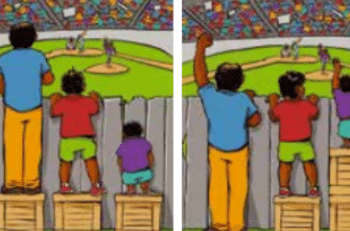
The most widely supported form of equality is equality of opportunity
by admin
Editorial. By Michael Smith The most widely supported form of equality is equality of opportunity. Even Margaret Thatcher believed in it. But it has more of the qualities of “freedom” than of “equality”. Village has always tended to support a vision of equality that contemplates equality of outcome/condition – distributing ‘goods’/resources in inverse proportion to the bestowals of fortune and history on individuals. We are all equal from birth and ethically. Society’s goal is to recognise that, by distributing ‘goods’ to reinforce that equality. If the agenda is imperative it needs to be facilitated. The first thing is to have the information – the data – to show from what basis you need to begin redistribution. But the greatest conspiracy of them all distorts the reality of inequality. Because those who benefit from inequality often want to keep it that way. For example, inconveniently, apparently, for thoroughgoing egalitarians, it has long been the case that data from the ESRI show that the post-redistribution. Gini Co-efficient (a statistical measure of overall income distribution that is used as a measure of inequality) is improving in Ireland. Having disimproved in the early years of the boom, the Gini Co-efficient in Ireland narrowed during the economic crisis and overall from 1987 to 2019. On the back of this according, for instance, to the Irish Times, the Republic is one of the few developed countries that has avoided an increase in income inequality over the past three decades. As pointed out regularly in this magazine and forensically by Unite the Union, in particular, this falling inequality has been presented as a “fact” but is not. • The ESRI methodology skews the result because in Ireland the Gini Co efficient shows income inequality falling while the other standard measure of income inequality (the share of income to the top 1%) shows it rising. • The Gini Co-efficient is peculiarly unreliable in Ireland, not being based on information on the 1.7 million households in the state but on a small sample of them – 4,183 to be exact (around 0.2 per cent of the total). The survey is voluntary. In 2019 the CSO invited over 9,000 households to take part in the survey but in the end only 40% agreed. The CSO employs around 100 people to carry out its work, but often they call to a house and not everyone is at home. They then conduct interviews “by proxy” – that is, information is provided by “another resident of the household due to unavailability of the person in question”. Up to 50 percent of all interviews for the income survey are by proxy, which gives rise to issues “with the quality of data for proxy responses for certainvariables”, according to the CSO itself. Left think-tank TASC has said that such surveys “have well-known limitations. Being voluntary, non-response is a problem among the rich in particular, and high incomes tend to be underreported when they do respond”. Because of all this, in the case of the Gini Co-efficient, the raw data collected by the CSO are subject to a series of statistical weights, measures, and guesswork to compensate for gaps in the interviews. A more universal set of figures based on actual taxation levels is more accurate. The ESRI did indeed look at data from tax returns which duly confirmed increases in the share of income going to the very top. However, this doesn’t form part of the final output. • Income inequality itself does not suffice as a measure of economic inequality (and economic inequality is not the full measure of inequality anyway). It is but one of at least seven, according to TASC. These are: income; wealth; public services; tax; capacities; family composition; and the costs of goods and services. If economic equality does not measure full economic capacity then what is measured is meaningless. • In particular wealth is obviously an even more important component of richness than income, since it includes the total of previous income. • Equality embraces social, environmental and cultural matters as well as economic ones. Access to services, education, healthcare, leisure facilities and a good environment constitute equality of outcome/condition at least as much as money. They are ignored by income (or even wealth)-driven assessments. • There are serious issues with some of the historic data. Other data which Unite present show “zero real income growth” from 2007 to 2017 but are ignored by the ESRI and in the reportage, even though the source of the data is relied upon in other ways. We are told that, regardless of our own experience, things have never been better. Official and establishment complacency is lethal to our society and our democracy. Unaddressed inequality always ultimately generates demagoguery. Anyone who cares can see that the richest have never had it easier but that many people struggle to survive in an extraordinarily pressurised society. Everyone can see that people in their 20s and 30s will be the first generation to be worse off than their parents. We need to analyse the trajectory and act on it as appropriate. The least our public service and media owe us is to ensure the time-bomb of rising inequality is properly monitored in the first place.
Posted in:
by admin
Biden is unexciting and past his best but not mad. ‘Vote Joe’
by admin
Taoiseach Leo Varadkar is viscerally and divisively right-wing, socially and economically; but hides it behind incoherent and inept policies and a now-suspect nice-guy media persona. By Michael Smith (February 2020). A famous 2010 Après Match sketch has Ireland’s Taoiseach Leo Varadkar openly admitting he’s plotting to knife his party leader Enda Kenny while gratuitously denying, in a mid-Atlantic nasal twang, that he’s going to set up an elite party which of course suggests he is in fact intending to do just that. A stage-Vincent-Browne with an impossible wig wonders whether he was bitten by a lizard, a snake or an eel. Though the elite party isn’t part of the revealed agenda he’s an exotic and cosmopolitan proposition no doubt; young and attractive, hipsterish, agnostic; a half-Indian, gay, charming and articulate doctor; a star-turn on the international stage. Over the last decade the satirist Oliver Callan has characterised Varadkar as an image-fetishising, gym-obsessed dude, increasingly cold to the downsides of his austere policies, the Teesh in a cabal of unpleasant elitists. The Varadkar who presented at the first leaders’ debate on 22 January 2020 had clearly been briefed to project an image of humility, emotion and modesty. Two and a half years into his premiership, scrutiny, the pressure of office and the relentless exposure of the policies and failures of his party are undermining his nice-guy credentials as his empathy becomes an election issue. And, as Village has always wondered, is there any beef? Varadkar is young and attractive, hipsterish, agnostic: a half-Indian, gay, charming and articulate doctor’ Background Varadkar was born in Dublin in 1979. the youngest of three and the only son of Ashtok and Miriam Varadkar. His Mumbai-born father had moved to England as a doctor in the 1960s. Miriam comes from a Fianna Fáil family; Ashtok considered himself a socialist and voted Labour. His Dungarvan-born mother met her husband while working as a nurse in Slough. Later they lived in Leicester and India, returning to Dublin in 1973. Leo, it seems, was the perfect son. His mother has said: “He was too good to be true, actually. Everyone adored him. He was adorable, a gorgeous baby and then he went into Fine Gael. And that’s it. He never said it. We just found out”. So little Leo wasn’t born a Fine Gaeler. But he soon made up for lost time. Varadkar was brought up Catholic and educated at the St Francis Xavier National School in his home of Blanchardstown before attending the liberalising fee-paying Church of Ireland King’s Hospital School in Palmerstown, where his classmates included the future excitable-presenter Kathryn Thomas. He obtained a wagon-load of points in his Leaving Cert. It was during his secondary schooling, debating and all that, that he joined Fine Gael. After an abortive few weeks in the Law faculty, he got a points-upgrade and studied Medicine at Trinity College Dublin, graduating in 2003. He spent several years as a junior doctor in Connolly Hospital before qualifying as a general practitioner in 2010. He often worked 36-hour shifts as a doctor, missing a night’s sleep; but rather than finding it stressful, he has said: “I quite liked the buzz of being busy”. Nevertheless, in 2016, he declined an invitation by the Irish Nurses and Midwives Organisation (INMO) to work a 12-hour shift alongside them in an A&E because “they never formally asked”. Around this time Varadkar was singled out for greatness by the Washington Ireland Program, which prepares ambitious young people for future leadership roles. Party grandee Nora Owen recalls him as overweight and Thatcherite around this time when he came to her attention. In 2004 the tyro’s ambition began to find expression as he was co-opted to Fingal County Council, serving as deputy mayor. Varadkar was first actually elected to Fingal County Council later on in 2004, drawing 4,894 votes, the highest in the State; there was a niche in Fingal for at least one meaty Thatcherite. He won a Dáil seat in 2007 and was immediately elevated by Enda Kenny to frontbench Spokesperson on Enterprise, Trade and Employment, remaining in this position until a 2010 reshuffle when he became Spokesperson on Communications, Energy and Natural Resources. In Government Transport When Kenny led Fine Gael into Government with Labour, Varadkar served as Minister for Transport, Tourism and Sport, from 2011 to 2014. He presided over ‘The Gathering’: the largest and most successful tourism initiative ever held in Ireland though one that left little in the way of a long-term imprint. He took the decision to link Dublin’s two independent Luas lines, opened up more bus routes to competition, restarted development at the National Sport Campus, and gave independence to Shannon Airport. He also developed a new Road Safety Strategy and a National Ports Policy. These are petty enough achievements for a three-year Ministry. He was already burnishing his lack of interest in the environment and did little to implement Noel Dempsey’s typically progressive ‘Smarter Travel – a Sustainable Transport Future’. He obtained government funding for its commitment to the €550m 57km public-private partnership of the egregiously over-scaled Gort-Tuam motorway while cancelling the necessary Dart Underground and Metro North underground plans, and again deferring Metro West, in Dublin. ’ These are petty enough achievements for a three-year Ministry’ Health He was then promoted to Minister for Health (2014-16) where he secured a controversial €1bn increase in the health budget, introduced free un-means-tested GP care for all children under six and seniors over 70, in what were iniquitous policy lurches. He published Ireland’s first ever National Maternity Strategy and secured funding and planning permission for the shifted National Children’s Hospital. He also introduced innovative public health legislation to regulate alcohol pricing and marketing and sought a 20% tax on sugar-sweetened drinks. Health is never an easy gig but he did not do anything dramatic beyond disposing of his party’s clearest policy – the promise to create a universal health care system, to move away from the invidious “two-tier” health system. Remarkably, he never had to explain what he was replacing it with. It’s not evident he even thought that the particular principle, or indeed having a principle, was of any significance. The issue is only now being addressed under the fangled ‘Sláintecare’, though with a long horizon. The HSE too, in accordance with policy, was supposed to be abolished by 2020, though beyond a “healthcare commissioning agency” it was not clear by what it would be replaced. This did not happen, anyway, and it remains very much with us, a blotch of redundancy for a regime that fancies it is business-like. Some months ago, Minister Simon Harris announced it is to become a strategy and standards body supplemented by six regional health boards, not unlike those that predated the HSE’s establishment. Varadkar also seems to have had little problem with the entitlements of professionals and, as Minister, announced the restoration of €12,000 for consultants who backed the Haddington Road and Lansdowne Road agreements. Of course, the indulgence of the entitled elite really re-emerged when complacency about the economy set in a few years later. In late 2019 Health Minister Simon Harris proposed that hospital consultants be offered a salary of up to €252,150, a significant increase on the rates currently applying to post-2012 consultants, under a new public-only consultant contract which prohibits private practice either on or off-site. It seems reasonable