Recently Hot and News

Random entry RSS

  • Posted in:

    Casement was straight and not a paedophile

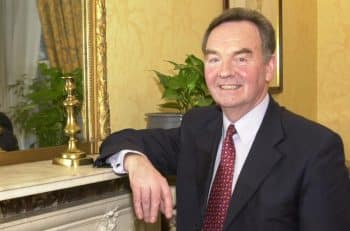
    Conor Lehihan probes ‘Anatomy of a Lie’ by Paul R Hyde. Sir Roger Casement was an icon for the British Empire in the Edwardian age. His two peripatetic reports on the degradation of natives and exploitation in the Congo and the Amazon were truly ground-breaking in the evolution of human rights. They were also solace for British people who had seen the imperial project discredited by the instigation of ‘Concentration Camps’ in the Second Boer War in South Africa. Knighted in 1911, Dublin-born Casement began to become more sympathetic to Irish nationalism due to his disenchantment with colonialism and a growing love for the Irish language. Significantly he never bothered to open the box containing the CMG that had come with his knighthood. He joined the Irish Volunteers and became a member of its national committee. He helped organise the Howth gun run and found a friend to part finance it. He later travelled to Germany, now at war with England, to enlist German support for a rebellion in Ireland. Before this, he had been in the USA to discuss his mission to Germany with Irish-American Fenians like John Devoy. Casement was caught landing arms at Banna Bay in Kerry and put on trial in London for treason. In an effort to discredit Casement, British officials claimed that he kept what became known as the ‘black diaries’ for the years 1903, 1910 and 1911, now kept in the public archive in Kew (London). They depict Casement as a homosexual who had many partners, had a fondness for young men and mostly paid for sex. The surreptitious campaign by the intelligence services was to frame Sir Roger as a moral degenerate who was owed no debt of sympathy for his earlier work on behalf of the Empire. Little difference was attached to the fundamental difference between homosexuality and paedophilia. Of course, prejudice persists to this day: it was revealing the online vituperation that greeted the advertisement in June 2023 by Kilmainham Gaol of ‘Pride Month Queer History tours of the Gaol’, much of it presumably from so-called republicans. The specific goal of the British establishment was to taint Casement to deny him a pardon from the death sentence in his trial for Treason in 1916. In his book, ‘Anatomy of a Lie’, Paul R Hyde shows that a British diplomat in Oslo fabricated a hasty report hinting that Casement enjoyed an “unnatural” relationship with his manservant. Hyde demonstrates through intense interrogation of the British documents the utter falsity of the original allegation. Furthermore, he discredits the effort by two Scotland Yard detectives to beef up the original Oslo allegation and gather reliable evidence which none of the possible witnesses were prepared to sign. Key figures from politics, the clergy, journalism and the administration were shown concocted details of Casement’s predatory sexuality allegedly culled from an actual diary that was forged from his own disparate notebooks and writings. When Casement heard of the rumours, he virulently denied they were in any way true; none of his close friends and colleagues ever apparently believed he was homosexual; and in the US and in Germany he was under intense surveillance yet allegations about his sexuality were never levelled Typed-up versions of the black diaries were circulated as the actual handwritten forged diaries had not yet been copied onto paper. The actual forged physical diaries were only produced after the smear campaign. The sheer detail of Hyde’s exegesis is impressive and reveals, point-by-point, the contradictions, factual errors and shoddy work the intelligence officers and policemen perpetrated in their effort to fit the spurious sexual allegations into the broader narrative of Casement’s day-to-day routine. Casement’s supporters have maintained his innocence. It has become an article of faith, particularly among supportive nationalists that the forged diaries maliciously rigged out a weakness for sex with young men, paedophilia; but that he was nevertheless homosexual. However, Hyde makes the point that none of the British and American surveillance threw up evidence of homosexual acts by Casement. In fairness to Hyde, he chooses not to enter into the debate about Casement’s sexuality but rather puts all his energy into proving that the black diaries are forgeries. Jeffrey Dudgeon, himself a distinguished gay-rights campaigner who published an edition of the diaries has also been cautious but in the end definitive. Noting that there is an absence of any evidence of heterosexual activity on the part of Casement, he has claimed: “His homosexual life was almost entirely out of sight and disconnected from his career and political work”. For this author, there is no evidence of homosexuality. For a start, when Casement heard of the rumours being circulated about him during his trial, he virulently denied there was any truth whatsoever to them. None of his close friends, including those that had worked with him as a professional, ever claimed before his execution or afterwards that they believed he was homosexual. Both in the USA and in Germany he was under intense surveillance. In the USA both the Fenians and British intelligence kept a close eye on his activities. The Germans and the Fenians both shared suspicions that Casement with his impeccable establishment credentials might have been sent by the British to infiltrate them. No allegations about his sexuality were ever levelled. Oh, what a tangled web we weave, when first we practise to deceive! Inference rather than proof may continue to dominate the controversy surrounding Casement’s sexuality and it has taken over one hundred years to disentangle the story to the point of informed and probable speculation. Scholarly writers and academic authors for many years accepted the authenticity of these forged diaries. However this, as Hyde points out, should not surprise anyone. Significant historians and hand-writing experts were all fooled by the famous Hitler diaries, with the elaborate hoax completed in a period of two years. The forgers of the Casement diaries did not have as much work to complete. The actual completion of the false narrative in physical form

    Loading

    Read more

  • Posted in:

    Tubridy’s environmental heedlessness is on show with his motors.

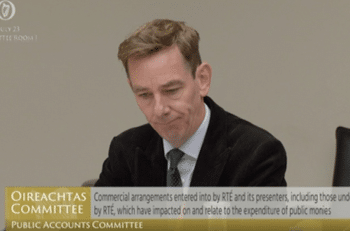
    RTE’s lead talent has rarely covered environmental topics and the range of gas-guzzling cars he drives goes some way to explain why. By Conor O’Carroll. Amid the ongoing controversy over payments made to Ryan Tubridy through a barter account by RTÉ as part of a sponsorship arrangement with Renault, his relationship with cars ought to be examined. Particularly against the background of the dramatic lack of environmental coverage showcased on his TV and radio shows down the years. Last week, People Before Profit TD, Paul Murphy, told the Dáil that The Late Late Show had covered climate change just twice in its history, questioning whether sponsors were exerting editorial influence over the show’s production. Renault has been the show’s main sponsor for eight years – the longest in its history – and details of the agreement between Renault, RTÉ and Tubridy are now the focus of intense public scrutiny. And it is difficult to forget Tubridy’s controversial comments on RTÉ Radio 1 back in 2019, where he criticised climate campaigner Greta Thunberg’s impassioned speech to a United Nations summit. He claimed that watching her, he wasn’t thinking about the climate. Instead, he appeared to focus on her appearance, describing “her face contorted in pain, in agony and in anxiety”, adding that he felt her campaign to save the planet was “not good for her mental health and wellbeing”. Tubridy continued his dismissal of Thunberg by suggesting she “return to the simple things”, such as being brought home to watch a movie or go for a walk, as if to say ‘leave this stuff to the adults’, whilst ignoring the fact that ‘the adults’ are part of the reason we’re on the verge of an environmental catastrophe. He later apologised for his comments. The reticence over environmental causes begins to make sense when examining Tubridy’s relationship with cars. It appears he favours a gas-guzzler. And of course, there’s the nostrum that you cannot convince people of the truth of something if their pay packet depends on not recognising the truth. The issue of RTÉ ‘talent’ receiving sponsorship deals to drive cars is far from a new phenomenon. Tubridy himself had a brand relationship with Lexus, signing a two-year contract with the manufacturer in June 2003 “to drive an IS200 and to participate in a number of Lexus customer events and promotions”. In an interview with the Irish Independent in 2004, Tubridy remarked how much he enjoyed the heated seats on his luxury car. Nice and cushy. However, those heated seats fell short, because after Lexus rejected Tubridy’s request for a larger, more expensive model, their partnership ended and Tubridy returned to driving a BMW, as he had before the arrangement with Lexus. Unluckily for Tubridy, it was around this time that the German manufacturer announced its decision to end its ‘brand ambassadorship’ programme, requiring several RTÉ ‘stars’ to return their sponsorship cars to the company. I drive an old car, it’s an ’07, but it’s a beautiful looking car Tubridy was not a part of this programme, though BMW did confirm he had approached the company about upgrading his current car to a newer, flashier model. Several years on from this, it was reported that Tubridy had elevated his choices, swapping his BMW for a swanky Jaguar XJ. It’s a brand he appears happy to promote, having been pictured alongside former Ireland and Leinster scrumhalf Eoin Reddan in front of a brand-new Jaguar F-TYPE in 2014 as part of the inaugural Jaguar Golf Classic for the Irish Youth Foundation. Jaguar Ireland insists that Tubridy has never been part of their ambassadorial scheme, stating that “while he may personally own and drive a Jaguar, that is not, in any way, directly linked with Jaguar”, and that “any attendance at events was also on a personal level and no way part of any partnership with the brand”. From here on, the make and model of Tubridy’s car of choice is difficult to pinpoint, though he is always quick to remind us of how old his car is. A 2021 interview with The Times makes pointed reference to the fact that the car parked in his drive is 14-years-old, and during a discussion of electric cars on his radio show in 2022, he repeatedly reiterates that “I drive an old car, it’s an ’07, but it’s a beautiful looking car”. Let’s face it: it’s not truthful to describe an old Jaguar as an old car: the connotation is misleading. These reminders attempt to convey a sense that Tubridy is ‘just like everyone else’, a narrative that has been truly shattered following the revelations over the past few weeks. It also doesn’t help that in 2020, before this grandstanding about how old his car is, he can be pictured leaning out of what appears to be a modern Volvo. It’s impossible to say whether this is the car Tubridy refers to, but the car certainly doesn’t appear to be 14-years-old. With such a list of petrol-burning automobiles, it’s little wonder that Tubridy’s environmentalism is elusive. Having suggested that Thunberg went for a walk, perhaps a humbler Tubridy may accept that he needs to get out of those cars to retain the public confidence on which his career depends.

    Loading

    Read more

  • Posted in:

    Understanding Prigozhin

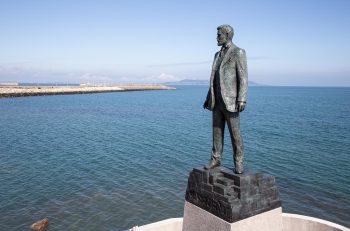
    Prigozhin is a Putin construct and illustrates underlying Russian structural deficiencies including indulgence of oligarchs and a dysfunctional relationship  between the public and private sectors that I recall from my time there.  By Conor Lenihan. The Russian government has gone to enormous lengths to maintain an illusion of business as usual on the domestic front, but Prigozhin offers a rare insight into the power struggles still raging beneath the apparently tranquil surface. Writing about the invasion of Ukraine in the early days, I predicted that one way or the other, it would unleash another power struggle within the Kremlin, however well-masked from prying western eyes. That Prigozhin would be the one to stage the uprising, coup or as he called it ‘march for justice’, was not initially obvious. There are historical and sociological reasons for the rise of Prigozhin. Before Putin came to power 23 years ago, it was never quite clear who was running the country – Boris Yeltsin, or the insiders and cronies who had taken ownership of previously publicly owned oil, gas and commodity, resource-based companies in the chaotic, crash-course transition to fledgling democracy. This situation whereby these wealthy oligarchs – often referred to as the “Yeltsn family” – effectively ran the Russian government caused much discomfort to the newly ascendant Putin. It was an early hallmark of the new regime that he set about reversing the nature of the relationship between the Russian Federation’s government and the oligarchs, many of whom either sat in the state Duma (parliament) or actually owned dozens of members – almost like proxy voters in a public company. In July 2000,  Putin brought the country’s top oligarchs into a meeting that was beamed out live on television where he formally warned them that if they interfered in politics and media via their ownerships, he – Putin – or the State would come after them.  Present at the meeting was one Mikhail Khodorkovsky owner of the one of the richest oil companies in Russia (Yukos). Khodorkovsky seemed to have ignored the warning and ended up in jail with his companies stripped and re-allocated either to the state or friends of the regime. Putin introduced his own system where the relationship between him and the Oligarchs became one of Servant-Master and he was the Master. Putin reversed the nature of the relationship between the Russian Federation’s government and these extraordinarily wealthy oligarchs many of whom either sat in the state Duma (parliament) or actually owned dozens of members almost like proxy voters in a public company. Putin introduced his own system where the relationship between him and the Oligarchs became one of Servant-Master and he was the Master. Added to his own “new money” oligarchs came a set of people largely drawn from the state sector called “ silivoki” a polite terms for middle or senior ranking state employees with an emphasis on those from the state security apparatus – the KGB, GRU and other such agencies. These “siloviki” were everywhere in the private companies and state organisations that I came into contact with, and the power they wielded was significant. Within Russian company these operators act as protectors for their patrons and in business terms have an uncanny way of both penetrating the often hazardous and slightly impenetrable Russian state bureaucracy. In 2011, after the loss of my Dáil seat, I had been invited by  Viktor Vekselberg to become a vice-president of the Skolkovo Foundation – a $10 billion innovation project which was Moscow’s effort to build its own Silicon Valley and lessen the dependence on oil, gas and commodities. Vekselberg himself has been on the US sanctions list since the annexation of Crimea in 2014. The foundation employed  dozens of siloviki, typically well-connected former intelligence agents, and at least one former KGB General. The point is that in Russia important roles at the highest levels are  filled by people who got there dysfunctionally – Yeltsin oligarchs, Putin oligarchs and silivoki. Yevgeny Prigozhin must be framed against this dysfunctionality though he is not rich enough to quality as a an oligarch in the usual sense. He is part of an elite spawned through corruption, nepotism and violence. Putin exploits this system and depends on it to consolidate his leadership and control of Russia. He is Putin’s creation. He derived his massive Wagner mercenary army, not from ownership of oil and gas resources, but from direct friendship with Putin. He rose from criminal, to hot dog seller, and eventually created a catering company that supplied not just the Kremlin, but also the Russian army. It was a small jump to supply paid mercenaries in 2014, renting them out to regimes in Africa and the Middle East who for one reason or another needed military muscle. The Wagner operation became a “discreet offering” from the Russian state to friendly allies like Assad in Syria and General Haftar in Libya. In a way, Prigozhin’s own story is emblematic of the state built by Putin. So it is a profound irony that he became a putative coup leader himself. This accounts for the clear look of fear and anger in Putin’s face during the live broadcasts in which he pledged to crack down on the coup and the coup leaders themselves. With Prigozhin speeding up the road to Moscow, Putin chose to offer him a way out – a safe haven in Belarus in a clearly staged intervention by his close ally Aleksandr Lukashenko. One member of the Russian Duma was heard to remark that Prigozhin deserved to get “a bullet in his head” rather than a comfortable exile arrangement. The Russian public will have been alarmed at the instability of those two days where the past once again seemed possible.  Still, the immediate consequence of the failed mutiny will be to strengthen Vladimir Putin and lead to a re-doubling of the Russian war effort in Ukraine. But Putin is not a young man anymore and the inherent instability of both the war in Ukraine and his own visible vulnerability

    Loading

    Read more

  • Posted in:

    Looking good for FIE challenge to EU’s inflated fishing quotas.

    Radical opinion from the European Court of Justice’s Advocate-General suggests EU Commission is closing down the EU’s non-scientific, short-term, socio-economic approach to total allowable catches of cod, whiting and plaice when those overfished stocks are caught as inevitable by-catch. By Tony Lowes. The EU Commission dealt with this in a way similar to the ‘no more chocolate from Monday’ promise; because, if Monday is not understood as a fixed deadline, one will keep eating chocolate and Monday will never come The abundance of marine life described by fifteenth-century seafarers is almost unimaginable today.  As Callum Roberts records in his 2007 ‘The Unnatural History of the Sea’, they “described encounters with enormous shoals of fish that appeared almost limitless. The shoals were so dense that they could be seen from afar, darkening the surface of the water as far as the eye could see. The seas were alive with movement and colour as fish of all shapes and sizes darted through the water in a mesmerising ballet. The richness of the marine ecosystem was unparalleled, with an abundance of cod, herring, sardines, and other species that sustained both seafarers and coastal communities for generations. The seafarers spoke of a world that seemed untouched by human intervention, a paradise of natural abundance that existed in harmony with the oceans”.  In her support of the challenge brought to the European Court of Justice by Friends of the Irish Environment to overfishing in Irish waters, Advocate General Tamara Ćapeta cited the Irish spirit of the oceans, Manannán Mac Lír. “Such was the abundance of his crop in the waters surrounding Ireland that when consecutive Royal Commission examined the fishing industry in 1863 and 1885, the leading ichthyologists of the day concluded that the fisheries were ‘inexhaustible’”.  “Alas”, she continues, “they were wrong. Fish stocks are not a perpetual self-renewing resource, independent of human influence. As we have learned in this century, fish stocks require careful management in order to secure their survival”.   Friends of the Irish Environment, supported by the resources of Client Earth, challenged the quota for total allowable catches [TACs] set in 2020 for cod, whiting and plaice when those overfished stocks are caught as inevitable by-catch Friends of the Irish Environment, supported by the resources of Client Earth, challenged the quota for total allowable catches [TACs] set in 2020 for cod, whiting and plaice when those overfished stocks are caught as inevitable by-catch during fishing operations that target other stocks, undermining the principle of ‘Maximum Sustainable Yield’ [MSY]. To protect these species from being part of the inevitable by-catch the target fisheries would have to be closed to allow them to recover, with financial ruin running “from northern Scotland to the southern Azores”, according to the industry. Certainly, achieving the scientifically recommended TAC at ‘0’ for whiting in the Irish Sea would temporarily close the Dublin Bay prawn fisheries, as they inevitably catch whiting because of the way they must carry out their trawling.  As Ćapeta explains: “The concept of the Maximum Sustainable Yield (‘MSY’) is a harvest strategy globally used in fisheries. It assumes that there is a certain level of catch that can be taken from a fish stock without affecting its equilibrium population size. In essence, the idea is to harvest only the surplus of fish that naturally occurs as the stock reaches its equilibrium point and its reproduction rates slow down. Hence, by ‘shaving off’ that surplus, the reproduction rates remain maximised and the fish stock annually repletes itself without affecting its long-term survival”.  Forty years ago, the European Union brought in the Common Fisheries Policy to ensure the sustainable management of fisheries resources. Citing the subsequent EU 2009 Green Paper review of the Common Fisheries Policy Basic Regulation, the Advocate General reported that “the Commission then found ‘the [previous] CFP has not worked well enough” and warned that an “ecological and sustainable vision of the CFP is a far cry from the current reality of overfishing and decline in the volume of fish caught by European fishermen”.  According to experts, overfishing not only reduces fish biomass but threatens biodiversity, alters the marine food web, and degrades marine habitats. The experts estimate that in the EU at least 38% of fish stocks in the North East Atlantic and Baltic Sea, and 87% in the Mediterranean and the Black Sea, are being fished beyond their maximum sustainable yield.  Hence, Article 2(2) of the 2013 CFP Basic Regulation provided that fisheries management “shall aim to ensure that exploitation of living marine biological resources restores and maintains populations of harvested species above levels which can produce the maximum sustainable yield by 2015 where possible and, on a progressive, incremental basis at the latest by 2020 for all stocks”.  Critically, Ćapeta rebutted the attempts of the Commission to claim to have amended the binding targets through other measures, such as the Western Waters 2019 Regulation purportedly providing “implicit amendments”. Such amendments, even if valid (which she held were not) are “not transparent for the public”. They are “the very enemy of transparent lawmaking”, undermining the “requirement to allow for participation in the legislative process”, especially when “it concerns amendments of core elements of policy which may be of interest to the public”.  As with many environmental restrictions, there is an argument for discretion, ostensibly here to allow the “balancing of the competing ideals of sustainability and fisheries management, on the one hand, with the economic and social objectives of the communities dependent on the sea for their livelihood, on the other”.   “To my mind, however”, the Advocate General continued, “as of 2020, Article 2(2) of the CFP Basic Regulation removed from the Council those elements of discretion which relate to the decision as to whether and by when to achieve Maximum Sustainable Yield levels for the stocks covered by the Common Fisheries Policy Basic Regulation. Indeed, I consider that, by setting a fixed deadline, the EU legislature aimed to prevent the Council from putting short-term economic interests before

    Loading

    Read more

  • Posted in:

    Work permissions for migrants yields a passive income for the official account owners from the labour of vulnerable non-European workers leaving payment per delivery for a Deliveroo worker in Ireland to drop from €4.39 to €2.90

    The interdepartmental Rubik’s cube of work permissions for migrants yields a passive income for the official account owners from the labour of vulnerable non-European workers who have to risk life-and-limb while working without insurance, leading the basic payment per delivery for a Deliveroo worker in Ireland to drop from €4.39 to €2.90

    Loading

    Read more