General

Random entry RSS

  • Posted in:

    Stalin’s Englishman On Trial in Ireland

    The paperback edition of Andrew Lownie’s highly regarded Stalin’s Englishman is now on sale with updates which did not appear in the hardback version. It is a riveting biography of the notorious Eton- and Cambridge-educated British spy and traitor Guy Burgess, bristling with new information based on first-hand sources including hitherto unpublished letters and files. Significantly, a careful reading, between the lines, reveals a lot for the discerning Irish reader about a hidden and deeply murky aspect of the Troubles here. RECUPERATING IN IRELAND, BURGESS-STYLE Burgess was a frequent visitor to these shores. One of his trips landed him in the dock of the District Court. Lownie describes how Burgess had tumbled down two flights of stone steps after a drunken midnight wrestle with a friend called Fred Warner, as the pair was leaving the Romilly Night Club in London in early 1949. Burgess smashed his elbow, slightly cracked his skull and dislocated three ribs. Warner pushed him into a taxi, bleeding profusely, and took him back to his rooms from where he telephoned without avail, every doctor whom he knew by name or repute. He received no reply and he remained there all night, with Burgess groaning on the bed. In the early dawn, he found a doctor who took Burgess off to the Middlesex Hospital. Some rest and recuperation were advised and, after ten days in hospital in London, Burgess went with his mother, with whom he often holidayed, first to Wicklow and then for a few days at the Shelbourne hotel in Dublin. In Dublin Burgess met the writer Terence de Vere White. Lownie’s recalls how de Vere wrote how Burgess was “travelling with his mother, a quiet lady. He took the centre of the stage. He was dark and bright-eyed and was either an old-looking young man or a young-looking middle-aged man, I was not quite certain which . . . He was in the Foreign Office and was taking a rest in Ireland on account of an accident in the Reform Club [sic], where he had fallen and bashed his head on the stairs. As a result of this, he was under doctor’s orders to keep off alcohol and if he disobeyed the rule, the result was a complete blackout, lasting for more than a day. I noticed that he drank tomato juice, which seemed out of character”. ON TRIAL AT THE DISTRICT COURT IN DUBLIN True to his reputation, Burgess was actually drinking incessantly. He and de Vere White parted ways after an hour as Burgess was off to enjoy a play at the Abbey Theatre. Shortly afterwards, on 4 March, de Vere White was contacted by phone and asked if he would give evidence for Burgess in the Dublin District Court. Burgess, he learnt, had been charged with “driving a car while drunk, driving without reasonable consideration, and dangerous driving” two days before, on Grafton Street. “Confronted with the most positive medical evidence of a shaky walk and alcoholic breath, Burgess was invited by the Justice . . . to explain how he reconciled this with his story of complete teetotalism”. He responded “with a most affable air” suggesting his tomato juice might have been doctored and pointed at de Vere White who was forced to give an account of the evening. Burgess’s old friend from Eton, Dermot McGillycuddy, now a lawyer with an office on Kildare Street beside the Oireachtas, was brought in as his defence solicitor and managed to make a silk purse out of a sow’s ear. The case was dismissed, with the judge describing Burgess as “a man of brilliance who appeared overwrought and nervous…a man of cultivated tastes” – he had been returning from seeing a play at the Abbey Theatre when the accident took place. According to the doctor, a friend of McGillycuddy, who examined Burgess at the police station, “There was no smell of drink which witnesses could detect from his breath. He was smoking continuously, his speech was confused and when witnesses asked him to walk in a line, he was definitely unsteady and limp”. DRUGS FIT FOR A HORSE Burgess continued his excessive proto-rock star lifestyle while in Dublin. The tumble in London had left him with bad headaches and insomnia which he treated with Nembutal to put him to sleep and Benzedrine to wake him up. He managed to secure his supplies from a vet. The dosage was fit for a horse. A friend quoted by Lownie wrote later that, “Drugs, combined with alcohol made him more or less insensible for considerable periods in which, when he was not silent and morose, his speech was rambling and incoherent” to the extent he “seemed, hardly capable of taking in whatever it was one was saying to him”. A LOT TO LEARN ABOUT THE HIDDEN HISTORY OF THE TROUBLES Reading between the lines of Lownie’s book, there is a lot to be gleaned about the dangerous and seedy side of the Troubles. Burgess, of course, was an MI5 and MI6 officer who worked secretly for the Soviet Union as part of the infamous Cambridge Circle of traitors which included Sir Anthony Blunt, Kim Philby, Donald Maclean and John Cairncross. Village has described aspects of the Anglo-Irish paedophile network of which Blunt and Burgess were members on a number of occasions over the last two years. Burgess knew some of the more senior members of the Anglo-Irish Vice Ring. The ring had probably existed in one form or another for generations but was reorganised on a systematic basis after WWII with access to orphanages and care homes in NI for paedophiles. It survived until at least the mid-Troubles, if not long afterwards. The British Establishment is still engaged in an ongoing cover-up of its activities. Survivors are hopeful that at least some of its Irish branches will be put under the microscope by the London-based Inquiry into Child Sexual Abuse (IICSA). The wider ring included friends of Burgess such as his fellow traitor Sir Anthony Blunt; the poet Brian

    Loading

    Read more

  • Posted in:

    Non Disclosure

    A fortnight ago, I gave evidence at the Disclosures Tribunal. I spent almost four hours in the witness box in Dublin Castle over the course of two days. Most of what I said was the subject of a blackout by the establishment media, as I suspected it would be. For some time, I have been an outspoken critic of RTÉ and the Denis O’Brien media because of their close relationships with government and the Gardai which are so harmful to democracy and the public good. In 2012, before Sergeant Maurice McCabe came to public prominence, I got a call one day at my office in the Irish Independent from his father. He asked if I would be willing to look at allegations his son was making about corruption in the force. At the time, I was the newspaper’s Chief Features Writer and had been working on a number of cases of garda corruption, mostly unsolved murders. Mr McCabe explained this was why he had contacted me. My investigation into the 1985 death of Fr Niall Molloy had just led to the ‘re-opening’ of the case and my stories were generating interest among citizens who were having their own difficulties with the Gardai. Most of them were bereaved families who believed their loved ones’ deaths had been covered up by the force. My questions to the Garda press office and the Department of Justice about these cases were routinely ignored and I had become a thorn in the side of Commissioner Martin Callinan and his headquarters in the Phoenix Park. I was increasingly alarmed at the depths Garda management seemed willing to go to cover up serious crimes to protect powerful individuals and deny citizens their right to justice and the truth. So when I heard that a serving member of the force had finally decided to speak out, I was intrigued and relieved, and agreed to meet Sergeant McCabe shortly afterwards. Over the course of several weeks, I got to know him and his colleague John Wilson and found their testimonies solid and compelling. They were courageous, honest and driven by nothing but a desire to expose wrongdoing in the force and try to clean it up. All of their efforts to date had failed. I began my own investigation into abuses of the penalty points system, focusing on a number of high-profile individuals who had had speeding fines quashed. One of them was Martin Callinan. By then, it had emerged that certain judges, state solicitors and crime reporters had had penalty points cleared. But now there was proof that the person with overall responsibility for implementing our road safety laws had also evaded them for his own personal gain. At the time, Independent News and Media (INM) was undergoing a period of enormous transition as Denis O’Brien became the largest shareholder. Stephen Rae, former editor of the Garda Review, took over the reins at the Irish Independent. Almost overnight, a wave of fear seemed to sweep through the newsroom. The new regime was planning big changes and there was a strong sense that those of us involved in adversarial investigative journalism might be about to have our wings clipped. It was in this period, I came into possession of a Garda PULSE document identifying a Martin Callinan as the recipient of speeding points that had been quashed. My source believed this to be the Garda Commissioner but knowing my lawyers at INM would not accept this as sufficient proof, I went to the address on the printout to make sure the information was correct. I had a cordial conversation with Mrs Callinan which lasted no more than a few seconds. I told her who I was and asked her if the Garda Commissioner lived at the house. She said he did but that he was away. I jumped back into my waiting cab, looking forward to getting my story published. Little did I know it would lead to the end of my 17-year career at INM. Shortly afterwards, I had a call from Stephen Rae’s then-deputy at the paper, Ian Mallon. He was very hostile and said the Commissioner was furious and had made a complaint of harassment against me. In the days that followed, there was little appetite to publish my story about Callinan and I was subjected to a barrage of criticism and intimidation. I also learned that the then Managing Editor at the paper had been ordered down to Garda HQ over my story. One afternoon shortly afterwards, I was bluntly informed that my job was gone but that every effort would be made to make my departure as financially attractive as possible. When I said I would not be bought off, I was told I could stay on at the paper as long as I withdrew from the work I was doing on Garda corruption. I refused and was forced to take three legal actions against the company which resulted in a High Court apology from the company and compensation. When the Disclosures Tribunal was established in 2017 to investigate an alleged smear campaign by Garda management against whistleblower Sergeant McCabe, I wrote to the chairman Justice Peter Charleton and offered myself as a witness. I believed my testimony would be of interest to it and the public, as it would help to reveal the incestuous links between INM and Garda HQ, and the lengths they were willing to go to to harm those backing up Maurice McCabe’s claims. I have never been in any doubt that my support for his work led to the end of my career at the company. And as I told the Tribunal in early June, it is also my belief that the smear campaign against McCabe intensified after Callinan was exposed for having his points terminated. Shortly after that story was published in April 2013, the repugnant rumours that McCabe was a paedophile started to surface. The ‘Miss D’ allegations emerged and a file was created by TUSLA –

    Loading

    Read more

  • Posted in:

    Suffer little children

    Eric Witchell is a serial paedophile. In the 1970s he ran Williamson House where he preyed on pre-pubescent boys and young teenagers. He and his accomplices drove at least three of them to commit suicide; and another two to attempt it. One of his charges was supplied to Enoch Powell MP, for abuse. A select few were transferred to the notorious Kincora Boys Home when they reached 14 years of age. At Kincora they became fodder for MI5 ‘honey trap’ blackmail operations. THE ENOCH POWELL STORY IS CONTAINED IN PART 2 OF THIS ARTICLE. Part One: Williamson House A WOLF IN A MONK’S HABIT Eric Witchell, a serial paedophile, was a key figure in the Anglo-Irish Vice Ring about which Village has been writing for the last two years. He is currently living in London aged 70, safe in the knowledge that a succession of senior MI5 figures have gone to extraordinary lengths to cover-up what he and his associates did in Belfast, London, Manchester, Liverpool and elsewhere as they – MI5 – benefited from the existence of an Anglo-Irish paedophile network of which he was a key member. In Northern Ireland (NI) MI5 exploited the network to gain leverage over influential Loyalists, including members of the DUP. Witchell, who hailed from England, was born in 1948. He became a Franciscan at the age of 19. Before his appointment to Williamson House, he had been a housefather in an English boys school attached to the Franciscans. He became the Officer-in-Charge (OiC) of Williamson House in May of 1975 at the age of 27. The small boys Witchell abused were abandoned, vulnerable and powerless waifs. A select few were later sent to the notorious Kincora Boys Home where they were used as bait in MI5 ‘honey trap’ blackmail operations. Sir Michael Hanley was Director-General of MI5 at the time. Ian Cameron ran MI5 operations on the ground in NI for Hanley from his office in Lisburn. Witchell betrayed the trust bestowed upon him by Belfast’s child welfare authorities but also by the Anglican Franciscan Order of which he was a member. He was, however, a godsend to Hanley and Cameron. The Williamson House scandal is worse than the outrage at Kincora insofar as younger children were abused at it. Witchell’s sordid branch of the Anglo-Irish Vice Ring supplied very young children to VIPs including Enoch Powell MP. The Independent Inquiry into Child Sexual Abuse (IICSA) was set up to investigate allegations of child abuse by VIPs including Westminster MPs. There is no indication yet that Witchell will be questioned by IICSA which is based in London despite the fact that Witchell is one of the most important living witness to the existence of a VIP vice ring and lives in London. Witchell did not appear before the Hart Inquiry. Had he done so – and told, or been made to tell, the truth – Judge Hart would have reached a wholly different conclusion to the one he published in 2017. Hart denied the existence of any sort of vice ring beyond the walls of Kincora Boys Home. WHO PAVED THE WAY FOR WITCHELL TO TAKE OVER WILIAMSON HOUSE? Witchell secured the post at Williamson House despite the fact his tutor at the National Children’s Home Training College in England had advised the appointment panel of Belfast‘s Welfare Department that at “this stage I would have some doubt in commending him to be the Officer- in-Charge… I would commend him to you for employment, but I would not commend him to you for employment as Officer-in-Charge”. It was fortuitous for MI5 that Witchell became OiC despite this because he was the vilest sort of paedophile, someone who was prepared to farm out the children in his care to a wider network of child molesters. This suited MI5 because it enabled them to manufacture blackmail opportunities and ensnare Loyalist politicians, paramilitaries and Orangemen and force them to do their bidding. After Witchell became OiC at the home, he moved into an apartment in the attic. It had a TV, sofa, sleeping quarters and a drinks cabinet. This was where he abused the young boys. He would usher his chosen victim upstairs and lock the door behind them. Physically, he was tall, thin and imposing. He wore glasses and had black longish hair. He was an exceptionally cruel and violent man with an insatiable sexual appetite. His preference was for prepubescent boys but he assaulted teenage boys too. His taste ranged from masturbation to anal rape. At least three of his victims would never recover from the assaults he and his associates perpetrated, and committed suicide; another two attempted to kill themselves. Officially, he held the post of OiC at Williamson House until 1 March 1980 but he actually left before then as the RUC and MI5 were losing control of the secrecy surrounding the scandal. WITCHELL’S ACCOMPLICES By the early 1970s MI5 had probably gained control over all of the key figures in the Anglo-Irish Vice Ring including Councillor Joshua (Joss) Cardwell, a Unionist politician and paedophile, who was also Chairman of Belfast Corporation Welfare Committee. The Committee was responsible for both WH, Kincora and other homes in Belfast where sexual violence was commonplace. Cardwell was also a friend of Joe Mains, the Warden of Kincora. Together Cardwell and Mains supplied boys from Kincora to England and Scotland. As Village reported last February, it was Cardwell who instructed Joe Mains to send Richard Kerr, who had been at Williamson House but was now residing at Kincora, to London in the mid-1970s. He was abused by a high-profile TV star there: a man still well known to the public, so much so that his photograph recently appeared in an Irish national daily newspaper. On another occasion, while still at Kincora, Kerr was sent to be abused by a Tory MP in London. Another Kincora boy, Stephen Waring, was also sent to the UK from Kincora. He committed suicide in 1977 by jumping into the sea

    Loading

    Read more

  • Posted in:

    Spooks spooked

    The poisoning of a Russian espionage agent and the naming of a politically coercive company in March 2018 proved a rare set-back for two British apparatchiks. Normally regarded as masters of their craft – and tradecraft – Christopher Steele and Alexander Nix were hoist by their own petard in areas of proven expertise, Espionage and Influencing. Steele’s expertise worked for MI6 (SIS – Secret Intelligence Service) where his career followed a predictable trajectory after Cambridge University, where he studied Russian and was President of the Union – to the SIS section of the Foreign Office, thence to the intrigues of 1990s Moscow. Along the way he made a reputation for being reliable and not given to alarmism. His basic espionage training included military skills in fire-arms and physical endurance, disguise and counter-surveillance. As a professional intelligence officer, Steele’s success rate was high in negotiating with, and ‘exfiltrating’ to, European countries defectors from his host’s intelligence services. His own country’s spies thought so highly of him that at a discreet get together with CIA counter-parts he was described as ‘the real James Bond’. By his 40s he had been recalled to the London Russian desk of SIS, supervising a clutch of Russian defectors, among them Alexander Litvinenko, poisoned by the Russian intelligence service, FSB, in tea-rooms off Grosvenor Square, in revenge for working with SIS. More recently another defector, Sergei Skripal, was also targeted and perhaps brain damaged in revenge as a warning to potential other defectors. Steele left SIS to, along with other ex-colleagues, found a business research firm, Orbis, which in turn was hired by US political interests and allegedly produced, via Steele’s former Russian network, a dossier on Trump which became known as the Dirty Dossier, as it included episodes of The Donald cavorting with Russian call-girls who, among other services, urinated on Trump in the hotel bed once occupied by his rival Hilary Clinton. Which seemed the point of the exercise. Though now being handsomely paid by corporate interests, Steele’s past as a skilled agent came back to haunt him when his authorship of the dossier was made public. One of his Russian sources was summarily dragged from a meeting by masked abductors; another source was found dead in his car with a cranial gunshot wound. Steele went to ground with his family, leaving requests with a neighbour to feed the cats … revealing the ‘ordinary life’ many spies inhabit. Weeks later he surfaced in the Orbis offices after, presumably, he had received some kind of assurance from – whoever. No such assurance was forthcoming for Alexander Nix, another achiever who was a co-founder of Cambridge Analytics, ostensibly another business ‘consultancy’ which also dealt in the black arts of power, deception and betrayal. Like Steele, Nix was a high academic achiever. MI6 specifically trained him in and ex-Etonian and Saatchi executive Nigel Oakes in ‘psycho ops’ – developed in the live laboratory of the Northern Ireland conflict, with the aim of inducing paranoia among paramilitaries. With input from security services personnel whose refining of paranoia among Irish paramilitaries had induced self-destruct, Oaks and Nix were plausible in being contracted to win elections by governments floundering in remnants of Empire. In Asia and Africa, Cambridge Analytica plausibly persuaded leaders to give the company vast sums of money and, in some cases, land – in return for mounting psychological campaigns against opponents. In Kenya particularly where politicians were prone to the post-colonial reflex of believing the White Man’s magic was superior to the native version, Cambridge Analytica by its own boasting “wrote speeches [and] honey- trapped – all on camera”. Unable to resist the lure of explaining to a potentially powerful Asian client (full marks to Central Casting) Nix was filmed by a camera left casually in a briefcase at a meeting. The resultant exposure on Channel 4 provoked investigations by the UK authorities, embarrassment for the Conservatives, and for the DUP and UKIP parties which had business relationships with it; and a deeply traumatised Nix being hustled away from reporters by heavies. Steele’s enforced purdah from Orbis and the departure of Nix from Cambridge Analytica seem to point to the enduring tactical importance of using long spoons when supping with devils. Steele can hardly have predicted his dossier on Trump would have generated such a personal backlash as to force his family into hiding to avoid revenge of the type that afflicted his one-time charge, Litvenko. Nix, boaster about the black arts of entrapment, fell foul of an ostensibly wealthy ‘client’ from a Sri Lankan political party seeking guidance. The client was a TV investigations unit, replete with convincing actors, a working camera and sound system. His own methods were used against him to devastating effect. The collateral ruin far exceeded his original success, with Facebook, Twitter and other giants of the digital universe suffering not only losing users and and revenue but attracting legislative penalties sufficient to deter them from making data available to sinister conspirators like Cambridge Analytica. Technology has a price, as Nix and Steele can vouch. Kevin O’Connor

    Loading

    Read more

  • Posted in:

    Israel Politik: Illegal settlement

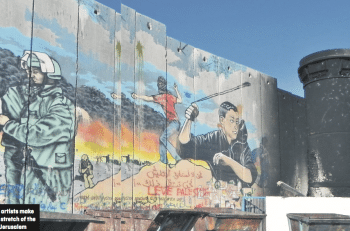
    After completing his Ph.D in the University of Pennsylvania, the former Palestinian foreign minister, Nabil Shaath, lectured in financial economics at the elite Ivy League Wharton School in the US. Among his students was a brash undergraduate named Donald Trump who did little study, flunked his exams and was expelled from the university. With the help of his very rich father, Trump was readmitted and, despite his poor academic credentials, went on to greater things. “He was not a good student. He dropped out and his academic standard did not come up to scratch. I was teaching advanced corporate finance and he flunked the courses. The idea of this man as President of the US to me shows the decline of American civilisation”. Some half a century later, Trump is leading the latest assault on the historic right of the Palestinian people to their own land, including international recognition of Jerusalem as the capital of their independent state. Last December, President Trump confirmed that he intended to move the US embassy in Israel from Tel Aviv to Jerusalem in a move that deeply angered the Arab world while elating many Israelis who have long had their sights on ultimate control of the holy city, which has been traditionally shared by Muslim, Christian and Jewish religions. The decision to move the embassy to Jerusalem was authorised by the US Congress some years ago but was put on hold by President Barack Obama, who believed the decision could only hamper efforts to find a lasting peace in the region and, in particular, the achievement of a two-state solution with east Jerusalem as capital of Palestine. For the Palestinian president, Mahmoud Abbas, and for Nabil Shaath who acts as foreign relations advisor to him, this divisive action by the Trump administration has confirmed a view they have long held privately: that the US cannot be considered as an honest broker in the search for a just solution to the Middle-East crisis, arguably one of the world’s most egregious human rights scandals. Over recent weeks, 35 Palestinian people have been killed and over 1500 injured by live rounds fired by Israeli army snipers from behind a fortified security fence erected in Gaza. Each Friday thousands of people from the besieged and almost destroyed Gaza Strip have protested for their “Right to Return” to the lands from which they and their families were expelled during the Nakba or catastrophe when the state of Israel was declared in 1948, and over the decades since. The policy of the government led by Benjamin Netanyahu and of the Israeli Defence Forces (IDF) is that the right-to-return protests must be resisted with maximum force, including by the killing of unarmed activists and the maiming of thousands. Already overstretched and under-resourced Gazan hospitals have been unable to cope with the recent slaughter, while their efforts to transfer shooting victims with serious injuries to hospitals in the West Bank have been obstructed by the IDF. Two young men who each had had a leg amputated after suffering severe bullet wounds lost their other leg after doctors were prevented by Israeli authorities from transferring them from Gaza to better-equipped hospitals for treatment. The reason they were refused access to urgent medical care in Ramallah was because their “medical condition is a function of their participation in the disturbances”, the Israeli authorities confirmed. One of the young men, Yousef Karnez, said that he was a trainee journalist and was holding a camera at the demonstration which he sought to document. “I got two bullets. One hit my left leg and crushed it and the other hit my right leg, where it gravely injured my shin. Doctors have already amputated my left leg and I am begging; I don’t want to lost my other leg,”, he pleaded in the days after he was shot in early April. A young journalist, Yaser Murtaja, who was wearing a white ‘Press’ sign on his chest during the same protest on 6t April, was shot dead by IDF snipers and wrongly accused by the Israeli defence minister, Avigdor Lieberman, of being a member of Hamas who had been operating a ‘spy drone’ before he was killed. His claims were denied by the International Federation of Journalists who said that Murtaja had worked for both national and international media over recent years including for the BBC and Al Jazeera, and that his company Ain Media had been funded by the US Agency for International Development. His production company had used drones for aerial filming and he was due to start a new job with the Norwegian Refugee Council two days after he was shot. Nabil Shaath, a Gazan, believes the people of the strip are desperate and the large ‘Right to Return’ protests are a reflection of their appalling living conditions. The electricity in Gaza, where some 2.5 million Palestinians live, is turned off for sixteen hours each day, there is no clean water, and there are severe shortages of food and medical supplies. Efforts to establish a unity government across the West Bank, east Jerusalem and Gaza which commenced last year have so far been unsuccessful due to the inability of the Palestinian Authority (PA) and Fatah (the political organisation led by President Mahmoud Abbas) and Hamas to reach agreement. At the core of their disagreement is the refusal of Hamas, which took political power in Gaza following elections in 2006, to cede control of security to a new government of Palestine. “We have a presidential system in Palestine and the President is in charge of security and foreign relations,” Shaath explains. “Hamas was elected in Gaza in 2006 by popular vote and we accepted that mandate. However, the PA remains responsible for ensuring that the people of Gaza have sufficient finance to cover the costs of education, health, water and electricity. We have now said to Hamas that we can only continue to pay the bills if they agree to complete discussions for a unity government that will include security”. This

    Loading

    Read more

  • Posted in:

    As sad as Assad

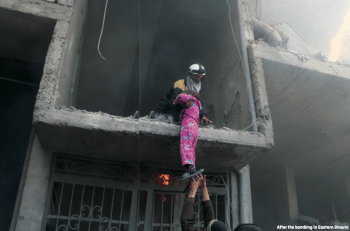
    Unthinkable suffering The Syrian army’s apparent chemical attack on Douma on April 7 was the worst atrocity of an infernal six-week military campaign in Eastern Ghouta. This in turn was the latest horrific chapter in a war lasting seven years which has brought unthinkable suffering to millions of innocent civilians. The relentless bombardment of Eastern Ghouta, backed by Russia and Iran, follows a cruel siege of the area lasting almost five years. These events reflect the most destructive and tragic elements of human nature: when ruthless powers encircle and terrorise the vulnerable, unchecked by any higher authority. The scenes being broadcast from the region are glimpses into an abyss of inhumanity – children being dragged from underneath rubble, parents convulsed with grief, neighbourhoods reduced to debris. The repeated bombing of hospitals and obstruction of aid convoys entering Ghouta are the most depraved aspects of the Syrian army campaign. They are examples of what Holocaust survivor Primo Levi called “useless violence” – suffering inflicted for its own sake and for no other purpose. Putin’s geo-political game Russian President Vladimir Putin has been providing military and diplomatic support to Bashar al-Assad since 2015 when he was losing the Syrian civil war – partly to secure Russian economic interests and partly to assert Russia’s dominance over the US in the region. The civilians of Eastern Ghouta are pawns in Putin’s geo-political game, and it appears he faces little consequence for directing this inferno of mayhem and bloodshed from Moscow. The wholesale destruction of Eastern Ghouta resembles the fate suffered by Aleppo and Homs earlier in the Syrian war and by Grozny, capital of Chechnya, during Putin’s first venture in politicised mass killing, a year into his reign. In each of these war zones the wretched plight of civilians incited him to an extreme of merciless aggression. Putin and al-Assad appear to share a psychopathic relish for attacking the weak. Aerial footage of Aleppo after the worst bombardments in 2016 showed apocalyptic scenes of ruination. The Russian and Syrian forces may as well have dropped a nuclear bomb on this once thriving, exotic city. Night after night on our television screens we are witnessing similar destruction and misery visited upon another mass of civilians, and hearing the same lies from Russian and Syrian officials who deny appalling events that are plain for all the world to see. Footage now emerging of Eastern Ghouta reveals almost a carbon copy of the haunted, hollowed-out cityscape that remains of Aleppo. Syria abandoned Article 1 of the Charter of the United Nations, set out at its inception in 1945, committed members to “tak[ing] effective collective measures for the prevention and removal of threats to the peace, and for the suppression of acts of aggression or other breaches of the peace”. Humanitarian protections for civilians in war zones were enshrined in the UN’s Fourth Geneva Convention of 1949. Grave breaches of these conventions include “wilful killing”, “wilfully causing great suffering or serious injury” and “making the civilian population or individual civilians the object of attack”, all of which have without question been perpetrated on Eastern Ghouta. The UN as it currently stands is nothing more than a politically redundant talking shop for Syria. Hand-wringing about the awfulness of the latest atrocity is invariably followed by diplomatic paralysis. Where power is concentrated most – among China, the US and the EU – moral courage appears absent. The US government, supported by the UK and France, mounted a sharp military response to the chemical assault on Douma, as it did last April when 80 civilians were killed by nerve agents dropped by Syrian army planes in Idlib province. We could ask why the relentless killing of civilians by every other weapon imaginable does not warrant intervention. As before, it is likely that such a measure will not be followed by substantive protections for Syrian civilians who will remain at the mercy of al-Assad and Putin. It primarily served as a show of US military might and of Trump’s willingness to impose a supposed tougher line than Obama on chemical weapons. It   also conveniently shifted public attention from the Mueller investigation into Trump’s alleged links with the Russian administration during his election campaign. An international peace-keeping force The Syrian conflict is a complex and deadly quagmire, involving armies and militias from several countries. Any attempt to resolve it is fraught with risk. And yet the choice to allow this slaughter of innocents to continue is a defilement of our collective humanity. If a large international peace-keeping ground force were based in Syria Putin would be far more cautious in the use of his military power there, and in his sanctioning of al-Assad’s violence. This would require courage from several of the world’s most powerful nations and would involve some risk to the domestic popularity of their leaders. It would be a show of collective strength to cold-blooded autocrats who answer to nothing else. A long-term political settlement is another challenge altogether, but in the interim this would give some protection to civilians caught up in the war. Putin and his allies have been emboldened for too long by having no limits placed on their behaviour and by the implied international attitude that the lives of Syrian civilians are not of much value to the rest of the world. Liam Quaide Liam Quaide is a clinical psychologist and the Green party election candidate for East Cork

    Loading

    Read more