General

Random entry RSS

  • Posted in:

    Illiberal liberalism

    College campuses around the world are renowned as centres of free thinking, individuality, and acceptance of those from all walks of life. And they are; as long as you think the right way that is. In recent years, it has become more and more normalised for people to be silenced because their opinions are seen as unpopular. In the lead-up to the abortion referendum debates raged across the nation, with students being particularly vocal, perhaps because they had little internal opposition. Although most, if not all, universities have pro-life societies, their Student Unions hold a pro-choice stance. In my experience many students feel demonised by the authoritarian view of the majority and are unable to express their opinions freely for fear of vituperation from other students. The impeachment of Katie Ascough, the former UCD Student Union president in late October 2017 is a notable example of the backlash some pro-life students face. Ascough made the decision to remove information concerning access to abortion from the SU’s magazine ‘winging it’, claiming she was acting on legal advice due to the strict laws surrounding the publication of such material and information. The decision led to the reprinting of the student magazine at an estimated cost of 8,000, a figure which her antagonists claimed was far higher than any potential fine that would have been incurred from the printing of the original material. Ascough was further criticised for making a decision that was not in line with her Student Union’s pro-choice mandate, which had been formally voted in by the student body the previous November. The grounds on which Ascough were impeached were somewhat questionable, however. She did, after all, act in accordance with the law, and technically did not actively withhold the information as it was readily available from other sources. What she did do was express a hugely unpopular opinion which was met with immediate ridicule and condemnation from fellow members of the Student Union and the student body. Posters and pamphlets were spread around campus with pictures of the original copy of ‘winging it’ containing the pricing information of obtaining an abortion and information on where to obtain abortion pills online, accompanied by pictures of President Katie Ascough’s campaign manifesto. Would the reaction have been the same if she had come out with a pro-choice guide? Perhaps not. My own experience as a student in DCU has had similar if less extreme overtones. It is almost automatically assumed that you are pro-choice; it is what is expected of you from other students. Certainly, the Student Union encouraged students via social media, not only to vote Yes in the referendum but to take part in pro-choice events which were happening throughout the year and particularly coming up to the referendum itself. DCU’s Student Union is not an outlier here, as almost every student union in the country supported the pro-choice movement. I was not the only student who saw a problem with this lack of representation for pro-life students. An organisation called Students for Fair Representation, led by a small band of DCU students, petitioned for the DCU Student Union to take a neutral stance on the abortion debate, stating in a Facebook post: “College is a time when we make up our minds on important social and political issues – like the abortion issue. But why does our Students’ Union – our voice – only pick one side of such a controversial issue to represent us and invest our welfare money in?”. From my experience, the conversations being had on campus were dominated by pro-choice opinions and this was easy to see from social media. I can’t even begin to count how many of my friends on Facebook put the Yes filter on their profile pictures. It is perfectly natural for members of the Student Union to support a movement they feel strongly about, after all, they are only human. But I feel it is also important to feel supported by the Union which claims to represent the interests of all students. It is imperative, if you have been elected, to represent those who have elected you rather than your own politics. Membership of a student union is not optional. They should be slow to take stances that even political parties, membership of which is very clearly optional, see as issues of conscience. Liberalism has several guises but the one that is subversive of those who are perceived as less liberal is unattractive, especially where the zeal of the Liberals seems to be in inverse relation to the complexity of the issue. The tainted legacy of the long-intolerant Catholic Church may be that it has left us a society of intolerant liberals, most dramatically our young people. Dearbhla Gormley

    Loading

    Read more

  • Posted in:

    Politics instead of vision

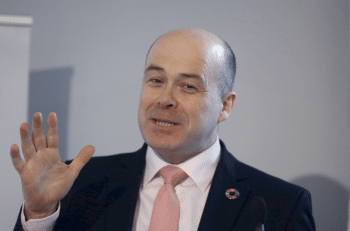
    Denis Naughten (45) was born in Drum, County Roscommon, site of the Meehambee Dolmen, a portal tomb estimated to be 5,500 years old, and educated at St Aloysius College, Athlone which closed last year, University College Dublin and University College Cork, where he did a PhD in Food Microbiology (impressively focused on extracellular polysaccharide – complex carbohydrates – production in lactic acid bacteria). Just as DeV was said to be one of only three people in the world who understood Relativity, Naughtenites allege he is driven by the scientific approach. He is married to Mary Tiernan and they have four children. In the New Year of 2017, Naughten was nearly killed while cycling with his wife along a road between Roscommon town and Fuerty when struck by a car, sustaining back injuries. Naughten’s father, Liam, was a Fine Gael TD (1982- 1987) and was Cathaoirleach of Seanad Eireann from 1995 to late 1996. Young Denis succeeded him following his tragic early death aged 52 in a car crash, at a by-election to Seanad Éireann in 1997 , making him the youngest ever senator. He has the ever-important keen interest in all sports and has played Gaelic football with Clann na nGael GAA club and held both county and provincial athletic titles with Moore AC. He was elected for the Longford–Roscommon constituency in the 1997 general election, aged just 24, and re-elected in 2002 when he and Simon Coveney were initially touted as the ace young guns who might replace the jaded Michael Noonan – before Big and wily Phil Hogan moved in to clear the path for Enda Kenny – with preferment promised. Within his first few weeks in the Dáil, he duly became Fine Gael Spokesperson on Youth Affairs, School Transport and Adult Education. This appears to be his level. He was re-elected at the 2007 general election for the new constituency of Roscommon–South Leitrim. In June 2010, he unwisely supported Richard Bruton’s leadership challenge to Enda Kenny, after he had been promised the deputy leadership in a Bruton shadow cabinet. Following Kenny’s victory in a motion of confidence, Naughten was not re-appointed to the front bench and there was bad blood between him and Kenny, perhaps partly because Kenny and Liam Naughten had been close. In October 2010, he was appointed as party Deputy Spokesperson on Health. He was a member of the Governing Council of the Association of European Parliamentarians with Africa which aims to strengthen parliamentary democracy in Africa and keep Africa high on the political agenda in Europe. He prevailed again at the 2011 general election. He voted against the Government in a motion to reverse cuts at Roscommon Hospital and lost the party whip. This parochial issue was the making of him; defined him. His party and constituency colleague Frank Feighan voted with the Government on the controversial issue, despite intense pressure from angry locals. The Government won the vote. On 13 September 2013, he and six other expellees formed the Reform Alliance, described as a “loose alliance” rather than a political party or “loose cannons”. The now largely forgotten grouping included TDs Lucinda Creighton, Billy Timmins, Terence Flanagan, and Peter Mathews as well as Senators Paul Bradford and Fidelma Healy-Eames who lost the whip over an abortion vote. In the run-up to the 2016 General Election Naughten told the Connacht Tribune he would be willing to prop-up a minority Government after the general election – as long as it maintained and invested in Portiuncula Hospital Ballinasloe and Roscommon Hospital, and local health services. He seems to draw his political tempo from his service on Roscommon County Council and the Western Health Board from January 1997 to October 2003. Any more profound political philosophy or vision of the common good has never crossed his lips. Naughten is really a rural populist, the Big Man, with a veneer of scientificism. His website is propelled by slogans like ‘Putting People First” and promises to “Get More Jobs to Cross The Shannon” and “Ensure That Every Child Leaving Primary School Can Read and Write”. Naughten was re-elected in 2016 and the numbers catapulted him to a ministry. The ambitious and crafty Naughten emerged as Minister for Communications, Climate Action and Environment in Enda Kenny’s Fine Gael/Independent minority government after two months of negotiation following the 2016 general election. He styles himself an Independent and has long dumped both Lucinda Creighton’s Reform Alliance and Shane Ross’s Independent Alliance. A year into his second government, Enda Kenny was asked if he would accept Minister Naughten back into Fine Gael. He said that was a matter for Naughten, and that he was doing a good job as an Independent Minister. He said: “How am I getting on with Denis Naughten? Great”. With Enda Kenny gone his rehabilitation is complete. So… time to see if the quiet man with the scientific bent is any good – playing, as they say, senior hurling. COMMUNICATIONS He has little interest in the communications brief, as it is of little value to his constituency. He has been almost invisible as minister for data protection – for Google and Facebook. The underpowered Data Protection Commissioner serves under the aegis of his department from an unimpressive office in Portarlington. Ireland took Facebook’s word for it that very few of the 87 million people compromised by Cambridge Analytica were Irish. He has, however, pushed for wider availability for high-speed broadband. Partly because viability has been undermined by Ireland’s unique fetish for one-off housing, Eir (successor to Eircom) pulled out of the bidding for the National Broadband Plan. Naughten was notably unable to get Eir, which owns much of the national phone infrastructure, to bid for the least attractive – farthest flung – next tranche of business, after it had delivered the most lucrative tranche to 300,000 houses in denser communities. Naughten may have been so reluctant to accept the logic of densifiying rural communities, anathema to his electorate, that he was blinded to its economic downsides. HIS MOST INFAMOUS OUTING IN HIS MEDIA

    Loading

    Read more

  • Posted in:

    ISIS in Ireland and France

    Not a season has passed since 2015 without a terrorist attack from ISIS or Al-Qaeda in France. Interventions in the Middle East, perceived discrimination against Arabs including ghettoisation and stringent or doctrinaire secularisation are the primary reasons for the attacks, though many have also been random, typically ‘franchised’ retrospectively from ISIS. Ireland is no model of racial tolerance and has not been generous in accepting refugees from conflicts in the Middle-East, including Syria. 1400 members of the Irish Defence Forces operate in Syria, Lebanon and Morocco on Peace Support Operations with the UN. Although Ireland has not participated in the war against terrorism in the Middle East, it is not impossible that one day it would suffer an attack. It is believed there are around 150 radicalised Muslims living in Ireland and that there are terrorists supporting ISIS financially from Ireland. For example, an electrician in his twenties named Hassan Bal was arrested in Waterford after confessing he had financed ISIS. He gave 400 in October 2015 in a city in Bosnia-Herzegovina to Stevo Maksimovic who was apparently supporting the terrorist group. Bal was jailed for 20 years. Last year, two men from Morocco and Algeria were arrested in Dublin suspected of assisting the financing of ISIS but the Garda didn’t have enough evidence to jail them and they were later released. It is understood the Garda Special Detective Unit was conducting several surveillance operations on people suspected of supporting terrorism in Ireland. Also in 2017, Humza Ali – a bricklayer from Birmingham – tried to travel to Syria via a Dublin-Istanbul flight. Turkey refused him entry. He went back to England where he had been before he had travelled to Ireland by boat and ferry. The man and one of his accomplices, Ali Akbar Zeb, had been sharing photos and videos on WhatsApp to promote the terrorist group. It is believed they were training for an attack. Last year, an Irish woman named ‘Sister Aaliya’, from Limerick who had become radicalised to Islam, claimed she had heard ISIS terrorists talking about running a 2.8m fund from Dublin. The men linked to this financing were planning a terrorist attack in the capital. Assistant Garda Commissioner Michael O’Sullivan revealed last month that the Garda has been ordered to use barriers on busy streets like Grafton Street in Dublin. He claimed to be worried about people coming back to Ireland after having travelled to Syria or Iraq in support of ISIS. Security specialist Dr Tom Clonan thinks terrorist attacks are possible in Ireland. He told Village that, according to the International Centre for the Study of Radicalisation in London, there were “40 Irish passport-holders who have gone to engage in jihad in the Middle-East”. The reason why Islamists do not attack on the soil of Ireland, he says, is because Muslims are integrated in this society. The Defence Forces are ready to deploy 500 soldiers if terrorists attack. However, civilians inevitably get killed before any police intervention. Even though France has long been on high alert, there are continuing fatalities. The state of Emergency declared there following the November 2015 Paris attacks only expired, after five extensions, in November 2017. In Ireland the state of emergency only expired after peace in Northern Ireland in 1995, and the Emergency Powers Act still allows internment, the juryless Special Criminal Court and draconian provisions for detention. However these are measures frmo a different era and with a different focus. It is believed our information technology and architecture; and our security and intelligence systems are over 20 years out of date. Two years ago, the association of Garda Sergeants said the Garda was not equipped or trained to deal with the terror threat here. The best way to avoid terrorism, according to Tom Clonan, is to stop interfering and bombing the Middle-East. “Muslims have been treated so badly since the invasions of Afghanistan and Iraq and the war in Syria. It is a major cause of radicalisation because people are suffering.” ISIS attacks are sadly frequent in France, the European focus for ISIS. 11 terrorist attacks, starting with Charlie Hebdo, have been committed since 2015 alone – resulting in 245 dead. 17 attacks have failed and 50 were foiled. 9 cases out of 11 targeted French police. Certainly Ireland has not been affected by terrorist attacks. However, the truth is that nobody knows the percentage chance that situation might change. After the murder of an Irish tourist in Tunisia three years ago, Tom Clonan thinks Ireland should have raised its terror threat level from Moderate to Substantial, the level before Severe and Critical. The 2017 Stockholm attack shows neutrality and non-interventionism are not definitive shields against attack, even if Ireland were not facilitating US troop and ordnance movements through Shannon. Clonan changed his mind after Stockholm: “Now terrorist attacks in Ireland are a distinct possibility”. Marianne Lecach

    Loading

    Read more

  • Posted in:

    Dublin’s North Inner City

    Dublin’s North City fell out of fashion after the flight of the future Duke of Leinster to Kildare St and the Act of Union. That’s more than two centuries ago and the journey back has been slow. It suffered shocking poverty over succeeding generations, the collapse of world-class mansions into tenements, dereliction, the flight of nearly all private residents and a drugs and crime epidemic. In the last twenty-five years it has been subjected to an inundation of third-rate private-sector apartments, the re- division of many old houses including the removal of period features and a pogrom of gang killings. It has also witnessed wholesale immigration and a degree of cultural diversity. It has a dramatic need for new apartments but the focus for new development in 2018 appears to be hotels and (high-quality if expensive) student housing, not – perhaps because standards are in flux – apartments. It seems likely a naïve Minister for Housing and Planning will indulge a reduction in building-height standards that may compromise perhaps the area’s principal attraction, its historic human scale. CONSERVATION The focus of this piece is on one small new pattern of development: some exciting conservation projects. ORMOND QUAY The construction of Ormond Quay Upper and Lower – named after James Butler, 1st Duke of Ormonde – began during the 1670s with the development of the former lands of St. Mary’s Abbey by Sir Humphrey Jervis, and with the setting out of a formal quay-line and carriageway as part of the Corporation’s grant of substantial lands to Jonathan Amory in 1675. These developments were facilitated by the construction of two bridges under the auspices of Jervis linking the walled medieval city with the new north-side suburbs: Essex Bridge (now Grattan Bridge), erected in the late 1670s, and Ormond Bridge (now O’Donovan Rossa Bridge), completed by 1684. The speculative development of the quay front soon followed, with the lands of Ormond Quay Upper developed as a fashionable residential parade with associated commercial uses under the freehold of Lord Santry, Henry Barry.   1-1A ORMOND QUAY LOWER The house on the corner of Capel Street and Lower Ormond Quay is most famous from its appearance on a late-18th-century Malton print (the ones you find on greasy place mats and on bathroom walls in Dublin 6) with a view across the river to the then Custom House where the Clarence Hotel now stands. It’s been derelict for twenty years since it served as offices for a solicitors firm fronted by Liam Cosgrave Junior who was disgraced after unedifying information about planning corruption emerged in the planning tribunal. It comprises an existing four-storey over basement protected structure with four bays and two shopfronts facing Ormond Quay and two bays with one shopfront facing Capel Street. The shopfronts are shuttered and now messy. There was previously a fast food restaurant at street level. The façade of the building is rendered and in a poor state of repair; however, there are interesting features including arched windows at first-floor level and corner quoins. Permission has been granted for development comprising conservation and a change of use at first, second and third floor levels from commercial occupancy to use as short-term-lease guest suites and change of use of the ground floor and basement to restaurant/cafe use, supervised by James Kelly of Kelly and Cogan Architects. Indeed it might be argued that in view of the strategic significance of the site, facing the overblown Temple Bar, in effect an ambassador for the North Side, public uses – pub or restaurant – might have been suitable for the entire building. The site of No 1 Capel Street was originally occupied by a larger house, which also occupied part of neighbouring plots. The exact age of the building is unclear but it is shown on a map dating from 1784, and also on a 1795 image by James Malton. The building was used as the state lottery office before 1800 and was then in a variety of uses including draper, feather merchant, stationer, bookseller and bookbinder in addition to briefly accommodating solicitors’ offices. By the mid-19th-century the building had been stucco-finished, with quoin detailing and decorative moulding added. The facade to the quays was partly blank but included an arched window at street level. During the Civil War in 1922 the façade and shopfront of the building were damaged. A new shopfront was then provided on the façade to Ormond Quay, which was divided into two parts and included a new entrance lobby onto the quays, though access to the building was, and remains, tricky with narrow pavement on two sides and a torrent of parking-free traffic down the quays. By the late 20th century the retail/commercial unit at ground floor level had been subdivided. It is stated that the building has been largely unaltered since the late eighteenth century, with the exception of the alterations to the shopfront and the plastering over the original brick façade. Original fabric, including the gothic rounded headed windows to Capel Street and the quays, survives, as do internal joinery works including architraves, staircase and doors. The building retains its commercial character, while the original plan form is substantially intact. 18 UPPER ORMOND QUAY On Upper Ormond Quay, to the South of the area, the Dublin Civic Trust is leading a project to restore an interconnected pair of riverfront merchant buildings. – the quayside house dates to 1842-43 and the rear building to the 1760s. The four-storey over basement house includes a rare arcaded Georgian shopfront composed from cut granite of, depending on who you listen to, a date of 1789 or around 1810. This is the most challenging and transformative building project the under-celebrated Trust has embarked on since its foundation in 1992 and is one of the most significant initiatives of its kind in Ireland. Both buildings require extensive structural stabilisation and careful conservation of fabric. The project will restore residential use to the upper floors and traditional shop use below. Number 18 started life as a river-fronting

    Loading

    Read more

  • Posted in:

    Russell, O Laoire and the Whitestown scandal

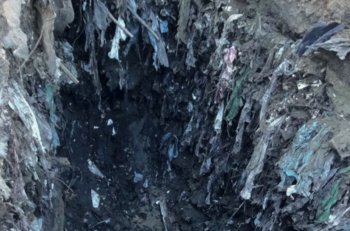
    When hazardous hospital waste was found in an illegal landfill at Whitestown, Co Wicklow Irish institutions and agencies were shocked. This wasn’t the usual domestic dumper avoiding charges of €1100 a tonne or a local authority dumping old road materials. The average cost of disposing of medical waste in 1998 was €11,480 a tonne. Clearly someone wanted to avoid such payments. The €40,000,000 bill handed to Wicklow County Council and, by default, Irish society that was explained in the February issue of Village puts the delinquency of those trying to avoid the disposal costs in perspective. Lest we forget the enormity of this case, which Judge Richard Humphreys described as centring on perhaps the largest illegal land ll in the history of the State, medical hazardous waste was found strewn in multi-tonnage amounts in initial examinations of the land ll. The World Health Organisation cites such illegally disposed waste as being responsible for 40% of hepatitis cases and 12% of HIV cases worldwide. The court case was primarily focused on the potential for pollution of water but those involved in the transporting waste to the site were also at high risk. The Judge and counsel bantered about Chicago in the 1930s and the Sopranos giving a avour of the waste-industry impropriety and corruption that figured in the case. Two of the individuals central to that case, Ireland’s Jarndyce v Jarndyce, that has lasted 16 years already, are Professor Ronnie Russell and Retired Commandant Donal O Laoire. The men have a business relationship through a range of associated directorships and companies that spans nearly 30 years to the present day. As O Laoire Russell Associates since 2001 and EMA International before that, they list clients including the World Bank, UNIDO, the European Commission and many Irish government, industry and regulatory authorities. With a PhD in Immunology from Glasgow University (1973-76), Professor Ronnie Russell is described on his own Linkedin page in terms that command respect: Adjunct Associate Professor TCD (1976 to present), Chairman HSE Decontamination Advisory Committee (2007-present), Vice-Chair of the Environmental Education Unit of An Taisce (which runs Ireland’s Green Schools, Blue Flags and other environmental programmes, 2015-present) and the technical representative for the disarmament section of the Department of Foreign Affairs at the UN in Geneva (1994-present) in which role he Chaired the EU Bioweapons Disarmament Expert Committee during Irish EU Presidencies. An RAF reconnaissance liaison and trainee Concorde pilot while studying for his Ph.D, he probably had a lot to complement the distinguished military experience of Donal O’Laoire whose profile on the CEMS website describes a professional career background in the Irish Defence Forces: Donal O Laoire has practised as an independent consultant in Ireland, EU, Eastern Europe, North Africa and Asia for almost 20 years, and is a graduate and post-graduate of Trinity College Dublin. Working with agencies of the United Nations, he has designed and project-managed large-scale environmental projects including land decontamination and remediation in several countries. In some biographies he de nes a lecturing role at TCD. This pair constitutes a formidable galaxy of knowledge, influence and contacts. What is here relevant is their involvement with one of the companies listed as having possibly contributed waste to the illegal land ll in the first place, Eco-Safe Systems Limited. Russell and O Laoire were two of the initial directors in Eco-safe Systems Ltd and both were shareholders. The implication of this company went unchallenged at all stages and was accepted by the High Court last year. Eco-Safe Systems Ltd had become the only company granted an Environmental Protection Agency (EPA) permit to dispose of treated hazardous hospital waste legally – in a, designated, Irish land ll. The compelling, frightening image of this land ll was graphically depicted in court by Professor Ronnie Russell. On 14 July 2005 he swore a lengthy affidavit about his examination of the site. His first paragraph included the following: “The items tested included bandages and dressings, cannulas, hypodermic needles and syringes. Many of these proved strongly positive for the presence of blood indicating a contaminated state. Furthermore, intravenous lines, assorted plastic tubings, sample containers and other clinical materials showed no evidence of having been autoclaved (having been subjected to high temperature sterilisation treatment) as would be appropriate for such material before being discarded”. O Laoire in his affidavit stated: “During this initial inspection I observed gas bubbling through waste puddles on the surface. Parts of surgical gloves were observed on the surface. All these parts of gloves seemed to have been systematically cut or shredded. Further examination of the surface revealed small amounts of broken glass, shredded tin cans, and medical equipment such as masks, syringes, surgical gloves and theatre gowns at surface level”. Other engineers and consultants also swore lengthy affidavits in July 2005 as to what was on site, including hospital waste. In other words, Wicklow County Council may have unwittingly invited two of the founding directors of that highly innovative new medical-waste-disposal company to forensically investigate the scene of a crime where waste from that company might have been illegally brought. There are ways that this could happen without the knowledge of company principals but the looming ethics question is why they did not bring this to the immediate attention of the Garda leading the Criminal Investigation. If they had, the excellent insurance coverage Eco-Safe Systems Ltd had in place as a prerequisite to being awarded the EPA waste licence permit 54-01 could have covered 15m for each of the ndings of illegal medical waste which might have paid for the entire subsequent clean-up of the whole site before the problem was exacerbated by the botched remediation. There is no legal time-limit on hospital waste generator obligations for proper disposal. They could also have met a medical duty of care to the workers who may unwittingly have been exposed to hazardous material and now perhaps even be suffering mystery illnesses of unknown origin. The “botched remediation” effectively blended all categories of waste on the site together leaving a

    Loading

    Read more

  • Posted in:

    Wild geese

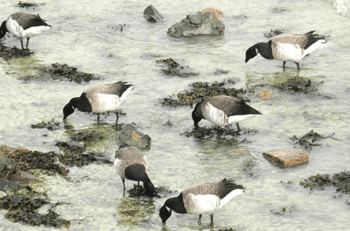
    In April An Bord Pleanála surprisingly granted permission to Crekav Trading for 104 houses and 432 apartments on playing fields east of St Paul’s College on Sybil Hill Road in Raheny, despite receiving more than 1,000 objections, and a recommendation for refusal from Dublin City Council. The site was originally part of the St Anne’s estate, the home of the Guinness brewing family on which Lord Ardilaun forged a magnificent Palazzo out of the original seventeenth century house. According to Dublin City Council’s Parks Division, St Paul’s is the most important ex-situ (ie outside of the North Bull Island) feeding site for Brent Geese in Dublin, based on numbers (a large majority of the Dublin population feed at this site), regularity of use, geographical location in relation to North Bull Island, size, and the relative lack of disturbance. The Brent Geese on the North Bull Island Special Protection Area are now largely reliant on the availability of inland feeding grounds, like St Paul’s. These lands are not designated but are nonetheless protected under habitats legislation. The only exception whereby development might be deemed to be compliant with this protection would be in exceptional cases where there is overriding public interest, and even then, only when no feasible alternative for the development has been demonstrated, and compensatory measures to offset the ecological damage are implemented. There is no suggestion that these exceptional circumstances and compensatory measures are to be found in the case of this development. Development on feeding areas forces the geese to travel greater distances to feed and potentially brings them into conflict with agricultural interests feeding on winter cereal crops. This results in greater expenditure of energy which affects the condition of the birds and their ability to complete the annual migration to their breeding grounds. The cumulative effects of this residential development proposal alongside existing impacts on geese arising from other already permitted developments which have removed some of their feeding sites, should have been assessed by An Bord Pleanála. In addition it should have considered whether adequate feeding areas will be left for Brent Geese after these developments are complet and whether any such areas are zoned appropriately in the Dublin City Development Plan. An Bord Pleanála is obliged to comply with European law on these issues . In considering the proposal, An Bord Pleanála’s inspector noted that the extent of potentially suitable feeding areas for the geese within Dublin city is finite and that the currently recognised feeding sites that are considered to be an alternative to the lands at St Paul’s may currently be experiencing pressures, including recreational disturbances, that may limit their capacity to accommodate the loss likely to occur as a result of the proposed development. Not withstanding this concern by its inspector, the planning board went on to grant consent for the development at the St Paul’s site. Of course Bord Pleanála decisions are formulaic and legalistic but we can take some indirect insight into its possible thinking from the reasoning in the report of its inspector whose conclusion it adopted: “The numbers of inland feeding areas are relatively significant, the geese appear to be thriving based on their increasing populations and I consider that the loss of this site as a feeding ground will not adversely impact on the conservation objectives of any of the five designated sites. In light of this assessment, I am of the opinion that there is capacity for the existing ex-situ inland feeding areas to absorb the loss of St Paul’s and I consider it reasonable to conclude on the basis of the information on the file, which I consider adequate in order to carry out a Stage 2 Appropriate Assessment, that the proposed development, individually or in combination with other plans or projects would not adversely affect the integrity of the five relevant European sites, in view of their Conservation Objectives”. However, whether this reasoning meets the requirements of European law and related case law remains to be seen. Bord Pleanála is under political pressure to approve housing schemes, in a housing crisis and the government is infamously unconcerned with environmental and planning niceties. In particular, for instance. The lack of certainty around the capacity of alternative sites to absorb geese displaced from the St Paul’s site may be problematic. Dublin City Council had eloquently warned in its submissions to An Bord Pleanála that the suggested capacity of alternative sites to accommodate the displaced geese is questionable and may not be achievable. The St Paul’s site is one of the top eight inland feeding sites for Brent geese. Accordingly, Bird-Watch Ireland and the Irish Brent Goose Research Group commented in their submission to An Bord Pleanála on this application: “We conclude that is an unacceptably high proportion of the population to be expected to be displaced to and absorbed within the existing network of sites and not in keeping with the conservation objectives of adjacent European protected sites” and furthermore that: “To suggest that these birds are flexible and will simply move elsewhere is simplistic and is especially weak given the recent pattern of development (all representing habitat loss) in the area”. The application was made under the new Strategic Housing Development ‘fast track’ planning system. This allows applications for schemes of more than 100 homes to be made directly to An Bord Pleanála, bypassing the local authority decision phase and excluding the possibility of an appeal. This leaves judicial review as the only course of action for those aggrieved by the planning consent. A miffed Dublin City Council, which turned down a less intrusive application for an associated application for sports facilities on a site at St Paul’s adjoining this one (on grounds of impacts to Brent geese) is hostile to the decision. City Manager Owen Keegan told the Council: “My recommendation, based on planning advice, was the board should not have granted this”. He obtained, presumably suitably conservative, legal advice that it did not have “locus standing” or legal standing to take

    Loading

    Read more