General

Random entry RSS

  • Posted in:

    SF won’t prop up FF, FG or Labour

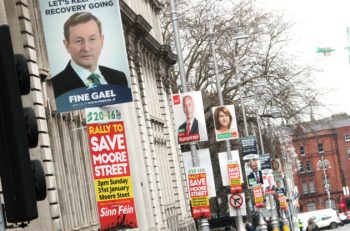
    The recent General Election was a very good one for Sinn Féin. We increased our number of TDs from 14 to 23. That’s a 65% increase – a success by any standards. Importantly, Sinn Féin also further increased the geographical spread of the party. There are now very few regions in the State in which there isn’t Sinn Féin Dáil representation. There is also in place, another whole raft of Sinn Féin representatives who, although not returned at this election are very likely to be elected next time around if they continue with the valuable work they are doing. So, Sinn Féin returns to the Dáil, not just with a significantly larger team but also with a team of very high-calibre TDs, including more women and more younger representatives. Sinn Féin had two clear objectives going into the election. The first was to get rid of a Fine Gael/Labour government that has brought chaos to housing and health, imposed unfair taxes and promoted mass emigration. We succeeded in that. In the early days of the election campaign we holed the coalition’s strategy below the waterline by proving that their figures were wrong and that they presented €2 billion which they did not have. I think we were also successful in demonstrating that you cannot have US-style taxes and at the same time invest in decent public services.Our other objective was to prove to people that there is a realistic, credible political alternative of which we are a significant part. That is very much a work in progress. We may not have succeeded, at this point, in getting enough seats to form a progressive Government but that will improve as we go on. But the realignment of politics in this State took an important step forward in this election and the next election will see that trend intensify. The political domination of Fine Gael and Fianna Fáil is finished. What we now need to do is increase the cohesion among those who advocate an alternative view of how the economy and society should be organised. Over the past five years, Sinn Féin has been the genuine voice of opposition in Leinster House, offering an alternative to the dreadful austerity policies of Fine Gael, Labour and Fianna Fáil. All of Sinn Féin’s pre-Budget submissions demonstrated a way of ensuring economic growth while also being socially equitable and protecting the vulnerable. We repeatedly warned the Government of the escalating homelessness crisis. The Government refused to listen and it became an emergency. We also consistently raised the issue of all-Ireland integration and the political, economic and social case for a united Ireland. Sinn Féin has now received an enhanced mandate to continue with that work. The post-election sham fight between Fine Gael and Fianna Fáil is nothing to do with the real issues affecting citizens. The people who were homeless last Friday will remain homeless under Fine Gael and Fianna Fáil. Patients will still languish on trolleys in our hospitals under Fine Gael and Fianna Fáil because those parties are not serious about resolving these issues. Going into this election Fianna Fáil picked up on a sense that voters were moving to the left, so they began to steal the phrases Sinn Féin was using about fairness and a recovery for all. That strategy resulted in a partial recovery of the Fianna Fáil vote itself but still left it far, far short, in his-torical terms, of where it once stood. Throughout the election campaign, Sinn Féin made it clear that we would not prop up those parties that created and sustained the economic and social crisis facing our people. That is the mandate we received and we will not break our commitments. Sinn Féin will continue to consult with others, including those aligned to the Right2Change platform, on the way forward. If not in the immediate period ahead, the objective of a genuinely progressive alternative Government in which Sinn Féin plays a lead role is a live possibility. Over 400,000 people voted for candidates aligned to the Right2Change platform to end water charges. The Fine Gael/Labour Government has been defeated and water charges should leave the stage with them. What is now clear from the election is that people voted for real change and a more equal society. Sinn Féin is committed to achieving that and to pursuing and preparing for the peaceful reunification of Ireland and the reconciliation of all our people. Whether in Government or in opposition, Sinn Féin will stick by the mandate we have been given. Gerry Adams Gerry Adams TD is President of Sinn Féin

    Loading

    Read more

  • Posted in:

    Unruly

    What is meant by the Rule of Law and is such a concept honoured in Ireland today? I believe that the rule of law though arguably an unqualified good is not being adhered to in this state save mostly by the judiciary and that the legal system and erratic observance of legality by state officials renders our democracy fragile. In my view Ireland draws close to that amorphous notion, a failed state that cannot in reality uphold the rule of law. This opinion piece will not be a comprehensive pathology but will point out many of the salient practical features which show how the rule of law is breaking down. The Rule of Law: Theoretical Incoherence? We first need to probe the many senses in which the rule of law is described. Joseph Raz, a legal positivist who believes in “perfectionist liberalism” has suggested that the rule of law is merely a kind of shorthand description of the positive aspects of any given political system. From a different vantage point the fundamentalist Christian legal philosopher John Finnis considers that the rule of law is: “[t]he name commonly given to the state of affairs in which a legal system is legally in good shape”. Another philosopher Brian Tamanaha chimes to negative effect that the rule of law is “an exceedingly elusive notion” which leads to “rampant divergence of understandings” and is similar to the amorphous concept of Good in that “everyone is for it, but has contrasting convictions about what it is”. At bottom, there is no consensus: it is elusive at best: a form of smokescreen or professional hypocrisy at worst. But let us endeavour to be constructive. For example Carothers, though sceptical, adds a worthwhile positive definition of the rule of law as: “a system in which the laws are public knowledge, are clear in meaning, and apply equally to everyone. They enshrine and uphold the political and civil liberties that have gained status as universal human rights over the last half-century. In particular, anyone accused of a crime has the right to a fair, prompt hearing and is presumed innocent until proved guilty. The central institutions of the legal system, including courts, prosecutors, and police, are reasonably fair, competent, and efficient. Judges are impartial and independent, not subject to political influence or manipulation. Perhaps most important, the government is embedded in a comprehensive legal framework, its officials accept that the law will be applied to their own conduct, and the government seeks to be law-abiding”. Now let us stress-test certain aspects of this detailed expurgation against the patient – in this context Ireland Inc. Yes of course rights exist in our still fine, if shopworn, constitutional matrix and are enforced by the courts in many instances but there is also an undue deference to the executive that has led to the non-enforcement of social and economic rights particularly the right to housing by the courts. There is an excess of judicial caution on other rights-based claims, particularly where issues of financial iniquity and the countervailing amorphous blob, public policy, are implicated. There is also widespread violation of privacy by the state and its police force, in particular. The overly sanguine way we as a nation have accepted, in effect, what has been police and state criminality with respect to privacy for the last thirty years without widespread outcry is baffling. At least there are signals of an upsurge in civil disobedience, which when peaceful, as Habermas, the German sociologist of critical theory and pragmatist, would contend, leads to a vitalisation of democracy. Not here. Further, the scandal that is our banking structures, the disgrace of the banks varying interest-rate repayments in breach of agreements, the sometimes unconscionable evictions, are not conterminous with the rule of law. NAMA is a mess formulated by the neoliberal club which did its best to avoid a proper new deal for the Irish people. The banking inquiry was a poorly performed French farce. What is desperately needed is a right to housing. Eviction should be rare, require rehousing, and should only follow meaningful intervention by an arbitrator who can determine whether the consumer can repay and whether the bank – with or without the enlistment of a vulture fund – is bundling the mortgage at a bargain-basement rate to private-law profiteers. Further, many of our state institutions have major structural problems. The Garda are not progressive in training and intent: they do not seek justice or the truth, but rather a result. They, at times spin, embellish or at worst, manufacture evidence – and, to be candid, at times act criminally and in violation of the rule of law. Finally, there are limited independent checks and far too close a nexus between politicians and the police. The recent moving of the deckchairs by the Garda Commissioner will not change the culture or training of the force, its group think or, arguably, its competence. It needs a radical ovehaul and a redirection so primarily promotes truth- seeking, investigative process. The impartiality and independence of our judiciary needs at times to be severely questioned because there is far too close a nexus between politics and judicial appointments. Though most are appointed on merit, many of our judges are appointed for their proximity to political parties. Further, some judges have an aggrandised sense of themselves: certainly they are not servants of the state as that is not a judicial function, but rather, they are the servants of the constitution which is a bulwark to protect the people against state excess. Judges also need, in the interest of public confidence as to their impartiality, to declare their share-holdings and indebtedness to the banks. Moreover, parts of the government left itself open to the accusation, during the bugging crisis, that it was also mired in corruption. In the strictest sense it observed the rule of law but, in manner, it laid itself open to the criticism levelled elsewhere by the late great Christopher Hitchens of being crypto-fascist, pursuing a

    Loading

    Read more

  • Posted in:

    Independent Living

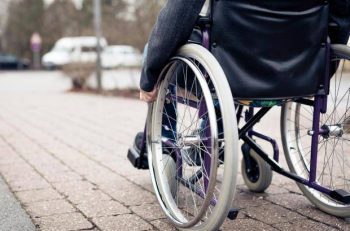
    2016 marks another anniversary, the 20th anniversary of a ‘Strategy for Equality’. This was the report of the Commission on the Status of People with Disabilities. Their task was to establish what life was like for people with disabilities in Ireland and to prepare a roadmap to equality for people with disabilities. Before deciding on the appropriateness of any celebrations, it is timely to ask a question: has Ireland become more equal for people with disabilities? The Commission took what it described at the time as “the unusual step” of consulting with people about their ‘lived’ experiences. It reported that people with disabilities experienced outdated social and economic policies and public attitudes, and pointed to “justifiable anger” felt by people with disabilities and their families. In the intervening years a multitude of laws and policies have been introduced but the question remains. Let me state it again: has Ireland become more equal for people with disabilities? A cursory look at the Strategy and subsequent developments would suggest that quite a lot has been achieved on many of its recommendations. A National Disability Authority (NDA) has been established, a Disability Act was passed into law, a National Advocacy Service was established, and a swathe of legislation was brought into force on equality, assisted decision-making and education. However, if you dig a little deeper, there is a different story to be told. Most of these measures were poorly thought out or half-implemented. The Disability Act 2005 created little by way of the rights-based legislation envisaged. Instead it provided a basic right to a person with disabilities to an assessment of need. However, no rights to services follow on from that assessment. Even this limited ‘right’ to an assessment has been only partly commenced and currently just caters for children. The Strategy envisaged an independent advocate for people with disabilities. In 2007 the Citizens Information Act was passed. This provided for “Personal Advocates” with statutory and wide-ranging powers. Four years later a limited non-statutory service called the National Advocacy Service was commenced. A total of 35 advocates operate across a country where there are an estimated 600,000 people with disabilities. The Education for People with Special Educational Needs Act 2004 has been stalled indefinitely. This means that children in mainstream schools struggle to get educational supports. Successive Governments have failed to address the issue of the cost of disability. Many of the manifestos for the recent election used the term “cost of disability” to describe plans to give people an extra ten euro on their welfare payment. This is a regrettable approach. Cost of Disability demands than an increase in welfare payments. It requires a genuine recognition that having a disability can be expensive and moving to alleviate that additional expense. The Strategy recommended that the Department of Environment develop a policy with “the right of people with disabilities to live as independently as possible” as its aim. In 2011 the ‘Congregated Settings’ report was published by the HSE, the agency responsible for care services. This was premised on moving people with disabilities back into the community. Progress on this ambition has been unacceptably poor. The Fine Gael manifesto for the recent election includes a target for 1/3 of residents to move back into the community by 2021, three years after the initial deadline for moving all residents. This is an acknowledgement that the policy has failed and that a generation of people will probably die in institutions. The Strategy stated that ful lment through relationships and sexuality is a basic right. Since 1993, the criminal law has cast a legal shadow over sex and people with disabilities, particularly those with intellectual disabilities or mental illness. The law has provided an easy excuse to opt-out of providing sex education that would strengthen their ability to protect themselves and possibly open the door to a ful-filling, intimate relationship. This is a bleak landscape, but it’s not all negative. We are beginning to win the ideological battle. Concepts of person-centredness, independent living and autonomy are creeping into the parlance of the body politic. The battle now must be to get our partially commenced legislation fully implemented. This will involve resources in many cases and a change in culture in others. Any marking of this 20th anniversary of the ‘Strategy for Equality’ must reflect that not much has changed and must pose the challenge to find the political will for equality. We have all the tools at our disposal. Sarah Lennon Sarah Lennon is Training and Development Of cer with Inclusion Ireland

    Loading

    Read more

  • Posted in:

    Voguish Commissioning

    Government plans to introduce “commissioning” as the means to deliver social, human and community-based services now threaten both the Community and Voluntary Sector and the effective delivery of essential social and community-based services. The Departments of Health, of Children and Youth Affairs, and of Environment, Community and Local Government are now moving to a commissioning model to deliver services. Traditionally they had been funded through block grants to Community and Voluntary Sector organisations. Commissioning is commonly understood as a strategic planning process that links resource allocation with assessed current and future needs, to achieve better outcomes for citizens and service users. The 2011 Programme for Government had the catchier definition: “Choice and Voice” for service users. The assumption of the coalition Government was that the marketisation of social and community-based services will benefit service users and communities. However, we have evidence from the UK, where public services have been privatised for many decades, that the commodi cation of social and community-based services has generated adverse impacts. It has resulted in a shift to one-size-fits-all models of delivery. Its focus is on cost-per-unit to be minimised, regardless of the outcomes for different groups. This ends up in a so-called ‘cherry-picking’ of participants most likely to achieve positive outcomes. As a result, the more marginalised communities and individuals with complex needs are excluded. The impetus driving the move to Commissioning model has been set out in various Government briefings. It includes the desire to link service development and delivery to assessed need and outcomes. It is focused on reducing costs and ensuring value-for-money. This assumes that Community and Voluntary Sector service providers are not already out-comes-focused or allocating resources on the basis of need. This, however, has never been comprehensively assessed by the relevant Departments or State agencies. It assumes that the current model of grant funding to Community and Voluntary Sector organisations is not delivering value-for-money. ‘Value-for-money’ is a contested term. It is all too often reduced to a simplistic cost- benefit equation, rather than being based on an assessment of outcomes for diverse communities and groups. This would take account of, and prefer, the added social value that accrues to individuals and communities as a result of how Community and Voluntary Sector services are delivered. The Government’s own review that examined the evidence for moving to commissioning would suggest it is fraught with risk. This review found: “limited evidence to date that commissioning approaches result in better outcomes” for service users; “a weak evidence base for commissioning as a strategic planning and resource allocation tool”; and the cost of the commissioning process could be extremely high to the commissioning Departments and State bodies. A House of Commons Report has found that almost 14% of the NHS budget was being spent on its commissioning infrastructure, for example. It is a significant undertaking to execute commissioning properly. This is underscored several times in the Government’s own review. The elements in the commissioning process of identifying needs, setting outcomes, and measuring impact all require significant national and regional infrastructure. Comprehensive national, regional and local data, and robust tools to capture the specific needs of different groups and communities are required to assess the social and community service needs of communities across the country. There is a significant absence of such data and tools currently. Until this is rectified it is difficult to envisage how comprehensive needs – assessments can be carried out. The Government’s review noted that expert knowledge and technical skills would be required in commissioning Departments and State agencies. This would include: expertise in needs analysis and service user engagement; robust data information and management systems; expertise in contracting and procurement; and expertise in evaluation. It is not credible that such resources will be found in the Department of Environment, Community and Local Government, to say nothing about the already hugely over-stretched and under-resourced Departments of Health and of Children and Youth Affairs. This lack of infrastructure leads to a very real risk that the costlier, more complex elements of the commissioning process will be dropped. Instead the focus will merely centre on reducing cost and increasing the marketisation of services, regardless of outcome. The Government needs to heed the warnings in its own report, because it will be impossible, under competition law, to revert back to grant-based funding once services have been opened up to competitive tendering processes as part of this proposed commissioning model. There is an urgent case to now press the pause button on this fashionable but insidious and dangerous process. Rachel Mullen

    Loading

    Read more

  • Posted in:

    A programme for government to be proud of

    The next Programme for Government must make choices in favour of those who have the least and have been hit the hardest by austerity. This requires not just a commitment to guaranteeing the rights and welfare of the most vulnerable in society, but also a focus on the values needed in building a strong and cohesive society. The Community Platform, a network of 29 national networks and organisations working to address poverty, social exclusion, and inequality, has proposed that the first, fundamental step must be to adopt values of economic and social justice, social inclusion, human rights, equality, participation, and sustainability. Vote for stability (and progress). These were the main slogans of the outgoing Government parties in fighting the election. It is hard to see either in the wake of austerity and the devastating cuts to our communities and the community sector. Spiralling homelessness and inadequate housing, the health crisis and the collapse of the vision of universal healthcare in the community, low-paid and insecure work, the lack of provision of safe Traveller accommodation and child poverty are shocking indicators of failed governance. This was brought into stark focus by the tragic deaths of ten Travellers, including five children, at a temporary halting site in Carrickmines; the mother with her three young children living and sleeping in a car in Tallaght; the state-sanctioned poverty of children growing up in direct provision; cuts to medical cards for children with life-threatening diseases; the 91-year-old man waiting 29 hours on a trolley in Accident and Emergency; and the father of two living on the minimum wage and crying as he did not know how to feed his children. This is certainly not progress. Ensuring progress requires a paradigm shift in the way we organise our economy and redistribute wealth. A commitment to a progressive and equitable tax system is key and should provide the bedrock in a Programme for Government. This should be the starting point in a move away from a low tax, low pay, and low public investment-economy. We want a country run for its people not for its economy. Develop a progressive tax regime Ensure a tax take as percentage of GDP of between 40% and 45%. Increase the income-tax rate for high earners. Introduce a wealth tax on all assets for high earners. Increase Capital Gains Tax and Capital Acquisitions Tax. Introduce a Financial Transactions Tax. Introduce a refundable tax credit system for people on low incomes. The lack of investment in public services undermines our society’s ability to ensure those with the least have access to essential, tailored supports and services. While the erosion of public services affects all in Irish society, it disproportionally undermines the lives of the most vulnerable. The renewal of public services can ow from a progressive and equitable tax regime and should be the second core element in a Programme for Government. Renew public services Increase investment in public services to ensure they are adequate to meet needs of society. Implement a health and social-care strategy to provide services and supports to enable people to live independently for as long as possible in their own homes. Provide access to more intensive learning options for adults with literacy or numeracy needs and low or no qualifications. Increase publicly-subsidised, comprehensive, and affordable early-years and after-school care infrastructure along with training, living wages and quality conditions for childcare staff. Ireland is now one of the most unequal countries in the EU in terms of income and wealth, yet we have one of the highest GDPs per capita. Inequality erodes trust and social solidarity. It is not an accident of fate. It is shaped and influenced by our political systems and institutions. Building a society with equality at its heart is good for everyone. Evidence shows that more equal societies do better in every sphere of life and that people are healthier and happier. This is not a utopian vision, equality is a conscious choice. The great strides that have been made for LGBT rights demonstrate this. Equality can be brought about through political commitment to rights and justice. Ensuring an adequate income through making work pay, tackling the gender pay gap and providing adequate social protection to have a minimum essential standard of living are critical to achieving equality and need to be a core element of the Programme for Government. The introduction of poverty-proofing in public expenditure and taxation – to ensure economic choices do not adversely affect women, minority and other vulnerable groups – is also critical in the Programme for Government. Ensure income equality and social inclusion  Ensure that a living wage is paid in all sectors. Increase all basic social welfare levels to the level of the Minimum Essential Standard of Living. Restore full social welfare payments to those under 26 years. Reverse the reduction in the income disregard for lone parents on One-Parent Family Payment. Implement the pay transparency initiatives recommended by the European Commission to reduce the gender pay gap. Provide adequate pensions and secondary income supports to all people in later life. Ensure adequate provision for the additional cost of disability calculated for people with disability. Promoting and supporting decent work and providing quality education and training to unemployed people and those alienated from the labour market will be an important political stimulus for greater equality. These need to be centre stage in the Programme for Government. Create decent work for all Develop a person-centred Public Employment Service. Fully implement the right to collective bargaining. Reinforce the instruments and institutions for the protection and enforcement of employment standards. Introduce further measures to tackle insecure contracts and precarious working conditions. Use public-procurement tenders to ensure successful tenderers implement quality-employment standards. Advance social justice Implement a National Action Plan for Social Inclusion based on the right to an adequate standard of living. Create affordability and certainty in housing and increase access to social housing. Invest in Traveller-specific accommodation. Increase resources to tackle homelessness. Increase rent supplement levels to match market rent levels

    Loading

    Read more

  • Posted in:

    Protect!

    The new Minister for Social Protection will face a number of significant challenges. She has to deal comprehensively with the damage of the immediate past, while expediting long overdue reforms, and at the same time stay on top of new welfare challenges associated with changing forms of family, employment patterns, demographic trends: all betrayed by pervasive inequalities. The UN has provided some valuable guidance for the new Minister – in the Concluding Observations of the United Nations Committee on Economic, Social and Cultural Rights on the third periodic report of Ireland about implementation of the International Covenant on Economic, Social and Cultural Rights of June 2015. The Committee strongly advised that austerity policies should only be temporary and only cover the period of the crisis. They recommended that Ireland restore pre-crisis levels of social protection. They stated that Ireland must strengthen policy capacity with a disaggregated data strategy and adequate rights and equality-proofing mechanisms. Five key priorities for the new Minister for Social Protection are suggested: Redressing the impact of austerity cuts on children at risk of poverty, young people under 26, and lone parents. These groups suffered serious collateral damage from austerity budgets that failed to protect the vulnerable; Reversing reductions in welfare payments that left recipients below the poverty line; Tackling long-term unemployment in a manner that promotes inclusion in the labour market for all those who want employment, including people with disabilities, and all women; Ensuring the contribution of social welfare payments to the growing crisis in family homelessness. Changing the male breadwinner model and responding to new forms of family diversity.  The universal Child Benefit was reduced over a number of austerity budgets from €166 per month in 2010 to €130 pm in 2013, with additional cuts to the higher payments for the 3rd + child. This payment was increased by €5 over budgets 2015 and 2016 and is now €140. The combined impact of these cuts and parental unemployment means child poverty doubled over the crisis period. Social-welfare-dependent single families with children suffered cumulative cuts over the crisis. The number of jobless households with children also burgeoned. Tackling child poverty is far more complex than simply restoring child benefit to its pre-crisis level. The new Minister must take seriously the advice offered by the National Economic and Social Council (NESC0 and by various commissions and expert groups. A tiered and better targeted child-income-support system is a prerequisite for efficiently tackling child poverty but avoiding unnecessary unemployment and poverty traps. Austerity disproportionately damaged the young. Its mechanisms included emigration, deterioration in the quality of employment and severe social welfare cuts – with job-seekers’ allowance reduced by more than half for those under 25 (from €204 to €100). Many young people have emigrated to avoid not only poverty and unemployment but also low-quality employment and underemployment; others remain trapped in the parental home unable to afford the transition to independent adult life or to move to larger urban centres to seek employment. An immediate priority is resolving the situation of the 600 young people who, unable to sustain residential tenancies on such an inadequate income, are left dependant on emergency homeless services. The new Minister should revisit the previous Minister’s overzealous cuts to lone parents’ income disregards, and the decision to compel lone parents, once their youngest child is 14 years old, to work full-time. It is clear that this policy is not conducive to the wellbeing of parents or children. Various creative alternative reform proposals have been offered to promote a more positive reform agenda capable of addressing poverty and respecting parents’ choices for reconciling care work and paid employment. While the EU Survey of Income and Living Conditions (SILC) shows poverty, deprivation, consistent poverty and inequality rose over the crisis (Table 1), Watson and Maitre (2013) still nd high levels of efficacy in Irish social transfers. Despite social welfare cuts, Irish welfare payments were relatively effective in cushioning people from the worst effects of rising unemployment and falling incomes. Social transfers reduced the post-transfer poverty rate by 53% in 2004, but this rose to 71% by 2013. Despite such an impact, deprivation rates still rose from 13.7% to 24.5% between 2008 and 2011, and up to 30.5% in 2013 before decreasing. Deprivation rates for lone parents, however, peaked at 63% in 2014 (CSO). The NESC has outlined the significant social impact of the crisis (2013). It estimated that 10% of the population experience food poverty. There is growing use of ‘soup kitchens’ and runaway homelessness. The welfare system is the core mechanism for economic equality. There are, as Micheál Collins argued in last month’s Village, lessons to be learned from mistakes in previous recoveries where the failure to prioritise welfare increases saw social-welfare-dependent households’ fall dramatically behind general incomes. The new Minister must commit to, and budget for, adequacy and indexation of all social welfare payments, not just those considered ‘deserving’. These increases need to be a policy priority, not crumbs – or an afterthought. Since 2011 social welfare rates have not been decreased except for two social welfare cuts which decreased the adult working age payment by €16. As Focus Ireland recently observed these cuts coupled with an increasing cost of living, have resulted in a considerable erosion of living standards for those reliant on social welfare payments as can be seen in this comparison of recent increases in the Consumer Price Index (CPI) with stagnant Irish social welfare rates (Table 2). The last five years have seen an unprecedented level of reform in the State’s employment services, in particular merging institutions into INTREO. The Pathways to Work 2016-2020 policy document does acknowledge services are struggling to reach quality standards, with uneven service delivery and poor guidance capacity. Other capacity gaps are now being addressed by ‘Job Path’, private-sector services for the long-term unemployed. These are based on a ‘pay-by-results’ model which will probably increase pressure on people to take poor-quality employment. The new Minister must carefully consider whether this work- first activation model

    Loading

    Read more

  • Posted in:

    Finance Department favoured vested interests over environment

    The option of increasing tax on diesel to cut dangerous emissions was discarded by the outgoing government amid concerns of upsetting road hauliers and increasing the cost of doing business in Ireland. A second possibility of raising carbon tax on solid fuel was also ignored by then Minister of Finance Michael Noonan because of fears over smuggling from across the border and a possible rise in “fuel poverty”. The two options were contained in a pre-Budget submission prepared for Finance Minister Michael Noonan last September, which has been obtained under Freedom of Information legislation by Village. The submission on “energy and environmental options” was discussed in advance of Budget 2016 but none of the suggestions contained within it were acted upon despite growing pressure on Ireland to meet its 2020 emissions targets. The economic cost of air pollution in Ireland has been estimated by the World Health Organisation at $2.5 billion annually but the Department of Finance submission suggests that political concerns may have played a more important role in last year’s internal Departmental debate. An Taisce said the decision not to make the tax changes illustrated how little priority had been afforded the environment by the outgoing government of Fine Gael and Labour. Calls from the Organisation for Economic Cooperation and Development (OECD) for “equalisation” of excise rates on petrol and diesel were disregarded, with the Department submission highlighting potentially “strong opposition”, particularly from road hauliers. The submission explained: “There is a significant difference between the rates of excise on petrol and diesel in Ireland. “This increased during the [economic] crisis when increase in excise on mineral oils were used to raise revenue but at the same time increases in diesel were tempered in order to protect business as much as possible”. The submission said that changes to vehicle registration tax and the different rates had now incentivised the purchase of diesel vehicles. However, it explained: “It should be noted that diesel is a dirtier fuel than petrol as emissions also include higher levels of nitrous oxides and particle matter”. It said the lower tax rate on diesel of 48 cent per litre failed to take account of the “social and health” impacts from its use and made three proposals on how the system could be reformed. A plan to increase the rate of tax on diesel to equal that on petrol (59 cent per litre) would have yielded an extra €298 million a year to the Exchequer. The opposite idea of reducing tax on petrol to bring it into line with diesel would have cost the State €172 million annually. A third idea – of letting the tax rates meet at half way (53 cent per litre) – would have brought in an extra €65 million in revenue each year, the submission explained. However, in the end the excise rates remained untouched with the executive summary of the submission explaining: “Any increase in excise [on diesel] would have a negative effect on the cost of doing business in the State. The Irish Road Haulier’s Association have campaigned for a reduction in costs and any increase in the rate of excise is likely to be met with strong opposition”. The submission later explained that the tax rate on diesel – 5.5% above the EU average – along with the additional costs of being an island state were affecting “Ireland’s overall competitiveness”. John Gibbons of An Taisce’s Climate Change Committee said: “There is no justification for diesel to be cheaper. This suggestion of having the tax rates meet in the middle would have actually given a profit to the State”. Proposals for an increase in carbon tax were also jettisoned by the Department. The submission explained that the carbon tax had been extended to solid fuels in 2012 but was now causing people to source fuel from across the border. It said: “A rate increase could lead to an upsurge in solid fuels being sourced from Northern Ireland and further exacerbate the issue”. An Taisce’s John Gibbons said it was absurd for a government department to be setting policy on the basis of the possibility of illegal smuggling. He commented: “Since when do we set policy like this in response to people breaking the law. The answer to this is enforcement. We do not apply this logic to cigarettes so why would we do it for fuel?”. The submission also suggested that increased carbon taxes could exacerbate the problem of “fuel poverty”. “According to the ESRI, low income households are more likely to use cheaper but more carbon intensive solid fuels”, it explained. However, John Gibbons said this was awed logic and that allowing the poorest households continue to use such fuel was just increasing “health inequality” instead. “If your concern is for fuel poverty”, said Gibbons, “then the answer is not cheaper solid fuels. Retrofitting is the answer, not cheap coal or other similar fuels. We are penalising these communities even further with ill health. It is a very poor argument. “I think we have seen from 2011 to 2016, the outgoing government never prioritised environmental issues. They were happy to make noise about it and go through the motions but in terms of translating that into policy, it just hasn’t happened”. A third proposal was also included in the Department of Finance submission for an increased electricity tax for business use. The rate is currently set at 50 cent per MegaWatt hour (MWh), which is the lowest permissible rate under the EU Energy Tax Directive. It was suggested that this could be increased to €1. However, the proposal, which would have generated an extra €4.5 million each year, also slipped off the table and was not introduced. As a Budget summary released by the Department of Finance explained: “There are no changes to any of the rates for electricity, mineral oil, solid fuel carbon or natural gas carbon taxes”. Asked for comment, the Department of Finance said: “In the course of preparing for the budget a range of options are presented

    Loading

    Read more