General

Random entry RSS

  • Posted in:

    Re-Ligion!

    Michel A aq (1910-1989) was the principal ideologue of the pan-Arabist Ba’ath Socialist party which still rules Syria, as it previously did Iraq under Saddam Hussein. Although born Christian, he believed Islam to be proof of Arab genius and allegedly converted before his death in Baghdad. The Arabs were a motley collection of illiterate warring tribes inhabiting the Arabian Peninsula until the Prophet Muhammed (570-632 CE) and his successors built an enduring empire with extraordinary speed. The early Muslims were not only successful warriors conquering territory from Spain to Persia but also projected a ‘soft’ power allowing them to convert subjugated peoples. The era brought great advances in philosophy, art and mathematics and was marked by a tolerance unknown in Christendom. The Qu’ran itself was the first book written in Arabic, and according to the historian Albert Hourani Muslims believe Arabic is revealed in it; it certainly ushered in a great era of literacy. It is perhaps unsurprising that contemporary Arabic political movements have expressed themselves in the idiom of Islam however diverse that inheritance is. Furthermore the failures of Arab nationalism especially under Egypt’s Gamal Abdel Nasser (1918-70) appeared to make Political Islam the answer to the project of throwing off the economic and cultural shackles of imperialism, and confronting Israel. The brutalisation of the Middle East through internal repression and outside intervention has shaped the emergence of ISIS, but its unsophisticated ideology has an historical trajectory. Likewise Christianity has had a lasting influence on the idea of Irishness: first because Christianity’s arrival in Ireland brought with it literacy (Ogham script hardly qualifies) that generated a seismic cultural awakening; second, and another source of pride, Irish Christians performed vital missions in restoring Christianity to Britain and other parts of Europe; third, the Reformation in Britain occurred simultaneously with its second wave of colonisation of Ireland, creating an effective method of creating a ruling caste; fourth, the decline of the Gaelic language left Catholicism as the most obvious point of cultural differentiation between the Irish and English. Thus in George Moore’s novel ‘The Lake’ Father Moran opines: “Religion in Ireland was another form of love of country and if Catholics were intolerant to every form of heresy, it was because they instinctively felt that the questioning of any dogma would mean some slight subsidence from the idea of nationality that held the people together”. He continues: “Like the ancient Jews, the Irish believed that the faith of their forefathers could bring them into their ultimate inheritance”. Moore himself eventually renounced Catholicism, just like the main character in the novel Father Gogarty who says: “my moral ideas were not my own. They were borrowed from others and badly assimilated”. Gogarty bemoans the Church’s attitude to women, recalling how “at Maynooth the tradition was always to despise women”. Well before Irish independence in 1922 the Catholic Church held a firm hold over Irish society especially in the crucial sphere of education. Maynooth was estab- lished in 1795 and Irish primary education had become increasingly denominational by the end of the nineteenth century. To some extent this suited the British administration as it recognised the Church as a force of conservatism that would protect private property against social revolutionaries. James Joyce also violently repudiated Catholicism. He wrote to Nora Barnacle in 1904: “Six years ago I left the Catholic Church, hating it most fervently … Now I make war upon it by what I write and say and do. I cannot enter the social order except as a vagabond”. In ‘Portrait’ he resolves: “I will not serve that in which I no longer believe, whether it calls itself my home, my fatherland, or my church: and I will try to express myself in some mode of life or art as freely as I can and as wholly as I can, using for my defence the only arms I allow myself to use – silence, exile and cunning”. It took artists of the stature of Joyce and Moore to escape their Catholic upbringings. Unfortunately most of the revolutionary generation rapidly conformed and thereby stamped out the pluralism, feminism and even vegetarianism that animated the more free-thinking period before hostilities began. One of the most powerful ministers in the first government, Kevin O’Higgins, remarked: “we were probably the most conservative-minded revolutionaries that ever put through a revolution”. That it should have been an ‘Easter Rising’ that kicked off the affair is revealing. There was an obtuse connection drawn between the crucifixion and resurrection of Jesus and the blood sacrifice and emergence of an Irish nation state. Remarkably, in the wake of the Rising such illustrious revolutionaries as Roger Casement, Countess Marckievicz and James Connolly converted to Catholicism. The Civil War between two children squabbling over the spoils of a new state imported no relevance for the relationship with the Church. Observers were already noting the “sombre bodyguard of priests” surrounding de Valera as he ascended political platforms in the early 1920s; and the first Cumann na nGaedheal administration (1922-32) alienated many erst- while progressive supporters, including WB Yeats, by bringing in a ban against divorce in 1925. We now know that the Catholic Church was virtually untouchable in its position of power in Ireland until the 1990s when the staggering effect of sexual repression and a culture of impunity became apparent. The same-sex marriage referendum last year affirmed that the once vice-like grip was no more: only Roscommon voted against the proposal, despite the Church’s opposition. It remains firmly entrenched in education but such is the prevailing distrust for priests in particular that this situation is unlikely to endure much longer. Moreover, Irish people are no longer drawn to the priest’s house or convent as they were in droves. The Church simply does not have the personnel to project its message any longer. Of course there are residual defenders of Catholic conservatism in the Iona Institute and the broader Pro-Life movement. But the abuse scandals seem to have changed most Irish people’s outlook and the Pro-Life movement now looks

    Loading

    Read more

  • Posted in:

    Nationalists as Real Men

    In 1909 Patrick Pearse wrote a short six-verse Irish-language poem, ‘A Mhic Bhig na gCleas’, translated into English as ‘Little Lad of the Tricks’. A relatively disposable piece, it has since gone on to have an infamous status; proof for many that Pearse had dark sexual proclivities: … Raise your comely head Till I kiss your mouth: If either of us is the better of that I am the better of it. There is a fragrance in your kiss That I have not found yet In the kisses of women Or in the honey of their bodies… Ruth Dudley Edwards’ 1979 revisionist biography, ‘The Triumph of Failure’ makes much of this poem, presenting it as evidence of Pearse’s supressed tendencies. And later works have echoed her, to the point that the trope of Pearse-as-Paedophile is now standard fare among Irish historians. Similar speculations have also been made about Eoin O’Duffy and even about Michael Collins. Such tabloid innuendos, though, ignore a central truth about Irish nationalists in the early years of the twentieth century: masculinity mattered for them. Not in the sense of private peccadilloes, but as a key part of their public ideology. Masculinity did much work for organisations like Sinn Féin and the Irish Volunteers, allowing them, as it did, to imagine what national sovereignty and the end of British colonial rule would look like. It allowed them to analyse that British rule as an effeminising influence on Irish men. And it allowed them to attack opponents, such as the Irish Parliamentary Party, as unmanly traitors. The heavy emphasis on masculinity also does much to explain how and why women and leftists were systematically frustrated in their efforts to influence the national movement; imagining the nation as a male fraternity was a convenient way to dismiss feminism or socialism as divisive ideologies that pitted brother against brother. In another of Pearse’s most famous texts, ‘The Murder Machine’, the educator-nationalist railed against the British state schools in Ireland (the “machine”). And in a telling passage, Pearse denounced the contemporary school system as worse than “an edict for the general castration of Irish males”. Anglicised Irishmen, he said, are “not slaves merely, but very eunuchs”. For Pearse, Irish men had been emasculated by British colonialism and by the slow parallel process of Anglicisation. These were common anxieties among almost all Irish nationalists. A recurring theme in Gaelic League publications was that the Irish, by abandoning their native language, had become de cient and deformed and no longer real men. As one turn-of-the-century Gaelic Leaguer said, if the Irish continued to speak only English, then “we can never be perfect men, full and strong men, able to do a true man’s part for God and Fatherland”. The movement to revive the Irish language was thus imagined as a process of reasserting a purified male power and was often associated with a recovery of sovereignty and strength. When the Irish Volunteers were established in 1912, many of their founding members had already imbibed the thinking that saw national revival and masculine revival as two parts of a broader whole. Writing in the Irish Republican Brotherhood’s Irish Freedom newspaper in July 1912, Ernest Blythe, a government minister in the 1920s, discussed the contribution that the Volunteers would make to healthy Irish masculinity. While he criticised the weak “ abby men” that predominated in Ireland, he also spoke of a subterranean manliness still surviving, he said, thanks to both militant nationalists “but also those whose thoughts have gone no further than the running and leaping and hurling which they delighted in”. The future Irishmen, whom physical-culture and physical-force enthusiasts such as these would birth, would be noticeable by their “mighty lungs and muscled frames”. The Volunteers were “the rebirth of manhood unto this Nation”. Their muscular masculinity would replace the abby weakness of Ireland under British rule. Talk of masculine power continued to circulate in the years after the Rising. Indeed, Ernie O’Malley, a medical student turned IRA soldier, later remembered that one positive effect of the war was that the “familiar stage-Irishman had disappeared”, replaced by the confident, armed men of the IRA. The rhetoric of heroic men standing together for the national interest, also lent itself to suppressing the ‘wrong’ kind of politics. A 1921 pamphlet on ‘The Labour Problem’ published by the Sinn Féin-allied Cumann Léigheachtaí an Phobhail presented socialism as an intrusion into the national fraternity of men: “Labour… is like a virulent foreign element in the social system… whatever else we are, capitalist or worker or neither, we are all Irishmen interested beyond anything else in the welfare of our common country, and as an Irishman speaking to Irishmen I put it that these industrial conflicts, if continued, will inevitably impair, if not utterly destroy, our common country”. Feminism was denounced in almost the exact same terms. The tourism-friendly version of Irish nationalism that has featured in the ‘Decade of Commemorations’ has received a large dose of justified criticism. With the government promoting an image of romantic, if depoliticised Irish rebels, it is worth remembering, first, how much Irish nationalism was a product of the encounter with British colonialism. Second, the State that emerged from this national struggle was noticeably coercive, particularly when it came to female citizens or left-wing politics. Masculinity, and the nationalist desire to create a harmonious nation of muscular men, was central to all of that. Masculinity matters. Aidan Joseph Beatty Aidan Joseph Beatty is Scholar-in-Residence at the School of Canadian Irish Studies, Concor- dia University, Montreal and author of ‘Masculinity and Power in Irish Nationalism, 1884-1938’. aidanbeatty.com

    Loading

    Read more

  • Posted in:

    Paean to culturally rich, politically limited patriots

    The paperback version of ‘Handbook of the Irish Revival’ was recently launched at Notre Dame’s O’Connell House, to coincide with their St Patrick’s day festivities and, of course, the commemoration of the 1916 Rising. The volume, an anthology of Irish Cultural and Political Writings 1891-1922, is beautifully produced by Abbey Theatre Press with the look and feel of a hardback though it is very reasonably priced at just €15. As the Abbey director-turned publisher, Fiach Mac Conghail, reveals in his introduction, the book arose from the ‘Theatre of Memory’ Symposium in 2014. During the concluding session Declan Kiberd lamented the fact that so few of the original writings of the Irish Revival were readily accessible. It’s to Mac Conghail’s enduring credit that he rose to the challenge by facilitating Kiberd and his co-editor PJ Mathews. Kiberd, though not a professional historian, has emerged as one of the most authoritative voices on the 1916 Rising, providing us with the clearest insights into the complex and sometimes confused intellectual world of the revolutionaries. He has always contended that for Romantics like Pearse and MacDonagh, both keenly interested in English literature, the Rising was a piece of theatre that could only end in their own deaths. Pearse who was described by one of his admirers as a “bit of a pose” may have been comfortable with the bizarre pageantry of the GPO, but he lacked the skills of a military commander. A prolific writer in both English and Irish, he features regularly in the anthology. It’s a digest of essays and articles, pamphlets, songs and poetry – most of them no more than two pages long – from the great names such as Yeats, Synge, Joyce and some of the lesser known but also influential. Each of the chapters is accompanied by an introduction in much larger font. Indeed, the overall design of the book makes it very appealing. No sooner have you read one chapter than you immediately want more. It’s a book for the serious academic or the ordinary punter who wishes to dip into writings of the period to get a avour of the zeitgeist. As you read it you get the sense, as the introduction states, that these were men and women who “lived intensely in the present moment; took ideas more seriously than their own careers; and contributed brilliantly to debate”. That selflessness, brilliance and intensity is perhaps best reflected in the writings of Connolly, whose prose can hardly contain his obvious passion. Take for an example this sentence from his 1897 essay ‘Erin’s Hope’: “Recognise the right of all to an equal opportunity to develop to their fullest capacity all the powers and capabilities inherent in them by guaranteeing to all our countrymen and women, the weak as well as the strong, the simple as well as the cunning, the honest equally with the unscrupulous, the fullest, and most abundant human life intelligently-organised society can confer upon any of its members”. What it lacks in Orwellian precision it makes up for it in its obvious fervour. This passage is taken from the chapter entitled ‘Militarism and Modernism’ whose introduction identifies the reason for the cultural and political malaise that would soon envelop the new state. “Militarism began to trump modernism”, the authors observe- the men of the the Rising, war of independence and the civil war were better suited to military affairs then forging a modern democratic state: “Mass suffrage came to many areas but soon declined into mere electoralism, as political leaders whose consciousness had been formed more through soldiering than through cultural action, offered ever more dogmatic, ever less thoughtful analyses”. It is easy to ‘idealise the idealists’ at this remove, but it would be foolish to forget that our new State was governed for its first fifty years by the men – the women were written out – of 1916. Socially and economically our new state was illiberal and stagnant, a failed state dominated by the Catholic church. So while this book shows that those who inspired the Rising may have been enlightened, it could also be argued that they were in many ways obstructions to progress. The new State was patriarchal, consigning women to the home and discriminating against them in the workplace. It must have been a disappointment to the women who had campaigned for universal suffrage such as Eva Gore Booth. In her poem ‘Women’s Rights’ from 1906 she portrays male dominance as contravening the natural order: Men have got their towers and walls, We have cliffs and waterfalls. Oh, whatever men may do, Ours is the gold air and the blue. Men have got their pomp and pride – All the green world is on our side’. The new State’s attitude to the Rising has been at times ambivalent. We have moved swiftly from commemoration to revisionism back to celebration. We have also moved from isolated nationalism to become the most globalised country in the world, without pausing for breath or even adequate reflection. The transformation has been staggering. Ireland, the country that its citizens wanted to leave, and whose citizens emigrated in droves, is now a favoured destination for migrants. From the end of the Second World War up the start of the 1960s we were the only state in Europe that experienced population decline. Now one in eight people is a non-national in a population that has grown steadily. This new Ireland is closer to Boston than Berlin and has, as perhaps might be expected, even turned its back on some British virtues. The British tried with some success to introduce a system of planning for urban and rural areas. One only has to contrast the British countryside with its beautifully planned towns and villages with the free-for-all in Ireland, to know that independence embraces the freedom to make a mess of things. And though there are many who wouldn’t change a thing, this strain of individualism is unhealthy in a State that is not just unplanned but saw t to

    Loading

    Read more

  • Posted in:

    Our key witness is unwell

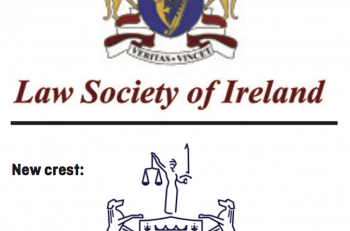
    The portentous Latin quoted Quis custodiet ipsos custodes? “who is watching the watchers?” jumps to mind in any consideration of the conduct of the Law Society of Ireland in its treatment of one-time member, solicitor Colm Murphy since it appears to show that the Law Society itself does not adhere to the standards that it imposes on its members. Readers may remember serial articles that appeared in this magazine before (see Village February/March 2014, June/July 2014, October 2014, April 2015 and December 2015) detailing how Kenmare-based Murphy was struck off from the Roll of Solicitors in 2009 on the back of complaints from another solicitor, Fergus Appelbe. Murphy took a case against the Law Society which failed to investigate Appelbe until last year when he was finally restricted as to how he can practise. Appelbe is a former member of the Law Society Conveyancing Committee and was the subject of two ‘Today Tonight’ investigations in 1997/8 into his conduct. He and his various companies are now also in overwhelming debt – to a sum in excess of €100m much of which will inevitably have to be borne by the State. The principal reason that Colm Murphy was struck off was for breaching an undertaking allegedly given to the High Court. The only evidence against him was that of a Solicitor of the Law Society, Linda Kirwan, who has subsequently admitted that she was not even in Court on the day in question. It was only after Murphy was struck off that she admitted, on af davit and in a letter to Murphy in 2010, that she was not in fact in the court when the supposed undertaking was made. No such undertaking is recorded in the order from the court issued on the day in question and the hapless Murphy had denied its existence for ten years, but Kirwan was believed.   Another contributing factor was that the Society relied on a forged document presented by Frank Fallon who subsequently got two seven year jail terms for fraud and forgery. Colm Murphy always believed that the Law Society realised that the document was forged some time after embarking on the proceedings against him and simply failed to inform the Courts of this. Documentation received under the Data Protection Act and seen by Village show that it was in fact much more sinister. On the day Joan O’Neill of the Law Society was maintaining in Court that Murphy had somehow cheated Fallon she sent the documents in relation to the land Fallon was wrongfully claiming to the rightful owner and thus she could not have believed the position she was maintaining before the Court. O’Neill subsequently swore that she had got the documents for Frank Fallon, had given them to him, and that was the end of the matter. Of course the documents seen prove that she had not done this but rather had given the documents to the person who was entitled to them. This action taken by Joan O’Neill and the Law Society and their maintaining of the position in relation to the forged document presented by Fallon prompted scathing comments from the then President of the High Court about Colm Murphy based on the fact that Colm Murphy had, we now know rightfully, stated that the document was a forgery. It seems that Colm Murphy sued the Society for defamation and abuse of power in 2004. Colm Murphy served the Summons on the Law Society and it seems that on receipt of the document Joan O’Neill wrote to John Elliot, Director of the Law Society’s Regulation Department, saying that “It is my view that Mr Murphy should not be a Solicitor. Linda Kirwan shares this”. The Supreme Court has ordered that Colm Murphy is entitled to a full trial on all the matters. O’Neill’s explanation of what has happened was eagerly awaited but it seems that the Law Society is now maintaining that O’Neill is “not medically fit to participate in these proceedings”. Colm Murphy had maintained since 2011 that the then High Court President had said he was entitled to a plenary hearing (full hearing of all matters). The Law Society went before Judge Hanna and denied that this was intended or indicated. It also maintained this position in it’s submission to the Supreme Court. A memo from the Law Society’s external solicitor shows that it was aware in June 2011 that “the President of the High Court made it clear that these matters should proceed to plenary hearing”. However, the Law Society has managed to frustrate this so far. Whatever happened to its elusive one-time motto “veritas vincet” (“Truth shall prevail”)? The Law Society seems to be trying to keep the real story here from even its own Council and has told its members not to contact Colm Murphy. You can see why. Michael Smith

    Loading

    Read more

  • Posted in:

    Retrograde results reflect recalcitrant republic

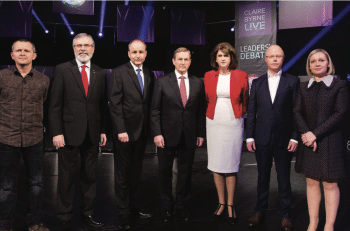
    The recent General Election was a very good one for Sinn Féin. We increased our number of TDs from 14 to One thing is clear: the after-math promises to be far more interesting than the insipid election campaign, a campaign defined by the monotony of the government’s ‘Keep the Recovery Going’ message. It may have resonated with the select few, but most reacted with an incredulous, ‘Are you for real?’ The employment figures may be up, but the people in jobs are still feeling the pinch eight years after the crash. Meanwhile, our public services appear to be getting worse. Most people – even those with private health insurance – have experienced the horror of watching a loved one on an A and E trolley. The opposition parties sensed that change in the public mood. Fianna Fáil, with its finger back on the public pulse, devised a set of policies that reflected people’s concerns. To be fair, this wasn’t just Fianna Fáil focus-group politics. Micheál Martin, as comes across in his recent Village interview, does have a commitment to social justice and has steered the party to the left of Fine Gael. The ideological differences may be slight but they are discernible and make a coalition less likely. There are, of course, other mercenary reasons why the grand coalition may not happen. Fianna Fáil won the election. It wasn’t a knock out, but it had/has Fine Gael on the ropes. A rematch at its time of choosing would suit it much better than it would a demoralised, soul-searching, Fine Gael party, which has fundamental problems. Inevitably, there will be a simplistic focus on the party leader. In post-election interviews pledges of allegiance to Enda from cabinet ministers have been noticeably absent or halfhearted. Big Phil, his protector in chief, is no longer around to sort out any of the renegades. The heave seems inevitable. Will it come to that? Or will it be a dignified resignation like Eamon Gilmore’s. The former Labour leader was treated mercilessly by Joan Burton who in turn will find her leadership questioned by the party faithful. The Labour Party’s mauling by the voters was entirely predictable. Bleating on about having to make hard decisions doesn’t win you much sympathy, as the Greens discovered last time out. Labour calculated that, having lost the working class vote to Sinn Féin and left-leaning parties, it could count on the socially liberal middle classes for support. The fact is that abortion has been shown not to be a defining issue either way. Those who wanted to repeal the eight amendment didn’t get a tail wind, and those vehemently opposed to abortion, like Lucinda Creighton, were kicked out. Likewise, the marriage referendum was seen as eaten bread. Fine Gael and all other parties had managed to appropriate that liberal space effectively – sure we’re all liberals now, some having got here a bit later than others – but who cares. Other electoral tactics back red. The political Banking Inquiry simply muddied the waters and showed that the last government had few options, and that the same pro-cyclical expansionary policies were advocated by all the parties. The Green resurgence owes much to the hard work and unstinting optimism of Eamon Ryan. Not even his narrow loss in the European elections could stop his gallop, and indeed it proved to be a blessing in disguise. He and Catherine Martin are the dream team: a moderate, articulate and photogenic pair, who have the capacity to provide a platform for further green success. Like other newly elected candidates, the Greens will hope that another election won’t happen too soon. But the signs on that front are not good. The rejection of Eamon Ryan’s proposal for co-operation amongst the opposition parties means that the new dawn for Irish parliamentary democracy will have to wait. Those who think that this election will result in a new Borgenesque Danish parliament of progressive legislators are delud-ing themselves. Instead, we may revert to the worst type of parish-pump horse-trading that the country has ever witnessed. We don’t have a Scandinavian list system; we have proportional representation with the single transferrable vote, an electoral system that has resulted in an array of independent political efs. Right now, shopping lists the length of your arm (in the case of the Healy Raes – the length of two arms) are being prepared for the highest bidder. It all promises to be unseemly and retrograde, and will be, perhaps, the best reflection of where we are as a nation in the centenary of 1916. John Gormley

    Loading

    Read more

  • Posted in:

    Transfer pattern augurs well for Left

    Transfers matter under proportionate representation though perhaps more for psephologists and party tacticians than in terms of actual electoral difference. Noel Whelan, for example, notes that: “only 12 or 13 of the 158 deputies in the new Dáil will win their seats because of transfers. If we stopped counting after the first counts and declared the results, all but a dozen or so of the seats would have been filled by the same people”. The most dramatic difference transfers made was of Maureen O’Sullivan, a notably gentle and non-partisan independent in Dublin Central. She polled badly on first preferences, getting just 1,990 votes. The quota was 5,922. She was in sixth place. Everyone assumed she was out for the count but in the end she took the last of the three seats. In the same constituency in 2007 Bertie Ahern, then ascendant Taoiseach, brought in his running-mate Cyprian Brady in 2007, though he had polled 939 first preferences. The only other candidate ever to be elected with fewer than 1000 first preferences was Brian O’Higgins (later President of Sinn Féin from 1931–1933) elected in Clare in 1923 on DeValera’s transfers. The Right to Change campaign, which involved around 100 candidates, both party and non-party, helped Sinn Féin to secure transfers that pushed a number of their candidates over the line. As well as a strong transfer pattern (76% as opposed to 58% in 2011) between SF candidates running in the same constituency the party enjoyed a good return of more than 23% from other left candidates who endorsed the campaign. In Dublin Bay North, which had one of the longest counts in the election, Denise Mitchell of Sinn Féin was assisted by significant transfers from John Lyons of People before Profit (PBP) as well as from her party colleague, Micheál MacDonncha who was eliminated at an earlier stage. Similarly, SF candidate and trade unionist, Louise O’Reilly, won a seat following strong transfers from Barry Martin, also of PBP and a running mate of Clare Daly’s in the Fingal constituency. Richard Boyd Barrett who was always likely to take a seat in Dun Laoghaire, was helped by the votes transferred from Sinn Féin candidate Shane O’Brien on his elimination. Across the country, there were other examples of the Right to Change arrangement benefitting successful candidates. AAA-PBP transferred significantly more votes to Sinn Féin than any other party with independents the next block to gain from their transfers. Sinn Féin performed exceptionally in its internal transfers with an unprecedented rate of 76% which augurs well for its future prospects where it stands two candidates. Sinn Féin has historically been quite transfer unfriendly, but in 2016 they have improved significantly on their own transfers as well as taking 28% of the transfers from AAA-PBP. With the exception of Donegal where it overrated its chances of taking three of the five seats, leaving Pádraig MacLochlainn as the party’s most prominent casualty, it came close in several other constituencies to bringing in a running mate. Fine Gael also displayed strong transfer discipline. The transfer rate between Fine Gael candidates was much better than that between Fianna Fáil candidates. In 2016 this discipline brought Fine Gael an even bigger seat bonus than it got in 2011. It benefited from 54% of its own transfers as well as 53% of those of Labour candidates. What is also evident and perhaps a harbinger of the future is the number of transfers between Fine Gael and Fianna Fáil. Where a candidate had no running mate or he or she had been eliminated or elected, Fine Gael was more likely to transfer to its big right-wing rivals than any other party and vice versa. 18% of FF transfers went to FG candidates and 16% of FG transfers nished up with FF. As the two beasts prepare the ground for an historic coalition it would seem that their supporters do not share the view that their differences would make the ending of civil war politics impossible. Frank Connolly

    Loading

    Read more

  • Posted in:

    The left must prepare for the next election

    As the dust settles and the victors and vanquished count their blessings or nurse their wounds all eyes are on the main political kingmaker, Micheál Martin. Fianna Fáil is likely to play the long game and hold out for as long as possible before conceding that it has no option but to shore up a Fine Gae-led government. There will be much hot air about the responsibilities of others, including Sinn Féin, to ‘step up to the mark’ but the people have spoken and the only tally that counts is the combined 90-plus seats of the two main parties. The downward and steady drift of the ideological right from 80% of the vote less than twenty years ago to just over 55% in 2016 makes a single large party of the right an historic inevitability no matter how much the leaders of FG and FF resist it. But resist they will, using any excuse to find reasons to differ even though there is hardly a sliver between them on fundamental policies. It is possible that their reluctance to come together or to agree a minority government arrangement along with right-minded independents or smaller parties will lead to another general election within months but they are both savvy enough to know that the electorate will not reward such failure. Besides, there is no guarantee that the result will be very different with the two centre-right parties each hovering around the 25% mark but unable to reach the numbers required to form a stable and coherent government that can implement their programmes. Another factor that will change the dynamic the next time around is the certainty that, with the possible exception of Martin, the faces on the television for the debates between the four main party leaders will be different. Kenny and Burton will be dumped by their respective parties for their poor showing in GE16 while Gerry Adams could be replaced by a younger leader during the coming Dáil term. As the two parties of the Right play hard to get, the Left cannot claim the historic break-through that some are hailing. Labour has suffered a traumatic implosion and just managed to hold its speaking rights in the Dáil. Sinn Féin increased its numbers but advanced to nowhere near what seemed possible just a few months ago. Obtaining just over 13% of first preference votes is way down on the 17-24% it polled consistently over the previous eighteen months. A relentless and hostile campaign led by Independent News and Media and the difficulties Adams faced during some of the leader debates and in one-on-one interviews were certainly factors in this late drop in support. But party strategists will also be looking at the rise of the far left in urban areas which ate into its potential vote, and at mistakes such as the three candidate experiment in Donegal as issues to be addressed. That said, Sinn Féin has increased its vote by 50% and has a raft of new, yet experienced, men and women in the 32nd Dáil providing a solid platform for its project of leading a left-wing government by 2020. Adams brought in Imelda Munster in Louth and has a secure seat into the distant future. Any decision by him to step down will be dictated by his perception of the best interests of the party, north and south, and not by his political or media opponents. It was something of an exaggeration on the part of the AAA-PBP to describe the outcome as a political earthquake, less still a revolution, when they managed to pull in just 4% of the vote between them. Dancing on the political grave-stones of the Labour casualties is not only crude but exposes their visceral and incorrect tendency to believe that they are the only true believers in the world of progressives. It is a view which guarantees long-term irrelevance and political impotence. As the noise subsided in the immediate aftermath of the vote some of the new and re-elected Left independents were mature enough to recognise that the potential of the Right to Change movement in bringing a swathe of parties, groups and individuals together was not realised this time around but could be the sort of vehicle to impel greater left-wing unity and a real electoral challenge down the road. The combined votes of SF, Labour, Social Democrats, Greens and up to 15 progressive independents would outnumber Fianna Fáil in the extremely unlikely event of such a grand coalition with the Soldiers of Destiny being cobbled together. Martin and his circle have insisted all through the election that they would not join with SF under any circumstances, while Adams would nd it difficult to bring his party into an arrangement which could halt or reverse its steady growth. It has captured a significant portion of the under-34 vote which does not entertain the old establishment. It needs to ensure that it remains vibrant and radical and not another version of the same old. For a long time the SF leader has insisted that he will not repeat the mistakes of the Labour Party which has been emasculated for what it sees as its sacrifice in putting the country first. Since the local elections in 2014 the demise of Labour has been apparent although the scale of its seat loss was not. The 2014 elections showed the steady recovery of Fianna Fáil as former supporters deserted Labour and FG to whom they ‘lent’ their votes in 2011. The Labour pact in 2016 with Fine Gael arguably pro ted the larger party in late transfers in the final counts in several constituencies and brought a seat bonus to the Blueshirts unjustified by their percentage vote. If there is a lesson for Labour it is that doing the right thing does not necessarily impress the voters unless they feel the results in their lives. Too many promises in the heat of the 2011 campaign were undelivered and party leaders failed to detect the

    Loading

    Read more