Posted in:
O’BRIEN-DESMOND LETTER
Denis’s mind is on the big picture and packing in as much litigation as possible, while fellow billionaire Dermot spends too much time on philanthropy, his kids’ burger thing, and golf.
Posted in:
by admin
Denis’s mind is on the big picture and packing in as much litigation as possible, while fellow billionaire Dermot spends too much time on philanthropy, his kids’ burger thing, and golf.
Posted in:
by Village
No interest Villager is always amazed at how some things that cost a lot just aren’t much good. Denis O’Brien’s spokesperson, James Morrissey, didn’t appear to know what he was talking about, still less to believe it, in his debate over parliamentary privilege with an impressive Micheál Martin on RTÉ Radio 1’s ‘This Week’. He did tell us that his master, who lobbied the government not to sell its remaining stake in Aer Lingus “has no aviation interests”. In fact, through Topaz Energy, O’Brien owns 50% of Shell & Topaz Aviation, supplier of fuel to Irish airports and airlines, which might be affected by a regime change. Innocent As the trial of phone-tap bad guy Andy Coulson, former editor of the News of the World, for perjury in the trial of former socialist MP, Tommy Sheridan, collapses, Villager got reflecting about delays to proceedings in the case of O’Brien’s best buddy, Seanie Fitz, who has pleaded not guilty to 21 charges of making a misleading, false or deceptive statement to auditors and six charges of furnishing false information in the years 2002 to 2007. Judge Mary Ellen Ring says the legal issues have now been resolved and a new jury will be sworn in, in October. It appears it has been difficult to keep some of the evidence against FitzPatrick tied down. Casting a cold eye. On life, on death. Prince Charles (or ‘Charles’ as Sinn Féin call him every second time they refer to him) enjoyed his visit to Drumcliffe, where WB Yeats is buried. The graveyard lost all its charm when the car-park was extended to within a yard of the great man’s grave and the Sligo-Bundoran route widened to create a constant background hum. Even the limestone is cut somewhat crassly and the capitalisation of “Life”, “Death” and “Eye” just wrong. Try cod instead A study of the annual inspection records of Irish salmon farms by the Department of Agriculture, Food and Fisheries between 2012 and 2014 has shown a complete breakdown of the salmon-farm licensing system. Author of the report, Friends of the Irish Environment Director Tony Lowes, said “We found there were no provisions for ensuring inspections of the critical mooring components that have led to previous breakaway disasters typically in storms in spite of repeated recommendations by the Minister’s officials in accident reports. When licence infringements were identified there was a persistent failure by operators to do anything about them”. No to youth Village’s editorial stance is secure. There are more than 200,000 fewer people in their 20s in Ireland than there were six years ago, according to the Central Statistics Office (CSO) indicate. The Vital Statistics Yearly summary shows the number of people between 20 and 29 fell from 755,000 in 2009 to 549,300 last year – a fall of 205,150, or 27.2 per cent. Most readers of Village were in college with Vincent Browne. Dairy reality makes bad poetry Hero George Monbiot puts his English boot into the mythology of Irish dairy farming in a recent article in the Guardian: “Perhaps the starkest example of this myth-making I’ve come across is a children’s book distributed with Saturday’s Guardian called ‘The Tale of City Sue’. It tells the story of a herd of cows on an Irish farm. ‘This friendly, Friesian family/were free to roam and browse/and eat the freshest, greenest grass/which made them happy cows/They belonged to farmer Finn/Who called them by their names/And when it was their birthday/He brought party hats and games/ He played his violin for them/inside the milking shed,/and sung [sic] them soothing lullabies/when it was time for bed’”. It turned out the book was in fact an extended advertisement for Kerrygold butter and following questions from Monbiot the Guardian made the provenance of the article clearer. He still wasn’t impressed: “From what I can glean, Kerrygold’s marketing seems to rely on the public perception that Irish dairy farms are small and mostly grass-fed. But they are changing fast. According to the former chair of the Irish Farmers’ Association, ‘scale must go up. … The dairy farm of the future is going to have to be bigger’. Could the current Kerrygold marketing blitz be an attempt to embed in our minds a bucolic, superannuated image of an industry that is now changing beyond recognition? If so, it might be an effective way of pre-empting criticism about the changing nature of its suppliers”. Líhypocrisie As France prepares to host the COP21 supposedly charged with solving the climate crisis, the French government has given a worrying insight into the sincerity of its commitment – in unveiling its choice of sponsors. Among the twenty companies on the initial sponsors list are Air France – an airline opposed to emissions reductions in the aviation sector, car manufacturers Renault-Nissan, and Suez Environnement – known for its pro-fracking lobbying. It may be over-compensation for the Anglo-Saxon perception that it’s all orgies and never business in Europe’s most contrarian land. Yes, but why? A low-light of the all-sweeping Yes campaign was a blazing row between Marriage Equality, Yes Equality and Glen on the one hand and Lawyers for Yes, on the other. The forensic ones wanted a focus on the law, in particular to counter the formidably analytical debating of “Dr” Tom Finegan, one-time parliamentary assistant to Ronan Mullen, the caped baron of ‘No’. Indeed the furious thwarted lawyers consider that continuance with the strategy of promoting the human reality of gay marriages and anti-gay discrimination, rather than focusing on adoption, surrogacy and those tiring differences between marriage and civil partnership etc led to the loss of 8% of the vote. The non-lawyers, led ironically by barrister, Noel Whelan, prevailed by sheer numbers. Doing no harm, everywhere only in private now At a recent launch of a barrage of new features, including ‘Google Expeditions’, ‘Google Next on Tap’ and a ‘revamped Google Cardboard’, products that didn’t come up much amid the razzmatazz were Google Plus, its moribund Facebook-following foray – “a social layer across
by admin
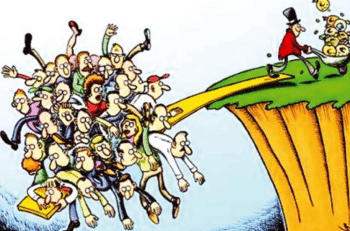
As politicians begin to throw around proposals for the last Budget before Fine Gael and Labour face an election, it’s worth remembering that this time is really the only window where citizens are encouraged to engage in economic debate. Even then the space of time is too short and the range of topics up for debate too narrow to make much impact. When it ends, economics is the preserve of technocrats again. That is a serious problem. Economics is the discussion of how things in our society are produced and distributed. If you leave it to experts there is a big cost for democracy. Yet, while people feel comfortable engaging in debate about politics in the Middle East or presidential elections in the United States, there is a reticence to talk about economics. Part of this is down to economics as a discipline, which has become increasingly remote from day-to-day life. The primacy of the market as a means to resolve problems has led to the rise of ‘market scientists”, who are seen as the authoritative voices on running an efficient economy. The language deployed by these experts is deliberately exclusive. Certainly they are unlikely to start explorations of economics with parables about pin factories, as Adam Smith did in ‘The Wealth of Nations’. Yet they dominate economics discourse. When economics is discussed with any substance in the mainstream press market scientists from universities, think-tanks and finance houses are given free reign to make objective statements about the common good. Research by Julien Merveille has shown that between 2008 and 2012 77% of commentators on austerity were from elite institutions. Another factor leading to the retreat of ordinary people from economic debate is the narrowing space for democracy in the economy. The democratic sphere only extends to areas where there is or could be public ownership. Outside of this decisions are made by private individuals or organisations. As wealth becomes concentrated in fewer hands, fewer economic decisions are made with public participation. This has bred a cynicism about what can be achieved by discussing economics. With capital increasingly breaking free from taxation – and mobile enough to defeat strikes – people have come to accept that social problems can only be resolved by appealing to private individuals and organisations to solve problems profitably through the market. And so we are relegated in the economy from citizens to consumers. This must be reversed if we are to build a politics in Ireland that can reclaim our society from the political establishment and the interest they serve. Joan Robinson, one of the great economists of the twentieth century, was once asked why people should study economics. She replied, “so that economists can’t fool you”. If we are to construct a movement where people are agents as opposed to pawns in the hands of power we will have to create space for a broader, more emancipatory discussion of economics. To that end here are five assertions citizens can make in the economic sphere that can help alter the direction of debates: 1. Economics is political Mainstream economics discourse operates under the pretense that power in the economy lies only with the policy wonks and business suits. This is not true. Take the commodification of a public good with the water charges, for example. There is widespread opposition to this policy – as recent months have shown. It is possible to suggest quick-fix solutions to provide for the abolition of these charges. The amount they will take in could be accounted for by the kind of wealth and capital acquisitions taxes proposed by Unite and the ICTU’s pre-Budget submissions, for instance. But that won’t happen. Why? Because economics is political and power concedes nothing without a demand. An organised opposition is far more important than a shovel-ready alternative. A mass water charges campaign that imposes costs on politicians for continuing on the current path can win concessions, as we have seen, and stands a chance of having those water charges overturned. Making a completing argument to End Kenny doesn’t. 2. There is more than one way of thinking about the economy In recent years students of economics across the world have been challenging the narrow nature of discourse in their universities with campaigns for what is called “post-crash economics”. Ireland could desperately use a post-crash economics movement – especially as so many go the experts invited to discuss our economy today are the same ones who advised us off a cliff in 2008. But the aim of the post-crash movement is broader than exposing the spectacular failure of mainstream economics during the recent crisis. It is to argue for diversity in the discipline. The kind of ‘market scientist’ approach I described above is a product of particular way of thinking about the economy – the neoclassical school. That is only one school among many. In fact, in a recent book Cambridge economist Hajoon Chang identified seven schools of economic thought. So why does one of these schools have such predominance – especially after it was proven flawed so recently? Citizens should demand a diversity of economic analysis from their media and education institutions, especially public ones. No more single experts being given free reign to make objective claims about the economy as if there were no competing ideas. 3. Wealth is created by us One of the most pernicious aspects of mainstream economics discourse is the idea that wealth is privately created and publicly expropriated through government taxes. This is underpins the narrative of ‘wealth creators’ and ‘job creators’, who we must allow to accumulate more and more wealth for our society to function. This is a nonsense – and particularly important for citizen economics to dispel. If we truly believe that wealth is created solely by these people, how could we but see ourselves as insignificant in the economy? If the economy grows by providing the wealthy with bigger and bigger shares of the pie and then letting wealth ‘trickle down’ on
Posted in:
by admin
“The options were narrowing down the nationalisation plus a guarantee or simply a guarantee of the system itself” – Brian Cowen in evidence to the Banking Inquiry. He shows no evidence of having digested the evidence of Central Bank governor, Patrick Honohan, that any guarantee “should not have included subordinated debt nor existing senior-term debt”. What is the point of Inquiries if the protagonists refuse to learn even the basic lessons?